As the Spin Doctor, I tend to lead an analog life. I'm not just talking about my preferred ways of listening to music, but also my approach to other everyday technology. For decades, there has been a push to turn everything we use into a connected, "smart" device. We now have technology that allows us to change the color temperature of the lights in our living room while we sit on the sofa, or to answer our front doorbell from the other side of the world. I prefer an older-school approach. For one thing, I drive a very analog car, a 33-year-old Mercedes-Benz diesel, which, once started, could happily drive all day without so much as a battery or alternator. Once it's started, you don't even need electricity, let alone anything digital.
Another piece of old tech I embrace is my analog landline telephone, which proudly boasts a phone number in the coveted 212 New York City area code. That area code ran out of numbers decades ago, so having a 212 number lets people know you're not some NYC newbie—that you've had the same number for decades. I use a slick-looking and great-sounding Bang & Olufsen phone on that line, but I have considered switching to a vintage Western Electric Model 500 rotary dial phone, just so I can challenge my Gen Z nieces to try and make a call. Even my refrigerator is behind the times, with no internal camera to scan its contents then text me when it thinks I'm running low on milk.
One concern I have with today's smart devices is oversharing. I just don't think Samsung needs to know how many eggs I have on hand. Some may say that makes me a Luddite, but as my dad always said as he went through the options list for a new car purchase, the things you leave off never break down.
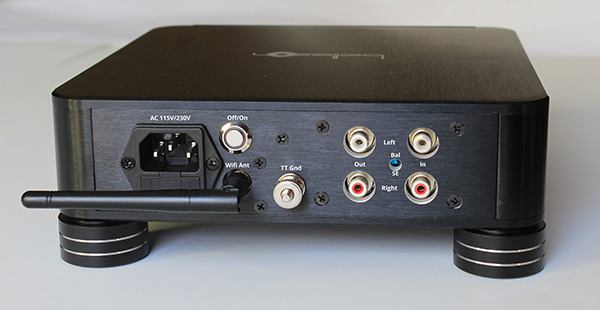 The Belleson Radiance phono preamplifier
I was a bit skeptical when I first saw the new Radiance phono stage made by South Carolina's Belleson at last year's Capital Audiofest. Not only does it have a remote function; it works by jumping onto your home network through its own built-in Wi-Fi connection. You then run an app (!)developed by Belleson, called Wifi Hifi, on your phone or tablet, allowing you to control functions like gain, loading, and muting (footnote 1). To be fair, the Radiance is not the first "smart" phono stage I've encountered. The CH Precision P1 I reviewed in 2023, which I continue to use, allows you to control its wide array of features using a connected tablet. Then there's the Mola Mola Lupe I checked out last year, though all it does is talk directly to your phone or tablet over Bluetooth, without connecting to your home network. The key difference between the CH Precision, the Mola Mola, and the Radiance is that the first two have a plethora of features that may need frequent adjustment, including multiple inputs that can be adjusted individually and alternative EQ curves to the standard RIAA. With such settings, it really can be useful to be able to make changes on the fly, from the listening position, allowing you to make subjective decisions while listening. The Radiance's Wifi Hifi functions are limited to the type of set-and-forget adjustments you typically find on any good phono preamp: gain, loading (both resistance and capacitance), and a mute switch. Except for Mute, these settings are usually adjusted when you install a new cartridge then never changed again. There is no mono or phase-reverse switch, although those would be useful additions, likely to be more frequently used.
Still, once I quit being distracted by the Radiance's network-connected remote functions and concentrated instead on its audio design, it became clear that this is not just some off-the-shelf design with fancy Wi-Fi bells and whistles thrown in to attract attention. A lot of deep, original thinking went into creating its design and the parts used to build it.
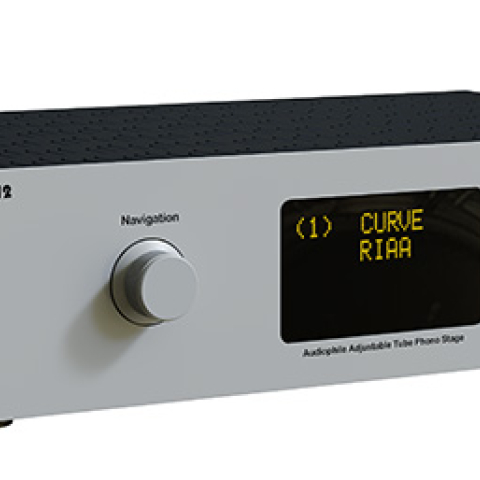
Housed in a nicely finished 8.5"-square machined aluminum chassis, the Radiance looks a bit like an Apple Mac mini that grew up and put on a tuxedo. It is essentially a simplified version of Belleson's flagship Brilliance phono preamp, which Tom Fine recently reviewed. At $3250 factory direct, it is less than half the cost of its big brother. There are no controls on the chassis itself other than the main power switch; everything else is controlled by the Wifi Hifi app. Around back are input and output pairs on RCA jacks, a ground terminal, and—a first for me on a phono preamp—one of those articulated black antennas for the Wi-Fi connection. The input RCA sockets are interesting because they can be used as a normal single-ended input or with a floating balanced connection like those found on some of the Sutherland transimpedance phono preamps. A tiny hidden button buried between the RCA jacks changes the grounding setup for use as a balanced connection.
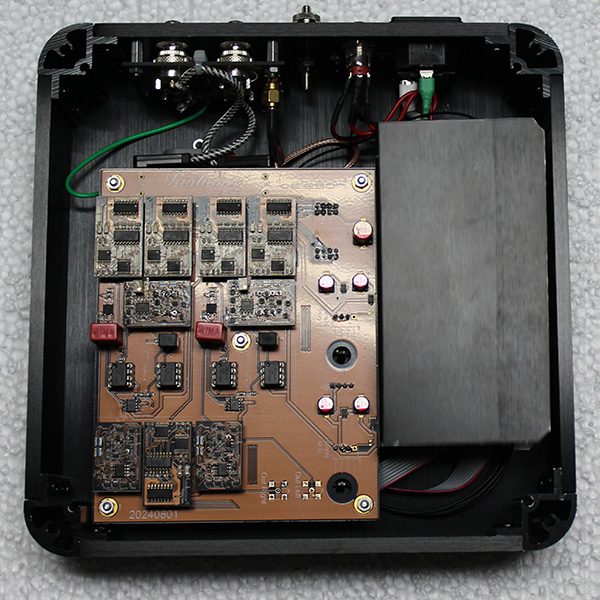 Electronics designer Brian Lowe founded Belleson in 2000, long before he created the Brilliance and Radiance phono preamps, eventually producing a line of high-performance voltage regulators for the audio industry. These superpower regulators are of course used in the Radiance, along with several bespoke Octal Opto optically coupled switches for the gain and loading adjustments. The resistive load can be adjusted in seven steps from 20 ohms to 47k ohms, while the capacitive load adjusts in 50pF steps from 0 to 750pF. Gain can be adjusted from 30dB to 70dB, with four steps for the moving magnet setting and four more for moving coils.
The signal path uses an interesting hybrid approach, with a traditional transconductance (voltage gain) circuit for the first stage in the form of a custom-made BEL Amp discrete op-amp employing JFETs. This is followed by a transimpedance (current gain) second stage with a second pair of custom BEL Amp discrete op-amps. Two additional op-amp gain stages complete the circuit, which is DC coupled throughout, with a servo loop to eliminate DC offset.
With both a switched-mode power supply and a Wi-Fi transmitter sitting inside the same box as the highly sensitive gain circuits, it's impressive how quiet Lowe was able to make the Radiance's output. Even with the volume set high, I could lift my Lyra Atlas λ Lambda cartridge off the record and hear nothing, even with my ear next to the tweeter. Any noise I heard was from the tube electronics farther along the chain. This level of quiet is right up there with my vintage Vendetta Research SCP-2B, which has long been my phono benchmark for an inky-black noisefloor.
Electronics designer Brian Lowe founded Belleson in 2000, long before he created the Brilliance and Radiance phono preamps, eventually producing a line of high-performance voltage regulators for the audio industry. These superpower regulators are of course used in the Radiance, along with several bespoke Octal Opto optically coupled switches for the gain and loading adjustments. The resistive load can be adjusted in seven steps from 20 ohms to 47k ohms, while the capacitive load adjusts in 50pF steps from 0 to 750pF. Gain can be adjusted from 30dB to 70dB, with four steps for the moving magnet setting and four more for moving coils.
The signal path uses an interesting hybrid approach, with a traditional transconductance (voltage gain) circuit for the first stage in the form of a custom-made BEL Amp discrete op-amp employing JFETs. This is followed by a transimpedance (current gain) second stage with a second pair of custom BEL Amp discrete op-amps. Two additional op-amp gain stages complete the circuit, which is DC coupled throughout, with a servo loop to eliminate DC offset.
With both a switched-mode power supply and a Wi-Fi transmitter sitting inside the same box as the highly sensitive gain circuits, it's impressive how quiet Lowe was able to make the Radiance's output. Even with the volume set high, I could lift my Lyra Atlas λ Lambda cartridge off the record and hear nothing, even with my ear next to the tweeter. Any noise I heard was from the tube electronics farther along the chain. This level of quiet is right up there with my vintage Vendetta Research SCP-2B, which has long been my phono benchmark for an inky-black noisefloor.
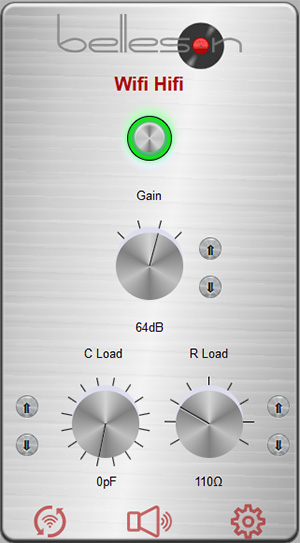 Connecting the Radiance to my home network and then the Wifi Hifi app was easy enough the first time I did it, but a couple of months later, when I wanted to reconnect to make some changes, I suddenly had difficulty getting the connection to work. The network connection instructions seemed like a bit of a throwback; it was like hooking up a new router 20 years ago, with discussions of network settings, WPA keys, and software reboots. After a few emails back and forth with Lowe, I had a eureka moment when I realized I was typing the wrong web address into my browser. Sometimes it's the little things.
Even when it was all working, I found the app interface kind of clunky, with a screen that emulates a physical panel, with rotating "knobs" on the touch screen you have to "grab" using two fingers. As I wrestled with this, I started to wish that they made a Luddite edition for people like me, which ditched the Wifi Hifi control system, replacing it with a few physical switches on the Radiance itself. That simplicity would make my dad happy.
For most of my time with the Radiance, I was using a Lyra Atlas λ Lambda cartridge, but I also spent some time using it with the EBI Audio Khumar—see below—and the Ortofon MC 90X. With an output voltage of 0.25mV, the Ortofon has the lowest output of the three. The Radiance had more than enough gain to deliver its output with all of the dynamics and power it is capable of.
Mongo At The Village Gate (Battle RS 96129) is a great-sounding live album by Cuban band leader and percussionist Mongo Santamaria, recorded by Ray Fowler in 1963 at the Village Gate in New York City's Greenwich Village. I think of Mr. Fowler as the East Coast equivalent of L.A.'s legendary Roy DuNann. Fowler managed to capture jazz performances with a naturalness of tone and clarity that few could match. This recording is a good example, with a wide but somewhat flattened stereo perspective similar to much of DuNann's work. The Radiance makes these qualities clear while demonstrating an impressive ability to flesh out the timbre of each instrument. If you blindfolded me and told me I was listening to a tube phono preamp, I would believe you, except that a tube unit would not be this quiet.
Connecting the Radiance to my home network and then the Wifi Hifi app was easy enough the first time I did it, but a couple of months later, when I wanted to reconnect to make some changes, I suddenly had difficulty getting the connection to work. The network connection instructions seemed like a bit of a throwback; it was like hooking up a new router 20 years ago, with discussions of network settings, WPA keys, and software reboots. After a few emails back and forth with Lowe, I had a eureka moment when I realized I was typing the wrong web address into my browser. Sometimes it's the little things.
Even when it was all working, I found the app interface kind of clunky, with a screen that emulates a physical panel, with rotating "knobs" on the touch screen you have to "grab" using two fingers. As I wrestled with this, I started to wish that they made a Luddite edition for people like me, which ditched the Wifi Hifi control system, replacing it with a few physical switches on the Radiance itself. That simplicity would make my dad happy.
For most of my time with the Radiance, I was using a Lyra Atlas λ Lambda cartridge, but I also spent some time using it with the EBI Audio Khumar—see below—and the Ortofon MC 90X. With an output voltage of 0.25mV, the Ortofon has the lowest output of the three. The Radiance had more than enough gain to deliver its output with all of the dynamics and power it is capable of.
Mongo At The Village Gate (Battle RS 96129) is a great-sounding live album by Cuban band leader and percussionist Mongo Santamaria, recorded by Ray Fowler in 1963 at the Village Gate in New York City's Greenwich Village. I think of Mr. Fowler as the East Coast equivalent of L.A.'s legendary Roy DuNann. Fowler managed to capture jazz performances with a naturalness of tone and clarity that few could match. This recording is a good example, with a wide but somewhat flattened stereo perspective similar to much of DuNann's work. The Radiance makes these qualities clear while demonstrating an impressive ability to flesh out the timbre of each instrument. If you blindfolded me and told me I was listening to a tube phono preamp, I would believe you, except that a tube unit would not be this quiet.
 I wanted to give the Radiance a chance to rock out a bit harder, so I played 1981's From the Lions Mouth (Korova Kode 5), the excellent sophomore album from The Sound, a London-based post-punk band that is mostly forgotten today. Think Comsat Angels meets The Cure, and you'll get the idea. On "Contact the Fact," the Radiance helped the Atlas cut through the sometimes thick-sounding mix, drawing out the excitement of the music. Graham Green's basslines were clean and weighty, and his twangy tone came through in spades; those bass strings are a prominent element in the album's sound.
The Belleson Radiance is a superb-sounding phono preamp. It manages to combine the detailed texture and tonal richness of a fine tube preamp with powerful dynamic punch, taut, textured bass, and ultralow noise more often found in solid state designs. The performance is especially impressive when you consider the Radiance's reasonable price. Now, how about that Luddite edition, Belleson?
I wanted to give the Radiance a chance to rock out a bit harder, so I played 1981's From the Lions Mouth (Korova Kode 5), the excellent sophomore album from The Sound, a London-based post-punk band that is mostly forgotten today. Think Comsat Angels meets The Cure, and you'll get the idea. On "Contact the Fact," the Radiance helped the Atlas cut through the sometimes thick-sounding mix, drawing out the excitement of the music. Graham Green's basslines were clean and weighty, and his twangy tone came through in spades; those bass strings are a prominent element in the album's sound.
The Belleson Radiance is a superb-sounding phono preamp. It manages to combine the detailed texture and tonal richness of a fine tube preamp with powerful dynamic punch, taut, textured bass, and ultralow noise more often found in solid state designs. The performance is especially impressive when you consider the Radiance's reasonable price. Now, how about that Luddite edition, Belleson?
 EBI Audio Khumar moving coil cartridge
There's an old joke that says that in Heaven, the cooks are French, the policemen are English, the mechanics are German, the lovers are Italian, and the bankers are Swiss, while in Hell the cooks are English, the policemen are German, the mechanics are French, the lovers are Swiss, and the bankers are Italian. Such ethnic stereotyping can be treacherous in today's politically correct world, but there's some validity to such thinking when it comes to high-end audio. If you show me a turntable, amplifier, or loudspeaker I've never seen before, I'd have at least a decent chance of guessing what country it came from. But every now and then, I get thrown a curveball. The Khumar cartridge from India's EBI Audio (footnote 3) is certainly one. (Do they have curveballs in cricket?)
I've met plenty of passionate, dedicated audiophiles from India over the decades, many of whom have extraordinary systems, but in almost every case, they are using Western or Southeast Asian components. Perhaps it's my Western isolationism, but Indian-made audio gear has never really been on my radar. An exception I recall was the Cadence Arca electrostatic loudspeakers from the late 1990s, which came to my attention when Martin Colloms gave them a lukewarm review in Hi-Fi News (footnote 3). Cadence was founded by Indian industrialist Ajay Shirke, who has since moved his operation to the UK. There, he owns several iconic hi-fi companies including SME, Garrard, and Siltech and Crystal Cable. A couple of years ago, I had an opportunity to hear a pair of the now-vintage Arcas at Shirke's Audio Lounge showroom in central London. Perhaps they made some production changes following Martin's review, because what I heard was much better than what he described more than a quarter-century ago.
The story behind EBI Audio and its founder Tariq Shafeeque reminds me of two other newish companies I wrote about recently: Westminster Lab, which was founded by Angus Leung, and Moonriver Audio, which was founded by George Polychronidis. All three started their companies as young, dedicated audiophiles and let their passion for quality music reproduction lead the way.
As a young child, Shafeeque loved to delve into his father's extensive record collection, but he had only modest equipment available to play those records on. In time he became a structural engineer and got his hands on an older Technics SL-23 turntable, restoring it to its former glory and performance. This skill set then developed into a hobby-business: He would import used turntables one at a time and restore and sometimes modify them before selling them. Like many people who get serious about their hobbies, he eventually turned working on turntables into a real business, and EBI (Engineering Beyond Imagination) Audio was born.
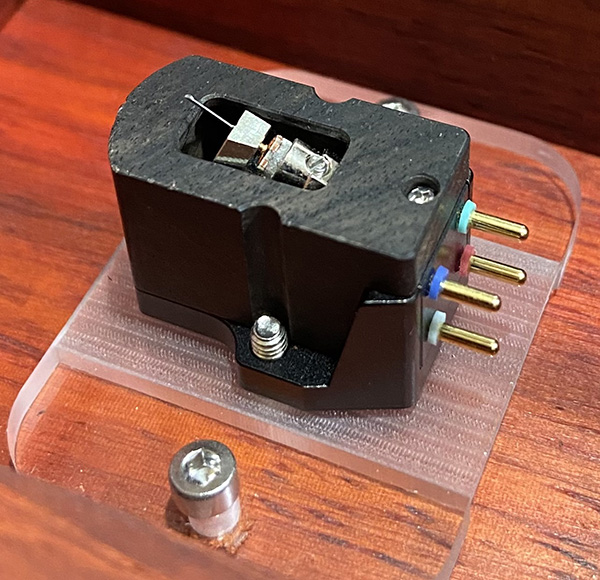
As the business developed, EBI moved from merely restoring turntables to building new, bespoke turntables for customers, and to cartridge rebuilding. The latest step in this progression came with the launch of the Khumar cartridge, a low-output moving coil that looks like it could have come from any of the world's top manufacturers.
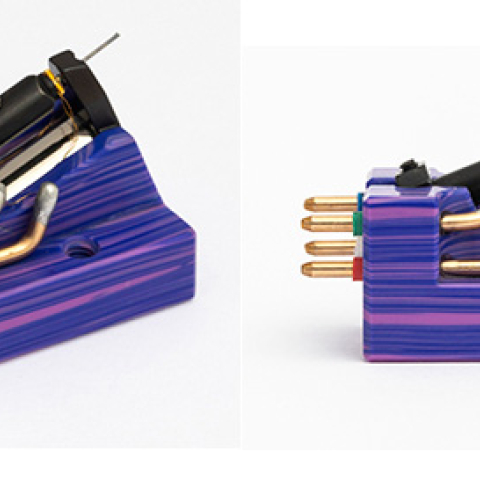
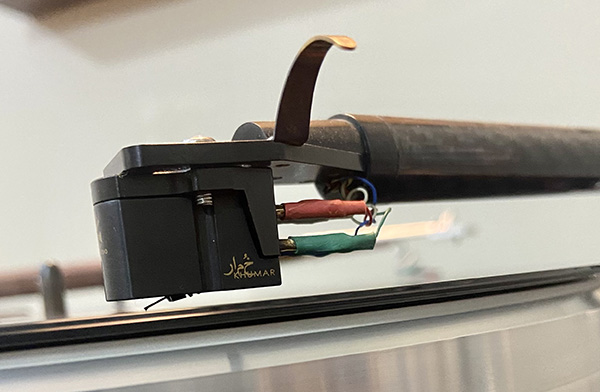 Indeed, the Khumar looks a bit like a cross between a ZYX and a Benz Micro LP-S—the shape of the former and the ebony wood body of the latter. With a boron cantilever fitted with a Shibata III stylus tip, the Khumar's low-impedance (2 ohm) coil generates a lowish output of 0.3mV. The recommended tracking force is 1.9gm, and combined with its 15µm/mN dynamic compliance, that means it should be a good match for any quality medium-to-high effective mass tonearm. I mostly used it with the Wand Master turntable and their Dark Light tonearm, but I also installed it in my Brinkmann La Grange turntable with the 10.1 tonearm, a more familiar reference.
The Khumar's build quality is superb, which is more than I can say for some of the boutique European cartridges. This impression of quality assembly was further confirmed by the stylus alignment, which measured near perfect when the headshell was set level for azimuth and slightly lower in the back for VTA. With everything dialed in, I gave the cartridge some break-in time, playing the Cardas Frequency Sweep record break-in track for about 10 hours followed by about 20 record sides. Finally, I settled in to listen intently.
We recently lost the great English singer Marianne Faithfull, whose career had two distinct periods. First, in the 1960s, she was a sweet, demure pop icon. Then after a decade in retirement, she returned with Broken English (Island Records M1), her voice changed dramatically by years of hard living. Broken English was in heavy rotation on my turntable in the early '80s. It's always revealing to come back to an album you haven't listened to in a while. On "Witches' Song," the main tune is carried by Faithfull, two acoustic guitars, and one electric guitar, but there is also an ethereal synthesizer part lurking in the background. Through the Khumar, the soundstage was presented clearly, the two acoustic guitars panned left and right, the electric guitar centered next to Faithfull's voice. The lurking synth sits deep in the stage, behind the other musicians. Tonally, the Khumar reminds me a bit of that wood-bodied Benz Micro, full-bodied with plenty of flesh on the bones, but also slightly illuminated in the upper midrange without ever edging into brightness. Tracking is excellent, and the Shibata stylus resolves lots of clean detail.
Indeed, the Khumar looks a bit like a cross between a ZYX and a Benz Micro LP-S—the shape of the former and the ebony wood body of the latter. With a boron cantilever fitted with a Shibata III stylus tip, the Khumar's low-impedance (2 ohm) coil generates a lowish output of 0.3mV. The recommended tracking force is 1.9gm, and combined with its 15µm/mN dynamic compliance, that means it should be a good match for any quality medium-to-high effective mass tonearm. I mostly used it with the Wand Master turntable and their Dark Light tonearm, but I also installed it in my Brinkmann La Grange turntable with the 10.1 tonearm, a more familiar reference.
The Khumar's build quality is superb, which is more than I can say for some of the boutique European cartridges. This impression of quality assembly was further confirmed by the stylus alignment, which measured near perfect when the headshell was set level for azimuth and slightly lower in the back for VTA. With everything dialed in, I gave the cartridge some break-in time, playing the Cardas Frequency Sweep record break-in track for about 10 hours followed by about 20 record sides. Finally, I settled in to listen intently.
We recently lost the great English singer Marianne Faithfull, whose career had two distinct periods. First, in the 1960s, she was a sweet, demure pop icon. Then after a decade in retirement, she returned with Broken English (Island Records M1), her voice changed dramatically by years of hard living. Broken English was in heavy rotation on my turntable in the early '80s. It's always revealing to come back to an album you haven't listened to in a while. On "Witches' Song," the main tune is carried by Faithfull, two acoustic guitars, and one electric guitar, but there is also an ethereal synthesizer part lurking in the background. Through the Khumar, the soundstage was presented clearly, the two acoustic guitars panned left and right, the electric guitar centered next to Faithfull's voice. The lurking synth sits deep in the stage, behind the other musicians. Tonally, the Khumar reminds me a bit of that wood-bodied Benz Micro, full-bodied with plenty of flesh on the bones, but also slightly illuminated in the upper midrange without ever edging into brightness. Tracking is excellent, and the Shibata stylus resolves lots of clean detail.
 When listening to an Indian cartridge, it makes sense to listen to some Indian music, so I pulled out A Meeting by the River (Analogue Productions APW 29), a fantastic album by American slide guitarist Ry Cooder and Indian Mohan Veena player Vishwa Mohan Bhatt. Bhatt's instrument is a sort of Indian equivalent to a Western acoustic slide guitar. The contrast is fascinating, with Cooder on the left of the soundstage and Bhatt on the right. This 1992 analog recording was engineered by my friend Kavi Alexander for his own Water Lily Acoustics label. It is a truly exceptional example of natural sound. On "Ganges Delta Blues," Cooder's son Joachim plays a drum called a dumbek, and with each hit, my subwoofers unleashed a pressure wave into the room. Kavi's recordings always have a huge, open soundstage, and the Khumar presented it with focus and solidity.
At $2599, the EBI Khumar enters a crowded sector of the market, with plenty of competition. With its fine build quality and attractive tonal character, it makes a compelling argument for being the one. It even comes in an attractive wood box—de rigueur with many of the better cartridges these days. Recommended.
When listening to an Indian cartridge, it makes sense to listen to some Indian music, so I pulled out A Meeting by the River (Analogue Productions APW 29), a fantastic album by American slide guitarist Ry Cooder and Indian Mohan Veena player Vishwa Mohan Bhatt. Bhatt's instrument is a sort of Indian equivalent to a Western acoustic slide guitar. The contrast is fascinating, with Cooder on the left of the soundstage and Bhatt on the right. This 1992 analog recording was engineered by my friend Kavi Alexander for his own Water Lily Acoustics label. It is a truly exceptional example of natural sound. On "Ganges Delta Blues," Cooder's son Joachim plays a drum called a dumbek, and with each hit, my subwoofers unleashed a pressure wave into the room. Kavi's recordings always have a huge, open soundstage, and the Khumar presented it with focus and solidity.
At $2599, the EBI Khumar enters a crowded sector of the market, with plenty of competition. With its fine build quality and attractive tonal character, it makes a compelling argument for being the one. It even comes in an attractive wood box—de rigueur with many of the better cartridges these days. Recommended.
Footnote 1: Belleson Audio Products, 317 Silver Creek Rd. Greer, SC 29650 Tel: (864) 444-9981 Web: belleson.com. Footnote 2: EBI Audio, B Block, Pocket B, Sector 19; Noida, Uttar Pradesh 201301 India. Tel: +91 98915 91270. Email: ebiindia@yahoo.com. Web: ebi-audio.com. US distributor: MIBS Distro LLC, Gig Harbor, WA. Tel: (253) 209-6792. Email: Shane@mibsdistro.com. Web: Mibsdistro.com. Footnote 3: See hifinews.com/content/cadence-arca.
The Belleson Radiance phono preamplifierI was a bit skeptical when I first saw the new Radiance phono stage made by South Carolina's Belleson at last year's Capital Audiofest. Not only does it have a remote function; it works by jumping onto your home network through its own built-in Wi-Fi connection. You then run an app (!)developed by Belleson, called Wifi Hifi, on your phone or tablet, allowing you to control functions like gain, loading, and muting (footnote 1). To be fair, the Radiance is not the first "smart" phono stage I've encountered. The CH Precision P1 I reviewed in 2023, which I continue to use, allows you to control its wide array of features using a connected tablet. Then there's the Mola Mola Lupe I checked out last year, though all it does is talk directly to your phone or tablet over Bluetooth, without connecting to your home network. The key difference between the CH Precision, the Mola Mola, and the Radiance is that the first two have a plethora of features that may need frequent adjustment, including multiple inputs that can be adjusted individually and alternative EQ curves to the standard RIAA. With such settings, it really can be useful to be able to make changes on the fly, from the listening position, allowing you to make subjective decisions while listening. The Radiance's Wifi Hifi functions are limited to the type of set-and-forget adjustments you typically find on any good phono preamp: gain, loading (both resistance and capacitance), and a mute switch. Except for Mute, these settings are usually adjusted when you install a new cartridge then never changed again. There is no mono or phase-reverse switch, although those would be useful additions, likely to be more frequently used.
Electronics designer Brian Lowe founded Belleson in 2000, long before he created the Brilliance and Radiance phono preamps, eventually producing a line of high-performance voltage regulators for the audio industry. These superpower regulators are of course used in the Radiance, along with several bespoke Octal Opto optically coupled switches for the gain and loading adjustments. The resistive load can be adjusted in seven steps from 20 ohms to 47k ohms, while the capacitive load adjusts in 50pF steps from 0 to 750pF. Gain can be adjusted from 30dB to 70dB, with four steps for the moving magnet setting and four more for moving coils.
Connecting the Radiance to my home network and then the Wifi Hifi app was easy enough the first time I did it, but a couple of months later, when I wanted to reconnect to make some changes, I suddenly had difficulty getting the connection to work. The network connection instructions seemed like a bit of a throwback; it was like hooking up a new router 20 years ago, with discussions of network settings, WPA keys, and software reboots. After a few emails back and forth with Lowe, I had a eureka moment when I realized I was typing the wrong web address into my browser. Sometimes it's the little things.
I wanted to give the Radiance a chance to rock out a bit harder, so I played 1981's From the Lions Mouth (Korova Kode 5), the excellent sophomore album from The Sound, a London-based post-punk band that is mostly forgotten today. Think Comsat Angels meets The Cure, and you'll get the idea. On "Contact the Fact," the Radiance helped the Atlas cut through the sometimes thick-sounding mix, drawing out the excitement of the music. Graham Green's basslines were clean and weighty, and his twangy tone came through in spades; those bass strings are a prominent element in the album's sound.
The Belleson Radiance is a superb-sounding phono preamp. It manages to combine the detailed texture and tonal richness of a fine tube preamp with powerful dynamic punch, taut, textured bass, and ultralow noise more often found in solid state designs. The performance is especially impressive when you consider the Radiance's reasonable price. Now, how about that Luddite edition, Belleson?
EBI Audio Khumar moving coil cartridgeThere's an old joke that says that in Heaven, the cooks are French, the policemen are English, the mechanics are German, the lovers are Italian, and the bankers are Swiss, while in Hell the cooks are English, the policemen are German, the mechanics are French, the lovers are Swiss, and the bankers are Italian. Such ethnic stereotyping can be treacherous in today's politically correct world, but there's some validity to such thinking when it comes to high-end audio. If you show me a turntable, amplifier, or loudspeaker I've never seen before, I'd have at least a decent chance of guessing what country it came from. But every now and then, I get thrown a curveball. The Khumar cartridge from India's EBI Audio (footnote 3) is certainly one. (Do they have curveballs in cricket?)
Indeed, the Khumar looks a bit like a cross between a ZYX and a Benz Micro LP-S—the shape of the former and the ebony wood body of the latter. With a boron cantilever fitted with a Shibata III stylus tip, the Khumar's low-impedance (2 ohm) coil generates a lowish output of 0.3mV. The recommended tracking force is 1.9gm, and combined with its 15µm/mN dynamic compliance, that means it should be a good match for any quality medium-to-high effective mass tonearm. I mostly used it with the Wand Master turntable and their Dark Light tonearm, but I also installed it in my Brinkmann La Grange turntable with the 10.1 tonearm, a more familiar reference.
The Khumar's build quality is superb, which is more than I can say for some of the boutique European cartridges. This impression of quality assembly was further confirmed by the stylus alignment, which measured near perfect when the headshell was set level for azimuth and slightly lower in the back for VTA. With everything dialed in, I gave the cartridge some break-in time, playing the Cardas Frequency Sweep record break-in track for about 10 hours followed by about 20 record sides. Finally, I settled in to listen intently.
When listening to an Indian cartridge, it makes sense to listen to some Indian music, so I pulled out A Meeting by the River (Analogue Productions APW 29), a fantastic album by American slide guitarist Ry Cooder and Indian Mohan Veena player Vishwa Mohan Bhatt. Bhatt's instrument is a sort of Indian equivalent to a Western acoustic slide guitar. The contrast is fascinating, with Cooder on the left of the soundstage and Bhatt on the right. This 1992 analog recording was engineered by my friend Kavi Alexander for his own Water Lily Acoustics label. It is a truly exceptional example of natural sound. On "Ganges Delta Blues," Cooder's son Joachim plays a drum called a dumbek, and with each hit, my subwoofers unleashed a pressure wave into the room. Kavi's recordings always have a huge, open soundstage, and the Khumar presented it with focus and solidity.
At $2599, the EBI Khumar enters a crowded sector of the market, with plenty of competition. With its fine build quality and attractive tonal character, it makes a compelling argument for being the one. It even comes in an attractive wood box—de rigueur with many of the better cartridges these days. Recommended.
Footnote 1: Belleson Audio Products, 317 Silver Creek Rd. Greer, SC 29650 Tel: (864) 444-9981 Web: belleson.com. Footnote 2: EBI Audio, B Block, Pocket B, Sector 19; Noida, Uttar Pradesh 201301 India. Tel: +91 98915 91270. Email: ebiindia@yahoo.com. Web: ebi-audio.com. US distributor: MIBS Distro LLC, Gig Harbor, WA. Tel: (253) 209-6792. Email: Shane@mibsdistro.com. Web: Mibsdistro.com. Footnote 3: See hifinews.com/content/cadence-arca.