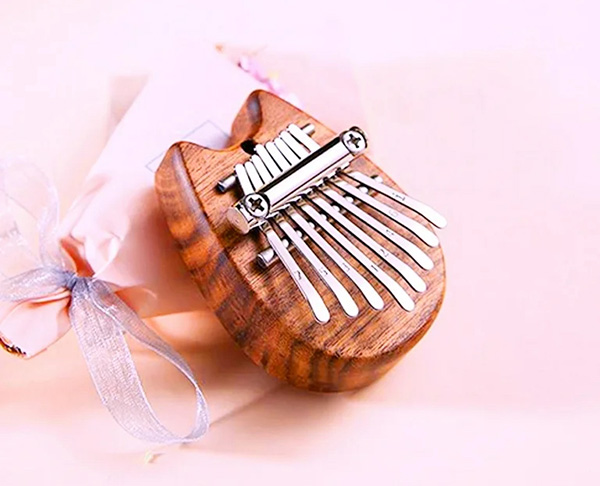
In my studio, I have a hand-sized wood box. It is the soundbox of an African musical instrument with a small internal volume, a pencil-sized sound hole, a bent steel bridge, and an array of eight steel wires with flattened ends—a keyboard. Its front surface is decorated with fire-etched geometric lines. It is called a thumb piano. Mine was made in South Africa, where it is called an mbira, but you can buy a spiffy varnished thumb piano at Walmart, where it is called a "Kalimba."
Walmart's mbiras—Kalimbas—are based on designs by British ethnomusicologist Hugh Tracey (1903–1977), who made his mbira design tunable to Western scales. African mbiras emit rough twangy jaw harp– like energy that reminds me of ancient Asian instruments. The Walmart Kalimbas play smoother and less buzzy.
Regular readers know I often praise the field recordings of American folk music made by John and Alan Lomax, the father-son team that researched and traveled extensively, documenting songs passed down through regional cultures. I also collect the work of global musicologists including David Lewiston, Francis Mazière, and David Fanshawe, all released in the Nonesuch Explorer Series. This global cadre of inspired recordists owes its mojo to Tracey, who began making recordings in Zimbabwe in the 1920s, preserving hundreds of songs that have since gone extinct in the wild. Between 1920 and 1970, Tracey recorded more than 35,000 songs, many of which were released on more than 250 LPs on South Africa's Gallo label.
 LAiV Harmony µDAC again
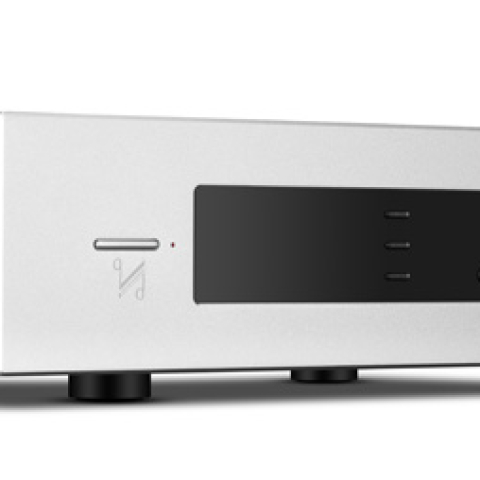
After the T+A MP 3100 HV G3 DAC-server–CD player left my house, I reinstalled the LAiV Audio Harmony µDAC (footnote 1) and played a Hugh Tracey masterpiece: Other Musics from Zimbabwe 1948 '49 '51 '57 '58 '63 Southern Rhodesia (SWP Records CD 012, footnote 2). I was curious how a $1000 DAC would strike me after I'd been listening to that $25,000 digital component that includes a DAC. This compilation of Hugh Tracey recordings was perfect for exposing any losses or gains in fidelity. With the LAiV, these mbira-and-vocals Zimbabwe tracks read as trance-induced singing or chanting, as if those recorded were contacting ancestors. The mystical tone is up front and inescapable, and I thought it came out fully with the LAiV DAC. I heard no easily identifiable let downs. With both DACs, vocal tones came through as what people actually sound like, with extraordinary deep soundspaces described by a single microphone. With the LAiV, voices displayed a more relaxed, breathy quality, which I regard as an important trait not captured by lesser machines. The LAiV µDAC encouraged me to revel in the resonating harmonics of the deze, an mbira fixed tightly with a stick inside an open calabash gourd. The deze's droning resonances made a plush cushion and spatial framework to support these vocals. Compared to LAiV's Harmony µDAC, T+A's MP 3100 HV G3 presented these tracks with a more obvious physicality, a finer resolve, and greater dimensionality. Images were dramatically solid and located more emphatically. But compared to the easy-flowing LAiV, the T+A sounded tense and a tad stern. What the LAiV DAC does that I find so beguiling is relaxed immediacy. And folks, when I have top-shelf tone and relaxed immediacy, my desire for upgrades is subdued.
Analog poetry
Ever since last month's deadlines, I've been enjoying the transparency-with-charm of the Lyra Delos phono cartridge. Its transient character matches nicely with my Voxativ Hagen2 speakers, making them sound like electrostatic headphones but with added charm. The Delos reproduces discs with a subtle but appealing glow I find compelling. Without that slight burnished radiance, the Delos would just be another stoic-sounding high-definition moving coil. In an effort to extract the Delos's full charm, I experimented with a wide range of resistive loads, phono stages, cables, and step-up transformers. That might sound like a lot of work, but I got into it and enjoyed it. Such analog investigations are way more fun than comparing oversampling rates and digital reconstruction filters.
Experimenting like this helps me better understand the complex, still-unsolved subject of how to load MC cartridges. In my studio, Lab 12's melto2 phono stage has made experimenting with cartridge loading a fascinating subhobby. Each tiny engine I install instigates its own unique loading adventure, but none of these investigations has been more thorough than setting up Etsuro Urushi's Cobalt Blue moving coil.
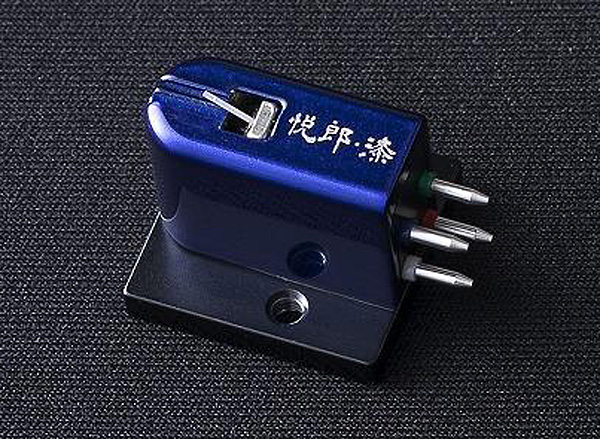 Etsuro Urushi Cobalt Blue
In case you haven't noticed, I aestheticize everything. I seek out art and books, clothes, turntables, and recordings. The beauty of their Cartesian order is, for me, the reason they exist. Like art and architecture, luxury style and high fashion are defined by the character of their ordered elements. It's the same with music and hi-fi systems, whose sound I judge first on the nature of its ordered elements then secondly by its ability to convey poetic content. When Koetsu closed and my MoFi-loaned Koetsu Rosewood Signature Platinum returned to where it came from, I started looking for a substitute. That Koetsu satisfied something intangible I don't get from other cartridges. I've owned a few Rosewood Koetsus, and they, along with my Rogers and Falcon LS3/5a, are like the books Job and Psalms in the Old Testament: They inspire dreams and defy analysis.
Lately, Excel Sound Corporation's Etsuro Urushi Cobalt Blue ($4800, footnote 3) has been satisfying my need for those Koetsu intangibles. In Gramophone Dreams #25, I wrote that My Sonic Lab's Ultra Eminent Ex presents music as if I'm hearing the master tape.
I wrote that the Lyra Delos has a charm factor. But please note, the Delos's "charm factor" only exists because it is haloing Lyra's famously precision Cartesian order. I now have about a hundred hours on the Etsuro Urushi Cobalt Blue, enough to say its structural elements appear less noticeable than the Lyra's and that they are bathed in a more sensuous light than that provided by the Lyra, My Sonic Lab, or Koetsu.
I first wrote about the Etsuro Urushi Cobalt Blue in Gramophone Dreams #29, and since then, I've spent a lot of nights with Alice and that rabbit in Wonderland. To me, it defines the notion of audio on acid.
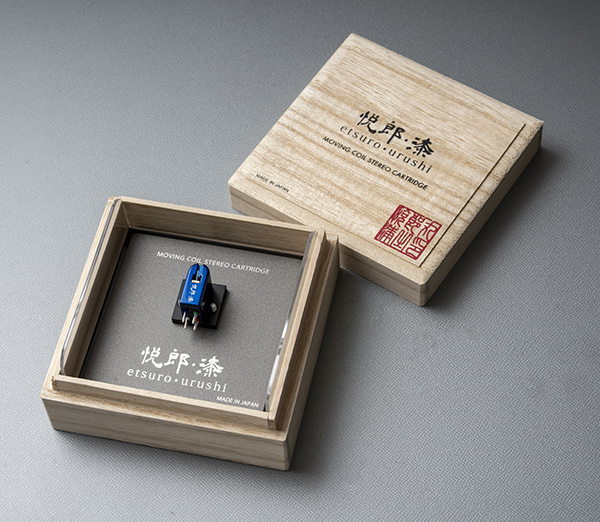 The Etsuro Urushi Cobalt Blue comes in a superbly crafted paulownia wood box, with a cobalt blue rice paper sheath lettered in metallic silver (see photo).
The first thing I noticed playing records with the Etsuro Urushi Cobalt Blue was how quietly it operated. It's possibly the quietest cartridge I've ever used. Self-generated noise (electromagnetic artifacts) was nonexistent. According to its website spec sheet, the Cobalt Blue uses an 80µm MicroLine stylus; apparently it stuck so tightly to the groove walls that it managed to miss the contaminants that cause surface noise. The Blue's cantilever is a sapphire pipe that echoes the urushi blue lacquer on the duralumin A7075 body.
In action, the Etsuro Urushi Cobalt Blue musters a 0.25mV output. Its magnetic circuit features a samarium cobalt magnet with a "soft iron" pole piece. Its impedance is specified as 3 ohms, its compliance as "High." It tracks at 2gm and weighs 8.1gm. Its terminal pins are rhodium plated.
With the Lab 12 phono: The first discs I played with the Etsuro Urushi connected to Lab 12's $4995 melto2 phono stage with a 100 ohm load resistance sounded quiet, dark, deep, and as microdetailed as a premium moving coil should be. With the melto2, all loads below 100 ohms are transformer coupled with amorphous core SUTs manufactured by Lundahl. In High Gain, the only resistive load offerings are 100 and 47k ohms.
At 88 ohms, the sound picked up some body and descriptiveness. Right away, I preferred transformer-based 88 ohms to 100 ohms resistive because it was quieter and more 3D. At 40 ohms, it became even more transparent, with brighter lighting, but now it felt off. I tried the Blue at 25 ohms, the transformer's lowest setting. With this load, the Blue came alive. Its already excellent tone improved, and immediacy became its dominant trait. I stuck with this SUT-based load because it felt like it drew maximum push and presence out of the Etsuro, which was unquestionably the most colorful and transparent at 25 ohms.
The Etsuro Urushi Cobalt Blue comes in a superbly crafted paulownia wood box, with a cobalt blue rice paper sheath lettered in metallic silver (see photo).
The first thing I noticed playing records with the Etsuro Urushi Cobalt Blue was how quietly it operated. It's possibly the quietest cartridge I've ever used. Self-generated noise (electromagnetic artifacts) was nonexistent. According to its website spec sheet, the Cobalt Blue uses an 80µm MicroLine stylus; apparently it stuck so tightly to the groove walls that it managed to miss the contaminants that cause surface noise. The Blue's cantilever is a sapphire pipe that echoes the urushi blue lacquer on the duralumin A7075 body.
In action, the Etsuro Urushi Cobalt Blue musters a 0.25mV output. Its magnetic circuit features a samarium cobalt magnet with a "soft iron" pole piece. Its impedance is specified as 3 ohms, its compliance as "High." It tracks at 2gm and weighs 8.1gm. Its terminal pins are rhodium plated.
With the Lab 12 phono: The first discs I played with the Etsuro Urushi connected to Lab 12's $4995 melto2 phono stage with a 100 ohm load resistance sounded quiet, dark, deep, and as microdetailed as a premium moving coil should be. With the melto2, all loads below 100 ohms are transformer coupled with amorphous core SUTs manufactured by Lundahl. In High Gain, the only resistive load offerings are 100 and 47k ohms.
At 88 ohms, the sound picked up some body and descriptiveness. Right away, I preferred transformer-based 88 ohms to 100 ohms resistive because it was quieter and more 3D. At 40 ohms, it became even more transparent, with brighter lighting, but now it felt off. I tried the Blue at 25 ohms, the transformer's lowest setting. With this load, the Blue came alive. Its already excellent tone improved, and immediacy became its dominant trait. I stuck with this SUT-based load because it felt like it drew maximum push and presence out of the Etsuro, which was unquestionably the most colorful and transparent at 25 ohms.
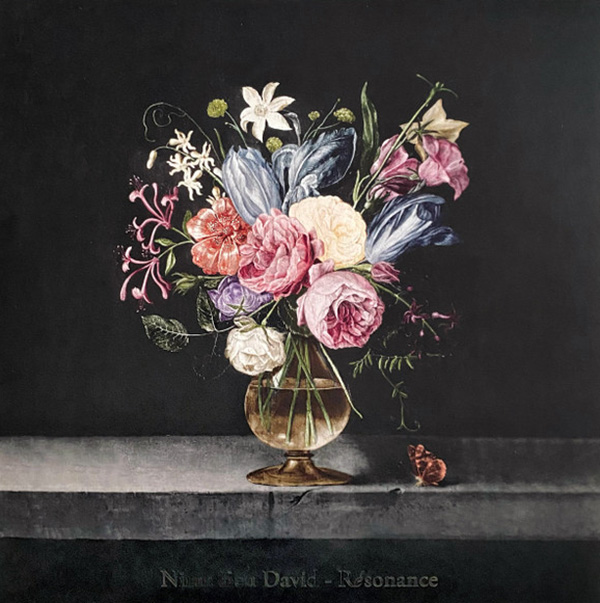 I made these load comparisons while playing one or another of the four sides to Todd Garfinkle's 2026 repressing of his 2010 masterpiece, Résonance (M•A Recordings 2-LP M088A-V) with Nima Ben David playing her viola da gamba. These discs' unusually silent grooves sounded quieter than ever with the stealthy Cobalt Blue: Quiet meets quiet meets high-presence voluptuousness.
After Résonance, I got lost for two days in a three-disc set of the Fine Arts Quartet playing Beethoven The Middle Quartets on Everest's 1966 Concert-Disc (SP506/3). These 160gm gold-label platters played warm, with exquisite tone, minute detail, and the kind of intimate foursquare spatial construction that makes chamber music so seductive on vinyl. With the Cobalt Blue, these discs played dark, deep, and quiet—enhancing the aura of Beethoven's mysteriousness. Listening to these discs caused me to wonder how much of their excellent tone and minute detail was a result of the Blue's sapphire cantilever, or its Urushi lacquer. Or what?
The Cobalt Blue could never replace my Koetsu Rosewood Signature. Fortunately, it didn't need to. It has a unique, seductive personality of its own that made me forget my old lovers. And that personality is "super quiet like a DS Audio cartridge; super rich and spacious like My Sonic Lab's Ultra Eminent Ex; and solid and expressive like the DST 62 Tzar." Maybe it's the sapphire cantilever and samarium cobalt magnet. Maybe it's the suspension. What I know is, I could live with it forever. The Etsuro Urushi Cobalt Blue satisfies something dark and romantic I don't get from other cartridges.
I made these load comparisons while playing one or another of the four sides to Todd Garfinkle's 2026 repressing of his 2010 masterpiece, Résonance (M•A Recordings 2-LP M088A-V) with Nima Ben David playing her viola da gamba. These discs' unusually silent grooves sounded quieter than ever with the stealthy Cobalt Blue: Quiet meets quiet meets high-presence voluptuousness.
After Résonance, I got lost for two days in a three-disc set of the Fine Arts Quartet playing Beethoven The Middle Quartets on Everest's 1966 Concert-Disc (SP506/3). These 160gm gold-label platters played warm, with exquisite tone, minute detail, and the kind of intimate foursquare spatial construction that makes chamber music so seductive on vinyl. With the Cobalt Blue, these discs played dark, deep, and quiet—enhancing the aura of Beethoven's mysteriousness. Listening to these discs caused me to wonder how much of their excellent tone and minute detail was a result of the Blue's sapphire cantilever, or its Urushi lacquer. Or what?
The Cobalt Blue could never replace my Koetsu Rosewood Signature. Fortunately, it didn't need to. It has a unique, seductive personality of its own that made me forget my old lovers. And that personality is "super quiet like a DS Audio cartridge; super rich and spacious like My Sonic Lab's Ultra Eminent Ex; and solid and expressive like the DST 62 Tzar." Maybe it's the sapphire cantilever and samarium cobalt magnet. Maybe it's the suspension. What I know is, I could live with it forever. The Etsuro Urushi Cobalt Blue satisfies something dark and romantic I don't get from other cartridges.
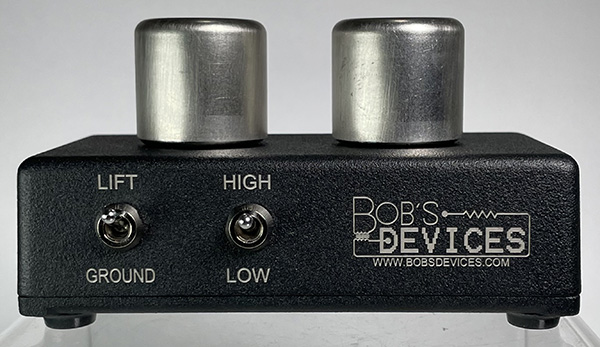 Bob's Devices Sky 20-S 1:20 SUT
In Gramophone Dreams #58 (March 2022), I auditioned a new version of the Bob's Devices Sky 20 step-up transformer ($1375, footnote 4). There's now another new version, the Sky 20-S ($1650). This 1:20 step-up uses Bob Sattin's latest core material: 80% nickel mu-metal laminations, which, according to Bob, "are specially processed for optimal performance at very low signal levels." There's also a 10-S, a 30-S, and a 40-S. Bob said that the 1:20 is the best choice for a Denon DL-103. "If you wanted one for the Denon 103R, I would have sent you the SKY 40-S (1:40). The Sky 20-S is also perfect for the Koetsu and most Hana Cartridges."
Then I asked Bob about the history of his company.
"I started making SUTs over 20 years ago by using vintage microphone transformers and selling them on eBay. I used Altec, Peerless, RCA, UTC, Lundahl, Sowter, and many others." He discovered that Ed Reichenbart, who had worked at Altec, had started his own company, CineMag. Bob contacted CineMag and learned that Ed's son Tom had taken over the company. "After trying their CMQEE-3440A microphone transformer and building some step-ups using them in 2009, I found that they were not as good as the Altec 4722 transformers that I had been using, but the supply was there, and the 4722s were getting hard to come by." As a result, Bob was struggling to meet demand.
Tom died, and David Geren took over. "I met with David, who showed me around the factory. He had a box of laminations he said they had pulled from production, since they exceeded the quality of their normal laminations. I asked if he could use those to build some 3440A transformers and change the CineMag font from Red to Blue. They became the 3440AH. We worked on refining the design to lower the inductance to suit MC cartridges instead of microphones and developed the 1131. The 1131 was the first CineMag that exceeded the performance of the Altec 4722. We continued to improve the design, and the SKY series was created. About 2 years ago, we improved the design, and the SKY-S was the result. ... Just recently, we developed the SKY 40-S, which has a longer and beefier core resulting in tighter bass with more impact." More turns also means more gain—32dB compared to the 20-S's 26dB.
In the box with the SUT Bob sent me was a short length of his own Cardas-terminated cables, which I installed between the Sky 20-S and Lab 12's MM input. That turned out to be a wise move.
If you were a reviewer, what would you listen for when comparing moving coil step-up transformers? Would you expect two 1:20 transformers—both with 80% nickel cores—to sound subtly different? Dramatically different? And what sort of recordings would you use to expose differences?
These are difficult questions, because every transformer design presents its own reactance profile. The Koetsu step-up I used with the Koetsu Rosewood Signature Platinum MC was also a 1:20, but its reactance profile had been tweaked to interfere as little as possible with the ease and flow of the Signature Platinum's 0.4mV signal. Compared to random 1:20 SUTs, Koetsu's $5k transformer made all the music flowers bloom at once. Images felt like they were hand-painted by Koetsu creator Yoshiaki Sugano. That cartridge and SUT exposed so much musical information, it taught me new things to listen for.
At the beginning of these auditions, I decided that some Indian flute music would have enough raw harmonic elements, and delirium-inducing levels of rhythm and melody, to show me what the $1825 Sky 20-S can do in front of my $5200 Etsuro Urushi Cobalt Blue. The record I played is called Pallavi—South Indian Flute Music, a Teresa Sterne–coordinated, Robert Ludwig–mastered recording from 1973 on Nonesuch Explorer (H-72052). It showcases four master musicians: T. Viswanathan on flute, L. Shankar on violin, T. Ranganathan on mrdangam, plus K. Ramiah and J. Suter on tambura and sśruti petti.
 I like single-mike field recordings because they project what the microphone heard into my room. It was incredible how powerfully and you-are-there vividly the Cobalt Blue + Sky 20-S staged its illusions between my Voxativs. There was a high-tactility presence I could feel, even in the kitchen washing dishes. The Cobalt Blue came across more like the Neumann DST 62 Tzar than a Japanese Koetsu or fancy Hana. I was not expecting this much push and muscle from a cartridge I had already pegged as frills and flowers delicate. Percussion had force. Rhythms were inescapable.
Bob's new Sky 20-S showcased vibrance, impact, and considerably more presence than I remembered from the old Sky 20. It had more presence and sparkle than I remembered from the original, plus more saturated tone and finer resolution—a definite upgrade.
As I pondered these results, it hit me that a part of these new wonders I was hearing from the old 20 might be Bob's new 26" interconnect. When I replaced it with an 18" pair of Auditorium 20 interconnects, my system changed character more than I anticipated.
It was an eye-opener to see how much a small change in the load's reactance profile (inductance + capacitance) via a cable substitution changed the Etsuro Urushi Cobalt Blue's sound character. With the Auditorium 20 wires, the sound became mellower, smoother, and 20% darker, with less bite and force. Midrange tones became more saturated, but the top octaves became darker, with lower contrast, and sometimes glary. The sound was satisfying, but not as stimulating as it was with Bob's $995 silver-clad copper interconnects.
I've learned that with low-output moving coil cartridges, small changes in what I put in front of them will often have a big effect on system sound. In this case, a few inches of wire between the Sky 20-S and melto2 phono stage made the difference between smooth and mellow and punchy exciting.
For the last decade, I've used 12" Auditorium 20 wires for my SUT-to-RIAA connections. They seemed unconstricted and were respectful of tone. But for the last year or so, I've been using Black Cat Coppertone wires for the output of the Lab 12's phono stage. Whenever I've needed wire to connect a SUT to the melto2's RIAA input, I've used the Coppertones because they have proved more invisible than alternative choices.
When I put the Coppertones in front of the Sky 20-S, the sound became brighter and more coruscating, more exciting and transparent than with the Auditorium 20 wires.
I like single-mike field recordings because they project what the microphone heard into my room. It was incredible how powerfully and you-are-there vividly the Cobalt Blue + Sky 20-S staged its illusions between my Voxativs. There was a high-tactility presence I could feel, even in the kitchen washing dishes. The Cobalt Blue came across more like the Neumann DST 62 Tzar than a Japanese Koetsu or fancy Hana. I was not expecting this much push and muscle from a cartridge I had already pegged as frills and flowers delicate. Percussion had force. Rhythms were inescapable.
Bob's new Sky 20-S showcased vibrance, impact, and considerably more presence than I remembered from the old Sky 20. It had more presence and sparkle than I remembered from the original, plus more saturated tone and finer resolution—a definite upgrade.
As I pondered these results, it hit me that a part of these new wonders I was hearing from the old 20 might be Bob's new 26" interconnect. When I replaced it with an 18" pair of Auditorium 20 interconnects, my system changed character more than I anticipated.
It was an eye-opener to see how much a small change in the load's reactance profile (inductance + capacitance) via a cable substitution changed the Etsuro Urushi Cobalt Blue's sound character. With the Auditorium 20 wires, the sound became mellower, smoother, and 20% darker, with less bite and force. Midrange tones became more saturated, but the top octaves became darker, with lower contrast, and sometimes glary. The sound was satisfying, but not as stimulating as it was with Bob's $995 silver-clad copper interconnects.
I've learned that with low-output moving coil cartridges, small changes in what I put in front of them will often have a big effect on system sound. In this case, a few inches of wire between the Sky 20-S and melto2 phono stage made the difference between smooth and mellow and punchy exciting.
For the last decade, I've used 12" Auditorium 20 wires for my SUT-to-RIAA connections. They seemed unconstricted and were respectful of tone. But for the last year or so, I've been using Black Cat Coppertone wires for the output of the Lab 12's phono stage. Whenever I've needed wire to connect a SUT to the melto2's RIAA input, I've used the Coppertones because they have proved more invisible than alternative choices.
When I put the Coppertones in front of the Sky 20-S, the sound became brighter and more coruscating, more exciting and transparent than with the Auditorium 20 wires.
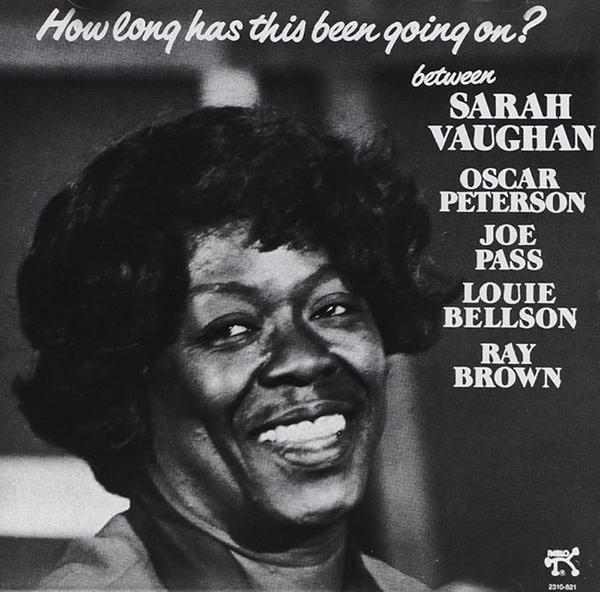 For these comparisons, I used one of my favorite Pablo recordings from 1978: How Long Has This Been Going On? (Pablo Records LP 2310–821), with Sarah Vaughan accompanied by Oscar Peterson on piano, Joe Pass on guitar, Ray Brown playing bass, and Louie Bellson really tapping it out on drums. This fine recording was engineered by Val Valentin and produced by Norman Granz. Playing this disc reminded me of the hundred previous times I played it and led me to compare how it sounds and feels now to how it did all those previous times. Today, with the Sky 20-S transformer and Black Cat wires, it sounded hipper and more vibed up than it did in the systems I remembered. More snap and punch, with more, livelier there there.
Life got more interesting when I put the Bob's Devices wire back in. The Bob's Devices wire was dramatically quieter than the Black Cat Coppertones. I figured it must be the shielding. Plus, the sound was way more forward and alive. Channel One and Pressure Sounds discs came passionately to life, sounding bouncy and free spirited with fine-grained resolve.
With the Hana Umami Blue: The Bob's Devices Sky 20-S SUT made the Etsuro Urushi Cobalt Blue sound bold and psychedelic. That combination did bass bounce and realistic snare drum impact in a manner I could feel with my body. It invigorated my records. I wondered if it would do all that with another blue cartridge: Hana's $2500 Umami Blue.
In my current cartridge collection, the Umami Blue is the "poor man's Koetsu." It specializes in color and touch. Its nature suits my nature, so I use it a lot when I'm playing records for myself between reviews. I find it conspicuously musical.
The Umami Blue features a duralumin body, a boron cantilever, and a Nude MicroLine stylus that pulls microdetail from the groove's depths. It has an alnico magnet, an 8-ohm impedance, and a 0.4mV output.
When I played Revolutionaries, a compilation from the late 1970s featuring Sly and Robbie, the Wailing Souls, and Ranking Trevor (Channel One Records, no catalog number), I giggled and smirked all the way through both sides, because it's a rockin' record that put pictures of Haile Selassie on my brainscreen. Once again, the Sky 20-S plus Bob's wires delivered an extraordinary amount of presence and vibrance, making the Umami Blue the second slightly feminine blue-bodied cartridge to acquire muscle mass and closed-fist punch power from Bob's transformer and wire.
With the Denon DL-103: I try to present audio as a hobby in which people build home sound systems to absorb their minds, keep themselves busy experimenting, and make new friends. Like hot-rodding or model railroading, we can think about it while we're at our day jobs. Analog audio is the kind of hobby where newbies join clubs, stalk forums, and maybe learn from old timers, who might reasonably tell them, "Son, before you get stuck in the world of modern sanitized audio, spend some time with a Denon DL-103, and you will see what roots-level musicality and verve feel like."
The $349 DL-103 is a gateway drug. It seems stronger and more intoxicating when loaded by step-up transformers. I always enjoy using it, because it is equally competent with all music genres. But it is not equally competent with every step-up transformer. It sounds fine loaded at its recommended 400 ohm shunt resistance, but its 40-ohm internal impedance can be fussy about SUTs.
I used J.C.F. Fischer, The Heidelberg Chamber Orchestra – Journal du Printemps (Four Orchestral Suites) (Da Camera Magna LP SM 91 014) from 1968 for my first listen, and it did not sound right. I tried a few Channel One discs, but they sounded off too. I double-checked and fine-tuned azimuth and antiskate till the DL-103 felt dialed in.
Then I tried Pharoah Sanders and the London Symphony Orchestra playing "Promises," a composition for saxophone, strings, keyboards, and electronics by Sam Shepherd (the electronic musician, not Sam Shepard the playwright). The album, too, is called Promises; the collaboration is known as Floating Points. It's on Luaka Bop Records (6 80899 0097-1–3). With it, some vibey 103 magic emerged ...
... but not as much as with the DL-103 at 25 ohms with the Lab 12 melto2. The Lab 12 uses amorphous core SUTs made by Lundahl, which score high on immediacy. The Sky 20-S uses high-quality mu-metal, which showcases tone and touch.
Remembering that, I decided to try Sculpture A's $995 1:20 Mini Nano SUT with nanocrystalline cores. I was rewarded with a superspacious, superdetailed, super-moody rendition of "Promises." This was that more-fantastic-than-live, audio-on-acid sound I described earlier. I enjoy this type of sound. It is overtly cinematic.
Like drag cars and model railroading
For these comparisons, I used one of my favorite Pablo recordings from 1978: How Long Has This Been Going On? (Pablo Records LP 2310–821), with Sarah Vaughan accompanied by Oscar Peterson on piano, Joe Pass on guitar, Ray Brown playing bass, and Louie Bellson really tapping it out on drums. This fine recording was engineered by Val Valentin and produced by Norman Granz. Playing this disc reminded me of the hundred previous times I played it and led me to compare how it sounds and feels now to how it did all those previous times. Today, with the Sky 20-S transformer and Black Cat wires, it sounded hipper and more vibed up than it did in the systems I remembered. More snap and punch, with more, livelier there there.
Life got more interesting when I put the Bob's Devices wire back in. The Bob's Devices wire was dramatically quieter than the Black Cat Coppertones. I figured it must be the shielding. Plus, the sound was way more forward and alive. Channel One and Pressure Sounds discs came passionately to life, sounding bouncy and free spirited with fine-grained resolve.
With the Hana Umami Blue: The Bob's Devices Sky 20-S SUT made the Etsuro Urushi Cobalt Blue sound bold and psychedelic. That combination did bass bounce and realistic snare drum impact in a manner I could feel with my body. It invigorated my records. I wondered if it would do all that with another blue cartridge: Hana's $2500 Umami Blue.
In my current cartridge collection, the Umami Blue is the "poor man's Koetsu." It specializes in color and touch. Its nature suits my nature, so I use it a lot when I'm playing records for myself between reviews. I find it conspicuously musical.
The Umami Blue features a duralumin body, a boron cantilever, and a Nude MicroLine stylus that pulls microdetail from the groove's depths. It has an alnico magnet, an 8-ohm impedance, and a 0.4mV output.
When I played Revolutionaries, a compilation from the late 1970s featuring Sly and Robbie, the Wailing Souls, and Ranking Trevor (Channel One Records, no catalog number), I giggled and smirked all the way through both sides, because it's a rockin' record that put pictures of Haile Selassie on my brainscreen. Once again, the Sky 20-S plus Bob's wires delivered an extraordinary amount of presence and vibrance, making the Umami Blue the second slightly feminine blue-bodied cartridge to acquire muscle mass and closed-fist punch power from Bob's transformer and wire.
With the Denon DL-103: I try to present audio as a hobby in which people build home sound systems to absorb their minds, keep themselves busy experimenting, and make new friends. Like hot-rodding or model railroading, we can think about it while we're at our day jobs. Analog audio is the kind of hobby where newbies join clubs, stalk forums, and maybe learn from old timers, who might reasonably tell them, "Son, before you get stuck in the world of modern sanitized audio, spend some time with a Denon DL-103, and you will see what roots-level musicality and verve feel like."
The $349 DL-103 is a gateway drug. It seems stronger and more intoxicating when loaded by step-up transformers. I always enjoy using it, because it is equally competent with all music genres. But it is not equally competent with every step-up transformer. It sounds fine loaded at its recommended 400 ohm shunt resistance, but its 40-ohm internal impedance can be fussy about SUTs.
I used J.C.F. Fischer, The Heidelberg Chamber Orchestra – Journal du Printemps (Four Orchestral Suites) (Da Camera Magna LP SM 91 014) from 1968 for my first listen, and it did not sound right. I tried a few Channel One discs, but they sounded off too. I double-checked and fine-tuned azimuth and antiskate till the DL-103 felt dialed in.
Then I tried Pharoah Sanders and the London Symphony Orchestra playing "Promises," a composition for saxophone, strings, keyboards, and electronics by Sam Shepherd (the electronic musician, not Sam Shepard the playwright). The album, too, is called Promises; the collaboration is known as Floating Points. It's on Luaka Bop Records (6 80899 0097-1–3). With it, some vibey 103 magic emerged ...
... but not as much as with the DL-103 at 25 ohms with the Lab 12 melto2. The Lab 12 uses amorphous core SUTs made by Lundahl, which score high on immediacy. The Sky 20-S uses high-quality mu-metal, which showcases tone and touch.
Remembering that, I decided to try Sculpture A's $995 1:20 Mini Nano SUT with nanocrystalline cores. I was rewarded with a superspacious, superdetailed, super-moody rendition of "Promises." This was that more-fantastic-than-live, audio-on-acid sound I described earlier. I enjoy this type of sound. It is overtly cinematic.
Like drag cars and model railroading
The subtext to all these listening adventures is: Always be experimenting. Always tweak and tune, plan and invent. Audio is a hobby, for curious tinkerers who enjoy scrutinizing the sounds they create in their lairs. Audio is a hobby for brainy pleasure seekers. I hope you're one.
Footnote 1: The LAiV µDAC costs $1049, shipping and tax included. LAiV, 24 Sin Ming Lane, Singapore 573970. Tel: +65 8066 9027. Email: info@laiv.audio. Web: laiv.audio.
Footnote 2: See discogs.com/release/6487708-Various-Other-Musics-From-Zimbabwe-1948–49–51–57–58–63-Southern-Rhodesia.
Footnote 3: Etsuro Urushi, Dai-ichi Shoji Co., Ltd., The Landmark Tower, Yokohama 20F 2-2-1 Minatomirai Nishi-Ku Yokohama, Japan. Tel: +81 45 228 3251. Web: EtsuroJapan.com. US distributor: Tri-Cell Enterprises, 391 Hanlan Rd., Unit 4, Woodbridge, Ontario L4L 3T1 Canada. Tel: (905) 265-7870. Toll-free: +1 (800) 263-8151. Email: tricell@bellnet.ca. Web: tricellenterprises.com.
Footnote 4: Bob's Devices, 10609 Richfield Ave. NE, Albuquerque, NM 87122. Tel: (910) 612-8666. Email: bob@bobsdevices. com. Web: bobsdevices.com.
LAiV Harmony µDAC againAfter the T+A MP 3100 HV G3 DAC-server–CD player left my house, I reinstalled the LAiV Audio Harmony µDAC (footnote 1) and played a Hugh Tracey masterpiece: Other Musics from Zimbabwe 1948 '49 '51 '57 '58 '63 Southern Rhodesia (SWP Records CD 012, footnote 2). I was curious how a $1000 DAC would strike me after I'd been listening to that $25,000 digital component that includes a DAC. This compilation of Hugh Tracey recordings was perfect for exposing any losses or gains in fidelity. With the LAiV, these mbira-and-vocals Zimbabwe tracks read as trance-induced singing or chanting, as if those recorded were contacting ancestors. The mystical tone is up front and inescapable, and I thought it came out fully with the LAiV DAC. I heard no easily identifiable let downs. With both DACs, vocal tones came through as what people actually sound like, with extraordinary deep soundspaces described by a single microphone. With the LAiV, voices displayed a more relaxed, breathy quality, which I regard as an important trait not captured by lesser machines. The LAiV µDAC encouraged me to revel in the resonating harmonics of the deze, an mbira fixed tightly with a stick inside an open calabash gourd. The deze's droning resonances made a plush cushion and spatial framework to support these vocals. Compared to LAiV's Harmony µDAC, T+A's MP 3100 HV G3 presented these tracks with a more obvious physicality, a finer resolve, and greater dimensionality. Images were dramatically solid and located more emphatically. But compared to the easy-flowing LAiV, the T+A sounded tense and a tad stern. What the LAiV DAC does that I find so beguiling is relaxed immediacy. And folks, when I have top-shelf tone and relaxed immediacy, my desire for upgrades is subdued.
Ever since last month's deadlines, I've been enjoying the transparency-with-charm of the Lyra Delos phono cartridge. Its transient character matches nicely with my Voxativ Hagen2 speakers, making them sound like electrostatic headphones but with added charm. The Delos reproduces discs with a subtle but appealing glow I find compelling. Without that slight burnished radiance, the Delos would just be another stoic-sounding high-definition moving coil. In an effort to extract the Delos's full charm, I experimented with a wide range of resistive loads, phono stages, cables, and step-up transformers. That might sound like a lot of work, but I got into it and enjoyed it. Such analog investigations are way more fun than comparing oversampling rates and digital reconstruction filters.
Etsuro Urushi Cobalt BlueIn case you haven't noticed, I aestheticize everything. I seek out art and books, clothes, turntables, and recordings. The beauty of their Cartesian order is, for me, the reason they exist. Like art and architecture, luxury style and high fashion are defined by the character of their ordered elements. It's the same with music and hi-fi systems, whose sound I judge first on the nature of its ordered elements then secondly by its ability to convey poetic content. When Koetsu closed and my MoFi-loaned Koetsu Rosewood Signature Platinum returned to where it came from, I started looking for a substitute. That Koetsu satisfied something intangible I don't get from other cartridges. I've owned a few Rosewood Koetsus, and they, along with my Rogers and Falcon LS3/5a, are like the books Job and Psalms in the Old Testament: They inspire dreams and defy analysis.
The Etsuro Urushi Cobalt Blue comes in a superbly crafted paulownia wood box, with a cobalt blue rice paper sheath lettered in metallic silver (see photo).
The first thing I noticed playing records with the Etsuro Urushi Cobalt Blue was how quietly it operated. It's possibly the quietest cartridge I've ever used. Self-generated noise (electromagnetic artifacts) was nonexistent. According to its website spec sheet, the Cobalt Blue uses an 80µm MicroLine stylus; apparently it stuck so tightly to the groove walls that it managed to miss the contaminants that cause surface noise. The Blue's cantilever is a sapphire pipe that echoes the urushi blue lacquer on the duralumin A7075 body.
In action, the Etsuro Urushi Cobalt Blue musters a 0.25mV output. Its magnetic circuit features a samarium cobalt magnet with a "soft iron" pole piece. Its impedance is specified as 3 ohms, its compliance as "High." It tracks at 2gm and weighs 8.1gm. Its terminal pins are rhodium plated.
I made these load comparisons while playing one or another of the four sides to Todd Garfinkle's 2026 repressing of his 2010 masterpiece, Résonance (M•A Recordings 2-LP M088A-V) with Nima Ben David playing her viola da gamba. These discs' unusually silent grooves sounded quieter than ever with the stealthy Cobalt Blue: Quiet meets quiet meets high-presence voluptuousness.
Bob's Devices Sky 20-S 1:20 SUTIn Gramophone Dreams #58 (March 2022), I auditioned a new version of the Bob's Devices Sky 20 step-up transformer ($1375, footnote 4). There's now another new version, the Sky 20-S ($1650). This 1:20 step-up uses Bob Sattin's latest core material: 80% nickel mu-metal laminations, which, according to Bob, "are specially processed for optimal performance at very low signal levels." There's also a 10-S, a 30-S, and a 40-S. Bob said that the 1:20 is the best choice for a Denon DL-103. "If you wanted one for the Denon 103R, I would have sent you the SKY 40-S (1:40). The Sky 20-S is also perfect for the Koetsu and most Hana Cartridges."
I like single-mike field recordings because they project what the microphone heard into my room. It was incredible how powerfully and you-are-there vividly the Cobalt Blue + Sky 20-S staged its illusions between my Voxativs. There was a high-tactility presence I could feel, even in the kitchen washing dishes. The Cobalt Blue came across more like the Neumann DST 62 Tzar than a Japanese Koetsu or fancy Hana. I was not expecting this much push and muscle from a cartridge I had already pegged as frills and flowers delicate. Percussion had force. Rhythms were inescapable.
Bob's new Sky 20-S showcased vibrance, impact, and considerably more presence than I remembered from the old Sky 20. It had more presence and sparkle than I remembered from the original, plus more saturated tone and finer resolution—a definite upgrade.
As I pondered these results, it hit me that a part of these new wonders I was hearing from the old 20 might be Bob's new 26" interconnect. When I replaced it with an 18" pair of Auditorium 20 interconnects, my system changed character more than I anticipated.
For these comparisons, I used one of my favorite Pablo recordings from 1978: How Long Has This Been Going On? (Pablo Records LP 2310–821), with Sarah Vaughan accompanied by Oscar Peterson on piano, Joe Pass on guitar, Ray Brown playing bass, and Louie Bellson really tapping it out on drums. This fine recording was engineered by Val Valentin and produced by Norman Granz. Playing this disc reminded me of the hundred previous times I played it and led me to compare how it sounds and feels now to how it did all those previous times. Today, with the Sky 20-S transformer and Black Cat wires, it sounded hipper and more vibed up than it did in the systems I remembered. More snap and punch, with more, livelier there there.
Life got more interesting when I put the Bob's Devices wire back in. The Bob's Devices wire was dramatically quieter than the Black Cat Coppertones. I figured it must be the shielding. Plus, the sound was way more forward and alive. Channel One and Pressure Sounds discs came passionately to life, sounding bouncy and free spirited with fine-grained resolve.
The subtext to all these listening adventures is: Always be experimenting. Always tweak and tune, plan and invent. Audio is a hobby, for curious tinkerers who enjoy scrutinizing the sounds they create in their lairs. Audio is a hobby for brainy pleasure seekers. I hope you're one.
Footnote 1: The LAiV µDAC costs $1049, shipping and tax included. LAiV, 24 Sin Ming Lane, Singapore 573970. Tel: +65 8066 9027. Email: info@laiv.audio. Web: laiv.audio.