How was last fall for you? Mine was crazy. I traveled much of October: the Rocky Mountain Audio Fest one weekend, emceeing Chad Kassem's Blues Masters at the Crossroads Blues Festival the next, and the week after that, appearing at two Audio Advice stores, in Raleigh and Charlotte, North Carolina. From there I traveled to Los Angeles to attend a 30th-anniversary celebration for
Tron at Grauman's Chinese Theatre, where, standing in front of the screen, I talked to a theater full of Tronnies about how we'd produced some of the sound effects for the original film. Experiencing the historic space from that perspective (and, earlier, in Sid Grauman's office) was a fleeting but unforgettable experience.
I had to leave the post-screening party early to rush to the airport—my flight the next morning had been canceled due to the impending arrival of Hurricane Sandy. I stood on line all night, got the No.1 standby slot for the last New Jersey–bound flight, and made it onto the plane. I got home just in time for a week without power, though that was the worst of it for us. The salt-water surge along Long Island's south shore took out my poor friend Michael's stereo and, worse, his treasured collection of jazz records.

Emceeing the blues fest and the
Tron party were fun, but the most rewarding events were the appearances at Audio Advice, where I played for attendees 24-bit/96kHz files I'd ripped from vinyl. That allowed them to compare the Onedof and
Continuum Audio Lab Caliburn turntables, and the
Graham Engineering Phantom Supreme II,
Kuzma 4Point, and
Spiral Groove Centroid tonearms. Okay, it wasn't pure analog, but I consider those files easily good enough for making valid comparisons. The tracks were Oscar Peterson's take on Duke Ellington's "C Jam Blues (Duke's Place)," from a two-disc 45rpm reissue of Peterson's
Night Train (Verve/ORG); "Calvary Cross," from a 1983 reissue of Richard and Linda Thompson's
I Want to See the Bright Lights Tonight (Hannibal/Carthage); and "Take Five," from a two-disc 45rpm reissue of the late Dave Brubeck's
Time Out (Columbia/Analogue Productions AAPJ 8192-45).
All of those who attended were more curious to hear how two $150,000 turntables would sound than in comparing the three tonearms. After a few tracks, the skepticism about such costly gear quickly evaporated, as it always does—the explosive musical display erupting from "black" backdrops, even via digital files played through a relatively modest system, makes an obvious statement, especially when the listener is familiar with the record. And for someone who spends most of his time alone in his listening room, having my sonic opinions validated (or not!) in real time by other audio enthusiasts was energizing.
Even through the modest conference-room system, the differences the group heard between the Caliburn and Onedof 'tables playing "Diamonds on the Soles of Her Shoes," from the recent remastering of Paul Simon's
Graceland (Columbia/Legacy 88691914721), matched those I had described in my reviews of the turntables. There was less unanimity about which 'table was preferable, but all agreed that the sound was exceptional, even startling, from both.
The sonic differences among the tonearms were much smaller, particularly in quick A/B comparisons—identifying which was which was almost impossible, so tonally and spatially similar were their sounds. Each arm is a variation on the unipivot. The Spiral Groove Centroid is the "purest" unipivot: a single point on which all of the arm's mass is loaded. The unique shape and weight distribution of the bearing cup's high-mass housing provides horizontal stability during play. The Graham Phantom Supreme II is an inverted unipivot with the bearing point facing down into a cup. Graham's dual-magnet Magneglide system provides horizontal stability without interfering with the bearing's mass loading. The Kuzma 4Point uses pairs of points for stability in the horizontal and vertical planes. One of each pair of points fits into a cup, while the second fits into a groove.
As I pointed out last month, only the Graham is neutrally balanced: with a warped record, the tracking force doesn't change as the record raises and lowers the arm. In practical terms, this difference isn't important—except when playing a warped LP.
Being able to instantly swap between recordings of each arm or listening through entire tracks revealed that the sonic differences are
minor. The Spiral Groove, Kuzma, and Graham are three of the finest tonearms currently available, in my listening experience. However, when three such mechanically different approaches to non–gimbaled-bearing tonearm design more or less agree, timbrally, that's saying something.
Without knowing which arm was which, one listener immediately preferred the Graham's reproduction of Peterson's piano. He noted the superior attack of the felt hammers hitting the strings, which he thought was less apparent through the other arms. Others paid more attention to overall instrumental timbre; one felt that the piano sounded richer and more tonally coherent through the Centroid. Another noted the Kuzma's spaciousness, dynamic authority, and low-frequency slam, particularly with "Take Five."
But all agreed that the differences were minor, and that all three arms, each costing around $6000, would be just fine in their systems—no one would feel that the sound was in any way lacking. My experience of all three arms tells me that their
dynamic performance, moving within and accurately tracking the grooves, was equally accomplished.
I know it's exciting to report mind-blowing sonic differences among similarly priced products, but to me it's just as exciting to be able to tell you about the relative
lack of difference among the sounds of three high-performance tonearms, any one of which I'd be more than happy to own. I feel that some observers unable to make the instantaneous comparisons possible with high-resolution digital files may be overstating the differences they hear. On the other hand, long-term listening does tend to expose certain fundamental differences that A/B comparisons don't. Both kinds of listening are important.
I've just spent more than a month comparing the Kuzma 4Point and the latest iteration of the Graham Phantom Supreme II on the Air Force One turntable, which is distributed in America by Graham Engineering. Report
next month.
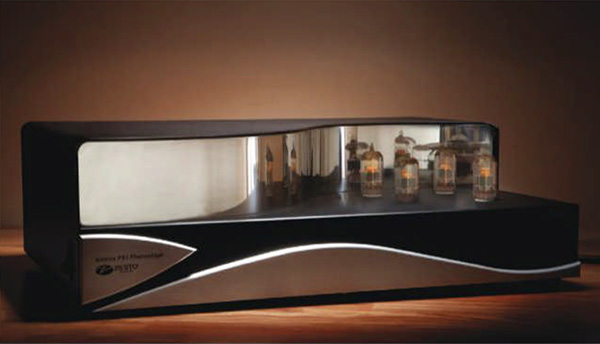 Zesto Andros PS1 MM/MC phono preamplifier
This tubed phono preamplifier with step-up transformer ($4300; footnote 1) seemed to create something of a sensation in 2011, when it was introduced for $3900. It has since won rave reviews across the board, including a short but exuberant report by John Atkinson that was part of his coverage of
T.H.E. Show Newport Beach 2012. JA noted the system's quiet and wide dynamic range as it reproduced a typically bright Deutsche Grammophon recording. He stayed for the entire first movement of Mahler's Symphony 1, with Seiji Ozawa conducting the Boston Symphony.
The Zesto Andros PS1 has been here for many months now, much listened to but not reviewed. I felt it wise to spend a good deal of time with a product from a new, relatively small manufacturer to see if it was reliable, and to hear if it would retain its sound and its surprising quiet over the long haul.
Which is a big lie. I held off writing this because I was enjoying listening to the Andros PS1 way too much. I didn't look forward to having to return it. Every time I'd run into Zesto founders George and Carolyn Counnas and apologize for the delay, they'd just say, "Take as much time as you need."
George Counnas's background is in tubed electronics; under contract to the Royal Air Force, he designed airborne navigational systems for Decca Navigator. His starting point for the Andros was the classic 1930s RCA tube circuits, updated using CAD simulations, though ultimately he designed by ear. The Andros PS1 is the result of a year's worth of circuit revisions—71 in all—and hundreds of component upgrades.
Wave Hello: You either love the Andros PS1's wavy shape or you don't. The retro-cool exterior design, by one Musky Mistry and Carolyn Counnas, makes you want to look when you're not listening, and sometimes even when you are. The PS1's great looks come at a price—all the controls are on the rear panel. It's easy to get over that when you consider that you don't have to get
inside the Andros PS1 to make any adjustments. You don't even have to open the chassis to replace one of the four gold-pin JJ Electronics ECC83S (12AX7) tubes (in ceramic sockets), or try other tubes—which I didn't do, though I've got some tasty choices in the closet. I feel gear should be reviewed as delivered.
The Andros's rear-panel layout is clean, spacious, and logical. Separate moving-magnet and moving-coil inputs make possible the simultaneous connection of two tonearms. The MC input offers both unbalanced, ground-isolated RCA or balanced XLR3F connectors. Output is single-ended only.
The rear-panel's layout reflects the circuit's dual-mono configuration: There are two of everything, including the very useful ground-lift switch. Counnas loads cartridges via the transformer's secondary winding, which has the effect of controlling transformer resonances, not so much cartridge ones. Ideally, you'd want to adjust the loading on both the primary and secondary sides—the latest Ypsilon transformer offers that, while the original MC-10 and MC-16 load only on the primary side of the transformer. Calculating the correct values can drive a mathlexic like me bonkers—you have to include the cable capacitance, the weather, the time of day, and your age, weight, and ethnicity, among other factors, to get the ideal results. While at some point we'll have that perfectionist discussion for those using outboard transformers, back in the real world, Counnas's choices of loading (20, 30, 40, 50, 100, 200, 400, and 1000 ohms) should suffice.
Choose the optimal loading by listening, but don't be fooled into thinking that brightness caused by an undamped resonance is "detail and air." If you use too low a load impedance, you'll get beyond critical damping and shelf high-frequency extension. Hit the right point and you'll have damped the resonant peak without attenuating high-frequency extension.
Back to the Zesto's back panel: There are two toggle switches for MC/MM, and two more for High/Low MC. This can be confusing: you might think High MC offers higher MC gain, but it's just the opposite: High MC is for high-output MC cartridges, and thus offers
lower gain.
The Andros PS1's specifications are straightforward: 45dB gain in MM mode, 65dB in MC (–10dB in High MC mode). The noise level is a claimed –75dBu, the passive filtered RIAA accuracy ±0.5dB. The output impedance is a high 10k ohms. The circuit uses 1% metal-film resistors exclusively, and only polypropylene capacitors in the signal path. The chassis is of 16-gauge steel, and the Andros PS1 is hand-built in the US using domestic and imported parts. Each unit's tubes and electronics are burned in for 50 hours before being shipped.
Granted, $4300 is not inexpensive, but considering what the Andros PS1 represents in terms of handmade-in-America build quality and aesthetics, it strikes me as good value for the money. Over the months I've hogged the review sample it's been 100% reliable, and its sound seems to have only improved.
Yes, But How Does It Sound? I don't care how much you've invested in a phono preamp—no analog devotee reading this will not enjoy listening to the Zesto Andros PS1. It had an addictive sound that combined the 12AX7 tube's well-known golden warmth with uncommon extension at the extremes of the audioband.
The Zesto's remarkable freedom from mechanical and electronic artifacts made it easy to enjoy long listening sessions without fatigue. It was also remarkably quiet, even with very low-output cartridges such as Ortofon's 0.2mV-output Anna and A-90. Its transient performance was also notably fine, with an attack character that was fast, clean, and not at all soft or overly romantic, as some tubed phono stages can sound. Yet it bloomed with the best of them. As my pal Ed Holliday likes to say, the Andros brought the schmaltz, though not the oversaturated variety.
The Andros PS1 produced a generously sized soundstage, particularly in terms of depth, which, when appropriate, extended well in front of as well as behind the speakers. There was
nothing recessed or polite about the PS1's sound.
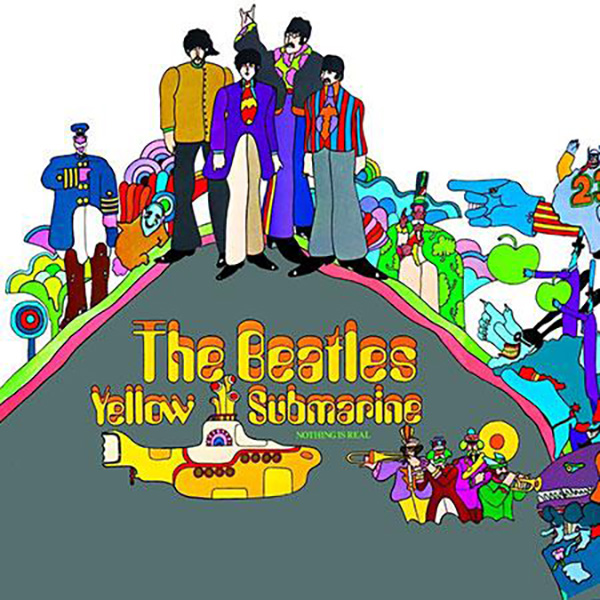
I've been poring through the recently issued boxed set of the Beatles albums on vinyl, and the other day got to the
Yellow Submarine soundtrack, the least important Beatles album (only four new songs). I hadn't played
any version of side 2, George Martin's orchestral score for the film, since maybe 1969, when the album was first issued. I first played side 2 as soon as I'd returned the Andros to service, after spending time with my reference Ypsilon VPS-100 phono stage, which costs not quite eight times as much ($32,000 with step-up transformer).
Hmmm, I thought;
in comparison, the Andros sounds pretty warm, bass-heavy, and "tubey," and the imaging is a bit vague.
Then I pulled out an original UK pressing. How wrong I was! It was the reissue, not the Andros, that was all of those things. The Andros made clear that the original pressing was actually somewhat shrill in the upper midrange side, but the imaging and spatiality were 100% superior. I could "see" the orchestra in Abbey Road, and pick out the positions of the various strings—something not possible with the reissue, though overall, despite too much bass, the reissue's EQ was preferable.
The ease with which I could distinguish between these two pressings confirmed my initial impression that the Andros PS1 was a pleasingly neutral phono preamp, if clearly of the classic tubed variety. Not that there's anything wrong with that—tubes also drive the Ypsilon VPS-100. The point is that while its sound was clearly tube-driven, the Andros was sufficiently analytical, and not drenched in warmth.
There's more transient speed and detail to be had, greater macrodynamic contrast, and, especially, bottom-end slam, grip, and extension—but getting all of those along with the PS1's overall grace, harmonic generosity, and freedom from electronic detritus will cost you plenty. Unless your speakers are capable of plumbing the depths, you won't miss what the Andros doesn't do—but don't take that to mean that its bass performance was weak.
What made the Andros PS1 very special was its top-to-bottom balance. It has clearly been designed by someone who listens and chooses carefully among multiple candidates for every component and circuit—its
musical presentation, from top to bottom and everywhere in between, was exceptionally coherent.
Between the Zesto Andros PS1 and the
Manley Labs Chinook ($2250) I reviewed in August 2012, we now have two very reasonably priced, US-made, tubed phono preamps that are quiet, well engineered, and represent excellent value for money. In a perfect world, I'd keep both on hand for comparisons. Based on what I recall of the Chinook's sound, I'd say that it and the Andros PS1 both sound as they look: the Manley is tonally more neutral or perhaps on the lean side, while the Zesto has that "classic" tube grace with a bit—just a touch—of added and very tasty schmaltz.
I highly recommend the Zesto Andros PS1. It's among the more enjoyable and satisfying phono preamplifiers I've auditioned at any price.
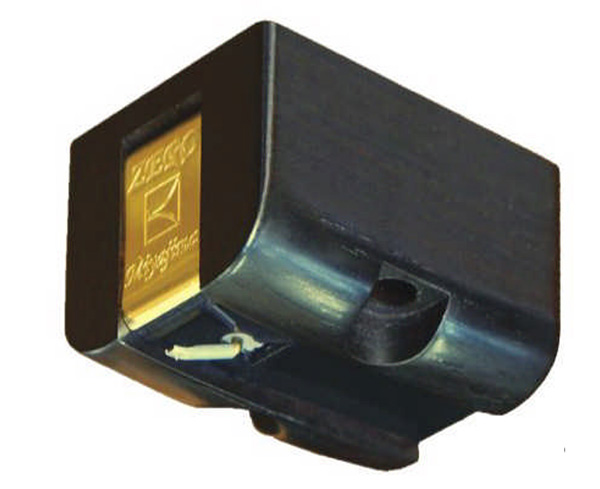 Miyajima Laboratory Zero mono phono cartridge
Other than no-calorie soda, I can't think of a good reason to name any product "Zero," but that's what Miyajima Laboratory has chosen for its latest and best mono cartridge. $1995 isn't zero bucks, but compared to some cartridge prices, it might as well be. US importer Robin Wyatt, of Robyatt Audio, claims that the Zero is "THE BEST CARTRIDGE AVAILABLE TODAY!!" He's so confident you'll agree that he offers a seven-day, money-back guarantee (footnote 2).
After spending a lot of time with a Zero and finding myself poring through my collection in an almost desperate search for more mono records to play, and at the risk of encouraging Wyatt's hyperbole, I agree: The Zero is the best
mono cartridge available today—among those I've heard. I can't speak for the rest of the world.
Miyajima's Premium BE mono ($1260) was an ear-opener, and I ended up addicted to its meaty, full-bodied sound, which seemed to perfectly capture the mono era's sonic aesthetic. I ended up buying the review sample, even though its compliance was so low that it often was a challenge to get it to lock in to the lead-in groove. But it was always worth the effort!
I don't have the space here to delve into Noriyuki Miyajima's unique technology. Art Dudley did that in his review of the
stereo Shilabe cartridge. Miyajima's explanation of why the Zero improves on the Premium BE was lost in translation (as is the instruction manual), but his conclusion that the Zero "gives clearer sound quality" is easily understood, and just as easy to confirm by listening. The Zero also more easily enters the lead-in groove without skipping the first inch or so of groove surface, and, with an output of 0.4mV (the Premium BE outputs 0.9mV), is more compatible with many MC phono preamps.
Like the Premium BE, the Zero is a true mono cartridge, not a stereo cartridge internally strapped to produce a mono signal. Also like the Premium BE, it produces a big, rich, meaty sound. But the Zero's mono image focus is better and has greater clarity. The Zero's high-frequency response is nothing short of spectacular in terms of transient and harmonic precision. Its bottom end remains meaty, but control is improved; thus, so are bass textures and transient detail. A slight bulbousness in the lower bass has been removed. Now the bottom is, as Captain Beefheart once said, fast'n'bulbous.
The Zero reproduced the sound of metal with astonishing verisimilitude. Cymbals, brasses, and bells sounded accurately hard, even as plucked double basses sounded that much more woody. Reeds buzzed and fibrillated viscerally.
I suspect it's the Zero's harmonic and textural accuracy that led Wyatt to make his claim, and I can't disagree with him. If you cherish your Blue Note, early Capitol, or Columbia monos, you need to hear them decoded by the Zero. Highlights for me include a mono of
The Who Sell Out (Decca DL 4950) recently found at a garage sale, Louis Prima's
The Wildest!, and my Dean Martin, Mickey Katz, and Nat King Cole albums, these all on Capitol—and, of course, the Beatles' original mono releases on Parlophone.
If you treasure your mono albums, get a Zero. It's infinitely better than any other mono cartridge I've heard.
Footnote 1: Zesto Audio, Thousand Oaks, CA. Tel: (805) 807-1841.
www.zestoaudio.com
Footnote 2: Miyajima Laboratory/Otono-Edison, 1-45-111, Katae 5-chome, Jounan-ku, Fufuoka 814-0142. Japan. Web:
www.miyajima-lab.com. US distributor: Robyatt Audio, Web:
www.robyattaudio.com.