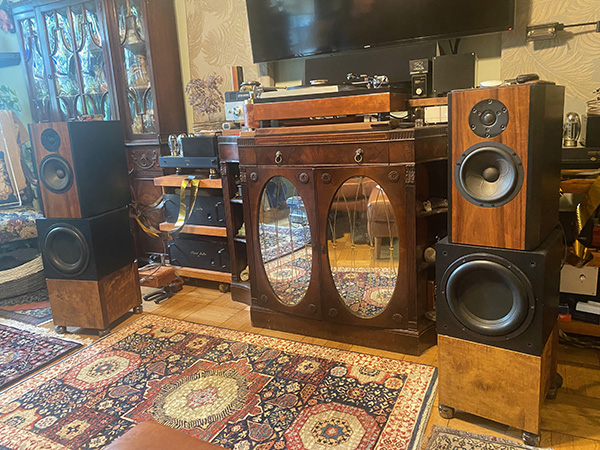
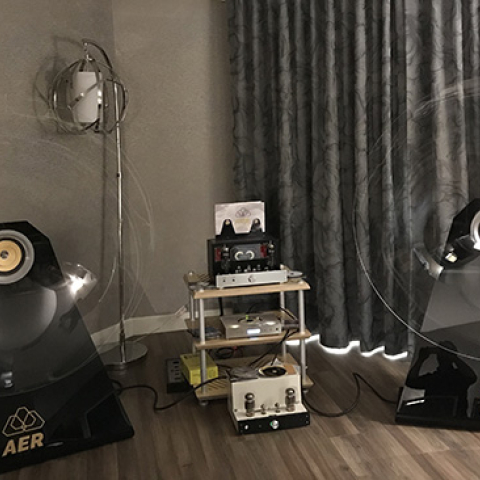
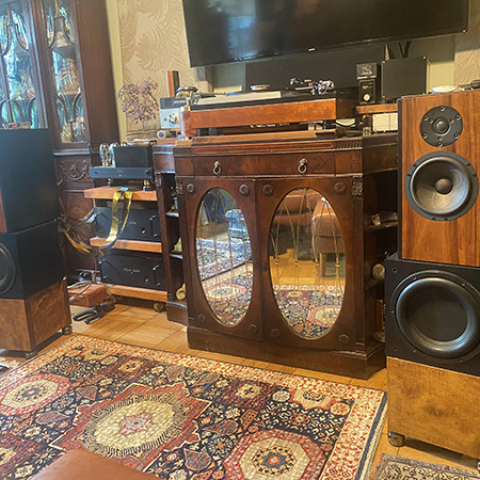
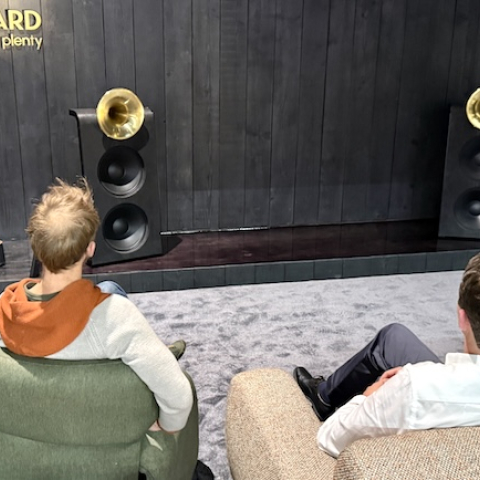
Richard Cirulnick's system.
I do not believe in chance or coincidence. Instead, I put my faith in the divine nature of Luck.
When I talk about standing on the right corner at the right time wearing the right hat when the limo pulls up, I am explaining one of the ways I prepare to experience the providential. When the doors to my mind are open, adventure always enters.
Last week, a black sedan pulled up by the curb in front of my building. I recognized the driver, Richard Cirulnick, because an old audio-world buddy named Al Rhodes introduced me to him at the New York Audio Show in 2017. Since then, we've hung out a lot, especially at audio shows, and talked extensively about engine building and phonography. But that day I did not know what Richard's plan was or where we were going. I preferred to be surprised.
I didn't inquire about our destination until we were at a place I'd never been before: Midwood, Brooklyn. I knew I'd never been there because the late 19th/early 20th century houses had turrets and tiled roofs and were gilded age palatial in ways unique to Midwood. Turns out we were approaching the workshop of audio service engineer Benjamin Jacoby, who grew up in Midwood, has family there, and lives within walking distance of the shop we visited.
Some of you may know Ben from his days as service manager at New York's Stereo Exchange (1993–1999). That is where I first met him.
I'd been wanting to visit Ben because he and Richard are besties and Richard is always talking about him. Also because Ben's company, High End Audio Repair (footnote 1), is known for its meticulously executed repairs of Audio Note UK products. High End Audio Repair is also an authorized Audio Note dealer in New York.
Richard once owned a speed shop specializing in dragster engines. One morning, Ben walked into the shop and proceeded to demonstrate his modified, race-ready version of the Rochester Quadrajet four-barrel carburetor (footnote 2). Ben and Richard have been friends ever since.
Ben Jacoby is a natural-born trouble-shooter, modifier, and improver, while Richard is a natural-born mechanic. Richard and his wife Audrey are downtown bohemian types with a penchant for making, finding, and arranging things.
I already knew, from Michael Trei, that Ben's listening rooms were small. When I saw them in person, I was impressed by how smartly arranged they were. Ben's Room One is 88ft
2, with 8' ceilings. Room Two is 96ft
2. Both rooms used midsize Audio Note speakers with a diverse range of top-level Audio Note electronics. Both rooms proved that the number one secret behind clarity of sound is nearfield listening. In both of Ben's rooms, I sat 5' or less from the speakers, which were positioned in room corners just as Audio Note intended.
Streamed WAV files passed through Ben's professional-quality streamer/clock and on to and through his Audio Note DAC 5 (footnote 3). The sound was clean, quiet, and super-succinct. It was a remarkable display of the sensuous intangibles old tubes, silver wire, Black Gate capacitors, and fine transformers bring to any presentation.
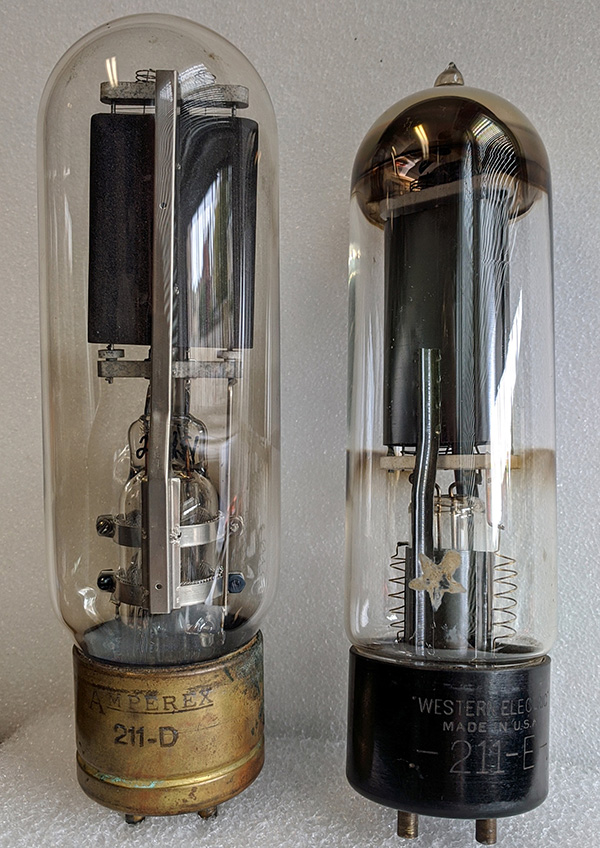
Western Electric 211D and 211E
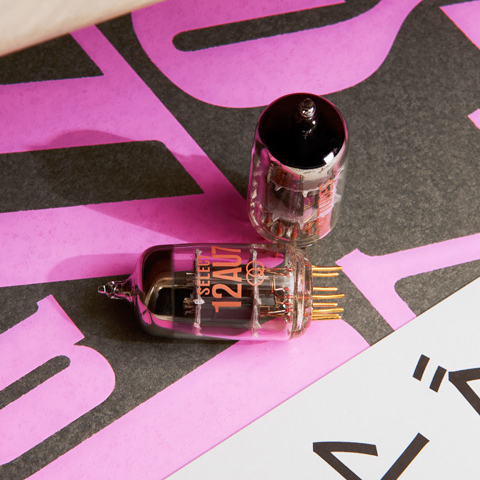
On this day, the presentation was super-special because Ben had just upgraded his Audio Note Jinro Shochu power amplifier with 10Y/VT25 driver tubes and Western Electric 211E output tubes. These pointy-top, engraved-base 211Es were manufactured at the dawn of the tube era (ca 1922). They presented themselves like sacred archeological artifacts.
In the late '80s, I was buying and selling Western Electric tubes, and I swear I never saw a WE 211 except in pictures in the back of Japan's
MJ Audio Technology magazine. All the 211s I knew had "bright emitters," thoriated tungsten cathodes that gave off intense white light and serious heat. These Western 211s have dull emitters, like the red-orange "toaster" filaments in most tubes.
Playing CDs ripped to WAV files, Ben's
unobtainably rare Western Electric 211Es—Richard found three at a flea market for "the price of a New York pizza"—played darker and richer through the midrange than the bright-emitter GEs and RCAs I was familiar with. Through these Westerns, male and female vocalists were presented with "talkies-era" immediacy and realistic tone. They made most new-manufacture tubes sound thin and washed out. It just occurred to me that those 211s might be the oldest, rarest tubes I've been lucky enough to hear playing music.
My next memorable moment happened in Room One, where Ben had an Audio Note TT Two turntable with a sharp-looking Supex 900 moving coil cartridge driving a rare 1:100 Nagatron Z Coupler step-up transformer into an Audio Note M9 phono preamp upgraded with 2W Tantalum resistors and Black Gate capacitors. Like those 211Es, I had heard of Z Couplers but had never seen one in person
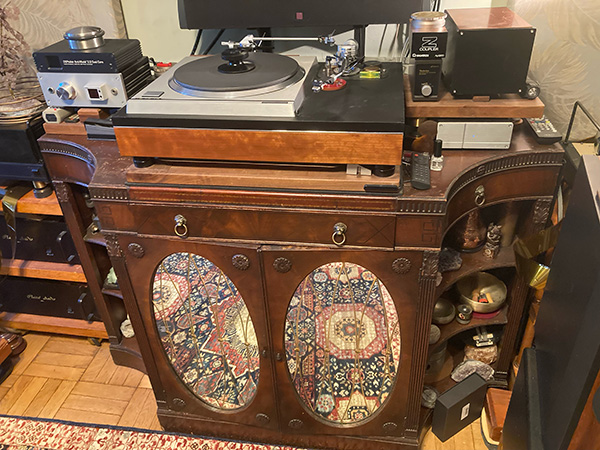
Richard Cirulnick's analog front-end. Note the Nagatron Z Coupler step-up transformer, right.
The Supex 900 was the first moving coil I ever bought, and I've never stopped appreciating how it changed my life. I haven't heard a 900 in years because I gave mine to Michael Trei for his cartridge museum. I was thrilled to hear Ben's, and with a Z Coupler no less.
Created in Japan by Yoshiaki Sugano, who later founded Koetsu, the Supex 900 kick-started high-end audio's second Golden Era by changing the way audiophiles thought their systems should sound. The 900 emphasized transient athletics, soundstage, and imaging over push, density, and immediacy.
In Ben's system, the Supex 900 played bright and exceedingly pure, showcasing rhythm energies and lightspeed transients. Powered by the Supex, Ben's Room One system presented a terse, highly descriptive analog that was easy to enjoy.
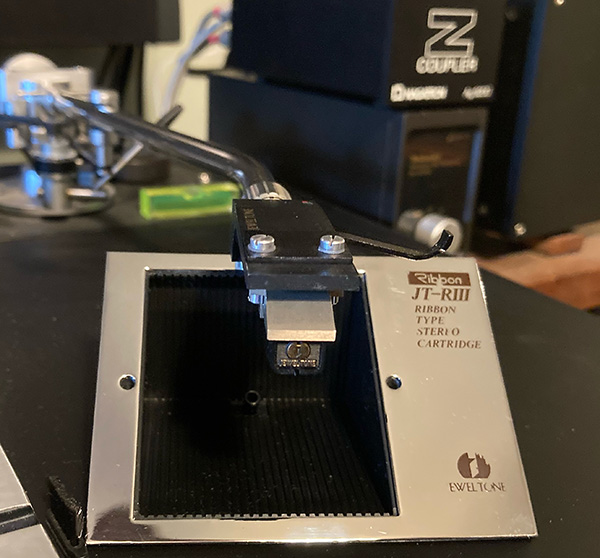
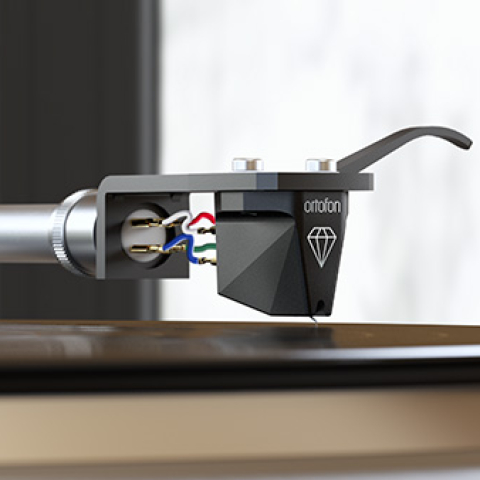
The Jeweltone JT-RIII ribbon phono cartridge.
In Richard I trust
Everybody has a resumé, but my friend Richard Cirulnick's is the rarest kind: It's fun to read. From 1981 to 2005, he owned that speed shop on Utica Avenue in East Flatbush, New York. After the speed shop, he worked at Quadrozzi Concrete in Far Rockaway, a scene I can imagine pretty well. Finally, he managed MTA bus-repair depots. He's retired now and devotes his time to searching the floating worlds of flea markets, thrift shops, and eBay. These searches feed his audio adventures, which include finding important turntables, tonearms, and cartridges and getting them up and running.
I come out of drag racing, art, and construction, so it was easy to picture Richard wearing a lab coat in a speed shop cleanroom full of Snap-on tools or in a bus-repair depot in the Bronx at three in the morning. Now I see him and his wife Audrey sitting on their couch together, noshing, while critiquing the sounds coming out of his painstakingly tuned stereo.
Richard and Audrey collect objects in scores of interesting categories. For example, the wall behind their bed is covered with dozens of old oil cans lined up in neat rows on narrow shelves. Audrey's a practicing artist, and the wall in front of their bed is filled with her latest black-and-white– glazed ceramic reliefs picturing classic nudes of women at their toilette.
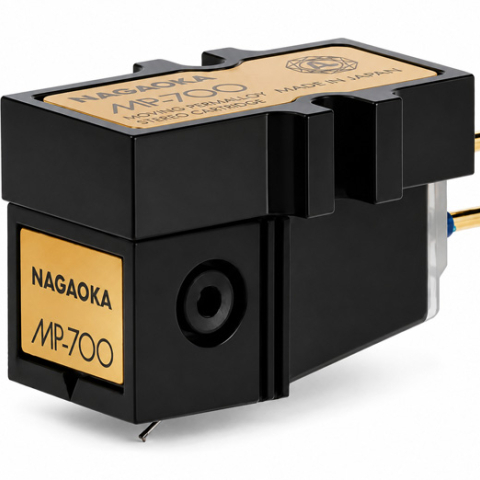
I've been itching to hear Richard's system. His analog front-end starts with an SP-10 MKII turntable equipped with a Sony PUA 1600 tonearm sporting a Nagaoka Jeweltone JT-RIII ribbon cartridge that puts out just 0.04mV! Hence the 1:100 step-up ratio of the Nagatron Ag9200 Z Coupler.
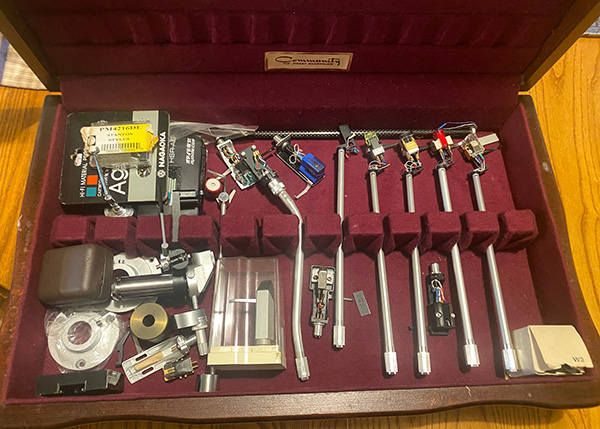
Richard's best silver
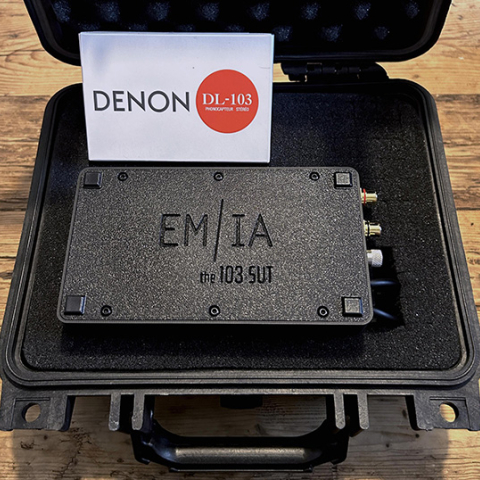
The second arm on the SP-10 is an Audio-Technica AT1100 for which Richard has seven different armtubes! He keeps them all lined up, cartridges mounted, in a silverware case lined with red velvet like the one my mother kept her best silver in. (See the photo above.) The AT1100 was sporting a Glanz MFG 610 LX moving-flux cartridge.
Richard's second 'table is an
Oracle Delphi Mk IV with an
SME V tonearm and an ELAC EMC-1 moving coil cartridge. His phono stages are an Audio Note Kit L3 and the Valab LCR. This is fantastic, pilgrimage-worthy analog.
Richard's amplification is a pair of
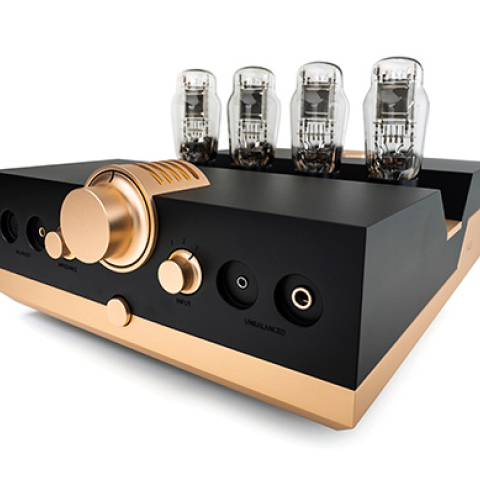
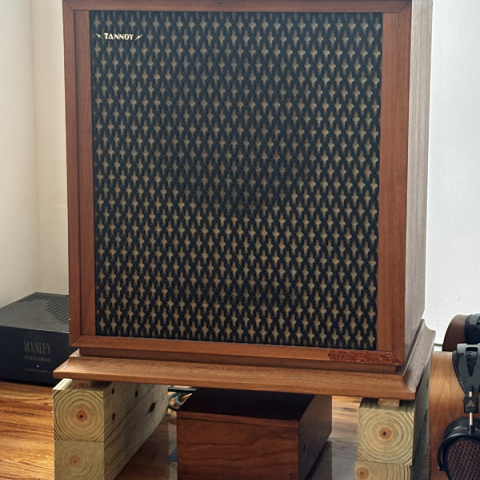
Woodside Electronics MA100 monoblock tube amps using a quad of Tungsol KT150 tubes. The speakers are a Madisound Klang & Ton NADA kit (footnote 4) supported by a distributed bass array using four REL Q201 subs.
Like Ben, Richard uses a Mutec MC3 audio interface with the 10MHz Reference 10 Master Clock. The output of the MC3 is connected to an Audio Note DAC 3.1x balanced, modified by Ben. The Audio Note DAC feeds a DIY Bent Audio TAP X autoformer volume control by Dave Slagle.
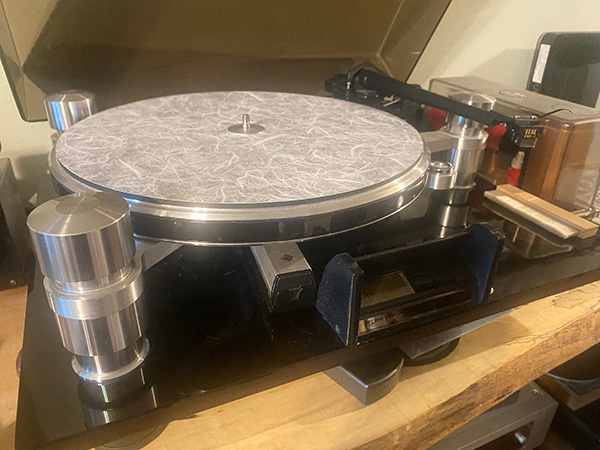
Richard's other analog front-end.
The sound in Richard and Audrey's living room was easy-flowing, glowing, transparent, and voluminous. It was uncolored in a way that made each disc sound like it should. Richard said he'd been assembling and fine-tuning this system for five years. I told him as I was leaving, "This is one of the top five or 10 systems I've ever heard."
As I was on my way out the door, Richard handed me a bag of moving magnet cartridges. "Which one should I try first?" I asked. "Start with the Empire 108," he answered. So I did.
Footnote 1: See highendaudiorepair.com.
Footnote 2: See wikipedia.org/wiki/quadrajet.
Footnote 3: Ben's digital front-end: A Beelink Mini PC running Plex Server and foobar2000; a Mutec MC3 + USB audio interface with a Reference 10 Master Clock upgraded to SE120 status; Audio Note DAC 5 Signature.
Footnote 4: See madisoundspeakerstore.com/2-way-speaker-kits/nada-2-way-klang-ton-kit-pair-using-illuminator/.