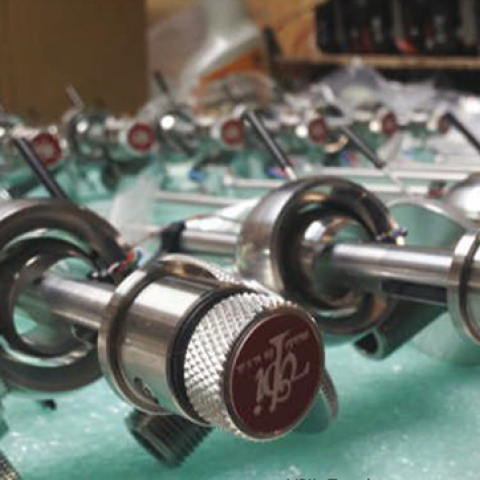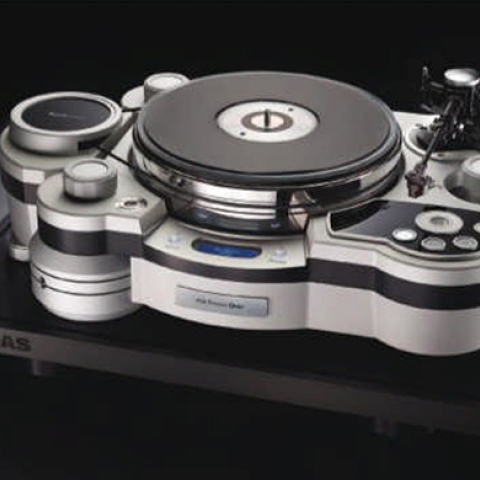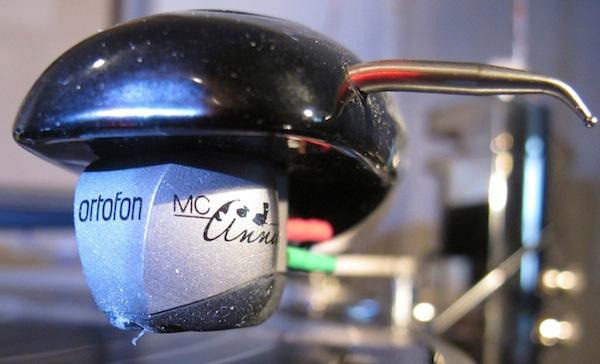
Ortofon's limited-edition MC A90 was the first phono cartridge made with selective laser melting (SLM). Using this technique, metallic powder is fused to build up, layer by layer, a specific shape. SLM allows the creation of complex constructions impossible to fabricate from a block of wood or metal using traditional machining techniques. What's more, it makes possible, in the individual layering, a precise control of variations in density that can result in a highly self-damped internal structure.
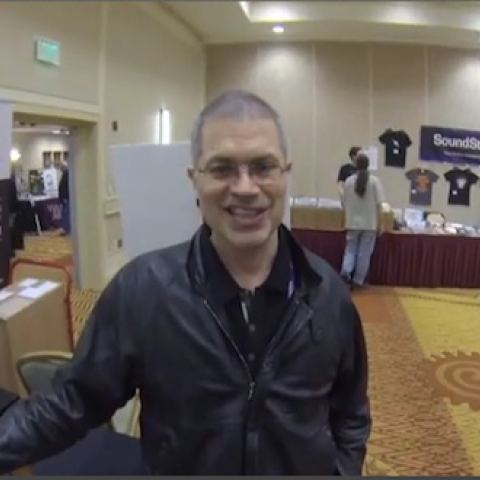
To demonstrate that last point at the 2009 Munich High End Show, Leif Johannsen, the MC A90's creator, dropped a conventional aluminum cartridge body on a hard linoleum floor. It struck the floor with a sustained ping, then bounced high enough that he could catch it without stooping. By contrast, a stainless-steel cartridge body made using SLM hit the floor with a barely audible tap—and stayed there.
Ortofon's sleek, minimalist MC A90 ($4200, reviewed in the September 2009 "Analog Corner") remains one of the most audacious and unusual-looking cartridges ever produced—one whose striking tonal neutrality must surely derive, at least in part, from its nonresonant, self-damped SLM carrier.
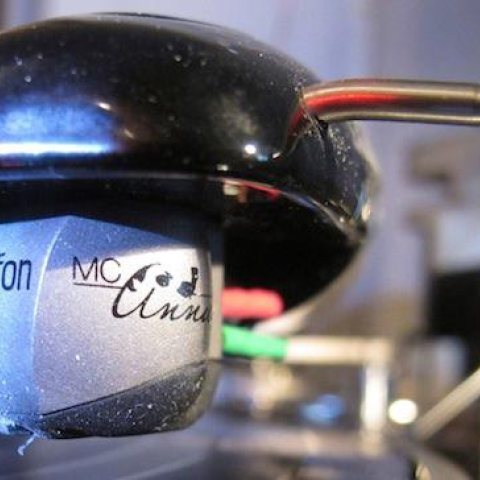
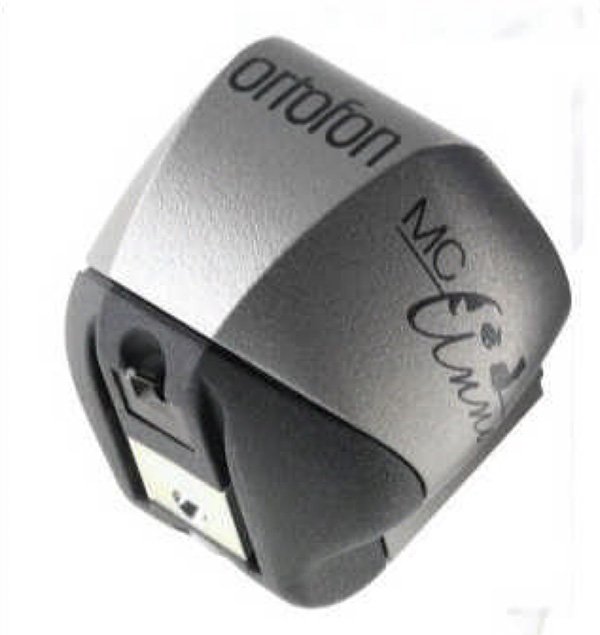
The MC Anna ($8499; footnote 1) is Ortofon's new flagship moving-coil cartridge, at more than twice the A90's price. Rather than reprise or update the A90's striking, exposed industrial design, Johannsen went in the opposite direction, this time using SLM to assemble particles of titanium. The Anna has a more conventional but still an unusually pudgy and curvaceous look, with much of its cantilever hidden safely underneath the body—the opposite of the A90's well-exposed cantilever. The Anna is named for an opera singer, many of whom are equally plumped out, though not this one: Russian soprano Anna Yuryevna Netrebko.
In November 2009, when I reviewed the MC A90, I thought it was the most tonally neutral transducer I'd ever heard. Ortofon's Replicant stylus is a radical cut, similar to a Geiger stylus profile, and thus closer than any other to the shape of the styli used to cut the original lacquers from which, ultimately, LPs are pressed. Unfortunately, if the MC A90 isn't precisely aligned, particularly in terms of stylus rake angle (SRA), its sound can be ragged and aggressive (SRA too high) or soft and polite (SRA too low)—and reviews in other publications have made both complaints.
Particulars: Ortofon has a patent pending for a new, "dramatically higher-efficiency magnet system" featuring optimized geometry of the magnet's neodymium and iron-cobalt elements, and said to produce "unprecedented consistency of the flux density within the system's air gap." Ortofon claims that this produces a more uniformly strong magnetic field that allows each coil to "see" the same flux density, regardless of the coil's position. The result, Ortofon claims, is the preservation, "to an overwhelming extent," of dynamics and impulse linearity.
The new magnet system has permitted Ortofon engineers to use a lightweight, polymer-based, nonmagnetic armature whose movement doesn't affect the magnetic field. This results, Ortofon claims, in yet another increase in the Anna's dynamic capabilities.
The new system's efficiency also means that the coil requires fewer turns of ultrapure, oxygen-free copper wire to achieve the desired output voltage, thus reducing to a minimum the moving system's mass. Lower mass means faster response time and greater tracking accuracy. Like the A90's, the Anna's cantilever is made of boron, and the radius of its nude Replicant stylus is r/R–5/100µm.
Specifications: Despite its motor's higher efficiency, the MC Anna's 0.2mV output is considerably lower than the MC A90's 0.27mV. It should be used only with the quietest phono preamplifiers capable of considerable gain; probably the best option is to use an appropriate step-up transformer.
Ortofon's specs for the MC Anna also indicate, at 1kHz, slightly less channel separation than the MC A90 (25dB vs more than 28dB), and slightly lower channel balance (0.5dB vs 0.2dB or lower). Even the Anna's claimed frequency response of 20Hz–20kHz, ±1.5dB, is slightly less flat than the A90's ±1dB. Trackability, at 315Hz at the recommended vertical down force (VTF) of 2.3gm (same as the A90), is 80µm vs the A90's 100µm, while the Anna's suspension compliance of 9µm/mN is considerably lower than the A90's 16µm/mN. The Anna's internal impedance of 6 ohms is slightly higher than the A90's 4 ohms. As you'd expect, the Anna's bulkier body results in considerably more mass than the A90's: 16gm vs 8gm. Considering the Anna's lower compliance, the added mass is a good idea, keeping the fundamental low-frequency response in the optimal region.
Perhaps some of the Anna's specs are simply more realistic and/or honest assessments of its measured performance than were the A90's of its. In any case, after spending a long time in bed with Anna, I found the differences insignificant in real-world terms. Despite the claimed 25dB of channel separation, the Anna produced generously wide, deep soundstages.
Controversy over the Replicant's allegedly brief lifespan has been all over the Internet forums. I found that if the A90 is set up correctly, with the recommended VTF of 2.3gm, and its stylus—and the LPs it tracks—are kept scrupulously clean, there's no reason that stylus shouldn't last at least 1000 hours. That's similar to the lifespan of any line-contact or other severely profiled stylus shape. A thousand hours is all you get? Yes—as with most styli.
I had my MC A90's stylus retipped (actually, an entire new motor assembly was installed in the original body) after at least 1000 hours, by which time I'd begun to notice, at the very beginning of LP sides, just a bit of noise in one channel that I couldn't hear with other cartridges. The cost of the service is considerable, a few thousand dollars, close to the A90's original price of $4200.
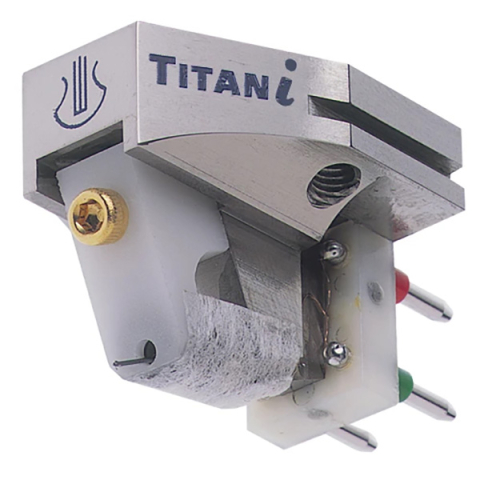
While some say that a worn stylus will tear up your records, the opposite is true, assuming proper setup and care. Before I sent my Lyra Titan i back to Lyra for retipping, I first sent it to Wally Malewicz, of WAM Engineering and Wally Phono Tools, who took some very good photos of the stylus through an optical microscopic. They showed very even wear that had resulted in a dulling of the stylus's sharp contours, not sharper edges that would damage the groove. This would produce less effective tracing (the correct word here, not tracking), and thus less retrieval of detail—the major benefit of extreme stylus profiles. While the deterioration might end up tearing up your bank account when you have the tip replaced, it shouldn't tear up your grooves.
 Life with Anna: very un–Ortofon-like: My first MC Anna arrived here around Thanksgiving 2011, shortly after the Lyra Atlas—an exciting time! Out of the box, the MC A90 had astonished me, and so did the Atlas. But something was wrong with Anna: She sounded soft, dull, and clearly not as intended. I shipped her back to Ortofon.
The problem turned out to be an incompatibility between the adhesives used and the elastomer of which the cartridge's damper is made. Ortofon makes this elastomer in-house, and supplies it and other such materials to manufacturers in other industries, many of them related to health. Evidently, however, this problem didn't affect every Anna that left the factory. I received e-mails from some very happy buyers, all of whom said their Annas were significantly better than the A90—as well they should be, at more than twice the price. I also heard from some folks whose Annas, like mine, had failed.
The second sample arrived. Looking at it through a microscope while setting it up, I noticed that the stylus's trailing edge—that is, the part of it that comes in contact with the groove—was convex instead of being chisel-flat. Perhaps some of the glue that secures the stylus in the cantilever had dripped . . . ?
I finished installing the Anna in my Continuum Audio Labs Cobra tonearm and did some listening. The results were enticing, particularly at the top of the audioband—the first sample hadn't had a top end—but it sounded as if this Anna would need a great deal of break-in before its sound truly opened up. Which meant that this second sample couldn't be 100% right either. I requested a third.
My experience with those first two samples was very unlike my past experiences with Ortofon products. I visited the Danish company a few years ago, while attending a Copenhagen Hi-Fi Show to give seminars in turntable setup, and found it to be a sophisticated, high-tech manufacturer capable of high volume and consistency in its machine-made lower-end cartridges, and of ultra-precision in its hand-made high-end models. (See this report on a later visit.)
My experience with the Annas was clearly an aberration, but I recommend you consider buying and learning how to use a digital microscope like the Dino-Lite AM313, so that when you buy an expensive cartridge you can be sure that what you've purchased lives up to what's promised. Under the microscope, the third Anna looked perfect, and its crosstalk and channel-balance measurements exceeded spec. However, like Anna Two, Anna Three sounded as if it would need a lot of break-in. Still, fresh out of the box, the third MC Anna's supple textural detail and microdynamics were obviously better than the MC A90's. However, this was tempered by a noticeable lack of transparency, and the Anna's inability to get under the surface of the familiar recordings I threw at it.
I just kept playing it. But I was happy to have, on my Kuzma 4Point tonearm, the Lyra Atlas, which by now was well broken in.
Life with Anna: very un–Ortofon-like: My first MC Anna arrived here around Thanksgiving 2011, shortly after the Lyra Atlas—an exciting time! Out of the box, the MC A90 had astonished me, and so did the Atlas. But something was wrong with Anna: She sounded soft, dull, and clearly not as intended. I shipped her back to Ortofon.
The problem turned out to be an incompatibility between the adhesives used and the elastomer of which the cartridge's damper is made. Ortofon makes this elastomer in-house, and supplies it and other such materials to manufacturers in other industries, many of them related to health. Evidently, however, this problem didn't affect every Anna that left the factory. I received e-mails from some very happy buyers, all of whom said their Annas were significantly better than the A90—as well they should be, at more than twice the price. I also heard from some folks whose Annas, like mine, had failed.
The second sample arrived. Looking at it through a microscope while setting it up, I noticed that the stylus's trailing edge—that is, the part of it that comes in contact with the groove—was convex instead of being chisel-flat. Perhaps some of the glue that secures the stylus in the cantilever had dripped . . . ?
I finished installing the Anna in my Continuum Audio Labs Cobra tonearm and did some listening. The results were enticing, particularly at the top of the audioband—the first sample hadn't had a top end—but it sounded as if this Anna would need a great deal of break-in before its sound truly opened up. Which meant that this second sample couldn't be 100% right either. I requested a third.
My experience with those first two samples was very unlike my past experiences with Ortofon products. I visited the Danish company a few years ago, while attending a Copenhagen Hi-Fi Show to give seminars in turntable setup, and found it to be a sophisticated, high-tech manufacturer capable of high volume and consistency in its machine-made lower-end cartridges, and of ultra-precision in its hand-made high-end models. (See this report on a later visit.)
My experience with the Annas was clearly an aberration, but I recommend you consider buying and learning how to use a digital microscope like the Dino-Lite AM313, so that when you buy an expensive cartridge you can be sure that what you've purchased lives up to what's promised. Under the microscope, the third Anna looked perfect, and its crosstalk and channel-balance measurements exceeded spec. However, like Anna Two, Anna Three sounded as if it would need a lot of break-in. Still, fresh out of the box, the third MC Anna's supple textural detail and microdynamics were obviously better than the MC A90's. However, this was tempered by a noticeable lack of transparency, and the Anna's inability to get under the surface of the familiar recordings I threw at it.
I just kept playing it. But I was happy to have, on my Kuzma 4Point tonearm, the Lyra Atlas, which by now was well broken in.
 Well worth the wait: Most cartridges need about 40 hours of break-in before the suspension has settled in and "dropped," at which point most require ca 1mm more of compensatory vertical tracking angle (VTA) to retain an SRA of 92°. My third sample of the MC Anna required almost 100 hours before its suspension dropped and I could fine-tune the VTA. But then, in its typically understated Danish way, it sounded nothing less than spectacular.
In contrast, my rebuilt MC A90 had sounded great out of the box (again), and got considerably better over time. Like the A90, the Anna was tonally well balanced, though I think the A90 is even more tonally neutral—which is why some people who want more va-va-voom, or a bit of "something" rather than nothing, don't cotton to it.
Rather than being "tuned" or damped, these two selective-laser-melted cartridges sounded entirely free of any resonances that might produce an obvious sonic signature—any sound describable as lively or polite or full or lean or whatever. (Though the Anna did have a tiny bit of something, which I'll describe shortly.) But while its tonal balance was remarkably similar to the A90's, the Anna's dynamic performance was in another league—the same league in which the Lyra Atlas plays.
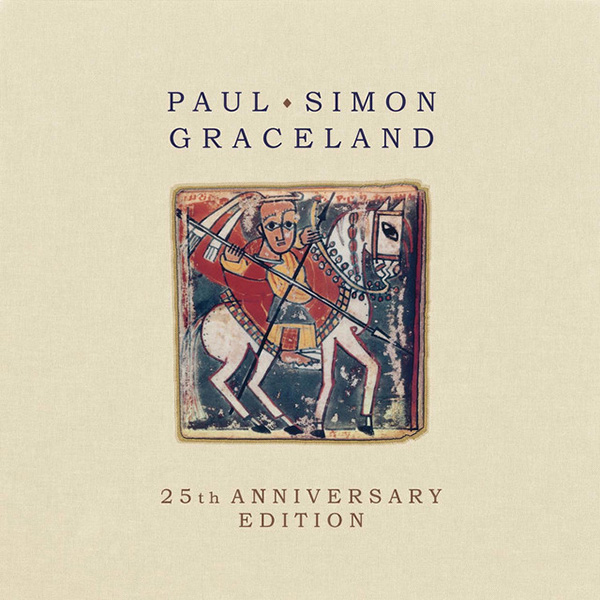
I remember John Atkinson's surprise when I used the Atlas to play him "Diamonds on the Soles of Her Shoes," from the 25th-anniversary reissue of Paul Simon's Graceland (LP, Columbia/Legacy 88691914721). As I recall, he said, "LPs are not supposed to have dynamics like that!" Well, they can. The Atlas reproduced them, and so did the MC Anna. (The MC A90 less so.)
The word refined is often used to describe upper-echelon cartridges, but it's often used interchangeably—and incorrectly, I think—with polite. "Polite" cartridges that have either a less-than-well-defined transient attack or a shelved top end may be fine for acoustic music, but they usually can't do electric rock. My problem with such designs, which can be pleasant to listen to, is that they turn the sharp shimmer and ring of cymbals, for instance, into the hissing of a truck's air brakes. Cymbals should ring and chime; when closely miked and struck hard, their sound should bite.
Well worth the wait: Most cartridges need about 40 hours of break-in before the suspension has settled in and "dropped," at which point most require ca 1mm more of compensatory vertical tracking angle (VTA) to retain an SRA of 92°. My third sample of the MC Anna required almost 100 hours before its suspension dropped and I could fine-tune the VTA. But then, in its typically understated Danish way, it sounded nothing less than spectacular.
In contrast, my rebuilt MC A90 had sounded great out of the box (again), and got considerably better over time. Like the A90, the Anna was tonally well balanced, though I think the A90 is even more tonally neutral—which is why some people who want more va-va-voom, or a bit of "something" rather than nothing, don't cotton to it.
Rather than being "tuned" or damped, these two selective-laser-melted cartridges sounded entirely free of any resonances that might produce an obvious sonic signature—any sound describable as lively or polite or full or lean or whatever. (Though the Anna did have a tiny bit of something, which I'll describe shortly.) But while its tonal balance was remarkably similar to the A90's, the Anna's dynamic performance was in another league—the same league in which the Lyra Atlas plays.
I remember John Atkinson's surprise when I used the Atlas to play him "Diamonds on the Soles of Her Shoes," from the 25th-anniversary reissue of Paul Simon's Graceland (LP, Columbia/Legacy 88691914721). As I recall, he said, "LPs are not supposed to have dynamics like that!" Well, they can. The Atlas reproduced them, and so did the MC Anna. (The MC A90 less so.)
The word refined is often used to describe upper-echelon cartridges, but it's often used interchangeably—and incorrectly, I think—with polite. "Polite" cartridges that have either a less-than-well-defined transient attack or a shelved top end may be fine for acoustic music, but they usually can't do electric rock. My problem with such designs, which can be pleasant to listen to, is that they turn the sharp shimmer and ring of cymbals, for instance, into the hissing of a truck's air brakes. Cymbals should ring and chime; when closely miked and struck hard, their sound should bite.
 One such recording would be the recent reissue of Thelonious Monk's Monk's Dream (LP, Columbia/Impex IMP 6014). It's somewhat drier than the original, with less room sound audible behind the instruments—as if the reverb were added during the original mastering and was not part of the actual sound of Columbia's 30th Street Studio. But Kevin Gray's new cut gets all the detail of Frankie Dunlop's closely miked drums and Charlie Rouse's aggressive, honkin' tenor sax.
The MC Anna's renderings of both instruments were hardly polite or like air brakes. Instead, the cartridge reproduced all of the edge and grit you'd want and expect from a top-tier cartridge playing this recording, with none of the euphonic smoothing that's often mischaracterized as refinement. The Anna put more meat on Dunlop's toms than did the Atlas—but the Atlas got more of his sticks striking the skins.
The Anna reproduced Monk's piano with a convincing balance of precise transient attack, woody sustain, and convincing decay up and down the keyboard, with dynamics at both ends of the scale that made me almost believe I was hearing a real piano in my room.
The Anna sounded truly refined. The images it produced were precisely drawn, compact, and cleanly defined, but not clinically so. Top-to-bottom transient attack was about as ideal as I've heard from a cartridge, neither too soft nor too sharp—though compared to the Atlas, transients in the midbass and below were slightly softer, which could make them more or less attractive, depending on the rest of your system. A system that's soft on bottom will probably like the Atlas better. A system that's too stiff in that region will probably like the Anna better.
One such recording would be the recent reissue of Thelonious Monk's Monk's Dream (LP, Columbia/Impex IMP 6014). It's somewhat drier than the original, with less room sound audible behind the instruments—as if the reverb were added during the original mastering and was not part of the actual sound of Columbia's 30th Street Studio. But Kevin Gray's new cut gets all the detail of Frankie Dunlop's closely miked drums and Charlie Rouse's aggressive, honkin' tenor sax.
The MC Anna's renderings of both instruments were hardly polite or like air brakes. Instead, the cartridge reproduced all of the edge and grit you'd want and expect from a top-tier cartridge playing this recording, with none of the euphonic smoothing that's often mischaracterized as refinement. The Anna put more meat on Dunlop's toms than did the Atlas—but the Atlas got more of his sticks striking the skins.
The Anna reproduced Monk's piano with a convincing balance of precise transient attack, woody sustain, and convincing decay up and down the keyboard, with dynamics at both ends of the scale that made me almost believe I was hearing a real piano in my room.
The Anna sounded truly refined. The images it produced were precisely drawn, compact, and cleanly defined, but not clinically so. Top-to-bottom transient attack was about as ideal as I've heard from a cartridge, neither too soft nor too sharp—though compared to the Atlas, transients in the midbass and below were slightly softer, which could make them more or less attractive, depending on the rest of your system. A system that's soft on bottom will probably like the Atlas better. A system that's too stiff in that region will probably like the Anna better.
 I compared my original Warner-7Arts edition of Van Morrison's Astral Weeks (LP, Warner-7Arts WS-1768) with a reissue, mastered by Kevin Gray and pressed by RTI, (LP, Warner Bros./Rhino 8122799071), which I'd reviewed in 2010. The reissue is far superior to the original, which itself is a sonic classic. I listened to both LPs with both the Lyra Atlas and the MC Anna, which helped clarify the Anna's personality.
Both cartridges pulled more genuine spatial, textural, and transient detail from this very familiar recording than I'd ever heard, but they did so slightly differently. The only area where they were remarkably similar, if not identical, was in their tonal balance from the upper midrange up. Morrison's voice sounded exactly the same through both.
The Atlas is anything but "clinical"—the usual negative Lyra rap—and the Anna was not polite on top. Where the two cartridges noticeably diverged was in the midrange and down, tonally and in terms of attack. The album's title song features an acoustic guitar rhythm track, an insistent, hard-plucked lead acoustic guitar (both, I believe, played by Jay Berliner), an intricately plucked double bass played mostly in the instrument's upper range, a string arrangement, and a shaker. Though the tonality was virtually identical through both cartridges, the Anna reproduced more detail in the shaker's sound. I could almost count the seeds with the Anna, less so with the Atlas—probably a result of that Replicant stylus's tracing abilities. The Atlas was very good, but not as detailed.
Through the Anna, I could more easily follow the rhythm guitar through the entire track: It was "there," but less so through the Atlas. But that's because the sound of the strummed guitar resides in the lower midrange/upper bass, where the Anna had an ever-so-slight warmth that nudged the instrument forward in the mix without losing any of its transient attack, body, or rhythmic punch.
In fact, the Atlas had more precise bass transient attack, and thus a tauter, more propulsive bottom end, while giving up some textural finesse—which is where the Anna bettered every other cartridge I've heard in my system. Still, both cartridges were better in that respect than the still-impressive MC A90 and most other cartridges I've heard. That's why that acoustic guitar was so much more obvious and prominent through the Anna. That doesn't necessarily mean that the Anna produced more actual detail of that strummed instrument's sound, just that its balance pushed that element to the fore.
I compared my original Warner-7Arts edition of Van Morrison's Astral Weeks (LP, Warner-7Arts WS-1768) with a reissue, mastered by Kevin Gray and pressed by RTI, (LP, Warner Bros./Rhino 8122799071), which I'd reviewed in 2010. The reissue is far superior to the original, which itself is a sonic classic. I listened to both LPs with both the Lyra Atlas and the MC Anna, which helped clarify the Anna's personality.
Both cartridges pulled more genuine spatial, textural, and transient detail from this very familiar recording than I'd ever heard, but they did so slightly differently. The only area where they were remarkably similar, if not identical, was in their tonal balance from the upper midrange up. Morrison's voice sounded exactly the same through both.
The Atlas is anything but "clinical"—the usual negative Lyra rap—and the Anna was not polite on top. Where the two cartridges noticeably diverged was in the midrange and down, tonally and in terms of attack. The album's title song features an acoustic guitar rhythm track, an insistent, hard-plucked lead acoustic guitar (both, I believe, played by Jay Berliner), an intricately plucked double bass played mostly in the instrument's upper range, a string arrangement, and a shaker. Though the tonality was virtually identical through both cartridges, the Anna reproduced more detail in the shaker's sound. I could almost count the seeds with the Anna, less so with the Atlas—probably a result of that Replicant stylus's tracing abilities. The Atlas was very good, but not as detailed.
Through the Anna, I could more easily follow the rhythm guitar through the entire track: It was "there," but less so through the Atlas. But that's because the sound of the strummed guitar resides in the lower midrange/upper bass, where the Anna had an ever-so-slight warmth that nudged the instrument forward in the mix without losing any of its transient attack, body, or rhythmic punch.
In fact, the Atlas had more precise bass transient attack, and thus a tauter, more propulsive bottom end, while giving up some textural finesse—which is where the Anna bettered every other cartridge I've heard in my system. Still, both cartridges were better in that respect than the still-impressive MC A90 and most other cartridges I've heard. That's why that acoustic guitar was so much more obvious and prominent through the Anna. That doesn't necessarily mean that the Anna produced more actual detail of that strummed instrument's sound, just that its balance pushed that element to the fore.
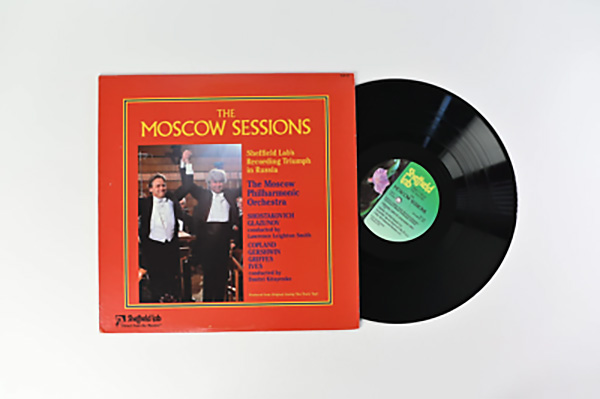 Space, Time, Attack, Decay: The MC Anna drew attacks precisely: not too fast and hard, not too soft and sluggish. Its sustain was generous, decays were graceful and extended. Images were solidly three-dimensional and, when appropriate to the recording, layered from front to back in a vast spatial array.
I probably hadn't played Sheffield Lab's The Moscow Sessions in at least a decade. In 1986, Lawrence Leighton Smith and Dmitri Kitayenko conducted the Moscow Philharmonic in works by Barber, Copland, Gershwin, Glazunov, Glinka, Griffes, Ives, Mussorgsky, Piston, Shostakovich, and Tchaikovsky, using Dave Wilson's (of Wilson Audio Specialties) Ultramaster open-reel recorder (3 LPs, Sheffield Lab SL10025-26-27). On hand for the recording were producer Lincoln Mayorga, plus Doug Sax, Stan Ricker, and Keith O. Johnson. The mixing console and microphones were custom-designed by Johnson, and the recording was minimally miked. Ah! Those were the days!
Through the MC Anna, all of the large hall's spatial glories were revealed on a vast, wide, deep, ultrastable stage, with an utterly effortless, nonmechanical, yet convincingly detailed and transparent sound filled with visceral instrumental textures and harmonic richness.
Despite its high resolution and ultradetail, the MC Anna coursed through the grooves with a preternatural quiet that diminished the effects of pops, clicks, and other vinyl blemishes, and its tracking abilities were outstanding.
Conclusions: An $8499 cartridge should generously give you everything. A few production hiccups aside, the ambitious MC Anna did, living up to its Ortofon heritage. Its dynamic capabilities were seemingly unlimited; its tonal balance was smooth and neutral from top to bottom, with only a slight but broad nudge in the lower mids and upper bass; and its textural abilities were second to those of no other cartridge I've heard. It's a graceful-sounding transducer with the liquidity to make solo violins sing almost sinfully, but with enough bite to make Seattle grunge crunch.
The MC Anna handled vocal sibilants cleanly, precisely, and smoothly—and was really good with female voices. Ortofon may have named its cartridge after Anna Netrebko, but Clearaudio, another cartridge maker, has reissued on vinyl Violetta, the soprano's album of arias and duets (with Rolando Villazón, Thomas Hampson, and others) from Verdi's La Traviata, recorded in 2005 at the Salzburg Grosses Festspielhaus, with the Vienna Philharmonic conducted by Carlo Rizzi (2 LPs, Deutsche Grammophon 002894776167). Through Anna, Anna sounds great!
Space, Time, Attack, Decay: The MC Anna drew attacks precisely: not too fast and hard, not too soft and sluggish. Its sustain was generous, decays were graceful and extended. Images were solidly three-dimensional and, when appropriate to the recording, layered from front to back in a vast spatial array.
I probably hadn't played Sheffield Lab's The Moscow Sessions in at least a decade. In 1986, Lawrence Leighton Smith and Dmitri Kitayenko conducted the Moscow Philharmonic in works by Barber, Copland, Gershwin, Glazunov, Glinka, Griffes, Ives, Mussorgsky, Piston, Shostakovich, and Tchaikovsky, using Dave Wilson's (of Wilson Audio Specialties) Ultramaster open-reel recorder (3 LPs, Sheffield Lab SL10025-26-27). On hand for the recording were producer Lincoln Mayorga, plus Doug Sax, Stan Ricker, and Keith O. Johnson. The mixing console and microphones were custom-designed by Johnson, and the recording was minimally miked. Ah! Those were the days!
Through the MC Anna, all of the large hall's spatial glories were revealed on a vast, wide, deep, ultrastable stage, with an utterly effortless, nonmechanical, yet convincingly detailed and transparent sound filled with visceral instrumental textures and harmonic richness.
Despite its high resolution and ultradetail, the MC Anna coursed through the grooves with a preternatural quiet that diminished the effects of pops, clicks, and other vinyl blemishes, and its tracking abilities were outstanding.
Conclusions: An $8499 cartridge should generously give you everything. A few production hiccups aside, the ambitious MC Anna did, living up to its Ortofon heritage. Its dynamic capabilities were seemingly unlimited; its tonal balance was smooth and neutral from top to bottom, with only a slight but broad nudge in the lower mids and upper bass; and its textural abilities were second to those of no other cartridge I've heard. It's a graceful-sounding transducer with the liquidity to make solo violins sing almost sinfully, but with enough bite to make Seattle grunge crunch.
The MC Anna handled vocal sibilants cleanly, precisely, and smoothly—and was really good with female voices. Ortofon may have named its cartridge after Anna Netrebko, but Clearaudio, another cartridge maker, has reissued on vinyl Violetta, the soprano's album of arias and duets (with Rolando Villazón, Thomas Hampson, and others) from Verdi's La Traviata, recorded in 2005 at the Salzburg Grosses Festspielhaus, with the Vienna Philharmonic conducted by Carlo Rizzi (2 LPs, Deutsche Grammophon 002894776167). Through Anna, Anna sounds great!
Footnote 1: Ortofon A/S, Stavangervej 9, DK-4900 Nakskov, Denmark. Tel: (45) 54-91-19-15. Fax: (45) 54-91-19-11 Web: www.ortofon.com. US distributor: Ortofon Inc., 500 Executive Blvd., Suite 102, Ossining, NY 10562. Tel: (914) 762-8646. Fax: (914) 762-8649. Web: www.ortofon.us.
Life with Anna: very un–Ortofon-like: My first MC Anna arrived here around Thanksgiving 2011, shortly after the Lyra Atlas—an exciting time! Out of the box, the MC A90 had astonished me, and so did the Atlas. But something was wrong with Anna: She sounded soft, dull, and clearly not as intended. I shipped her back to Ortofon.
Well worth the wait: Most cartridges need about 40 hours of break-in before the suspension has settled in and "dropped," at which point most require ca 1mm more of compensatory vertical tracking angle (VTA) to retain an SRA of 92°. My third sample of the MC Anna required almost 100 hours before its suspension dropped and I could fine-tune the VTA. But then, in its typically understated Danish way, it sounded nothing less than spectacular.
In contrast, my rebuilt MC A90 had sounded great out of the box (again), and got considerably better over time. Like the A90, the Anna was tonally well balanced, though I think the A90 is even more tonally neutral—which is why some people who want more va-va-voom, or a bit of "something" rather than nothing, don't cotton to it.
Rather than being "tuned" or damped, these two selective-laser-melted cartridges sounded entirely free of any resonances that might produce an obvious sonic signature—any sound describable as lively or polite or full or lean or whatever. (Though the Anna did have a tiny bit of something, which I'll describe shortly.) But while its tonal balance was remarkably similar to the A90's, the Anna's dynamic performance was in another league—the same league in which the Lyra Atlas plays.
One such recording would be the recent reissue of Thelonious Monk's Monk's Dream (LP, Columbia/Impex IMP 6014). It's somewhat drier than the original, with less room sound audible behind the instruments—as if the reverb were added during the original mastering and was not part of the actual sound of Columbia's 30th Street Studio. But Kevin Gray's new cut gets all the detail of Frankie Dunlop's closely miked drums and Charlie Rouse's aggressive, honkin' tenor sax.
I compared my original Warner-7Arts edition of Van Morrison's Astral Weeks (LP, Warner-7Arts WS-1768) with a reissue, mastered by Kevin Gray and pressed by RTI, (LP, Warner Bros./Rhino 8122799071), which I'd reviewed in 2010. The reissue is far superior to the original, which itself is a sonic classic. I listened to both LPs with both the Lyra Atlas and the MC Anna, which helped clarify the Anna's personality.
Both cartridges pulled more genuine spatial, textural, and transient detail from this very familiar recording than I'd ever heard, but they did so slightly differently. The only area where they were remarkably similar, if not identical, was in their tonal balance from the upper midrange up. Morrison's voice sounded exactly the same through both.
The Atlas is anything but "clinical"—the usual negative Lyra rap—and the Anna was not polite on top. Where the two cartridges noticeably diverged was in the midrange and down, tonally and in terms of attack. The album's title song features an acoustic guitar rhythm track, an insistent, hard-plucked lead acoustic guitar (both, I believe, played by Jay Berliner), an intricately plucked double bass played mostly in the instrument's upper range, a string arrangement, and a shaker. Though the tonality was virtually identical through both cartridges, the Anna reproduced more detail in the shaker's sound. I could almost count the seeds with the Anna, less so with the Atlas—probably a result of that Replicant stylus's tracing abilities. The Atlas was very good, but not as detailed.
Space, Time, Attack, Decay: The MC Anna drew attacks precisely: not too fast and hard, not too soft and sluggish. Its sustain was generous, decays were graceful and extended. Images were solidly three-dimensional and, when appropriate to the recording, layered from front to back in a vast spatial array.
Footnote 1: Ortofon A/S, Stavangervej 9, DK-4900 Nakskov, Denmark. Tel: (45) 54-91-19-15. Fax: (45) 54-91-19-11 Web: www.ortofon.com. US distributor: Ortofon Inc., 500 Executive Blvd., Suite 102, Ossining, NY 10562. Tel: (914) 762-8646. Fax: (914) 762-8649. Web: www.ortofon.us.