My first paid job working with turntables was during my final two years at boarding school in England. I joined up with my friend Martin, and we created a little partnership to provide music for the school's dances, or hops as we called them then and there. I owned a small PA system I had used for my punk band, The Ripchords, and Martin had a dual-deck, deejay-style console made by a company called FAL, with two turntables and a mixer. Martin also had a habit of keeping his music selections up to date, buying all the latest hit singles on vinyl. All we needed were a few disco lights and a fog machine and we were in business.
Martin's dual deejay deck was equipped with a pair of belt-drive BSR turntables, which seems almost laughable by today's standards, where direct-drive turntables are universally used for deejay work. Back then, we were just playing records, with no concept of beat matching, looping, scratching, or any of the other techniques being developed at the time by the hip-hop pioneers. Even in the legendary New York clubs like Studio 54, Paradise Garage, and David Mancuso's The Loft, they were playing records using belt-drive turntables. Meanwhile up in The Bronx and out in Brooklyn, a revolution was taking place.
These days, the birth of hip hop is usually narrowed down to a party on August 11, 1973, in The Bronx in New York City, where DJ Kool Herc introduced the concept of the breakbeat. Noticing that the party guests went wild during the brief drum breakdown section found midway through many soul and funk songs, he looked for a way to extend that moment of exhilaration by playing two copies of the record at the same time and repeating the drum break over and over. To pull off this effect seamlessly, he needed two turntables that could start very quickly while allowing him to turn the record backward without protest so he could find the exact starting point of the break as he switched from deck to deck. Belt-drive turntables, such as the Thorens TD-125s being used in the big clubs, were useless for this, but the new direct-drive turntables being introduced at the time were perfect, with ultrafast start times and no complaints when spun backwards.
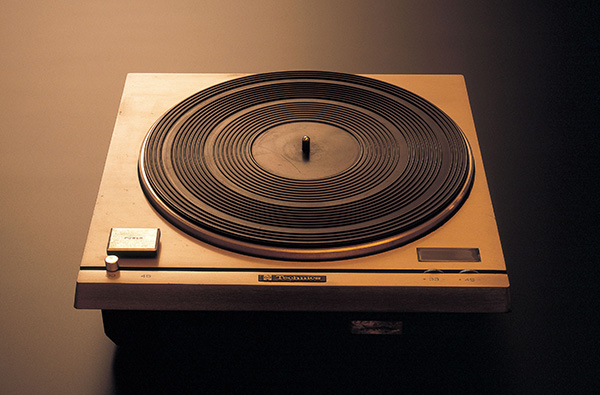
Technics introduced the world's first direct-drive turntable, the SP-10 (above), in 1970. It was aimed squarely at professional facilities like radio stations and not at deejays for club use. The SP-10 was a "motor unit"—just a spinning platter with no plinth or tonearm, which the user was expected to source elsewhere. It was designed to replace the big, clunky idler-drive turntables these facilities had been using for decades, such as the Gates CB-100 I wrote about in Spin Doctor #7. The SP-10 was revolutionary in this application, eliminating the susceptibility of idler drives to rumble while reducing maintenance needs.
The first time I went to my college's radio station, WAER 88.3 FM at Syracuse University, the on-air studio had a pair of SP-10s installed in the console, with Micro-Trak 303 tonearms and Stanton 500 cartridges. The old Gates and Russco idlers that had been used on air previously were relegated to some production rooms seen as less critical.
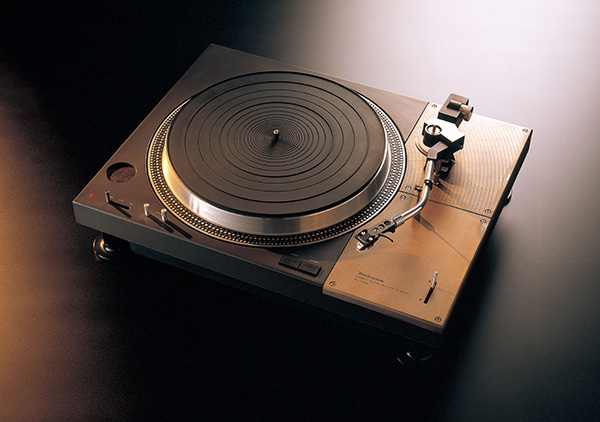 About a year after the SP-10 was launched, Technics brought direct-drive technology into the home market with the launch of the SL-1100 (above), an integrated turntable complete with plinth and tonearm. DJ Kool Herc used a pair of these at that 1973 party to premiere his new breakbeat style. The SL-1100 was the gateway that opened the door to an entirely new culture—but there was a catch. Its $330 price tag put it out of reach for many aspiring deejays, especially since you needed two of them. Adjusted for inflation, that's almost $5000 in today's money, just for a pair of record decks.
Fast-forward another year. Technics hit the sweet spot when it launched the SL-1200, with a price tag about 20% lower than the 1100's price. This is what swept in a whole new generation of hip-hop deejays, like Grandmaster Flash and Afrika Bambaataa. As with the SL-1100, Technics had designed the SL-1200 with home listening in mind and no special thought for the emerging deejay culture that was seeing them being used more and more in clubs. It wasn't until the mid-1970s, when some Technics staffers visited clubs in Chicago and saw their SL-1200s being used for deejay techniques like beat matching and scratching, that they figured they could modify the feature set to cater to that type of user. They consulted with a number of deejays and asked about their wish lists.
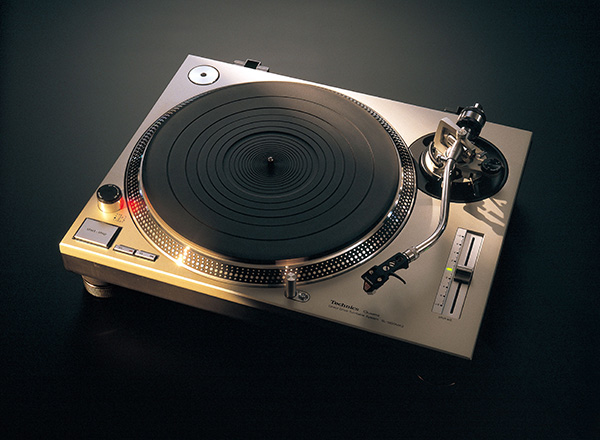
The results of this rethink arrived in 1979 in the form of the SL-1200MK2 (below). Among the changes were lower profile speed and power switches that would be harder to nudge accidentally during vigorous scratching sessions and a complete redesign of the pitch-control system, with a slider that allowed repeatable pitch changes, with quartz-locked speed accuracy when desired. A small pop-up cue light made it easier to see where you were dropping the stylus in a dark club, while a heavy rubber damping block filled the lower half of the chassis to reduce feedback from big speakers and the ear-splitting volume in most clubs.
The SL-1200MK2 quickly became the standard for all club deejays. Many copycats followed, but few could match the performance, reliability, and durability of the original.
About a year after the SP-10 was launched, Technics brought direct-drive technology into the home market with the launch of the SL-1100 (above), an integrated turntable complete with plinth and tonearm. DJ Kool Herc used a pair of these at that 1973 party to premiere his new breakbeat style. The SL-1100 was the gateway that opened the door to an entirely new culture—but there was a catch. Its $330 price tag put it out of reach for many aspiring deejays, especially since you needed two of them. Adjusted for inflation, that's almost $5000 in today's money, just for a pair of record decks.
Fast-forward another year. Technics hit the sweet spot when it launched the SL-1200, with a price tag about 20% lower than the 1100's price. This is what swept in a whole new generation of hip-hop deejays, like Grandmaster Flash and Afrika Bambaataa. As with the SL-1100, Technics had designed the SL-1200 with home listening in mind and no special thought for the emerging deejay culture that was seeing them being used more and more in clubs. It wasn't until the mid-1970s, when some Technics staffers visited clubs in Chicago and saw their SL-1200s being used for deejay techniques like beat matching and scratching, that they figured they could modify the feature set to cater to that type of user. They consulted with a number of deejays and asked about their wish lists.
The results of this rethink arrived in 1979 in the form of the SL-1200MK2 (below). Among the changes were lower profile speed and power switches that would be harder to nudge accidentally during vigorous scratching sessions and a complete redesign of the pitch-control system, with a slider that allowed repeatable pitch changes, with quartz-locked speed accuracy when desired. A small pop-up cue light made it easier to see where you were dropping the stylus in a dark club, while a heavy rubber damping block filled the lower half of the chassis to reduce feedback from big speakers and the ear-splitting volume in most clubs.
The SL-1200MK2 quickly became the standard for all club deejays. Many copycats followed, but few could match the performance, reliability, and durability of the original.
 Over the following 30-plus years, the SL-1200 became the best-selling high-performance turntable in history, with in excess of 3.5 million sold. Along the way, Technics also introduced variations and special editions, but the MK2 continued to chug along until 2010.
That was when Technics announced that all turntables would be discontinued and that the Technics brand was effectively dead. Wornout tooling was the reason most frequently cited, but whatever the reason, Technics's timing could hardly have been worse. The vinyl world had been at a low ebb through the late 1990s and early 2000s, but by 2010, the vinyl revival was starting to kick in, with increasingly buoyant sales of records and the equipment used to play them on. Technics had gotten their timing exactly wrong and missed a prime opportunity.
Four years later, in 2014, parent company Panasonic brought the Technics brand back to life, launching a range of high-end electronics and speakers reminiscent of their glory days at the IFA Show in Berlin. But where were the turntables?
Technics had always been thought of as a turntable company first, so a revived Technics with no turntables felt like bringing back Pontiac without cars.
Over decades, I have learned that patience is the key with Technics, and this was proved true a year later, at the next IFA show, where Technics exhibited a prototype of a new turntable alongside a bunch of tight-lipped representatives. Information was very limited. The turntable on display had no tonearm, no labeling, and no production date or price, yet it managed to get people talking, which I expect was the goal.
Speculation ran wild. Was it a new, super–high-end SP-10? Or were they picking up where they had left off five years earlier with the beloved SL-1200?
Over the following 30-plus years, the SL-1200 became the best-selling high-performance turntable in history, with in excess of 3.5 million sold. Along the way, Technics also introduced variations and special editions, but the MK2 continued to chug along until 2010.
That was when Technics announced that all turntables would be discontinued and that the Technics brand was effectively dead. Wornout tooling was the reason most frequently cited, but whatever the reason, Technics's timing could hardly have been worse. The vinyl world had been at a low ebb through the late 1990s and early 2000s, but by 2010, the vinyl revival was starting to kick in, with increasingly buoyant sales of records and the equipment used to play them on. Technics had gotten their timing exactly wrong and missed a prime opportunity.
Four years later, in 2014, parent company Panasonic brought the Technics brand back to life, launching a range of high-end electronics and speakers reminiscent of their glory days at the IFA Show in Berlin. But where were the turntables?
Technics had always been thought of as a turntable company first, so a revived Technics with no turntables felt like bringing back Pontiac without cars.
Over decades, I have learned that patience is the key with Technics, and this was proved true a year later, at the next IFA show, where Technics exhibited a prototype of a new turntable alongside a bunch of tight-lipped representatives. Information was very limited. The turntable on display had no tonearm, no labeling, and no production date or price, yet it managed to get people talking, which I expect was the goal.
Speculation ran wild. Was it a new, super–high-end SP-10? Or were they picking up where they had left off five years earlier with the beloved SL-1200?
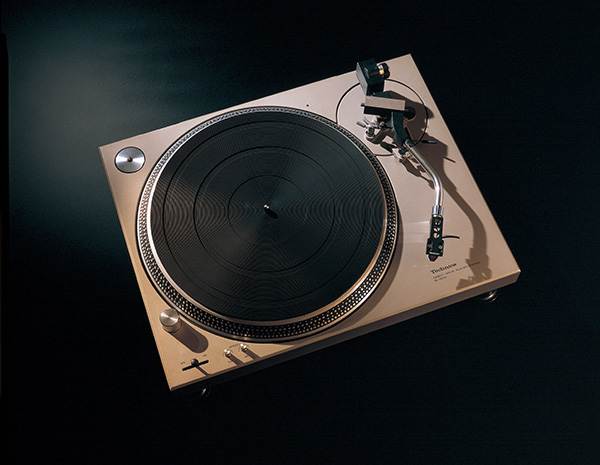 Another year of patience was required before, at the 2016 Consumer Electronics Show in Las Vegas, Technics unveiled the limited-edition SL-1200GAE—GAE stood for Grand Anniversary Edition—which was a maxed-out SL-1200. With its $4000 price tag, this new model was clearly aimed more at audiophile users than impoverished club deejays, yet it retained many deejay features including the pitch slider and pop-up cue light. After the limited run of 1200 individually numbered GAEs had been sold, Technics clarified its position: The turntable would continue to be produced in unlimited numbers, nearly unchanged, as the SL-1200G; the G stood for Grand Edition. For nearly a decade, sales were good, and everyone was happy.
In the years following the 1200GAE's debut, Technics expanded its lineup to include a more affordable model called the SL-1200GR, which I reviewed in 2018 for our sister magazine Sound & Vision, and the SL-1200MK7, the true successor of the MK2, priced and featured for turntablist style club deejays (footnote 1). Technics also brought back the "professional" motor unit as a new flagship, available both as the SP-10R (motor unit only) or combined with a plinth and tonearm as the SL-1000R.
2023 saw the launch of the SL-1200GR2, which introduced a radically new digital drive system for the direct-drive motor called ΔΣ-Drive (Delta Sigma Drive). A/B comparisons with the original SL-1200GR showed a notable improvement in firmness of pitch and dynamic attack. It seemed obvious that a SL-1200G2 with this feature added would follow soon. It never did. Instead, Technics launched the SL-1300C, a stripped-down model shorn of most of the deejay features, without a lot of the 1200G's heft and solidity. At least it included the ΔΣ-Drive system.
Another year of patience was required before, at the 2016 Consumer Electronics Show in Las Vegas, Technics unveiled the limited-edition SL-1200GAE—GAE stood for Grand Anniversary Edition—which was a maxed-out SL-1200. With its $4000 price tag, this new model was clearly aimed more at audiophile users than impoverished club deejays, yet it retained many deejay features including the pitch slider and pop-up cue light. After the limited run of 1200 individually numbered GAEs had been sold, Technics clarified its position: The turntable would continue to be produced in unlimited numbers, nearly unchanged, as the SL-1200G; the G stood for Grand Edition. For nearly a decade, sales were good, and everyone was happy.
In the years following the 1200GAE's debut, Technics expanded its lineup to include a more affordable model called the SL-1200GR, which I reviewed in 2018 for our sister magazine Sound & Vision, and the SL-1200MK7, the true successor of the MK2, priced and featured for turntablist style club deejays (footnote 1). Technics also brought back the "professional" motor unit as a new flagship, available both as the SP-10R (motor unit only) or combined with a plinth and tonearm as the SL-1000R.
2023 saw the launch of the SL-1200GR2, which introduced a radically new digital drive system for the direct-drive motor called ΔΣ-Drive (Delta Sigma Drive). A/B comparisons with the original SL-1200GR showed a notable improvement in firmness of pitch and dynamic attack. It seemed obvious that a SL-1200G2 with this feature added would follow soon. It never did. Instead, Technics launched the SL-1300C, a stripped-down model shorn of most of the deejay features, without a lot of the 1200G's heft and solidity. At least it included the ΔΣ-Drive system.
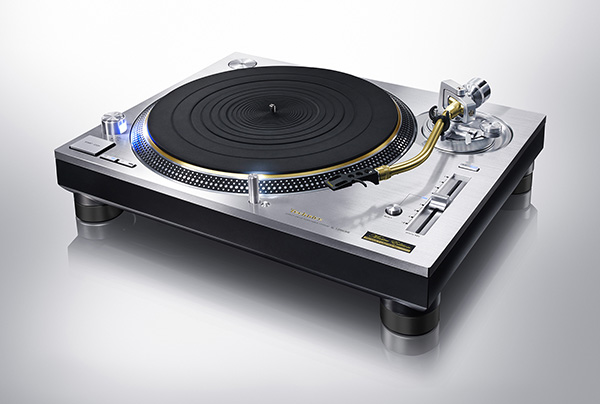 Finally, late last year, Technics announced a new model that seemed to have it all and more: The SL-1200GME (Grand Master Edition; above). It was basically a 1200G with ΔΣ-Drive, but with a few small improvements including revised damping feet. There were, however, two catches. As with the SL-1200GAE a decade earlier, the GME was to be a limited run with just 1200 available in silver (because that was the model number), and 1210 in black (ibid). More importantly, and not so obvious from the wording of the press release, this would be the swan song for the 1200G. Once the GME run was sold out, there would be no more 1200Gs, though the cheaper GR2 and MK7 would continue.
My question: Why? I'm getting those MK2 vibes, from 2010, all over again.
Over the last decade, I have probably set up more new 1200Gs than any other turntable model. So why kill it off?
Technics has a history of playing their cards close to the chest. For all I know, they could be getting ready to unveil the new SL-1201. Meanwhile, I'm scratching my head.
A pickup truck for the city
Finally, late last year, Technics announced a new model that seemed to have it all and more: The SL-1200GME (Grand Master Edition; above). It was basically a 1200G with ΔΣ-Drive, but with a few small improvements including revised damping feet. There were, however, two catches. As with the SL-1200GAE a decade earlier, the GME was to be a limited run with just 1200 available in silver (because that was the model number), and 1210 in black (ibid). More importantly, and not so obvious from the wording of the press release, this would be the swan song for the 1200G. Once the GME run was sold out, there would be no more 1200Gs, though the cheaper GR2 and MK7 would continue.
My question: Why? I'm getting those MK2 vibes, from 2010, all over again.
Over the last decade, I have probably set up more new 1200Gs than any other turntable model. So why kill it off?
Technics has a history of playing their cards close to the chest. For all I know, they could be getting ready to unveil the new SL-1201. Meanwhile, I'm scratching my head.
A pickup truck for the city
For most of my life, I have been a city boy. I was born in New York City and spent most of my childhood in and around great cities: Stockholm, London, Copenhagen, Brussels, Geneva. I returned to NYC in my 20s. Don't think that means I haven't had my share of country living. The boarding school I went to in England was way out in the sticks, and over the last 30 years, I have spent a lot of time with a group of friends in the Smoky Mountains, near where North Carolina, Georgia, and Tennessee meet. We bonded over a shared passion for buying, selling, fixing up, and tinkering with vintage Mercedes-Benz cars, a hobby that's much easier to pursue when you are in the spread-out living of the rural south than it is on the parking-challenged streets of Manhattan (footnote 2). All my friends down there have many cars—mostly Mercedes of course, but also a couple of task-specific vehicles including a proper pickup truck. Pickups are great for going to Home Depot to buy 50 bags of mulch, hauling trash to the dump, or towing a car trailer to bring a new vintage Mercedes home. They are utility vehicles par excellence. I have never owned a pickup truck—the closest I've come is two station wagons—but I have long owned what I think of as the turntable equivalent of a pickup truck: my Technics SL-1200MK2. This is my utility turntable. It sounds great, and it is so easy to use. If I need to test a cartridge, I can stick it in a headshell and have it sounding pretty good in five minutes. If I want to use my Miyajima Kotetu mono cartridge, or play 7" records using my special alignment that's optimized for them, I can be up and running in less than a minute.
Like many audiophiles, I had long dismissed the SL-1200MK2 as being for deejays only. Real turntables had to be belt drive and made by a tiny company in some remote village. I credit Kevin Barrett of KAB Electro Acoustics for persuading me otherwise. It happened during a visit to his home in New Jersey to hear his remarkable home-brew custom four-way horn speaker setup.
Kevin has long been an advocate of the SL-1200 as an audiophile turntable, and he has created several upgrades to wring maximum performance from the machine (footnote 3). Hearing his rig about 25 years ago convinced me to get an SL-1200MK2 for myself, and since then I have found it to be an extremely useful "pickup truck."
But now I have traded in the MK2 for a shiny new SL-1200GME, which, at $7600, is more than 10 times the price I paid for the MK2 back in the day. I justify it like this: It's like trading in your 1999 Ford F-150 XL for a new F-450 Super Duty Platinum with every luxury option available. Necessary? No, but clearly a luxury upgrade—one I wanted to take advantage of while it remained available.
I won't be reviewing the SL-1200GME. I will leave that in the capable hands of Tom Fine. I will say however that the new 'table is sounding superb for a "daily driver pickup truck" turntable. I will still be using more exotic turntables, like my Brinkmann LaGrange and SME 30/2, for more critical listening and reviewing duties, but when I just want to check out a record or quickly try some tweak, the GME does the trick.
The SME and Brinkmann are both phenomenal turntables. I have relied on them to extract superb performance from tonearms and cartridges. But setting up a cartridge for a quick listen isn't a feature of either: They require care and fine tuning. The Technics—the new one like the older one—will allow me to get a lot of work done quickly, but the new GME will allow me to do it with even more panache than my old 1200MK2, which has found a new home with a friend of a friend.
Footnote 1: Why the leap from 2 to 7? There were MK3–6 variants in various markets at different times, along with some other versions, but the MK2 was the classic, and it ran all the way until Technics discontinued turntables in 2010.
Footnote 2: Your humble editor, former owner of a 1983 MB 300TD, will also note that despite the altitude, that part of the country doesn't get that much snow and ice, which means less ice on the roads, which means less rust on these wonderful old cars.—Jim Austin Footnote 3: Tom Fine is also a fan.—Jim Austin
About a year after the SP-10 was launched, Technics brought direct-drive technology into the home market with the launch of the SL-1100 (above), an integrated turntable complete with plinth and tonearm. DJ Kool Herc used a pair of these at that 1973 party to premiere his new breakbeat style. The SL-1100 was the gateway that opened the door to an entirely new culture—but there was a catch. Its $330 price tag put it out of reach for many aspiring deejays, especially since you needed two of them. Adjusted for inflation, that's almost $5000 in today's money, just for a pair of record decks.
Over the following 30-plus years, the SL-1200 became the best-selling high-performance turntable in history, with in excess of 3.5 million sold. Along the way, Technics also introduced variations and special editions, but the MK2 continued to chug along until 2010.
That was when Technics announced that all turntables would be discontinued and that the Technics brand was effectively dead. Wornout tooling was the reason most frequently cited, but whatever the reason, Technics's timing could hardly have been worse. The vinyl world had been at a low ebb through the late 1990s and early 2000s, but by 2010, the vinyl revival was starting to kick in, with increasingly buoyant sales of records and the equipment used to play them on. Technics had gotten their timing exactly wrong and missed a prime opportunity.
Four years later, in 2014, parent company Panasonic brought the Technics brand back to life, launching a range of high-end electronics and speakers reminiscent of their glory days at the IFA Show in Berlin. But where were the turntables?
Another year of patience was required before, at the 2016 Consumer Electronics Show in Las Vegas, Technics unveiled the limited-edition SL-1200GAE—GAE stood for Grand Anniversary Edition—which was a maxed-out SL-1200. With its $4000 price tag, this new model was clearly aimed more at audiophile users than impoverished club deejays, yet it retained many deejay features including the pitch slider and pop-up cue light. After the limited run of 1200 individually numbered GAEs had been sold, Technics clarified its position: The turntable would continue to be produced in unlimited numbers, nearly unchanged, as the SL-1200G; the G stood for Grand Edition. For nearly a decade, sales were good, and everyone was happy.
In the years following the 1200GAE's debut, Technics expanded its lineup to include a more affordable model called the SL-1200GR, which I reviewed in 2018 for our sister magazine Sound & Vision, and the SL-1200MK7, the true successor of the MK2, priced and featured for turntablist style club deejays (footnote 1). Technics also brought back the "professional" motor unit as a new flagship, available both as the SP-10R (motor unit only) or combined with a plinth and tonearm as the SL-1000R.
2023 saw the launch of the SL-1200GR2, which introduced a radically new digital drive system for the direct-drive motor called ΔΣ-Drive (Delta Sigma Drive). A/B comparisons with the original SL-1200GR showed a notable improvement in firmness of pitch and dynamic attack. It seemed obvious that a SL-1200G2 with this feature added would follow soon. It never did. Instead, Technics launched the SL-1300C, a stripped-down model shorn of most of the deejay features, without a lot of the 1200G's heft and solidity. At least it included the ΔΣ-Drive system.
Finally, late last year, Technics announced a new model that seemed to have it all and more: The SL-1200GME (Grand Master Edition; above). It was basically a 1200G with ΔΣ-Drive, but with a few small improvements including revised damping feet. There were, however, two catches. As with the SL-1200GAE a decade earlier, the GME was to be a limited run with just 1200 available in silver (because that was the model number), and 1210 in black (ibid). More importantly, and not so obvious from the wording of the press release, this would be the swan song for the 1200G. Once the GME run was sold out, there would be no more 1200Gs, though the cheaper GR2 and MK7 would continue.
My question: Why? I'm getting those MK2 vibes, from 2010, all over again.
Over the last decade, I have probably set up more new 1200Gs than any other turntable model. So why kill it off?
Technics has a history of playing their cards close to the chest. For all I know, they could be getting ready to unveil the new SL-1201. Meanwhile, I'm scratching my head.
For most of my life, I have been a city boy. I was born in New York City and spent most of my childhood in and around great cities: Stockholm, London, Copenhagen, Brussels, Geneva. I returned to NYC in my 20s. Don't think that means I haven't had my share of country living. The boarding school I went to in England was way out in the sticks, and over the last 30 years, I have spent a lot of time with a group of friends in the Smoky Mountains, near where North Carolina, Georgia, and Tennessee meet. We bonded over a shared passion for buying, selling, fixing up, and tinkering with vintage Mercedes-Benz cars, a hobby that's much easier to pursue when you are in the spread-out living of the rural south than it is on the parking-challenged streets of Manhattan (footnote 2). All my friends down there have many cars—mostly Mercedes of course, but also a couple of task-specific vehicles including a proper pickup truck. Pickups are great for going to Home Depot to buy 50 bags of mulch, hauling trash to the dump, or towing a car trailer to bring a new vintage Mercedes home. They are utility vehicles par excellence. I have never owned a pickup truck—the closest I've come is two station wagons—but I have long owned what I think of as the turntable equivalent of a pickup truck: my Technics SL-1200MK2. This is my utility turntable. It sounds great, and it is so easy to use. If I need to test a cartridge, I can stick it in a headshell and have it sounding pretty good in five minutes. If I want to use my Miyajima Kotetu mono cartridge, or play 7" records using my special alignment that's optimized for them, I can be up and running in less than a minute.
Footnote 1: Why the leap from 2 to 7? There were MK3–6 variants in various markets at different times, along with some other versions, but the MK2 was the classic, and it ran all the way until Technics discontinued turntables in 2010.
Footnote 2: Your humble editor, former owner of a 1983 MB 300TD, will also note that despite the altitude, that part of the country doesn't get that much snow and ice, which means less ice on the roads, which means less rust on these wonderful old cars.—Jim Austin Footnote 3: Tom Fine is also a fan.—Jim Austin