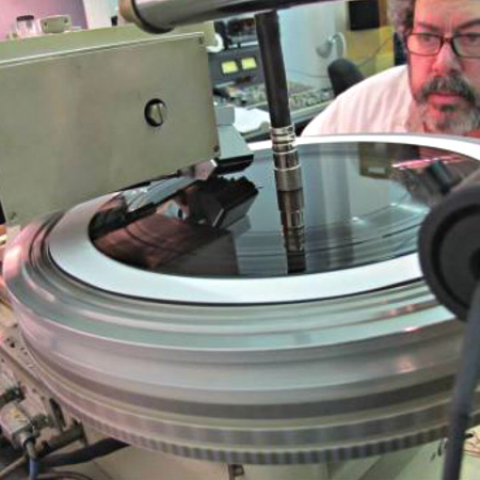
Shortly after the July 2013 issue of Stereophile hit the newsstands, I received an e-mail from audio restoration expert Doug Pomeroy, who specializes in the digital preservation of disc pressing metal parts, acetates, and 78s. (For an example of his excellent work, see www.nytimes.com/2010/08/17/arts/music/17jazz.html?pagewanted=all&_r=0.)
I first spoke with Pomeroy in 2001, for a story about digital audio published in a Village Voice music supplement. His and my opinions about digital sound couldn't be more divergent. Pomeroy's experience dwarfs mine, but I haven't budged from my opinions about digital in the 12 years since.
I'll give you a quick example why: I just played 24-bit/96kHz files of Tom Waits's Bad As Me as on a very expensive and superb-sounding digital playback system I'm reviewing, then played the 180gm LP (Anti- 87151-1), mastered by Bernie Grundman.
I don't care that it was recorded digitally, then mastered to LP from the same 24/96 files, and I don't care if the vinyl suffers "euphonic colorations—it sounded much better, and drew me into the music as the files did not. I heard image three-dimensionality and instruments that were harmonically fully fleshed out, in a mix that, via the files, sailed into the silvery backwash. If that's a result of "euphonic colorations," bring 'em on.
 Back to the Story
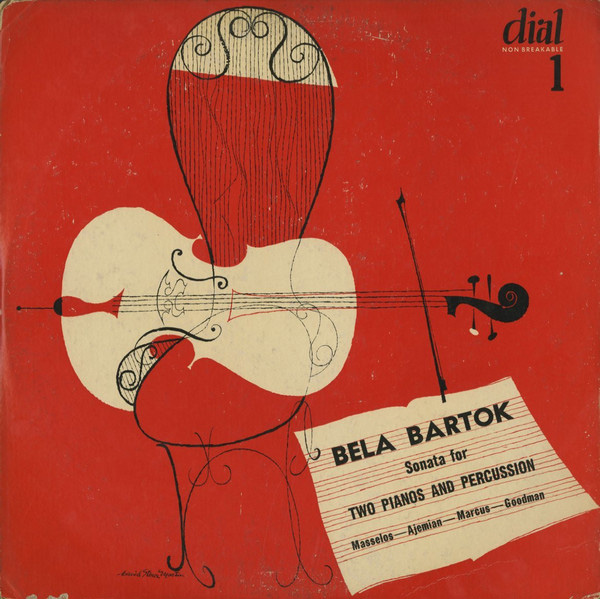
Pomeroy had read my "The Power of Vinyl" column, in which I surmised that Dial #1, a recording of Bartók's Sonata for Two Pianos, was probably not the same Dial label that had issued Charlie Parker 78s in the 1940s. I couldn't find anything online connecting what I thought were two separate labels of the same name, but wouldn't you know it, "Beyond Bebop: Dial Records and the Library of Contemporary Classics," a conference paper by D.J. Hoek, head of the Northwestern University Music Library, published in the Spring 2013 issue of the ARSC Journal (the publication of the Association for Recorded Sound Collections), provided the answer.
In his e-mail, Pomeroy explained that after Parker left Dial to sign with Savoy Records, Dial owner Ross Russell decided to "go classical and enlisted the cooperation of Schoenberg, Stravinsky, Cage and others." If you were going to "go classical" in the mid-20th century, could you imagine a better group to enlist? Pomeroy offered to send the issue of ARSC Journal containing the story, and I accepted. The paper was as thorough as you'd expect from an academic: meticulously annotated and footnoted, it included recording information not found on the record jacket.
The Bartók was recorded July 29, 1949, at WOR studios, in New York City, by engineer Doug Hawkins, a Juilliard graduate who had engineered all of the label's jazz releases. Russell cared about how his records sounded.
Dial's 19-LP Library of Contemporary Classics included works by Schoenberg, Berg, Webern, Hovhaness, Stravinsky, and Cage. Stravinsky was already signed to Columbia, but in those earliest days of the LP, Columbia Records' Goddard Lieberson restricted the number of releases of the composer's work, so Stravinsky moonlighted on Dial.
Russell's relationship with Schoenberg was "stormy," to say the least, but his managing to convince Cage to record was a real coup. Cage, who preferred to play his music for family and friends, was so happy with Hawkins's engineering that he's quoted on the jacket as having said, "Hawkins is actually recording perfume!"
Russell, who died in 2000, said in 1995 of the Library of Contemporary Classics, "The recordings [for] the most part received splendid reviews. They didn't sell and the project was not a success." Will the current recording scene produce such a rich historical tapestry?
 DSA Phono II phono preamplifier
Dynamic Sound Associates (DSA; footnote 1) is a one-man operation owned and operated by Douglas Hurlburt, a Naples, Florida, resident whose background includes a master's degree in solid-state physics and a PhD in electrical engineering. While an undergraduate at Johns Hopkins University, Hurlburt worked in the acoustic laboratory at the National Bureau of Standards, which he says was staffed by audiophiles. That's where he began learning about circuit design, a field in which, despite his degrees, he claims to be self-taught.
Hurlburt's real audiophile training began in high school, when he built and heavily modified a Heathkit amp based on the 6L6 tube. In college he built his own amp from scratch using a published Dynaco circuit diagram, as well as a tubed preamp based on Stu Hegeman's design for the Harman/Kardon Citation, which he modified, separating the phono stage so that it could be placed closer to the turntable. Years later, Hurlburt designed and built a 125W, class-A, direct-coupled, FET-based power amplifier.
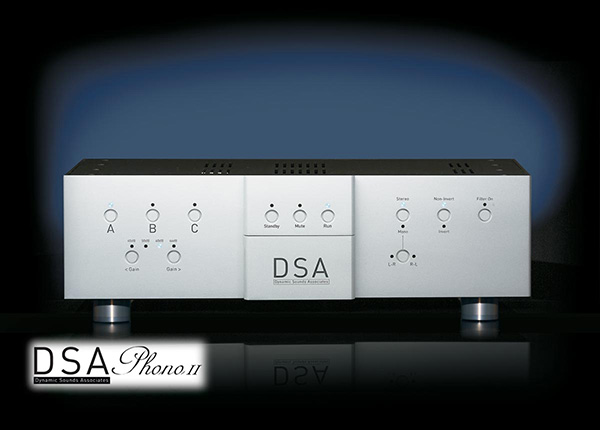
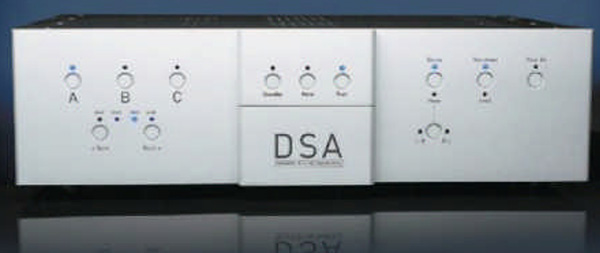
The circuitry of the Phono II ($12,000) is similar to that of its predecessor, the Phono-One, but the new model has a vastly enhanced feature set that includes three XLR/RCA MM/MC inputs, each independently adjustable on the front panel for resistive or capacitive loading. Six loading choices, with additive capabilities, are offered, plus, on input A only, a seventh option allows your resistive choice via circuit board sockets. There are four gain levels (40, 50, 60, 66dB), as well as pushbuttons for Mono, Polarity Invert, high-pass filter (rumble), and L–R/R–L. This last can be used to approximate azimuth setting—but, as the instructions point out, this difference method is not the same as minimizing crosstalk, which is a more accurate method. In short, the Phono II is a full-function phono preamplifier that will be especially useful if you have multiple tonearms and/or turntables.
Each of the four all-FET gain stages, (the final three of which operate in differential mode), uses internal feedback, with passive RIAA equalization divided between the input and second stage and the second and third stages. The dual-mono design uses no global feedback and no step-up transformers—if you don't like step-ups but you need a lot of gain, this one might be for you.
The Phono II's output stage employs a separate class-A amplifier for each polarity of the amplified signal, and its fully regulated supply voltages are powered independently of the gain-stage voltage rails. The DSA is claimed to output more than 20V peak–peak without clipping, and produce 30mA of drive current.
When I spoke with Hurlburt, he emphasized that, despite the plethora of switches, inputs, and loading options, his design does not in any way sacrifice signal purity. All of the switching and routing is done via logic-controlled relays. Signal paths have been kept very short, with boards located next to their functions, and Hurlburt has made sure to keep the lengths of wires in both channels identical, even when the physical distances those traces must traverse slightly differ.
Hurlburt sources his "stuffed" boards from one company and his chassis from another, and assembles, tests, and burns in each unit at home.
Should his volume of sales increase, Hurlburt is prepared to move DSA out of his home. Considering the $12,000 price of admission, it's unlikely that an assembly line will be needed, even under the best of circumstances—but I bet Mrs. Hurlburt wouldn't mind his outsourcing the construction of the Phono II.
Use and Sound: Connecting, configuring, and using the DSA Phono II was a pleasure, with one exception: its five blue LEDs are bright—too bright, particularly if the preamp is placed level with your head when you're seated in the listening chair. The glare obscures adjacent button functionality, though it doesn't take long to learn what each button does.
The sound of this all-FET design was fast, fast, fast—and transparent. If your taste leans toward the tubey and rich, you might find the DSA Phono II on the overanalytical side, though I think it's among the more neutral-sounding phono preamps I've yet encountered.
The Phono II's high-frequency performance was "crystalline" without being edgy or glary. Transient performance was precise without accentuating leading-edge definition. Because of the speed and extension, cartridge loading must be done with great care.
The fast, limitless extension on top could so draw the attention that you might be led to think that bass is shortchanged, but try Daft Punk's sonically spectacular Random Access Memories (LP, Columbia 88883716861), recorded using real instruments and, some say, on analog tape (I'm trying to get the real story). The bass extension was full-bodied and well extended, with visceral physical impact. The DSA left nothing on the table at low frequencies through the Wilson Alexandria XLF speakers.
As the company's name implies, the Dynamic Sound Associates Phono II was among the most dynamic, if not the most dynamically expressive phono preamps I've yet heard, particularly on the bottom.
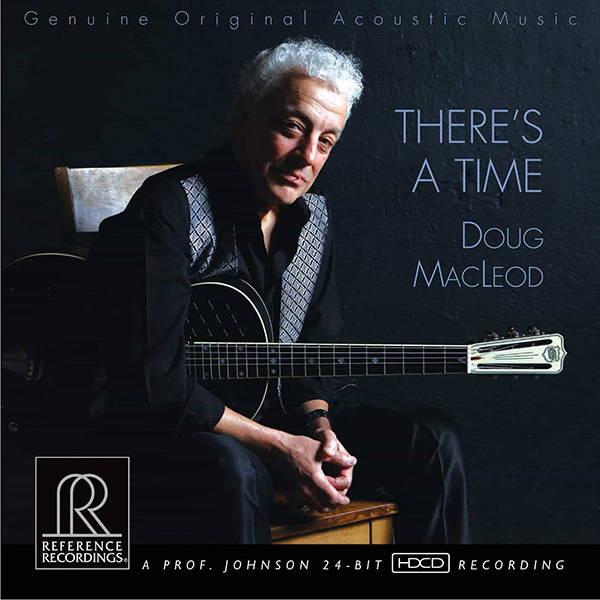 With the right cartridge—one that's not too analytical or bright in its own right—the DSA could be a real cream puff. For instance, the half-speed-mastered edition of Doug MacLeod's There's a Time (two 45rpm LPs, Reference Recordings Mastercuts RM-2507) sounded positively rich and full-bodied in the mids via the Miyajima Labs Takumi cartridge (see below). This high-resolution digital recording, recorded live by Keith O. Johnson at Skywalker Ranch, is as spacious and deep as Johnson's classical recordings for Reference, and the DSA reproduced a soundstage of appropriate width and depth. In "Ghost," MacLeod's tapping foot, well down in level, produced subtle, deep, concentrated pulses that convincingly reverberated and settled across the stage. Used with the Miyajima Takumi ($1800), the Phono II could never be accused of being bass shy or lacking bass expressiveness—or of midrange thinness, for that matter. It's not the fastest cartridge on the track, either, and the DSA didn't speed it up or produce false edge definition on top.
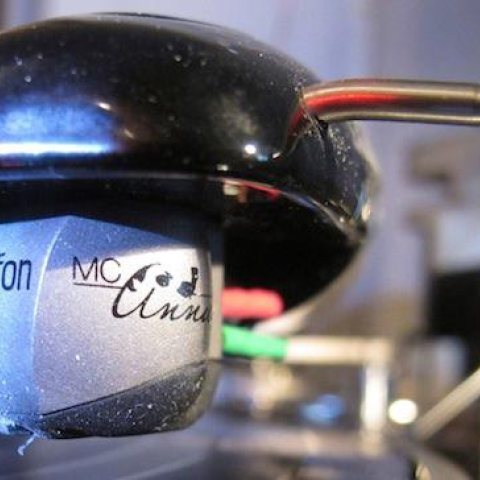
Switching to the more-than-five-times-as-expensive Ortofon Anna that I reviewed in May ($8499) (easy to do on this versatile phono pre!) produced greater transparency, more space from front to back and from side to side, more air around voices and instruments, and even more bottom-end weight with no loss of low-frequency authority—but the Takumi has a sonic "direct connection" to the music that seems unique to Miyajima Labs cartridges.
Switching cartridges again, this time to the Stein Aventurin 6 Mk.2 ($6000; see review below), produced another completely different sonic picture, one that was fast, lively, precise, superdetailed, and somewhat leaner than with either of the other two cartridges. My cartridge swapping led me to conclude that the DSA imparts very little, if any, of its own character to the cartridge. Still, if I had to describe its character, I would have to call it "transistory"—which is, of course, the kind of product it is.
Because of noise problems, Douglas Hurlburt discourages using the 66dB gain setting unless it's absolutely necessary. The 0.2mV-output Miyajima Takumi and 0.23mV Ortofon Anna required 60dB of gain; sitting in my listening seat, I heard no hiss at normal volume levels. If those cartridges didn't require the 66dB setting, only the very lowest of the low-output cartridges would. That's where step-up transformers are a necessity, in my opinion.
However, when I put my ear next to a speaker, I heard another kind of noise, a quite, midrange-rich whirring that sounded like a distant machine shop—less like pink noise than purple noise. I don't know what it was, but it was so far in the background that I didn't consider it a major problem (though you might). Of somewhat greater concern was the Phono II's willingness to pass along line impulses—such as the fairly loud pop I heard every time my central air-conditioner switched on.
A bigger problem was this oddity: When I used the Stein Aventurin 6 cartridge, which uses a Benz LP motor—nothing exotic—for some reason, the motor of my Continuum Audio Lab Caliburn turntable, located more than 3' away (its computerized motor controller is a bit closer), produced through the speakers a whirring noise that was clearly speed related. I've had the Caliburn for seven years now and had never heard anything like that. (I investigated this further in a review published on AnalogPlanet.com)
Those burps aside, the DSA Phono II was an accomplished performer: tonally neutral, fast, well extended, transparent, superclean, ultradynamic, and superbly detailed. Its top-end performance was addictively open and transparent, with no hint of glare, grain, or glaze. In the attack/sustain/decay department, the Phono II was fast, precise, and clean on the attack, a bit less than fully generous with sustain and decay. Even properly loaded strings may be a bit less lustrous than some might like.
But overall, if you don't like what you're hearing from the DSA Phono II, lay most of the blame on your cartridge or how it's been set up.
With the right cartridge—one that's not too analytical or bright in its own right—the DSA could be a real cream puff. For instance, the half-speed-mastered edition of Doug MacLeod's There's a Time (two 45rpm LPs, Reference Recordings Mastercuts RM-2507) sounded positively rich and full-bodied in the mids via the Miyajima Labs Takumi cartridge (see below). This high-resolution digital recording, recorded live by Keith O. Johnson at Skywalker Ranch, is as spacious and deep as Johnson's classical recordings for Reference, and the DSA reproduced a soundstage of appropriate width and depth. In "Ghost," MacLeod's tapping foot, well down in level, produced subtle, deep, concentrated pulses that convincingly reverberated and settled across the stage. Used with the Miyajima Takumi ($1800), the Phono II could never be accused of being bass shy or lacking bass expressiveness—or of midrange thinness, for that matter. It's not the fastest cartridge on the track, either, and the DSA didn't speed it up or produce false edge definition on top.
Switching to the more-than-five-times-as-expensive Ortofon Anna that I reviewed in May ($8499) (easy to do on this versatile phono pre!) produced greater transparency, more space from front to back and from side to side, more air around voices and instruments, and even more bottom-end weight with no loss of low-frequency authority—but the Takumi has a sonic "direct connection" to the music that seems unique to Miyajima Labs cartridges.
Switching cartridges again, this time to the Stein Aventurin 6 Mk.2 ($6000; see review below), produced another completely different sonic picture, one that was fast, lively, precise, superdetailed, and somewhat leaner than with either of the other two cartridges. My cartridge swapping led me to conclude that the DSA imparts very little, if any, of its own character to the cartridge. Still, if I had to describe its character, I would have to call it "transistory"—which is, of course, the kind of product it is.
Because of noise problems, Douglas Hurlburt discourages using the 66dB gain setting unless it's absolutely necessary. The 0.2mV-output Miyajima Takumi and 0.23mV Ortofon Anna required 60dB of gain; sitting in my listening seat, I heard no hiss at normal volume levels. If those cartridges didn't require the 66dB setting, only the very lowest of the low-output cartridges would. That's where step-up transformers are a necessity, in my opinion.
However, when I put my ear next to a speaker, I heard another kind of noise, a quite, midrange-rich whirring that sounded like a distant machine shop—less like pink noise than purple noise. I don't know what it was, but it was so far in the background that I didn't consider it a major problem (though you might). Of somewhat greater concern was the Phono II's willingness to pass along line impulses—such as the fairly loud pop I heard every time my central air-conditioner switched on.
A bigger problem was this oddity: When I used the Stein Aventurin 6 cartridge, which uses a Benz LP motor—nothing exotic—for some reason, the motor of my Continuum Audio Lab Caliburn turntable, located more than 3' away (its computerized motor controller is a bit closer), produced through the speakers a whirring noise that was clearly speed related. I've had the Caliburn for seven years now and had never heard anything like that. (I investigated this further in a review published on AnalogPlanet.com)
Those burps aside, the DSA Phono II was an accomplished performer: tonally neutral, fast, well extended, transparent, superclean, ultradynamic, and superbly detailed. Its top-end performance was addictively open and transparent, with no hint of glare, grain, or glaze. In the attack/sustain/decay department, the Phono II was fast, precise, and clean on the attack, a bit less than fully generous with sustain and decay. Even properly loaded strings may be a bit less lustrous than some might like.
But overall, if you don't like what you're hearing from the DSA Phono II, lay most of the blame on your cartridge or how it's been set up.
 Stein Music Aventurin 6 Mk.2 MC phono cartridge
Holger Stein, of Stein Music (footnote 2), last year introduced the Aventurin 6 phono cartridge, and brought one over from Germany for me. But because of its bulky, cantilever-obscuring body, I decided not to review it. If you can't precisely align a cartridge, what's the point? I did listen to it, though, and the results were beyond promising. They were startling. The Aventurin 6 is based on a Benz LP-S motor made in Switzerland. The Benz LP-S that I reviewed back in the day had a pleasing but laid-back temperament well suited to classical music, perhaps, but not to rock. What I heard from the original Aventurin 6 was anything but laid-back.
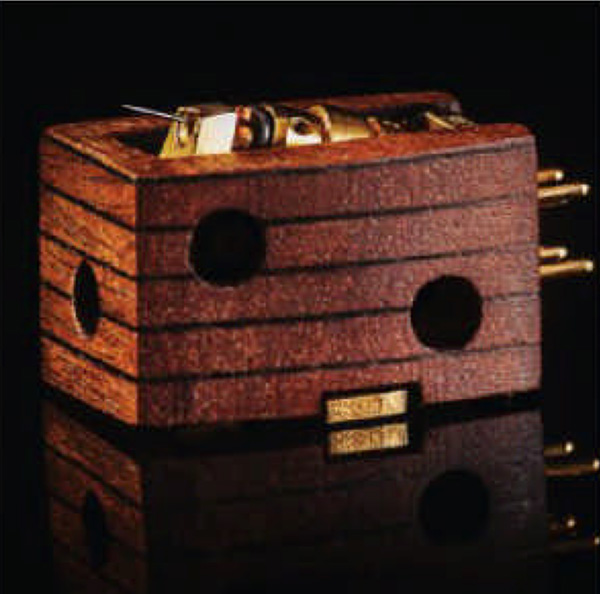
Stein's revision, the Aventurin 6 Mk.2, retains the boxy body, now sculpted to ease alignment. Stein puts the Benz LP-S motor in an open-bottomed body made of layers of mahogany and carbon fiber and coated with his own Maestro lacquer.
A cast (not machined), tapped frame and base plate of gold-plated bronze interfaces with the headshell, though all of what Stein has done probably contributes to a synergy that has produced a Benz LP-S that sounds only somewhat like a Benz LP-S. The Benz LP-S has a brass housing and a thin nickel subplate interface. Stein also performs a few tweaks he doesn't describe. The Aventurin 6 Mk.2 retails in America for $6000, or $1000 more than an LP-S.
The Benz LP-S motor has a solid boron cantilever and a MicroRidge stylus, a coil wound on a ruby former, an output voltage of 0.32mV at 3.54cm/s, and an internal impedance of 38 ohms. The moderate-compliance cartridge weighs 11.5gm (the Benz LP-S weighs about 16gm), making it an ideal match for a tonearm of medium to high mass, such as the Kuzma 4Point.
Loading the Aventurin 6 at 400 ohms produced the most balanced and pleasing sound via the DSA Phono II. I also used the Ypsilon MC-10 step-up transformer with Ypsilon's YPS-100 phono preamp, which produces 20dB gain and an effective load of 500 ohms.
With either phono preamp, the Aventurin 6 produced a fast, linear sound free of obvious colorations. There was no "woody warmth" whatsoever, and no hyper-edginess. Top-end extension was fully extended, approaching the "crystalline" yet still natural, and the bottom end was generous and impactful, if somewhat lean compared to the Ortofon Anna. Overall, both the Anna and the Lyra Atlas sound "meatier" than the Stein, but you pay thousands more for either of them, and you give up a bit of the Aventurin 6's speed.
Like the Benz LP-S, the Aventurin 6 was a superb, ultraquiet tracker that produced pristine, finely rendered vocal sibilants and transients. Images were pleasingly compact, well focused, and three-dimensional on stages that were as wide as the recordings permitted. Despite its lively, almost speedy sound, the Aventurin 6 retained the Benz's harmonic richness, particularly in the midrange—strings soared with great sheen, and singers popped up in space between the speakers with almost alarming verisimilitude.
While the Benz LP-S is more appropriate for classical music and acoustic jazz, the Aventurin 6 Mk.2 had no such restrictions: It was just as effective with rock and even synth music. Well done, Herr Stein!
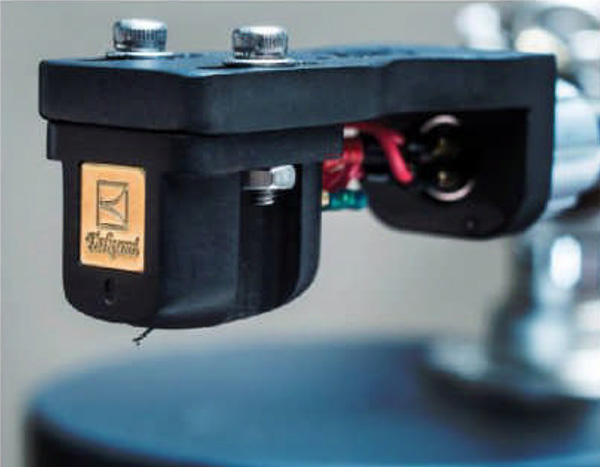
Another "cross-ring" design from Miyajima Labs (footnote 3), and no surprises either, except for one. (For more details on the cross-ring design, see here.) The brand-new Takumi (which means "artisan") resembles the Shilabi and other premium models in the Miyajima line. Like those, it has a body of sculpted African rosewood, behind which are very powerful magnets.
The Takumi has a bit less output than the Shilabe (0.2 vs 0.23mV), a more forgiving stylus profile (elliptical vs Shibata), and is slightly lighter (9 vs 10.4gm) and slightly more compliant (7 vs 5 × 10⁻⁶ cm/dyne). Its recommended vertical tracking force (VTF) is 2.0–2.5gm vs the Shilabe's 2.5–3.2gm. The surprise is the price: $1800, or $1000 less than the Shilabe.
Without break-in, out of the box and freshly set up, the sound of the Takumi resembled more than differed from the sound of the Shilabe. My first response was, Are you kidding?
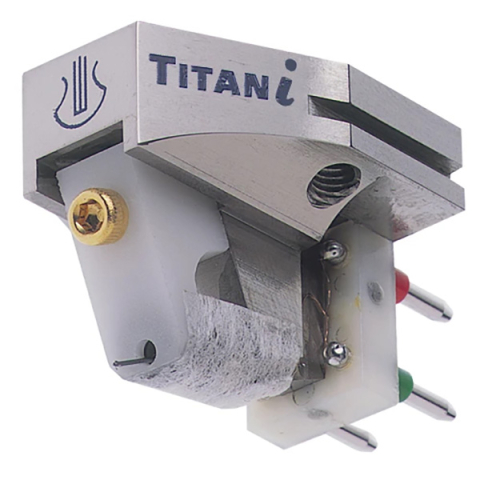
The Takumi produced that same great, fully developed, "direct-from-disc," "meaty" sound, though perhaps with slightly diminished intensity—just as a Lyra Dorian resembles a Lyra Titan i, but with diminished dynamics, detail, and overall sonic "clout"—except that the Takumi more closely resembles the Shilabe than the Dorian resembles the Titan i. Then again, the difference in price between the Lyras is far greater. I'm out of space, so read my review of the Shilabe online here—that's what you get here for $1000 less, and minus a bit of sound quality artfully shaved off each performance parameter, particularly detail, with the elliptical substituting for the Shibata. What's not missing at all is the unique, full-bodied tonal beauty shared by all Miyajima models.
Footnote 1: Dynamic Sound Associates, LLC. Naples, FL. Tel: 386-338-3500. Web: www.dynamicsounds-assoc.com Footnote 2: SteinMusic Ltd., Hingbergstrasse 103a, 45468 Mülheim an der Ruhr, Germany. Tel: (49) (0)208-32089. Fax: (49) (0)208-390938. Web: www.steinmusic.com. Footnote 3: Miyajima Laboratory, Otono-Edison, 1-45-111, Katae 5-chome, Jounan-ku, Fufuoka, 814-0142. Japan. Web: www.miyajima-lab.com. US distributor: Robyatt Audio. Web: www.robyattaudio.com
Back to the StoryPomeroy had read my "The Power of Vinyl" column, in which I surmised that Dial #1, a recording of Bartók's Sonata for Two Pianos, was probably not the same Dial label that had issued Charlie Parker 78s in the 1940s. I couldn't find anything online connecting what I thought were two separate labels of the same name, but wouldn't you know it, "Beyond Bebop: Dial Records and the Library of Contemporary Classics," a conference paper by D.J. Hoek, head of the Northwestern University Music Library, published in the Spring 2013 issue of the ARSC Journal (the publication of the Association for Recorded Sound Collections), provided the answer.
DSA Phono II phono preamplifierDynamic Sound Associates (DSA; footnote 1) is a one-man operation owned and operated by Douglas Hurlburt, a Naples, Florida, resident whose background includes a master's degree in solid-state physics and a PhD in electrical engineering. While an undergraduate at Johns Hopkins University, Hurlburt worked in the acoustic laboratory at the National Bureau of Standards, which he says was staffed by audiophiles. That's where he began learning about circuit design, a field in which, despite his degrees, he claims to be self-taught.
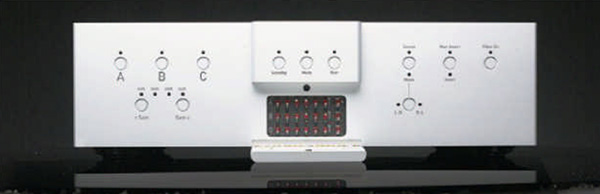
The Phono II keeps its less-often used controls under a cover.
Hurlburt has paid particular attention to noise. The Phono II's two matched toroidal AC transformers have primaries driven out of phase with each other, and are magnetically shielded in a separate housing. Also included is an internal RFI filter for the power line.
Because there are no coupling capacitors in the Phono II's circuit, an occasional "touch-up" of the DC balance and/or offset at the output might eventually require some tweaking (there's another rarely needed balance tweak, but I won't go into that here) if you hear a pop when selecting outputs. The instructions provided for doing this seem straightforward, though it wasn't needed during the two months I had the review sample. The owner's manual is exemplary: very detailed, very well written.
With the right cartridge—one that's not too analytical or bright in its own right—the DSA could be a real cream puff. For instance, the half-speed-mastered edition of Doug MacLeod's There's a Time (two 45rpm LPs, Reference Recordings Mastercuts RM-2507) sounded positively rich and full-bodied in the mids via the Miyajima Labs Takumi cartridge (see below). This high-resolution digital recording, recorded live by Keith O. Johnson at Skywalker Ranch, is as spacious and deep as Johnson's classical recordings for Reference, and the DSA reproduced a soundstage of appropriate width and depth. In "Ghost," MacLeod's tapping foot, well down in level, produced subtle, deep, concentrated pulses that convincingly reverberated and settled across the stage. Used with the Miyajima Takumi ($1800), the Phono II could never be accused of being bass shy or lacking bass expressiveness—or of midrange thinness, for that matter. It's not the fastest cartridge on the track, either, and the DSA didn't speed it up or produce false edge definition on top.
Stein Music Aventurin 6 Mk.2 MC phono cartridgeHolger Stein, of Stein Music (footnote 2), last year introduced the Aventurin 6 phono cartridge, and brought one over from Germany for me. But because of its bulky, cantilever-obscuring body, I decided not to review it. If you can't precisely align a cartridge, what's the point? I did listen to it, though, and the results were beyond promising. They were startling. The Aventurin 6 is based on a Benz LP-S motor made in Switzerland. The Benz LP-S that I reviewed back in the day had a pleasing but laid-back temperament well suited to classical music, perhaps, but not to rock. What I heard from the original Aventurin 6 was anything but laid-back.
Miyajima's Takumi cartridge has a body of sculpted African rosewood.
Miyajima Labs TakumiAnother "cross-ring" design from Miyajima Labs (footnote 3), and no surprises either, except for one. (For more details on the cross-ring design, see here.) The brand-new Takumi (which means "artisan") resembles the Shilabi and other premium models in the Miyajima line. Like those, it has a body of sculpted African rosewood, behind which are very powerful magnets.
Footnote 1: Dynamic Sound Associates, LLC. Naples, FL. Tel: 386-338-3500. Web: www.dynamicsounds-assoc.com Footnote 2: SteinMusic Ltd., Hingbergstrasse 103a, 45468 Mülheim an der Ruhr, Germany. Tel: (49) (0)208-32089. Fax: (49) (0)208-390938. Web: www.steinmusic.com. Footnote 3: Miyajima Laboratory, Otono-Edison, 1-45-111, Katae 5-chome, Jounan-ku, Fufuoka, 814-0142. Japan. Web: www.miyajima-lab.com. US distributor: Robyatt Audio. Web: www.robyattaudio.com