I find myself appreciating more and more the way perfectionist audio—a peculiar mix of art, craft, and engineering—tends to attract idealists. Temperamentally, hi-fi people tend to be unlike people involved in the manufacture of ring-joint gaskets or digital kitchen timers—activities that, without a doubt, have their own scales of excellence. But those who labor at hi-fi believe in the possibility of creating a musical experience that can change your life—or at least beautify it in matterful ways—and are willing to invest nontrivial amounts of time and money on this conviction. I confess I find that pretty amazing.
Of course no two people seem to agree on how to go about creating that experience, which is just another way of saying that listeners tend to enjoy different things. But once in a while, someone succeeds so brilliantly that their offering becomes an enduring classic. Which brings to mind products like Harry Olson's RCA LC-1A speaker, Wilhelm Franz's EMT 927 and 930 turntables, Ken Shindo's tube electronics, Ronnie Rackham's Tannoy Dual Concentric speaker, and Ivor Tiefenbrun's Linn LP12 turntable, as well as certain gear from Western Electric, Klangfilm, Marantz, Fairchild, Klipsch, Quad, Ortofon, JBL, Snell, J.C. Verdier, Air Tight, and others. The best of these devices emit a mystery—a kind of reputational verdigris accrued with the passage of time—that exists apart from their performance. The Japanese seem particularly attuned to its wavelength.
Then, very infrequently, someone creates a music reproduction device that becomes its own branch of aesthetics. Like spiritual realization or sex, it can be alluded to verbally, but it must be experienced to be grasped. For audiophiles of my generation, an example of this is Koetsu, the brand of moving coil cartridges first marketed by Yoshiaki Sugano in the late 1970s. Nearly from the beginning, the Koetsus were said to create a listening experience described variously as euphonious, ravishingly beautiful, and uncommonly musical. The vagueness of these descriptors contributed to the cartridges' mystique. If you wanted to know what a Koetsu sounded like, you pretty much had to hear one for yourself.
Sugano worked as a sales executive at Toyota, but in his private life he was an expert appreciator of samurai swords, a boxer, an oil painter, and a lover of Western classical music. He began making cartridges in retirement and named them after his distant relative Hon'ami Kōetsu, a 16th century calligrapher, potter, and lacquerer who became a foundational figure in Japanese art history and aesthetics. So it makes sense that Sugano's cartridges were made with materials like urushi lacquer applied over rosewood and often flecked with gold in the traditional manner, though inside you'd find bleeding-edge technology like ultrapure copper wire, boron cantilevers, and platinum magnets. Sugano conducted his enterprise with the deep spirit of a craftsman, even passing it on to his son, Fumihiko, the way a swordsmith or a bamboo weaver might. If Japan's government recognized phono cartridge making as a traditional artform, it might have designated Sugano père a Living National Treasure.
A Koetsu cartridge was never intended to be a budget item. Sugano became one of the first cartridge makers to break the $10,000 price barrier, eventually breaking the $20,000 one, too. Adding to the expense, the company didn't retip worn-out cartridges but rebuilt them entirely, a far pricier proposition. What's more, the entry-level Koetsu Black was reputed to be somewhat of a stylistic outlier rather than a full-fledged taste of the Sugano sound. These are some of the reasons why, as a fledgling audiophile who grew up with the Koetsu myth, I never got to live with one of the company's cartridges.
Then, a few years after I began writing for this magazine, Fumihiko passed away. Lacking a third-generation Sugano to take over, the company closed its doors and announced that there would be no more Koetsu cartridges. For a while I considered buying a used one but was warned that many had been retipped by parties other than the Suganos, making them questionable at best. And so I bid my Koetsu dream goodbye.
And then in 2025, against all odds, the little Japanese company sprang back to life. What? How? To find out, at last year's High End Munich, I spent the better part of two hours talking to Arturo Manzano, the person said to have resurrected Koetsu. We sat in one of those antiseptic white meeting rooms on the third floor, the kind of space where you might have an unlicensed root canal or buy a duffel bag of MDMA.
A compact, fit man with a matter-of-fact demeanor, Manzano told me about getting his start selling hi-fi gear to American military personnel on an army base in West Germany and later becoming the first to import Koetsu cartridges to the US. According to Manzano, after Fumihiko's death in 2023 the Sugano family wanted nothing to do with the cartridge business, dispersing the staff and letting the contracts with suppliers expire. Shortly after, Manzano rehired the craftsmen who had built (and rebuilt) the cartridges for decades, drew up new contracts with the parts suppliers, and trademarked the company's name, becoming its new owner (footnote 1). I haven't tried to verify his account but found no reason to doubt it. Manzano also told me that he has never been an audiophile, feeling contented with the music from his Bose all-in-one.
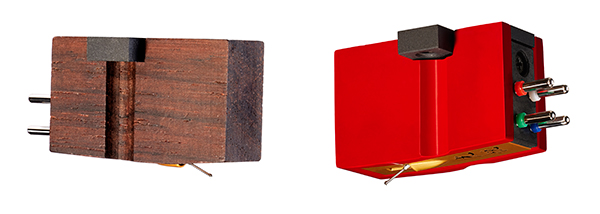
The headline news here is that Koetsu's range of cartridges and repair services are once again available worldwide. Manzano claims that, being made by the same hands, they sound identical to the Koetsus of old. So after a brief back and forth with Steve Huntley of Axiss Audio, Manzano's former company and the resurrected brand's distributor (footnote 2), I received two petite wooden boxes containing Koetsu's Rosewood Signature and Urushi Vermillion cartridges. I had to rub my eyes.
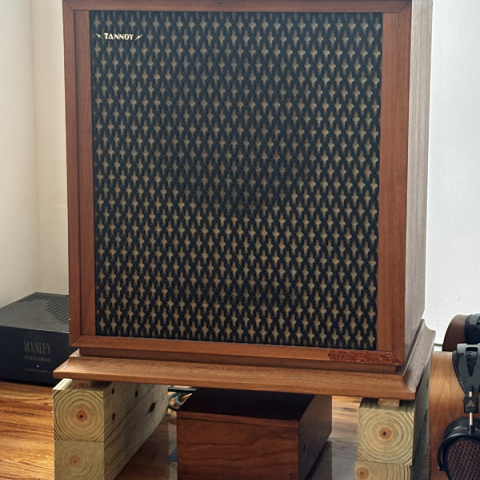
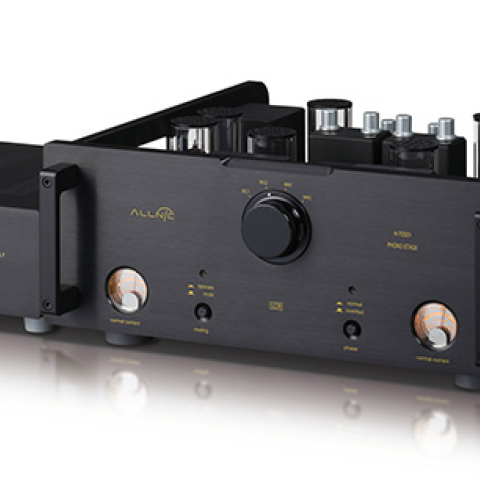
The Koetsus are famously low-compliance things, and I listened to them with my appropriately chunky Schick 12" tonearm on my restored Garrard 301 turntable. I mounted the cartridges in both the 10gm Yamamoto Sound Craft HS-1A ebony headshell and the 20gm Audio Creative HS-01 aluminum headshell and didn't find their materials and weight difference to have a vast impact on the cartridges' performance. Both Koetsus tracked and sounded best at the specified 1.9gm. I routed them directly through the Manley Steelhead and Allnic H-7000 phono stages. I also used the Consolidated Audio Monster Can step-up transformer (the 1:20, Cardas copper, low-inductance model).
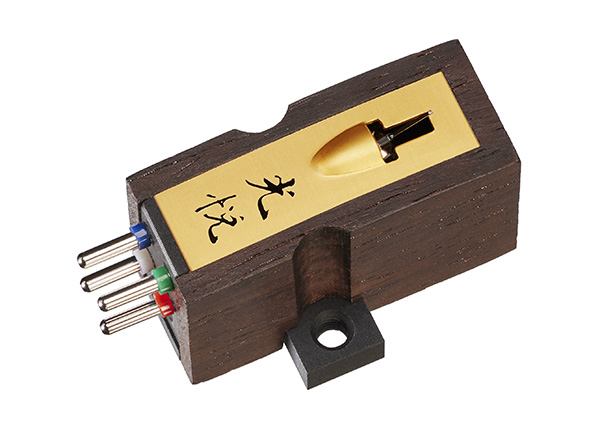 The Rosewood Signature
In trawling the interwebs for Sugano lore, I came across several commentators who posited that the Rosewood Signature—for a long time the third least expensive cartridge in the product line—is the gateway into "true Koetsu sound." If that's the case, at $7995 it's not a particularly thrifty gateway. Regardless, the Rosewood Signature is a lovely thing to behold, featuring copper coils, Permendur magnets, a boron cantilever with a line-contact stylus, a source impedance of 5 ohms, and a highly usable output of 0.4mV.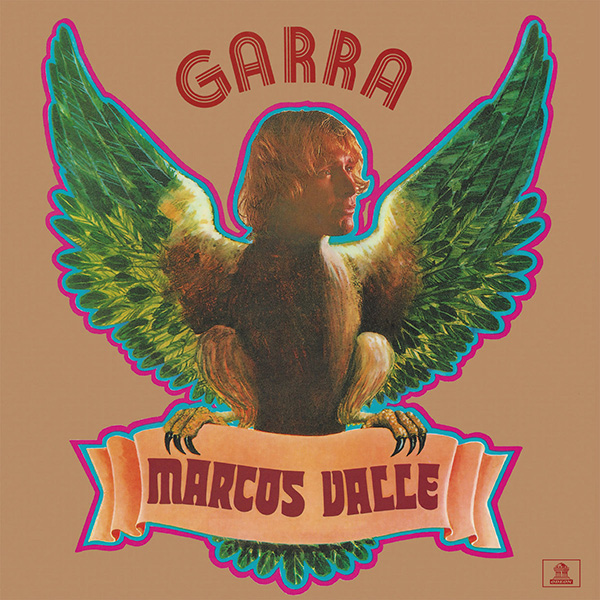 Playing "Jesus Meu Rei" from Marcos Valle's Garra offered an in-depth look at the Rosewood Signature's personality. A performer and songwriter who excelled at every style of Brazilian popular music, a teenaged Valle first won fame in the early 1960s with bossa nova. Released in 1971, Garra is his master class in the wildly eclectic music known as MPB—which encompasses psychedelia, funk, jazz, soul, and samba—and a showcase for his unerring sense of melody and downright weird lyrics.
The Koetsu made a delight of Valle's light, vibratoless, perfectly in-tune voice, imbuing it with richness and body. It reproduced the harpsichord at the track's beginning with real weight and not as a series of tinkly notes and lent the piano all the harmonic overtones I could wish for. Color rendition was spectacular, too, presenting the differences between the layered keyboards in ultrahigh contrast.
The soundfield created by the Koetsu was as enveloping as a Black Friday crowd at a Walmart, creating a Cinemascope performance that seemed to wrap around me. In my still-new-to-me medium-sized room, Valle's vocal seemed to come not from the wall above the speakers, as with most cartridges, but to loom above and slightly in front of me, significantly proud of the speakers' front plane, while the band and Lindolfo Gaya's orchestra appeared to be located behind it. I found this radical sense of height and depth, which seemed to ignore the room's physical boundaries, highly entertaining.
Playing "Jesus Meu Rei" from Marcos Valle's Garra offered an in-depth look at the Rosewood Signature's personality. A performer and songwriter who excelled at every style of Brazilian popular music, a teenaged Valle first won fame in the early 1960s with bossa nova. Released in 1971, Garra is his master class in the wildly eclectic music known as MPB—which encompasses psychedelia, funk, jazz, soul, and samba—and a showcase for his unerring sense of melody and downright weird lyrics.
The Koetsu made a delight of Valle's light, vibratoless, perfectly in-tune voice, imbuing it with richness and body. It reproduced the harpsichord at the track's beginning with real weight and not as a series of tinkly notes and lent the piano all the harmonic overtones I could wish for. Color rendition was spectacular, too, presenting the differences between the layered keyboards in ultrahigh contrast.
The soundfield created by the Koetsu was as enveloping as a Black Friday crowd at a Walmart, creating a Cinemascope performance that seemed to wrap around me. In my still-new-to-me medium-sized room, Valle's vocal seemed to come not from the wall above the speakers, as with most cartridges, but to loom above and slightly in front of me, significantly proud of the speakers' front plane, while the band and Lindolfo Gaya's orchestra appeared to be located behind it. I found this radical sense of height and depth, which seemed to ignore the room's physical boundaries, highly entertaining.
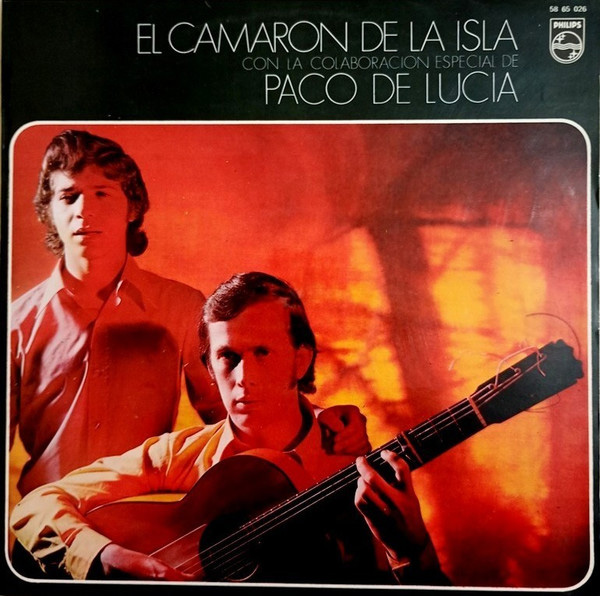 To get a sense of the Rosewood Signature's way with dynamics, I put on the first album by flamenco sensation Camarón de la Isla. This glorious recording from 1969, which features a young Paco de Lucía on acoustic guitar, was first released under the unfortunate title El Camarón de la Isla con la colaboración especial de Paco de Lucía; my Spanish pressing from 1988 is titled La magia cantaora (footnote 3). Regardless, the singing of the Spanish Romani artist—whose name translates as Island Shrimp, a tribute to his diminutive size, pale skin, blondish hair, and home on the island city of San Fernando in Cádiz—is by turns soul stirring and harrowing in its intensity. On "Barrio de Santa María," the Koetsu did a credible job of capturing the dynamic pulse of this music, though in this respect it was not in the same league as the muscle-car–like Dynavector DRT XV-1s. And in reproducing the staccato flurries of notes from de Lucía's nylon-stringed guitar, the Rosewood Signature's impulse response sounded about average—neither ponderously slow nor close to the edge of what's possible.
 The area where the wood-bodied Japanese cartridge set up a poolside chair and pitched camp is in its sumptuous portrayal of instrumental timbres and textures. If it didn't make de Lucía's guitar notes sound a as blindingly fast as I'd have liked, it made them sound glowing, lustrous, colorful, and gorgeous. The Koetsu's penchant for this kind of rococo sonic splendor was most apparent with strings, just as evident when listening to Natalia Gutman's cello on Schubert's Konzertstück in D Major as while grinning at Vassar Clements's tart-as-a-lemon violin on "Crossing the Catskills."
I found the Rosewood Signature's laid-back, sumptuous presentation to be constantly enjoyable and did plenty of marveling at the loveliness of various sonic events. It is undoubtedly a high-class cartridge. But I also didn't entirely trust what I was hearing. This Koetsu struck me as more decorative than insightful, with a frequency response that felt tastefully contoured for my enjoyment. The contour itself was masterful—just a bit of emphasis in the upper bass and the presence region and the slightest recess at the top—but at times felt too apparent in calling attention to its own version of beauty.
The area where the wood-bodied Japanese cartridge set up a poolside chair and pitched camp is in its sumptuous portrayal of instrumental timbres and textures. If it didn't make de Lucía's guitar notes sound a as blindingly fast as I'd have liked, it made them sound glowing, lustrous, colorful, and gorgeous. The Koetsu's penchant for this kind of rococo sonic splendor was most apparent with strings, just as evident when listening to Natalia Gutman's cello on Schubert's Konzertstück in D Major as while grinning at Vassar Clements's tart-as-a-lemon violin on "Crossing the Catskills."
I found the Rosewood Signature's laid-back, sumptuous presentation to be constantly enjoyable and did plenty of marveling at the loveliness of various sonic events. It is undoubtedly a high-class cartridge. But I also didn't entirely trust what I was hearing. This Koetsu struck me as more decorative than insightful, with a frequency response that felt tastefully contoured for my enjoyment. The contour itself was masterful—just a bit of emphasis in the upper bass and the presence region and the slightest recess at the top—but at times felt too apparent in calling attention to its own version of beauty.
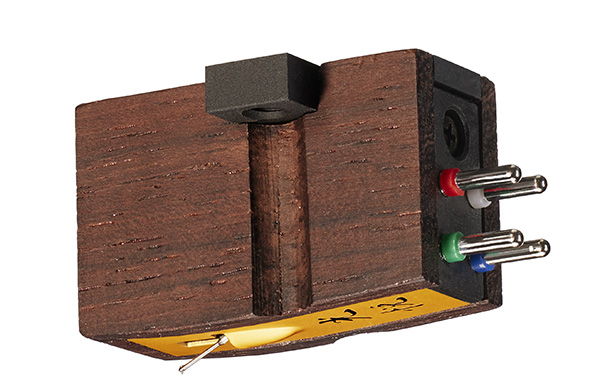 The Rosewood Signature reminded me of a luxury product that feels expensive and embodies a fantasy of constant pleasure and ease. As much as I enjoyed listening to it, after a while I felt a desire for something a little more honest and gritty, more physical and less perfumed. It left me feeling respect and admiration rather than the excitement and joy that comes from losing yourself in the music. And it made me wonder whether I had fully fathomed the Koetsu experience.
 The Urushi Vermillion
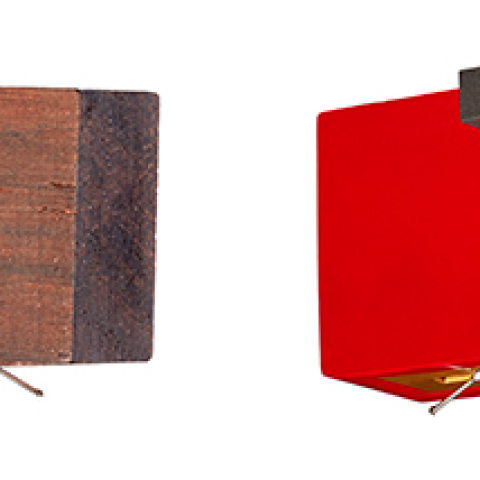
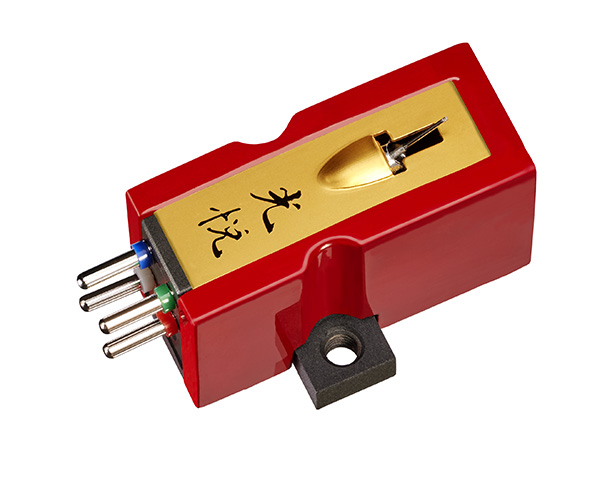
According to Koetsu, the Urushi series of cartridges begin with the same wood body as the Rosewood Signature, to which a craftsman then applies multiple coats of lacquer made from the sap of the Toxicodendron vernicifluum, a tree also known as Japanese sumac. Plus, the copper coils of the Urushi cartridges are clad in silver. The breathtakingly lovely members of this series—which include the Sky Blue, the Wajima, and the stunningly gilt Tsugaru—are identical internally. With one exception. The Urushi Vermillion, covered in scarlet lacquer, uses coils made of silver and copper wire as well as fewer turns, resulting in a lower output—a mere 0.2mV. As a result, it requires a quiet phono stage with lots of gain. If using a step-up transformer, don't be tempted to compensate by using a high ratio like 40×, which would load the cartridge too heavily, smothering all the delicacy it's capable of. Like the Rosewood Signature, I found the Vermillion to sound best at just over 100 ohms, which luckily is the very load presented by the 20× Consolidated Audio Monster Can SUT, a fantastic partner for the Koetsus. Tantalizingly, several of the Koetsu stans I encountered online described this pretty red cartridge as Yoshiaki Sugano's personal favorite. Given that red is the most auspicious hue of urushi lacquer, being the color of the temples, maybe they're on to something. In any case, retailing at $9495, a meaningful bump from its former price, the Urushi Vermillion arrived to high expectations.
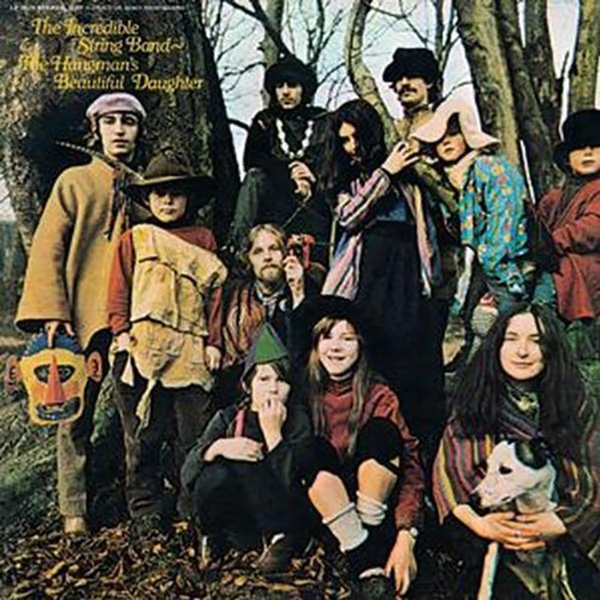 The first album I listened to after installing the Vermillion was The Incredible String Band's The Hangman's Beautiful Daughter, a 1968 gem of British countryside psychedelia I grow fonder of with every passing year. I have an abiding affection for this peculiar musical utility closet, sometimes described as acid-folk—which includes unapologetically fey records by Marc Bolan, Donovan, and Nick Drake—probably because the worlds it describes seem far more agreeable than our own.
Listening to "Nightfall," what I noticed first was the Vermillion's outstanding transparency, detail retrieval, and speed. It depicted Mike Heron's sitar, which opens the song, with rivetingly precise timbre and tone, and made it easy to follow the instrument's interplay with Robin Williamson's voice and guitar.
The Vermillion brought along all the Rosewood Signature's strengths: the soundstage as grand as the Hollywood Bowl, the vivid colors, the harmonic richness, and the lush portrayal of textures. But whereas the Rosewood's way with music sometimes seemed decorative and even a little decadent, the Vermillion's transparency and brisk transient response made instrumental textures sound liquid and electric, so breathtakingly pure that they seemed lit from the inside. Vastly improved dynamics added to its sense of liveness. Paradoxically, the little red Koetsu somehow managed to sound both sumptuous and agile as a leopard.
I'm racing through these sonic descriptions because, in the end, they weren't what I found most unique or memorable about this cartridge. Describing that is going to be rather more challenging, but I'll try. When listening to "Nightfall," when Williamson sang "Oh sleep, oh come to me," my body roiled with goose bumps. Not because of any sonic quality but because of the unexpected emotiveness of what I was hearing, and my heightened interest in it.
The first album I listened to after installing the Vermillion was The Incredible String Band's The Hangman's Beautiful Daughter, a 1968 gem of British countryside psychedelia I grow fonder of with every passing year. I have an abiding affection for this peculiar musical utility closet, sometimes described as acid-folk—which includes unapologetically fey records by Marc Bolan, Donovan, and Nick Drake—probably because the worlds it describes seem far more agreeable than our own.
Listening to "Nightfall," what I noticed first was the Vermillion's outstanding transparency, detail retrieval, and speed. It depicted Mike Heron's sitar, which opens the song, with rivetingly precise timbre and tone, and made it easy to follow the instrument's interplay with Robin Williamson's voice and guitar.
The Vermillion brought along all the Rosewood Signature's strengths: the soundstage as grand as the Hollywood Bowl, the vivid colors, the harmonic richness, and the lush portrayal of textures. But whereas the Rosewood's way with music sometimes seemed decorative and even a little decadent, the Vermillion's transparency and brisk transient response made instrumental textures sound liquid and electric, so breathtakingly pure that they seemed lit from the inside. Vastly improved dynamics added to its sense of liveness. Paradoxically, the little red Koetsu somehow managed to sound both sumptuous and agile as a leopard.
I'm racing through these sonic descriptions because, in the end, they weren't what I found most unique or memorable about this cartridge. Describing that is going to be rather more challenging, but I'll try. When listening to "Nightfall," when Williamson sang "Oh sleep, oh come to me," my body roiled with goose bumps. Not because of any sonic quality but because of the unexpected emotiveness of what I was hearing, and my heightened interest in it.
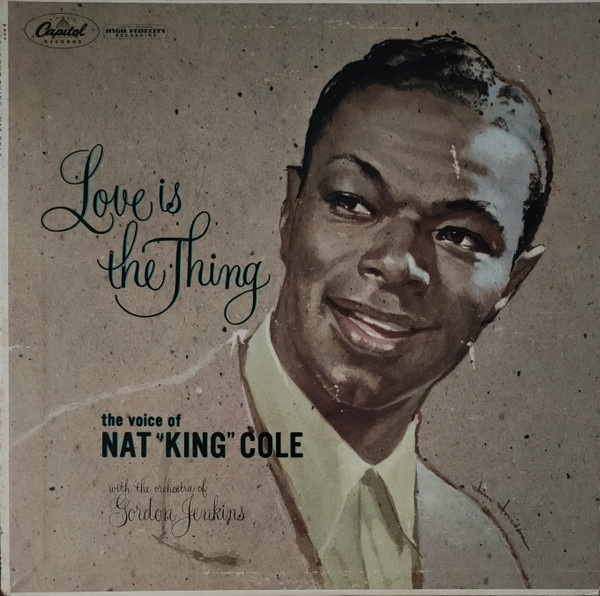 When I put on "Stardust" from Nat King Cole's Love Is the Thing—a first US stereo pressing—I sat transfixed by the drama of the stately vocal and Gordon Jenkins's uncommonly empathetic orchestral arrangement. But the weirder thing happened when the next track, "It's All in the Game," began to play. Usually I get up and skip to "When I Fall in Love," probably my favorite of Cole's performances. In fact, I believe sincerely that "It's All in the Game" is a below-average melody with a pretty stupid lyric. But with the Vermillion on the end of my tonearm, I remained in my seat, marveling at the climbing string parts that Jenkins had written and at the way the song seemed to lurch forward, buoyed by the double bass. What was happening to me?
Whatever it was, it kept happening. I was finding myself drawn into music that hadn't struck me before as particularly compelling, and when listening to records I knew well and enjoyed, I was able to access new and higher registers of involvement. I'd always loved Leonard Cohen's weirdly spartan Ten New Songs, with their almost-too-simple synth tracks, garage studio production, and the Montreal Bard's unison singing with his partner Sharon Robinson. With the Koetsu tracing "Here It Is," I nearly gasped when Cohen's scrape of a voice first dovetails with Robinson's, and—for the first time in many, many listens—hung on every word of the lyric. Afterward, to my embarrassment, I discovered that until then I hadn't really understood what the song was about.
When I put on "Stardust" from Nat King Cole's Love Is the Thing—a first US stereo pressing—I sat transfixed by the drama of the stately vocal and Gordon Jenkins's uncommonly empathetic orchestral arrangement. But the weirder thing happened when the next track, "It's All in the Game," began to play. Usually I get up and skip to "When I Fall in Love," probably my favorite of Cole's performances. In fact, I believe sincerely that "It's All in the Game" is a below-average melody with a pretty stupid lyric. But with the Vermillion on the end of my tonearm, I remained in my seat, marveling at the climbing string parts that Jenkins had written and at the way the song seemed to lurch forward, buoyed by the double bass. What was happening to me?
Whatever it was, it kept happening. I was finding myself drawn into music that hadn't struck me before as particularly compelling, and when listening to records I knew well and enjoyed, I was able to access new and higher registers of involvement. I'd always loved Leonard Cohen's weirdly spartan Ten New Songs, with their almost-too-simple synth tracks, garage studio production, and the Montreal Bard's unison singing with his partner Sharon Robinson. With the Koetsu tracing "Here It Is," I nearly gasped when Cohen's scrape of a voice first dovetails with Robinson's, and—for the first time in many, many listens—hung on every word of the lyric. Afterward, to my embarrassment, I discovered that until then I hadn't really understood what the song was about.
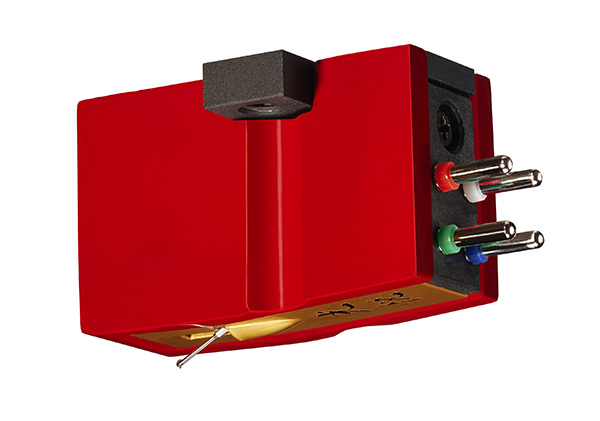 How does the Vermillion do what it does? I'm afraid I can't tell you. Searching online produced no answers. Axiss Audio's Steve Huntley, whose previous emails had the mild-mannered tone of a church newsletter and never engaged in even a hint of boosterism, replied as follows: "I've had a couple of Urushi Vermillions in my life, and there is nothing like it. Taking one to my grave with me! They will have to pry it out of my cold dead hands!"
I've been a journalist since my 20s, and few things raise my hackles and spike my bullshit detector like worshipful reviews. Anyone who's spent any time at all reading the writing produced in this hobby has had to slog through, well, more than a few. But it is also important to acknowledge when, once in a great while, something enables you to have the kind of musical experience hinted at in nearly every piece of hi-fi marketing copy, an experience that all of us, to one degree or another, are still chasing.
The question of value when discussing a $9495 cartridge is, admittedly, difficult to take seriously. I will never be able to afford it, but the Urushi Vermillion is the cartridge I would choose over any I've heard. I'm glad to have experienced what it does—to finally plumb the depths of the Koetsu mystery. While I was auditioning it, a musician friend sat down to listen for a while and then said, simply, "That's the most immersive thing I've ever heard." I'll give him the last word.
How does the Vermillion do what it does? I'm afraid I can't tell you. Searching online produced no answers. Axiss Audio's Steve Huntley, whose previous emails had the mild-mannered tone of a church newsletter and never engaged in even a hint of boosterism, replied as follows: "I've had a couple of Urushi Vermillions in my life, and there is nothing like it. Taking one to my grave with me! They will have to pry it out of my cold dead hands!"
I've been a journalist since my 20s, and few things raise my hackles and spike my bullshit detector like worshipful reviews. Anyone who's spent any time at all reading the writing produced in this hobby has had to slog through, well, more than a few. But it is also important to acknowledge when, once in a great while, something enables you to have the kind of musical experience hinted at in nearly every piece of hi-fi marketing copy, an experience that all of us, to one degree or another, are still chasing.
The question of value when discussing a $9495 cartridge is, admittedly, difficult to take seriously. I will never be able to afford it, but the Urushi Vermillion is the cartridge I would choose over any I've heard. I'm glad to have experienced what it does—to finally plumb the depths of the Koetsu mystery. While I was auditioning it, a musician friend sat down to listen for a while and then said, simply, "That's the most immersive thing I've ever heard." I'll give him the last word.
Footnote 1: Analog2Fidelity, 17800 S Main St, Ste 109, Gardena, CA 90248. Web: analog2fidelity.com/. Footnote 2: Axiss Audio USA, LLC, 624 Grassmere Park, Suite 18 Nashville, TN 37211 (866) 295-4133. Web: axissaudio.com/. Footnote 3: Listening to this album made me wonder about flamenco musicians and their very odd names. Camarón de la Isla's main disciple is a guitarist and singer named Tomatito, which means Little Tomato. Apparently this is a tradition in his family of flamenco performers: Tomatito's grandfather became known as El Tomate Viejo (The Old Tomato), while his father was simply called El Tomate. I don't know what to make of this, but it's okay with me.
The Rosewood SignatureIn trawling the interwebs for Sugano lore, I came across several commentators who posited that the Rosewood Signature—for a long time the third least expensive cartridge in the product line—is the gateway into "true Koetsu sound." If that's the case, at $7995 it's not a particularly thrifty gateway. Regardless, the Rosewood Signature is a lovely thing to behold, featuring copper coils, Permendur magnets, a boron cantilever with a line-contact stylus, a source impedance of 5 ohms, and a highly usable output of 0.4mV.
Playing "Jesus Meu Rei" from Marcos Valle's Garra offered an in-depth look at the Rosewood Signature's personality. A performer and songwriter who excelled at every style of Brazilian popular music, a teenaged Valle first won fame in the early 1960s with bossa nova. Released in 1971, Garra is his master class in the wildly eclectic music known as MPB—which encompasses psychedelia, funk, jazz, soul, and samba—and a showcase for his unerring sense of melody and downright weird lyrics.
To get a sense of the Rosewood Signature's way with dynamics, I put on the first album by flamenco sensation Camarón de la Isla. This glorious recording from 1969, which features a young Paco de Lucía on acoustic guitar, was first released under the unfortunate title El Camarón de la Isla con la colaboración especial de Paco de Lucía; my Spanish pressing from 1988 is titled La magia cantaora (footnote 3). Regardless, the singing of the Spanish Romani artist—whose name translates as Island Shrimp, a tribute to his diminutive size, pale skin, blondish hair, and home on the island city of San Fernando in Cádiz—is by turns soul stirring and harrowing in its intensity. On "Barrio de Santa María," the Koetsu did a credible job of capturing the dynamic pulse of this music, though in this respect it was not in the same league as the muscle-car–like Dynavector DRT XV-1s. And in reproducing the staccato flurries of notes from de Lucía's nylon-stringed guitar, the Rosewood Signature's impulse response sounded about average—neither ponderously slow nor close to the edge of what's possible.
The area where the wood-bodied Japanese cartridge set up a poolside chair and pitched camp is in its sumptuous portrayal of instrumental timbres and textures. If it didn't make de Lucía's guitar notes sound a as blindingly fast as I'd have liked, it made them sound glowing, lustrous, colorful, and gorgeous. The Koetsu's penchant for this kind of rococo sonic splendor was most apparent with strings, just as evident when listening to Natalia Gutman's cello on Schubert's Konzertstück in D Major as while grinning at Vassar Clements's tart-as-a-lemon violin on "Crossing the Catskills."
I found the Rosewood Signature's laid-back, sumptuous presentation to be constantly enjoyable and did plenty of marveling at the loveliness of various sonic events. It is undoubtedly a high-class cartridge. But I also didn't entirely trust what I was hearing. This Koetsu struck me as more decorative than insightful, with a frequency response that felt tastefully contoured for my enjoyment. The contour itself was masterful—just a bit of emphasis in the upper bass and the presence region and the slightest recess at the top—but at times felt too apparent in calling attention to its own version of beauty.
The Rosewood Signature reminded me of a luxury product that feels expensive and embodies a fantasy of constant pleasure and ease. As much as I enjoyed listening to it, after a while I felt a desire for something a little more honest and gritty, more physical and less perfumed. It left me feeling respect and admiration rather than the excitement and joy that comes from losing yourself in the music. And it made me wonder whether I had fully fathomed the Koetsu experience.
The Urushi VermillionAccording to Koetsu, the Urushi series of cartridges begin with the same wood body as the Rosewood Signature, to which a craftsman then applies multiple coats of lacquer made from the sap of the Toxicodendron vernicifluum, a tree also known as Japanese sumac. Plus, the copper coils of the Urushi cartridges are clad in silver. The breathtakingly lovely members of this series—which include the Sky Blue, the Wajima, and the stunningly gilt Tsugaru—are identical internally. With one exception. The Urushi Vermillion, covered in scarlet lacquer, uses coils made of silver and copper wire as well as fewer turns, resulting in a lower output—a mere 0.2mV. As a result, it requires a quiet phono stage with lots of gain. If using a step-up transformer, don't be tempted to compensate by using a high ratio like 40×, which would load the cartridge too heavily, smothering all the delicacy it's capable of. Like the Rosewood Signature, I found the Vermillion to sound best at just over 100 ohms, which luckily is the very load presented by the 20× Consolidated Audio Monster Can SUT, a fantastic partner for the Koetsus. Tantalizingly, several of the Koetsu stans I encountered online described this pretty red cartridge as Yoshiaki Sugano's personal favorite. Given that red is the most auspicious hue of urushi lacquer, being the color of the temples, maybe they're on to something. In any case, retailing at $9495, a meaningful bump from its former price, the Urushi Vermillion arrived to high expectations.
The first album I listened to after installing the Vermillion was The Incredible String Band's The Hangman's Beautiful Daughter, a 1968 gem of British countryside psychedelia I grow fonder of with every passing year. I have an abiding affection for this peculiar musical utility closet, sometimes described as acid-folk—which includes unapologetically fey records by Marc Bolan, Donovan, and Nick Drake—probably because the worlds it describes seem far more agreeable than our own.
Listening to "Nightfall," what I noticed first was the Vermillion's outstanding transparency, detail retrieval, and speed. It depicted Mike Heron's sitar, which opens the song, with rivetingly precise timbre and tone, and made it easy to follow the instrument's interplay with Robin Williamson's voice and guitar.
The Vermillion brought along all the Rosewood Signature's strengths: the soundstage as grand as the Hollywood Bowl, the vivid colors, the harmonic richness, and the lush portrayal of textures. But whereas the Rosewood's way with music sometimes seemed decorative and even a little decadent, the Vermillion's transparency and brisk transient response made instrumental textures sound liquid and electric, so breathtakingly pure that they seemed lit from the inside. Vastly improved dynamics added to its sense of liveness. Paradoxically, the little red Koetsu somehow managed to sound both sumptuous and agile as a leopard.
When I put on "Stardust" from Nat King Cole's Love Is the Thing—a first US stereo pressing—I sat transfixed by the drama of the stately vocal and Gordon Jenkins's uncommonly empathetic orchestral arrangement. But the weirder thing happened when the next track, "It's All in the Game," began to play. Usually I get up and skip to "When I Fall in Love," probably my favorite of Cole's performances. In fact, I believe sincerely that "It's All in the Game" is a below-average melody with a pretty stupid lyric. But with the Vermillion on the end of my tonearm, I remained in my seat, marveling at the climbing string parts that Jenkins had written and at the way the song seemed to lurch forward, buoyed by the double bass. What was happening to me?
Whatever it was, it kept happening. I was finding myself drawn into music that hadn't struck me before as particularly compelling, and when listening to records I knew well and enjoyed, I was able to access new and higher registers of involvement. I'd always loved Leonard Cohen's weirdly spartan Ten New Songs, with their almost-too-simple synth tracks, garage studio production, and the Montreal Bard's unison singing with his partner Sharon Robinson. With the Koetsu tracing "Here It Is," I nearly gasped when Cohen's scrape of a voice first dovetails with Robinson's, and—for the first time in many, many listens—hung on every word of the lyric. Afterward, to my embarrassment, I discovered that until then I hadn't really understood what the song was about.
How does the Vermillion do what it does? I'm afraid I can't tell you. Searching online produced no answers. Axiss Audio's Steve Huntley, whose previous emails had the mild-mannered tone of a church newsletter and never engaged in even a hint of boosterism, replied as follows: "I've had a couple of Urushi Vermillions in my life, and there is nothing like it. Taking one to my grave with me! They will have to pry it out of my cold dead hands!"
I've been a journalist since my 20s, and few things raise my hackles and spike my bullshit detector like worshipful reviews. Anyone who's spent any time at all reading the writing produced in this hobby has had to slog through, well, more than a few. But it is also important to acknowledge when, once in a great while, something enables you to have the kind of musical experience hinted at in nearly every piece of hi-fi marketing copy, an experience that all of us, to one degree or another, are still chasing.
The question of value when discussing a $9495 cartridge is, admittedly, difficult to take seriously. I will never be able to afford it, but the Urushi Vermillion is the cartridge I would choose over any I've heard. I'm glad to have experienced what it does—to finally plumb the depths of the Koetsu mystery. While I was auditioning it, a musician friend sat down to listen for a while and then said, simply, "That's the most immersive thing I've ever heard." I'll give him the last word.
Footnote 1: Analog2Fidelity, 17800 S Main St, Ste 109, Gardena, CA 90248. Web: analog2fidelity.com/. Footnote 2: Axiss Audio USA, LLC, 624 Grassmere Park, Suite 18 Nashville, TN 37211 (866) 295-4133. Web: axissaudio.com/. Footnote 3: Listening to this album made me wonder about flamenco musicians and their very odd names. Camarón de la Isla's main disciple is a guitarist and singer named Tomatito, which means Little Tomato. Apparently this is a tradition in his family of flamenco performers: Tomatito's grandfather became known as El Tomate Viejo (The Old Tomato), while his father was simply called El Tomate. I don't know what to make of this, but it's okay with me.