Photo by Dave Archambault@vinylnirvana.com.
A friend who sells high-end audio gear once pointed out that people who shop for separate tonearms are very different from those interested in phono cartridges or turntables in general. If you think about it, this makes sense. Almost everyone buying a new turntable needs a cartridge to go with it, and most turntables come equipped with a tonearm. Tonearm shoppers are more avid enthusiasts than general consumers.
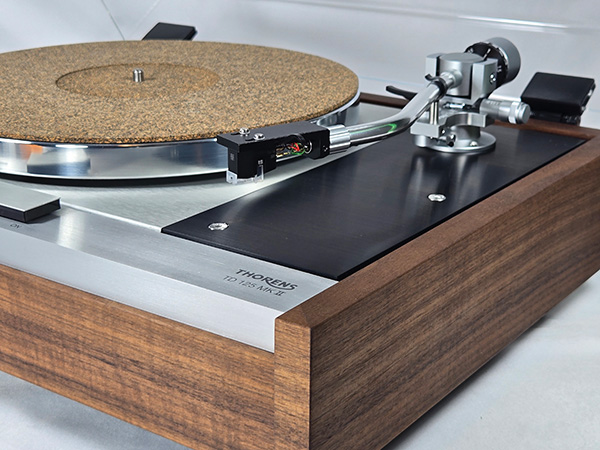
It wasn't always that way. In earlier days of high fidelity, 60 or more years ago, people putting together a cutting-edge phono playback system would typically buy what was known as a motor unit: a Thorens TD 124, Garrard 301, or a few years later the Garrard 401 or Technics SP-10. They would match it up with a tonearm from a company like SME or Ortofon. Then they would buy or build a wooden plinth to mount the motor unit and arm on (footnote 1). Decades later, many of these vintage motor units have gained near cult-like status, and their new owners are still shopping for arms and plinths to use with them. A good chunk of my recent turntable setup work involves helping these new owners assemble a motor unit, plinth, and tonearm that meets their needs, expectations, and budget.
Up until six years ago, selecting a new tonearm wasn't too complicated. If you wanted superb bang for your buck, Jelco, from Japan, offered an extensive range of affordable options in various lengths, finishes, and performance levels. They sounded great, rarely gave trouble, and were easy to use, all of which made them an obvious, frequent recommendation. Many turntable manufacturers also went to Jelco to have custom arms built and branded just for them. In the early 1990s, when I worked for British turntable manufacturer Roksan, we sold thousands of the Jelco-built Tabriz.
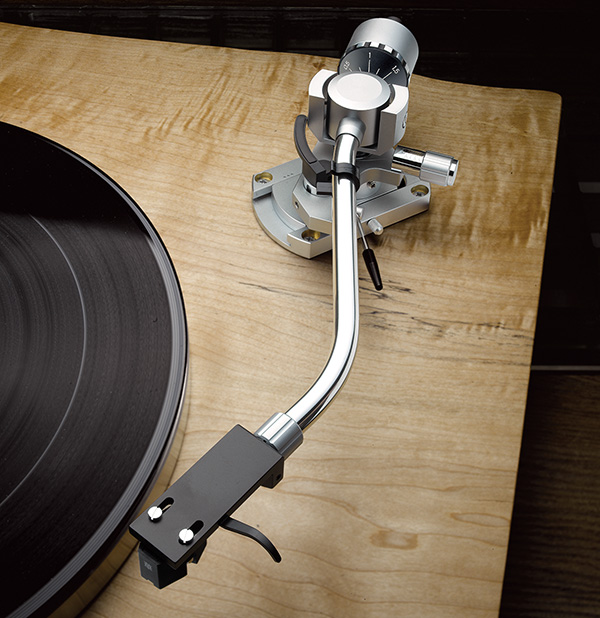 The Sorane TA-1
One popular arm I've seen getting some love from the DIY vintage turntable crowd is the Sorane TA-1 (footnote 3). Sorane traded under the name Abis until 2017, and I believe this name change has made the arms somewhat less recognizable than they probably should be. Sorane makes just three basic models, the TA-1, the SA-1.2, and the ZA-12, but you can make that four if you include the longer 12" TA-1L. The three are quite different in concept. The unusual-looking SA-1.2 sports a sliding armtube weight that allows you to adjust its effective mass; see Herb Reichert's review in See Gramophone Dreams #73. The heavyweight, I-beam– looking ZA-12 was reviewed by Art Dudley in Listening #194. Art also reviewed the longer TA-1L, in Listening #145, but this is the first time Stereophile has looked at the standard 9" TA-1. Of the three Sorane arm designs, the TA-1 is the most conventional. It's a basic, static-balanced gimbal-bearing arm with an S-shaped armtube and an SME-style H-4 bayonet mount with an azimuth-adjustable removable headshell. The mounting distance is 216mm, and at 518gm total mass, it should work fine on bouncy suspended turntables like the Linn LP12. No effective mass is specified, but I estimate it in the medium to medium-high range. I received the TA-1 to use with the TT Hub turntable; after that review, Mike Fajen from Sierra Sound (who is not Sorane's distributor) was kind enough to allow me to hold on to the arm for a while for further evaluation. I mounted it on my Brinkmann LaGrange and installed my Lyra Delos cartridge so that I could listen to it in a familiar context.
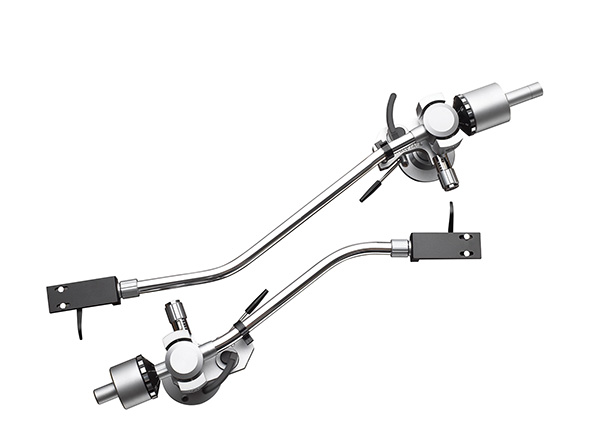 It's nice to have a tonearm like the TA-1 where all the adjustments are clear and intuitive and everything moves smoothly and precisely. Tracking force is adjusted using a static-balance counterweight and dial, and the VTA/SRA adjustment uses a basic sliding arm pillar with a locking screw in the arm collar—no fancy on-the-fly VTA adjustment tower here. The antiskate bias is controlled with a calibrated screw-in knob on the side of the bearing housing, so there's no fiddling with weights dangling on fishing line. The supplied tonearm cable plugs into a 5-pin DIN plug at the base of the arm pillar. The arm's gimbal bearings rotate freely with no discernible friction and zero free play or rattle. The fit and finish is superb, and everything works as intended, making cartridge setup a snap.
Footnote 1: The TD 124 has an onboard armboard. Still, it needs a separate plinth. Footnote 2: Although Origin Live provides OEM tonearms to some manufacturers, as Jelco once did. Footnote 3: Sorane/Youtek. Web: youtek.jp. US distributor: Mockingbird Distribution, 703 Elm Circle, Van Alstyne TX 75495. Tel: (214) 648-2509. Email: mockingbirddistributionllc@gmail.com. Web: mockingbirddistribution.com.