 It's nice to have a tonearm like the TA-1 where all the adjustments are clear and intuitive and everything moves smoothly and precisely. Tracking force is adjusted using a static-balance counterweight and dial, and the VTA/SRA adjustment uses a basic sliding arm pillar with a locking screw in the arm collar—no fancy on-the-fly VTA adjustment tower here. The antiskate bias is controlled with a calibrated screw-in knob on the side of the bearing housing, so there's no fiddling with weights dangling on fishing line. The supplied tonearm cable plugs into a 5-pin DIN plug at the base of the arm pillar. The arm's gimbal bearings rotate freely with no discernible friction and zero free play or rattle. The fit and finish is superb, and everything works as intended, making cartridge setup a snap.
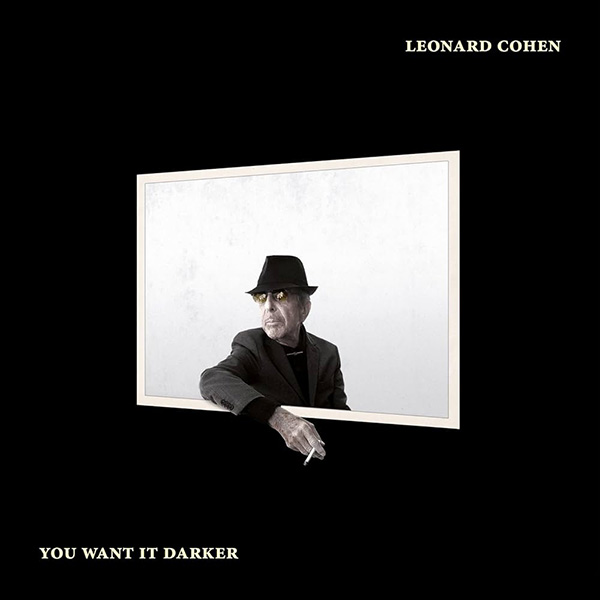
A few years ago, after High End Munich, I stopped in Amsterdam and found a copy of Leonard Cohen's final album, You Want It Darker (Colombia 88985365071), in a small, canal-side record shop. This aptly titled album was released days before Cohen died, and here, his deep, brooding sprechgesang technique is in full force. With the Sorane TA-1 in place of my normal Brinkmann 10.5, this music was dynamic and powerful, separating the male choral backing voices from the minimalist instrumental accompaniment. The Brinkmann arm is three times as expensive, but the Sorane keeps it close, with speed and detail that would better any of the old Jelco 'arms.
Going back to an old favorite, Segments, by the jazz trio of Geri Allen, Charlie Haden, and Paul Motian (DIW-8034), Allen's piano sounded glorious on "I'm All Smiles," her chords and phrasing majestic. On this recording, Haden's bass is a bit introverted; it takes the control and resolution of a great playback system to sort it out. The Lyra Delos/Sorane TA-1 combination kept Haden's bass from sounding too woofy, rendering his basslines clear. Motian's angular drumming is always a treat, and through this setup, the timing and tone of his drums and cymbals were perfect.
It's nice to have a tonearm like the TA-1 where all the adjustments are clear and intuitive and everything moves smoothly and precisely. Tracking force is adjusted using a static-balance counterweight and dial, and the VTA/SRA adjustment uses a basic sliding arm pillar with a locking screw in the arm collar—no fancy on-the-fly VTA adjustment tower here. The antiskate bias is controlled with a calibrated screw-in knob on the side of the bearing housing, so there's no fiddling with weights dangling on fishing line. The supplied tonearm cable plugs into a 5-pin DIN plug at the base of the arm pillar. The arm's gimbal bearings rotate freely with no discernible friction and zero free play or rattle. The fit and finish is superb, and everything works as intended, making cartridge setup a snap.
A few years ago, after High End Munich, I stopped in Amsterdam and found a copy of Leonard Cohen's final album, You Want It Darker (Colombia 88985365071), in a small, canal-side record shop. This aptly titled album was released days before Cohen died, and here, his deep, brooding sprechgesang technique is in full force. With the Sorane TA-1 in place of my normal Brinkmann 10.5, this music was dynamic and powerful, separating the male choral backing voices from the minimalist instrumental accompaniment. The Brinkmann arm is three times as expensive, but the Sorane keeps it close, with speed and detail that would better any of the old Jelco 'arms.
Going back to an old favorite, Segments, by the jazz trio of Geri Allen, Charlie Haden, and Paul Motian (DIW-8034), Allen's piano sounded glorious on "I'm All Smiles," her chords and phrasing majestic. On this recording, Haden's bass is a bit introverted; it takes the control and resolution of a great playback system to sort it out. The Lyra Delos/Sorane TA-1 combination kept Haden's bass from sounding too woofy, rendering his basslines clear. Motian's angular drumming is always a treat, and through this setup, the timing and tone of his drums and cymbals were perfect.
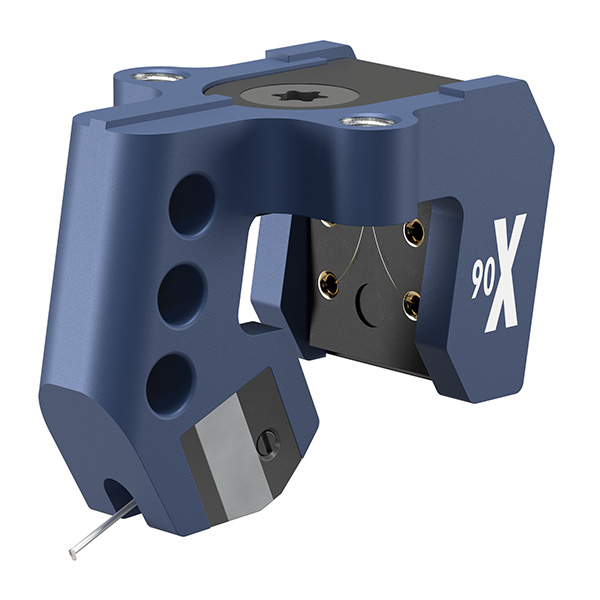
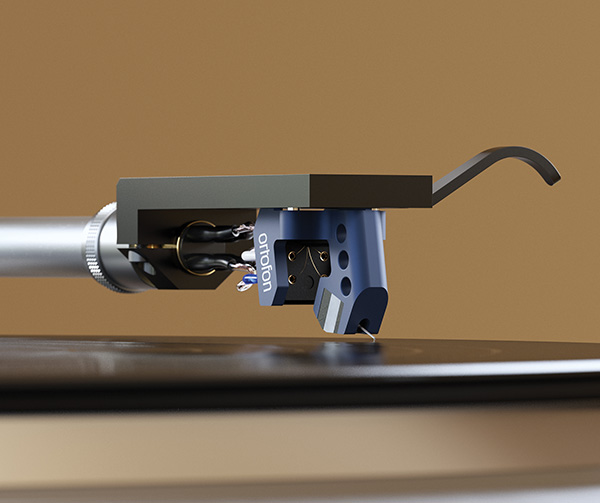
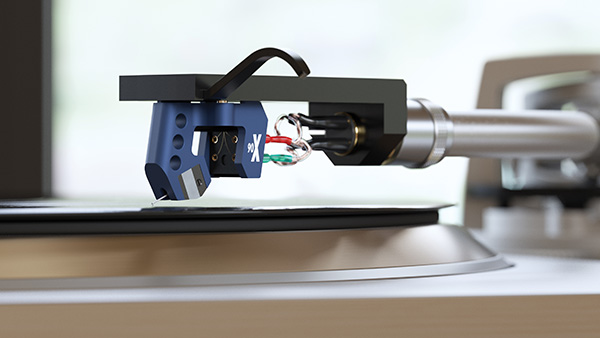 The Ortofon MC 90X
When I was a semibroke college freshman, I got my first new turntable, a Dual CS 506. At first, I equipped it with the most affordable cartridge with any sort of audiophile street cred, the ubiquitous $18 Grado FCE+1. For the money it was hard to beat. But just a few months later—after I had collected a bit more scratch—I went back to my roots, influenced by the British hi-fi press, and bought an Ortofon VMS 20E, the budget choice for many UK audiophiles at the time. That move came at a time when I was rapidly building my record collection, and the hours of pleasure the VMS 20E gave me cultivated a lifelong respect for Danish cartridge manufacturer Ortofon (footnote 4). Ortofon makes what is easily the most diverse range of cartridges of any manufacturer, covering the entry level with their OM and 2M moving magnet series, the pro-deejay market with their ubiquitous Concorde series, the vintage market with their SPU models, and the audiophile mar ket with their Quintet, Cadenza, and Exclusive series. That last range—Exclusive—is where Ortofon's cutting-edge development takes place, resulting in a disparate array of models that lack the color-coded hierarchy of the 2M, Quintet, and Cadenza ranges.
 Another N-shaped Ortofon was launched in 2012, but MC A104 didn't have quite the required ring to it, so they called it the MC Verismo. Changes included a wider version of the N body for added stiffness and a diamond cantilever, trickled down from the flagship Century and Anna D (since renamed MC Diamond) from the boron cantilever used for the A90 and A95.
 The A90 was as uncompromising a cartridge as existed 17 years ago, presenting the music with spectacular detail and retrieving gobs of information, but there were no soft edges to cushion less-than-stellar recordings.
For many years, turntable manufacturer Continuum hired me to set up its Obsidian turntable in their demonstration systems at high-end audio shows including High End Munich and AXPONA. The A90 required careful balancing to behave synergistically with the rest of the system. It gave you everything on the record, even stuff you didn't want to hear. Having lived in Denmark as a child and worked for a Danish boss for several years, I like to think I have a tiny insight into the Danish way of thinking, and I expect it pained Leif Johannsen, Ortofon's chief cartridge designer, to realize that not everyone wanted the absolute, pure, unvarnished truth from their records. He used that realization to dial a more burnished glow in the 90X.
The A90 was as uncompromising a cartridge as existed 17 years ago, presenting the music with spectacular detail and retrieving gobs of information, but there were no soft edges to cushion less-than-stellar recordings.
For many years, turntable manufacturer Continuum hired me to set up its Obsidian turntable in their demonstration systems at high-end audio shows including High End Munich and AXPONA. The A90 required careful balancing to behave synergistically with the rest of the system. It gave you everything on the record, even stuff you didn't want to hear. Having lived in Denmark as a child and worked for a Danish boss for several years, I like to think I have a tiny insight into the Danish way of thinking, and I expect it pained Leif Johannsen, Ortofon's chief cartridge designer, to realize that not everyone wanted the absolute, pure, unvarnished truth from their records. He used that realization to dial a more burnished glow in the 90X.
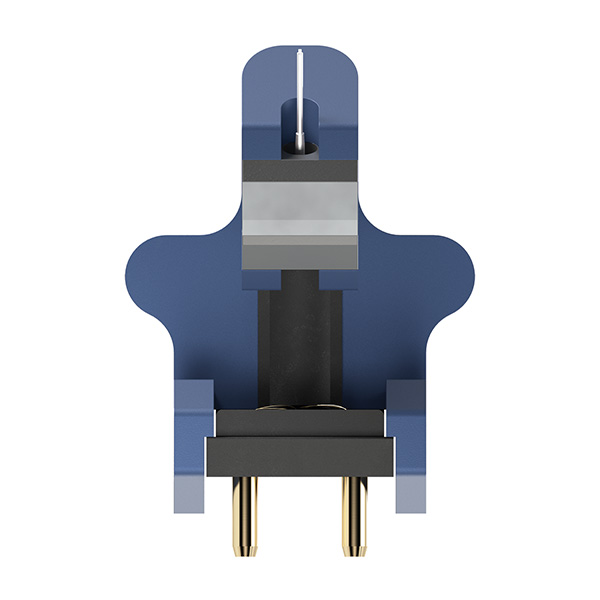 Ortofon recommends a tracking force of precisely 2.3gm, with no ± range. The gold-plated copper "Aucurum" coils have an internal impedance of 4 ohms, making the 90X suitable for current-mode phono preamps. I experimented with both the current and voltage inputs of the CH Precision P1 phono preamp and had a subtle but clear preference for the current input, which delivered a slightly quieter noisefloor and enhanced dynamic performance. The 90X's output voltage is 0.25mV, so it needs plenty of low-noise gain. With the voltage input, I settled on a load of 105 ohms for the best mix of dynamics, bass tightness, and top-end response. Most of my listening was with the 90X mounted on a Kuzma Safir 9 tonearm with my Brinkmann LaGrange, but I also used Brinkmann's own 10.5 tonearm. With the 90X's low, 11µm/mN dynamic compliance, the super-heavyweight Safir 9 played nice, with no obvious matching issues.
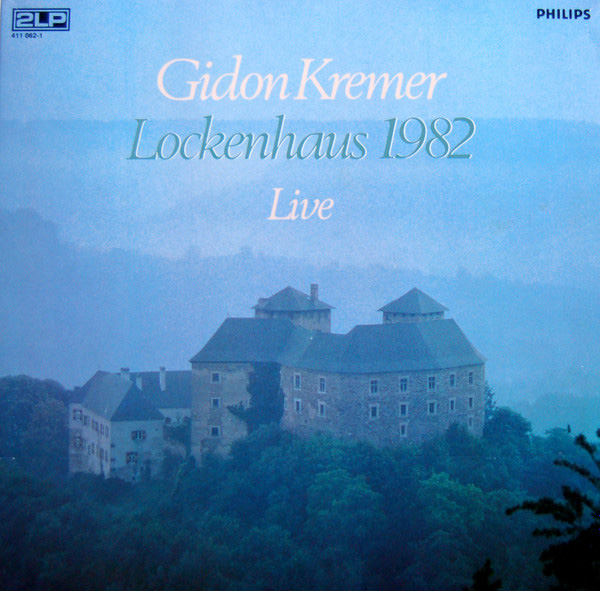
Despite Johannsen's work to dial back detail on the 90X compared to its predecessors, this cartridge still sucks an astonishing amount of information from the record grooves. Violinist Gidon Kremer founded the annual Lockenhaus chamber music festival in Austria in 1981. During the second event, some of the proceedings were recorded and released as Gidon Kremer Lockenhaus 1982 Live (Philips 411 062-1). Recorded in what sounds like a huge church, this chamber recording is an amazing blend of closely miked instruments and a massive acoustic space. On the opening track, Haydn's String Quartet No.1 in B-flat major (Op.1, No.1), you can hear every detail of the players fingering and bowing their instruments but also every scrape, cough, and throat-clearing from the audience, set in a massive bubble around the players. At one point, a huge door at the back of the church closes and the weight of the sound echoes around the room for seconds. Often with lesser cartridges—and with previous N-bodied Ortofons—when the quartet played fast and loud, the strings became thin and brittle. This effect is absent with the 90X, which adds more flesh on the sonic bones and more realism.
Ortofon recommends a tracking force of precisely 2.3gm, with no ± range. The gold-plated copper "Aucurum" coils have an internal impedance of 4 ohms, making the 90X suitable for current-mode phono preamps. I experimented with both the current and voltage inputs of the CH Precision P1 phono preamp and had a subtle but clear preference for the current input, which delivered a slightly quieter noisefloor and enhanced dynamic performance. The 90X's output voltage is 0.25mV, so it needs plenty of low-noise gain. With the voltage input, I settled on a load of 105 ohms for the best mix of dynamics, bass tightness, and top-end response. Most of my listening was with the 90X mounted on a Kuzma Safir 9 tonearm with my Brinkmann LaGrange, but I also used Brinkmann's own 10.5 tonearm. With the 90X's low, 11µm/mN dynamic compliance, the super-heavyweight Safir 9 played nice, with no obvious matching issues.
Despite Johannsen's work to dial back detail on the 90X compared to its predecessors, this cartridge still sucks an astonishing amount of information from the record grooves. Violinist Gidon Kremer founded the annual Lockenhaus chamber music festival in Austria in 1981. During the second event, some of the proceedings were recorded and released as Gidon Kremer Lockenhaus 1982 Live (Philips 411 062-1). Recorded in what sounds like a huge church, this chamber recording is an amazing blend of closely miked instruments and a massive acoustic space. On the opening track, Haydn's String Quartet No.1 in B-flat major (Op.1, No.1), you can hear every detail of the players fingering and bowing their instruments but also every scrape, cough, and throat-clearing from the audience, set in a massive bubble around the players. At one point, a huge door at the back of the church closes and the weight of the sound echoes around the room for seconds. Often with lesser cartridges—and with previous N-bodied Ortofons—when the quartet played fast and loud, the strings became thin and brittle. This effect is absent with the 90X, which adds more flesh on the sonic bones and more realism.
 Elvis Costello's single I Want You (Imp Records IMP 008T) is a harrowing plea from a spurned and obsessed man to his romantic interest; the desperation in Costello's voice is tangible. The 12", 45rpm single brings astonishing dynamics to the mix, as Costello's sense of desperation rises then falls again in resignation. The backing from The Attractions is slow and brooding, but the clarity of Steve Nieve's organ is exceptional. One challenging aspect of this recording is Costello's sibilants, which can sound smeared and fuzzy. With the 90X there's none of this; the sound is clear and full bodied yet razor sharp.
It has been interesting to watch Ortofon's top cartridges develop over the years. Each new model offers a new balance of strengths, often borrowing from what came before, yet the trend is always in the right direction, toward better. While I'd probably get chased down with pitchforks if I called this $5499 needle good value for money, the 90X offers more than its predecessor for less. No one can deny that it's a step in the right direction.
Elvis Costello's single I Want You (Imp Records IMP 008T) is a harrowing plea from a spurned and obsessed man to his romantic interest; the desperation in Costello's voice is tangible. The 12", 45rpm single brings astonishing dynamics to the mix, as Costello's sense of desperation rises then falls again in resignation. The backing from The Attractions is slow and brooding, but the clarity of Steve Nieve's organ is exceptional. One challenging aspect of this recording is Costello's sibilants, which can sound smeared and fuzzy. With the 90X there's none of this; the sound is clear and full bodied yet razor sharp.
It has been interesting to watch Ortofon's top cartridges develop over the years. Each new model offers a new balance of strengths, often borrowing from what came before, yet the trend is always in the right direction, toward better. While I'd probably get chased down with pitchforks if I called this $5499 needle good value for money, the 90X offers more than its predecessor for less. No one can deny that it's a step in the right direction.
Footnote 4: Ortofon AS, Stavangervej 9, DK-4900 Nakskov, Denmark. Web: ortofon.com. US distributor: Ortofon Inc., 500 Executive Boulevard, Suite 102, Ossining, NY 10562. Tel: (914) 762-8646. Email: support@ortofon.us