
Editors' Choice Awards
 Kii SEVEN active loudspeaker system
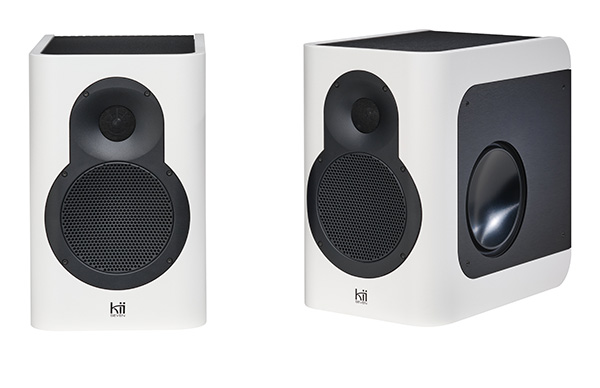
In my final year of providing measurements for Stereophile's reviews, two conventional loudspeakers impressed me in my test lab: the Dynaudio Contour 20 Black Edition standmount that I reviewed in November 2025, and the Magico S2 floorstander that Rogier van Bakel reviewed in April 2026. But my Editor's Choice is an active loudspeaker system: the Kii SEVEN standmount that Kalman Rubinson reviewed in February 2026. The SEVEN features digital (AES3) and analog (XLR/TRS) inputs—the latter digitized with a sigma-delta A/D converter. The optional wired remote Kii Control module adds USB, TOSLINK, and S/PDIF inputs and easy access to all the loudspeaker's settings. I found that this compact speaker's use of DSP to optimize its behavior in both the frequency and time domains resulted in extraordinarily good measured performance. I keep returning to the SEVEN's waterfall plot, which featured the cleanest cumulative spectral decay I have encountered in almost four decades of measuring loudspeakers.—John Atkinson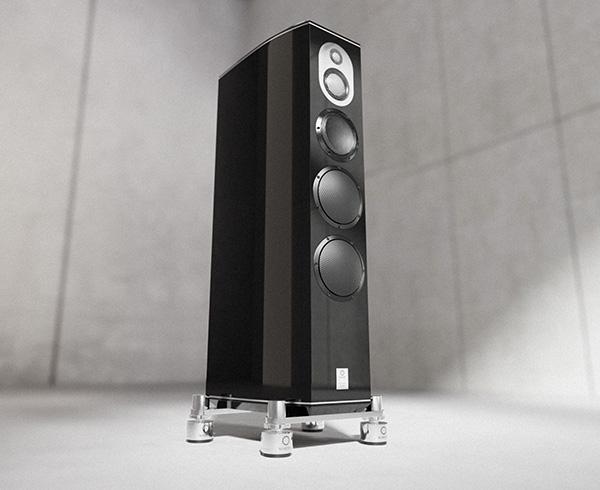 Marten Mingus Septet Statement Edition loudspeaker
When it comes to winning "Best-of" awards, loudspeakers have a built-in advantage: more sonic variation means more opportunity to stand out. So I guess it's not surprising that when I think back on the past year, the product that stands out most is a loudspeaker. The Marten Mingus Septet Statement Edition is notable for the length of its name—five words!—and the ambition of its design. Like other Marten speakers, it is time coincident, which means the designer had to employ first-order crossovers (either that or digital crossovers, a different beast and a different story). Few designers bother because first-order crossovers make a designer's job much harder. Most judge that the payoff isn't worth the effort. Obviously Marten thinks it is. I'm not going to disagree.
I wrote in my conclusion that I couldn't be sure time coincidence was what made the Marten special, but "what I am sure of is that I've just heard some of the best sound I've heard in my listening room, or even elsewhere, as in, top two or three. For certain aspects of the sound, including 3D imaging, it was the very best."—Jim Austin
 Aurender N50 server/streamer
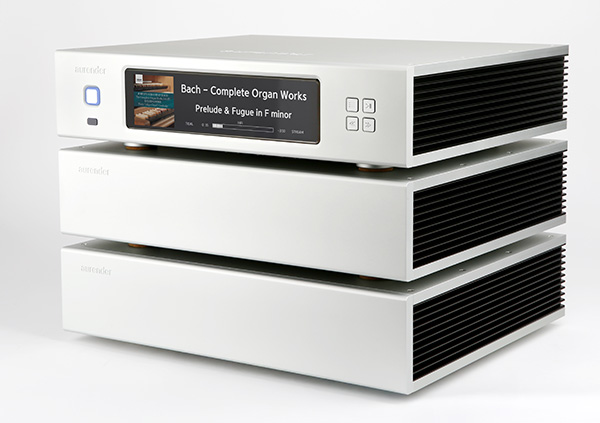
If I were asked what features a perfect streamer-server should have, it would include a top-quality S/PDIF output, a high-quality clock, separation between the computer and digital output components, and a pristine power supply. It seems I am not the only person with such dreams, as the Aurender N50 ticks every single one of these boxes plus more. The unit includes every input you might desire—plus internal storage and native playback—as well as all manner of outputs, each executed with utmost precision. I have yet to find a streamer-server that performs at this level, such that playback over my dCS Rossini APEX streamer-DAC is better via the N50 than its internal streaming implementations. An accomplished product in all regards.—Miguel Barrio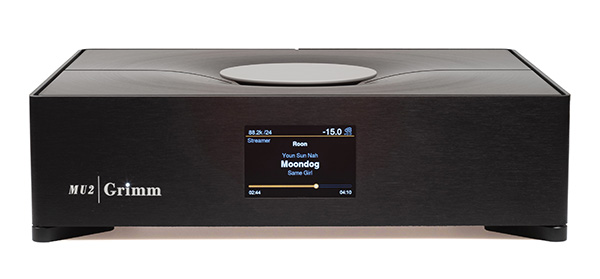 Grimm Audio MU2 streaming preamplifier
The specter of bias looms over my choice, as I had bought an MU2 prior to joining Stereophile. This also means it's a component I'm intimately familiar with. The return on investment for high-end digital sources seems meager relative to other components, but the virtues of the MU2 carry unusual weight. Nothing about it is extravagant or flashy; under the cloak of subconsciousness, it dutifully practices its sublime craft with a degree of perfectionist finesse that you fully appreciate only when it's absent. It costs a lot, but you get a Roon server, a DAC, a headphone amplifier, and a preamp with an analog volume control. With the MU2 in my system, I worry less about digital audio than I ever have before. New digital sources appear to steal the limelight every year, and presumably the MU2 will be old news at some point. But it provides me such joy every day that I'm not able to conjure any worry about that. As a reviewer, I could wish it had digital outputs, and I know by now that it's not the ideal preamp for every power amplifier. But I don't regret for one second having bought this astonishing box.—Ola Björling
 Technics SL-1200GME and Technics SL-50C turntables
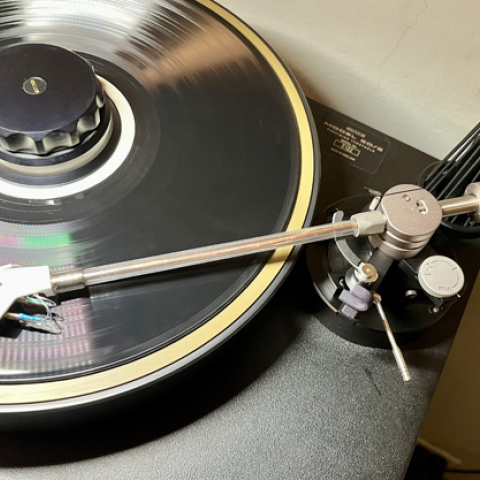
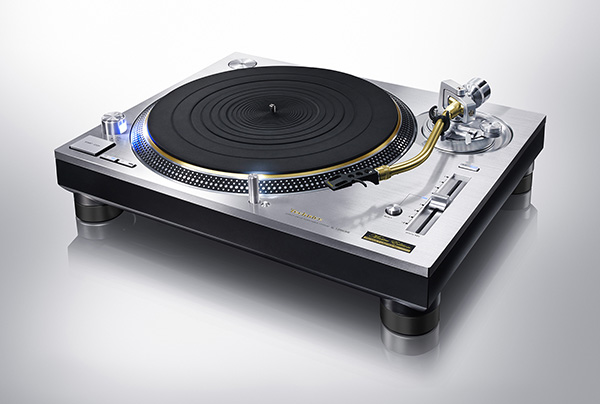
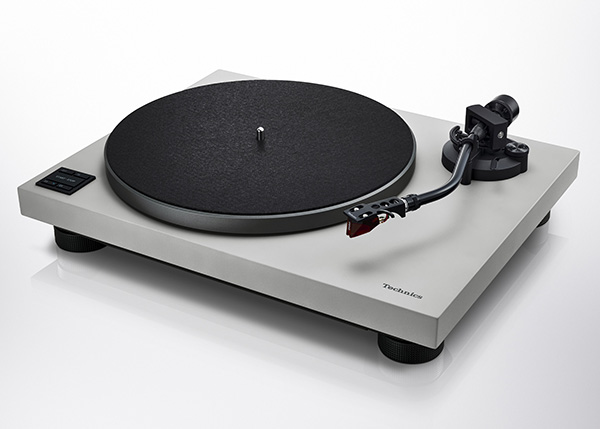
The SL-1200GME is a limited-edition final iteration of the model's top-line "G-class" turntables. Due to discontinuation of certain parts, Technics is ending the top of the SL-1200 line here; only 1200 of the traditional gray-plinth SL-1200GMEs were made, and 1210 of the black-plinth SL-1210GMEs. In my opinion, this turntable is a masterful capstone to the legendary line, successfully bridging the gap between Technics's historical legacy and modern high-end audiophile performance. In my system, it offered silent backgrounds, rock-solid speed accuracy, and musical pacing. It excelled with my Hana SL MK II, allowing the cartridge and its Shibata stylus to pull every musical detail out of the grooves. It's not inexpensive, but its performance level makes it a great value. The SL-50C is an impressive, highly accessible entry point into high-fidelity vinyl playback. With the included Ortofon 2M Red cartridge and built-in phono preamp, it can be plugged into almost any system or powered streaming speaker system, bringing record-playing into the modern stream-centric world. It's easy to set up, easy to use, and very easy to enjoy. Plus, it's an affordable way to get almost everything important out of almost any record.—Tom Fine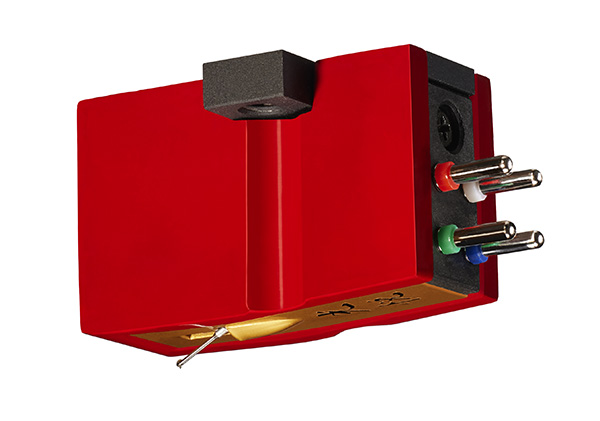 Koetsu Urushi Vermillion phono cartridge
As children, we believe in magic rings and amulets that make wishes come true. As we grow older, that magic is leached from our lives, replaced with a guarded pessimism masquerading as pragmatism. If our hi-fi is where some of that magic can be taken back, then Koetsu's little red cartridge is the most enchanting piece of audio gear I've come across. Yes, it is gallingly expensive, and any cartridge costing $10,000 should approach sonic perfection. But the Urushi Vermillion does more than sound wonderful. During the months I spent living with it, it managed to actually increase my interest in my music, heightening the desire to listen. Played back with the Koetsu, records I'd heard as borderline tedious revealed themselves to be more complex, vivid, and compelling than I had imagined. And longtime favorites became easier to access and hear anew. Said to be Yoshiaki Sugano's favorite of his own creations, the Vermillion was brought back from obsolescence by its former US importer, Arturo Manzano, and according to some longtime Koetsu stans, this version may be the best one yet.—Alex Halberstadt
 Linn Klimax Solo 500 monoblock amplifier
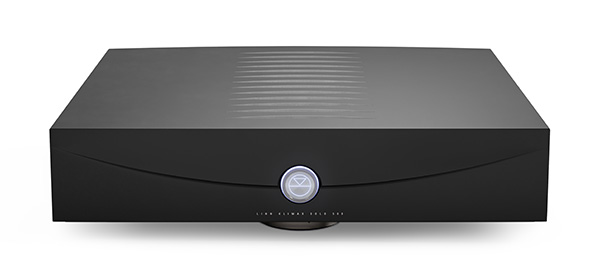
The Linn Klimax Solo 500s added significantly to the enjoyment and resolution derived from my reference system. Their microscopically low distortion specs are among the technical reasons these amps truly create a black hole as far as noise is concerned. This in turn boosts the sense of musical realism and dynamics these 'blocks create—given fine source material. Wishing the ticket price were lower is like wishing Bentleys were economy cars; the quality of every single part used in this design is at the highest level available. Now a multigenerational family business, Scotland's Linn Products is setting new benchmarks for itself, as well as for the larger high-end audio world.—Sasha Matson Benny Audio Odyssey turntable
If the main jobs of a turntable are rhythmic authority, speed consistency, a believable soundstage, and a quiet background, the Polish-made Odyssey is a winner. In my review, I wrote, "The Odyssey delivered everything a nearly $50k table should—massive stage, fat images, ink-black background, charged dynamics. But what really captured me was its naturalness, sense of rhythmic speed and weight, and sheer corporeal chunk. While you expect a lightweight Rega or Pear Audio 'table to jettison music like a hornet, mass-loaded turntables sometimes trade transient snap for drama and weight. Not this one." The Odyssey played like a sprinter: punchy, full bore, driving notes off the platter with practically human spirit and drive. It delivered a tonally saturated performance, translating the emotion of a record as if purpose-built. A relative newcomer to the industry, designer Tomasz Franielczyk (aka "Benny") steps into the big leagues with an exceptional "vibration measuring machine."—Ken Micallef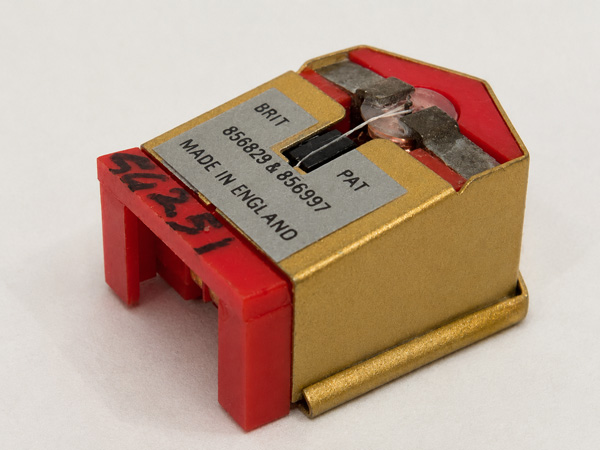 Decca Super Gold Type II phono cartridge
In my world, London Decca's new Super Gold Type II "moving armature" phono cartridge is a paradigm-shifting life-changer. And I promise you, those words are not overstatement. I've used scores of cartridges, from every decade after 1950, and I can't say any of them sounded more fleet or natural than this new $2895 Super Gold. Like all previous Decca cartridges, its tone is true and supersaturated. Its transients feel fast and complete, so it handles complex program like a Lotus Elan. But what it does better than any cartridge I know of is fit all the sound bits together into a complete, exquisitely sorted whole that feels distinctly of a piece.
Then, it exploits this propensity for evenly sorted wholeness to show me why and how I should appreciate the music it is playing. This is a rare talent, one it shares with Audio Note's IO II and Denon's DL-103, both of which also use alnico magnets.
Andy Whittle, the engineering wizard behind the new Type II Decca, made two very smart changes: He replaced the neodymium magnet with a lower-powered Alnico 5 and changed the material of its line-contact stylus carrier from hard-sprung steel to a thicker, soft iron.
If you've never experimented with a Decca, this is the place to start.—Herb Reichert
 Dirac Live ART
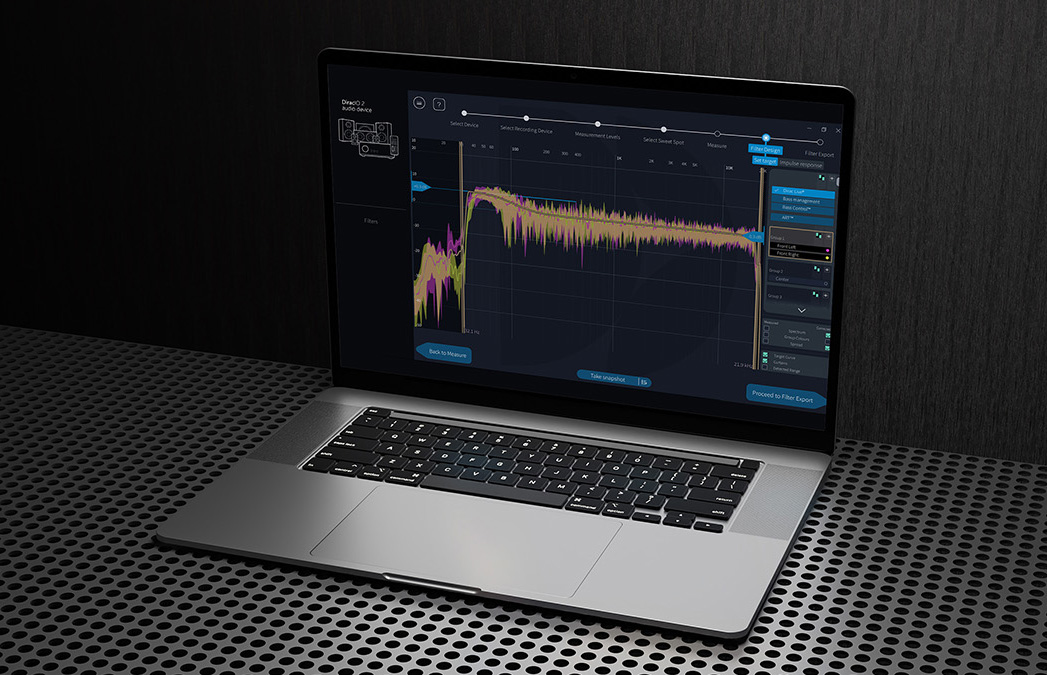
My 2026 Editor's Choice is Dirac Live ART (Active Room Treatment), which, if the rules permitted, would also have been my pick for Product of the Year. I argue that, unless one is committed to a fully analog system from source to speaker, DL ART (or other effective DSP-based room correction) should be considered as essential in any modern audio system, especially where the room is not dedicated, designed, and constructed for audio.
Dirac Live ART is, in my opinion, unique in two ways. First, it is accessible to nearly all users because it is offered installed in a broad range of components as well as for Windows and Mac PC applications. Second, it is relatively friendly to the average user and yet as powerful as some professional tools. ART, along with the other Dirac Live tools, gives users the ability to balance levels and timing, and implement bass management and target curves. ART itself implements a MIMO (Multiple-Input, Multiple-Output) system where the outputs of all the speakers and subwoofers interact to eliminate room-dependent modes from 20 to 150Hz.
The overall effect of DL ART is striking and pleasing, and it is likely to make a greater improvement in audible system performance than upgrading any single physical component.—Kal Rubinson
 Wattson Emerson Digital Network Bridge
When I received the final ballot selection from John Atkinson and noticed that the Wattson Emerson Digital streaming bridge was no longer a contender in the Budget category, I dispatched a quick email to John about its absence, saying, "That's a shame. The Emerson is a potent gateway drug." "You can choose it as your Editor's Choice," came his reply.
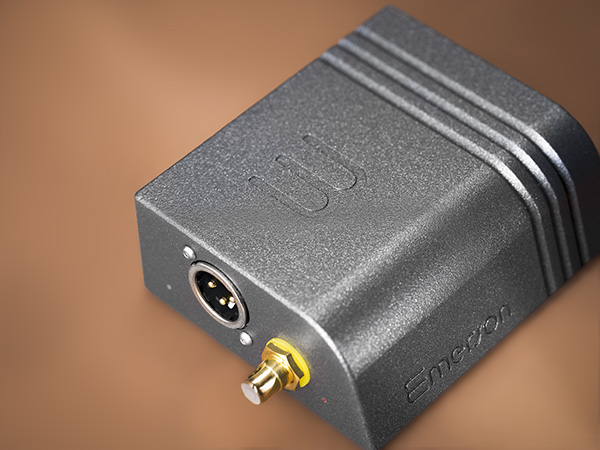
So here it is, being honored as my Editor's Choice, because it's an under-$2000 killer! It sounds fantastic—even better with an aftermarket external 5V power supply, such as the one I use from SBooster—and makes streaming from your mobile device about as pleasurable as possible. The Digital doesn't have a screen, features no connections other than a single Ethernet RJ45 input and one 75-ohm S/PDIF (RCA) output, and doesn't come in a big, fancy enclosure. But that's by design. As I wrote in my review, "the Digital's sole purpose is to bridge a datastream to a DAC, with no filters, no data conversion of any kind. That's about as straight-wire as it gets."
In other words, there isn't a single part or feature of the Emerson Digital that isn't there in the interest of preserving the music signal's integrity from one end to the other—and, in the process, upgrading your DAC to a streaming one. In return, you'll open up a vast world of music in both Red Book and hi-rez formats, delivered in colorful, vibrant, richly layered sound.—Rob Schryer
 dCS Varèse Music System
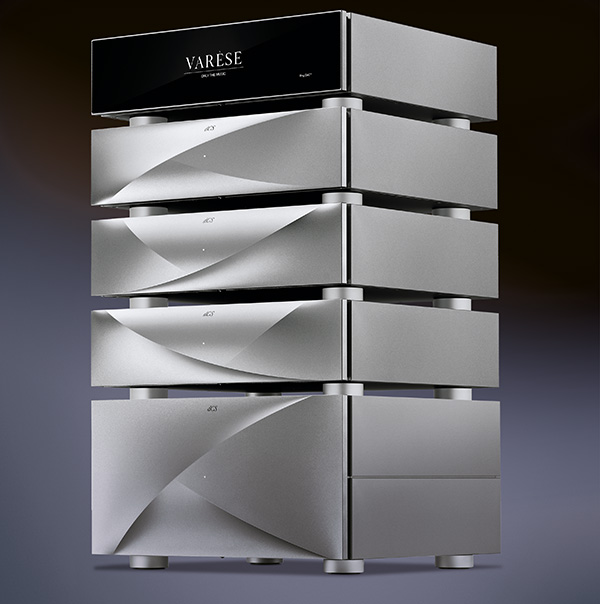
Since its arrival in Port Townsend, the multibox dCS Varèse Music System has served as the linchpin that has propelled my system to another level. For clarity, color, image and soundstage size, air, detail, dynamic range, lightning-fast response, musical flow, and emotional impact—literally every indicator of quality on the audiophile checklist—the Varèse is state-of-the-art. When you feed it high-resolution files from a USB stick or a music server/streamer of comparable quality, or when you play SACDs or even CDs on the optional Varèse transport that I reviewed in May 2026, the glories of its sound call into question the axiom that vinyl is a superior medium for audio reproduction. I love it.—Jason Victor Serinus
 Esoteric Grandioso T1 turntable
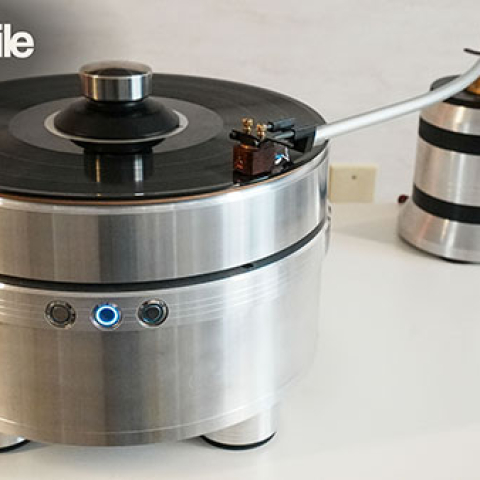
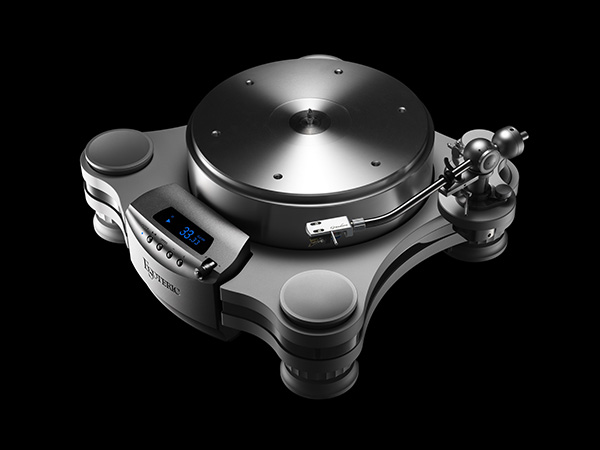
A few years ago, pretty much every turntable with audiophile pretensions used a belt to drive the platter. That thinking has been changing as more people discover the unique qualities of alternative drive systems like idler and direct drive. The Esoteric Grandioso T1 takes things further, with its own tunable magnetic drive system that somehow manages to combine the qualities of those other popular methods. It is beautifully made, and its performance is as good as anything I have heard in my own system.—Michael Trei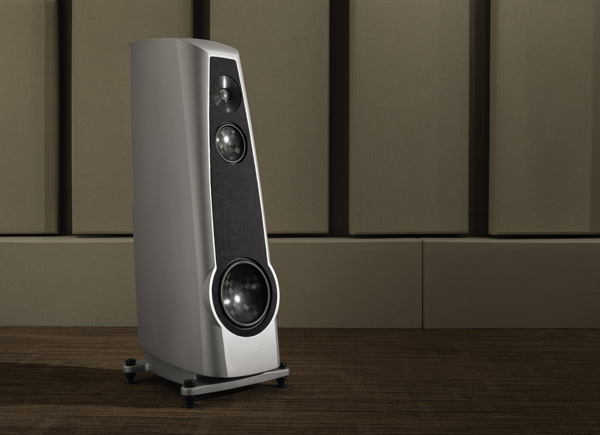 Rockport Technologies Lynx loudspeaker
The Rockport Technologies Lynx is a big speaker in every sense except, surprisingly, physical bulk. Its 305-pound aluminum enclosure—roughly the weight of a sumo wrestler, but much more compact—contains a 10" woofer capable of producing the scale and pressure of a considerably larger loudspeaker, yet the Lynx never visually overwhelmed my room. More important, its considerable force and slam came with articulate bass that remained fully connected to everything above it. What stayed with me most was the Lynx's resolution. This speaker made distinctions between instruments, performers, and recording spaces unusually easy to hear without turning music into an analytical exercise. It clarified musical character rather than dissecting it. Low-level information emerged naturally, in service of the performance.
That combination—muscular authority, tonal coherence, dynamic freedom, and fine resolution—is rare. I wrote that the best reproducers preserve enough of an original experience's "scale, life, and color" to bring it vividly back into view. The Lynx did exactly that. Having a pair in my room was a daily joy.—Rogier van Bakel
Kii SEVEN active loudspeaker systemIn my final year of providing measurements for Stereophile's reviews, two conventional loudspeakers impressed me in my test lab: the Dynaudio Contour 20 Black Edition standmount that I reviewed in November 2025, and the Magico S2 floorstander that Rogier van Bakel reviewed in April 2026. But my Editor's Choice is an active loudspeaker system: the Kii SEVEN standmount that Kalman Rubinson reviewed in February 2026. The SEVEN features digital (AES3) and analog (XLR/TRS) inputs—the latter digitized with a sigma-delta A/D converter. The optional wired remote Kii Control module adds USB, TOSLINK, and S/PDIF inputs and easy access to all the loudspeaker's settings. I found that this compact speaker's use of DSP to optimize its behavior in both the frequency and time domains resulted in extraordinarily good measured performance. I keep returning to the SEVEN's waterfall plot, which featured the cleanest cumulative spectral decay I have encountered in almost four decades of measuring loudspeakers.—John Atkinson
Marten Mingus Septet Statement Edition loudspeakerWhen it comes to winning "Best-of" awards, loudspeakers have a built-in advantage: more sonic variation means more opportunity to stand out. So I guess it's not surprising that when I think back on the past year, the product that stands out most is a loudspeaker. The Marten Mingus Septet Statement Edition is notable for the length of its name—five words!—and the ambition of its design. Like other Marten speakers, it is time coincident, which means the designer had to employ first-order crossovers (either that or digital crossovers, a different beast and a different story). Few designers bother because first-order crossovers make a designer's job much harder. Most judge that the payoff isn't worth the effort. Obviously Marten thinks it is. I'm not going to disagree.
Aurender N50 server/streamerIf I were asked what features a perfect streamer-server should have, it would include a top-quality S/PDIF output, a high-quality clock, separation between the computer and digital output components, and a pristine power supply. It seems I am not the only person with such dreams, as the Aurender N50 ticks every single one of these boxes plus more. The unit includes every input you might desire—plus internal storage and native playback—as well as all manner of outputs, each executed with utmost precision. I have yet to find a streamer-server that performs at this level, such that playback over my dCS Rossini APEX streamer-DAC is better via the N50 than its internal streaming implementations. An accomplished product in all regards.—Miguel Barrio
Grimm Audio MU2 streaming preamplifierThe specter of bias looms over my choice, as I had bought an MU2 prior to joining Stereophile. This also means it's a component I'm intimately familiar with. The return on investment for high-end digital sources seems meager relative to other components, but the virtues of the MU2 carry unusual weight. Nothing about it is extravagant or flashy; under the cloak of subconsciousness, it dutifully practices its sublime craft with a degree of perfectionist finesse that you fully appreciate only when it's absent. It costs a lot, but you get a Roon server, a DAC, a headphone amplifier, and a preamp with an analog volume control. With the MU2 in my system, I worry less about digital audio than I ever have before. New digital sources appear to steal the limelight every year, and presumably the MU2 will be old news at some point. But it provides me such joy every day that I'm not able to conjure any worry about that. As a reviewer, I could wish it had digital outputs, and I know by now that it's not the ideal preamp for every power amplifier. But I don't regret for one second having bought this astonishing box.—Ola Björling
Technics SL-1200GME and Technics SL-50C turntablesThe SL-1200GME is a limited-edition final iteration of the model's top-line "G-class" turntables. Due to discontinuation of certain parts, Technics is ending the top of the SL-1200 line here; only 1200 of the traditional gray-plinth SL-1200GMEs were made, and 1210 of the black-plinth SL-1210GMEs. In my opinion, this turntable is a masterful capstone to the legendary line, successfully bridging the gap between Technics's historical legacy and modern high-end audiophile performance. In my system, it offered silent backgrounds, rock-solid speed accuracy, and musical pacing. It excelled with my Hana SL MK II, allowing the cartridge and its Shibata stylus to pull every musical detail out of the grooves. It's not inexpensive, but its performance level makes it a great value. The SL-50C is an impressive, highly accessible entry point into high-fidelity vinyl playback. With the included Ortofon 2M Red cartridge and built-in phono preamp, it can be plugged into almost any system or powered streaming speaker system, bringing record-playing into the modern stream-centric world. It's easy to set up, easy to use, and very easy to enjoy. Plus, it's an affordable way to get almost everything important out of almost any record.—Tom Fine
Koetsu Urushi Vermillion phono cartridgeAs children, we believe in magic rings and amulets that make wishes come true. As we grow older, that magic is leached from our lives, replaced with a guarded pessimism masquerading as pragmatism. If our hi-fi is where some of that magic can be taken back, then Koetsu's little red cartridge is the most enchanting piece of audio gear I've come across. Yes, it is gallingly expensive, and any cartridge costing $10,000 should approach sonic perfection. But the Urushi Vermillion does more than sound wonderful. During the months I spent living with it, it managed to actually increase my interest in my music, heightening the desire to listen. Played back with the Koetsu, records I'd heard as borderline tedious revealed themselves to be more complex, vivid, and compelling than I had imagined. And longtime favorites became easier to access and hear anew. Said to be Yoshiaki Sugano's favorite of his own creations, the Vermillion was brought back from obsolescence by its former US importer, Arturo Manzano, and according to some longtime Koetsu stans, this version may be the best one yet.—Alex Halberstadt
Linn Klimax Solo 500 monoblock amplifierThe Linn Klimax Solo 500s added significantly to the enjoyment and resolution derived from my reference system. Their microscopically low distortion specs are among the technical reasons these amps truly create a black hole as far as noise is concerned. This in turn boosts the sense of musical realism and dynamics these 'blocks create—given fine source material. Wishing the ticket price were lower is like wishing Bentleys were economy cars; the quality of every single part used in this design is at the highest level available. Now a multigenerational family business, Scotland's Linn Products is setting new benchmarks for itself, as well as for the larger high-end audio world.—Sasha Matson
Benny Audio Odyssey turntableIf the main jobs of a turntable are rhythmic authority, speed consistency, a believable soundstage, and a quiet background, the Polish-made Odyssey is a winner. In my review, I wrote, "The Odyssey delivered everything a nearly $50k table should—massive stage, fat images, ink-black background, charged dynamics. But what really captured me was its naturalness, sense of rhythmic speed and weight, and sheer corporeal chunk. While you expect a lightweight Rega or Pear Audio 'table to jettison music like a hornet, mass-loaded turntables sometimes trade transient snap for drama and weight. Not this one." The Odyssey played like a sprinter: punchy, full bore, driving notes off the platter with practically human spirit and drive. It delivered a tonally saturated performance, translating the emotion of a record as if purpose-built. A relative newcomer to the industry, designer Tomasz Franielczyk (aka "Benny") steps into the big leagues with an exceptional "vibration measuring machine."—Ken Micallef
Decca Super Gold Type II phono cartridgeIn my world, London Decca's new Super Gold Type II "moving armature" phono cartridge is a paradigm-shifting life-changer. And I promise you, those words are not overstatement. I've used scores of cartridges, from every decade after 1950, and I can't say any of them sounded more fleet or natural than this new $2895 Super Gold. Like all previous Decca cartridges, its tone is true and supersaturated. Its transients feel fast and complete, so it handles complex program like a Lotus Elan. But what it does better than any cartridge I know of is fit all the sound bits together into a complete, exquisitely sorted whole that feels distinctly of a piece.
Dirac Live ARTMy 2026 Editor's Choice is Dirac Live ART (Active Room Treatment), which, if the rules permitted, would also have been my pick for Product of the Year. I argue that, unless one is committed to a fully analog system from source to speaker, DL ART (or other effective DSP-based room correction) should be considered as essential in any modern audio system, especially where the room is not dedicated, designed, and constructed for audio.
Wattson Emerson Digital Network BridgeWhen I received the final ballot selection from John Atkinson and noticed that the Wattson Emerson Digital streaming bridge was no longer a contender in the Budget category, I dispatched a quick email to John about its absence, saying, "That's a shame. The Emerson is a potent gateway drug." "You can choose it as your Editor's Choice," came his reply.
dCS Varèse Music SystemSince its arrival in Port Townsend, the multibox dCS Varèse Music System has served as the linchpin that has propelled my system to another level. For clarity, color, image and soundstage size, air, detail, dynamic range, lightning-fast response, musical flow, and emotional impact—literally every indicator of quality on the audiophile checklist—the Varèse is state-of-the-art. When you feed it high-resolution files from a USB stick or a music server/streamer of comparable quality, or when you play SACDs or even CDs on the optional Varèse transport that I reviewed in May 2026, the glories of its sound call into question the axiom that vinyl is a superior medium for audio reproduction. I love it.—Jason Victor Serinus
Esoteric Grandioso T1 turntableA few years ago, pretty much every turntable with audiophile pretensions used a belt to drive the platter. That thinking has been changing as more people discover the unique qualities of alternative drive systems like idler and direct drive. The Esoteric Grandioso T1 takes things further, with its own tunable magnetic drive system that somehow manages to combine the qualities of those other popular methods. It is beautifully made, and its performance is as good as anything I have heard in my own system.—Michael Trei
Rockport Technologies Lynx loudspeakerThe Rockport Technologies Lynx is a big speaker in every sense except, surprisingly, physical bulk. Its 305-pound aluminum enclosure—roughly the weight of a sumo wrestler, but much more compact—contains a 10" woofer capable of producing the scale and pressure of a considerably larger loudspeaker, yet the Lynx never visually overwhelmed my room. More important, its considerable force and slam came with articulate bass that remained fully connected to everything above it. What stayed with me most was the Lynx's resolution. This speaker made distinctions between instruments, performers, and recording spaces unusually easy to hear without turning music into an analytical exercise. It clarified musical character rather than dissecting it. Low-level information emerged naturally, in service of the performance.