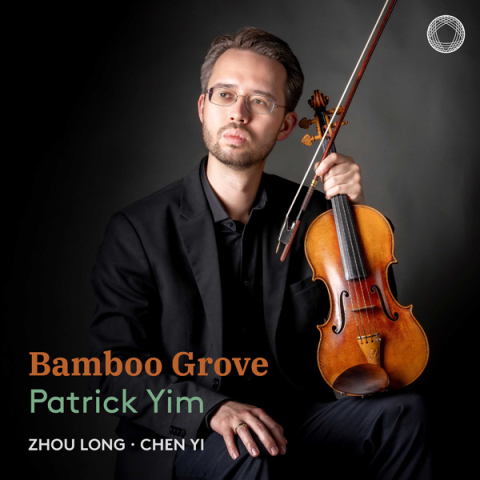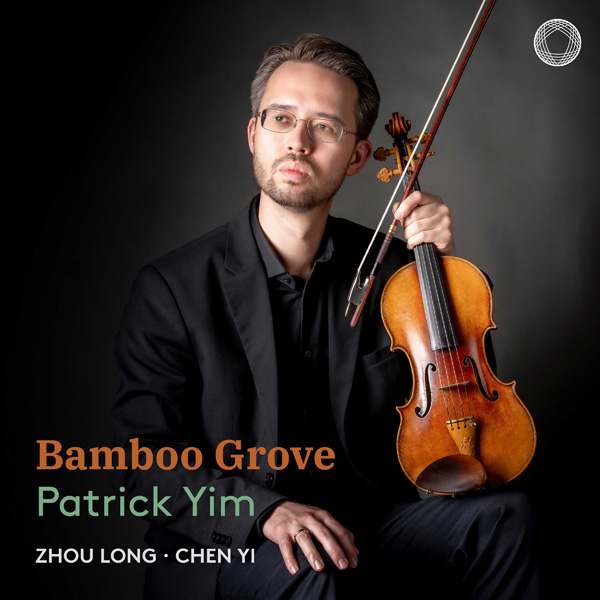
Patrick Yim: Bamboo Grove
Works by Zhou Long, Chen Yi
Patrick Yim, violin, viola; Catherine Ramirez, flute; Jennet Ingle, oboe; John Diodati, clarinet; Anna Marsh, bassoon; Charles Roberts, trumpet; Matthew Oliphant, horn; Riley Leitch, trombone; Kirsten Docter, viola; Shuai Wang, piano; Paul Vaillancourt, percussion
Pentatone PTC5187586 (CD; auditioned as 24/192 FLAC pre-release). 2026. Patrick Yim, Chen Yi, Zhou Long, prods.; Dan Nichols, eng.
Performance *****
Sonics ***** This bountiful find presents string player Patrick Yim in four thrilling world-premiere recordings of music by two Chinese-American composers who bring Chinese tonalities to Western instruments. Zhou Long and Chen Yi, both born in 1953, survived the Chinese Cultural Revolution and went on to study at the Central Conservatory of Music in Beijing and Columbia University. Zhou has since won the Pulitzer Prize in Music for his opera Madame White Snake, and Chen has received a Pulitzer nomination along with numerous awards. The title work, Zhou's Bamboo Grove for Unaccompanied Violin (2024), finds Yim utilizing what sounds like every bowing technique known to humankind to invoke the sounds of the guqin (the ancient seven-stringed zither), zheng (the plucked zither), ruan (lute), and erhu (two-stringed Chinese fiddle). As with all the works on the 59-minute recording, strong rhythms and vigorous writing alternate with slower and more contemplative passages. The ending of this fascinating work sounds, to my Western ears, like the unbridled Chinese equivalent of an American hoedown.
Chen's Xian Shi (1982), heard in its trio form for viola, percussion, and piano, dates from her student years. Suite for Viola and Chamber Winds (2012), for an ensemble of nine players conducted by Paul Hostetter, could almost pass as the Chinese-American chamber music counterpart to Stravinsky's The Rite of Spring. George Antheil, the original Bad Boy of American Music, would have been duly impressed by the frenetic pounding that concludes this marvelous audiophile-approved recording.—Jason Victor Serinus
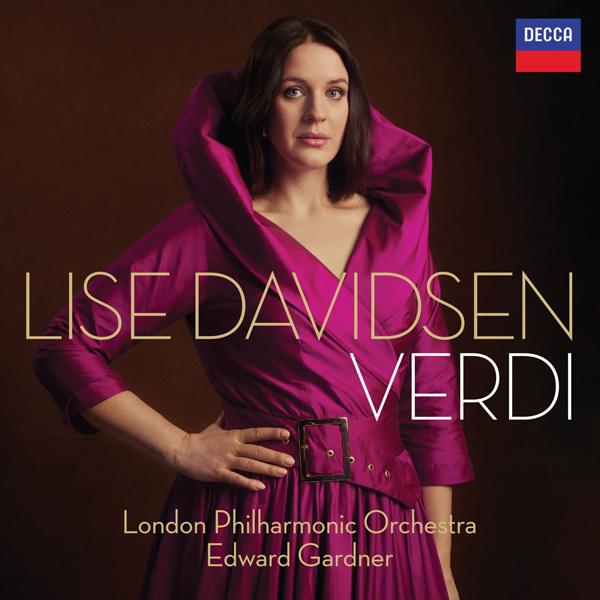 Lise Davidsen: Verdi
Davidsen, soprano; Apollo Voices, London Philharmonic/Edward Gardner
Decca 487 2241 (CD). 2026. John Fraser, prod.; Philip Siney, eng.
Performance ****
Sonics **** It stands to reason that Lise Davidsen, a Norwegian and a Wagnerian, would sing Verdi differently, not with the native practitioners' dark timbre and mercurial temperament, the characteristics that mavens will insist on. But remember: Birgit Nilsson, a bright-voiced Wagnerian of an earlier generation, sang some of these roles often—recording three of them, complete—using her distinctive phrasing and power to advantage.
Maybe, though, starting with the Scottish Lady—Davidsen's Met season opener—was not the best choice. The first aria lies high for her; she has to "chop up" the cabaletta's syncopations, and the octave drops don't open out but instead collapse inward. "La luce langue" is a better fit, though her fast section remains cautious. The best Macbeth aria for Davidsen is the Sleepwalking Scene, which musters some chest voice and rises to a nice floated D-flat.
In the handsomely sung, alert Un ballo in machera arias, she gets better—then keeps getting better. She brings a wonderful intensity and thrust to the Forza del destino cuts, intoning "La Vergine degli Angeli" with a pleading breadth. The Don Carlo arias are even better: She fills out the broad lines of "Tu che le vanità," responding with alert immediacy to the agitated central section. Finally, Davidsen manages to convey the requisite tumult of Aïda's "Ritorna vincitor!"
The Sleepwalking Scene gets its long introduction, but then the supporting parts are simply skipped over; a slightly frayed male chorus seconds Davidsen in Forza. Gardner here redeems the clumsy impression he made when he supported Freddie De Tommaso in Puccini, with his taut, bang-bang start in Ballo, alert pickups in Don Carlo, and compact but still-splashy tuttis in Aïda.—Stephen Francis Vasta
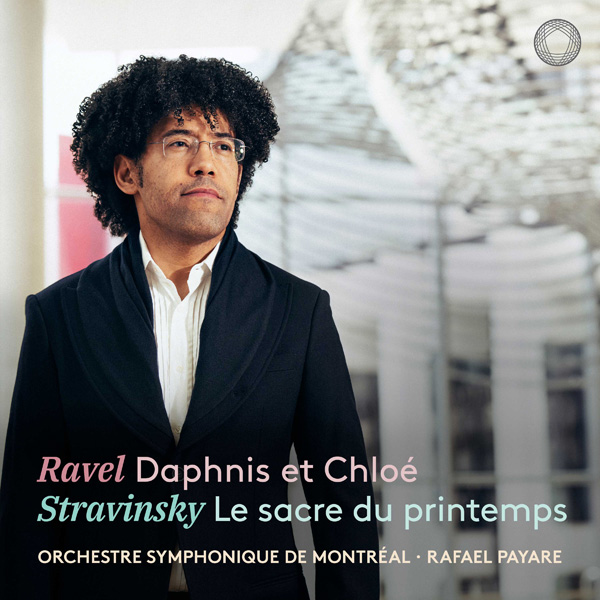 Ravel: Daphnis et Chloé
Stravinsky: Le sacre du printemps
Montréal Symphony Orchestra/Rafael Payare
Pentatone PTC187665 (2 CDs). 2026. Carl Talbot, prod.; Richard King, eng.
Performance ****½
Sonics ****½ From the opening bars, this Daphnis et Chloé promises (and delivers) something special. The soft harp plinks emerge cleanly from opposite ends of the stage. The wordless chorus sits in perspective as "another instrument." The horn and flute soli are firm and clear. The polished Montréal winds register from various pinpoint locations within a spacious sonic frame: one trumpet solo in Tableau 2 clearly and vividly emanates upstage of the reeds. Only hard-edged trumpets at the peaks keep the production out of the highest audiophile category. The purely musical virtues are, if possible, even greater. Where this dazzling score tempts many conductors to play it as a showpiece, Payare remembers that it is, first and foremost, a dance score. Even the staccatos of the Danse des jeunes filles (track 3) go with buoyant motion; so does the Danse de Lycéion (track 6). The disjunct string motif—familiar from the Suite but appearing throughout the score—undulates enticingly on each appearance, even at slower tempi. The quieter passages are calm and transparent.
The Sacre gets a slightly softer-edged focus, which, however, doesn't obscure clear detail, and it avoids an edge that's harsh. Payare plays the long opening scene almost lyrically: You can practically hear Nature awakening and burgeoning. The rest follows standard lines, though, as in Daphnis, Payare brings out the score's dance underpinnings.
The end of Part I is unusually fleet and propulsive. The concluding Danse sacrale is as energetic as any other, but Payare elicits airborne phrasing that transcends the irregular bar lines.
The musically excellent performance and sonically excellent recording are worth your attention.—Stephen Francis Vasta
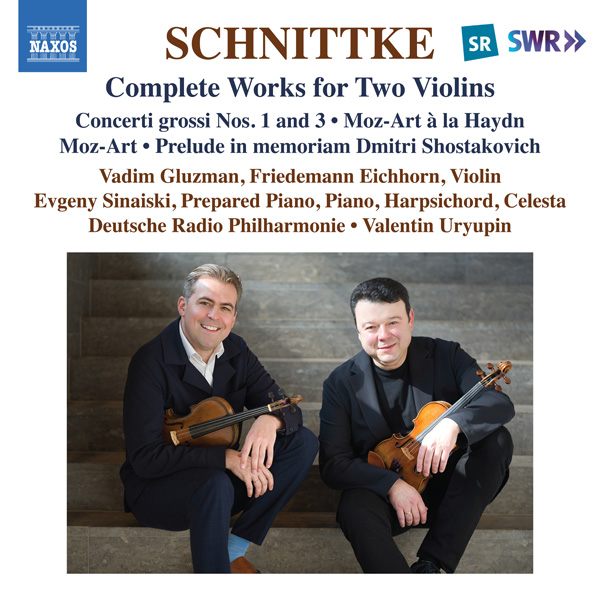 Schnittke: Complete Works for Two Violins
Concerti grossi 1 and 3, Moz-Art à la Haydn, Moz-Art, Prelude in memoriam Dmitri Shostakovich
Vadim Gluzman, Friedemann Eichhorn, violin; Evgeny Sinaiski, keyboards; Deutsche Radio Philharmonie/ Valentin Uryupin
Naxos 8.574460 (CD; auditioned as 24/48 WAV pre-release). 2026. Sébastien Chonion, prod.; Thomas Becher, Angela Öztanil, engs.
Performance *****
Sonics ****
No music is quite like Alfred Schnittke's. Once the German-Jewish-Russian composer got past dabbling with serialism, you could count on more twists, turns, and detours than you'd encounter on the Los Angeles freeways amidst occasional musical quotations and tributes to other composers.
The six-movement Concerto grosso 1, composed in 1976–'77 for Tatiana Grindenko and Gidon Kremer, is one of the pieces that put Schnittke on the map. The opening prelude, which features a prepared piano that John Cage would have loved, may sound pretty strange, if not downright hilarious, but it merely hints at the outrageous harmonies, unexpected outbursts, and other assorted weirdness that follows. Even when Schnittke appears intent on adhering to authentic baroque style, the loveliest of passages serve as little more than decoys for the assaults that follow. Unless they don't, of course, and Schnittke surprises you once again.
How wild can he get is the first question that may cross your mind as you cue up the Concerto grosso 3 for two violins and chamber orchestra. Composed in 1985, it overflows with unexpected delights. Even if no musician would have dared play music like this for baroque royalty, we, blessed by the sounds of two famed Stradivarius violins played by two exceptional artists, are the beneficiaries of what they missed.
Moz-Art, one of two works on the recording inspired by Mozart's fragment K.416d, is wild and delightful. The Prelude in memoriam Dmitri Shostakovich, however, is far more serious and moving. Great stuff.—Jason Victor Serinus
Works by Zhou Long, Chen Yi
Patrick Yim, violin, viola; Catherine Ramirez, flute; Jennet Ingle, oboe; John Diodati, clarinet; Anna Marsh, bassoon; Charles Roberts, trumpet; Matthew Oliphant, horn; Riley Leitch, trombone; Kirsten Docter, viola; Shuai Wang, piano; Paul Vaillancourt, percussion
Pentatone PTC5187586 (CD; auditioned as 24/192 FLAC pre-release). 2026. Patrick Yim, Chen Yi, Zhou Long, prods.; Dan Nichols, eng.
Performance *****
Sonics ***** This bountiful find presents string player Patrick Yim in four thrilling world-premiere recordings of music by two Chinese-American composers who bring Chinese tonalities to Western instruments. Zhou Long and Chen Yi, both born in 1953, survived the Chinese Cultural Revolution and went on to study at the Central Conservatory of Music in Beijing and Columbia University. Zhou has since won the Pulitzer Prize in Music for his opera Madame White Snake, and Chen has received a Pulitzer nomination along with numerous awards. The title work, Zhou's Bamboo Grove for Unaccompanied Violin (2024), finds Yim utilizing what sounds like every bowing technique known to humankind to invoke the sounds of the guqin (the ancient seven-stringed zither), zheng (the plucked zither), ruan (lute), and erhu (two-stringed Chinese fiddle). As with all the works on the 59-minute recording, strong rhythms and vigorous writing alternate with slower and more contemplative passages. The ending of this fascinating work sounds, to my Western ears, like the unbridled Chinese equivalent of an American hoedown.
Lise Davidsen: VerdiDavidsen, soprano; Apollo Voices, London Philharmonic/Edward Gardner
Decca 487 2241 (CD). 2026. John Fraser, prod.; Philip Siney, eng.
Performance ****
Sonics **** It stands to reason that Lise Davidsen, a Norwegian and a Wagnerian, would sing Verdi differently, not with the native practitioners' dark timbre and mercurial temperament, the characteristics that mavens will insist on. But remember: Birgit Nilsson, a bright-voiced Wagnerian of an earlier generation, sang some of these roles often—recording three of them, complete—using her distinctive phrasing and power to advantage.
Ravel: Daphnis et ChloéStravinsky: Le sacre du printemps
Montréal Symphony Orchestra/Rafael Payare
Pentatone PTC187665 (2 CDs). 2026. Carl Talbot, prod.; Richard King, eng.
Performance ****½
Sonics ****½ From the opening bars, this Daphnis et Chloé promises (and delivers) something special. The soft harp plinks emerge cleanly from opposite ends of the stage. The wordless chorus sits in perspective as "another instrument." The horn and flute soli are firm and clear. The polished Montréal winds register from various pinpoint locations within a spacious sonic frame: one trumpet solo in Tableau 2 clearly and vividly emanates upstage of the reeds. Only hard-edged trumpets at the peaks keep the production out of the highest audiophile category. The purely musical virtues are, if possible, even greater. Where this dazzling score tempts many conductors to play it as a showpiece, Payare remembers that it is, first and foremost, a dance score. Even the staccatos of the Danse des jeunes filles (track 3) go with buoyant motion; so does the Danse de Lycéion (track 6). The disjunct string motif—familiar from the Suite but appearing throughout the score—undulates enticingly on each appearance, even at slower tempi. The quieter passages are calm and transparent.
Schnittke: Complete Works for Two ViolinsConcerti grossi 1 and 3, Moz-Art à la Haydn, Moz-Art, Prelude in memoriam Dmitri Shostakovich
Vadim Gluzman, Friedemann Eichhorn, violin; Evgeny Sinaiski, keyboards; Deutsche Radio Philharmonie/ Valentin Uryupin
Naxos 8.574460 (CD; auditioned as 24/48 WAV pre-release). 2026. Sébastien Chonion, prod.; Thomas Becher, Angela Öztanil, engs.
Performance *****
Sonics ****