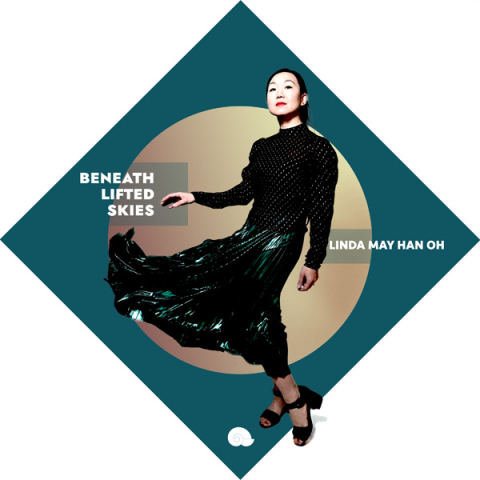

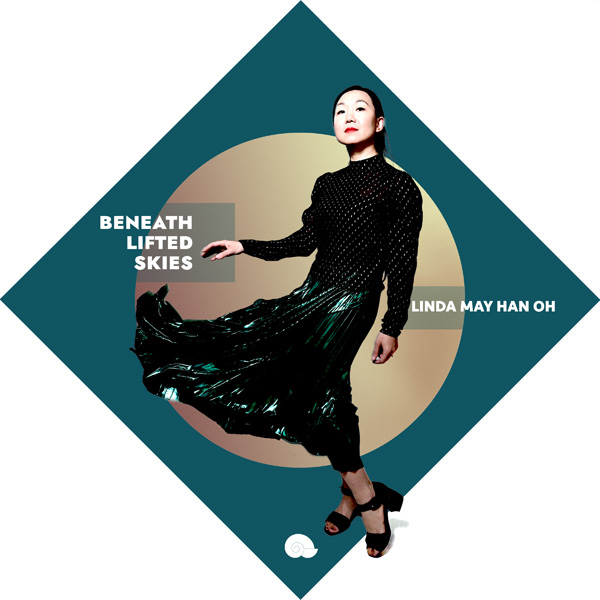
Linda May Han Oh: Beneath Lifted Skies
Oh, acoustic bass; Melissa Aldana, saxophones
Biophilia Records BREP0040 (CD). 2026. Oh, prod.; Dave Darlington, eng.
Performance *****
Sonics **** Standards albums are abundant in jazz. Few, though, have the focus, intensity, and joy that bassist Linda May Han Oh and saxophonist Melissa Aldana bring to this Biophilia Records release. The energy Oh and Aldana summon for these infrequently covered standards is a marvel of economy and drive. Their note choices reveal quick wits and deep chordal empathy. Solos are focused. Communication, focus, and exuberance create a high-wire effect that captivates. Each selection is a virtuoso performance.
The pair bursts from the gate with Wayne Shorter's "Dance Cadaverous," stating the melody with clear-headed mastery, following this with rapt improvisations, dissecting the chord progression while moving together.
The playful "Social Call," popularized by Betty Carter, is a good-natured, swinging romp. Aldana does her birdlike fluttering. Oh lays down a rhythm so deep and vigorous it could clear a city block.
The 15-track outing includes a searing, beautiful take on "Duke Ellington's Sound of Love." Aldana's tone is the stuff of pure soul. Oh's commentary is stately and substantial.
Bud Powell's "Hallucinations" is majestic. Oh covers her whole large instrument and all the strings with beautiful tone and steely, declarative plucks. Her logic on solos is unique. On Charlie Parker and Dizzy Gillespie's "Anthropology," Aldana matches Oh's intensity in her own way, with graceful exhortations, a sleek bebop feel, and a whirring, stop-time solo.
The other tracks, all performed furiously, include Sam Rivers's "Cyclic Episode," Thelonious Monk's "Introspection," and Coltrane's "26-2." There are two improvisations and one Oh original. It's the past, present, and future of jazz in 54 minutes and 23 seconds.—Ken Micallef
 Kelly Green: Eat Your Greens!
Green, vocals, piano, arrangements; seven others
Green Soul Studios 1006 (CD). 2026. Green, prod.; Todd Whitelock, eng.
Performance ****
Sonics ****½
Chops are abundant on Eat Your Greens!, but this record has a quality more rare than chops: charm.
When the first track begins—Jerome Kern's "Nobody Else but Me"—you are quickly captivated. Green has the voice of a waif, someone you want to protect. There is a throwback fascination to her style. She reminds you of another singer/pianist, Blossom Dearie, who had a cult following back in the day (and who also sang "Nobody Else but Me").
Green turns out to be more complex than she at first seems. That coy, childlike voice is only one of her sounds. By the end of the opening track, she is belting it out and kicking your ass. She doesn't need your protection. And while the vintage bebop vibe is real, Green's infectious joie de vivre keeps the music alive in the moment. Try to listen to "When You're Smilin'" without grinning like a fool. Just try.
In fact, Green has many moods besides elation. Her version of "The Very Thought of You" is intimate and personal. Her precise diction gives the lyrics intelligent clarity and emotional credibility. She uncovers new subtleties of nuance in the song. She also offers a thoughtful, understated, and therefore affecting rendering of Duke Ellington's "Solitude." Her most inspired song choice is Paulette Girard's "If I'm Lucky," a little-remembered gem whose gentle pensiveness is perfect for her.
There are other reasons why this is more than a feel-good retro record. Green is a better piano player than most singer/pianists, and she is a clever arranger. Eat Your Greens! is not only a singer's album. Her band gets as much space as she does, and it is filled with high-class soloists like saxophonists Steve Wilson and Scott Robinson, trombonist Wycliffe Gordon, trumpeter Wallace Roney Jr., and flautist Elijah J. Thomas.—Thomas Conrad
 Jim McNeely/Frankfurt Radio Big Band: Expeditions
McNeely, composer, arranger, conductor; 18-piece orchestra
Sunnyside SSC1795 (CD). 2026. Olaf Stötzler, prod.; Maximilian Sauer, eng.
Performance ***½ Sonics ****
Jim McNeely died in September 2025. He was good enough to play with people like Stan Getz and Phil Woods, but he was best known as a composer/arranger for large ensembles. He had a long relationship with the Thad Jones/Mel Lewis Big Band and worked extensively with European orchestras.
Europe has many excellent radio big bands, permanent aggregations maintained by publicly funded broadcasting institutions. McNeely's longest European engagement was with the Frankfurt Radio Big Band. Expeditions is a 12-part suite composed for that ensemble. It was premiered and recorded in Frankfurt on June 13, 2024, with McNeely conducting. Expeditions became his final artistic testament.
He was an erudite composer/arranger. In a McNeely chart, many things happen at once. Meters shift. Motifs intersect. Complex counterpoint evolves. Tunes pause and transform and start over. As a big band composer, McNeely may not have created melodies that became fixed in time forever, like Gil Evans and Oliver Nelson. Sometimes his work is so intricately and meticulously assembled that it feels analytical. But even then, its elegance and intelligence are rewarding.
He also knew how to maximize a band. On Expeditions, he gives one solo to each of the 18 players. All 18 shine. It is almost unfair to name only a few. But tenor saxophonist Steffen Weber injects raw passion into the sophisticated evolving form of "Terra Incognita." Flugelhornist Martin Auer completes "At Twilight" with his fervent lyricism. Baritone saxophonist Rainer Heute is powerful on "At Midnight." So is bassist Hans Glawischnig on "Reflections on Coming Home." For recordings, the radio orchestras of Europe often bring in famous soloists from the outside. On Expeditions, there was no need.—Thomas Conrad
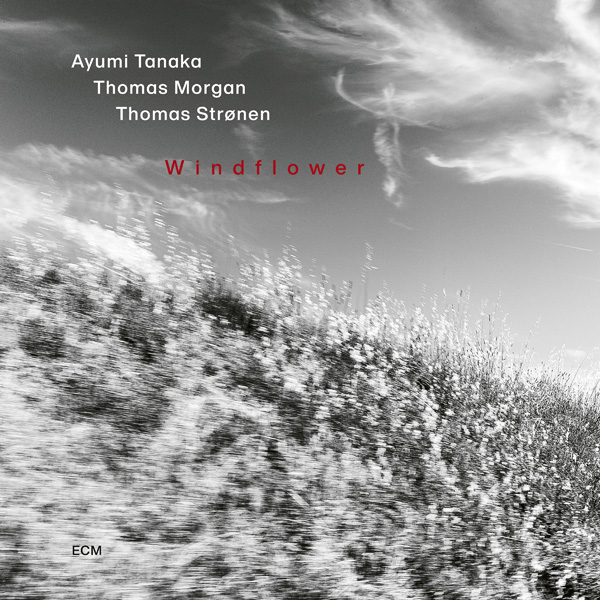 Ayumi Tanaka/Thomas Morgan/Thomas Strønen: Windflower
Tanaka, piano; Morgan, bass; Strønen, drums
ECM 2859 (CD). 2026. Manfred Eicher, prod.; Gérard de Haro, eng.
Performance ****
Sonics ****½ If ECM had only ever released piano trio recordings, it would still be a major label. Its catalog of piano trio albums is headed by the huge discography of Keith Jarrett, but there are many other brilliant trios on ECM, led by such pianists as Bobo Stenson, Tord Gustavsen, Stefano Battaglia, John Taylor, and Marcin Wasilewski. The piano trio is ECM's sweet spot.
Ayumi Tanaka has had an unusual career trajectory. She was born in Japan and began playing classical music. In 2011, in her mid-20s, she moved to Oslo. She is now embedded in the Norwegian jazz scene and is considered a prominent representative of atmospheric Nordic ambience.
Eight of the nine tracks here are characterized as "spontaneously composed." On pieces like "Weaving" and "Spring," you can hear Tanaka finding new melodies under her hands in real time. Albums made by means of collective improvisation require a different level of engagement from their audience. They call for creative listening. You have to suspend yourself in the moment like the players, and so open yourself to their movements that you almost become a participant. Tanaka's motifs often begin like small, bare cells. When, like on "Driftwood," a cell unfolds and blossoms, the epiphany is intense. Tanaka is intuitive about the meaning of space in music. But she is also capable of flooding silence with melody. Her songs are streams of consciousness that make free-form, variously beautiful designs.
Thomas Morgan and Thomas Strønen are leading voices in current jazz on their instruments. Strønen specializes in percussion gestures that are stark, pivotal, and provocative. Morgan, on pieces like "Tree of Stars," plays bass lines so lyrical that, while they last, become all you hear or care about.—Thomas Conrad
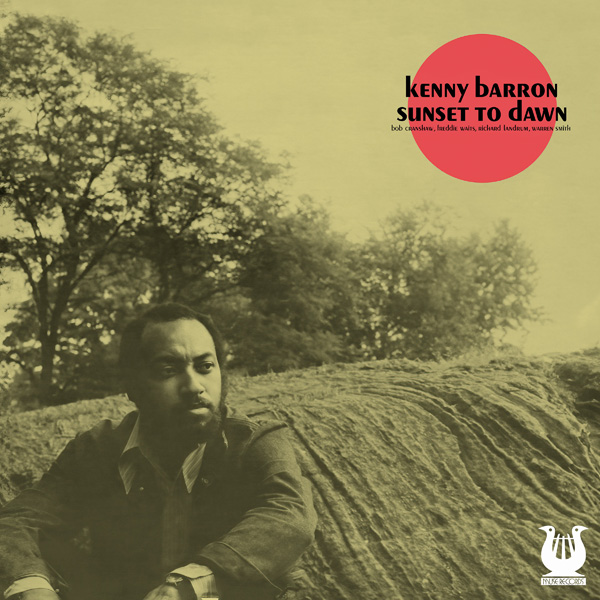 Kenny Barron: Sunset to Dawn
Barron, piano; Bob Cranshaw, bass; Freddie Waits, drums; Richard Landrum, Warren Smith, percussion
Muse/Time Traveler TT-M002 (LP). 1973/2026. Don Schlitten, prod.; Paul Goodman, eng.; Zev Feldman, James Batsford, reissue prods.; Lloyd Hummel, exec. reissue prod.; Matthew Luthans, reissue eng.
Performance ****½
Sonics ****½ One of today's giants on jazz piano, Kenny Barron's recording catalog is vast. Including compilations, it now numbers somewhere over 100 entries. Sunset to Dawn is one of Barron's earliest dates as a leader. This superbly pressed and packaged reissue from the storied Muse catalog is the first time the album has been back on LP since its 1973 release.
While the opener, "Sunset," is a little too enamored at first with the pulsing reverb of the electric piano, the nine-minute tune eventually settles into a midtempo pace. At times, Barron catches a little of Bob James's lightly funky way on piano. Next up, "A Flower," also a Barron original and basically a solo piece, gorgeously displays the lyricism that has always made Barron such a special player.
Barron is not usually thought of as a soul-jazz groover, but here he stakes his funky claim with his own "Swamp Demon," a rich, convincing funk jam. Barron stretches out on electric piano, his soul-jazz weapon of choice. Alternately soloing and pushing the groove forward, in league with the steady bass throb of Bob Cranshaw, Barron explores a side of his playing he has rarely if ever turned to.
He follows that with "Al-Kifha," a nimble, swiftly paced post-bop sprint. Barron flies dexterously through arpeggios, leading the breakneck charge, Cranshaw and Waits close behind. Warren Smith adds his instrumental voice at opportune moments.
Barron returns to the electric piano in the closer and again, ably supported by Smith and bassist Bob Cranshaw, demonstrates his surprisingly easy affinity with this instrument. Sonics are rich and exemplary throughout. An often-forgotten classic returns.—Robert Baird
Oh, acoustic bass; Melissa Aldana, saxophones
Biophilia Records BREP0040 (CD). 2026. Oh, prod.; Dave Darlington, eng.
Performance *****
Sonics **** Standards albums are abundant in jazz. Few, though, have the focus, intensity, and joy that bassist Linda May Han Oh and saxophonist Melissa Aldana bring to this Biophilia Records release. The energy Oh and Aldana summon for these infrequently covered standards is a marvel of economy and drive. Their note choices reveal quick wits and deep chordal empathy. Solos are focused. Communication, focus, and exuberance create a high-wire effect that captivates. Each selection is a virtuoso performance.
Kelly Green: Eat Your Greens!Green, vocals, piano, arrangements; seven others
Green Soul Studios 1006 (CD). 2026. Green, prod.; Todd Whitelock, eng.
Performance ****
Sonics ****½
Jim McNeely/Frankfurt Radio Big Band: ExpeditionsMcNeely, composer, arranger, conductor; 18-piece orchestra
Sunnyside SSC1795 (CD). 2026. Olaf Stötzler, prod.; Maximilian Sauer, eng.
Performance ***½ Sonics ****
Ayumi Tanaka/Thomas Morgan/Thomas Strønen: WindflowerTanaka, piano; Morgan, bass; Strønen, drums
ECM 2859 (CD). 2026. Manfred Eicher, prod.; Gérard de Haro, eng.
Performance ****
Sonics ****½ If ECM had only ever released piano trio recordings, it would still be a major label. Its catalog of piano trio albums is headed by the huge discography of Keith Jarrett, but there are many other brilliant trios on ECM, led by such pianists as Bobo Stenson, Tord Gustavsen, Stefano Battaglia, John Taylor, and Marcin Wasilewski. The piano trio is ECM's sweet spot.
Kenny Barron: Sunset to DawnBarron, piano; Bob Cranshaw, bass; Freddie Waits, drums; Richard Landrum, Warren Smith, percussion
Muse/Time Traveler TT-M002 (LP). 1973/2026. Don Schlitten, prod.; Paul Goodman, eng.; Zev Feldman, James Batsford, reissue prods.; Lloyd Hummel, exec. reissue prod.; Matthew Luthans, reissue eng.
Performance ****½
Sonics ****½ One of today's giants on jazz piano, Kenny Barron's recording catalog is vast. Including compilations, it now numbers somewhere over 100 entries. Sunset to Dawn is one of Barron's earliest dates as a leader. This superbly pressed and packaged reissue from the storied Muse catalog is the first time the album has been back on LP since its 1973 release.