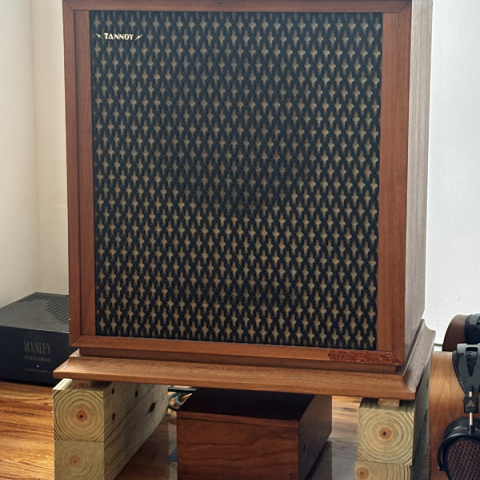
My story with Wattson Audio began about three years ago. It was my first encounter with a network bridge, at least within the context of our hobby. It happened as I was covering the Montreal Audiofest for Stereophile, in the exhibitor room helmed by Canadian distributor Phonographe, which had perhaps the most minimalist demo at the show. When I entered the room, I saw vintage-looking speakers and a Thöress integrated amplifier—but no source. Where I expected the source to be, against the front wall, there was only a window.
Or so I thought. Behind the curtain, resting on the windowsill, was a stage star waiting for its big reveal—a Wattson Emerson Analog network bridge. The system sounded very good, but when Phonographe owner Erik Fortier, who hosted the room, introduced the Emerson to me as a network bridge, I felt compelled to correct him.
"You mean a streamer, right?" He responded with what I interpreted as a "more-or-less" swivel of his head, then added: "It just connects your streaming service to your DAC."
"So, it's a music server?" I sputtered, feeling the muscles in my neck tighten.
"It's a bridge," he said patiently, at which point I dropped an emphatic nod, as if I'd just had a "Got it!" moment, but it wasn't true. I just told myself I'd look it up later.
What exactly is a network bridge?
Determined to answer that question over the course of this review, I started with the most obvious source of information: the Wattson Audio website. The closest I found to a direct explanation was its description of the Emerson Digital as a product that "turns any DAC into a streaming DAC." But that doesn't tell the whole story. For one thing, it appeared that a network bridge could also include D/A conversion. Case in point: The Emerson Analog I auditioned in the Phonographe room has a built-in DAC and is nonetheless referred to by Wattson as a network bridge. It outputs an analog signal—hence its name—while the Digital model reviewed here outputs a digital signal that needs to be converted to analog by an outboard DAC. Looking into it further, I felt I'd stumbled on an important clue in my quest for clarity when I read on the Wattson website that the sole function of the Digital was to bridge a datastream to a DAC, no filters, no data conversion of any kind. That's about as straight-wire as it gets.
The Emerson Digital uses an asynchronous architecture employing a bespoke clock powered by ultralow-noise phase oscillators, one supporting the 44.1kHz family of sample rates, the other the 48kHz family—that is, those frequencies and their multiples.
That's all fine and dandy, but still—what exactly was a network bridge? The most obvious difference between a bridge and a streamer from brands such as Eversolo or HiFi Rose is visual: Those products typically have more features, more connections, and often a built-in menu screen. The Emerson Digital is much simpler, minimalist by design, with an appearance to match.
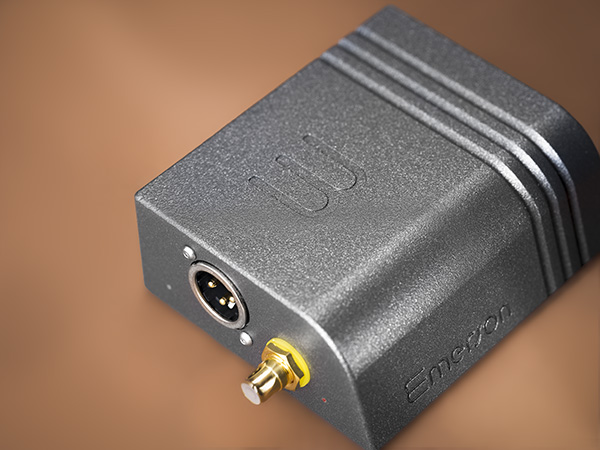
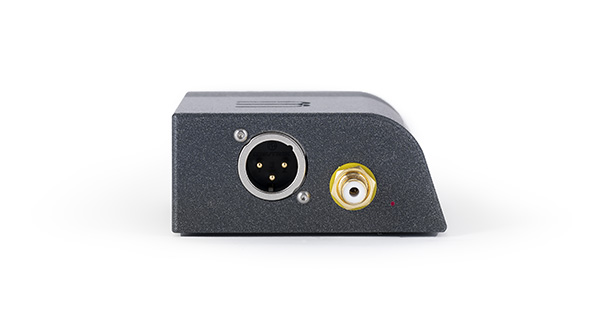
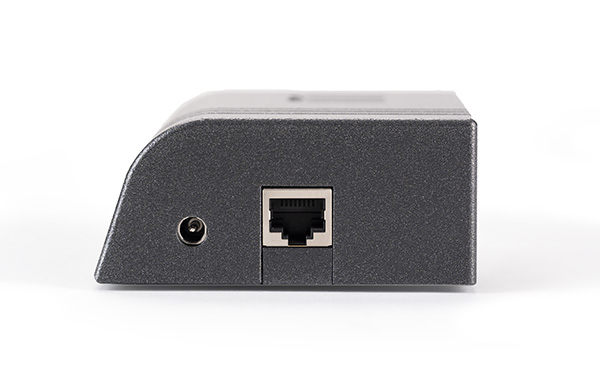 Visually, the Wattson Digital is a billet-aluminum case with the model name and three vertically embossed, rivulet-like lines running parallel across the faceplate, one of which tapers at one end into a downward, shoulder-like motif. There's a single RJ45 Ethernet input on one side and two outputs—one true 75 ohm S/PDIF over RCA and one true 110 ohm AES3—on the other. That, and two tiny LEDs.
When I quoted that the Emerson Digital "turns any DAC into a streaming DAC," I left out the rest of that sentence: "or improves the streaming performance of most streaming DACs." If that sounds like bluster, consider Wattson's backstory—which also goes a long way toward explaining the Emerson Digital.
Who is Wattson?
Visually, the Wattson Digital is a billet-aluminum case with the model name and three vertically embossed, rivulet-like lines running parallel across the faceplate, one of which tapers at one end into a downward, shoulder-like motif. There's a single RJ45 Ethernet input on one side and two outputs—one true 75 ohm S/PDIF over RCA and one true 110 ohm AES3—on the other. That, and two tiny LEDs.
When I quoted that the Emerson Digital "turns any DAC into a streaming DAC," I left out the rest of that sentence: "or improves the streaming performance of most streaming DACs." If that sounds like bluster, consider Wattson's backstory—which also goes a long way toward explaining the Emerson Digital.
Who is Wattson?
Wattson Audio was founded in 2019, but its roots in streaming date back two decades—to 2004, when a former Goldmund engineer named Florian Cossy founded ABC PCB as an audio-engineering company specializing in network signal processing. ABC PCB's main business was providing products and technologies to other companies, an activity typically dubbed "OEM" for "original-equipment manufacture." The first engineer Cossy hired was another Goldmund alum, Alexandre Lavanchy. In 2009, Florian sold ABC PCB to Alex and a partner and went on to establish CH Precision with the late Thierry Heeb. Alex and his partner reorganized ABC PCB and renamed it, calling it Engineered SA. Engineered SA continued its OEM development, engineering, and consulting work, eventually creating the offshoot company Wattson Audio with the aim of employing its rigorous and well-respected streaming technology into its own product line.
Alex and Florian had gone separate ways, but they remained friends and collaborators. Florian continued to use his former company's Ethernet interface in CH Precision products.
Then, in 2024, in a twist worthy of a Remington shaver commercial ("I liked it so much, I bought the company!"), CH Precision, under Florian's direction, purchased Wattson Audio, bridging Alex and Florian back together again. Heh.
Wattson Audio, then, was founded on its streaming expertise, and its proprietary streaming technology has been refined for a generation. Every model in its lineup hews to a guiding principle: to preserve the integrity of the datastream. That goal supersedes all other design considerations.
The Wattson Emerson Digital
The purest expression of that aim is the Wattson Audio Emerson Digital. But the other products also stick close to those basics. For example, the company's top-of-the-line Madison SE, which has a built-in DAC, and which Herb Reichert reviewed, does away with a screen and all other functions that might interfere with the signal. That extends to the choice to use a high-performance 5V "brick" power supply instead of an internal one, to isolate the mains voltage from the component's core electronics. It's just another precautionary measure that abides by the Audiophilic Oath, which, just like the Hippocratic one, commands, "First, do no harm." As all seekers of audio purity know, prevention is better than cure. So that's the beauty of the Emerson Digital: its singular purpose and purity of execution. It was created to do one thing and do it in a way that matters to those who value sound quality most of all: deliver a clean, bit-perfect, jitter-free PCM signal up to 24/192kHz and native DSD64. Its whole meaning in life is to be a lean, mean streaming machine. "CH Precision uses this interface because we think it's the best," said Kevin Wolff, representative of both CH Precision and Wattson Audio, of the platform's underlying technology. "And because of the close relationship [between companies] and the quality of our engineering team, we were the only audio manufacturer that created its own streaming firmware."
Interestingly, while the Analog version, unlike the Digital one, includes a DAC, both models sell for the same price. Explained Kevin: "In today's market, the parts cost of the DAC chips is actually modestly less expensive than the two digital outputs" on the digital version. "We don't broadcast this, but crazy as it sounds, this is the way things are today."
He added: "All Wattson Audio pieces are Swiss made. This has been true from the beginning." What's new today is that "they are all engineered, designed, machined, and built by CH Precision. Even the boards are done in the same Swiss factory. CH Precision and the Wattson teams are merged and developing products together."
Wattson Audio describes the Emerson, which is Roon Ready and supports Apple AirPlay 2, as future-proof. New technologies can be supported with a firmware upgrade.
 Setup
Setup
The sentence you're reading right now took about as long to type as it took me to connect the Emerson Digital's power supply, network cable, and my digital coax cable to my iFi Diablo DAC. Setting up the Emerson made me feel like the Flash. I felt like the Flash again when I downloaded the Wattson Remote streaming app to my Android smartphone—a tablet or laptop will also do—and linked it to the Wattson, which appeared on my phone as "Emerson DIGITAL-38." The "38" represents the final digits of the IP address assigned to the Emerson by the local network router. Once its job was complete, bridging my phone to the Emerson, the app was out of the picture and everything else—the library browsing, the track selections—was handled directly through my streaming-service apps. This isn't the case with the app's iOS counterpart, called Wattson Music, which is considerably more versatile. "The distinction is intentional," John Giolas, global director of marketing for Wattson Audio and CH Precision, said. "While the Wattson Remote is used exclusively for initial configuration and volume control, the iOS version is the complete operational interface, allowing users to browse music, access streaming services, and manage playback in one integrated environment." The Music app allows access to music files stored on network-attached storage. "Both apps communicate with the hardware identically; the difference lies in scope, not performance."
Currently the Wattson Music app is basic. It's fully functional in the sense that it lets you access all the music you'll likely want to access, but it's basic in the same sense the Emerson Digital itself is basic. For one thing, it's only available for iPhone; if you run it on an iPad, it appears in a window shaped like an iPhone screen. Most likely—for now at least—you'll use third-party apps (Qobuz, Tidal) and connect to the Emerson using their Connect features.
Finally, the Emerson Digital is a sleeper—literally: If it hasn't detected a signal for roughly 15 minutes, it goes to sleep.
Listening
Immediately after I'd inserted the Emerson in my system, I took a test drive into Qobuz Hi-Res territory, a densely populated area, and took an offramp into the subcategory Hi-Res Masters: Autumn Songs, a section encompassing song titles alluding to fall spanning six hi-rez hours and 89 tracks. My pit stops included the first three tracks: Diana Krall's "Autumn in New York" in 24/48, Chet Baker's "'Tis Autumn" in 24/192, and Ella Fitzgerald's "Early Autumn" in 24/192. I took a side trip through Hi-Res Masters: Jazz Guitar to take in Grant Green's "Idle Moments" in 24/192.
I hit no functional speedbumps. Everything worked. The sound was very good—earth-toned, well-sorted, harmonically ambient with an undercurrent of quiet stability.
 I let the music stream 24/7 for a handful of days then got down to more focused listening, starting with 16/44.1 fare: David Bowie's "Lazarus" from Blackstar. This song lives or dies on the gravitational force of the bassline weaving through it—if it lacks presence or impact, the music loses its cohesion. There was none of that with the Emerson, which preserved the bassline's grip and granted the orbiting sounds appropriate weight.
With data flowing from the Emerson Digital, the music seemed relaxed, on time, dynamically spry. This is basic: no amount of texture, tone, or whatever else we audiophiles crave will keep our minds on the music if it sounds like it's dragging its feet or running out of gas.
Something else the Emerson did well was detail, that most double-edged of sonic attributes. Happily, the Wattson's detail wasn't of the flesh-eating type. It was space-filling, shape-giving, and melodically insightful. The studio effects in "Lazarus" surged high above and horizontally beyond the speaker plane. They projected into the room as palpable images laid out in their own air-churning atmospheres, right in front of me.
Perhaps the most striking attribute I heard was the sense of composed physicality—that stability thing I alluded to earlier in my hi-rez observations with Autumn Songs. In the softest, quietest passages, where you might expect some grain to creep in or for the glint of glass-eyed snakes to peek through the grass, there was none. The music and the setting were undisturbed.
I let the music stream 24/7 for a handful of days then got down to more focused listening, starting with 16/44.1 fare: David Bowie's "Lazarus" from Blackstar. This song lives or dies on the gravitational force of the bassline weaving through it—if it lacks presence or impact, the music loses its cohesion. There was none of that with the Emerson, which preserved the bassline's grip and granted the orbiting sounds appropriate weight.
With data flowing from the Emerson Digital, the music seemed relaxed, on time, dynamically spry. This is basic: no amount of texture, tone, or whatever else we audiophiles crave will keep our minds on the music if it sounds like it's dragging its feet or running out of gas.
Something else the Emerson did well was detail, that most double-edged of sonic attributes. Happily, the Wattson's detail wasn't of the flesh-eating type. It was space-filling, shape-giving, and melodically insightful. The studio effects in "Lazarus" surged high above and horizontally beyond the speaker plane. They projected into the room as palpable images laid out in their own air-churning atmospheres, right in front of me.
Perhaps the most striking attribute I heard was the sense of composed physicality—that stability thing I alluded to earlier in my hi-rez observations with Autumn Songs. In the softest, quietest passages, where you might expect some grain to creep in or for the glint of glass-eyed snakes to peek through the grass, there was none. The music and the setting were undisturbed.
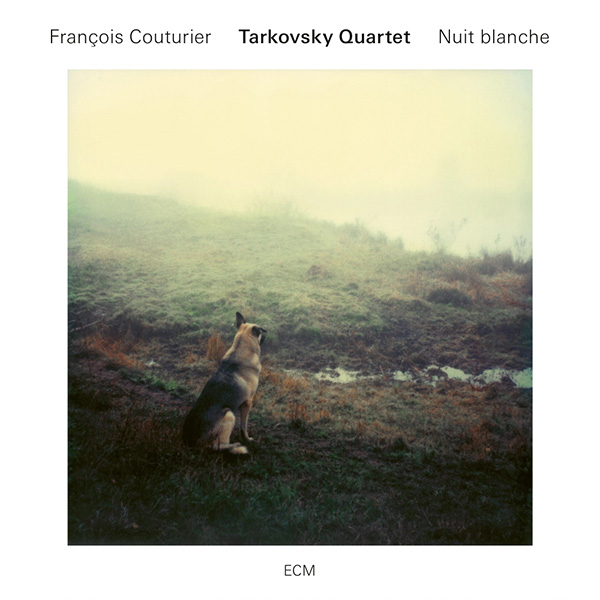 That quality was especially noticeable during Nuit blanche by the Tarkovsky Quartet (24/96 FLAC, ECM/Qobuz), an ECM recording replete with delicate tones, contorting nuances, and protracted notes from piano, cello, soprano saxophone, and accordion. I heard plenty of subtle shifts in tone and texture even as the music's sensuously steady pace was preserved.
If I seem surprised by the sound's sense of stability, it's because of a bias—but a bias based on experience. I have long found that physical formats sound more physical—vinyl most obviously—while streams sound more, well, streamy, more glazed and less rooted to the ground. I'm convinced that this remains a valid observation in many cases—but apparently not all.
A few times during my audition of Nuit blanche, I found myself marveling—much as I marvel that this giant plane I'm flying in is charging through the air at several hundred miles per hour at 30,000 feet—that the source of this unwavering sound wasn't a physical medium but a stream of data packets siphoned off the internet. Some of those packets may have taken one route to my home, other packets a completely different route. But the Emerson never wavered. It always brought a sure-footed eloquence to the music. This is progress, I thought.
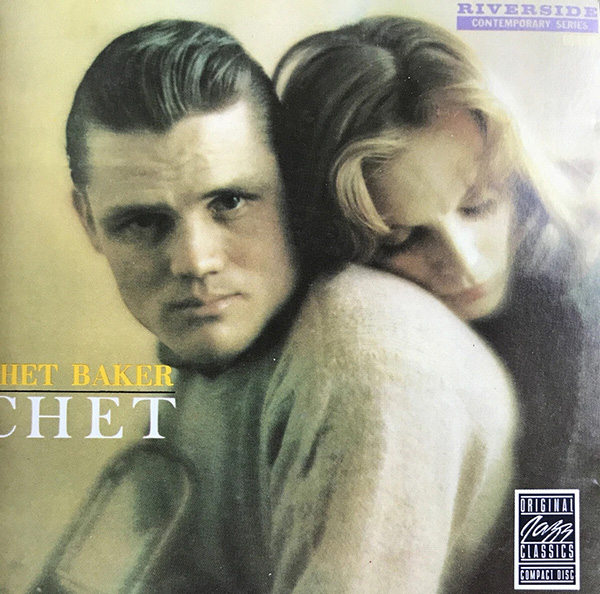
Does it sound as solid as a CD? I compared excerpts from CDs with their Tidal-streamed counterparts, volume levels matched with my Android Sound Decibel Meter app, with both formats feeding a 16/44.1 signal into my iFi Diablo DAC. I made sure that the online versions matched the CD versions I have on hand. The recordings were Chet Baker's Chet (CD, Riverside OJCCD-087) and Radiohead's In Rainbows (CD, TBD Records TBD0001)—the former chosen for its smooth, delicate sounds, the latter for its punch and bold imaging.
In both formats, Chet delivered tonal purity and lots of subtle finger-pressed, air-expulsed technique, amid a harmonically rich backdrop. The presentations were similar, but there were differences. The Wattson delivered more vivid shapes and more textural definition, with bass notes and cymbals a tad more resolved and less receded in the mix than they were on the CD. The overriding difference, however, laid in the lighting. The CD version sounded more closed in and harmonically stunted. The Wattson reproduced a more fully realized, thriving environment.
That quality was especially noticeable during Nuit blanche by the Tarkovsky Quartet (24/96 FLAC, ECM/Qobuz), an ECM recording replete with delicate tones, contorting nuances, and protracted notes from piano, cello, soprano saxophone, and accordion. I heard plenty of subtle shifts in tone and texture even as the music's sensuously steady pace was preserved.
If I seem surprised by the sound's sense of stability, it's because of a bias—but a bias based on experience. I have long found that physical formats sound more physical—vinyl most obviously—while streams sound more, well, streamy, more glazed and less rooted to the ground. I'm convinced that this remains a valid observation in many cases—but apparently not all.
A few times during my audition of Nuit blanche, I found myself marveling—much as I marvel that this giant plane I'm flying in is charging through the air at several hundred miles per hour at 30,000 feet—that the source of this unwavering sound wasn't a physical medium but a stream of data packets siphoned off the internet. Some of those packets may have taken one route to my home, other packets a completely different route. But the Emerson never wavered. It always brought a sure-footed eloquence to the music. This is progress, I thought.
Does it sound as solid as a CD? I compared excerpts from CDs with their Tidal-streamed counterparts, volume levels matched with my Android Sound Decibel Meter app, with both formats feeding a 16/44.1 signal into my iFi Diablo DAC. I made sure that the online versions matched the CD versions I have on hand. The recordings were Chet Baker's Chet (CD, Riverside OJCCD-087) and Radiohead's In Rainbows (CD, TBD Records TBD0001)—the former chosen for its smooth, delicate sounds, the latter for its punch and bold imaging.
In both formats, Chet delivered tonal purity and lots of subtle finger-pressed, air-expulsed technique, amid a harmonically rich backdrop. The presentations were similar, but there were differences. The Wattson delivered more vivid shapes and more textural definition, with bass notes and cymbals a tad more resolved and less receded in the mix than they were on the CD. The overriding difference, however, laid in the lighting. The CD version sounded more closed in and harmonically stunted. The Wattson reproduced a more fully realized, thriving environment.
 Likewise, the streamed Radiohead revealed a more illuminated view, as if a dimmer on a light switch had been nudged upward to expose more shape, color, and spatial definition. But it wasn't just light and space. It was also more bass. Low instruments and percussion delivered more in-your-face impact and bodacious swing.
Then the Benchmark DAC3 B, a Stereophile Class-A+–rated DAC, arrived for a follow-up review.
When I took out the iFi and put in the Benchmark, the gap between the streaming and CD formats widened. I now heard that the iFi sounded brash. The Benchmark removed a layer of grit I had not known was there. The result was a sound that was more polished and palpable, with better separation and smoother tone. Ambience seemed enhanced—due presumably to more complete (longer) decay of notes. Shapes gelled; colors saturated. The soundstage extended backward a few feet and beamed out into the room with more energy.
Revisiting Qobuz's Hi-Res neighborhood, the surroundings now took on a crisper, more vibrant glow. Chet's trumpet in 24/192 sounded taffylike and sculpted, with added girth from better low-end extension. Same for Pepper Adams's baritone sax, which, like the trumpet, gained timbral accuracy and scale. The piano? It sounded more like a piano.
Ella's and Diana's vocals came through more incisive and breathily human. String sections thickened into a fibrously silky texture.
The CD versions? Subdued, lethargic, gray.
CD transports vary in quality, so your mileage may vary. But the transport I was using—the Simaudio Moon 260D—is no slouch. There was also, in the Wattson-streamed music, an improved sense of stability, as reiterated in Nuit blanche, where the noisefloor seemed to drop a level, allowing instruments to sound more deliberate, notes drawn out and more artfully shaped. The music became easier to focus on in a less conscious, less analytical way. I could sum this up by calling it more involving.
I feel obliged at this juncture to point out that the differences between the iFi and Benchmark presentations weren't as night-and-day as these comments might lead you to believe, and that the iFi, like the Emerson, uses a 5V brick power supply whereas the Benchmark was using its own internal power supply (which is surely carefully designed) and a DR Acoustics power cable that retails for $3500. Make of that what you will.
None of that changes a key observation: No digital source can transcend the DAC it feeds its data to.
Does this mean the Emerson could be used as a kind of DAC tester—a way to gauge a DAC's performance relative to a fixed standard, the Emerson? With the caveat that it has no USB output and so could not help evaluate USB DACs, maybe so. Conversely, it could serve as a standard against which to judge other streamers: Could the Emerson Digital outperform the streamers integrated into a $10,000 DAC? A $20,000 one? It would be an interesting thing to test.
Here's another thing I found myself wondering. What if I did that CD comparison using a world-class CD transport, something like the CH Precision D10 Reference Transport, which weighs 140lb and costs $95,000? The D10's transport mechanism weighs more than many CD players.
Likewise, the streamed Radiohead revealed a more illuminated view, as if a dimmer on a light switch had been nudged upward to expose more shape, color, and spatial definition. But it wasn't just light and space. It was also more bass. Low instruments and percussion delivered more in-your-face impact and bodacious swing.
Then the Benchmark DAC3 B, a Stereophile Class-A+–rated DAC, arrived for a follow-up review.
When I took out the iFi and put in the Benchmark, the gap between the streaming and CD formats widened. I now heard that the iFi sounded brash. The Benchmark removed a layer of grit I had not known was there. The result was a sound that was more polished and palpable, with better separation and smoother tone. Ambience seemed enhanced—due presumably to more complete (longer) decay of notes. Shapes gelled; colors saturated. The soundstage extended backward a few feet and beamed out into the room with more energy.
Revisiting Qobuz's Hi-Res neighborhood, the surroundings now took on a crisper, more vibrant glow. Chet's trumpet in 24/192 sounded taffylike and sculpted, with added girth from better low-end extension. Same for Pepper Adams's baritone sax, which, like the trumpet, gained timbral accuracy and scale. The piano? It sounded more like a piano.
Ella's and Diana's vocals came through more incisive and breathily human. String sections thickened into a fibrously silky texture.
The CD versions? Subdued, lethargic, gray.
CD transports vary in quality, so your mileage may vary. But the transport I was using—the Simaudio Moon 260D—is no slouch. There was also, in the Wattson-streamed music, an improved sense of stability, as reiterated in Nuit blanche, where the noisefloor seemed to drop a level, allowing instruments to sound more deliberate, notes drawn out and more artfully shaped. The music became easier to focus on in a less conscious, less analytical way. I could sum this up by calling it more involving.
I feel obliged at this juncture to point out that the differences between the iFi and Benchmark presentations weren't as night-and-day as these comments might lead you to believe, and that the iFi, like the Emerson, uses a 5V brick power supply whereas the Benchmark was using its own internal power supply (which is surely carefully designed) and a DR Acoustics power cable that retails for $3500. Make of that what you will.
None of that changes a key observation: No digital source can transcend the DAC it feeds its data to.
Does this mean the Emerson could be used as a kind of DAC tester—a way to gauge a DAC's performance relative to a fixed standard, the Emerson? With the caveat that it has no USB output and so could not help evaluate USB DACs, maybe so. Conversely, it could serve as a standard against which to judge other streamers: Could the Emerson Digital outperform the streamers integrated into a $10,000 DAC? A $20,000 one? It would be an interesting thing to test.
Here's another thing I found myself wondering. What if I did that CD comparison using a world-class CD transport, something like the CH Precision D10 Reference Transport, which weighs 140lb and costs $95,000? The D10's transport mechanism weighs more than many CD players.
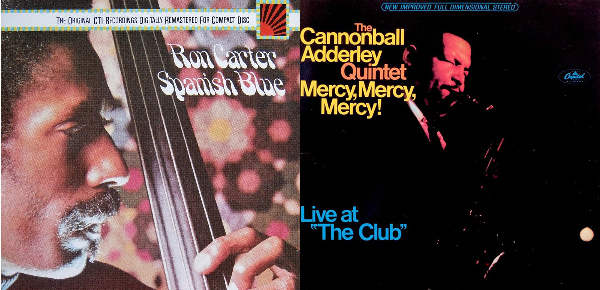 I can't answer any of those questions, so instead I'll tell you how the Wattson-Benchmark pairing changed my feelings about two of my CDs: Ron Carter's Spanish Blue (CD, CBS ZK 40803) and Cannonball Adderley's Mercy, Mercy, Mercy! – Live at "The Club" (CD, Capitol Jazz CDP 7243 8 29915 2 6). This is good music hampered by bad digital transfers. Both discs lost the battle to the Wattson, which quickly made the case that there was no longer any justification for me to keep the CDs, with their emaciated sound, flimsy inserts, and shoddy "jewel" cases, when what's available streaming is better (see sidebar).
At a recent audio show, I borrowed the $395 SBooster BOTW P&P ECO MKII external 5V power supply to replace the stock brick one supplied with my iFi DAC. When I tried it with the Wattson, I heard—well, a boost in performance. So here it makes sense to mention that Wattson Audio makes an external power supply, the Madison Power S ($2500). Although it's part of the higher-level Madison series, it is compatible with Emerson components, including the Emerson Digital.
Conclusion
I can't answer any of those questions, so instead I'll tell you how the Wattson-Benchmark pairing changed my feelings about two of my CDs: Ron Carter's Spanish Blue (CD, CBS ZK 40803) and Cannonball Adderley's Mercy, Mercy, Mercy! – Live at "The Club" (CD, Capitol Jazz CDP 7243 8 29915 2 6). This is good music hampered by bad digital transfers. Both discs lost the battle to the Wattson, which quickly made the case that there was no longer any justification for me to keep the CDs, with their emaciated sound, flimsy inserts, and shoddy "jewel" cases, when what's available streaming is better (see sidebar).
At a recent audio show, I borrowed the $395 SBooster BOTW P&P ECO MKII external 5V power supply to replace the stock brick one supplied with my iFi DAC. When I tried it with the Wattson, I heard—well, a boost in performance. So here it makes sense to mention that Wattson Audio makes an external power supply, the Madison Power S ($2500). Although it's part of the higher-level Madison series, it is compatible with Emerson components, including the Emerson Digital.
Conclusion
The Emerson passed my most basic listening test: I missed it when I stopped listening to it. It sounds great, is Flash-fast to set up, and for a reference-class component—and I think it is that—it's affordable. I liked it better than significantly more expensive (and fuller-featured) alternatives I've heard. If you're considering getting a streamer to partner with your DAC, you might not need one. The Emerson Digital bridge could be the better option. And it's here, as I write these words, that I may have come closest to intuitively grasping what exactly a network bridge is. It is precisely how John Giolas described it to me at the end of my review, when I asked him the million-dollar question: What exactly is a network bridge? "It retrieves digital music from network sources—streaming services, local servers, or internet radio—and delivers that data to a DAC or integrated amplifier that lacks streaming capability," he wrote. "Its role is to manage network protocols, process the incoming stream, and output a clean, precisely timed digital signal to the DAC."
When that happens, you may also come to appreciate the inherent beauty of a network bridge. Finally, it's another name for a streamer, but, as executed by Wattson, it is a streamer's most minimalist expression, executed at the highest level. Its unadorned simplicity and streamlined design are devoted to a singular mission: delivering an exceptionally high-quality network signal to your DAC. It turns a "regular DAC player into a streaming one" in a superlative way. You have to live with the Emerson for a while—listen to it—before you truly "get it."
The Wattson carries the spirit of stability—in music, your network signal, your hi-fi, your musical life.
Determined to answer that question over the course of this review, I started with the most obvious source of information: the Wattson Audio website. The closest I found to a direct explanation was its description of the Emerson Digital as a product that "turns any DAC into a streaming DAC." But that doesn't tell the whole story. For one thing, it appeared that a network bridge could also include D/A conversion. Case in point: The Emerson Analog I auditioned in the Phonographe room has a built-in DAC and is nonetheless referred to by Wattson as a network bridge. It outputs an analog signal—hence its name—while the Digital model reviewed here outputs a digital signal that needs to be converted to analog by an outboard DAC. Looking into it further, I felt I'd stumbled on an important clue in my quest for clarity when I read on the Wattson website that the sole function of the Digital was to bridge a datastream to a DAC, no filters, no data conversion of any kind. That's about as straight-wire as it gets.
Visually, the Wattson Digital is a billet-aluminum case with the model name and three vertically embossed, rivulet-like lines running parallel across the faceplate, one of which tapers at one end into a downward, shoulder-like motif. There's a single RJ45 Ethernet input on one side and two outputs—one true 75 ohm S/PDIF over RCA and one true 110 ohm AES3—on the other. That, and two tiny LEDs.
Wattson Audio was founded in 2019, but its roots in streaming date back two decades—to 2004, when a former Goldmund engineer named Florian Cossy founded ABC PCB as an audio-engineering company specializing in network signal processing. ABC PCB's main business was providing products and technologies to other companies, an activity typically dubbed "OEM" for "original-equipment manufacture." The first engineer Cossy hired was another Goldmund alum, Alexandre Lavanchy. In 2009, Florian sold ABC PCB to Alex and a partner and went on to establish CH Precision with the late Thierry Heeb. Alex and his partner reorganized ABC PCB and renamed it, calling it Engineered SA. Engineered SA continued its OEM development, engineering, and consulting work, eventually creating the offshoot company Wattson Audio with the aim of employing its rigorous and well-respected streaming technology into its own product line.
The purest expression of that aim is the Wattson Audio Emerson Digital. But the other products also stick close to those basics. For example, the company's top-of-the-line Madison SE, which has a built-in DAC, and which Herb Reichert reviewed, does away with a screen and all other functions that might interfere with the signal. That extends to the choice to use a high-performance 5V "brick" power supply instead of an internal one, to isolate the mains voltage from the component's core electronics. It's just another precautionary measure that abides by the Audiophilic Oath, which, just like the Hippocratic one, commands, "First, do no harm." As all seekers of audio purity know, prevention is better than cure. So that's the beauty of the Emerson Digital: its singular purpose and purity of execution. It was created to do one thing and do it in a way that matters to those who value sound quality most of all: deliver a clean, bit-perfect, jitter-free PCM signal up to 24/192kHz and native DSD64. Its whole meaning in life is to be a lean, mean streaming machine. "CH Precision uses this interface because we think it's the best," said Kevin Wolff, representative of both CH Precision and Wattson Audio, of the platform's underlying technology. "And because of the close relationship [between companies] and the quality of our engineering team, we were the only audio manufacturer that created its own streaming firmware."
SetupThe sentence you're reading right now took about as long to type as it took me to connect the Emerson Digital's power supply, network cable, and my digital coax cable to my iFi Diablo DAC. Setting up the Emerson made me feel like the Flash. I felt like the Flash again when I downloaded the Wattson Remote streaming app to my Android smartphone—a tablet or laptop will also do—and linked it to the Wattson, which appeared on my phone as "Emerson DIGITAL-38." The "38" represents the final digits of the IP address assigned to the Emerson by the local network router. Once its job was complete, bridging my phone to the Emerson, the app was out of the picture and everything else—the library browsing, the track selections—was handled directly through my streaming-service apps. This isn't the case with the app's iOS counterpart, called Wattson Music, which is considerably more versatile. "The distinction is intentional," John Giolas, global director of marketing for Wattson Audio and CH Precision, said. "While the Wattson Remote is used exclusively for initial configuration and volume control, the iOS version is the complete operational interface, allowing users to browse music, access streaming services, and manage playback in one integrated environment." The Music app allows access to music files stored on network-attached storage. "Both apps communicate with the hardware identically; the difference lies in scope, not performance."
Immediately after I'd inserted the Emerson in my system, I took a test drive into Qobuz Hi-Res territory, a densely populated area, and took an offramp into the subcategory Hi-Res Masters: Autumn Songs, a section encompassing song titles alluding to fall spanning six hi-rez hours and 89 tracks. My pit stops included the first three tracks: Diana Krall's "Autumn in New York" in 24/48, Chet Baker's "'Tis Autumn" in 24/192, and Ella Fitzgerald's "Early Autumn" in 24/192. I took a side trip through Hi-Res Masters: Jazz Guitar to take in Grant Green's "Idle Moments" in 24/192.
I let the music stream 24/7 for a handful of days then got down to more focused listening, starting with 16/44.1 fare: David Bowie's "Lazarus" from Blackstar. This song lives or dies on the gravitational force of the bassline weaving through it—if it lacks presence or impact, the music loses its cohesion. There was none of that with the Emerson, which preserved the bassline's grip and granted the orbiting sounds appropriate weight.
With data flowing from the Emerson Digital, the music seemed relaxed, on time, dynamically spry. This is basic: no amount of texture, tone, or whatever else we audiophiles crave will keep our minds on the music if it sounds like it's dragging its feet or running out of gas.
That quality was especially noticeable during Nuit blanche by the Tarkovsky Quartet (24/96 FLAC, ECM/Qobuz), an ECM recording replete with delicate tones, contorting nuances, and protracted notes from piano, cello, soprano saxophone, and accordion. I heard plenty of subtle shifts in tone and texture even as the music's sensuously steady pace was preserved.
Likewise, the streamed Radiohead revealed a more illuminated view, as if a dimmer on a light switch had been nudged upward to expose more shape, color, and spatial definition. But it wasn't just light and space. It was also more bass. Low instruments and percussion delivered more in-your-face impact and bodacious swing.
Then the Benchmark DAC3 B, a Stereophile Class-A+–rated DAC, arrived for a follow-up review.
When I took out the iFi and put in the Benchmark, the gap between the streaming and CD formats widened. I now heard that the iFi sounded brash. The Benchmark removed a layer of grit I had not known was there. The result was a sound that was more polished and palpable, with better separation and smoother tone. Ambience seemed enhanced—due presumably to more complete (longer) decay of notes. Shapes gelled; colors saturated. The soundstage extended backward a few feet and beamed out into the room with more energy.
I can't answer any of those questions, so instead I'll tell you how the Wattson-Benchmark pairing changed my feelings about two of my CDs: Ron Carter's Spanish Blue (CD, CBS ZK 40803) and Cannonball Adderley's Mercy, Mercy, Mercy! – Live at "The Club" (CD, Capitol Jazz CDP 7243 8 29915 2 6). This is good music hampered by bad digital transfers. Both discs lost the battle to the Wattson, which quickly made the case that there was no longer any justification for me to keep the CDs, with their emaciated sound, flimsy inserts, and shoddy "jewel" cases, when what's available streaming is better (see sidebar).
At a recent audio show, I borrowed the $395 SBooster BOTW P&P ECO MKII external 5V power supply to replace the stock brick one supplied with my iFi DAC. When I tried it with the Wattson, I heard—well, a boost in performance. So here it makes sense to mention that Wattson Audio makes an external power supply, the Madison Power S ($2500). Although it's part of the higher-level Madison series, it is compatible with Emerson components, including the Emerson Digital.
The Emerson passed my most basic listening test: I missed it when I stopped listening to it. It sounds great, is Flash-fast to set up, and for a reference-class component—and I think it is that—it's affordable. I liked it better than significantly more expensive (and fuller-featured) alternatives I've heard. If you're considering getting a streamer to partner with your DAC, you might not need one. The Emerson Digital bridge could be the better option. And it's here, as I write these words, that I may have come closest to intuitively grasping what exactly a network bridge is. It is precisely how John Giolas described it to me at the end of my review, when I asked him the million-dollar question: What exactly is a network bridge? "It retrieves digital music from network sources—streaming services, local servers, or internet radio—and delivers that data to a DAC or integrated amplifier that lacks streaming capability," he wrote. "Its role is to manage network protocols, process the incoming stream, and output a clean, precisely timed digital signal to the DAC."