Budget Product of the Year
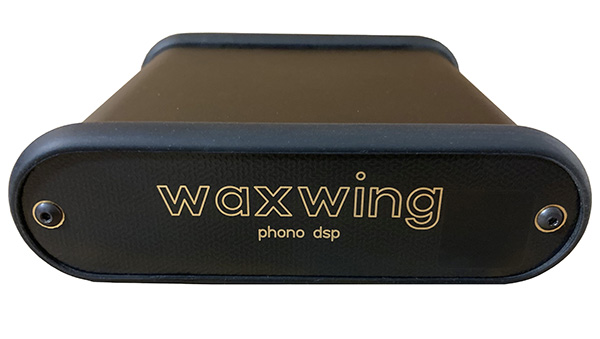 Parks Audio Waxwing phono preamplifier
($500; reviewed by Michael Trei in Vol.49 No.7, July 2026 review) FINALISTS (in alphabetical order) Audirvāna Studio streaming app
($7.99/month; reviewed by Miguel Barrio in Vol.49 No.9, September 2026 review) Benchmark DAC3 B D/A processor
($1899; reviewed by Rob Schryer in Vol.49 No.7, July 2026 review) Dirac Live ART room-correction software
($799 stereo, $899 multichannel; reviewed by Kalman Rubinson in Vol.49 No.9, September 2026 review) Eversolo DMP-A6 Master Edition Gen 2 D/A processor
($1399; reviewed by Kalman Rubinson in Vol.49 No.7, July 2026 review) LAiV Audio Harmony µDAC D/A processor
($1194; reviewed by Herb Reichert in Vol.48 No.12, December 2025 and Vol.49 No.7, July 2026 review)
Technics SL-50C record player
($899.99 w/Ortofon 2M Red phono cartridge; reviewed by Tom Fine in Vol.49 No.3, March 2026 review) The tiny Parks Audio Waxwing is a unique phono preamplifier in that its analog inputs are converted to PCM digital, at 24 bits and 96kHz. DSP (digital signal processing) is then used to implement the RIAA equalization curve and many other options, including 10 presets for early LPs and 78s. The EQ can also be custom-tuned using turnover and bass-shelving controls or bypassed for line-level inputs. Gain is adjustable from –4dB, for line-level sources, to 72dB for very low-output moving coil cartridges. In addition to Treble and Bass controls, there is an optional Bass Boost that acts below 100Hz, Hi and Lo bandwidth limiters, a single-band parametric EQ that's useful for notching out a particular problem frequency, and a Warmth control that allows the frequency response to be tilted up or down over the full bandwidth. There are no physical controls on the Waxwing; everything is operated with an app, available for iOS and Android, that communicates with the Waxwing using Bluetooth. The Waxwing offers the usual analog inputs and outputs, and coaxial S/PDIF and TOSLINK digital outputs allow the processed signal to be sent to an external D/A processor. "All these bells and whistles would be wasted if the Waxwing didn't sound good, but sonically it punches way above its weight," noted MT, adding that he had to constantly remind himself that the Waxwing costs just $500. "I can't name anything near that price that can do what it can do." He concluded his review by writing, "The question I'm asking—and I'm sure many others are asking—is does the Waxwing sound 'digital'? For me the answer is no, not in a way I can point to and say 'there, that's digital.' I find the sins of digital to be mostly of omission, and those are harder to recognize. Analog delivers just a little more body, color, depth, and vividness, although I'm pretty sure naysayers will say these qualities are no more than enjoyable colorations and not accurate to the source. Assuming that's true, I'm fine with it. To me, the Waxwing sounds like a good analog source, and you don't have to sell your soul to the devil to enjoy it."
Notes on the vote
This may have been a diverse group of worthy finalists, but the extraordinarily versatile and affordable Waxwing phono preamplifier was the clear winner.
Parks Audio Waxwing phono preamplifier($500; reviewed by Michael Trei in Vol.49 No.7, July 2026 review) FINALISTS (in alphabetical order) Audirvāna Studio streaming app
($7.99/month; reviewed by Miguel Barrio in Vol.49 No.9, September 2026 review) Benchmark DAC3 B D/A processor
($1899; reviewed by Rob Schryer in Vol.49 No.7, July 2026 review) Dirac Live ART room-correction software
($799 stereo, $899 multichannel; reviewed by Kalman Rubinson in Vol.49 No.9, September 2026 review) Eversolo DMP-A6 Master Edition Gen 2 D/A processor
($1399; reviewed by Kalman Rubinson in Vol.49 No.7, July 2026 review) LAiV Audio Harmony µDAC D/A processor
($1194; reviewed by Herb Reichert in Vol.48 No.12, December 2025 and Vol.49 No.7, July 2026 review)
($899.99 w/Ortofon 2M Red phono cartridge; reviewed by Tom Fine in Vol.49 No.3, March 2026 review) The tiny Parks Audio Waxwing is a unique phono preamplifier in that its analog inputs are converted to PCM digital, at 24 bits and 96kHz. DSP (digital signal processing) is then used to implement the RIAA equalization curve and many other options, including 10 presets for early LPs and 78s. The EQ can also be custom-tuned using turnover and bass-shelving controls or bypassed for line-level inputs. Gain is adjustable from –4dB, for line-level sources, to 72dB for very low-output moving coil cartridges. In addition to Treble and Bass controls, there is an optional Bass Boost that acts below 100Hz, Hi and Lo bandwidth limiters, a single-band parametric EQ that's useful for notching out a particular problem frequency, and a Warmth control that allows the frequency response to be tilted up or down over the full bandwidth. There are no physical controls on the Waxwing; everything is operated with an app, available for iOS and Android, that communicates with the Waxwing using Bluetooth. The Waxwing offers the usual analog inputs and outputs, and coaxial S/PDIF and TOSLINK digital outputs allow the processed signal to be sent to an external D/A processor. "All these bells and whistles would be wasted if the Waxwing didn't sound good, but sonically it punches way above its weight," noted MT, adding that he had to constantly remind himself that the Waxwing costs just $500. "I can't name anything near that price that can do what it can do." He concluded his review by writing, "The question I'm asking—and I'm sure many others are asking—is does the Waxwing sound 'digital'? For me the answer is no, not in a way I can point to and say 'there, that's digital.' I find the sins of digital to be mostly of omission, and those are harder to recognize. Analog delivers just a little more body, color, depth, and vividness, although I'm pretty sure naysayers will say these qualities are no more than enjoyable colorations and not accurate to the source. Assuming that's true, I'm fine with it. To me, the Waxwing sounds like a good analog source, and you don't have to sell your soul to the devil to enjoy it."
This may have been a diverse group of worthy finalists, but the extraordinarily versatile and affordable Waxwing phono preamplifier was the clear winner.