When I was about 12 years old, my mother and I watched a movie on TV in which a ship closed in on a swimmer. The scene cut from the churning screw propeller to the vantage point of the hapless victim, inches above the waterline. The camera lingered there as the hull came closer, menacing, darkening the sky.
Did the man survive? I don't remember. I do remember my mother looking at me and asking, a glint of amusement in her eye, "Why did you do that?"
"Do what?" "With your arms." I looked at her, not understanding. "You held your arms over your head," she said. "Warding off the boat." "Come on," I said. "I did not." "You absolutely did." It was easier to become immersed back then, before jadedness dulled my wide-eyed enthusiasm. At 12 years old, every book I read was exciting even if, 10 or 15 years later, I would have thought it derivative or clumsily written. Every movie was a thrilling adventure, even with plots built on tropes and clichés and actors as lifeless as ventriloquist dummies. In those days I gave myself over.
Sometimes I miss sliding so easily into absorption. Occasionally though, when I'm lucky, it still happens, thanks to some of the high-end gear that comes in for review.
That time my brain broke
If I have a bias toward Magico, it's because I've never heard a Magico speaker I didn't like. Even so, when I listened to the company's M6 towers ($185,000/pair) in a large demo room at AXPONA 2022, my brain broke. They were part of a system that featured lovely Luxman electronics: M-10X stereo amplifiers, configured as monoblocks, in their North American debut; a C-900u preamp; a D-10X SACD/CD player; and a PD-151 MKII turntable. I heard "Wall Street Pt. 1," a drum solo by Toto drummer Simon Phillips, from his solo debut album Protocol. "Wall Street" is an exceptionally fine recording, with explosive dynamics; I would've enjoyed hearing it on any competent system. But the M6 speakers lifted the track into majestic territory. The scale was true to life—it really sounded as if there was a large drum kit in the room, played by a master. I was awestruck and said so in my show report: "The sound pressure changes in the large room were felt more than heard, but they came as a package alongside top-notch dynamics, slam and impact, and probably the best start-stop speeds I've heard from any speaker in my lifetime." That demo was easily among the five best experiences I've had at audio shows. Magico's latest model, the S2 ($37,400/pair in standard finishes), costs less than a fourth the M6's price. Could it make similar magic happen in my listening room? It's not a given. The S Series represents Magico's middle tier, below the flagship M series and above the more attainable A-series models. The S2 has two larger siblings, the S3 and S5.
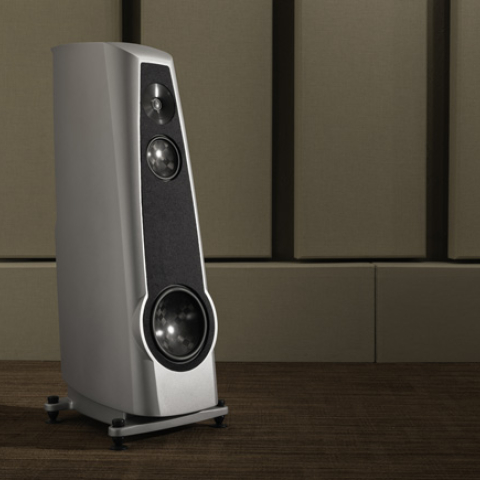
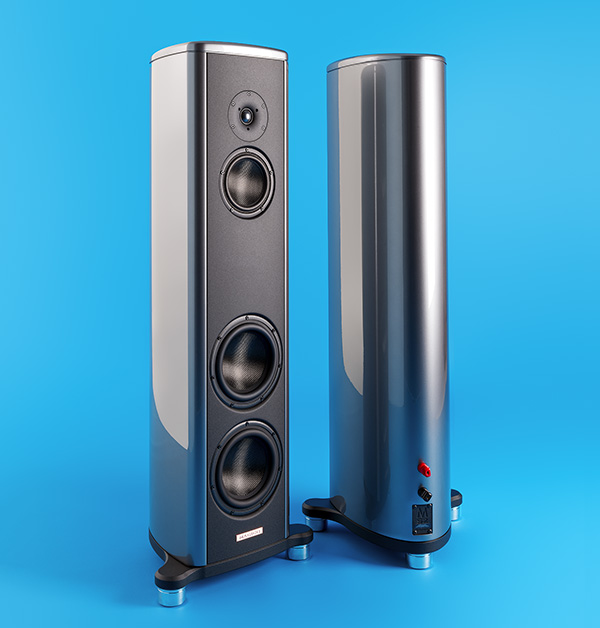
The S2 stands 43.5" tall and weighs 132lb. Its enclosure is extruded aluminum; Magico says it's the largest one-piece extrusion they've ever pulled off.
 When my friend Matt and I uncrated the speakers, we first had to liberate them from the three thick bolts protruding from the crate floor. Those bolts were threaded into mounting holes on each speaker's underside. Those same holes let you attach the included outriggers. When we wrestled the Magicos into place, it wasn't so much their weight as their heft that got our attention. They have that neutron-star quality you get from picking up something compact but heavy, like a gold bar or a cast-iron pan.
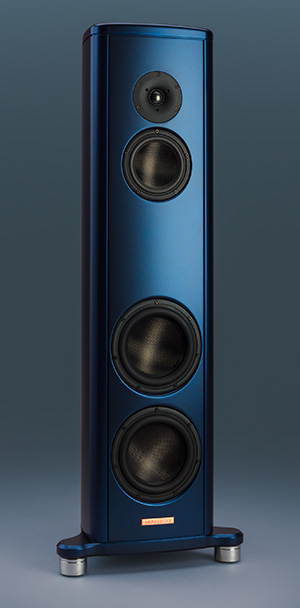
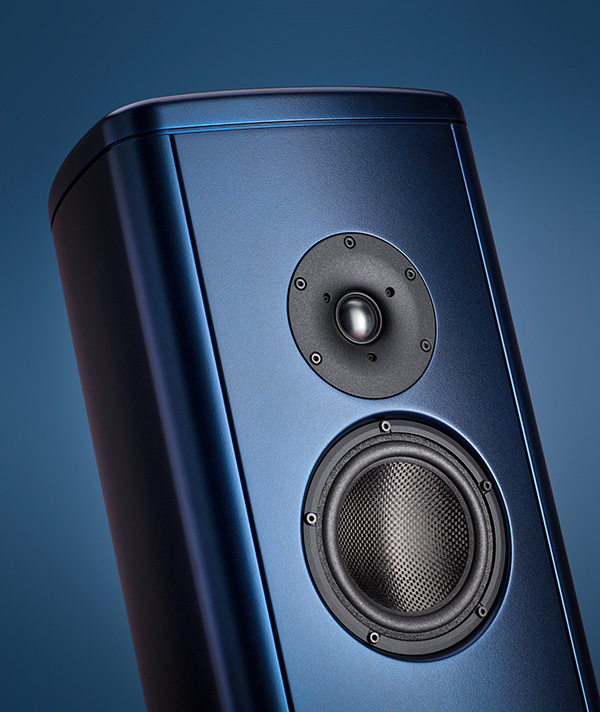
Four drivers are mounted on the S2's front baffle, which curves subtly outward. Up top sits a 1.1" "high-precision" tweeter, with a 5" midrange driver right below it. A foot farther south and about an inch apart are vertically stacked twin 7" woofers.
The midrange and bass cones are Gen 8 Nano-Tec designs—Nano-Tec is a Magico trademark—which features an aluminum honeycomb core sandwiched between graphene-reinforced carbon-fiber skins. The company says that this provides 300% more stiffness than the previous generation. A 3" titanium voice coil former, backed with a neodymium motor system and dual oversized magnets, helps the midrange sing. The woofers are engineered to maximize excursion without audible distortion. The tweeter is derived from the one on Magico's flagship M9 ($750,000/pair), with a diaphragm made of diamond-coated beryllium.
The S2 uses Magico's three-way Elliptical Symmetry ESXO crossover, with its 24dB Linkwitz-Riley slopes. The crossover employs Mundorf MResist Ultra foil resistors and copper foil paper coils, which are new to the S2. According to Magico, they improve the noisefloor by reducing microphonic effects.
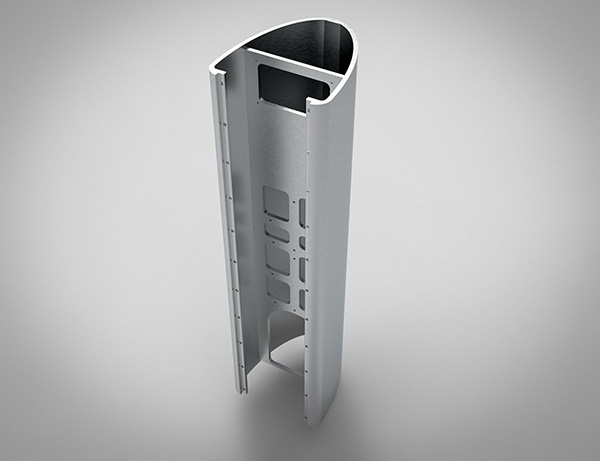
Inside the U-shaped cabinet, a full-length vertical brace sits in the center, parallel to the baffle, where it helps reduce vibrations. During development, Magico used a Polytec laser vibrometer to hunt down every resonance and constructed the final speaker to eliminate them. I'll wait for JA's findings on how acoustically inert the S2s are, but I expect stellar results: Firmly rapping various parts of the enclosures with my knuckles resulted in—well, slightly painful knuckles. There was no ringing.
As to combating vibrations, each S2 rests on a three-point outrigger supported by cylindrical feet that resemble Magico's M-Pods; the S2 feet feature similar constrained-layer damping.
Around back, 7" and 8" from the floor, protrudes a single pair of vertically arranged binding posts, mounted above the serial number stamped into the aluminum. To my eye, these plastic-clad posts looked a bit downmarket for a speaker at this price, but the quality is high: These are the 6mm "Classic" binding posts from Mundorf, manufactured in Cologne, made from pure copper and gold plated for corrosion resistance. They're not as nice as those on the M7 and M9, but the same as on all other Magico speakers.
When my friend Matt and I uncrated the speakers, we first had to liberate them from the three thick bolts protruding from the crate floor. Those bolts were threaded into mounting holes on each speaker's underside. Those same holes let you attach the included outriggers. When we wrestled the Magicos into place, it wasn't so much their weight as their heft that got our attention. They have that neutron-star quality you get from picking up something compact but heavy, like a gold bar or a cast-iron pan.
Four drivers are mounted on the S2's front baffle, which curves subtly outward. Up top sits a 1.1" "high-precision" tweeter, with a 5" midrange driver right below it. A foot farther south and about an inch apart are vertically stacked twin 7" woofers.
The midrange and bass cones are Gen 8 Nano-Tec designs—Nano-Tec is a Magico trademark—which features an aluminum honeycomb core sandwiched between graphene-reinforced carbon-fiber skins. The company says that this provides 300% more stiffness than the previous generation. A 3" titanium voice coil former, backed with a neodymium motor system and dual oversized magnets, helps the midrange sing. The woofers are engineered to maximize excursion without audible distortion. The tweeter is derived from the one on Magico's flagship M9 ($750,000/pair), with a diaphragm made of diamond-coated beryllium.
The S2 uses Magico's three-way Elliptical Symmetry ESXO crossover, with its 24dB Linkwitz-Riley slopes. The crossover employs Mundorf MResist Ultra foil resistors and copper foil paper coils, which are new to the S2. According to Magico, they improve the noisefloor by reducing microphonic effects.
Inside the U-shaped cabinet, a full-length vertical brace sits in the center, parallel to the baffle, where it helps reduce vibrations. During development, Magico used a Polytec laser vibrometer to hunt down every resonance and constructed the final speaker to eliminate them. I'll wait for JA's findings on how acoustically inert the S2s are, but I expect stellar results: Firmly rapping various parts of the enclosures with my knuckles resulted in—well, slightly painful knuckles. There was no ringing.
As to combating vibrations, each S2 rests on a three-point outrigger supported by cylindrical feet that resemble Magico's M-Pods; the S2 feet feature similar constrained-layer damping.
Around back, 7" and 8" from the floor, protrudes a single pair of vertically arranged binding posts, mounted above the serial number stamped into the aluminum. To my eye, these plastic-clad posts looked a bit downmarket for a speaker at this price, but the quality is high: These are the 6mm "Classic" binding posts from Mundorf, manufactured in Cologne, made from pure copper and gold plated for corrosion resistance. They're not as nice as those on the M7 and M9, but the same as on all other Magico speakers.
 Air apparent: sealed vs ported
A week or two after the S2s' delivery, I spoke with Magico founder and chief engineer Alon Wolf at the company's headquarters in Hayward, California. Wolf asked if I'd ever reviewed sealed speakers before. "Pretty sure I have," I answered, with perhaps too much nonchalance and swagger. He arched an eyebrow. "You may not have," he said.
That evening, I looked through years of my scribblings and considered every speaker I'd reviewed: ported or sealed? I thought I'd hit pay dirt when I came to the portless Piega 811, which I assessed for Stereophile a couple of years ago, but then realized that they have passive radiators, which makes them a variation on a ported design. Wolf was right: With the exception of a couple of subwoofers, I'd never had a sealed loudspeaker in my listening room. Which says something about what a rare breed it is. Only a small handful of companies—Magico and YG among them—are committed to sealed designs (footnote 1).
A quick refresher: Acoustic suspension speakers, which is what all Magicos are, are sealed-enclosure designs where the trapped air inside the cabinet acts as the primary restoring force for the woofer cone. When the driver moves, it changes the internal air pressure, creating a pressure differential with the outside atmosphere. This air spring pushes the cone back toward its resting position. The driver's mechanical suspension is made more compliant than in conventional speakers, allowing the air spring to dominate and providing more linear cone control, with greater excursion and less distortion. Below the –3dB point, response rolls off at 12dB/octave; ported designs roll off faster, at 24dB/octave.
The tradeoff is sensitivity: Sealed designs typically sacrifice 3dB of output per watt compared to ported equivalents. The S2 has a listed sensitivity of 86.5dB/2.83V/1m; many ported speakers measure north of 90dB. The company recommends a minimum of 50Wpc for the S2s, but the speakers will handle (and should probably receive) considerably more.
The sealed design also means the S2's low-frequency extension, rated at 26Hz, represents actual, meaningful output, not the inflated –10dB figures many manufacturers cite when a port creates an artificial hump in or near the bottom octave.
 In JA's February 2020 Stereophile review of the Magico M2, he queried Alon Wolf about sealed vs ported designs. "What you gain from the sealed alignment is, your group delay goes down to almost nothing," Wolf explained. Group delay is the time it takes for different parts of the frequency spectrum to pass out into the room. In sealed enclosures, all frequencies arrive at your ears at nearly the same time. In ported designs, the port can introduce timing delays because bass frequencies routed through the port arrive later than the direct sound from the woofers. This can smear transients and make bass sound looser and less precise, Wolf says: "Everything becomes much clearer, not just in the bass but across the midrange as well."
Wolf says he fully appreciates the appeal of ported designs—"that big, full, charging bass"—but he argues that the tradeoffs aren't worth it: port noise, uneven LF response with certain notes emphasized, and the tendency for bass levels to rise disproportionately as volume increases, throwing off the tonal balance. Once you hear the quality of the bass in sealed designs, Wolf says, "it's difficult to go back."
I secretly hoped he was wrong because I didn't want to be tempted to bid adieu to the ported speakers I've grown to love (footnote 2).
Placement and performance
In JA's February 2020 Stereophile review of the Magico M2, he queried Alon Wolf about sealed vs ported designs. "What you gain from the sealed alignment is, your group delay goes down to almost nothing," Wolf explained. Group delay is the time it takes for different parts of the frequency spectrum to pass out into the room. In sealed enclosures, all frequencies arrive at your ears at nearly the same time. In ported designs, the port can introduce timing delays because bass frequencies routed through the port arrive later than the direct sound from the woofers. This can smear transients and make bass sound looser and less precise, Wolf says: "Everything becomes much clearer, not just in the bass but across the midrange as well."
Wolf says he fully appreciates the appeal of ported designs—"that big, full, charging bass"—but he argues that the tradeoffs aren't worth it: port noise, uneven LF response with certain notes emphasized, and the tendency for bass levels to rise disproportionately as volume increases, throwing off the tonal balance. Once you hear the quality of the bass in sealed designs, Wolf says, "it's difficult to go back."
I secretly hoped he was wrong because I didn't want to be tempted to bid adieu to the ported speakers I've grown to love (footnote 2).
Placement and performance
The S2s were almost as fussy with placement as the Diptyque Reference panel speakers I reviewed for Stereophile last year. After a good week of trial, error, and second-guessing, I ended up with my ears 7' from the back wall, 14' from the front wall, and 9' from the center of each speaker's baffle. The towers stood 8'6" apart, so that we—speakers and listener—came close to forming an equilateral triangle. Toe-in was a mild 3°–4°, such that imaginary lasers shooting from each speaker's drivers would intersect roughly 12' behind my head, beyond the rear room boundary. Mindful of the fact that sealed speakers like power, I did most of my listening with the McIntosh MC462 power amplifier in the system. The 462 delivers upwards of 450Wpc regardless of the speakers' impedance. Later I listened with lower-powered amps: the Audia Flight FLS10 integrated (380Wpc into 4 ohms) and the all-in-one T+A Symphonia (250Wpc into 4 ohms). I wasn't disappointed.
My digital front end alternated between the Eversolo DMP-A10 and the Grimm MU1, with the latter making the most convincing case for itself; it stayed in the system for the final six weeks of the S2s' two-month-plus visit. For CDs, I used my Sony S9000ES SACD player.
To limber up the factory-fresh drivers, I played about 120 hours of varied fare before listening critically. During that extended warmup, the Magicos occasionally made me prick up my ears. While watching movies on the OLED screen mounted on the front wall, I often noticed exceptional liveliness. During The Zookeeper's Wife, some of the ambient sounds, like crowd cries and rumbling WWII artillery, seemed to come from behind me. At 17:42, Stuka bombers appeared to roar overhead, and an announcement on the public address system of the Warsaw train station echoed from every direction, just as such bouncing sounds do in real life.
Much of the credit for such effects goes to the excellent work of the film's sound designers and mixing engineers, who must've played with reverb, delay, and spatial techniques to create that three-dimensional effect. In other words, it wasn't just the speakers. But the S2s did reproduce it all with uncommon realism, from an old-school two-channel stereo system.
On Architecton, a filmic meditation on stone, concrete, and ancient ruins, Evgueni Galperine's music is as stately and hypnotic as Philip Glass's Koyaanisqatsi soundtrack, an old favorite. Architecton has tight slow-motion shots of a giant mass of falling, breaking rocks and dirt—an unrelenting wall of heavy scree that seems to not merely tumble but to expand and pulse. Via the Magicos, the combination of visuals and sound was beyond impressive: It triggered primeval fright. My chest tightened. There can be awed joy in watching and feeling Mother Nature's violence when you're not at the receiving end of it.
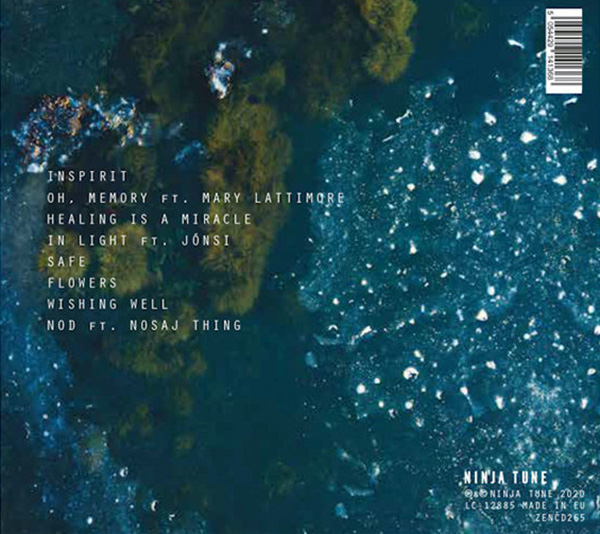 Weeks later I experienced something similar, this time with music, specifically Healing Is a Miracle (24/96 FLAC, Qobuz/Ninja Tune), a Julianna Barwick album full of her trademark ambient choral recordings. The sixth track, "Flowers," is a sonic treat, especially the marvelous last 10 seconds when the sound of a deep-pulsing synthesizer grows larger and heavier, the sonic equivalent of a supernova exploding at you in slow motion. It produced that same mixture of awe and mild fear—a phenomenon that, I learned later, some call "the sublime." The 18th century Anglo-Irish philosopher and statesman Edmund Burke, who coined the term, claimed that the sublime tightens the "fibers" of our bodies—unlike beauty, which relaxes them. The S2s proved an easy conduit to this thrill and many more besides.
With good recordings, the soundstage was always wide, extending beyond the sidewalls of my listening room, and more U-shaped, or wraparound, than usual. This helped with envelopment and immersion.
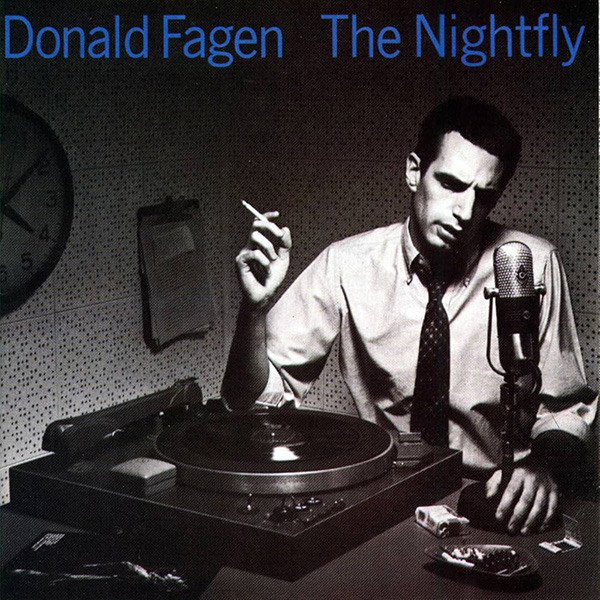
Tool's "Chocolate Chip Trip," off Fear Inoculum (24/96 FLAC, Qobuz/RCA), was a real trip. That Joe Barresi–produced recording presents real sonic pyrotechnics. After that, I cued up Donald Fagen's very different but similarly outstanding The Nightfly (24/48 FLAC, Qobuz/Warner Bros.). This landmark album manages to sound breezy and hypersolid at the same time—Caribbean island vibes combined with poised, almost hi-tech precision. I love the shimmer of The Nightfly as much as the subtle rot that lies beneath the louche, steamy world Fagen conjures: Expat gamblers promenading in pastel shorts and yacht shoes, quietly yearning for better times. Calypso bands entertaining the gringos through smiles and quiet contempt. Femmes fatales on the downslope, chasing their now-fading beauty and increasingly open to certain arrangements. (You know what happens. You've read the book.) The S2s handled the Tool and Fagen tracks with great authority, without breaking a sweat.
Weeks later I experienced something similar, this time with music, specifically Healing Is a Miracle (24/96 FLAC, Qobuz/Ninja Tune), a Julianna Barwick album full of her trademark ambient choral recordings. The sixth track, "Flowers," is a sonic treat, especially the marvelous last 10 seconds when the sound of a deep-pulsing synthesizer grows larger and heavier, the sonic equivalent of a supernova exploding at you in slow motion. It produced that same mixture of awe and mild fear—a phenomenon that, I learned later, some call "the sublime." The 18th century Anglo-Irish philosopher and statesman Edmund Burke, who coined the term, claimed that the sublime tightens the "fibers" of our bodies—unlike beauty, which relaxes them. The S2s proved an easy conduit to this thrill and many more besides.
With good recordings, the soundstage was always wide, extending beyond the sidewalls of my listening room, and more U-shaped, or wraparound, than usual. This helped with envelopment and immersion.
Tool's "Chocolate Chip Trip," off Fear Inoculum (24/96 FLAC, Qobuz/RCA), was a real trip. That Joe Barresi–produced recording presents real sonic pyrotechnics. After that, I cued up Donald Fagen's very different but similarly outstanding The Nightfly (24/48 FLAC, Qobuz/Warner Bros.). This landmark album manages to sound breezy and hypersolid at the same time—Caribbean island vibes combined with poised, almost hi-tech precision. I love the shimmer of The Nightfly as much as the subtle rot that lies beneath the louche, steamy world Fagen conjures: Expat gamblers promenading in pastel shorts and yacht shoes, quietly yearning for better times. Calypso bands entertaining the gringos through smiles and quiet contempt. Femmes fatales on the downslope, chasing their now-fading beauty and increasingly open to certain arrangements. (You know what happens. You've read the book.) The S2s handled the Tool and Fagen tracks with great authority, without breaking a sweat.
 On "Stink," off the Get Shorty movie soundtrack (16/44.1 FLAC rip from the CD), saxophonist and band leader John Lurie lays down some of the most enjoyable music of his career. Though he's partly known for ferocious free jazz, here he reins himself in and builds on a droll little piano motif that recalls Vince Guaraldi's "Linus and Lucy." Then the track turns into an infectious, Talking Heads–meets–Booker T party song. The S2s' controlled bass served the groove without plumping it up.
Speaking of parties, there's a great one happening on Donny Hathaway's "Sugar Lee," from Everything Is Everything (16/44.1 FLAC, Qobuz/Atlantic). The raw energy is inescapable, underpinned by a beat that, for all its looseness, stays solidly "in the pocket." The recording constantly feels like it could fall apart, but it never does (footnote 3). It's the opposite of those pristine audiophile recordings where everything is perfectly balanced and polished. The S2s didn't sanitize "Sugar Lee," though they did admirably highlight details like the lovely air around the left-channel trumpet.
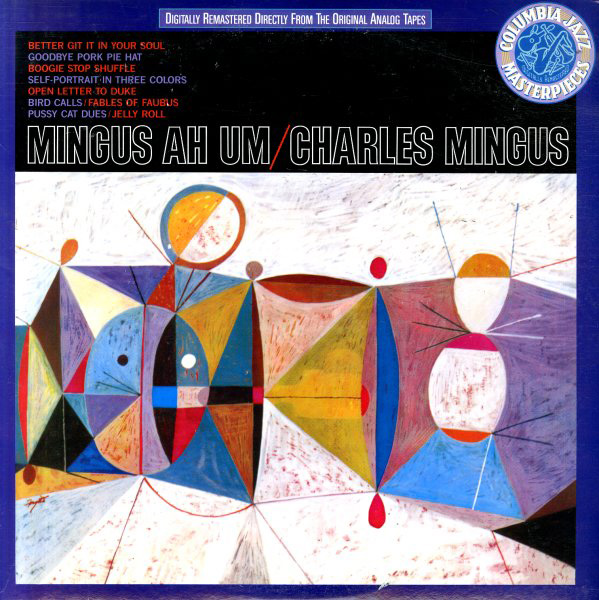
The hard-panned stereo effects on Charles Mingus's Mingus Ah Um (16/44.1 FLAC, Columbia/Tidal) were more apparent with the S2s than with other speakers I've reviewed. I think it's because the Magicos have exceptionally clean left-right separation, with apparently minimal cabinet diffraction. When speakers image this precisely, hard-panned material stays hard-panned. There's less smearing or blurring that might mask that hole-in-the-middle effect on less capable speakers.
On "Stink," off the Get Shorty movie soundtrack (16/44.1 FLAC rip from the CD), saxophonist and band leader John Lurie lays down some of the most enjoyable music of his career. Though he's partly known for ferocious free jazz, here he reins himself in and builds on a droll little piano motif that recalls Vince Guaraldi's "Linus and Lucy." Then the track turns into an infectious, Talking Heads–meets–Booker T party song. The S2s' controlled bass served the groove without plumping it up.
Speaking of parties, there's a great one happening on Donny Hathaway's "Sugar Lee," from Everything Is Everything (16/44.1 FLAC, Qobuz/Atlantic). The raw energy is inescapable, underpinned by a beat that, for all its looseness, stays solidly "in the pocket." The recording constantly feels like it could fall apart, but it never does (footnote 3). It's the opposite of those pristine audiophile recordings where everything is perfectly balanced and polished. The S2s didn't sanitize "Sugar Lee," though they did admirably highlight details like the lovely air around the left-channel trumpet.
The hard-panned stereo effects on Charles Mingus's Mingus Ah Um (16/44.1 FLAC, Columbia/Tidal) were more apparent with the S2s than with other speakers I've reviewed. I think it's because the Magicos have exceptionally clean left-right separation, with apparently minimal cabinet diffraction. When speakers image this precisely, hard-panned material stays hard-panned. There's less smearing or blurring that might mask that hole-in-the-middle effect on less capable speakers.
 Unaware of my observation, my friend Matt remarked on the same thing days later. "If you close your eyes, you'll never be able to tell where the speakers are, based on where the vocal is coming from," he texted me one night while he was housesitting for me and had sauntered into the listening room. "With that Leonard Cohen song ["You Want It Darker," 24/44.1 FLAC, Columbia/Qobuz], there's a lot of space between the instruments on the sides and the vocal in the center. If the room was a clock, the instruments sound like they're only coming from the 10 o'clock and 2 o'clock areas, while the vocal is dead-on at 12. There's mostly emptiness in the 11 and 1 o'clock areas. The separation is just insanely good."
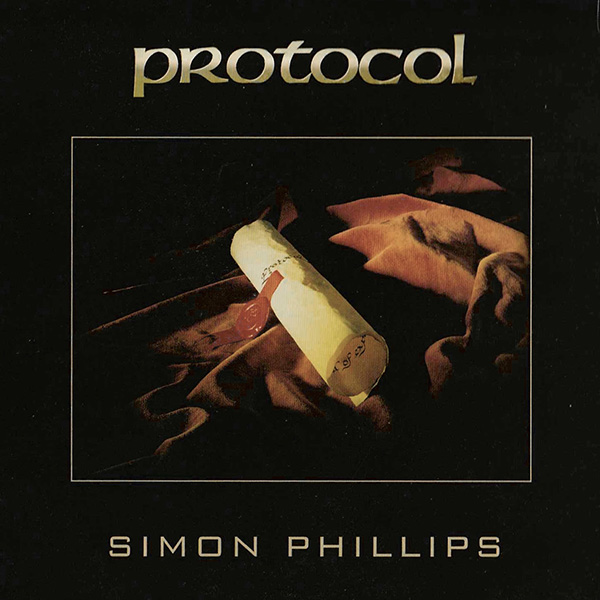
And the bass? Magico's Alon Wolf has cautioned that sealed designs can sound bass-light at first because we've grown accustomed to the warmth and sonic heft that ports deliver. Even when a sealed speaker measurably extends deeper, the bass frequencies don't announce themselves the same way. That was exactly my experience. Only gradually did I appreciate that what I was hearing wasn't absence but control; fidelity not reticence. Simon Phillips's "Wall Street Pt. 1" from Protocol (CD, Phantom Recordings, no catalog number)—the track that had impressed me so much via the M6s at AXPONA—still sounded magnificent. The S2s' drivers acted like sonic firehoses, shooting out energy. No, they can't match the majesty and especially the scale of the larger M-series speakers, not in my listening room at least. But the timbre and character I heard with the staggering M6s is present in spades. Are the S2s smaller and decidedly more modest? Of course. Do they clearly carry the same genes? You'd best believe it.
Unaware of my observation, my friend Matt remarked on the same thing days later. "If you close your eyes, you'll never be able to tell where the speakers are, based on where the vocal is coming from," he texted me one night while he was housesitting for me and had sauntered into the listening room. "With that Leonard Cohen song ["You Want It Darker," 24/44.1 FLAC, Columbia/Qobuz], there's a lot of space between the instruments on the sides and the vocal in the center. If the room was a clock, the instruments sound like they're only coming from the 10 o'clock and 2 o'clock areas, while the vocal is dead-on at 12. There's mostly emptiness in the 11 and 1 o'clock areas. The separation is just insanely good."
And the bass? Magico's Alon Wolf has cautioned that sealed designs can sound bass-light at first because we've grown accustomed to the warmth and sonic heft that ports deliver. Even when a sealed speaker measurably extends deeper, the bass frequencies don't announce themselves the same way. That was exactly my experience. Only gradually did I appreciate that what I was hearing wasn't absence but control; fidelity not reticence. Simon Phillips's "Wall Street Pt. 1" from Protocol (CD, Phantom Recordings, no catalog number)—the track that had impressed me so much via the M6s at AXPONA—still sounded magnificent. The S2s' drivers acted like sonic firehoses, shooting out energy. No, they can't match the majesty and especially the scale of the larger M-series speakers, not in my listening room at least. But the timbre and character I heard with the staggering M6s is present in spades. Are the S2s smaller and decidedly more modest? Of course. Do they clearly carry the same genes? You'd best believe it.
 No ifs, ands, or ports
After a good two months with the Magicos, I went back and forth about what I'd heard. My reference Focal Scala Utopia Evos remain superb speakers—generous, full-bodied, with intoxicating ease and power. The Estelon X Diamond Mk IIs I've been living with are just as compelling, delivering spectacular resolution and visceral impact. Both speakers do many things brilliantly. But the Magicos have forced a reckoning. Their sealed-enclosure approach revealed what I hadn't fully appreciated: namely, the precision that comes from eliminating port artifacts; the clarity that emerges when group delay drops to almost nothing; the transient energy that makes music feel especially immediate. If I were forced to choose new reference speakers, and assuming the M6s (that I still quietly pine for!) are out of reach, the S2s would be serious contenders. That's not because the Magicos do everything better than the Focals or Estelons. It's because they reveal a different kind of truth. Provided you give the S2s serious amplifier power and place them carefully, they offer uncompromising engineering fully in service of accurate music reproduction, shunning embellishments. I could damn sure live with that.
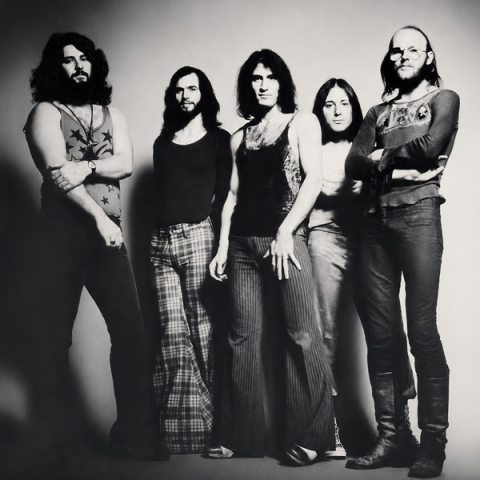
Footnote 1: Some manufacturers offer one or two sealed models alongside ported ones. Tidal and its new AP1 come to mind. Footnote 2: My reference speakers are the ported Focal Scala Utopia EVOs, and for months I've been listening to the Estelon X Diamond Mk IIs. Footnote 3: When it comes to glorious performances that threaten to fall apart, I know of none more thrilling than "Hocus Pocus," which the Dutch prog-rock band Focus raced through on a Midnight Special TV appearance in 1973. Guitarist Jan Akkerman plays the solo intro at breakneck speed, flubbing notes along the way before regaining his footing. The band, led by keyboard player and flautist Thijs van Leer, has no choice but to adopt the insane tempo, resulting in four-plus minutes of something so inspired and virtuosic, yet so close to collapsing into chaos, that it almost leaves you winded. Look for it on YouTube. This is a strong argument for having a screen between your speakers.
If I have a bias toward Magico, it's because I've never heard a Magico speaker I didn't like. Even so, when I listened to the company's M6 towers ($185,000/pair) in a large demo room at AXPONA 2022, my brain broke. They were part of a system that featured lovely Luxman electronics: M-10X stereo amplifiers, configured as monoblocks, in their North American debut; a C-900u preamp; a D-10X SACD/CD player; and a PD-151 MKII turntable. I heard "Wall Street Pt. 1," a drum solo by Toto drummer Simon Phillips, from his solo debut album Protocol. "Wall Street" is an exceptionally fine recording, with explosive dynamics; I would've enjoyed hearing it on any competent system. But the M6 speakers lifted the track into majestic territory. The scale was true to life—it really sounded as if there was a large drum kit in the room, played by a master. I was awestruck and said so in my show report: "The sound pressure changes in the large room were felt more than heard, but they came as a package alongside top-notch dynamics, slam and impact, and probably the best start-stop speeds I've heard from any speaker in my lifetime." That demo was easily among the five best experiences I've had at audio shows. Magico's latest model, the S2 ($37,400/pair in standard finishes), costs less than a fourth the M6's price. Could it make similar magic happen in my listening room? It's not a given. The S Series represents Magico's middle tier, below the flagship M series and above the more attainable A-series models. The S2 has two larger siblings, the S3 and S5.
When my friend Matt and I uncrated the speakers, we first had to liberate them from the three thick bolts protruding from the crate floor. Those bolts were threaded into mounting holes on each speaker's underside. Those same holes let you attach the included outriggers. When we wrestled the Magicos into place, it wasn't so much their weight as their heft that got our attention. They have that neutron-star quality you get from picking up something compact but heavy, like a gold bar or a cast-iron pan.
Four drivers are mounted on the S2's front baffle, which curves subtly outward. Up top sits a 1.1" "high-precision" tweeter, with a 5" midrange driver right below it. A foot farther south and about an inch apart are vertically stacked twin 7" woofers.
Air apparent: sealed vs portedA week or two after the S2s' delivery, I spoke with Magico founder and chief engineer Alon Wolf at the company's headquarters in Hayward, California. Wolf asked if I'd ever reviewed sealed speakers before. "Pretty sure I have," I answered, with perhaps too much nonchalance and swagger. He arched an eyebrow. "You may not have," he said.
In JA's February 2020 Stereophile review of the Magico M2, he queried Alon Wolf about sealed vs ported designs. "What you gain from the sealed alignment is, your group delay goes down to almost nothing," Wolf explained. Group delay is the time it takes for different parts of the frequency spectrum to pass out into the room. In sealed enclosures, all frequencies arrive at your ears at nearly the same time. In ported designs, the port can introduce timing delays because bass frequencies routed through the port arrive later than the direct sound from the woofers. This can smear transients and make bass sound looser and less precise, Wolf says: "Everything becomes much clearer, not just in the bass but across the midrange as well."
Wolf says he fully appreciates the appeal of ported designs—"that big, full, charging bass"—but he argues that the tradeoffs aren't worth it: port noise, uneven LF response with certain notes emphasized, and the tendency for bass levels to rise disproportionately as volume increases, throwing off the tonal balance. Once you hear the quality of the bass in sealed designs, Wolf says, "it's difficult to go back."
The S2s were almost as fussy with placement as the Diptyque Reference panel speakers I reviewed for Stereophile last year. After a good week of trial, error, and second-guessing, I ended up with my ears 7' from the back wall, 14' from the front wall, and 9' from the center of each speaker's baffle. The towers stood 8'6" apart, so that we—speakers and listener—came close to forming an equilateral triangle. Toe-in was a mild 3°–4°, such that imaginary lasers shooting from each speaker's drivers would intersect roughly 12' behind my head, beyond the rear room boundary. Mindful of the fact that sealed speakers like power, I did most of my listening with the McIntosh MC462 power amplifier in the system. The 462 delivers upwards of 450Wpc regardless of the speakers' impedance. Later I listened with lower-powered amps: the Audia Flight FLS10 integrated (380Wpc into 4 ohms) and the all-in-one T+A Symphonia (250Wpc into 4 ohms). I wasn't disappointed.
Weeks later I experienced something similar, this time with music, specifically Healing Is a Miracle (24/96 FLAC, Qobuz/Ninja Tune), a Julianna Barwick album full of her trademark ambient choral recordings. The sixth track, "Flowers," is a sonic treat, especially the marvelous last 10 seconds when the sound of a deep-pulsing synthesizer grows larger and heavier, the sonic equivalent of a supernova exploding at you in slow motion. It produced that same mixture of awe and mild fear—a phenomenon that, I learned later, some call "the sublime." The 18th century Anglo-Irish philosopher and statesman Edmund Burke, who coined the term, claimed that the sublime tightens the "fibers" of our bodies—unlike beauty, which relaxes them. The S2s proved an easy conduit to this thrill and many more besides.
With good recordings, the soundstage was always wide, extending beyond the sidewalls of my listening room, and more U-shaped, or wraparound, than usual. This helped with envelopment and immersion.
On "Stink," off the Get Shorty movie soundtrack (16/44.1 FLAC rip from the CD), saxophonist and band leader John Lurie lays down some of the most enjoyable music of his career. Though he's partly known for ferocious free jazz, here he reins himself in and builds on a droll little piano motif that recalls Vince Guaraldi's "Linus and Lucy." Then the track turns into an infectious, Talking Heads–meets–Booker T party song. The S2s' controlled bass served the groove without plumping it up.
Speaking of parties, there's a great one happening on Donny Hathaway's "Sugar Lee," from Everything Is Everything (16/44.1 FLAC, Qobuz/Atlantic). The raw energy is inescapable, underpinned by a beat that, for all its looseness, stays solidly "in the pocket." The recording constantly feels like it could fall apart, but it never does (footnote 3). It's the opposite of those pristine audiophile recordings where everything is perfectly balanced and polished. The S2s didn't sanitize "Sugar Lee," though they did admirably highlight details like the lovely air around the left-channel trumpet.
Unaware of my observation, my friend Matt remarked on the same thing days later. "If you close your eyes, you'll never be able to tell where the speakers are, based on where the vocal is coming from," he texted me one night while he was housesitting for me and had sauntered into the listening room. "With that Leonard Cohen song ["You Want It Darker," 24/44.1 FLAC, Columbia/Qobuz], there's a lot of space between the instruments on the sides and the vocal in the center. If the room was a clock, the instruments sound like they're only coming from the 10 o'clock and 2 o'clock areas, while the vocal is dead-on at 12. There's mostly emptiness in the 11 and 1 o'clock areas. The separation is just insanely good."
And the bass? Magico's Alon Wolf has cautioned that sealed designs can sound bass-light at first because we've grown accustomed to the warmth and sonic heft that ports deliver. Even when a sealed speaker measurably extends deeper, the bass frequencies don't announce themselves the same way. That was exactly my experience. Only gradually did I appreciate that what I was hearing wasn't absence but control; fidelity not reticence. Simon Phillips's "Wall Street Pt. 1" from Protocol (CD, Phantom Recordings, no catalog number)—the track that had impressed me so much via the M6s at AXPONA—still sounded magnificent. The S2s' drivers acted like sonic firehoses, shooting out energy. No, they can't match the majesty and especially the scale of the larger M-series speakers, not in my listening room at least. But the timbre and character I heard with the staggering M6s is present in spades. Are the S2s smaller and decidedly more modest? Of course. Do they clearly carry the same genes? You'd best believe it.
No ifs, ands, or portsAfter a good two months with the Magicos, I went back and forth about what I'd heard. My reference Focal Scala Utopia Evos remain superb speakers—generous, full-bodied, with intoxicating ease and power. The Estelon X Diamond Mk IIs I've been living with are just as compelling, delivering spectacular resolution and visceral impact. Both speakers do many things brilliantly. But the Magicos have forced a reckoning. Their sealed-enclosure approach revealed what I hadn't fully appreciated: namely, the precision that comes from eliminating port artifacts; the clarity that emerges when group delay drops to almost nothing; the transient energy that makes music feel especially immediate. If I were forced to choose new reference speakers, and assuming the M6s (that I still quietly pine for!) are out of reach, the S2s would be serious contenders. That's not because the Magicos do everything better than the Focals or Estelons. It's because they reveal a different kind of truth. Provided you give the S2s serious amplifier power and place them carefully, they offer uncompromising engineering fully in service of accurate music reproduction, shunning embellishments. I could damn sure live with that.
Footnote 1: Some manufacturers offer one or two sealed models alongside ported ones. Tidal and its new AP1 come to mind. Footnote 2: My reference speakers are the ported Focal Scala Utopia EVOs, and for months I've been listening to the Estelon X Diamond Mk IIs. Footnote 3: When it comes to glorious performances that threaten to fall apart, I know of none more thrilling than "Hocus Pocus," which the Dutch prog-rock band Focus raced through on a Midnight Special TV appearance in 1973. Guitarist Jan Akkerman plays the solo intro at breakneck speed, flubbing notes along the way before regaining his footing. The band, led by keyboard player and flautist Thijs van Leer, has no choice but to adopt the insane tempo, resulting in four-plus minutes of something so inspired and virtuosic, yet so close to collapsing into chaos, that it almost leaves you winded. Look for it on YouTube. This is a strong argument for having a screen between your speakers.