Although I have very much appreciated how the best floorstanding loudspeakers have performed in my various listening rooms over the decades, I have always been most comfortable with relatively small two-way standmounts. Back in the early 1980s, I got musically moving sound from a pair of Rogers LS3/5a's, which I still own, followed by Celestion SL6s, SL600s, and SL700s, and for the longest time a pair of Bowers & Wilkins John Bowers Silver Signatures. For the past decade, when not reviewing loudspeakers, I've been using either original KEF LS50s or GoldenEar BRXes as my daily drivers. Neither of these minimonitors can compete with big floorstanders when it comes to dynamics, maximum loudness, or low-frequency extension and weight, but both excel at creating a tangible, though admittedly small-scale, image of the performers, allowing me to forget the speakers and become immersed in the music.
A two-way, reflex-loaded standmount that impressed me when I reviewed it in May 2017 was the Contour 20 from Danish manufacturer Dynaudio. "The Contour 20 transmits the recorded sound unhindered by any sonic editorializing," I wrote, concluding, "it is a true monitor speaker." The Contour 20 was replaced in 2020 by the Contour 20i, which featured an improved tweeter and a reflex port that was flared on both ends, not just the outer. The 20i remains in production but is now joined by the Contour 20 Black Edition, which recently received an award as the Premium Standmount Loudspeaker 2025-2026 by EISA (the Expert Imaging and Sound Association).
 The Contour 20 BE
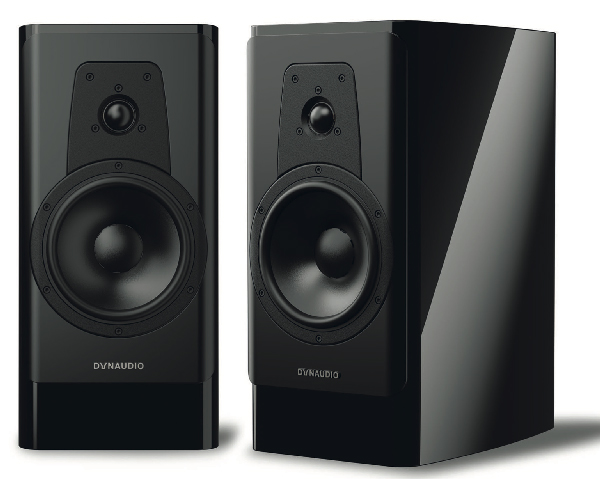
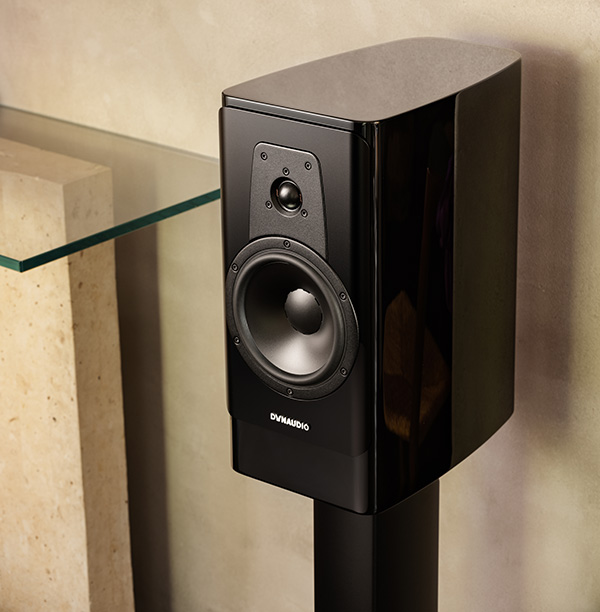
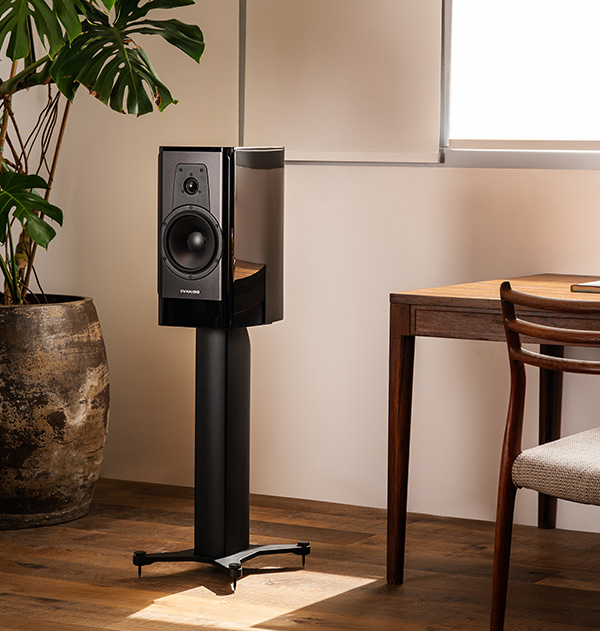
The Contour 20 BE costs $8000/pair compared with the Contour 20i's $5750/pair. With its contoured, black-anodized aluminum front baffle, the BE's cabinet appears to be the same as that of the 20i but is distinguished by its high-gloss black finish. In fact, everything about the new speaker is black, including the mounting plates for the tweeter and woofer and the flared port at the top of the rear panel. This port, like the 20i's, is flared on both its exterior and interior openings, but it has a larger diameter. Matching stands are available at $598/pair.
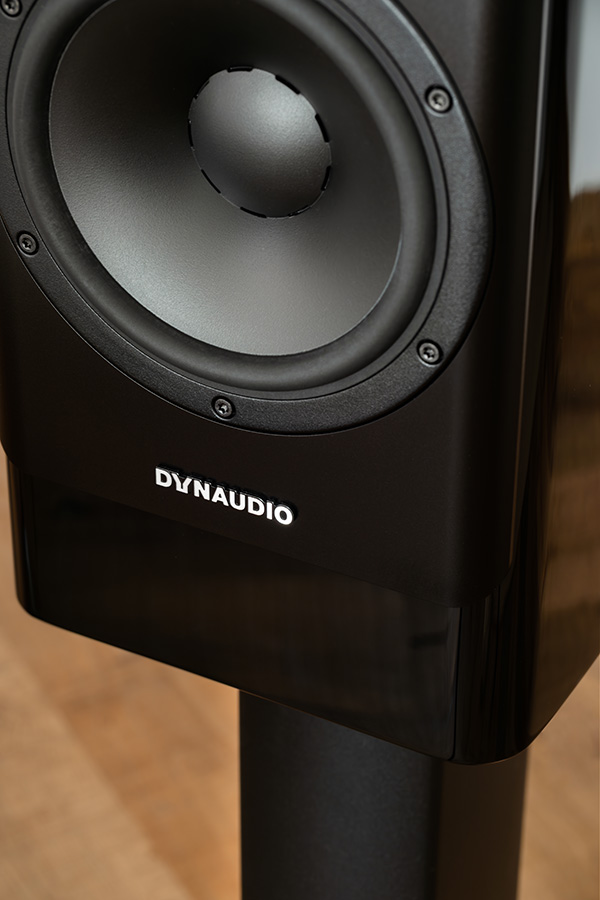
The BE's drive units are very different from the 20i's. Instead of the Esotar 2i tweeter, the Black Edition uses the Esotar 3 featured in Dynaudio's top-of-the-line Confidence models. The 1.1" coated-fabric diaphragm is loaded by what Dynaudio refers to as a "Hexis" inner-dome structure, and the aluminum voice coil is powered by a neodymium magnet. The 7.1" woofer was developed from those used in Dynaudio's Confidence series; it too uses a neodymium magnet and an aluminum voice coil, the latter mounted on a glass-fiber former. Its one-piece MSP (Magnesium Silicate Polymer) cone is said to offer an optimal combination of stiffness, damping, and low weight and is terminated with a hefty half-roll rubber surround. The dust cap is integrated with both the cone and the voice coil.
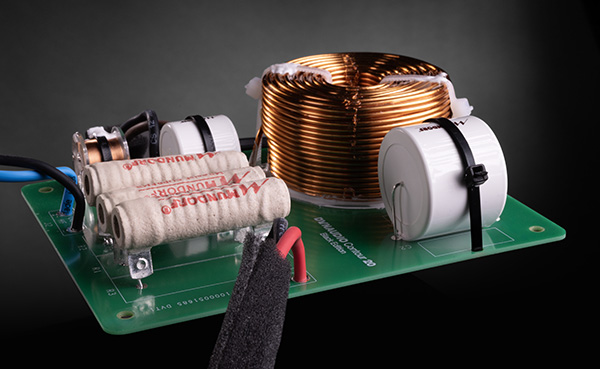
Electrical connection is via a single pair of high-quality binding posts on the rear panel. The crossover uses high-quality capacitors and resistors sourced from Mundorf, a massive air-cored inductor, and large-diameter van den Hul internal wiring. The crossover is described in the specifications as "second-order," but as you can see from the Measurements sidebar, the two drive units are connected with the same acoustic polarity. This is not what I was expecting, as with a second-order crossover and a flat baffle one drive unit needs to be connected in inverted polarity to compensate for the filters' phase shifts in the crossover region.
 In a Zoom conversation, I asked Dynaudio's Chief Engineer, Acoustics, Stephen Entwistle, to clarify the Black Edition's crossover topology.
He explained that while I was talking about the electrical phase of the low- and high-pass filters, the drive units themselves have their own phase behavior. "When we design loudspeakers, we're not really interested in what the electrical phase is. We're interested in the acoustical phase. When we're designing the crossover, one of the things we look for is the region where the phase of the midwoofer and/or midrange unit and the tweeter have a broad alignment. That's where we put the crossover.
"The crossovers that we use are not typical second-order crossovers, either. They're more like spaced first orders. Having found that region where the phase lines up, we then use the second-order part of the filter to manipulate the phase to give us more phase shift where we need it. And it also gives us a steeper slope out of band." The hybrid crossover, then, is initially first-order, with second-order components spaced away from the crossover frequency to give better out-of-band rejection.
The Contour 20 BE's crossover frequency—3.6kHz—is almost an octave higher than you normally get in a two-way loudspeaker. Does this result from the need to find the regions where the phase alignment is optimal?
"Yes, we are looking at the phase alignment on axis. But we're also looking at the power response, the directivity of the loudspeaker. It's about trying to blend the phase response and the directivity to make sure that we get an even sound power into the room. This tends to lead us to try and simplify crossovers as much as possible, because the more components you put in the crossover, the higher the filters' order, the more group delay you introduce. You're starting to smear the loudspeaker's time response. So we try to preserve the time response, and we find that when we preserve the time response that helps with the [image] localization.
"Spatial presentation is one of our focuses. We tend to find that when you get the spatial things right—if you listen to some Chesky recordings, for example, when you start to get the localizations of the instruments and the singer relative to each other and relative to the speakers—everything else starts to fall in place. The dynamics are good, and the timbre is good. But if you focus on the timbre, then the spatial reproduction can go away. So it's all a bit of a balancing act, but the localization is a big thing for us."
In a Zoom conversation, I asked Dynaudio's Chief Engineer, Acoustics, Stephen Entwistle, to clarify the Black Edition's crossover topology.
He explained that while I was talking about the electrical phase of the low- and high-pass filters, the drive units themselves have their own phase behavior. "When we design loudspeakers, we're not really interested in what the electrical phase is. We're interested in the acoustical phase. When we're designing the crossover, one of the things we look for is the region where the phase of the midwoofer and/or midrange unit and the tweeter have a broad alignment. That's where we put the crossover.
"The crossovers that we use are not typical second-order crossovers, either. They're more like spaced first orders. Having found that region where the phase lines up, we then use the second-order part of the filter to manipulate the phase to give us more phase shift where we need it. And it also gives us a steeper slope out of band." The hybrid crossover, then, is initially first-order, with second-order components spaced away from the crossover frequency to give better out-of-band rejection.
The Contour 20 BE's crossover frequency—3.6kHz—is almost an octave higher than you normally get in a two-way loudspeaker. Does this result from the need to find the regions where the phase alignment is optimal?
"Yes, we are looking at the phase alignment on axis. But we're also looking at the power response, the directivity of the loudspeaker. It's about trying to blend the phase response and the directivity to make sure that we get an even sound power into the room. This tends to lead us to try and simplify crossovers as much as possible, because the more components you put in the crossover, the higher the filters' order, the more group delay you introduce. You're starting to smear the loudspeaker's time response. So we try to preserve the time response, and we find that when we preserve the time response that helps with the [image] localization.
"Spatial presentation is one of our focuses. We tend to find that when you get the spatial things right—if you listen to some Chesky recordings, for example, when you start to get the localizations of the instruments and the singer relative to each other and relative to the speakers—everything else starts to fall in place. The dynamics are good, and the timbre is good. But if you focus on the timbre, then the spatial reproduction can go away. So it's all a bit of a balancing act, but the localization is a big thing for us."
 Dynaudio's loudspeaker designs have benefited for almost a decade from the company's R&D Center, which, in addition to its two dedicated listening rooms, features "Jupiter," a cube-shaped chamber measuring 13 meters in every dimension (footnote 1). "We have some absorption in the room to reduce the reverberation time, but it's not actually an anechoic room," Entwistle explained. "We measure at 3m, and we've got 31 microphones in an array around the loudspeaker, so we put an awful lot of focus and energy into the engineering of our products. But in terms of the tuning process, only 30% of the work is done in the chamber."
With the large anechoic time window you can achieve in the chamber, surely the time-gated measurements tell more than 30% of the story, I suggested.
"Our main focus is understanding those objective things and translating them into the subjective experience in the listening room and then trying to make sure that you don't trip up on either one. Sometimes you can have something that measures pretty good but sounds terrible. And vice versa: You can have something that sounds pretty good but measures terribly."
You can see from the Measurements sidebar that the Contour 20 BE measured pretty good. How did it sound?
Installation
Dynaudio's loudspeaker designs have benefited for almost a decade from the company's R&D Center, which, in addition to its two dedicated listening rooms, features "Jupiter," a cube-shaped chamber measuring 13 meters in every dimension (footnote 1). "We have some absorption in the room to reduce the reverberation time, but it's not actually an anechoic room," Entwistle explained. "We measure at 3m, and we've got 31 microphones in an array around the loudspeaker, so we put an awful lot of focus and energy into the engineering of our products. But in terms of the tuning process, only 30% of the work is done in the chamber."
With the large anechoic time window you can achieve in the chamber, surely the time-gated measurements tell more than 30% of the story, I suggested.
"Our main focus is understanding those objective things and translating them into the subjective experience in the listening room and then trying to make sure that you don't trip up on either one. Sometimes you can have something that measures pretty good but sounds terrible. And vice versa: You can have something that sounds pretty good but measures terribly."
You can see from the Measurements sidebar that the Contour 20 BE measured pretty good. How did it sound?
Installation
After I unpacked the Contour 20 Black Editions and bolted them to their optional stands, John Quick, Dynaudio North America's VP sales & marketing, set them up in my listening room. He started with the speakers in the positions where the original Contour 20s had sounded best. I connected the speakers first to a NAD M10 V3 integrated amplifier (in for review), then to a pair of Parasound JCA100 Tribute monoblock amplifiers, single-wiring them with AudioQuest Robin Hood cables. The source was my Roon Nucleus+ server sending data either to the NAD amplifier via my network or, with the Parasounds, sending the data to a Roon Ready MBL N31 CD player/DAC. Quick laid down strips of blue masking tape in front of and to one side of each speaker, marking the tape at 1" intervals to make adjusting the speakers' positions straightforward. After about a couple of hours of playing reference tracks and experimenting with the Contour 20 BEs' placement, he found positions where he felt that the speakers sounded best. The Contour 20 BEs' front baffles ended up 75" from the wall behind the speakers; the center of the left-hand baffle was 38" from the LPs that line that speaker's closest sidewall, and the right-hand baffle was 59" from the books that line that speaker's sidewall. The Dynaudio speakers were toed in not quite all the way to the listening position, their axes crossing about 30" behind my head as I sit in my listening chair. The tweeters were 37" from the floor, close to the height of my ears.
Listening
I started my critical listening by playing the diagnostic tracks I created for the various Stereophile Test CDs (footnote 2). The 1/3-octave warble tones were cleanly reproduced down to the 80Hz band. The 63Hz tone was slightly lower in level, the 50Hz and 40Hz tones slightly higher in level. The 32Hz tone was boosted by my room's lowest-frequency mode. I couldn't hear the 20Hz tone. The half-step–spaced tonebursts spoke cleanly and evenly from 4kHz down to 32Hz. The lower-frequency tonebursts and warble tones sounded clean, with no "doubling" (second-harmonic distortion), and there was no wind noise from the port. Listening with a stethoscope to the enclosure's sidewalls while these test tones played, I could hear some resonances in the octave between 250Hz and 500Hz. Dual-mono pink noise was reproduced as a stable central image. The high frequencies sounded smooth, the midrange natural, and I could hear very little comb filtering as I moved my head from side to side. Richard Lehnert's speaking voice and my Fender bass guitar on the channel identification track from my Editor's Choice CD (Stereophile STPH016-2, no longer available) were both reproduced with an even tonal balance and without coloration. drums, and the piano sounded evenly balanced, with no notes unnaturally emphasized. The Dynaudio Contour 20 Black Editions resided in my system in July and August, which is when the BBC broadcasts the legendary "Proms" from London's Royal Albert Hall. I listen to as many of these concerts as I can, streamed from the BBC's Radio 3 channel with Roon. The August 16 concert featured Shostakovich's Symphony No.5 performed from memory by the Aurora Orchestra conducted by Nicholas Collon (footnote 3). Despite the AAC stream's low 96kbps resolution, I found myself utterly enthralled by this live performance, as reproduced by the Dynaudios. The low frequencies were sufficiently extended and powerful, the high frequencies sounded natural, the midrange was uncolored, and most importantly, the image of the orchestra was spread between and behind the plane of the speakers. I was there in London, courtesy of the BBC, Roon, and the Contour 20 BEs.
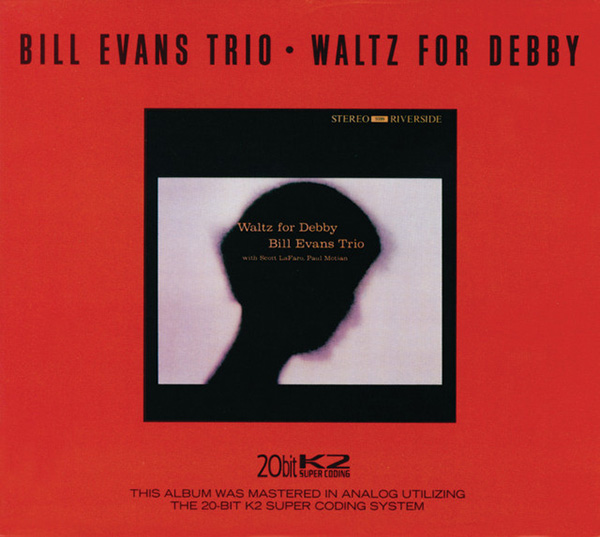 The emotional journey I took with the Shostakovich left me needing to listen to something less intense. I cued up another live recording, "My Romance (Take 1)" from Bill Evans's Waltz for Debby (Live at the Village Vanguard 1961) (24/192 FLAC, Craft Recordings/Qobuz). Less intense? Scott LaFaro's solo on double bass raised goosebumps on my arms, the Contour 20 BE's combination of upper-bass definition and sufficient midbass weight paying tribute to the sound of his instrument. The Dynaudios unambiguously presented LaFaro's bass and Evans's piano in front of Paul Motian's drums, and the piano sounded evenly balanced, with no notes unnaturally emphasized.
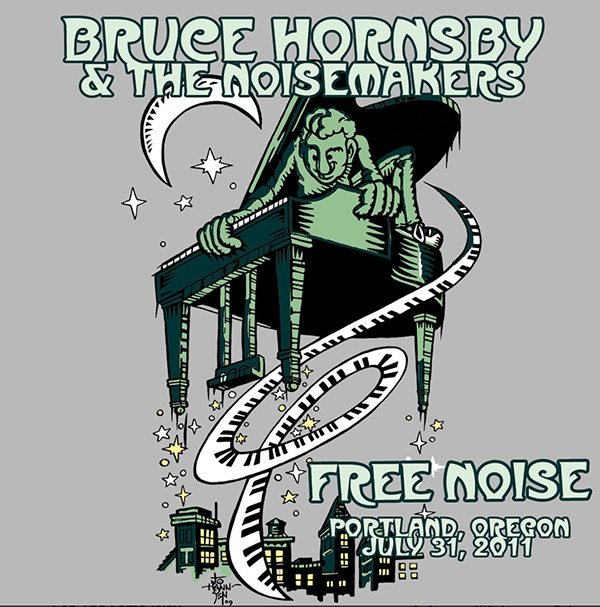 From a classic live album to one very much less well-known: Bruce Hornsby and the Noisemakers' Live at the Portland Oregon Zoo 7/31/2011 (24/44.1 FLAC download; footnote 4). On "The Way It Is," Hornsby duets with banjo player Béla Fleck. The images of the piano and banjo were stably presented by the Dynaudios in front of the busy-sounding band. As with the Royal Albert Hall Shostakovich, each soundstage created by the Contour 20 BEs took me to the live event.
Evans and Hornsby are featured on very different-sounding pianos captured in very different contexts: the intimate ambience of a Manhattan club and the spacious acoustic of the Portland Zoo (the latter aided, I suspect, by some artificial reverb). Notably, the Dynaudios didn't homogenize the tonal characters of each piano, an instrument that all too easily takes on the character of the loudspeaker with which it is reproduced.
I have found my own recording of Canadian pianist Robert Silverman performing Liszt's Liebestraum in 1993 very revealing of midrange problems in a loudspeaker (from Sonata, 16/44.1 ALAC, Stereophile STPH008-2, no longer available). The piano was recorded with a Schoeps KFM 6 Sphere stereo microphone flanked by a pair of Brüel & Kjær 4006 omnidirectional microphones feeding a four-channel Nagra-D open-reel digital recorder. When I mixed this album with the Sonic Solutions DAW, I time-aligned the four microphones to present a believable image of Silverman's Steinway D piano; the image extended from just inside the left speaker position all the way to the right loudspeaker position, which is what you would have heard in real life. The microphones were positioned so that they placed the piano within the supportive ambience of Albuquerque's First United Methodist Church.
From a classic live album to one very much less well-known: Bruce Hornsby and the Noisemakers' Live at the Portland Oregon Zoo 7/31/2011 (24/44.1 FLAC download; footnote 4). On "The Way It Is," Hornsby duets with banjo player Béla Fleck. The images of the piano and banjo were stably presented by the Dynaudios in front of the busy-sounding band. As with the Royal Albert Hall Shostakovich, each soundstage created by the Contour 20 BEs took me to the live event.
Evans and Hornsby are featured on very different-sounding pianos captured in very different contexts: the intimate ambience of a Manhattan club and the spacious acoustic of the Portland Zoo (the latter aided, I suspect, by some artificial reverb). Notably, the Dynaudios didn't homogenize the tonal characters of each piano, an instrument that all too easily takes on the character of the loudspeaker with which it is reproduced.
I have found my own recording of Canadian pianist Robert Silverman performing Liszt's Liebestraum in 1993 very revealing of midrange problems in a loudspeaker (from Sonata, 16/44.1 ALAC, Stereophile STPH008-2, no longer available). The piano was recorded with a Schoeps KFM 6 Sphere stereo microphone flanked by a pair of Brüel & Kjær 4006 omnidirectional microphones feeding a four-channel Nagra-D open-reel digital recorder. When I mixed this album with the Sonic Solutions DAW, I time-aligned the four microphones to present a believable image of Silverman's Steinway D piano; the image extended from just inside the left speaker position all the way to the right loudspeaker position, which is what you would have heard in real life. The microphones were positioned so that they placed the piano within the supportive ambience of Albuquerque's First United Methodist Church.
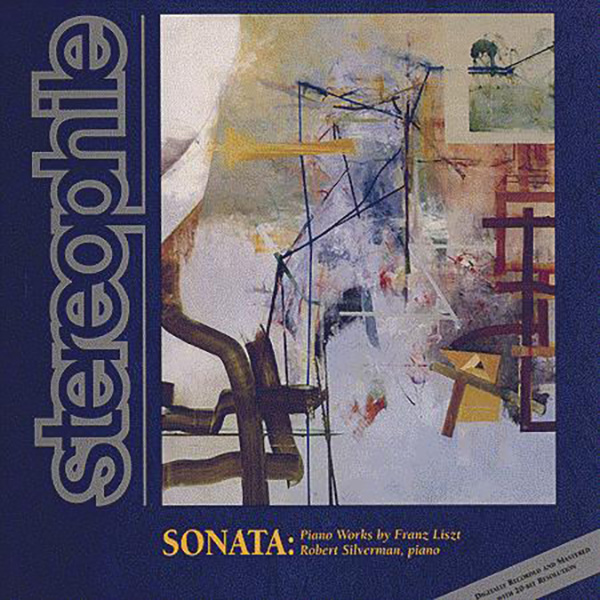 This is exactly what I heard when Liebestraum was reproduced by the Dynaudio Contour 20 BEs. The uncolored image of the piano was tangible, set slightly back within the soundstage, but more importantly, Silverman's performance was presented with all its delicacy of touch and tone intact.
The Dynaudio Contour BE's lack of midrange coloration meant that vocals were well-served. Bruce Hornsby's image sounded palpable on the Portland Zoo album, as did that of Cécile McLorin Salvant on "I Didn't Know What Time It Was" (from WomanChild, 24/96 FLAC, Mack Avenue/Qobuz) and of Joni Mitchell on the title track from Both Sides Now (24/96 ALAC, Reprise). And on both these albums, the spatial contrast between the lead vocal and the backing—jazz trio on the Salvant, orchestra on the Mitchell—was clean and clear. And like Scott LaFaro's double bass on the Bill Evans track, Rodney Whitaker's instrument on "I Didn't Know What Time It Was" was reproduced with an excellent combination of midbass weight and definition.
It could be argued that the role of an audio critic is to play a selection of recordings that reveal not just the good points of a product's behavior but also the areas where it fails. This didn't prove possible with the Contour 20 BE, because every time I thought I had a handle on something wrong, it turned out that it was a characteristic of the recording being played.
An example: Roon's Radio function selected two tracks in succession that sounded like the Dynaudios' tweeters had dropped in level, Duke Ellington's and Johnny Hodges's "Beale Street Blues" (from Back to Back, 24/192 FLAC, Verve/Qobuz) and Chet Baker's "There Will Never Be Another You" (from Chet Baker Sings, 16/44.1 FLAC, Pacific Jazz/Qobuz). I hastily cued up some familiar tracks from my local storage: Cannonball Adderley's "Autumn Leaves" (from Somethin' Else, 24/96 ALAC, Blue Note) and Ronnie Isley's "The Look of Love" (from Here I Am: Isley Meets Bacharach, 16/44.1 ALAC, DreamWorks B0001005-2). Phew. All was well with the high frequencies, cymbals having the right amount of splish and vocal sibilants properly presented. It appeared that the Contour 20 BEs were revealing the vintage of the Ellington and Baker tracks to a greater degree than I was used to with my regular speakers.
This is exactly what I heard when Liebestraum was reproduced by the Dynaudio Contour 20 BEs. The uncolored image of the piano was tangible, set slightly back within the soundstage, but more importantly, Silverman's performance was presented with all its delicacy of touch and tone intact.
The Dynaudio Contour BE's lack of midrange coloration meant that vocals were well-served. Bruce Hornsby's image sounded palpable on the Portland Zoo album, as did that of Cécile McLorin Salvant on "I Didn't Know What Time It Was" (from WomanChild, 24/96 FLAC, Mack Avenue/Qobuz) and of Joni Mitchell on the title track from Both Sides Now (24/96 ALAC, Reprise). And on both these albums, the spatial contrast between the lead vocal and the backing—jazz trio on the Salvant, orchestra on the Mitchell—was clean and clear. And like Scott LaFaro's double bass on the Bill Evans track, Rodney Whitaker's instrument on "I Didn't Know What Time It Was" was reproduced with an excellent combination of midbass weight and definition.
It could be argued that the role of an audio critic is to play a selection of recordings that reveal not just the good points of a product's behavior but also the areas where it fails. This didn't prove possible with the Contour 20 BE, because every time I thought I had a handle on something wrong, it turned out that it was a characteristic of the recording being played.
An example: Roon's Radio function selected two tracks in succession that sounded like the Dynaudios' tweeters had dropped in level, Duke Ellington's and Johnny Hodges's "Beale Street Blues" (from Back to Back, 24/192 FLAC, Verve/Qobuz) and Chet Baker's "There Will Never Be Another You" (from Chet Baker Sings, 16/44.1 FLAC, Pacific Jazz/Qobuz). I hastily cued up some familiar tracks from my local storage: Cannonball Adderley's "Autumn Leaves" (from Somethin' Else, 24/96 ALAC, Blue Note) and Ronnie Isley's "The Look of Love" (from Here I Am: Isley Meets Bacharach, 16/44.1 ALAC, DreamWorks B0001005-2). Phew. All was well with the high frequencies, cymbals having the right amount of splish and vocal sibilants properly presented. It appeared that the Contour 20 BEs were revealing the vintage of the Ellington and Baker tracks to a greater degree than I was used to with my regular speakers.
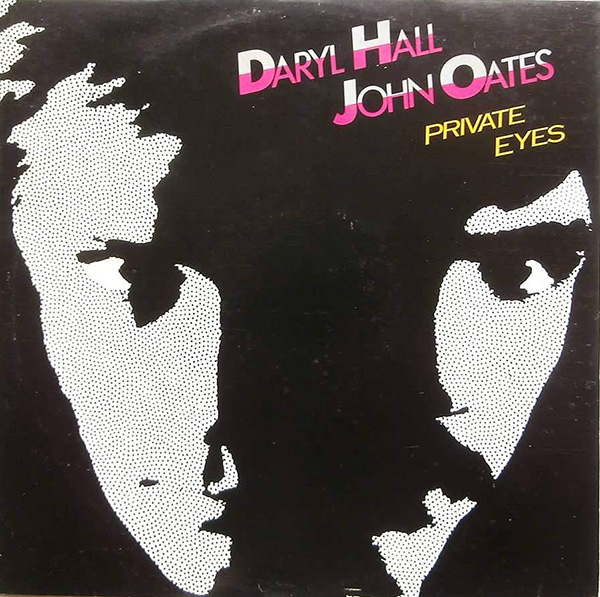 A couple of thousand words ago, I wrote that those two-way minimonitors I prefer can't compete with large speakers when it comes to dynamics. The Contour 20 BE may be a two-way, but it is appreciably larger than my minimonitors. To check out its dynamic performance, I finished my critical listening sessions by seeing how well the Dynaudio worked with my rocking-out favorites: Justin Bieber's and will.i.am's "#thatPOWER" from #willpower (16/44.1 MQA, Interscope Records UICS-9136/7); Taylor Swift's "All Too Well (Taylor's Version)" from Red (Taylor's Version) (24/96 FLAC, Big Machine Records/Qobuz); and Hall & Oates's "I Can't Go for That (No Can Do) (Extended Club Mix)" from Private Eyes (16/44.1 FLAC, RCA-BMG Heritage/Qobuz).
With the Parasound monoblocks providing power, the average SPL at my listening position with these tracks was 95dB(C), slow ballistics, measured with the Studio Six SPL Meter app on my iPhone. Reproducing the low frequencies on these tracks at this level was asking a lot from a pair of woofers with a total radiating area of 40 square inches. Nevertheless, the Dynaudios coped well. The dropped bass notes on the Swift and Bieber tracks had sufficient weight, yet they didn't muddy up the higher frequencies. The damped bass line on "I Can't Go for That" sounded even and powerful, and while the treble on this track is pushed forward in the mix, it didn't sound distorted. Even though the woofers were being tortured by the required ½" excursions with the kickdrums on "All Too Well" and "#thatPOWER," and the port was pumping out the lower frequencies, there was no wind noise from the port or obvious distortion.
A couple of thousand words ago, I wrote that those two-way minimonitors I prefer can't compete with large speakers when it comes to dynamics. The Contour 20 BE may be a two-way, but it is appreciably larger than my minimonitors. To check out its dynamic performance, I finished my critical listening sessions by seeing how well the Dynaudio worked with my rocking-out favorites: Justin Bieber's and will.i.am's "#thatPOWER" from #willpower (16/44.1 MQA, Interscope Records UICS-9136/7); Taylor Swift's "All Too Well (Taylor's Version)" from Red (Taylor's Version) (24/96 FLAC, Big Machine Records/Qobuz); and Hall & Oates's "I Can't Go for That (No Can Do) (Extended Club Mix)" from Private Eyes (16/44.1 FLAC, RCA-BMG Heritage/Qobuz).
With the Parasound monoblocks providing power, the average SPL at my listening position with these tracks was 95dB(C), slow ballistics, measured with the Studio Six SPL Meter app on my iPhone. Reproducing the low frequencies on these tracks at this level was asking a lot from a pair of woofers with a total radiating area of 40 square inches. Nevertheless, the Dynaudios coped well. The dropped bass notes on the Swift and Bieber tracks had sufficient weight, yet they didn't muddy up the higher frequencies. The damped bass line on "I Can't Go for That" sounded even and powerful, and while the treble on this track is pushed forward in the mix, it didn't sound distorted. Even though the woofers were being tortured by the required ½" excursions with the kickdrums on "All Too Well" and "#thatPOWER," and the port was pumping out the lower frequencies, there was no wind noise from the port or obvious distortion.
 Conclusion
I very much enjoyed my time with Dynaudio's Contour 20 Black Edition loudspeakers. Night after night, listening session after listening session, they opened an uncolored, wide-bandwidth, grain-free window into recorded soundstages, with sufficient low-frequency extension and loudness capability to satisfy. Highly recommended
Footnote 1: See dynaudio.com/magazine/2016/december/the-new-dynaudio-research-and-development-center. Footnote 2: While the CDs are out of print, the test-tone files can be downloaded free of charge from tinyurl.com/yfkvayat.
Footnote 3: See the review at theguardian.com/music/2025/aug/17/aurora-orchestra-nicholas-collon-review-shostakovich-fifth-symphony.
Footnote 4: See bruuuce.com/2014/06/29/download-portland-zoo-july-31-2011/.
The Contour 20 BEThe Contour 20 BE costs $8000/pair compared with the Contour 20i's $5750/pair. With its contoured, black-anodized aluminum front baffle, the BE's cabinet appears to be the same as that of the 20i but is distinguished by its high-gloss black finish. In fact, everything about the new speaker is black, including the mounting plates for the tweeter and woofer and the flared port at the top of the rear panel. This port, like the 20i's, is flared on both its exterior and interior openings, but it has a larger diameter. Matching stands are available at $598/pair.
In a Zoom conversation, I asked Dynaudio's Chief Engineer, Acoustics, Stephen Entwistle, to clarify the Black Edition's crossover topology.
Dynaudio's loudspeaker designs have benefited for almost a decade from the company's R&D Center, which, in addition to its two dedicated listening rooms, features "Jupiter," a cube-shaped chamber measuring 13 meters in every dimension (footnote 1). "We have some absorption in the room to reduce the reverberation time, but it's not actually an anechoic room," Entwistle explained. "We measure at 3m, and we've got 31 microphones in an array around the loudspeaker, so we put an awful lot of focus and energy into the engineering of our products. But in terms of the tuning process, only 30% of the work is done in the chamber."
After I unpacked the Contour 20 Black Editions and bolted them to their optional stands, John Quick, Dynaudio North America's VP sales & marketing, set them up in my listening room. He started with the speakers in the positions where the original Contour 20s had sounded best. I connected the speakers first to a NAD M10 V3 integrated amplifier (in for review), then to a pair of Parasound JCA100 Tribute monoblock amplifiers, single-wiring them with AudioQuest Robin Hood cables. The source was my Roon Nucleus+ server sending data either to the NAD amplifier via my network or, with the Parasounds, sending the data to a Roon Ready MBL N31 CD player/DAC. Quick laid down strips of blue masking tape in front of and to one side of each speaker, marking the tape at 1" intervals to make adjusting the speakers' positions straightforward. After about a couple of hours of playing reference tracks and experimenting with the Contour 20 BEs' placement, he found positions where he felt that the speakers sounded best. The Contour 20 BEs' front baffles ended up 75" from the wall behind the speakers; the center of the left-hand baffle was 38" from the LPs that line that speaker's closest sidewall, and the right-hand baffle was 59" from the books that line that speaker's sidewall. The Dynaudio speakers were toed in not quite all the way to the listening position, their axes crossing about 30" behind my head as I sit in my listening chair. The tweeters were 37" from the floor, close to the height of my ears.
I started my critical listening by playing the diagnostic tracks I created for the various Stereophile Test CDs (footnote 2). The 1/3-octave warble tones were cleanly reproduced down to the 80Hz band. The 63Hz tone was slightly lower in level, the 50Hz and 40Hz tones slightly higher in level. The 32Hz tone was boosted by my room's lowest-frequency mode. I couldn't hear the 20Hz tone. The half-step–spaced tonebursts spoke cleanly and evenly from 4kHz down to 32Hz. The lower-frequency tonebursts and warble tones sounded clean, with no "doubling" (second-harmonic distortion), and there was no wind noise from the port. Listening with a stethoscope to the enclosure's sidewalls while these test tones played, I could hear some resonances in the octave between 250Hz and 500Hz. Dual-mono pink noise was reproduced as a stable central image. The high frequencies sounded smooth, the midrange natural, and I could hear very little comb filtering as I moved my head from side to side. Richard Lehnert's speaking voice and my Fender bass guitar on the channel identification track from my Editor's Choice CD (Stereophile STPH016-2, no longer available) were both reproduced with an even tonal balance and without coloration. drums, and the piano sounded evenly balanced, with no notes unnaturally emphasized. The Dynaudio Contour 20 Black Editions resided in my system in July and August, which is when the BBC broadcasts the legendary "Proms" from London's Royal Albert Hall. I listen to as many of these concerts as I can, streamed from the BBC's Radio 3 channel with Roon. The August 16 concert featured Shostakovich's Symphony No.5 performed from memory by the Aurora Orchestra conducted by Nicholas Collon (footnote 3). Despite the AAC stream's low 96kbps resolution, I found myself utterly enthralled by this live performance, as reproduced by the Dynaudios. The low frequencies were sufficiently extended and powerful, the high frequencies sounded natural, the midrange was uncolored, and most importantly, the image of the orchestra was spread between and behind the plane of the speakers. I was there in London, courtesy of the BBC, Roon, and the Contour 20 BEs.
The emotional journey I took with the Shostakovich left me needing to listen to something less intense. I cued up another live recording, "My Romance (Take 1)" from Bill Evans's Waltz for Debby (Live at the Village Vanguard 1961) (24/192 FLAC, Craft Recordings/Qobuz). Less intense? Scott LaFaro's solo on double bass raised goosebumps on my arms, the Contour 20 BE's combination of upper-bass definition and sufficient midbass weight paying tribute to the sound of his instrument. The Dynaudios unambiguously presented LaFaro's bass and Evans's piano in front of Paul Motian's drums, and the piano sounded evenly balanced, with no notes unnaturally emphasized.
From a classic live album to one very much less well-known: Bruce Hornsby and the Noisemakers' Live at the Portland Oregon Zoo 7/31/2011 (24/44.1 FLAC download; footnote 4). On "The Way It Is," Hornsby duets with banjo player Béla Fleck. The images of the piano and banjo were stably presented by the Dynaudios in front of the busy-sounding band. As with the Royal Albert Hall Shostakovich, each soundstage created by the Contour 20 BEs took me to the live event.
Evans and Hornsby are featured on very different-sounding pianos captured in very different contexts: the intimate ambience of a Manhattan club and the spacious acoustic of the Portland Zoo (the latter aided, I suspect, by some artificial reverb). Notably, the Dynaudios didn't homogenize the tonal characters of each piano, an instrument that all too easily takes on the character of the loudspeaker with which it is reproduced.
This is exactly what I heard when Liebestraum was reproduced by the Dynaudio Contour 20 BEs. The uncolored image of the piano was tangible, set slightly back within the soundstage, but more importantly, Silverman's performance was presented with all its delicacy of touch and tone intact.
The Dynaudio Contour BE's lack of midrange coloration meant that vocals were well-served. Bruce Hornsby's image sounded palpable on the Portland Zoo album, as did that of Cécile McLorin Salvant on "I Didn't Know What Time It Was" (from WomanChild, 24/96 FLAC, Mack Avenue/Qobuz) and of Joni Mitchell on the title track from Both Sides Now (24/96 ALAC, Reprise). And on both these albums, the spatial contrast between the lead vocal and the backing—jazz trio on the Salvant, orchestra on the Mitchell—was clean and clear. And like Scott LaFaro's double bass on the Bill Evans track, Rodney Whitaker's instrument on "I Didn't Know What Time It Was" was reproduced with an excellent combination of midbass weight and definition.
A couple of thousand words ago, I wrote that those two-way minimonitors I prefer can't compete with large speakers when it comes to dynamics. The Contour 20 BE may be a two-way, but it is appreciably larger than my minimonitors. To check out its dynamic performance, I finished my critical listening sessions by seeing how well the Dynaudio worked with my rocking-out favorites: Justin Bieber's and will.i.am's "#thatPOWER" from #willpower (16/44.1 MQA, Interscope Records UICS-9136/7); Taylor Swift's "All Too Well (Taylor's Version)" from Red (Taylor's Version) (24/96 FLAC, Big Machine Records/Qobuz); and Hall & Oates's "I Can't Go for That (No Can Do) (Extended Club Mix)" from Private Eyes (16/44.1 FLAC, RCA-BMG Heritage/Qobuz).
ConclusionI very much enjoyed my time with Dynaudio's Contour 20 Black Edition loudspeakers. Night after night, listening session after listening session, they opened an uncolored, wide-bandwidth, grain-free window into recorded soundstages, with sufficient low-frequency extension and loudness capability to satisfy. Highly recommended
Footnote 1: See dynaudio.com/magazine/2016/december/the-new-dynaudio-research-and-development-center. Footnote 2: While the CDs are out of print, the test-tone files can be downloaded free of charge from tinyurl.com/yfkvayat.