I reviewed the Kii THREE digital active loudspeaker in the September 2017 issue of Stereophile and was totally smitten. Despite its compact size, it sounded open and well-balanced. It was capable of convincing, lively reproduction of solo voice, full orchestra and chorus, and anything in between. It was cutting edge in supporting analog and digital sources, direct-wired and network connections, and streaming. It was a pioneering effort in controlling loudspeaker radiation patterns to minimize the influence of room acoustics on reproduced sound.
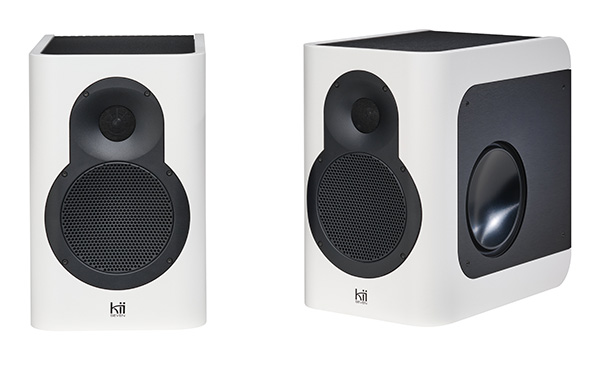
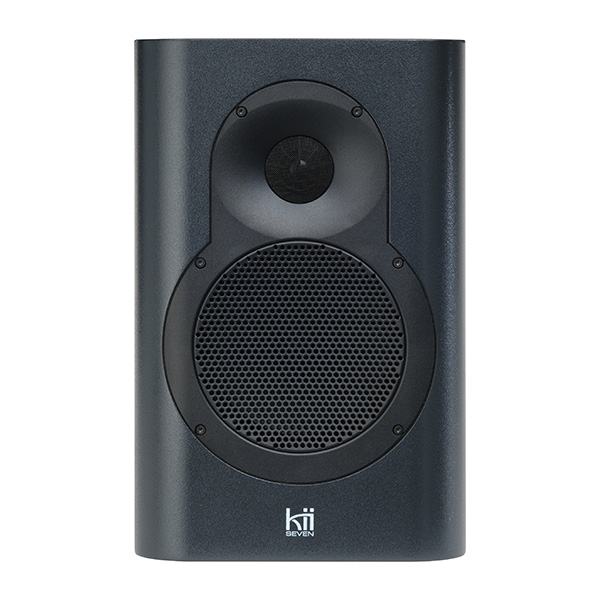
Now Kii is offering a newer, smaller, less expensive yet equally appealing alternative, the Kii SEVEN. The same design principles are applied. Indeed, the Kii SEVEN is the spitting image of its big brother but smaller, intended for those with tight spaces or a need to put several speakers in a room. The only feature not carried over from the THREE to the SEVEN is a way of connecting a subwoofer or Kii's BXT Extension Speaker Module.
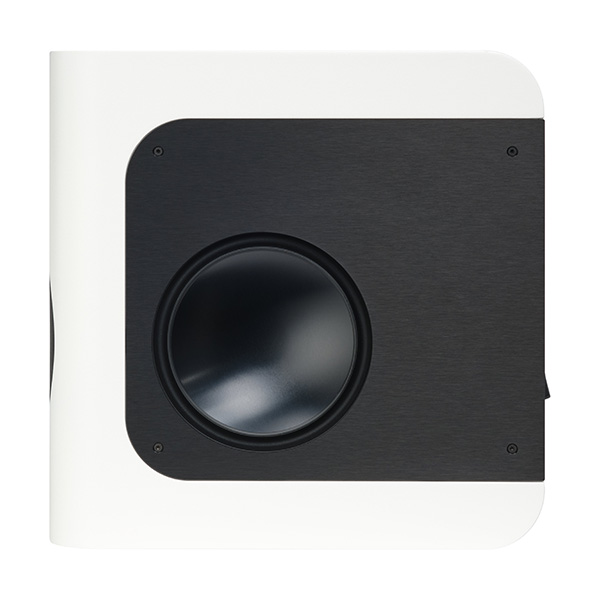
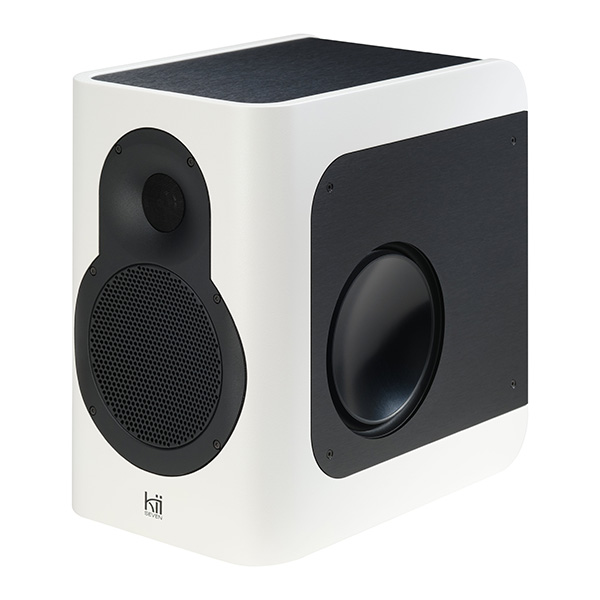
The most significant concession to its smaller size is that the three-way SEVEN incorporates just four drivers per side; the THREE incorporates six. The SEVEN lacks the THREE's two rear-mounted woofers which combine with the side and front drivers to create the cardioid dispersion pattern necessary to minimize the excitation of room modes. (The SEVEN has a similar facility but achieves it differently; see the Bruno Putzeys sidebar.) Otherwise, the driver complement is the same: same acoustic-lens–loaded tweeter, same 5" midrange driver, both located on the front panel. Each SEVEN has three power amps. As Kii explains, the midrange and tweeter are so efficient that their Purifi Eigentakt amplifiers are never pushed near their 200W limits; what limits the speaker's maximum output is the woofers, which reach maximum linear excursion at 600W and are guarded by a limiter.
 Out of the box
The SEVEN is deceptively heavy, reassuringly sleek and solid. At first, bare of grilles, it looks like what it is, a speaker with its four drivers, but around back, it looks more like an amplifier, with vents for cooling, a power switch, a panel of LEDs and touch controls, and an array of input and output connectors, none bearing any resemblance to traditional multiway binding posts. From left to right below the control panel there is an IEC power connector, an XLR/TRS analog input jack, an AES3 input jack, a pair of RJ45 ports for KiiLink in and out, and, tucked under the edge of the control panel, a pair of RJ45 ports for audio over IP using the Dante/AES67 standard. While the speaker control panel provides access to all the essential operations, its placement minimizes its usefulness. Fortunately, Kii provides two excellent options. The first is the Kii Home app, which supports setup, input selection, streaming, tone control, presets, and of course volume control, all settings accessible from the listening seat. The second is Kii Control, a wired remote control that adds USB, TosLink, and S/PDIF inputs and easy access to all the controls available on the rear panel and the Kii Home app. In addition, Kii Control offers a Pro submenu of options allowing control of latency, absolute polarity, and "Advanced Filters." These are primarily intended for studio use, but they may be of value to other users. Without doubt, the Kii Control is the preferred option.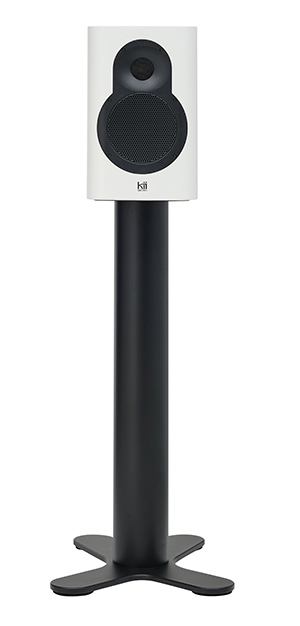 In anticipation of the SEVENs, I purchased a pair of 27" Target stands from an internet vendor. I plugged in the AC cords and turned on the power. Since no setup guide or manual was provided (footnote 1), I followed the cues in the Kii Home app, which located the two speakers, set them up as a "Zone," identified them as Left and Right, and set BoundaryEQ to 0dB for their free-field positions. I then opened Qobuz Connect on my phone and clicked on a favorite, French Duets (24/192 FLAC, Hyperion/Qobuz), with pianists Steven Osborne and Paul Lewis. It took less than 10 minutes from power on to streaming music at 24/192.
That was impressive, but I don't listen enough to streamed music to feel comfortable using it to appraise sound quality. The SEVENs offer several alternatives, and I tried most of them: analog on XLR, AES3, and USB, the first two via direct connection, the latter via the Kii Connect in addition to streaming by Wi-Fi. In retrospect, comparing the sound via each of these options from sources up to 24/192, without up or down resampling or EQ, I had no preference; in fact I was unable to discern any difference. It was easiest to begin with the analog XLR: I simply unplugged the XLR cables from my Benchmark power amps and inserted them into the XLR/TRS jacks of the SEVENS.
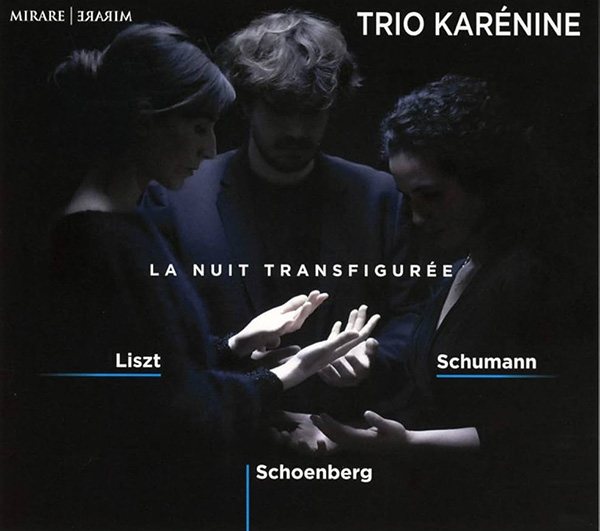
Choosing a piece for first listen to a new loudspeaker is crucial because it can imprint an unconscious bias on the listener. The choice should be familiar. It should be well-recorded but not challenging in terms of extra-wide dynamics or frequency extremes; those tests come later. The first track played is like the opening line on a blind date. I chose a favorite piece, Liszt's "Vallée d'Obermann" from his Années de pèlerinage—specifically his own rapturous transcription for piano trio, which he retitled "Tristia" (S.723c). I played the performance by Trio Karénine (CD rip, La Nuit transfigurée, Mirare MIR 554).
This piece opens with just piano. The cello's entry is startling to those who know the original piece for solo piano. Later, when the violin joins, everything seems natural. Despite my familiarity, this recording seemed scrubbed fresh by the Kii SEVENs. Each instrument had body and presence, and the ensemble seemed spread from speaker to speaker. Tonal balance was excellent, and the detail and timbre of the instruments was eminently satisfying.
In anticipation of the SEVENs, I purchased a pair of 27" Target stands from an internet vendor. I plugged in the AC cords and turned on the power. Since no setup guide or manual was provided (footnote 1), I followed the cues in the Kii Home app, which located the two speakers, set them up as a "Zone," identified them as Left and Right, and set BoundaryEQ to 0dB for their free-field positions. I then opened Qobuz Connect on my phone and clicked on a favorite, French Duets (24/192 FLAC, Hyperion/Qobuz), with pianists Steven Osborne and Paul Lewis. It took less than 10 minutes from power on to streaming music at 24/192.
That was impressive, but I don't listen enough to streamed music to feel comfortable using it to appraise sound quality. The SEVENs offer several alternatives, and I tried most of them: analog on XLR, AES3, and USB, the first two via direct connection, the latter via the Kii Connect in addition to streaming by Wi-Fi. In retrospect, comparing the sound via each of these options from sources up to 24/192, without up or down resampling or EQ, I had no preference; in fact I was unable to discern any difference. It was easiest to begin with the analog XLR: I simply unplugged the XLR cables from my Benchmark power amps and inserted them into the XLR/TRS jacks of the SEVENS.
Choosing a piece for first listen to a new loudspeaker is crucial because it can imprint an unconscious bias on the listener. The choice should be familiar. It should be well-recorded but not challenging in terms of extra-wide dynamics or frequency extremes; those tests come later. The first track played is like the opening line on a blind date. I chose a favorite piece, Liszt's "Vallée d'Obermann" from his Années de pèlerinage—specifically his own rapturous transcription for piano trio, which he retitled "Tristia" (S.723c). I played the performance by Trio Karénine (CD rip, La Nuit transfigurée, Mirare MIR 554).
This piece opens with just piano. The cello's entry is startling to those who know the original piece for solo piano. Later, when the violin joins, everything seems natural. Despite my familiarity, this recording seemed scrubbed fresh by the Kii SEVENs. Each instrument had body and presence, and the ensemble seemed spread from speaker to speaker. Tonal balance was excellent, and the detail and timbre of the instruments was eminently satisfying.
 Despite all that goodness, I was uncertain about something in the upper treble, though I could not put my finger on what it was. The Kii app lets you apply treble tilt, so I tried tilting it up a couple of dB, then tilting it down, but neither seemed right.
My next thought was, hey, this is a "digital" speaker. Feeding it an analog signal sourced from digital means inserting redundant conversions (footnote 2). But switching the digital feed from the Hapi made no audible difference. Sure, the SEVENs were always remarkably clean and transparent and generally a pleasure to listen to, but I got another bug in my ear when I played Jane Ira Bloom's "Song Patrol," from Early Americans (24/96 PCM rip from a Sono Luminus Blu-ray, SLE-70005). This bracingly clean recording is impressively tight, with well-extended bass, but, although the SEVEN provided weight and impact in the bass, it was damped and dulled. That could just be the price paid for the small box, or maybe I was doing something wrong.
Despite all that goodness, I was uncertain about something in the upper treble, though I could not put my finger on what it was. The Kii app lets you apply treble tilt, so I tried tilting it up a couple of dB, then tilting it down, but neither seemed right.
My next thought was, hey, this is a "digital" speaker. Feeding it an analog signal sourced from digital means inserting redundant conversions (footnote 2). But switching the digital feed from the Hapi made no audible difference. Sure, the SEVENs were always remarkably clean and transparent and generally a pleasure to listen to, but I got another bug in my ear when I played Jane Ira Bloom's "Song Patrol," from Early Americans (24/96 PCM rip from a Sono Luminus Blu-ray, SLE-70005). This bracingly clean recording is impressively tight, with well-extended bass, but, although the SEVEN provided weight and impact in the bass, it was damped and dulled. That could just be the price paid for the small box, or maybe I was doing something wrong.
 Back to the front
Over the decades, I've gained the impression that unless there are explicit reasons to the contrary (acoustic, aesthetic, interpersonal, etc.), loudspeakers should be positioned away from room boundaries. That's where I always start, and it's usually where I end up. Sometimes a manufacturer makes recommendations, and sometimes the speakers have corrections/presets for different placements with regard to room boundaries, as do the SEVENs. Those tend to be generic solutions and inferior to measurement-based corrections (footnote 3).
So, I was really pleased when, in a detailed response to a series of questions, Kii designer Bruno Putzeys wrote, "On the Kii Home app, the default labeling is just 'wall' or 'free.' But the free space setting is not recommended." The emphasis is mine. "It's only there to accommodate customers who for some reason are unable or unwilling to place the speaker against the wall." Cardioid bass is Kii's raison d'être, and it requires reflection from the wall boundary. Duh!
I immediately moved the SEVENs to the top of a sturdy cabinet that spans the front wall of my listening room. I changed BoundaryEQ from 0dB to –6dB.
Da capo
I made a fresh start with the Kii Control connected to my WinPC running JRiver and Roon by USB. USB via the Kii Control supports DSD up to DSD128 and PCM up to 24/384—well beyond the 24/192 limit of the other sources.
A quick check back with the "Vallée d'Obermann" track by Trio Karénine was revealing. The treble was smooth and detailed all the way up, but, more significantly, the immediacy was enhanced, providing an almost graphic, visual illusion of the three instruments just behind the speaker plane. The bass on Jane Ira Bloom's "Song Patrol" was solid and full, while, in this new near-equilateral configuration, the soundstage gained in width and height.
As set up now, the Kii SEVENs were hard to criticize. The soundstage still spread only from speaker to speaker, but by sitting closer, my perspective was wider, and larger forces were well accommodated. Listening to "St. Paul's Suite" (Manze, Royal Liverpool Philharmonic Orchestra, Onyx ONYX4258, CD, 16/44.1 download), the string orchestra was spread wide and deep, and I enjoyed the zesty interplay among the string choirs and the rich bass of the cellos and bass fiddles.
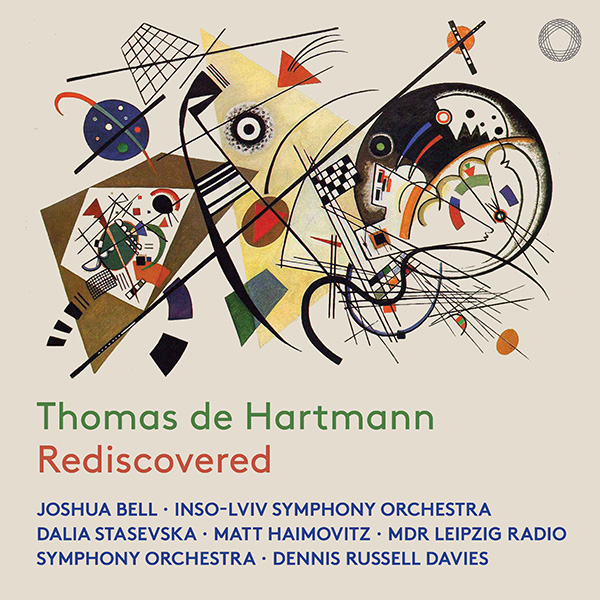 The Violin Concerto, Op.66 (1943) from the album Thomas de Hartmann Rediscovered, with Joshua Bell and the INSO-Lviv Symphony Orchestra of the Lviv National Philharmonic conducted by Dalia Stasevska (24/48 download, Pentatone PTC: 5187076), demanded much more from the SEVENs. This is the first recording of this remarkable piece of music; it is worthy of being programmed more widely (footnote 4). Discovered recently by Bell, it is quite approachable: tuneful, rhythmic, sweepingly romantic, yet modern. Bell's violin was always up front and, via the SEVENs, engagingly sweet and full-bodied. The large orchestra filled the soundstage, and the bass was impactful, the bass drum in particular.
Big orchestra is one thing. Big ambience is another. Christina Pluhar and L'Arpeggiata have made more than two dozen recordings, all characterized by their entertaining repertoire, delightful performances, surprising sounds, and excellent representation of the sound of a small ensemble in richly resonant spaces. Their latest, Terra Mater (16/44.1 WAV download, Warner Classics/Erato 5021732533753), is no exception. It starts with some birdsong and nature sounds to set the mood. As reproduced by the SEVENs, the acoustic was bigger and more open than those of the two previous recordings I listened to. Even in a fairly close listening configuration, individual instruments were generously spaced. Malena Ernman's voice, when it appeared on the second track, was strikingly close and almost in the room. All the instruments and Ernman's voice share the same generous ambience.
The Violin Concerto, Op.66 (1943) from the album Thomas de Hartmann Rediscovered, with Joshua Bell and the INSO-Lviv Symphony Orchestra of the Lviv National Philharmonic conducted by Dalia Stasevska (24/48 download, Pentatone PTC: 5187076), demanded much more from the SEVENs. This is the first recording of this remarkable piece of music; it is worthy of being programmed more widely (footnote 4). Discovered recently by Bell, it is quite approachable: tuneful, rhythmic, sweepingly romantic, yet modern. Bell's violin was always up front and, via the SEVENs, engagingly sweet and full-bodied. The large orchestra filled the soundstage, and the bass was impactful, the bass drum in particular.
Big orchestra is one thing. Big ambience is another. Christina Pluhar and L'Arpeggiata have made more than two dozen recordings, all characterized by their entertaining repertoire, delightful performances, surprising sounds, and excellent representation of the sound of a small ensemble in richly resonant spaces. Their latest, Terra Mater (16/44.1 WAV download, Warner Classics/Erato 5021732533753), is no exception. It starts with some birdsong and nature sounds to set the mood. As reproduced by the SEVENs, the acoustic was bigger and more open than those of the two previous recordings I listened to. Even in a fairly close listening configuration, individual instruments were generously spaced. Malena Ernman's voice, when it appeared on the second track, was strikingly close and almost in the room. All the instruments and Ernman's voice share the same generous ambience.
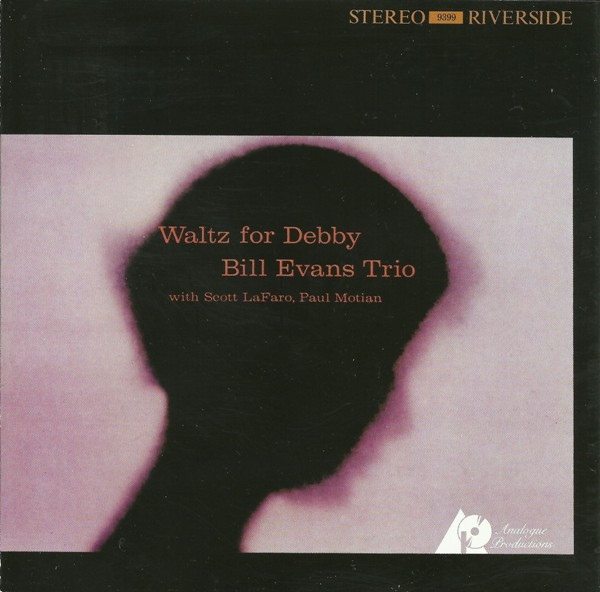 The very different impacts Waltz for Debby by the Bill Evans Trio (24/192 FLAC download, Craft Recordings) and Room on the Porch by Taj Mahal and Keb' Mo' (16/44.1 download, Concord Records) have on the listener were never clearer than with the SEVENs. The Bill Evans album allows the listener into the space, to feel the presence of the performers and the other guests. Contrast that with Taj Majal on "Nobody Knows You When You're Down and Out": Taj Mahal is bursting out into your listening room, nearly on top of you center-front while the drums, bass, and background vocals billow out and back deep.
I've commented on the SEVEN's impressive bass, but the laws of physics limit what such small speakers can achieve. Kii acknowledges this by employing a "low corner frequency of 20Hz ... to preserve phase information and ambience at normal listening levels," while noting that this "is not sustainable at high SPLs." Consequently, "A limiter shifts the corner frequency temporarily whenever the woofers are close to overloading." In other words, the speakers can go quite low at moderate listening levels, but as you increase the volume, their bass extension shrinks. I tried to get a feel for this by playing, at close to "party levels," Christopher Cerrone's rhythmic "Don't Look Down" for "traditional percussion instruments like drum set and vibraphone alongside found objects"—beer bottles, bike pumps, sandpaper blocks—and Conor Hanick's prepared piano (24/96 download, Pentatone PTC 5187403). The sound was fabulous, punchy and immediate, and all the sound-producers had realistic weight throughout. For this music, the effect of the limiter was inconsequential.
Extended organ pedal tones present a different order of challenge. I played several pipe organ selections while observing the real-time analyzer on JRiver. Every tone down to 20Hz (the lower limit of the RTA) was seen on screen and heard, via the SEVENs, clearly and cleanly at healthy levels. What I saw but didn't hear was the ambient rumbling in that range and lower. On some live recordings, such as Sweelinck, Mozart & Debussy: Live at the Royal Concertgebouw, with Nicolas van Poucke on piano (24/176.4 download, TRPTK TTK 0123), such noise imparts an awareness of the size of the space and creates an impression of "being there" even before the music starts—a cheap thrill, perhaps, but I like it. The SEVENs also failed to play loud enough to evoke the structural vibrations or "load" the room on the orchestra and organ finale of Saint-Saëns' Symphony No.3. (I sampled from several recorded versions.) If that's what you need, you need bigger speakers, like the Kii THREE BXT.
The very different impacts Waltz for Debby by the Bill Evans Trio (24/192 FLAC download, Craft Recordings) and Room on the Porch by Taj Mahal and Keb' Mo' (16/44.1 download, Concord Records) have on the listener were never clearer than with the SEVENs. The Bill Evans album allows the listener into the space, to feel the presence of the performers and the other guests. Contrast that with Taj Majal on "Nobody Knows You When You're Down and Out": Taj Mahal is bursting out into your listening room, nearly on top of you center-front while the drums, bass, and background vocals billow out and back deep.
I've commented on the SEVEN's impressive bass, but the laws of physics limit what such small speakers can achieve. Kii acknowledges this by employing a "low corner frequency of 20Hz ... to preserve phase information and ambience at normal listening levels," while noting that this "is not sustainable at high SPLs." Consequently, "A limiter shifts the corner frequency temporarily whenever the woofers are close to overloading." In other words, the speakers can go quite low at moderate listening levels, but as you increase the volume, their bass extension shrinks. I tried to get a feel for this by playing, at close to "party levels," Christopher Cerrone's rhythmic "Don't Look Down" for "traditional percussion instruments like drum set and vibraphone alongside found objects"—beer bottles, bike pumps, sandpaper blocks—and Conor Hanick's prepared piano (24/96 download, Pentatone PTC 5187403). The sound was fabulous, punchy and immediate, and all the sound-producers had realistic weight throughout. For this music, the effect of the limiter was inconsequential.
Extended organ pedal tones present a different order of challenge. I played several pipe organ selections while observing the real-time analyzer on JRiver. Every tone down to 20Hz (the lower limit of the RTA) was seen on screen and heard, via the SEVENs, clearly and cleanly at healthy levels. What I saw but didn't hear was the ambient rumbling in that range and lower. On some live recordings, such as Sweelinck, Mozart & Debussy: Live at the Royal Concertgebouw, with Nicolas van Poucke on piano (24/176.4 download, TRPTK TTK 0123), such noise imparts an awareness of the size of the space and creates an impression of "being there" even before the music starts—a cheap thrill, perhaps, but I like it. The SEVENs also failed to play loud enough to evoke the structural vibrations or "load" the room on the orchestra and organ finale of Saint-Saëns' Symphony No.3. (I sampled from several recorded versions.) If that's what you need, you need bigger speakers, like the Kii THREE BXT.
 A more convincing demonstration of the performance of the Kii SEVENs is Pink Floyd's Dark Side of the Moon. According to Discogs, 1470 versions of DSotM have been released worldwide. I enjoy the multichannel versions, but for stereo, I stick with the original 1973 Alan Parson mix via the 24/96 version, included in the 2011 "Immersion" box set (Blu-ray rip, EMI 50999 029431 2 1). With the SEVENs, the heartbeats began softly but firmly, but as they get louder, they pound my chest until, to my great relief, it passes into "Breathe (In the Air)" and a sigh. Through this and the rest of the album, the SEVENs were so powerful and precise that my attention was locked onto the music. The well-known special effects on "Time," "On the Run," and "Money" seemed fresh. Throughout, some voices sang directly to me while others soared in space. Bass and drums were solid. Guitars and synth weaved in and out. Yes, this album can get old, but if you hear it on the Kii SEVENs with the volume turned up, it's new again.
 A comparison
The KEF LS60 Wireless towers, which are usually relegated to surround-channel duty, are a much better foil for the Kii SEVENs than my much larger mains. Both the LS60Ws and the SEVENs are DSP-enabled powered speakers. They have similar driver arrangements with HF and midrange on the front panel and woofers on the sides; the four KEF woofers are smaller, but they're mounted in a larger cabinet. The Kii offers useful cardioid dispersion, while the KEF is fairly omnidirectional from about 400Hz down. The Kii also offers a sophisticated parametric EQ and the capability of running completely wirelessly at 24/192, while the KEF requires an inter-speaker link at sampling rates above 24/96. Both can benefit from the addition of a subwoofer, but the KEFs make it easier.
I was surprised by how similarly the two speakers reproduced a solo voice or instrument. The ambience and soundstage cues are another matter. Consider the old chestnut Eliot Fisk Plays Bach and Scarlatti (SACD rip, Red Rose Music RRM 06). This is an intimate recording with negligible space around the instrument. With this album, there's very little difference in the presentation of the Kiis and the KEFs. It is almost like listening to test tones, which also sounded much the same.
But any recording with good spatial ambience revealed that the KEFs and Kiis are no more twins than Danny DeVito and Arnold Schwarzenegger. On "Tarrega's Capricho árabe," performed by Stefano Grondona on La Guitarra de Torres (CD rip, Divox CDX-29701), we hear everything from the touch of fingers on the strings, the strings themselves, and the resonant tones from the body of the instrument, all within a richly warm ambience. The SEVENs directed more attention to the early items on that list—the close-in, local things—while the KEFs made a stronger case for the ambience.
It comes down to how they interact with the room. With the SEVENs nearly against the front wall, listening from a seat fairly close to the speakers, the cardioid radiation minimizes the excitation of room modes and delivers a finely detailed soundstage defined by the width of the speaker pair. The KEFs sound best a few feet from the walls and from a listening position farther from the speakers than they are from each other. Under those conditions, the soundstage conjured is consistently wider than the speaker span. While their imaging is marginally less incisive than the SEVENs', they are somewhat better at separating the music from the speakers. Tough choice.
 Conclusions
I am greatly impressed with the Kii SEVEN. Its sonic quality and character is attributable not only to the quality of the components—the drivers, amplifiers, and other hardware—but also to their controlled dispersion: that cardioid design and the consequently reduced influence of room modes on their sound. Whatever the reason, the Kii SEVEN has an uncanny ability to reveal every detail captured on a recording with precision and balance. Instruments and ensembles have texture, just as they do live. Whether you hear the performance and its space as intimate or expansive will depend entirely on what is on the recording. All this makes the SEVEN suitable as studio monitors, but it also makes it, just like the THREE, a superb domestic loudspeaker for pure listening enjoyment.
Footnote 1: The major documentation is available online at https://www.support.kiiaudio.com/support-center-kii-seven. However, while it deals clearly and in detail with the Kii Control and Kii Home app, it is merely descriptive about the SEVEN itself. Footnote 2: "The ADC is a switched-cap 1-bit sigma-delta converter with a 120dB dynamic range. The input stage has a switchable gain for consumer and pro input levels."
Footnote 3: See my review of the Technics SC-CX700 active loudspeaker system.
Footnote 4: It was premiered by the New York Philharmonic in November 2025 with Bell and Stasevska!
Out of the boxThe SEVEN is deceptively heavy, reassuringly sleek and solid. At first, bare of grilles, it looks like what it is, a speaker with its four drivers, but around back, it looks more like an amplifier, with vents for cooling, a power switch, a panel of LEDs and touch controls, and an array of input and output connectors, none bearing any resemblance to traditional multiway binding posts. From left to right below the control panel there is an IEC power connector, an XLR/TRS analog input jack, an AES3 input jack, a pair of RJ45 ports for KiiLink in and out, and, tucked under the edge of the control panel, a pair of RJ45 ports for audio over IP using the Dante/AES67 standard. While the speaker control panel provides access to all the essential operations, its placement minimizes its usefulness. Fortunately, Kii provides two excellent options. The first is the Kii Home app, which supports setup, input selection, streaming, tone control, presets, and of course volume control, all settings accessible from the listening seat. The second is Kii Control, a wired remote control that adds USB, TosLink, and S/PDIF inputs and easy access to all the controls available on the rear panel and the Kii Home app. In addition, Kii Control offers a Pro submenu of options allowing control of latency, absolute polarity, and "Advanced Filters." These are primarily intended for studio use, but they may be of value to other users. Without doubt, the Kii Control is the preferred option.
In anticipation of the SEVENs, I purchased a pair of 27" Target stands from an internet vendor. I plugged in the AC cords and turned on the power. Since no setup guide or manual was provided (footnote 1), I followed the cues in the Kii Home app, which located the two speakers, set them up as a "Zone," identified them as Left and Right, and set BoundaryEQ to 0dB for their free-field positions. I then opened Qobuz Connect on my phone and clicked on a favorite, French Duets (24/192 FLAC, Hyperion/Qobuz), with pianists Steven Osborne and Paul Lewis. It took less than 10 minutes from power on to streaming music at 24/192.
Despite all that goodness, I was uncertain about something in the upper treble, though I could not put my finger on what it was. The Kii app lets you apply treble tilt, so I tried tilting it up a couple of dB, then tilting it down, but neither seemed right.
My next thought was, hey, this is a "digital" speaker. Feeding it an analog signal sourced from digital means inserting redundant conversions (footnote 2). But switching the digital feed from the Hapi made no audible difference. Sure, the SEVENs were always remarkably clean and transparent and generally a pleasure to listen to, but I got another bug in my ear when I played Jane Ira Bloom's "Song Patrol," from Early Americans (24/96 PCM rip from a Sono Luminus Blu-ray, SLE-70005). This bracingly clean recording is impressively tight, with well-extended bass, but, although the SEVEN provided weight and impact in the bass, it was damped and dulled. That could just be the price paid for the small box, or maybe I was doing something wrong.
Back to the frontOver the decades, I've gained the impression that unless there are explicit reasons to the contrary (acoustic, aesthetic, interpersonal, etc.), loudspeakers should be positioned away from room boundaries. That's where I always start, and it's usually where I end up. Sometimes a manufacturer makes recommendations, and sometimes the speakers have corrections/presets for different placements with regard to room boundaries, as do the SEVENs. Those tend to be generic solutions and inferior to measurement-based corrections (footnote 3).
I made a fresh start with the Kii Control connected to my WinPC running JRiver and Roon by USB. USB via the Kii Control supports DSD up to DSD128 and PCM up to 24/384—well beyond the 24/192 limit of the other sources.
The Violin Concerto, Op.66 (1943) from the album Thomas de Hartmann Rediscovered, with Joshua Bell and the INSO-Lviv Symphony Orchestra of the Lviv National Philharmonic conducted by Dalia Stasevska (24/48 download, Pentatone PTC: 5187076), demanded much more from the SEVENs. This is the first recording of this remarkable piece of music; it is worthy of being programmed more widely (footnote 4). Discovered recently by Bell, it is quite approachable: tuneful, rhythmic, sweepingly romantic, yet modern. Bell's violin was always up front and, via the SEVENs, engagingly sweet and full-bodied. The large orchestra filled the soundstage, and the bass was impactful, the bass drum in particular.
The very different impacts Waltz for Debby by the Bill Evans Trio (24/192 FLAC download, Craft Recordings) and Room on the Porch by Taj Mahal and Keb' Mo' (16/44.1 download, Concord Records) have on the listener were never clearer than with the SEVENs. The Bill Evans album allows the listener into the space, to feel the presence of the performers and the other guests. Contrast that with Taj Majal on "Nobody Knows You When You're Down and Out": Taj Mahal is bursting out into your listening room, nearly on top of you center-front while the drums, bass, and background vocals billow out and back deep.
I've commented on the SEVEN's impressive bass, but the laws of physics limit what such small speakers can achieve. Kii acknowledges this by employing a "low corner frequency of 20Hz ... to preserve phase information and ambience at normal listening levels," while noting that this "is not sustainable at high SPLs." Consequently, "A limiter shifts the corner frequency temporarily whenever the woofers are close to overloading." In other words, the speakers can go quite low at moderate listening levels, but as you increase the volume, their bass extension shrinks. I tried to get a feel for this by playing, at close to "party levels," Christopher Cerrone's rhythmic "Don't Look Down" for "traditional percussion instruments like drum set and vibraphone alongside found objects"—beer bottles, bike pumps, sandpaper blocks—and Conor Hanick's prepared piano (24/96 download, Pentatone PTC 5187403). The sound was fabulous, punchy and immediate, and all the sound-producers had realistic weight throughout. For this music, the effect of the limiter was inconsequential.
A more convincing demonstration of the performance of the Kii SEVENs is Pink Floyd's Dark Side of the Moon. According to Discogs, 1470 versions of DSotM have been released worldwide. I enjoy the multichannel versions, but for stereo, I stick with the original 1973 Alan Parson mix via the 24/96 version, included in the 2011 "Immersion" box set (Blu-ray rip, EMI 50999 029431 2 1). With the SEVENs, the heartbeats began softly but firmly, but as they get louder, they pound my chest until, to my great relief, it passes into "Breathe (In the Air)" and a sigh. Through this and the rest of the album, the SEVENs were so powerful and precise that my attention was locked onto the music. The well-known special effects on "Time," "On the Run," and "Money" seemed fresh. Throughout, some voices sang directly to me while others soared in space. Bass and drums were solid. Guitars and synth weaved in and out. Yes, this album can get old, but if you hear it on the Kii SEVENs with the volume turned up, it's new again.
A comparisonThe KEF LS60 Wireless towers, which are usually relegated to surround-channel duty, are a much better foil for the Kii SEVENs than my much larger mains. Both the LS60Ws and the SEVENs are DSP-enabled powered speakers. They have similar driver arrangements with HF and midrange on the front panel and woofers on the sides; the four KEF woofers are smaller, but they're mounted in a larger cabinet. The Kii offers useful cardioid dispersion, while the KEF is fairly omnidirectional from about 400Hz down. The Kii also offers a sophisticated parametric EQ and the capability of running completely wirelessly at 24/192, while the KEF requires an inter-speaker link at sampling rates above 24/96. Both can benefit from the addition of a subwoofer, but the KEFs make it easier.
ConclusionsI am greatly impressed with the Kii SEVEN. Its sonic quality and character is attributable not only to the quality of the components—the drivers, amplifiers, and other hardware—but also to their controlled dispersion: that cardioid design and the consequently reduced influence of room modes on their sound. Whatever the reason, the Kii SEVEN has an uncanny ability to reveal every detail captured on a recording with precision and balance. Instruments and ensembles have texture, just as they do live. Whether you hear the performance and its space as intimate or expansive will depend entirely on what is on the recording. All this makes the SEVEN suitable as studio monitors, but it also makes it, just like the THREE, a superb domestic loudspeaker for pure listening enjoyment.
Footnote 1: The major documentation is available online at https://www.support.kiiaudio.com/support-center-kii-seven. However, while it deals clearly and in detail with the Kii Control and Kii Home app, it is merely descriptive about the SEVEN itself. Footnote 2: "The ADC is a switched-cap 1-bit sigma-delta converter with a 120dB dynamic range. The input stage has a switchable gain for consumer and pro input levels."