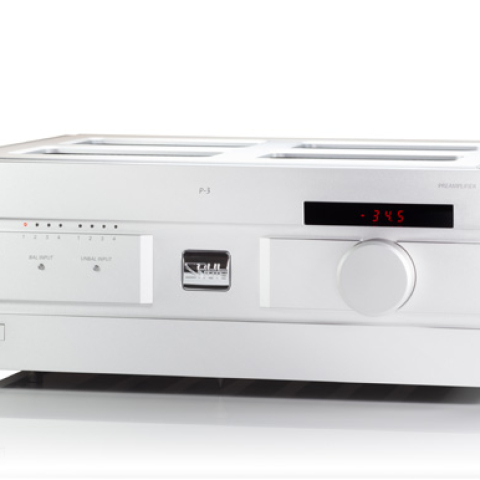
The origins of Canadian audio manufacturer MOON, from the company called Simaudio, stretch back to 1980, when audio engineer Victor Sima created his first designs. Sima's company became Simaudio Ltd. in 1990. Simaudio launched the MOON brand in 1997. Simaudio's factory is located in Boucherville, Quebec, across the St. Lawrence River from Old Montreal. Currently helmed by principals Costa Koulisakis and Thierry Dufour, Simaudio has been at the forefront of Canadian audio design and manufacture for 45 years. With only the tiniest exceptions, everything Simaudio does is done at their Boucherville factory.
I'm not sure how consumers got so lucky. Today, even with the chaos tariffs created, customers interested in audio can now choose from a surfeit of products that are better designed and manufactured, do more, and cost less than was the case just a few years ago. This is particularly striking for multifunction integrated units including streaming preamplifiers and integrated amplifiers. In a marketing presentation, Simaudio described the compact, integrated approach as a way of "targeting newcomers to HiFi and bringing people back to HiFi."
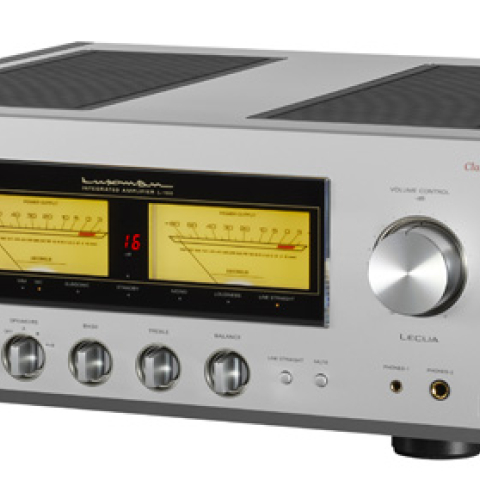
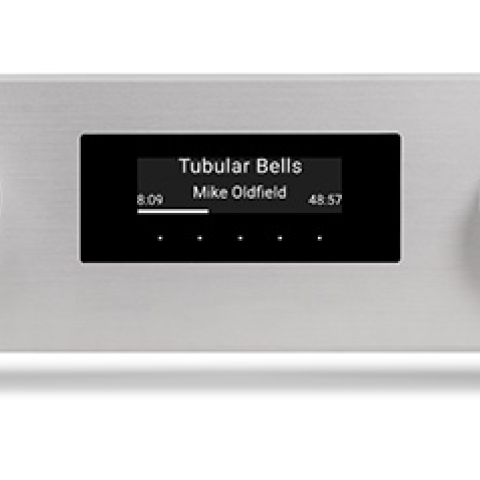
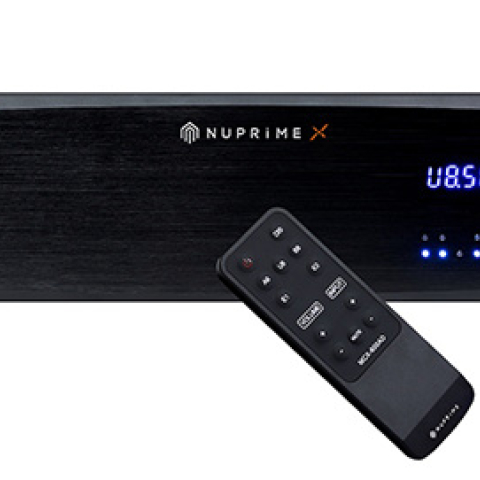
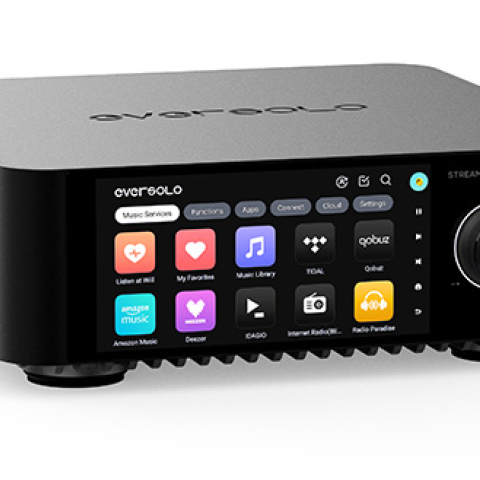
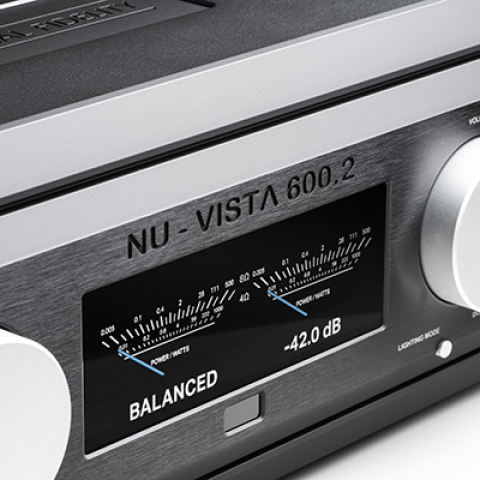
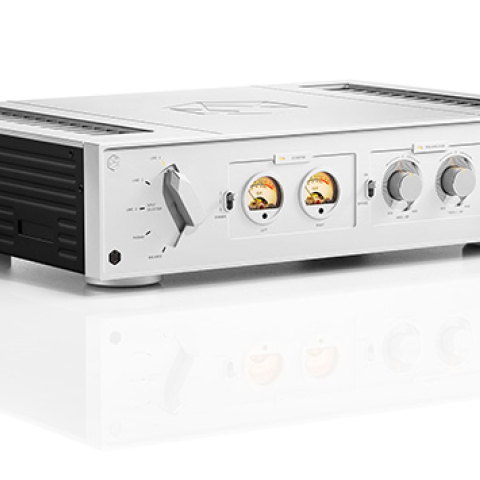
This trend toward packing as many audio capabilities as possible into one box has accelerated and spread downward and upward in quality and price. Some manufacturers that in the past were mainly associated with state-of-the-art separates have gotten onboard, offering high-quality integrated designs, Simaudio included. Even MOON's higher-end North series integrates functions, including the 791 and 891 network player/preamplifiers.
Fly me to the MOON
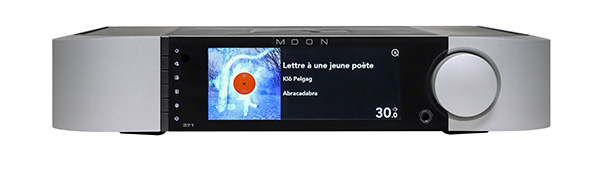
In one respect, magazine writing staffs are like football teams. Jim Austin attended the MOON 371 launch event last year, and he intended to review it himself. When he became too busy, he handed it off to me so that we could keep the ball moving down the field. The 371 streaming integrated amplifier is the first product in a new MOON collection called COMPASS. The idea is that (since Simaudio is Canadian) COMPASS points NORTH, which is to say, toward the company's higher-end NORTH collection. The MOON 371 Network Player/Integrated Amplifier ($6500) offers built-in Ethernet and Wi-Fi streaming. It can process up to 32/384 PCM and DSD 256 from the major service providers: It's Roon-certified and incorporates Qobuz, Tidal, Spotify, and so on via their "Connect" capabilities or by integrating those services into the Simaudio MiND network music player app.
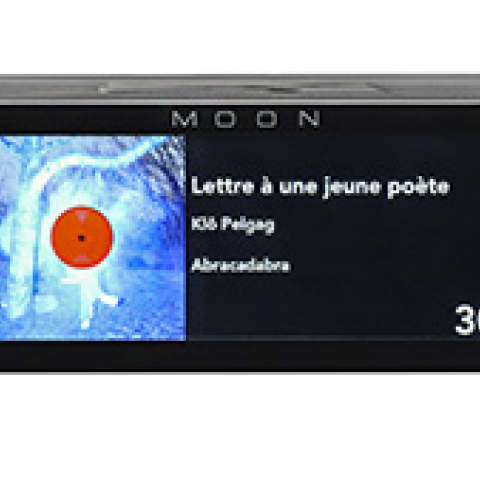
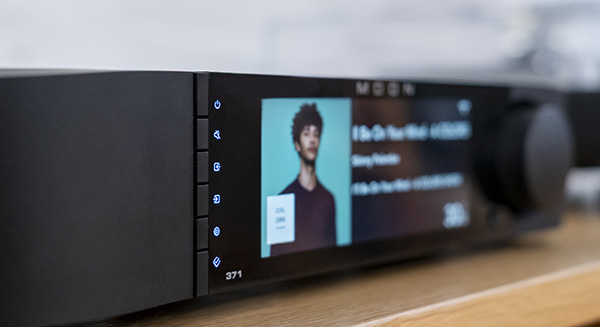 The 371 incorporates a phono stage capable of supporting both MM and MC cartridges, and a color front-panel screen measuring 6½" × 2". It utilizes a class-AB output stage capable of producing 100Wpc into 8 ohms or 200Wpc into 4 ohms. All this is packed into a modest-sized anodized aluminum case weighing 20lb. It's available in either black or a two-tone (silver-black) finish. A basic aluminum remote control is included, but customers have the option of pairing the 371 with the fuller-featured, oval-shaped BRM-1 remote control. The only digital playback item not included here is a silver-disc transport.
Upon returning to the city after a few weeks in Woodstock, I retrieved the MOON 371 from a lockup in the mailroom of my NYC apartment building, where Jim had dropped it off days earlier. Inserting it into my New York Apartment System couldn't have been easier. I hadn't planned it that way, but the result was an informal kissing-cousins shootout: The 371 replaced the AVM Inspiration CS 2.3 all-in-one integrated I reviewed in June 2023, which has a similar feature set and an almost identical list price. I plugged in my small Sonus faber speakers, REL subwoofer, Pro-Ject turntable, and the LAN Ethernet cable direct from the modem. In minutes I was up and running—I should say "running in": The MOON 371 was a new unit from the factory, so I let it burn in for some days prior to making notes.
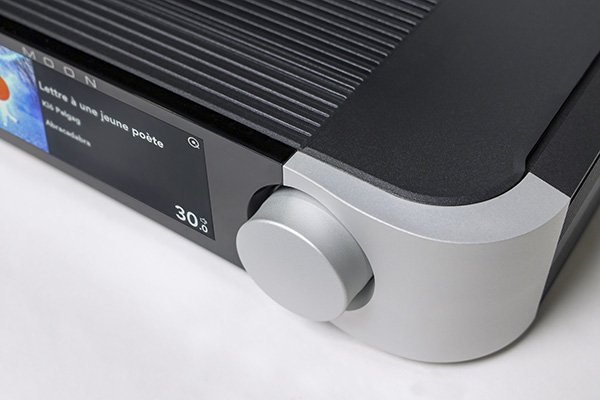
MOON has been around long enough to establish a recognizable visual style. The exterior of the 371 conveys this visual signature, with curved, beveled corners and edges, made from anodized extruded aluminum. The left and right "cheeks" of the front panel frame the large display. The sides are recessed heatsinks made from the same materials.
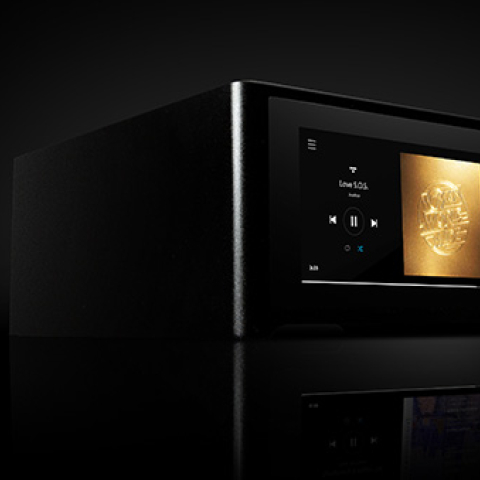
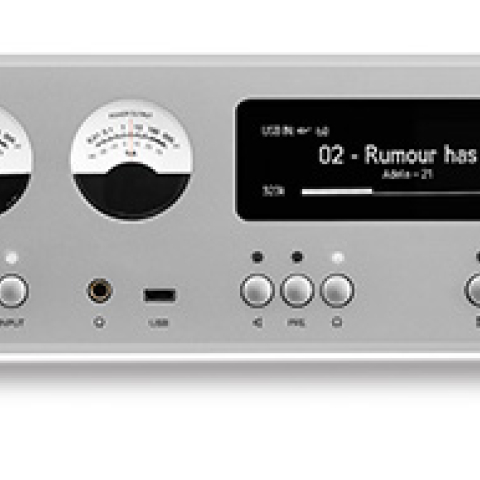
The front panel of the MOON 371 is simple and minimalist in appearance: Only a large multifunction knob toward the right side breaks the smooth surface. A ¼" headphone jack is tucked into one corner, but you really must be looking for it to see it. Six tiny, recessed pushbuttons to the left of the display perform various functions; unless their labels are lit, they are similarly hard to see.
The 371 incorporates a phono stage capable of supporting both MM and MC cartridges, and a color front-panel screen measuring 6½" × 2". It utilizes a class-AB output stage capable of producing 100Wpc into 8 ohms or 200Wpc into 4 ohms. All this is packed into a modest-sized anodized aluminum case weighing 20lb. It's available in either black or a two-tone (silver-black) finish. A basic aluminum remote control is included, but customers have the option of pairing the 371 with the fuller-featured, oval-shaped BRM-1 remote control. The only digital playback item not included here is a silver-disc transport.
Upon returning to the city after a few weeks in Woodstock, I retrieved the MOON 371 from a lockup in the mailroom of my NYC apartment building, where Jim had dropped it off days earlier. Inserting it into my New York Apartment System couldn't have been easier. I hadn't planned it that way, but the result was an informal kissing-cousins shootout: The 371 replaced the AVM Inspiration CS 2.3 all-in-one integrated I reviewed in June 2023, which has a similar feature set and an almost identical list price. I plugged in my small Sonus faber speakers, REL subwoofer, Pro-Ject turntable, and the LAN Ethernet cable direct from the modem. In minutes I was up and running—I should say "running in": The MOON 371 was a new unit from the factory, so I let it burn in for some days prior to making notes.
MOON has been around long enough to establish a recognizable visual style. The exterior of the 371 conveys this visual signature, with curved, beveled corners and edges, made from anodized extruded aluminum. The left and right "cheeks" of the front panel frame the large display. The sides are recessed heatsinks made from the same materials.
The front panel of the MOON 371 is simple and minimalist in appearance: Only a large multifunction knob toward the right side breaks the smooth surface. A ¼" headphone jack is tucked into one corner, but you really must be looking for it to see it. Six tiny, recessed pushbuttons to the left of the display perform various functions; unless their labels are lit, they are similarly hard to see.
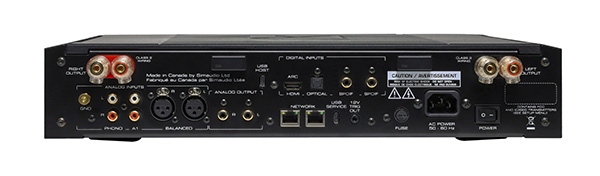 The rear panel of the MOON 371 isn't minimalist at all: The many functions of the 371 require a host of input and output connections. There are three analog inputs, two on RCA (one phono, one line; there's a grounding connection for phono) and one balanced on XLR. There are four digital inputs: S/PDIF via RCA (2) and TosLink and HDMI-ARC. Streaming connectivity is via two back-panel Ethernet connections and a hidden Wi-Fi antenna. There is no USB audio input: The two USB-C ports are for connecting a music library on a flash drive or a portable SSD (the one labeled "Host") and for service. A 12V trigger, a pair of Preamp Outs on RCA, two pairs of high-quality speaker binding posts, a fuse, an IEC power cord connection, and an On/Off rocker switch complete the busy picture.
I suggest using speaker cables with banana plugs, since the right speaker connection is just above the phono inputs, which makes spades hard to connect unless you want the cables sticking up.
There are three ways to operate the MOON 371: the front panel buttons and control knob, the supplied remote control, and a dedicated App. Initial setup, I found, is best accomplished from the front panel. Basically, you scroll through input and function options using the big knob and select them with the buttons. Once it is up and running, you can enter information (like names and passwords for Wi-Fi networks) via the MiND app.
In my apartment system setup, I struggled to get Wi-Fi to connect. I don't know why. (Later, in my house Upstate, I would succeed in connecting to Wi-Fi.) But when I plugged in an Ethernet cable direct from the modem and properly entered the network info, I went straight online. No issues. I have often been advised—and have found myself—that hardwired is the best way to go with streaming audio.
The rear panel of the MOON 371 isn't minimalist at all: The many functions of the 371 require a host of input and output connections. There are three analog inputs, two on RCA (one phono, one line; there's a grounding connection for phono) and one balanced on XLR. There are four digital inputs: S/PDIF via RCA (2) and TosLink and HDMI-ARC. Streaming connectivity is via two back-panel Ethernet connections and a hidden Wi-Fi antenna. There is no USB audio input: The two USB-C ports are for connecting a music library on a flash drive or a portable SSD (the one labeled "Host") and for service. A 12V trigger, a pair of Preamp Outs on RCA, two pairs of high-quality speaker binding posts, a fuse, an IEC power cord connection, and an On/Off rocker switch complete the busy picture.
I suggest using speaker cables with banana plugs, since the right speaker connection is just above the phono inputs, which makes spades hard to connect unless you want the cables sticking up.
There are three ways to operate the MOON 371: the front panel buttons and control knob, the supplied remote control, and a dedicated App. Initial setup, I found, is best accomplished from the front panel. Basically, you scroll through input and function options using the big knob and select them with the buttons. Once it is up and running, you can enter information (like names and passwords for Wi-Fi networks) via the MiND app.
In my apartment system setup, I struggled to get Wi-Fi to connect. I don't know why. (Later, in my house Upstate, I would succeed in connecting to Wi-Fi.) But when I plugged in an Ethernet cable direct from the modem and properly entered the network info, I went straight online. No issues. I have often been advised—and have found myself—that hardwired is the best way to go with streaming audio.
 Inside information
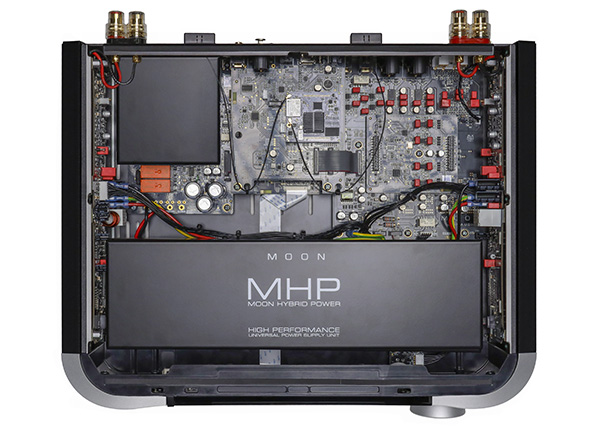
Earlier I called the 371's amplification "class-AB." That's not wrong, but it's not the total picture. To understand the circuit architecture utilized by the MOON 371, we must tackle a few acronyms—like MDCA, which stands for "MOON Distortion-Canceling Amplifier." This technology was first developed for MOON's North Collection and has now been adapted (and adopted) for the Compass Collection. Jim Austin explained MDCA in an online post after hearing the 371 demoed in Montreal: "Instead of using conventional feedback or feed-forward circuits, MDCA duplicates the signal at the input stage and routes the duplicated signal to a proprietary circuit, which determines the correction required. This correction signal is then injected back into the audio path." Simaudio's 371 specification is impressive: "total harmonic distortion @ 100W: 0.003%. Intermodulation distortion: 0.005%."
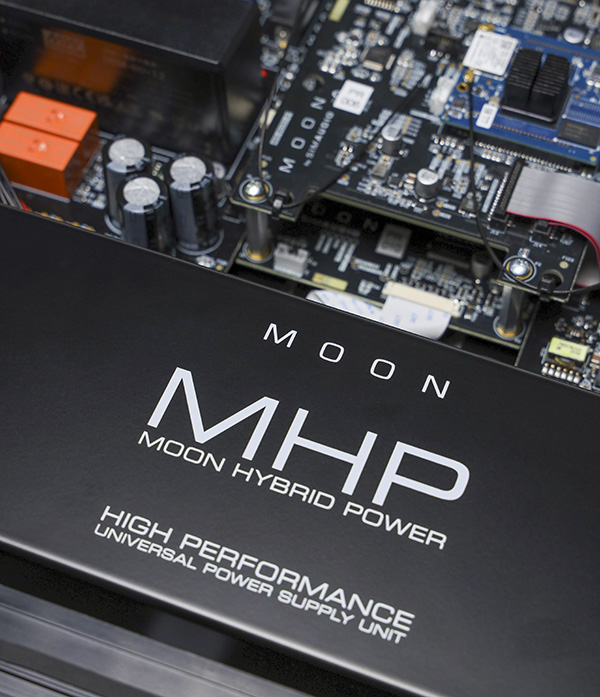
The COMPASS 371 also includes a new kind of power supply called MHP, for "Moon Hybrid Power." This new power supply can provide a whopping 800W of continuous DC power while reducing harmonics, creating a smooth analog wave, and improving energy efficiency. I asked Product Director Dominique Poupart to explain. "MOON Hybrid Power is a hybrid power supply design that brings together the strengths of both switch-mode and linear technologies, giving the MDCA circuit the ideal conditions to perform at its best. Fine spatial cues and microdetails emerge with greater clarity, giving music a cleaner and more unfettered character. The sound acquires a relaxed naturalness and spatial realism."
 The 371's phono stage is all analog—no digital conversion. It employs fixed loading settings: 47k ohms and 100pF for moving magnet cartridges, 1k ohms and 0pF for moving coil. MM gain is a standardish 40dB; MC gain is on the low side at 60dB; neither the gain nor the loading are optimal for ultralow-output moving coils. Step-up transformers and external MC phono preamplifiers are of course available to those who wish to use their favorite low-output MC with the 371.
Those who keep a music library on a computer will miss having a USB input. Dominique Poupart explained: "We decided not to include a traditional USB-B computer input simply because fewer listeners still use their amplifier or DAC that way. Instead, we chose a USB-C Host input, which serves a more useful purpose today: It lets someone plug in a USB key or small portable drive and play music without involving a computer at all." Those who store music on their computers can still send it to the 371 over the network.
The digital stage of the MOON 371 employs an ESS ES9039Q2M two-channel converter chip. Simaudio describes the configuration: "A low-jitter picosecond-grade clock is placed in close proximity to the DAC to minimize phase noise." Those "critical digital and clock circuits" are powered with separate, dedicated low-noise voltage regulators. The DAC's analog output stage is optimized "to mate seamlessly with the unit's internal preamp."
The MOON 371's digital filter setting for the DAC is fixed, not variable. "In our experience, products that offer multiple filter choices often lead users to endlessly toggle settings instead of simply enjoying the music," Poupart said. Either that, or they ignore them.
The streaming platform bundled into the MOON 371 is called "MiND 2"; the associated app is the MOON MiND Controller. It is available for iOS and Android from the Apple App Store and Google Play. MiND 2 supports multiroom installations.
The Sounds of Music
The 371's phono stage is all analog—no digital conversion. It employs fixed loading settings: 47k ohms and 100pF for moving magnet cartridges, 1k ohms and 0pF for moving coil. MM gain is a standardish 40dB; MC gain is on the low side at 60dB; neither the gain nor the loading are optimal for ultralow-output moving coils. Step-up transformers and external MC phono preamplifiers are of course available to those who wish to use their favorite low-output MC with the 371.
Those who keep a music library on a computer will miss having a USB input. Dominique Poupart explained: "We decided not to include a traditional USB-B computer input simply because fewer listeners still use their amplifier or DAC that way. Instead, we chose a USB-C Host input, which serves a more useful purpose today: It lets someone plug in a USB key or small portable drive and play music without involving a computer at all." Those who store music on their computers can still send it to the 371 over the network.
The digital stage of the MOON 371 employs an ESS ES9039Q2M two-channel converter chip. Simaudio describes the configuration: "A low-jitter picosecond-grade clock is placed in close proximity to the DAC to minimize phase noise." Those "critical digital and clock circuits" are powered with separate, dedicated low-noise voltage regulators. The DAC's analog output stage is optimized "to mate seamlessly with the unit's internal preamp."
The MOON 371's digital filter setting for the DAC is fixed, not variable. "In our experience, products that offer multiple filter choices often lead users to endlessly toggle settings instead of simply enjoying the music," Poupart said. Either that, or they ignore them.
The streaming platform bundled into the MOON 371 is called "MiND 2"; the associated app is the MOON MiND Controller. It is available for iOS and Android from the Apple App Store and Google Play. MiND 2 supports multiroom installations.
The Sounds of Music
I got off on the good foot with the first music I heard from the MOON 371. I had plugged in my Pro-Ject Debut Carbon EVO turntable fitted with a Sumiko Olympia moving magnet cartridge. The output level with the Sumiko MM cartridge was fine—no need to crank the volume knob. I grabbed an original copy of Mel Tormé's first studio album for Verve, Tormé, from 1958 (Verve MG V-2105). The fine Marty Paich arrangements sounded at once detailed and relaxed. The young Mel's velvet vocal tone came across clearly. Listening to "Gloomy Sunday," my initial impression (which never left me over subsequent weeks of listening with different systems) was of a sound that was almost tubelike, in a good way. Continuing in a similar vinyl vein, I spun another old original LP, which I had picked up in a used book and record store on West 72nd Street in NYC. The MOON 371 is a truthteller. An old scratchy record is going to sound like an old scratchy record—no aural gauze or bandaid here.
Ray Charles recorded Have a Smile with Me in 1964 (ABC-Paramount ABCS-495). What a kick this great, swingin' big-band album is, a combination of great, earthy R&B numbers with some real garbage mixed in—hey, it was 1964! "The Man with the Weird Beard" somehow coexists with "Move It On Over" and "Two Ton Tessie," with great arrangers including Gerald Wilson and Benny Carter.
With an assist from the MOON 371, our New York apartment was transformed into an early-'60s Nashville gin dispensary. I couldn't keep from grinnin' and tappin'.
Using the MOON MiND Controller app on my iPhone, I found the page where streaming services and other input options are listed. That list includes internet radio. I enjoy listening to New York's only surviving classical music station, WQXR. I saved it as a Favorite, to be recalled easily later. Sound quality was excellent. The MiND app displays the resolution of whatever is playing—in this case streaming at 128kbps. That's information I like to know. Volume can be adjusted, and sound muted, via taps on a phone screen. It isn't a digital volume control: The app adjusts the analog control in the 371. You can use the supplied remote.
Or if you don't mind getting up out of your chair, the weighted front-panel knob is excellent, operating in 1dB increments from 0 to 30, and then in 0.5dB steps up to a numerical maximum of 80. Volume numbers and the Mute function are displayed in nice, large letters and numbers on the front panel screen. I got hooked on the quality of this color display—large enough that I could read it and see album covers from across the small room.
I shipped the 371 to myself in Woodstock. Once I was back Upstate, I inserted the amp into our living room system, swapping out the McIntosh MA252 integrated amplifier that lives there. Output power is almost identical: The MA252 puts out 100Wpc into 8 ohms. Pricing is similar—however, the McIntosh is a simple integrated: no onboard DAC, no streaming, just three pairs of inputs: balanced and unbalanced line level and an unbalanced MM phono input. The turntable in this system is another Pro-Ject, with the Sumiko MM cartridge that came with it.
The loudspeakers in this system are a step up from my New York City speakers, but they're still small: P3ESR XDs placed on actual, built-in bookshelves. They're musical as all get out, but sensitive they are not: Harbeth's stated sensitivity is a low-to-middling 83dB/2.83V/1m. To get proper results from the P3ESRs, you need to partner them with a suitable amplifier.
Continuing in a similar vinyl vein, I spun another old original LP, which I had picked up in a used book and record store on West 72nd Street in NYC. The MOON 371 is a truthteller. An old scratchy record is going to sound like an old scratchy record—no aural gauze or bandaid here.
Ray Charles recorded Have a Smile with Me in 1964 (ABC-Paramount ABCS-495). What a kick this great, swingin' big-band album is, a combination of great, earthy R&B numbers with some real garbage mixed in—hey, it was 1964! "The Man with the Weird Beard" somehow coexists with "Move It On Over" and "Two Ton Tessie," with great arrangers including Gerald Wilson and Benny Carter.
With an assist from the MOON 371, our New York apartment was transformed into an early-'60s Nashville gin dispensary. I couldn't keep from grinnin' and tappin'.
Using the MOON MiND Controller app on my iPhone, I found the page where streaming services and other input options are listed. That list includes internet radio. I enjoy listening to New York's only surviving classical music station, WQXR. I saved it as a Favorite, to be recalled easily later. Sound quality was excellent. The MiND app displays the resolution of whatever is playing—in this case streaming at 128kbps. That's information I like to know. Volume can be adjusted, and sound muted, via taps on a phone screen. It isn't a digital volume control: The app adjusts the analog control in the 371. You can use the supplied remote.
Or if you don't mind getting up out of your chair, the weighted front-panel knob is excellent, operating in 1dB increments from 0 to 30, and then in 0.5dB steps up to a numerical maximum of 80. Volume numbers and the Mute function are displayed in nice, large letters and numbers on the front panel screen. I got hooked on the quality of this color display—large enough that I could read it and see album covers from across the small room.
I shipped the 371 to myself in Woodstock. Once I was back Upstate, I inserted the amp into our living room system, swapping out the McIntosh MA252 integrated amplifier that lives there. Output power is almost identical: The MA252 puts out 100Wpc into 8 ohms. Pricing is similar—however, the McIntosh is a simple integrated: no onboard DAC, no streaming, just three pairs of inputs: balanced and unbalanced line level and an unbalanced MM phono input. The turntable in this system is another Pro-Ject, with the Sumiko MM cartridge that came with it.
The loudspeakers in this system are a step up from my New York City speakers, but they're still small: P3ESR XDs placed on actual, built-in bookshelves. They're musical as all get out, but sensitive they are not: Harbeth's stated sensitivity is a low-to-middling 83dB/2.83V/1m. To get proper results from the P3ESRs, you need to partner them with a suitable amplifier.
 The 371 proved more than suitable: It sounded great with this system! An aspect I immediately noticed was the level of soundstaging detail that the MOON 371 brought to the table. I heard more room sound than I have been hearing with the McIntosh integrated. Detail and textures were superb, no trace of grain or etch.
One recording illustrated these sonic virtues in spades: Sergei Rachmaninoff—Piano Concerto No.3. This superlative remastering, by Stereophile's own Tom Fine, from the recently issued CD box set of Antal Dorati's recordings for Mercury in London (CD, Mercury/Eloquence 484 7015), just blew the roof off the sucker, as George Clinton would say. Pianist Byron Janis lobbed musical hand grenades right and left—and I mean WAY right and left: The MOON 371 created a soundstage that was very wide and deep, the piano sounding big and impactful, as it darn well should with this piece—all from a pair of actual bookshelf speakers! I experimented with a loudspeaker cable swap, replacing AudioQuest Rocket 11 cabling with the bit more upscale AudioQuest Robin Hood Zero. The MOON 371 resolved and highlighted subtle but noticeable differences; the latter cables seemed to transmit more dB, through these inefficient smallish Harbeth speakers, with enhanced textures.
The 371 proved more than suitable: It sounded great with this system! An aspect I immediately noticed was the level of soundstaging detail that the MOON 371 brought to the table. I heard more room sound than I have been hearing with the McIntosh integrated. Detail and textures were superb, no trace of grain or etch.
One recording illustrated these sonic virtues in spades: Sergei Rachmaninoff—Piano Concerto No.3. This superlative remastering, by Stereophile's own Tom Fine, from the recently issued CD box set of Antal Dorati's recordings for Mercury in London (CD, Mercury/Eloquence 484 7015), just blew the roof off the sucker, as George Clinton would say. Pianist Byron Janis lobbed musical hand grenades right and left—and I mean WAY right and left: The MOON 371 created a soundstage that was very wide and deep, the piano sounding big and impactful, as it darn well should with this piece—all from a pair of actual bookshelf speakers! I experimented with a loudspeaker cable swap, replacing AudioQuest Rocket 11 cabling with the bit more upscale AudioQuest Robin Hood Zero. The MOON 371 resolved and highlighted subtle but noticeable differences; the latter cables seemed to transmit more dB, through these inefficient smallish Harbeth speakers, with enhanced textures.
 Time for some jazz. I spun a newly purchased LP, French Postcard from sax man Bennie Wallace (LP, Back Country Jazz Records BCJ-001). This fine 180gm pressing finds Wallace in a bossa mood: Two of the tracks are by Carlos Jobim. Bennie and I go way back, since we both work with producer Joe Harley. The album was recorded by engineer James Farber at New York's Sear Sound, same as my most recent album. To top it off, it was mastered to vinyl by Kevin Gray (ditto). But Wallace is one up on me, as this album was "recorded direct to two-track analog tape." I haven't done that in a while.
The MOON 371 laid on me great breathy, gorgeous sound from Bennie's tenor sax and fine, firm upright bass from Peter Washington. BackCountry Jazz—the outfit behind the label—is based in Greenwich, Connecticut. It promotes jazz education and concerts. This is their first LP. Check it out.
Next—the final stop of my review train—was my Reference System in the back room. Now the MOON 371 was called on to punch above its weight class, in terms of price and actual weight. The separate components in my reference setup all retail for more than the all-in-one MOON 371 does: the McIntosh MC462, a solid state hunk of an amplifier that weighs 115lb; the two-box McIntosh C12000 preamplifier; and the Bricasti M21 DAC.
Time for some jazz. I spun a newly purchased LP, French Postcard from sax man Bennie Wallace (LP, Back Country Jazz Records BCJ-001). This fine 180gm pressing finds Wallace in a bossa mood: Two of the tracks are by Carlos Jobim. Bennie and I go way back, since we both work with producer Joe Harley. The album was recorded by engineer James Farber at New York's Sear Sound, same as my most recent album. To top it off, it was mastered to vinyl by Kevin Gray (ditto). But Wallace is one up on me, as this album was "recorded direct to two-track analog tape." I haven't done that in a while.
The MOON 371 laid on me great breathy, gorgeous sound from Bennie's tenor sax and fine, firm upright bass from Peter Washington. BackCountry Jazz—the outfit behind the label—is based in Greenwich, Connecticut. It promotes jazz education and concerts. This is their first LP. Check it out.
Next—the final stop of my review train—was my Reference System in the back room. Now the MOON 371 was called on to punch above its weight class, in terms of price and actual weight. The separate components in my reference setup all retail for more than the all-in-one MOON 371 does: the McIntosh MC462, a solid state hunk of an amplifier that weighs 115lb; the two-box McIntosh C12000 preamplifier; and the Bricasti M21 DAC.
 The 371 said, "Bring it on!" and I did so. I hooked it up to my Wilson WATT/Puppies, got the Wi-Fi running, and plugged in my CD transport and my VPI HW-40 turntable fitted with a Lyra Etna λ Lambda cartridge. I started with a heaping helping of Bill Evans: Haunted Heart: the Legendary Riverside Studio Recordings (24/192 FLAC, Riverside-Craft/Qobuz). Listening via Wi-Fi to this extraordinary music provided deep-river pleasure. Evans's piano seemed to hover in space right in front of me. The newly remastered Scott LaFaro's bass playing sounded f---ing awesome! He always does, but this was something else. Three versions of "Blue in Green" are included in this collection. Choose any one: a heartbreaker. I forgot about stereos and reviewing and equipment.
During the time I was auditioning the 371, we lost another one: Bobby Weir. Growing up as I did in Berkeley in the 1960s, my homies and I viewed the members of the Grateful Dead as our big brothers—as role models. I'll never forget the night my pal Allen managed to get us kicked out of the Carousel Ballroom in San Francisco, which the Dead briefly ran themselves and ran into the ground before Bill Graham took it over and renamed it The Fillmore West.
So there we sat, on the sidewalk at 2am, feedback wafting out a second-floor window where the ballroom was located, above a car dealership, waiting for someone's mom to come pick us up. The Dead would record the same program there during two weekends in February and March 1969 with one of the first 16-track machines from Ampex. The results are IMO still some of the best-sounding live rock recordings ever made. And they sound spectacular with the Plangent tape process applied to the vinyl remasterings from Rhino in recent years.
I cued up February 27, the first night of four. This is the version of "Dark Star" and "St. Stephen" correctly used for the Live/Dead release. OMG: There's Phil Lesh! We shared a music teacher at Berkeley High School, Mr. Hansen, though Phil was some years my senior. Phil studied trumpet; I took clarinet. And there's Bobby Weir, a cherub. Bob's unique, inventive rhythm guitar supported Garcia and pushed him on. The MOON 371 brought it all back, in all its colors and magnificent sonics—particularly the unique attack of Phil Lesh's bass. He always got such a great sound. Now they're gone.
The 371 said, "Bring it on!" and I did so. I hooked it up to my Wilson WATT/Puppies, got the Wi-Fi running, and plugged in my CD transport and my VPI HW-40 turntable fitted with a Lyra Etna λ Lambda cartridge. I started with a heaping helping of Bill Evans: Haunted Heart: the Legendary Riverside Studio Recordings (24/192 FLAC, Riverside-Craft/Qobuz). Listening via Wi-Fi to this extraordinary music provided deep-river pleasure. Evans's piano seemed to hover in space right in front of me. The newly remastered Scott LaFaro's bass playing sounded f---ing awesome! He always does, but this was something else. Three versions of "Blue in Green" are included in this collection. Choose any one: a heartbreaker. I forgot about stereos and reviewing and equipment.
During the time I was auditioning the 371, we lost another one: Bobby Weir. Growing up as I did in Berkeley in the 1960s, my homies and I viewed the members of the Grateful Dead as our big brothers—as role models. I'll never forget the night my pal Allen managed to get us kicked out of the Carousel Ballroom in San Francisco, which the Dead briefly ran themselves and ran into the ground before Bill Graham took it over and renamed it The Fillmore West.
So there we sat, on the sidewalk at 2am, feedback wafting out a second-floor window where the ballroom was located, above a car dealership, waiting for someone's mom to come pick us up. The Dead would record the same program there during two weekends in February and March 1969 with one of the first 16-track machines from Ampex. The results are IMO still some of the best-sounding live rock recordings ever made. And they sound spectacular with the Plangent tape process applied to the vinyl remasterings from Rhino in recent years.
I cued up February 27, the first night of four. This is the version of "Dark Star" and "St. Stephen" correctly used for the Live/Dead release. OMG: There's Phil Lesh! We shared a music teacher at Berkeley High School, Mr. Hansen, though Phil was some years my senior. Phil studied trumpet; I took clarinet. And there's Bobby Weir, a cherub. Bob's unique, inventive rhythm guitar supported Garcia and pushed him on. The MOON 371 brought it all back, in all its colors and magnificent sonics—particularly the unique attack of Phil Lesh's bass. He always got such a great sound. Now they're gone.
 Move over Rover
The part of the hi-fi market tagged "all-in-one" is getting crowded. The MOON by 371 Network Player/Integrated Amplifier is a standout. The parts quality is first-rate; Simaudio sources custom capacitors and builds their own circuit boards at their Boucherville, Quebec, facility. The visual design is simple and elegant. The feature list is comprehensive. The performance is outstanding. Icing on the cake? A 10-year warranty for registered buyers.
But the really delicious aspect of this French-Canadian prix fixe menu is the quality of the sound. Achieving low distortion figures, and a high damping factor, aids in creating an unusually black, low, and uncluttered noisefloor. This has the effect of releasing the music into space as it would happen in live performance. Merci MOON.
In one respect, magazine writing staffs are like football teams. Jim Austin attended the MOON 371 launch event last year, and he intended to review it himself. When he became too busy, he handed it off to me so that we could keep the ball moving down the field. The 371 streaming integrated amplifier is the first product in a new MOON collection called COMPASS. The idea is that (since Simaudio is Canadian) COMPASS points NORTH, which is to say, toward the company's higher-end NORTH collection. The MOON 371 Network Player/Integrated Amplifier ($6500) offers built-in Ethernet and Wi-Fi streaming. It can process up to 32/384 PCM and DSD 256 from the major service providers: It's Roon-certified and incorporates Qobuz, Tidal, Spotify, and so on via their "Connect" capabilities or by integrating those services into the Simaudio MiND network music player app.
The 371 incorporates a phono stage capable of supporting both MM and MC cartridges, and a color front-panel screen measuring 6½" × 2". It utilizes a class-AB output stage capable of producing 100Wpc into 8 ohms or 200Wpc into 4 ohms. All this is packed into a modest-sized anodized aluminum case weighing 20lb. It's available in either black or a two-tone (silver-black) finish. A basic aluminum remote control is included, but customers have the option of pairing the 371 with the fuller-featured, oval-shaped BRM-1 remote control. The only digital playback item not included here is a silver-disc transport.
Upon returning to the city after a few weeks in Woodstock, I retrieved the MOON 371 from a lockup in the mailroom of my NYC apartment building, where Jim had dropped it off days earlier. Inserting it into my New York Apartment System couldn't have been easier. I hadn't planned it that way, but the result was an informal kissing-cousins shootout: The 371 replaced the AVM Inspiration CS 2.3 all-in-one integrated I reviewed in June 2023, which has a similar feature set and an almost identical list price. I plugged in my small Sonus faber speakers, REL subwoofer, Pro-Ject turntable, and the LAN Ethernet cable direct from the modem. In minutes I was up and running—I should say "running in": The MOON 371 was a new unit from the factory, so I let it burn in for some days prior to making notes.
MOON has been around long enough to establish a recognizable visual style. The exterior of the 371 conveys this visual signature, with curved, beveled corners and edges, made from anodized extruded aluminum. The left and right "cheeks" of the front panel frame the large display. The sides are recessed heatsinks made from the same materials.
The rear panel of the MOON 371 isn't minimalist at all: The many functions of the 371 require a host of input and output connections. There are three analog inputs, two on RCA (one phono, one line; there's a grounding connection for phono) and one balanced on XLR. There are four digital inputs: S/PDIF via RCA (2) and TosLink and HDMI-ARC. Streaming connectivity is via two back-panel Ethernet connections and a hidden Wi-Fi antenna. There is no USB audio input: The two USB-C ports are for connecting a music library on a flash drive or a portable SSD (the one labeled "Host") and for service. A 12V trigger, a pair of Preamp Outs on RCA, two pairs of high-quality speaker binding posts, a fuse, an IEC power cord connection, and an On/Off rocker switch complete the busy picture.
I suggest using speaker cables with banana plugs, since the right speaker connection is just above the phono inputs, which makes spades hard to connect unless you want the cables sticking up.
Inside informationEarlier I called the 371's amplification "class-AB." That's not wrong, but it's not the total picture. To understand the circuit architecture utilized by the MOON 371, we must tackle a few acronyms—like MDCA, which stands for "MOON Distortion-Canceling Amplifier." This technology was first developed for MOON's North Collection and has now been adapted (and adopted) for the Compass Collection. Jim Austin explained MDCA in an online post after hearing the 371 demoed in Montreal: "Instead of using conventional feedback or feed-forward circuits, MDCA duplicates the signal at the input stage and routes the duplicated signal to a proprietary circuit, which determines the correction required. This correction signal is then injected back into the audio path." Simaudio's 371 specification is impressive: "total harmonic distortion @ 100W: 0.003%. Intermodulation distortion: 0.005%."
The 371's phono stage is all analog—no digital conversion. It employs fixed loading settings: 47k ohms and 100pF for moving magnet cartridges, 1k ohms and 0pF for moving coil. MM gain is a standardish 40dB; MC gain is on the low side at 60dB; neither the gain nor the loading are optimal for ultralow-output moving coils. Step-up transformers and external MC phono preamplifiers are of course available to those who wish to use their favorite low-output MC with the 371.
Those who keep a music library on a computer will miss having a USB input. Dominique Poupart explained: "We decided not to include a traditional USB-B computer input simply because fewer listeners still use their amplifier or DAC that way. Instead, we chose a USB-C Host input, which serves a more useful purpose today: It lets someone plug in a USB key or small portable drive and play music without involving a computer at all." Those who store music on their computers can still send it to the 371 over the network.
I got off on the good foot with the first music I heard from the MOON 371. I had plugged in my Pro-Ject Debut Carbon EVO turntable fitted with a Sumiko Olympia moving magnet cartridge. The output level with the Sumiko MM cartridge was fine—no need to crank the volume knob. I grabbed an original copy of Mel Tormé's first studio album for Verve, Tormé, from 1958 (Verve MG V-2105). The fine Marty Paich arrangements sounded at once detailed and relaxed. The young Mel's velvet vocal tone came across clearly. Listening to "Gloomy Sunday," my initial impression (which never left me over subsequent weeks of listening with different systems) was of a sound that was almost tubelike, in a good way.
Continuing in a similar vinyl vein, I spun another old original LP, which I had picked up in a used book and record store on West 72nd Street in NYC. The MOON 371 is a truthteller. An old scratchy record is going to sound like an old scratchy record—no aural gauze or bandaid here.
Ray Charles recorded Have a Smile with Me in 1964 (ABC-Paramount ABCS-495). What a kick this great, swingin' big-band album is, a combination of great, earthy R&B numbers with some real garbage mixed in—hey, it was 1964! "The Man with the Weird Beard" somehow coexists with "Move It On Over" and "Two Ton Tessie," with great arrangers including Gerald Wilson and Benny Carter.
The 371 proved more than suitable: It sounded great with this system! An aspect I immediately noticed was the level of soundstaging detail that the MOON 371 brought to the table. I heard more room sound than I have been hearing with the McIntosh integrated. Detail and textures were superb, no trace of grain or etch.
Time for some jazz. I spun a newly purchased LP, French Postcard from sax man Bennie Wallace (LP, Back Country Jazz Records BCJ-001). This fine 180gm pressing finds Wallace in a bossa mood: Two of the tracks are by Carlos Jobim. Bennie and I go way back, since we both work with producer Joe Harley. The album was recorded by engineer James Farber at New York's Sear Sound, same as my most recent album. To top it off, it was mastered to vinyl by Kevin Gray (ditto). But Wallace is one up on me, as this album was "recorded direct to two-track analog tape." I haven't done that in a while.
The MOON 371 laid on me great breathy, gorgeous sound from Bennie's tenor sax and fine, firm upright bass from Peter Washington. BackCountry Jazz—the outfit behind the label—is based in Greenwich, Connecticut. It promotes jazz education and concerts. This is their first LP. Check it out.
The 371 said, "Bring it on!" and I did so. I hooked it up to my Wilson WATT/Puppies, got the Wi-Fi running, and plugged in my CD transport and my VPI HW-40 turntable fitted with a Lyra Etna λ Lambda cartridge. I started with a heaping helping of Bill Evans: Haunted Heart: the Legendary Riverside Studio Recordings (24/192 FLAC, Riverside-Craft/Qobuz). Listening via Wi-Fi to this extraordinary music provided deep-river pleasure. Evans's piano seemed to hover in space right in front of me. The newly remastered Scott LaFaro's bass playing sounded f---ing awesome! He always does, but this was something else. Three versions of "Blue in Green" are included in this collection. Choose any one: a heartbreaker. I forgot about stereos and reviewing and equipment.
During the time I was auditioning the 371, we lost another one: Bobby Weir. Growing up as I did in Berkeley in the 1960s, my homies and I viewed the members of the Grateful Dead as our big brothers—as role models. I'll never forget the night my pal Allen managed to get us kicked out of the Carousel Ballroom in San Francisco, which the Dead briefly ran themselves and ran into the ground before Bill Graham took it over and renamed it The Fillmore West.
Move over RoverThe part of the hi-fi market tagged "all-in-one" is getting crowded. The MOON by 371 Network Player/Integrated Amplifier is a standout. The parts quality is first-rate; Simaudio sources custom capacitors and builds their own circuit boards at their Boucherville, Quebec, facility. The visual design is simple and elegant. The feature list is comprehensive. The performance is outstanding. Icing on the cake? A 10-year warranty for registered buyers.