The more I listen—to gear I'm reviewing as well as other people's hi-fis—the more I believe in intangibles. One of these intangibles is the art of system building.
Permit me a brief thought experiment. Let's imagine that your long-lost uncle from El Paso, the one who did a little legal work for the Sinaloa Cartel, suddenly left you a car trunk full of cash. After getting over the shock, you apply this tax-free windfall toward renovating your kitchen or putting a child through college, but before long you visit an audio salon. Armed with some f *ck-you money, you can now afford a f *ck-you stereo. And so you order those five-way speakers that require four movers to maneuver into place, and the Swiss monoblocks that look like props from Fritz Lang's Metropolis, and maybe that moving coil cartridge carved from a wolf femur by a defrocked priest in the Dalmatian Hinterland.
But what happens when it's all sitting in your room? Does this assemblage of boxes, cables, and assorted doohickeys whisk you to the edge of the bandstand at the Village Vanguard, where you nurse a mojito and tap your foot happily? Judging by much of the sound one hears at audio shows and in retail showrooms, where these sorts of fantasy systems are the norm, the answer is very likely no. For one, most of us listen to hi-fis cobbled together from gear made by several manufacturers, each with their distinct philosophy and quirks. None of it is made to work together or, for that matter, in your particular room. And then there's the simple fact that not every component, to put it delicately, excels at delivering listening satisfaction.
I'm not trying to dampen anyone's enthusiasm for buying new gear. I'm only suggesting that putting components together effectively is difficult, and time consuming, and sometimes not at all fun. A/B-ing cables in particular makes me want to kick a nun. That's one reason system building is a skill at which I'm barely above middling, something I'm reminded of whenever I interact with folks like Jeffrey Catalano or John DeVore. Doing it well demands keen ears, good taste, lots of experience and, alas, a boatload of patience.
But what if the system building has been done for you? What if someone else had done all the endless A/B-ing and even—perish the thought!—enjoyed it? This is the situation I was presented with last year when I decided to spend some months listening to an entire system of gear from Uppsala, Sweden's Lejonklou.
According to the company's US distributor, Thomas O'Keefe of Nokturne Audio, Lejonklou has spent a godless number of hours on comparative listening not only to cables and transistors but also chassis materials, switches, footers, solders, and even individual inputs, outputs, and resistors. As the Linn credo holds, if it sounds better, it is better, and the Swedish obsessive has stuck to his method even when it contradicts conventional wisdom or established engineering. Radically, he's even followed it when the sense of engagement he's after comes at the expense of absolute sound quality. "The mission became to develop products that would make me and other lovers of music have a more intense experience," he writes on his website (emphasis his). "I want to be moved. Touched. It's all about the thrill."
The obsessive workings of Fredrik Lejonklou's mind are best witnessed in the details. He believes, for example, that different lengths of cable sound different, and so you may not be surprised to learn that the speaker cables come in one length: 2.48m. Other weird touches abound. While two of the components are outfitted with IEC jacks and ship with the inexpensive Volex power cords Lejonklou prefers, the power cord on the Entity phono stage is captive. The Entity also lacks a power switch. Oh, and the Boazu has no input selector: All of the inputs are active, so if you play two sources simultaneously, you will hear both through your speakers. Plus, the Källa is the only high-end digital component I'm aware of that's designed to receive music solely via Apple AirPlay. Why? Because, according to Lejonklou, all this contributes to making listening to music compelling.
Every attempt to substitute seemingly fancier components or cables into the setup recommended by Lejonklou simply made things worse. This strikes me as a vote of confidence in Fredrik Lejonklou's approach and the acuity of his ears. After I finally decided to stop tinkering, I relaxed and focused on the music.
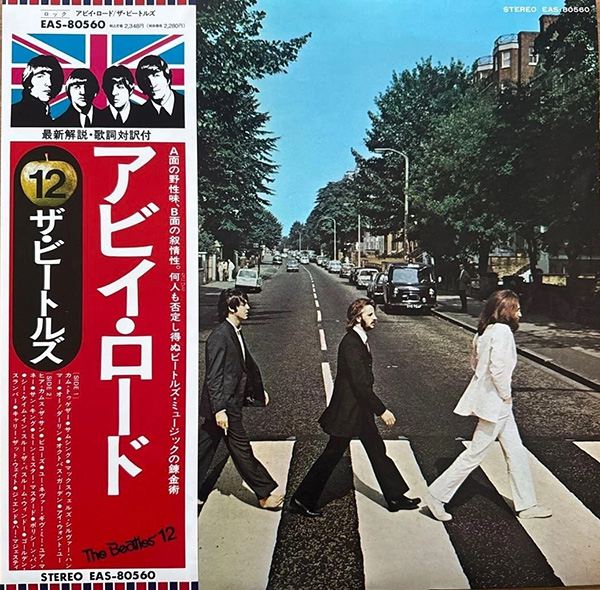
The 1976 Japanese pressing of the Beatles' Abbey Road (Apple Records EAS-80560) is one of the most splendid-sounding LPs I've heard. It offers exemplary separation, an unusually panoramic sense of scale, deep, articulate bass, and a really special feeling of analog presence. When I first played this record, I cued up the 16-minute medley on side 2, and by the time the record got to "Carry That Weight," with its stately orchestral backing, I was wiping away tears like a Welsh spinster at a Tom Jones concert. Listening to the album quickly clarified the Lejonklou system's purpose. What it did better than all but a few hi-fis I've heard is present the music's rhythm and pace, and what Art Dudley used to call touch, with relentless insight.
 On "Sun King," it portrayed Paul McCartney's Fender Jazz bass not as a source of low-frequency thuds but as a sinuous string instrument. And the abrupt switch in Ringo's drum pattern near the end of "Mean Mr. Mustard" was so delightful that I had to get up and move the needle to listen to it again. The experience of hearing the record through the Swedish gear felt like a series of delightful acts of noticing, with my attention focused squarely on the playing, arranging, and singing.
The Lejonklou system also made a veritable banquet of a lossless Spotify stream of The Swinging Guitar of Tal Farlow, a mono recording from 1957, one of two that Farlow made with the sorely underrated pianist and vibist Eddie Costa. During "Taking a Chance on Love," played at a breakneck tempo, I was glued to my seat by the interplay between Farlow's ebullient single-note solos and Costa's inimitable staccato attacks on the keyboard. At times, the two musicians sounded like they were locked in a manic dance, always on the edge of losing control but somehow never relinquishing the melody. Hearing it made me wonder what else Costa might have done if he hadn't died tragically in a car wreck at age 31. The little Swedish system made this track death-defyingly, breathlessly exciting, which is just how this music should feel.
On "Sun King," it portrayed Paul McCartney's Fender Jazz bass not as a source of low-frequency thuds but as a sinuous string instrument. And the abrupt switch in Ringo's drum pattern near the end of "Mean Mr. Mustard" was so delightful that I had to get up and move the needle to listen to it again. The experience of hearing the record through the Swedish gear felt like a series of delightful acts of noticing, with my attention focused squarely on the playing, arranging, and singing.
The Lejonklou system also made a veritable banquet of a lossless Spotify stream of The Swinging Guitar of Tal Farlow, a mono recording from 1957, one of two that Farlow made with the sorely underrated pianist and vibist Eddie Costa. During "Taking a Chance on Love," played at a breakneck tempo, I was glued to my seat by the interplay between Farlow's ebullient single-note solos and Costa's inimitable staccato attacks on the keyboard. At times, the two musicians sounded like they were locked in a manic dance, always on the edge of losing control but somehow never relinquishing the melody. Hearing it made me wonder what else Costa might have done if he hadn't died tragically in a car wreck at age 31. The little Swedish system made this track death-defyingly, breathlessly exciting, which is just how this music should feel.
 By now you must be impatient to hear how this gear sounds, a question that's somewhat difficult to answer because good sound, in the audiophile sense, isn't Lejonklou's first priority. But let me share a few observations.
Regular readers of this column are probably aware of my mania for vacuum tubes and my stubborn grouchiness about all things silicon. So it is with real appreciation that I experienced the Lejonklou gear—and the Boazu in particular—as offering the sweetest, most inviting sound I've heard from solid state devices. No, they don't "sound like tubes," but neither do they truck in the opacity, hardness, and grayish tonality of some transistor-based components.
Rated at 40W into 8 ohms and 70W into 4 ohms, the Boazu drove the BLISS Jubilés with effortlessness and beautifully articulated bass. The speakers sounded admirably neutral and reasonably resolute. That the Boazu couldn't match the tonal contrasts, transparency, and deep color saturation of the very best tube amps struck me as hardly surprising.
By now you must be impatient to hear how this gear sounds, a question that's somewhat difficult to answer because good sound, in the audiophile sense, isn't Lejonklou's first priority. But let me share a few observations.
Regular readers of this column are probably aware of my mania for vacuum tubes and my stubborn grouchiness about all things silicon. So it is with real appreciation that I experienced the Lejonklou gear—and the Boazu in particular—as offering the sweetest, most inviting sound I've heard from solid state devices. No, they don't "sound like tubes," but neither do they truck in the opacity, hardness, and grayish tonality of some transistor-based components.
Rated at 40W into 8 ohms and 70W into 4 ohms, the Boazu drove the BLISS Jubilés with effortlessness and beautifully articulated bass. The speakers sounded admirably neutral and reasonably resolute. That the Boazu couldn't match the tonal contrasts, transparency, and deep color saturation of the very best tube amps struck me as hardly surprising.
The immediate benefits of listening to this equipment in a whole-system context were relatively easy to perceive. The Entity in particular sounded like a far more capable phono stage than the one I reviewed in 2022, when it was handing off the signal to electronics from Shindo and Line Magnetic. It now sounded fuller and tonally richer, with better presence and texture.
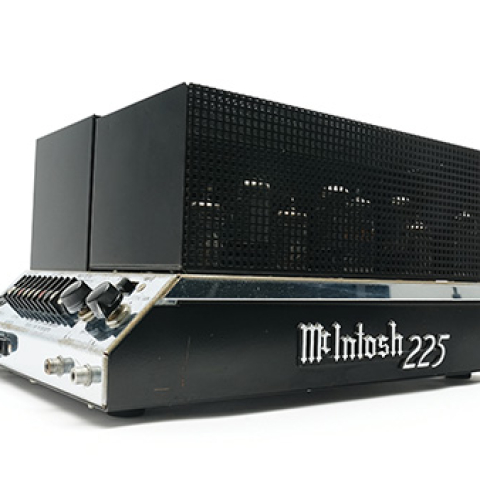
The larger point I'm getting around to making is that the Lejonklou system sounded unremarkable. Perhaps self-effacing is a better description. In terms of the kind of audiophile checklists we tend to write about in these pages, it does nothing audibly wrong, but neither does it have a single standout sonic quality. It isn't astonishingly transparent, nor does it throw the biggest soundstage, nor will it allow you to hear the heart murmur of the violist in the third row. In fact, it frustrated my attempts to focus on the sound, which I believe is by design. The Lejonklou gear reminds me of the vintage McIntosh MC225 I wrote about last year. While it sounds appreciably more polished and modern than that smallest stereo Mac, it has a similar set of priorities. It's extraordinary at drawing my attention to the work of the musicians and only average at the sound effects that often pass for cutting-edge performance.
Spending time with the Swedish system made me wonder about the relationship between sound quality and musical engagement. If the paths to these two ideals run parallel to each other, as most of us assume, then why do they sometimes diverge? Could the pursuit of optimizing certain sonic criteria actually run counter to achieving maximum immersion in our music? And if what most of us want out of this hobby is to be swept away by our favorite recordings—a deeply subjective experience—then why are we so much better at talking about a component's frequency response anomalies than its ability to facilitate amazement, suspense, and drama? Perhaps the public service Fredrik Lejonklou's eccentric, provocative gear is performing is to ask whether, in our pursuit of musical happiness, we have been worshiping false gods.
TP-Link MC220L Ethernet-to-Fiber Converters
A few months ago, during an evening of listening at a good friend's home, he offered to play some digital files. We had been listening to Kathleen Ferrier singing Brahms on a glorious-sounding mono Decca LP, and I must have winced at his offer, if only inwardly. But I was a guest, and reaching for a modicum of grace, agreed gamely. The friend's digital source is a streamer/DAC, outboard clock, and external power supply from Switzerland's Merging Technologies, a company better known in the pro world (footnote 2). To my ears, these three boxes, which retail for about as much as a midlevel Audi sedan, hold their own against most of the better-known audiophile contenders. We listened to a stream of Arturo Benedetti Michelangeli playing a Chopin prelude. To me, the digital stream sounded respectable, admirable, and solid rather than thrilling. Which is to say pretty darn good—for digital. "Let me change something," my friend said and then disappeared into the next room. When he came back, we listened to the track again. Now it sounded quieter and more resolved but also far more colorful, vivid, and physical. I heard a better sense of texture and presence as well as enhanced musical flow. The music made more sense. It was more emotional. It was simply more real. The change I'm describing isn't on the order of a cable change but rather a component change. It was as if we were listening to a different and far better DAC.
When I asked my friend how he'd managed to so dramatically improve the quality of his breathtakingly costly digital front end, he said a little sheepishly that he'd inserted a pair of Ethernet-to-fiber converters between his network switch and the streamer. He'd bought them online for around $85, including shipping.
Some years ago, when I was writing for AudioStream, Stereophile's sadly defunct digital blog, I used a pair of similar converters from TP-Link, which I eventually replaced with the unforgivably named but great-sounding DJM Electronics GigaFOILv4-INLINE Ethernet filter. When this device eventually crapped out, I discovered that it had been discontinued, and soon the whole subject of Ethernet filtration drifted from my consciousness like a wayward tumbleweed.
Until that fateful visit to my friend's apartment. Shocked at the magnitude of the improvement I heard, I soon found myself on the website of a computer superstore buying two TP-Link MC220L Ethernet-to-fiber converters, two TP-Link TL-FM311 SFP modules (since replaced with the TL-FM511), and a 3.3' run of Cable Matters single-mode fiber optic patch cable. The whole thing cost less than going out for pizza and beer in Brooklyn.
When the little boxes arrived and I inserted them between my router and the excellent-sounding Grimm MU2, I sat back to listen. Damn me if I didn't hear an improvement that I'd describe as fundamental. Aside from all the sonic gains described above, it took me from appreciating what I heard to wanting very badly to dance. The music was more alive and way better at making me feel rather than think and compare.
Generally speaking, you get what you pay for, so what was going on here? Put simply, a fiber optic cable is a strand of silica glass that transmits data in the form of light. Inserting one in line with an Ethernet cable removes much of the electrical noise and RF interference that the metal conductors in Ethernet cables are prone to.
I also called my friend Miguel Barrio, this magazine's newest reviewer (footnote 3) and the owner of a Ph.D. in physics and a scary-good prefrontal cortex. He provided a deeper explanation of the theory, explaining that electrical noise can cause jitter. As it turns out, Barrio also uses two pairs of inexpensive SFP converters, which he says significantly improve the sound of his dCS Rossini APEX Player and Rossini Clock.
Neither Barrio nor I understand why more manufacturers don't incorporate this inexpensive technology into their digital sources. It's hardly new. There is plenty of heroic marketing claiming that a particular streamer or DAC eliminates all jitter and noise at the input. I'm not going to talk trash, but for less than $100 you can put these claims to the test. And if you can find anything that offers more obvious improvement for so little outlay, I'll eat a bar of Irish Spring.
As I was completing this column, Editor Jim Austin alerted me that the US Department of Commerce and several other agencies are pushing for a ban on products from TP-Link, whom they accuse of spying for the Chinese. TP-Link denies this. You'll have to make up your own mind. As for me, if the night shift at the Ministry of State Security is eavesdropping on my living room, I'll try to play something soothing.
Footnote 1: Lejonklou HiFi AB, Skolgatan 3 753 12, Uppsala, Sweden. Tel: +4670 558 0549. Web: lejonklou.com. US distributor: Nokturne Audio, 8259 Hugh St., Westland, MI 48185. Tel: (734) 612-4009. Email: info@nokturneaudio.com. Web: nokturneaudio.com.
Footnote 2: ... and also to Kalman Rubinson, who has reviewed several of their products. See, for example, here, here, and here
Footnote 3: Miguel's first review will appear in the May 2026 issue.—Jim Austin
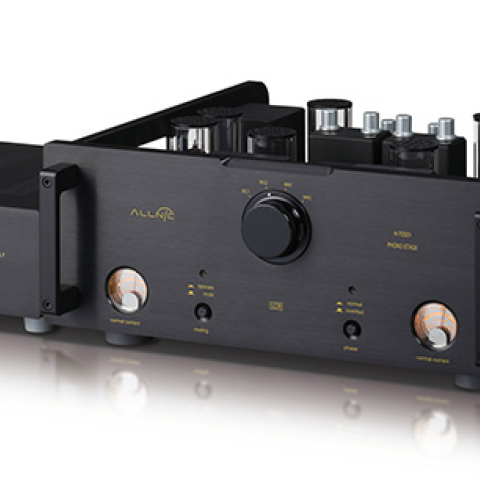
The Lejonklou Entity 1.2 phono stage.
Fredrik Lejonklou is a disciple of the Tune Dem method developed by Linn's Ivor Tiefenbrun, which holds that the best way to evaluate components is to play a short snippet of music over each and determine which one makes it easier to "follow the tune." But Lejonklou has taken this technique to previously unheard-of lengths, as he acknowledges on his company's website: "While a lot of companies like to claim they pay attention to detail, we mean it in an extreme way." For Lejonklou, optimizing a hi-fi is an activity that, to a mental health professional, might look like an extreme variant of OCD.
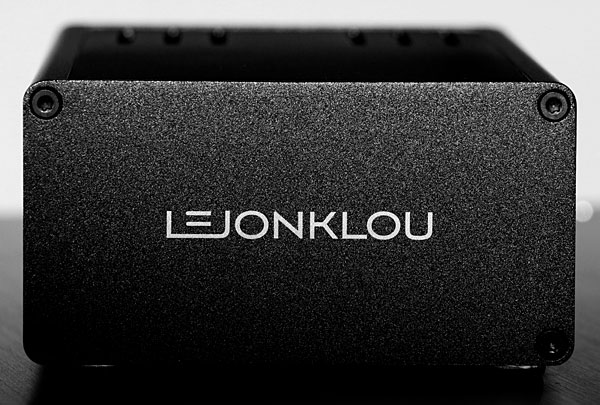
The Lejonklou Källa streamer-DAC.
Since I tend to side with adherents of pleasure (rather than the finger waggers who believe that their oscilloscopes and accelerometers hold every secret to musical enjoyment), Lejonklou's approach appeals to me. I've previously written about the company's Källa streamer/DAC and Entity 1.2 phono stage, but members of the passionate audiophile cabal that has grown up around the company insist that the gear must be heard as a complete system to truly experience its founder's vision.
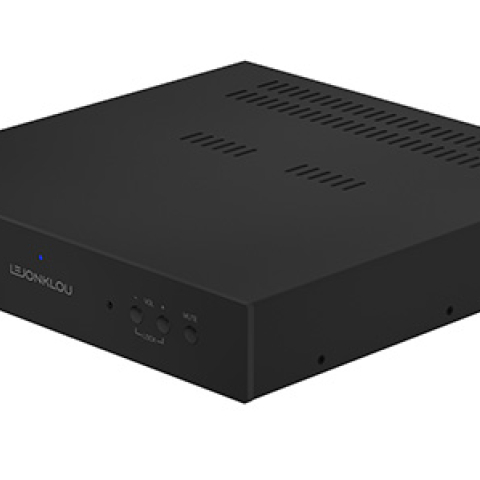
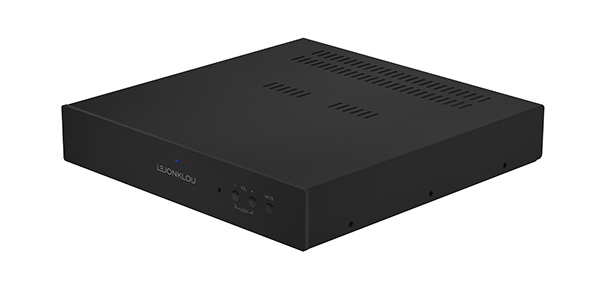
"Complete" here is a misnomer. The company doesn't manufacture analog sources, speakers, or cables, though Fredrik Lejonklou isn't shy about recommending all manner of ancillary gear based on the results of his listening tests. After I agreed to this experiment, O'Keefe sent me the aforementioned Källa ($9250) and Entity 1.2 ($3190), but also a Boazu 2 integrated amplifier ($6195), a pair of Nokturne Audio K248 speaker cables ($700), two sets of Linn Silver interconnects (which are actually made of copper), two Blue Jean Cable CAT 6A Ethernet cables, a Netgear GS108 network switch, and a pair of modified power strips from Home Depot.
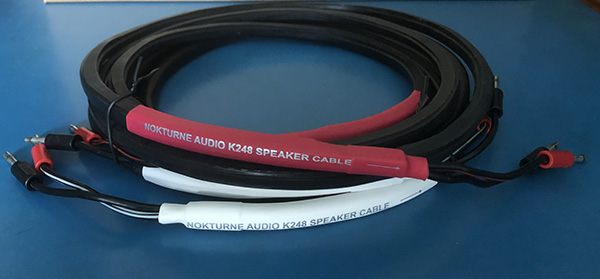
The Nokturne cables.
In terms of setup, too, little is left to chance. The company provides a diagram that specifies how the components should be connected. The two power strips are to be plugged into the same wall outlet with no filtration. Listeners are instructed to plug the hi-fi components into the first strip and the router and network switch into the second. Yes, the company does tell you in which order the components must be plugged into the strips and specifies that the cable from the router be connected to port #7 on the switch, while the Ethernet cable that goes to the Källa be plugged into port #8.
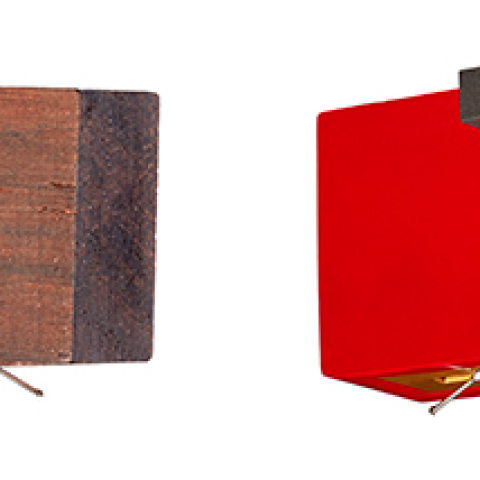
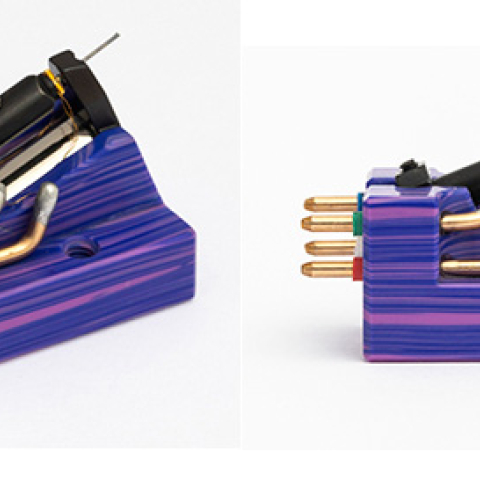
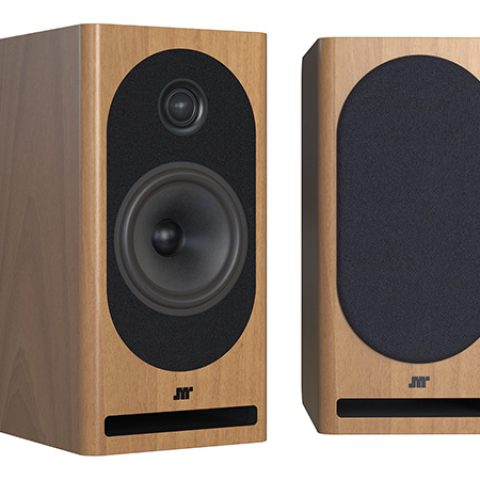
Jumping ahead: I set up the Lejonklou system as instructed. When I listened to the system with the now-departed Klipsch La Scalas, I found the combination a bit staid. But I was advised that the Reynaud BLISS Jubilé speakers I wrote about in my March 2026 column were superb partners for the Swedish gear. Happily, this turned out to be true. Since I was undertaking an experiment in maximal system optimization, the listening impressions below apply to listening with the Reynaud speakers. I played LPs with my Garrard 301 turntable, Schick 12" tonearm, and a variety of low-output moving coil cartridges; the tonearm leads were plugged directly into the Entity.
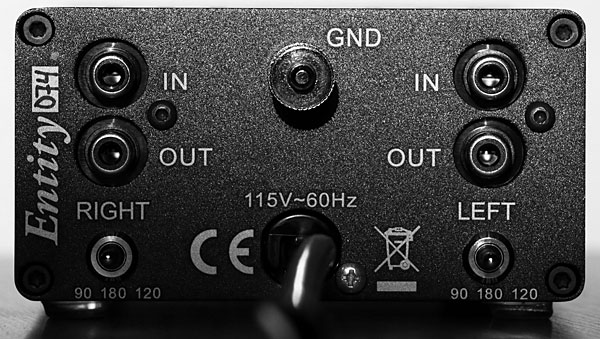
The Lejonklou Entity 1.2 phono stage, back.
Listening to Peak LejonklouThe 1976 Japanese pressing of the Beatles' Abbey Road (Apple Records EAS-80560) is one of the most splendid-sounding LPs I've heard. It offers exemplary separation, an unusually panoramic sense of scale, deep, articulate bass, and a really special feeling of analog presence. When I first played this record, I cued up the 16-minute medley on side 2, and by the time the record got to "Carry That Weight," with its stately orchestral backing, I was wiping away tears like a Welsh spinster at a Tom Jones concert. Listening to the album quickly clarified the Lejonklou system's purpose. What it did better than all but a few hi-fis I've heard is present the music's rhythm and pace, and what Art Dudley used to call touch, with relentless insight.
On "Sun King," it portrayed Paul McCartney's Fender Jazz bass not as a source of low-frequency thuds but as a sinuous string instrument. And the abrupt switch in Ringo's drum pattern near the end of "Mean Mr. Mustard" was so delightful that I had to get up and move the needle to listen to it again. The experience of hearing the record through the Swedish gear felt like a series of delightful acts of noticing, with my attention focused squarely on the playing, arranging, and singing.
The Lejonklou system also made a veritable banquet of a lossless Spotify stream of The Swinging Guitar of Tal Farlow, a mono recording from 1957, one of two that Farlow made with the sorely underrated pianist and vibist Eddie Costa. During "Taking a Chance on Love," played at a breakneck tempo, I was glued to my seat by the interplay between Farlow's ebullient single-note solos and Costa's inimitable staccato attacks on the keyboard. At times, the two musicians sounded like they were locked in a manic dance, always on the edge of losing control but somehow never relinquishing the melody. Hearing it made me wonder what else Costa might have done if he hadn't died tragically in a car wreck at age 31. The little Swedish system made this track death-defyingly, breathlessly exciting, which is just how this music should feel.
By now you must be impatient to hear how this gear sounds, a question that's somewhat difficult to answer because good sound, in the audiophile sense, isn't Lejonklou's first priority. But let me share a few observations.
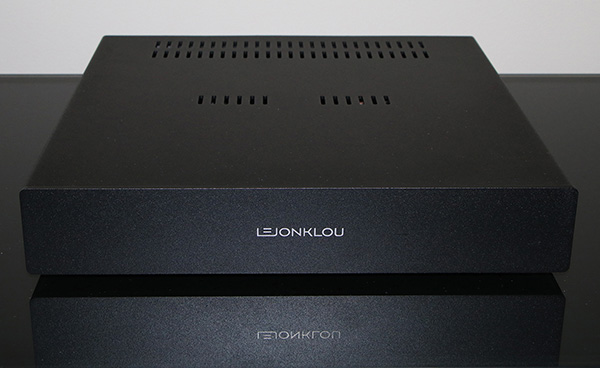
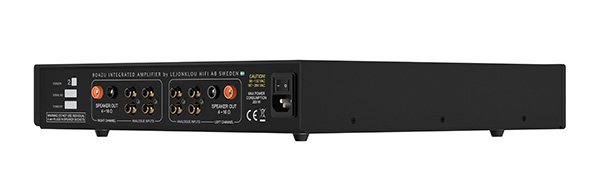
The Lejonklou Boazu 2 integrated amplifier.
Compared to the far more expensive Grimm MU2 I've been listening to, the Källa sounds tonally lighter, a touch less colorful and resolute, but also a hair more engaging.
A few months ago, during an evening of listening at a good friend's home, he offered to play some digital files. We had been listening to Kathleen Ferrier singing Brahms on a glorious-sounding mono Decca LP, and I must have winced at his offer, if only inwardly. But I was a guest, and reaching for a modicum of grace, agreed gamely. The friend's digital source is a streamer/DAC, outboard clock, and external power supply from Switzerland's Merging Technologies, a company better known in the pro world (footnote 2). To my ears, these three boxes, which retail for about as much as a midlevel Audi sedan, hold their own against most of the better-known audiophile contenders. We listened to a stream of Arturo Benedetti Michelangeli playing a Chopin prelude. To me, the digital stream sounded respectable, admirable, and solid rather than thrilling. Which is to say pretty darn good—for digital. "Let me change something," my friend said and then disappeared into the next room. When he came back, we listened to the track again. Now it sounded quieter and more resolved but also far more colorful, vivid, and physical. I heard a better sense of texture and presence as well as enhanced musical flow. The music made more sense. It was more emotional. It was simply more real. The change I'm describing isn't on the order of a cable change but rather a component change. It was as if we were listening to a different and far better DAC.
Footnote 1: Lejonklou HiFi AB, Skolgatan 3 753 12, Uppsala, Sweden. Tel: +4670 558 0549. Web: lejonklou.com. US distributor: Nokturne Audio, 8259 Hugh St., Westland, MI 48185. Tel: (734) 612-4009. Email: info@nokturneaudio.com. Web: nokturneaudio.com.