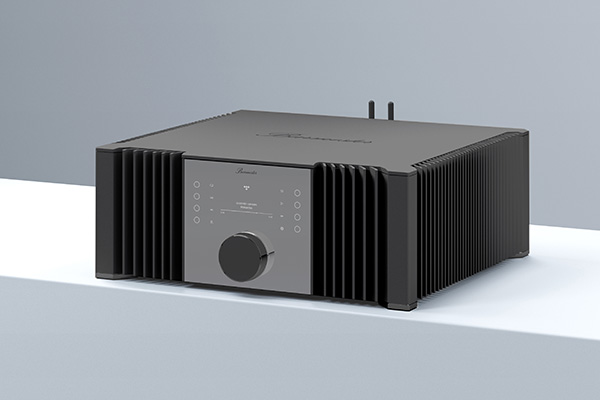
 The review unit arrived complete with optional DAC/streamer module—and the phono module I could not evaluate. As a Roon Ready device that offers multiple connection and playback options, including Wi-Fi and Bluetooth file playback, I tested it multiple ways:
As a pure integrated, with the vastly more expensive Innuos Nazaré server-streamer, the five-piece dCS Varèse music system doing the conversion (footnote 3). This setup enabled me to compare the same music at the same resolution sourced from the Nazaré's internal SSD and Qobuz.
As a pure integrated amplifier using the five-piece dCS Varèse music system as both streamer and DAC and the dCS Mosaic Actus app to control playback.
The review unit arrived complete with optional DAC/streamer module—and the phono module I could not evaluate. As a Roon Ready device that offers multiple connection and playback options, including Wi-Fi and Bluetooth file playback, I tested it multiple ways:
As a pure integrated, with the vastly more expensive Innuos Nazaré server-streamer, the five-piece dCS Varèse music system doing the conversion (footnote 3). This setup enabled me to compare the same music at the same resolution sourced from the Nazaré's internal SSD and Qobuz.
As a pure integrated amplifier using the five-piece dCS Varèse music system as both streamer and DAC and the dCS Mosaic Actus app to control playback.
You thought I'd never get there? If it's any consolation, so did I. I began using the Burmester 232 as an integrated, with the Innuos PhoenixNET switch/Nazaré server/streamer and dCS Varèse serving as source. I was delighted by what I heard. Whether I played 24/96 files of the first movement of Mahler Symphony No.5 or Ligeti's Violin Concerto, timbres sounded extremely natural, with ideal warmth in the midrange. As complex and multilayered as Ligeti's music is, I never felt detail was lost or smudged. Nor was there any lack of bass; it seemed as impactful as I've heard from monoblocks with significantly more power that cost significantly more.
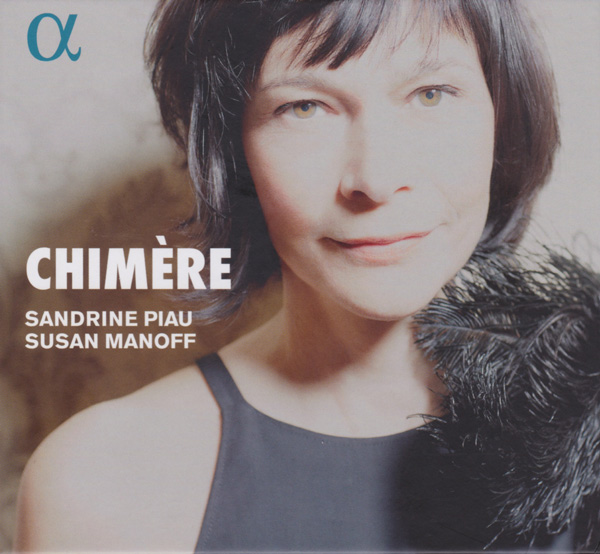 Flow was excellent and musical. Take, for example, soprano Sandrine Piau's performance of Schumann's song, "Die Lotosblume," from her recording Chimère with Susan Manoff on piano (24/96 FLAC, Alpha/Qobuz). When she sang of a lotus flower awaiting her lover, the moon, to whom she would unveil her gentle flower face, bloom, glow, and shine, her full and fragrant voice exhibited all the overtones and natural flow central to its unforced beauty. Manoff's piano, too, sounded full and resonant.
During setup, I had compared the sound of Debussy's Sonata for Flute, Viola, and Harp, from Debussy: Sonates & Trios (24/96 FLAC, Erato/Qobuz) before and after I inserted Wilson Pedestals under the unit. "Significantly more color," I wrote in my notes. "The harp sounds rounder and more natural, and there's far more air and natural acoustic. This is a tremendous improvement."
Next, I turned to files, stored on the Nazaré, of a not-yet-released recording of three works by Unsuk Chin, collected on an album named for the composer, performed by percussionist Samuel Favre, pianist Dimitri Vassilakis, and the famed Ensemble Intercontemporain directed by Pierre Bleuse (24/96 WAV, Alpha/download). Though I ultimately decided to review other recordings for the February issue (footnote 4), I felt I could trust the 232 to deliver an honest representation of everything that the musicians, conductor, and sound engineer had channeled into this recording of extremely complex, dynamic, and sometimes startlingly violent music.
Flow was excellent and musical. Take, for example, soprano Sandrine Piau's performance of Schumann's song, "Die Lotosblume," from her recording Chimère with Susan Manoff on piano (24/96 FLAC, Alpha/Qobuz). When she sang of a lotus flower awaiting her lover, the moon, to whom she would unveil her gentle flower face, bloom, glow, and shine, her full and fragrant voice exhibited all the overtones and natural flow central to its unforced beauty. Manoff's piano, too, sounded full and resonant.
During setup, I had compared the sound of Debussy's Sonata for Flute, Viola, and Harp, from Debussy: Sonates & Trios (24/96 FLAC, Erato/Qobuz) before and after I inserted Wilson Pedestals under the unit. "Significantly more color," I wrote in my notes. "The harp sounds rounder and more natural, and there's far more air and natural acoustic. This is a tremendous improvement."
Next, I turned to files, stored on the Nazaré, of a not-yet-released recording of three works by Unsuk Chin, collected on an album named for the composer, performed by percussionist Samuel Favre, pianist Dimitri Vassilakis, and the famed Ensemble Intercontemporain directed by Pierre Bleuse (24/96 WAV, Alpha/download). Though I ultimately decided to review other recordings for the February issue (footnote 4), I felt I could trust the 232 to deliver an honest representation of everything that the musicians, conductor, and sound engineer had channeled into this recording of extremely complex, dynamic, and sometimes startlingly violent music.
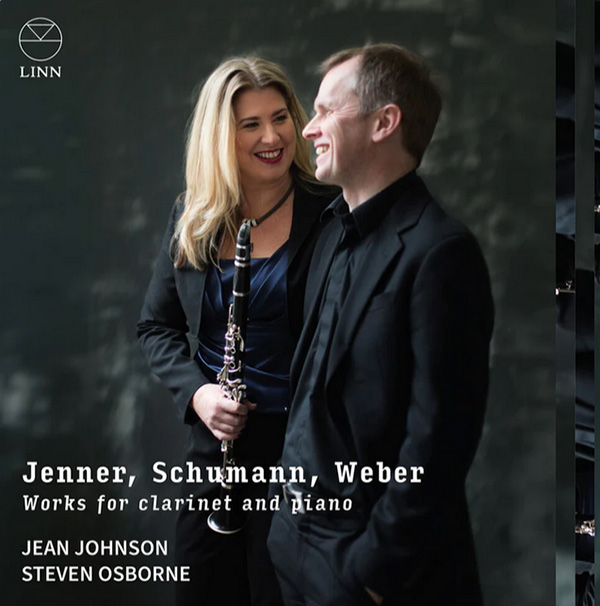 Sampling other new recordings, I discovered just how fine and warm Jean Johnson's clarinet sounded on Jenner, Schumann, Weber: Works for clarinet and piano (24/192 WAV, Linn/download), her new recording with pianist Steven Osborne. On Bach: Mein Geist from Le Banquet Céleste (24/192 WAV, Alpha/download), the ensemble's winds sounded wonderfully full, the bass foundation so essential to baroque performance strong and perfectly proportioned. Next, I turned to Prophecy, Ksenija Sidorova's new recording of works for accordion and orchestra by three living composers, Erkki-Sven Tüür, Tõnu Kõrvitz, and Peēteris Vasks, performed by the Estonian Festival Orchestra under Paavo Järvi (24/48 WAV, Alpha/download). "Marvelous stuff," I wrote about Tüür's 20-minute title work. "Lots of mystery and energy as the accordion weaves in and out of the orchestra. How wonderful that the accordion is not blown up to sound bigger than it is." That—the accordion's size—is more a tribute to the recording engineer than to the 232; still, I was truly impressed.
Although I was eager to explore other genres of music, I first needed to review, for another publication, Nadia Boulanger's virtually unknown, posthumously orchestrated, rapturously atmospheric opera, La ville morte (footnote 5), which she composed with Raoul Pugno (24/96 WAV, Pentatone/download). On the plus side, I appreciated the 232's rich lower octaves and clear percussion, which were delivered with gratifying speed.
We interrupt this discussion not for a commercial break but for some critical realignment. I expect I'm not the only reader of audiophile reviews who wonders what's what when the exact same terminology and adjectives are applied to sound from products priced at three figures through six figures. The sound from the $25,000 Burmester 232 integrated is not as colorful, dynamic, airy, three-dimensional, and transparent as that from the best products costing far more. Expensive the 232 may be, yet it's still Burmester's entry-level integrated amplifier, and Burmester saves its best music-spinning technology for its three higher-priced lines. On the other hand, the 232 is the first in a whole new array of Burmester products, it contains copious technological advances and new approaches, and it reveals how much Burmester can deliver at its entry-level price. To these ears, the 232's sound is thoroughly musical, honest to the source, and a pleasure to listen to.
Sampling other new recordings, I discovered just how fine and warm Jean Johnson's clarinet sounded on Jenner, Schumann, Weber: Works for clarinet and piano (24/192 WAV, Linn/download), her new recording with pianist Steven Osborne. On Bach: Mein Geist from Le Banquet Céleste (24/192 WAV, Alpha/download), the ensemble's winds sounded wonderfully full, the bass foundation so essential to baroque performance strong and perfectly proportioned. Next, I turned to Prophecy, Ksenija Sidorova's new recording of works for accordion and orchestra by three living composers, Erkki-Sven Tüür, Tõnu Kõrvitz, and Peēteris Vasks, performed by the Estonian Festival Orchestra under Paavo Järvi (24/48 WAV, Alpha/download). "Marvelous stuff," I wrote about Tüür's 20-minute title work. "Lots of mystery and energy as the accordion weaves in and out of the orchestra. How wonderful that the accordion is not blown up to sound bigger than it is." That—the accordion's size—is more a tribute to the recording engineer than to the 232; still, I was truly impressed.
Although I was eager to explore other genres of music, I first needed to review, for another publication, Nadia Boulanger's virtually unknown, posthumously orchestrated, rapturously atmospheric opera, La ville morte (footnote 5), which she composed with Raoul Pugno (24/96 WAV, Pentatone/download). On the plus side, I appreciated the 232's rich lower octaves and clear percussion, which were delivered with gratifying speed.
We interrupt this discussion not for a commercial break but for some critical realignment. I expect I'm not the only reader of audiophile reviews who wonders what's what when the exact same terminology and adjectives are applied to sound from products priced at three figures through six figures. The sound from the $25,000 Burmester 232 integrated is not as colorful, dynamic, airy, three-dimensional, and transparent as that from the best products costing far more. Expensive the 232 may be, yet it's still Burmester's entry-level integrated amplifier, and Burmester saves its best music-spinning technology for its three higher-priced lines. On the other hand, the 232 is the first in a whole new array of Burmester products, it contains copious technological advances and new approaches, and it reveals how much Burmester can deliver at its entry-level price. To these ears, the 232's sound is thoroughly musical, honest to the source, and a pleasure to listen to.
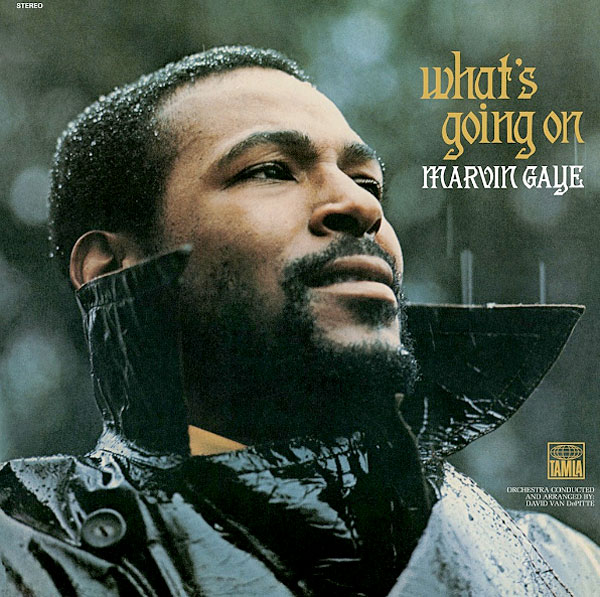 Midway into the review period, Eric Ross, an installer at Gig Harbor Audio (footnote 6), dropped by to pick up my loaner Accuphase A-300 monoblocks. When I invited him to take a listen, he requested three fabulous classics: "Mercy Mercy Me" from Marvin Gaye's What's Going On (24/192 FLAC, Motown/Qobuz), Barry White's "You're the First, the Last, My Everything" collected on Barry White's Greatest Hits (24/192 FLAC, Island Def Jam/Qobuz), and "We the People Who Are Darker Than Blue" from the 2019 remaster of Curtis Mayfield's Curtis (24/192 FLAC, Rhino/Qobuz). Superb sound.
Certain that I was hearing the Burmester 232 at its best (in the context of this system at least), it was time to check out the optional digital module. "Well, this is a surprise," I wrote as I used the digital module and Qobuz to stream Debussy's Sonata for Flute, Viola, and Harp via Ethernet—the same recording I mentioned previously. "It sounds quite good. The colors aren't as saturated and fleshed out as through the 33-times-as-expensive Innuos/dCS combo, but the essential qualities of the music, and the feelings it arouses in me, are all there."
When I cued up Debussy's Cello Sonata, which I'd heard live days (footnote 7) before from about halfway back in Port Angeles's Field Hall, instrumental textures—the complex mix of the dominant pitch and its harmonics, of hammer and bow on strings—were subdued, and the piano a mite mushy in the bottom octaves. Nonetheless, lower octaves were strong and well balanced with higher octaves, and the music's beauty was undiminished.
Midway into the review period, Eric Ross, an installer at Gig Harbor Audio (footnote 6), dropped by to pick up my loaner Accuphase A-300 monoblocks. When I invited him to take a listen, he requested three fabulous classics: "Mercy Mercy Me" from Marvin Gaye's What's Going On (24/192 FLAC, Motown/Qobuz), Barry White's "You're the First, the Last, My Everything" collected on Barry White's Greatest Hits (24/192 FLAC, Island Def Jam/Qobuz), and "We the People Who Are Darker Than Blue" from the 2019 remaster of Curtis Mayfield's Curtis (24/192 FLAC, Rhino/Qobuz). Superb sound.
Certain that I was hearing the Burmester 232 at its best (in the context of this system at least), it was time to check out the optional digital module. "Well, this is a surprise," I wrote as I used the digital module and Qobuz to stream Debussy's Sonata for Flute, Viola, and Harp via Ethernet—the same recording I mentioned previously. "It sounds quite good. The colors aren't as saturated and fleshed out as through the 33-times-as-expensive Innuos/dCS combo, but the essential qualities of the music, and the feelings it arouses in me, are all there."
When I cued up Debussy's Cello Sonata, which I'd heard live days (footnote 7) before from about halfway back in Port Angeles's Field Hall, instrumental textures—the complex mix of the dominant pitch and its harmonics, of hammer and bow on strings—were subdued, and the piano a mite mushy in the bottom octaves. Nonetheless, lower octaves were strong and well balanced with higher octaves, and the music's beauty was undiminished.
 Headphone playback
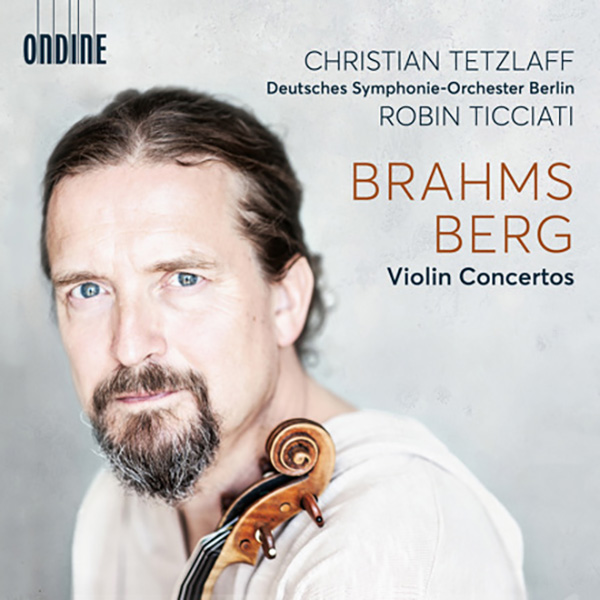
Having ascertained that playback from a USB stick showed off the digital module at its best, I connected my Audeze LCD-X headphones outfitted with Nordost Heimdall 2 headphone cables. Perusing the stick's contents, I arrived at Brahms | Berg Violin Concertos, performed by Christian Tetzlaff and the Deutsches Symphonie-Orchester Berlin under Robin Ticciati (24/96 FLAC download, Ondine). Flow was top notch, but color and transparency were not on the same level as through Wilson Alexia V loudspeakers. Switching to that tried-and-true recording of Debussy's Sonata for Flute, Viola, and Harp, which I'd recently transferred to the stick, I confirmed that sound was warm and lovely but the colors a mite muted, and the background less than pristine. On the day before this review was due, a little birdie, flying two whole days from Southern California without break, deposited Audeze's flagship LCD-5S headphones ($4500) on my doorstep. According to Peter James, director of marketing at Audeze, this updated version of the LCD-5, which is brand new, utilizes the SLAM (footnote 8) technology Audeze first introduced on the CRBN2 electrostatic in 2024. "SLAM technology allows the driver to move more freely by equalizing the pressure across both sides of the driver," he wrote. "It also allows us to selectively enhance the low frequencies, working similar to a Helmholtz resonator." The timing was propitious. After years of service, the glue on one of the LCD-X's earpads gave up the ghost as I removed them from my head. They still sounded great, but the LCD-5S, outfitted with stock cables, supplied significantly more bottom octave extension and weight. Colors were more saturated, and the 'phones themselves felt better on my head. The double basses at the start of Mahler Symphony No.4, lightly sketched in pencil via the LCD-X, emerged intact and in healthier proportion to higher-pitched instruments. I needed to turn up the gain significantly, but when I did, color contrasts were more impactful than before. Though the noisefloor remained higher than through speakers, Mahler's bass foundation emerged in all its glory. Switching gears, Danill Trifonov's piano, on his recording of Berg's lied, "Schlafen, schlafen," from 4 Gesange, Op.2 with baritone Matthias Goerne (24/96 WAV download, Deutsches Grammophon), sounded gorgeous, if not as full as through the Dragonfire Acoustics desktop sound system with subwoofer, designed by Audeze's own Dragoslav Colich.
 Summing up
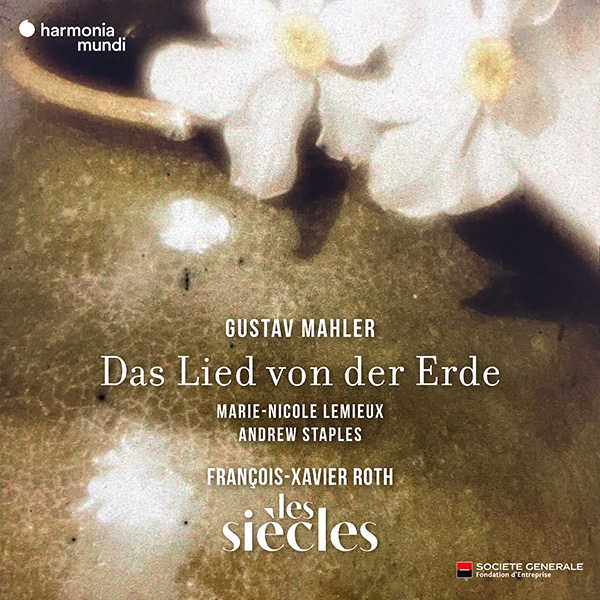
Am I going to conclude this review with the classic sentence, "I thoroughly enjoyed my time with the Burmester 232 modular integrated amplifier." No. Not because I didn't thoroughly enjoy my time with the Burmester 232. Rather, it's because I felt so positive about the 232's sound that faint praise will not cut it. I used the 232 to review several recordings, including the 24/96 files of February 2026's system-challenging Recording of the Month, Mahler's Das Lied von der Erde (The Song of the Earth), recorded by Harmonia Mundi and performed by Marie-Nicole Lemieux, Andrew Staples, and the period instruments of Les Siècles conducted by François-Xavier Roth. On every recording I auditioned, I was able to let go of critical mind, trust what I heard, and surrender to the emotions aroused by the oft-transcendent melding of compositional brilliance, carefully cultivated tone, finely honed technique, interpretive insight, and soul.
Footnote 3: The Innuos PhoenixNET network switch was in the data path, and playback was controlled by the Innuos Sense app. Footnote 4: Instead, Jason's review of Unsuk Chin ended up in the March issue—this one.—Jim Austin