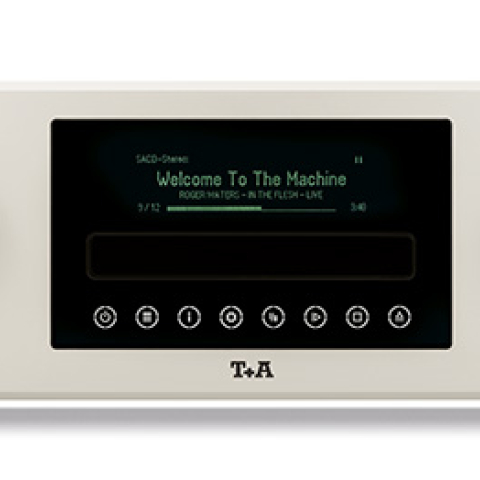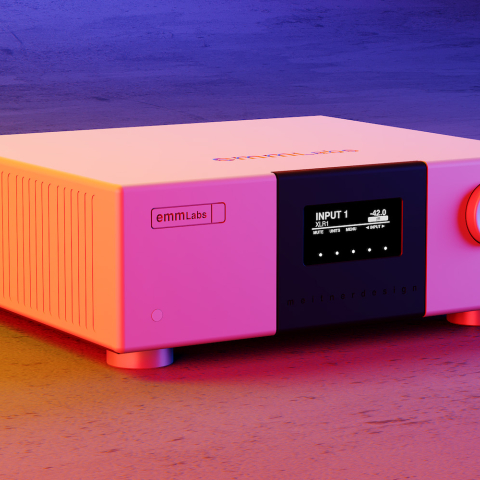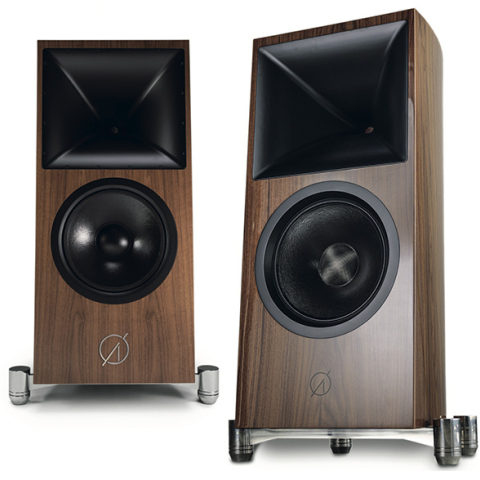
In ancient times, when I first ventured beyond playing files stored on a USB stick or NAS to streaming from Tidal and Qobuz, I ran a USB cable between a MacBook Pro and my DAC. For playback software, I alternated between Amarra, Audirvana, and—sometimes with a dCS DAC—dCS Mosaic. During a decade of upgrades from laptop and DACs with their own streamer software to dedicated server/streamers, some with proprietary music-management and playback software, one basic concern remained consistent: Was there a streamer (or streamer-software combo) out there that could improve musicality and the retrieval of musically important musical detail without making operation kludgy or unduly complex?
Soon after Roon's release, I heralded it as a no-brainer software upgrade for its superb integration of library management, streaming services, and musically enriching extras. When I compared Roon's sound to that of a server's proprietary software, I sometimes found a glaring gap between the sonic advantages that dedicated software often provided and its operational challenges (footnote 1). Even if proprietary software sounded better than Roon, the number of hoops I sometimes had to jump through to achieve better sound seemed worthy of a medal of valor.
If any phrase rings like the sound of a bell in hell, it is the one blurted out by one company's exasperated software engineer: "WAV? Why do you have WAV files? Our software was designed to handle FLAC!!!" It was at moments like those that I blessed the day that Roon was created.
When I reviewed the original, top-of-the-line two-piece Statement music server/streamer from Innuos of Portugal, its sound with the company's own proprietary InnuOS software, accessed through the app now called Innuos Sense, was so much better than anything I'd used before that I chose to provide feedback aimed at helping the company improve its music-management features. Sense 3.3.1, the latest iteration of InnuosOS at the time of this writing, doesn't boast all of Roon's bells and whistles, but its ease of operation and superior sound quality almost always make it, for me, a no-brainer.
After a few years with the original Statement, I upgraded to an Innuos Statement Next-Gen (NG) music server/streamer with 4TB internal storage. Boy, did that make a difference! After I learned that Innuos always demoed the Statement NG with an Innuos PhoenixNET reclocking Ethernet switch (because it invariably improved sound), it too joined my system. Finally, when I auditioned the Statement Next-Gen's upgraded umbilical cables, I heard sufficient added detail, texture, and transparency to lead me to question whether server technology could get any better.
Enter Nazaré
Shortly before High End Munich 2024, I visited Innuos HQ in Faro, Portugal. After listening to familiar tracks through a PhoenixNET and Statement NG, we switched to an early prototype of the company's forthcoming reference music server/streamer. Then dubbed "Frankenstein" because it was housed in an open chassis with wires sticking out in all directions, it creamed the Statement NG's sound in every respect.
This huge improvement was apparent even though the speakers Innuos then used in their listening room (footnote 2) were incapable of reproducing all the details, nuance, and shading that I routinely hear through my reference system. I was so impressed by the difference the Frankenstein made that I immediately declared my desire to review it when it came to market.
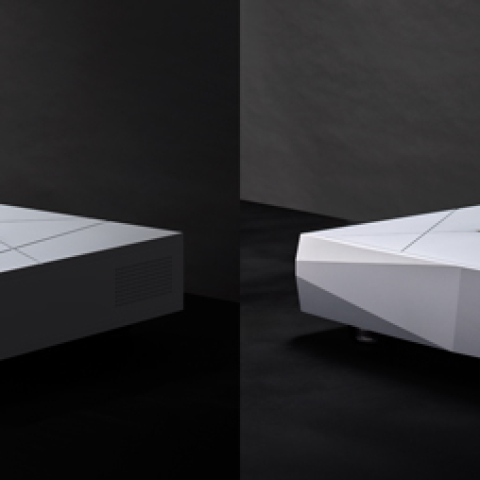
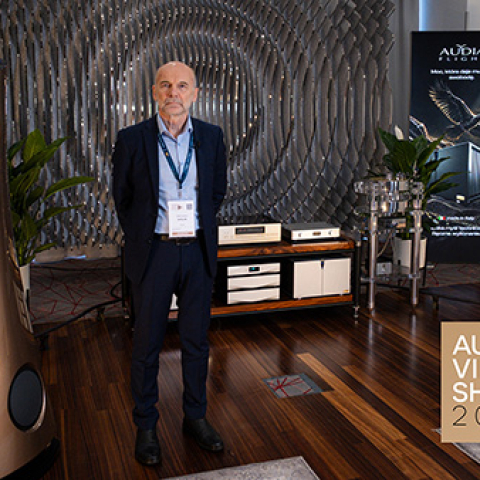
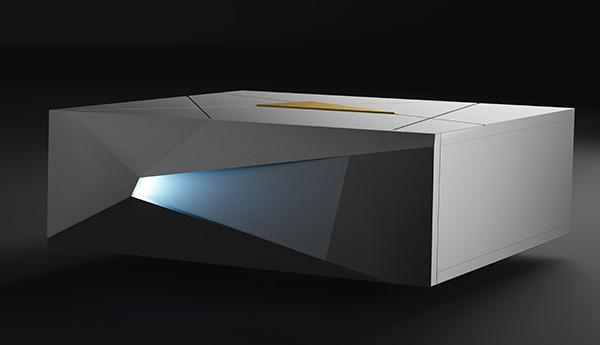
More than a year later, a beautifully finished preproduction sample of the new server, with the same internals and chassis as the version available soon from Innuos dealers, debuted at High End Munich 2025. Its name, the Nazaré, derives from the submarine Nazaré Canyon in Portugal that's famed for birthing the world's most powerful waves. As Innuos cofounder and Director of Research and Development Nuno Vitorino explained during a face-to-face interview, "The largest wave recorded at Nazaré was 100'. The place commands a lot of respect for nature. When you're there, you get immersed not only with the view of the massive wave but also with their rumbling sound as they come crashing down. That sense of total immersion led us to name our new music server/streamer after the canyon."
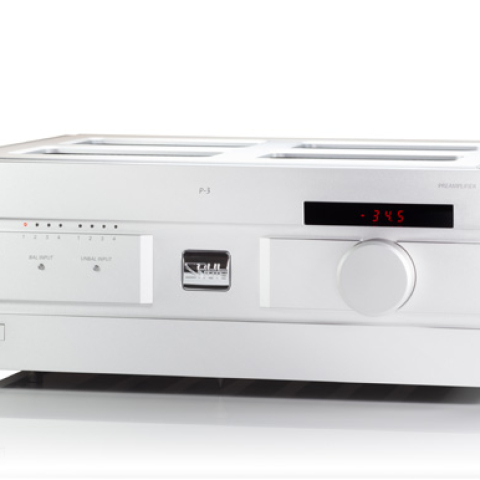
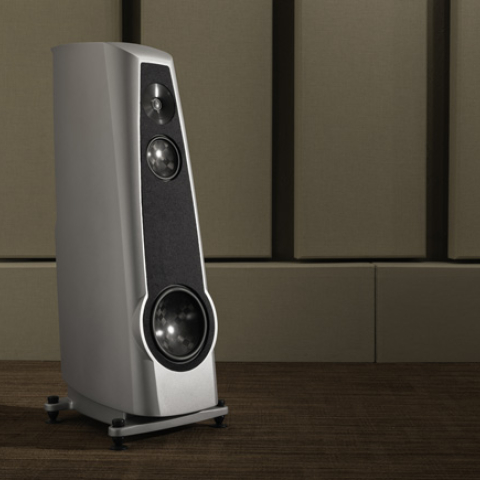
 The Nazaré's Munich debut was in the context of a superb system that included an MSB Cascade DAC, Gryphon's mighty Commander preamp and Apex stereo power amplifier, Marten Coltrane Quintet loudspeakers, and Transparent cabling. In A/B/A comparisons with the Statement NG, the sonic differences were impressive, if less pronounced than I had heard a year earlier with the Frankenstein prototype.
My only reservation was that the server comparisons seemed to be weighted in the Nazaré's favor. That's because the Nazaré was presented as part of a complete Nazaré system. The Statement NG received music data through an Innuos PhoenixNET network switch, while the Nazaré got its data via a presumably superior prototype NazaréNET switch. The difference in switches was justified, arguably, by the fact that the NazaréNET was (or would become) part of the multichassis Nazaré system. (In addition to the RJ45 input, the NazaréNET will include an SFP input for fiber (footnote 3) that, for people who, like me, use fiber, will obviate the need for a separate Ethernet-to-optical converter.)
The Munich demo also took advantage of a prototype NazaréFLOW reclocking output stage, which has USB and I2S outputs as well as a dedicated module for DACs with proprietary interfaces (footnote 4). For the show, the NazaréFLOW was outfitted with MSB's proprietary ProISL connector for its Cascade DAC; the Statement NG, in turn, used MSB's ProUSB adapter to connect to the Cascade DAC's ProISL input.
How those two methods of inputting data to the Cascade DAC compare sonically, I do not know. I've never had the Cascade DAC in my system, and my crystal ball is too clouded by other questions at the moment.
Both the NazaréNET and the NazaréFLOW are part of a complete Nazaré system. Each will be sold separately. It will be possible to use the Nazaré server/streamer by itself, with either the NazaréNET or NazaréFLOW, or with both of them. It will even be possible to use them with other Innuos servers to improve sound quality.
There was only one way to know for sure if and to what degree the Nazaré by itself, without its two companion components, delivered superior sonics than the Statement NG: Shortly before Memorial Day, the same preproduction Nazaré shown in Munich arrived in my Port Townsend music room for review. Because the NazaréNET and NazaréFLOW were not yet finished, they were not included. Once they become available, I will evaluate them in follow-ups.
The Nazaré's Munich debut was in the context of a superb system that included an MSB Cascade DAC, Gryphon's mighty Commander preamp and Apex stereo power amplifier, Marten Coltrane Quintet loudspeakers, and Transparent cabling. In A/B/A comparisons with the Statement NG, the sonic differences were impressive, if less pronounced than I had heard a year earlier with the Frankenstein prototype.
My only reservation was that the server comparisons seemed to be weighted in the Nazaré's favor. That's because the Nazaré was presented as part of a complete Nazaré system. The Statement NG received music data through an Innuos PhoenixNET network switch, while the Nazaré got its data via a presumably superior prototype NazaréNET switch. The difference in switches was justified, arguably, by the fact that the NazaréNET was (or would become) part of the multichassis Nazaré system. (In addition to the RJ45 input, the NazaréNET will include an SFP input for fiber (footnote 3) that, for people who, like me, use fiber, will obviate the need for a separate Ethernet-to-optical converter.)
The Munich demo also took advantage of a prototype NazaréFLOW reclocking output stage, which has USB and I2S outputs as well as a dedicated module for DACs with proprietary interfaces (footnote 4). For the show, the NazaréFLOW was outfitted with MSB's proprietary ProISL connector for its Cascade DAC; the Statement NG, in turn, used MSB's ProUSB adapter to connect to the Cascade DAC's ProISL input.
How those two methods of inputting data to the Cascade DAC compare sonically, I do not know. I've never had the Cascade DAC in my system, and my crystal ball is too clouded by other questions at the moment.
Both the NazaréNET and the NazaréFLOW are part of a complete Nazaré system. Each will be sold separately. It will be possible to use the Nazaré server/streamer by itself, with either the NazaréNET or NazaréFLOW, or with both of them. It will even be possible to use them with other Innuos servers to improve sound quality.
There was only one way to know for sure if and to what degree the Nazaré by itself, without its two companion components, delivered superior sonics than the Statement NG: Shortly before Memorial Day, the same preproduction Nazaré shown in Munich arrived in my Port Townsend music room for review. Because the NazaréNET and NazaréFLOW were not yet finished, they were not included. Once they become available, I will evaluate them in follow-ups.
 What's new with Nazaré?
Vitorino told me that when the Statement was released in 2018, nine years after he and Innuos CEO Amelia Santos founded the company, he thought it was as far as the company could go. Its improvements included eight separate linear power supplies and an internal USB reclocker. When he discovered that he could advance further, he upgraded the Statement to Next-Gen status, in 2020, and began incorporating its new elements into an entirely new server.
Vitorino and his team addressed vibration first. The Statement already included feet to counter vibration in its chassis, but he wondered if other feet could further improve isolation. Then he went a step further. After conducting many lab simulations, he licensed extremely thin antivibration material to put between the main board and the rectification, capacitor, and regulator plates.
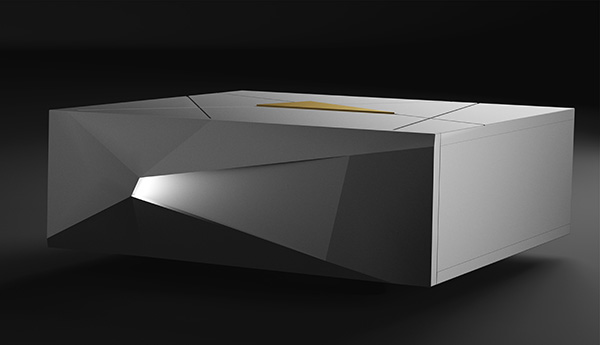
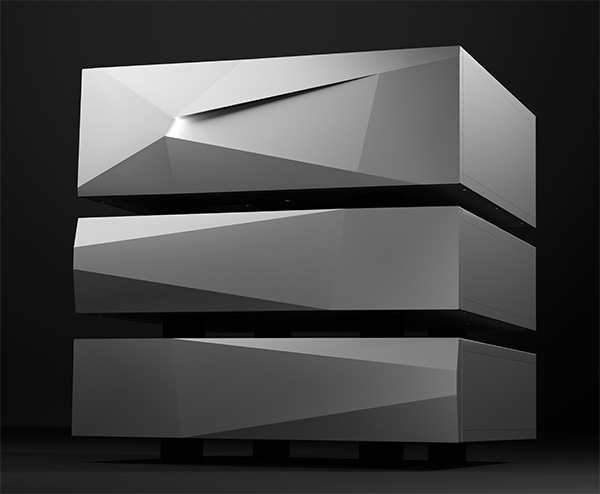
By the time the Nazaré chassis was complete, Vitorino had decided to affix special IsoAcoustics decoupling feet, tuned to the Nazaré system. His team also designed the Nazaré chassis's asymmetric fascia and cover to help dissipate standing waves and reduce structural resonance. An environmentally friendly ceramic coating presents a scratch-resistant finish. The color can be personalized.
Then he looked further. "The Statement has a custom main board with a lot of elements on it," he told me. "The next step we wanted to take was to minimize the number of elements or components on it to make sure we have a simpler path that doesn't go through a lot of electronic components. We removed whatever wasn't necessary. This keeps things nice and quiet. It's an entirely different architecture."
The two-box Statement Next-Gen houses its processor, output, and voltage regulation elements in its server box and the bulkier AC/DC rectification, capacitor banks, and regulator elements in its separate "Power box." The main Nazaré unit, by contrast, houses its processor and dual-transformer power supply in its chassis and relegates its specialized outputs, with their own power supply, to the separate NazaréFLOW. (The Nazaré can output signal directly to a DAC via its USB output. That is how I auditioned it for this review.)
The Nazaré's toroidal transformers sit in a special housing that is CNC-machined from a solid block of aluminum and decoupled from the chassis using "SmartStack" vibration-damping material. This SmartStack material is also used on the PreciseAudio boards, toroidal transformers, inductors, capacitor banks, and regulators.
Because the NazaréFLOW is housed in a separate chassis, it can have multiple output boards with customized power supplies that are completely independent and isolated from the processor. The NazaréNET, with its matching, improved chassis and power supply, also offers the potential for improved output. Nonetheless, as noted above, the Nazaré can operate on its own, without use of the NET or FLOW, by sending out signal over USB.
The Nazaré's superior technology also includes a tuned "PreciseAudio" mainboard with 20 cores and 32GB of industrial-grade RAM and new "PreciseUSB" and "PreciseNET" boards with direct CPU connection. Its power supply includes high-precision "multifilar" toroidal transformers (footnote 5), custom Lundahl inductors, an upgraded NGaN+ regulator with high-performance filters, and premium internal cabling. It also has innovative new GaN-ARC8 rectifier/capacitor-bank modules with GaN-based active rectification and 376,000µF capacitance each, and advanced DC4 linear regulators with high-precision foil resistors. Both were designed in collaboration with Dr. Sean Jacobs (footnote 6). GaN rectifiers offer lower impedance and greater efficiency while creating less noise.
When used as an all-in-one, the Nazaré's internal PreciseNET serves as the RJ45 input and takes the place of either the PhoenixNET or the improved NazaréNET; the Nazaré's PreciseUSB boards take the place of the NazaréFLOW's reclocker stage, I2S via HDMI output, reclocked USB output, and DAC-specific outputs.
What happened to the Statement Next-Gen? It has been discontinued. Innuos has simplified its product line to three series of products: STREAM series, ZEN Next-Gen, and Nazaré. Anyone who bought a new Statement NG from an authorized Innuos dealer from September 2024 on is eligible to trade in the Statement and apply a credit for its full purchase price to the price of the Nazaré. The offer is good through March 2026.
Footnote 1: I tactfully omitted any number of four-letter words from some of my server reviews. Footnote 2: Those speakers have since been upgraded, to Marten Momento 2. Footnote 3: The prototype NazaréFLOW shown in Munich did not yet have this SFP input available. Footnote 4: Companies whose DACs have proprietary interfaces so far include MSB, dCS (Varèse), Wadax, and CH Precision. Lampizator uses I2S. Footnote 5: In this context, "multifilar" means that the wire used in the transformer consists of several wires that are bonded together, in parallel. Multifilar magnet wire provides more consistent (hence predictable) capacitance and inductance.—Jim Austin
Footnote 6: I looked up Dr. Jacobs in connection with the Innuos Statement review. He is company director and audio electronics engineer at Custom HiFi Cables Ltd., which specializes in power supplies and power cords but also makes a few interconnects. He received the title "Dr." by earning a PhD in robotics, in 2010, from the University of Leeds. The title of his dissertation was Adaptive Control of a Climbing Robot. He has a master's degree from the same institution, in "mechanotronics," a mixture of mechanical and electronic engineering. As I noted in JVS's original Statement review, "that sounds like fine training for designing power supplies."—Jim Austin
Shortly before High End Munich 2024, I visited Innuos HQ in Faro, Portugal. After listening to familiar tracks through a PhoenixNET and Statement NG, we switched to an early prototype of the company's forthcoming reference music server/streamer. Then dubbed "Frankenstein" because it was housed in an open chassis with wires sticking out in all directions, it creamed the Statement NG's sound in every respect.
The Nazaré's Munich debut was in the context of a superb system that included an MSB Cascade DAC, Gryphon's mighty Commander preamp and Apex stereo power amplifier, Marten Coltrane Quintet loudspeakers, and Transparent cabling. In A/B/A comparisons with the Statement NG, the sonic differences were impressive, if less pronounced than I had heard a year earlier with the Frankenstein prototype.
What's new with Nazaré?Vitorino told me that when the Statement was released in 2018, nine years after he and Innuos CEO Amelia Santos founded the company, he thought it was as far as the company could go. Its improvements included eight separate linear power supplies and an internal USB reclocker. When he discovered that he could advance further, he upgraded the Statement to Next-Gen status, in 2020, and began incorporating its new elements into an entirely new server.
Footnote 1: I tactfully omitted any number of four-letter words from some of my server reviews. Footnote 2: Those speakers have since been upgraded, to Marten Momento 2. Footnote 3: The prototype NazaréFLOW shown in Munich did not yet have this SFP input available. Footnote 4: Companies whose DACs have proprietary interfaces so far include MSB, dCS (Varèse), Wadax, and CH Precision. Lampizator uses I2S. Footnote 5: In this context, "multifilar" means that the wire used in the transformer consists of several wires that are bonded together, in parallel. Multifilar magnet wire provides more consistent (hence predictable) capacitance and inductance.—Jim Austin