There's something inherently suspicious about most all-in-one solutions. They promise convenience but whisper compromise. It's a bit like those Swiss Army knives with 14 attachments: The corkscrew is barely adequate, and the other tools are terrible at everything. And it isn't just quality. The audiophile brain, trained over decades of mix-and-match rituals, recoils instinctively. Where's the fun in a speaker that arrives with amplification baked in? Where's the journey of pairing, the thrill of synergy discovered at 2am after your sixth cable swap?
And yet. Sometimes the all-in-one approach isn't a concession to laziness but a statement of intent. It's the difference between hoping that the groceries you bought will somehow become dinner, and a meal prepared by a Michelin-starred chef who refuses to let you ruin his vision with your adventurous choice of ingredients.
A is for active
With the Confidence 20A, we see Dynaudio pulling out all the stops to create an end-game system for audiophiles tired of endless component chasing. Connect a source that has a volume control, digital or analog, and you're done. Skip the component matching and the cable anxiety.
The Danish company is well suited to such an undertaking. Its pro division has been selling active monitors to recording and mixing studios for decades.
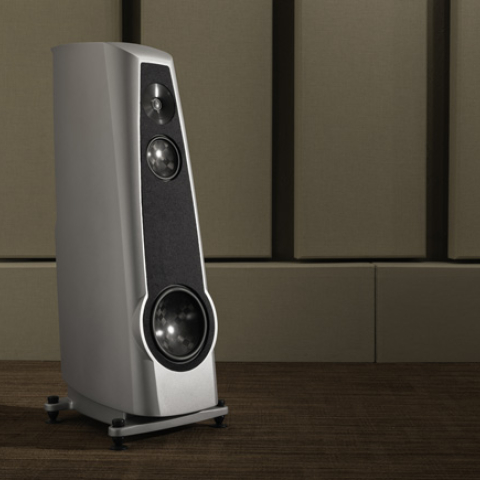
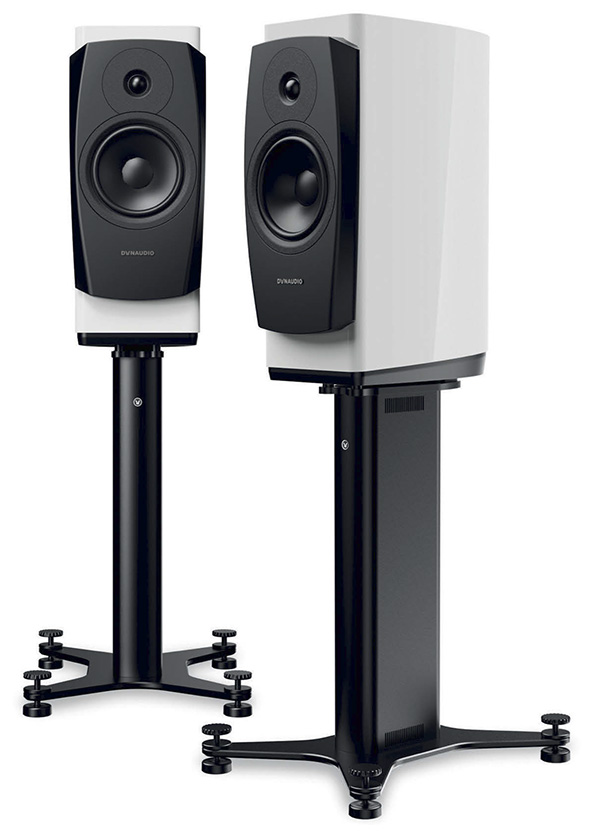
The 20A's are bookshelf speakers that won't fit on a shelf; or at least, that placement won't do you any good. Like the Grimm LS1c, which I reviewed in the April 2025 issue, they must be paired with bespoke stands—included in the $24,000/pair price—which contain the electronics that power them.
Think of these loudspeakers as larger, more capable cousins of the active Dynaudio Focus 10 ($5500/pair) reviewed by JVS in Stereophile three years ago. They certainly bear more than a passing resemblance to the passive Contour 20 Black Edition ($8000/pair) that JA recently assessed in these pages.
But their closest relation is the Confidence 20, without the A. The 20A is an active speaker that has the same cabinet dimensions as the 20 (20½" H × 91/8" W × 16¼"D) but with a bit more interior volume due to the removal of crossover components.
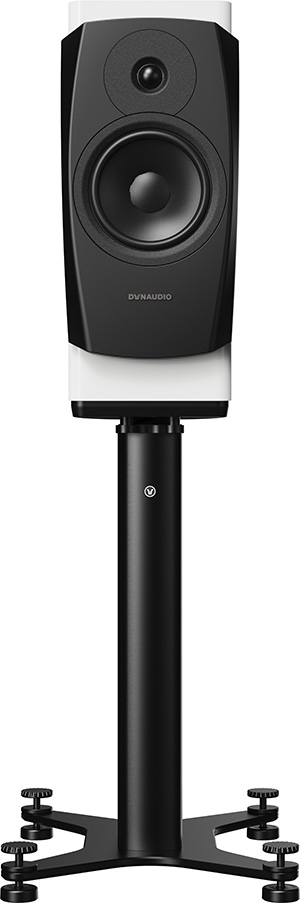 Apart from the dimensions, though, much has changed. Rather than blithely cramming electronics into Confidence 20 enclosures and calling it good, Dynaudio redesigned everything except the tweeter and the feet. The result is an active speaker system that's less an amplification project than a reimagining of what high-end active monitors can be.
The driver complement features Dynaudio's 1.1" Esotar3 soft-dome tweeter, whose enlarged rear chamber and optimized venting reduces resonance and back pressure on the diaphragm, resulting (we are told) in lower distortion, greater sensitivity, and cleaner integration with the woofer. Smack in the middle of the baffle sits a 7" NeoTec magnesium silicate polymer cone with a neodymium-magnet–based motor. The woofer features an aluminum voice coil wound on a glass-fiber former, for optimal stiffness.
The aluminum stands double as heatsinks for Pascal digital amplification, capable of sending 150W to the tweeter and an impressive 400W to the woofer; the woofer amps have 500W on tap but are limited by DSP to protect the drivers. Banishing the electronics from the enclosures is claimed to prevent cabinet resonances. It also adds considerable mass to the stands, improving stability and reducing vibrations.
Like Dynaudio itself, Pascal—see sidebar—is a Danish company. Pascal modules can deliver exceptionally high voltage rails combined with the ability to drive low impedance loads, providing massive power headroom. The technology is well-suited to active speaker applications where space is at a premium and thermal management is critical. That's the scenario Dynaudio faced with the Confidence 20A.
The digital crossover uses minimum-phase IIR filters designed to mimic the sonic character of well-executed passive crossovers—smooth rolloffs without the preringing artifacts that some digital filter designs introduce—while offering precision that analog components can't match. The crossover point sits at 2.5kHz, with time alignment between the drivers handled in the digital domain.
Apart from the dimensions, though, much has changed. Rather than blithely cramming electronics into Confidence 20 enclosures and calling it good, Dynaudio redesigned everything except the tweeter and the feet. The result is an active speaker system that's less an amplification project than a reimagining of what high-end active monitors can be.
The driver complement features Dynaudio's 1.1" Esotar3 soft-dome tweeter, whose enlarged rear chamber and optimized venting reduces resonance and back pressure on the diaphragm, resulting (we are told) in lower distortion, greater sensitivity, and cleaner integration with the woofer. Smack in the middle of the baffle sits a 7" NeoTec magnesium silicate polymer cone with a neodymium-magnet–based motor. The woofer features an aluminum voice coil wound on a glass-fiber former, for optimal stiffness.
The aluminum stands double as heatsinks for Pascal digital amplification, capable of sending 150W to the tweeter and an impressive 400W to the woofer; the woofer amps have 500W on tap but are limited by DSP to protect the drivers. Banishing the electronics from the enclosures is claimed to prevent cabinet resonances. It also adds considerable mass to the stands, improving stability and reducing vibrations.
Like Dynaudio itself, Pascal—see sidebar—is a Danish company. Pascal modules can deliver exceptionally high voltage rails combined with the ability to drive low impedance loads, providing massive power headroom. The technology is well-suited to active speaker applications where space is at a premium and thermal management is critical. That's the scenario Dynaudio faced with the Confidence 20A.
The digital crossover uses minimum-phase IIR filters designed to mimic the sonic character of well-executed passive crossovers—smooth rolloffs without the preringing artifacts that some digital filter designs introduce—while offering precision that analog components can't match. The crossover point sits at 2.5kHz, with time alignment between the drivers handled in the digital domain.
 It's a setup!
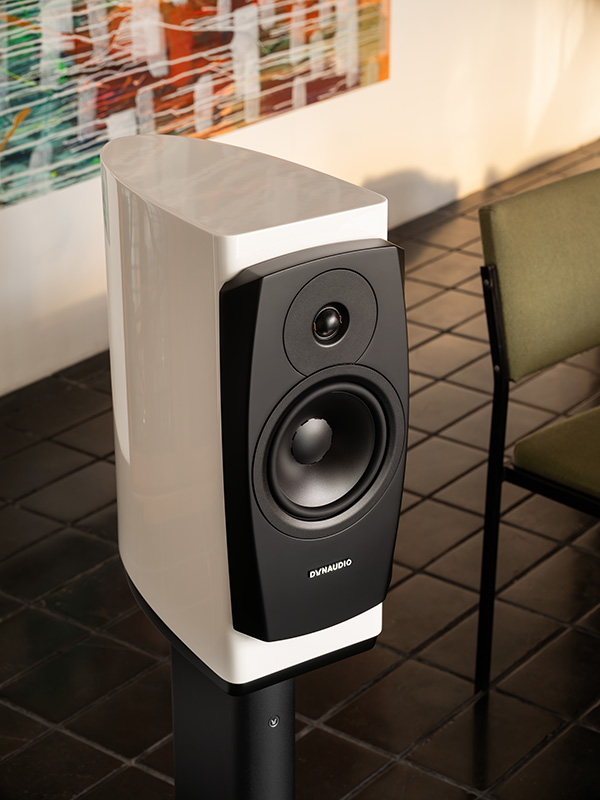
John Quick, Dynaudio's US VP of sales and marketing, kindly drove the five hours from Boston to midcoast Maine to deliver the speakers and set them up in my listening room. After a couple of hours of changing their positions by inches, then millimeters, he declared himself satisfied, and I couldn't disagree: The test tracks we played were enveloping and accurate. Head-bobbing and foot-tapping ensued. If it all fell short of nirvana, we could point the finger at FedEx: the AudioQuest AES3 interconnects that were sent from that company's California headquarters were still en route to my place. They would arrive two days after the promised delivery date. On the day of Quick's visit, we made do with analog microphone cables. Not bad, but I noticed that the vocals on Marc Cohn's "29 Ways," from his self-titled debut album (16/44.1 FLAC, Qobuz/Rhino), had become a bit grain-coated. Jitter? All the same, the system did well—and increasingly better—as day turned into night and its electronics warmed up. I ended my listening at 4am with a very fine (make that mesmerizing) recording: Love in Exile (24/96 FLAC, Trio/Qobuz) by singer Arooj Aftab, pianist Vijay Iyer, and bassist Shahzad Ismaily. Muscular-sounding and hard-driving yet good at fine detail, the Dynaudios left little on the table. The next morning, when daylight returned, I took a closer look. The 20A's I'd received were finished in "Space High Gloss," an Apple-reminiscent moniker that simply means gloss black. There's another color option, which Dynaudio calls "Snow High Gloss." If you guessed that it's white, you're half-right. "Two-tone" might be a better label: the cabinet itself is white, but the curved, protruding baffle (sculpted from Compex, a hardened foam) is matte black, as are the stands. Those stands are supported by outrigger feet with spikes or pads (you receive both). The tops of the stands are shaped to sonically complement the speakers' downfiring bass ports, though you can't see this once the speaker is permanently attached to its stands.
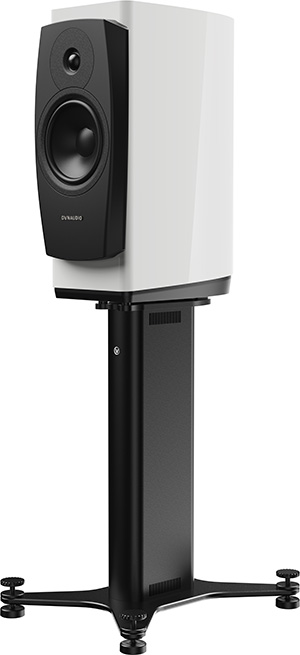 All connections are located on the bottom rear of each stand for floor-level wiring. There, you'll find single balanced analog and AES3 digital inputs on XLR connectors plus a digital output (also on AES3/XLR) to link the two speakers together—though this is only needed if your source has only one AES3 output. The USB-B port is for service only and doesn't allow a USB source to feed into the DAC stage. There's no built-in streamer and no app-based room correction. Dynaudio clearly expects the buyer to own, or be willing to buy, a high-quality source component with balanced outputs. I alternated between two players: the Grimm MU1 ($14,800, connected via AES3) and the Eversolo DMP-A10 ($3999, via balanced analog on XLR).
Above the connection ports, vertically mounted along the spine of each stand, are six control knobs. From the top, the first control is a left/right switch that lets the user assign the correct channel when using the digital input. The second is an analog sensitivity control with three settings (Low, Mid, High) to match speaker sensitivity to source output voltage. The third provides sound adjustment with three tone settings: Dark, Neutral, and Bright. I preferred Neutral with most music and Dark with certain '70s pop albums and early digital recordings. The fourth knob is a room-position control with three settings—Wall, Corner, and Free—to adjust for speaker placement near (or not near) room boundaries. The fifth knob offers sample rate conversion, which can be set to leave the source sample rate intact for the highest sound quality or to convert the files to enable gapless playback of tracks with different sample rates. The sixth and final control is a light switch that sets the illumination of the Y-shaped Dynaudio logo on the front of the stand to Off, On, or Dim. The light glows white during playback, flashes red if there's clipping at the analog input, pulses red rapidly if thermal protection is activated, and extinguishes itself after 20 minutes without a signal. I never saw it turn red.
The Confidence 20A is a bass-reflex design with a port that vents straight down into the attached stand. That port features Dynaudio's "Exponentially Shaped Dual Flared" (ESDF) port design with a shape claimed to virtually eliminate port noise and turbulence. While the passive Confidence 20 reaches down to 42Hz (–3dB), the active version extends bass response to 33Hz—a welcome 9Hz improvement that challenges the low-frequency capabilities of many floorstanders.
With the physical setup complete and the speakers in position, all that remained was getting the signal chain properly sorted. There, I hit a snag or two, as we'll see.
Cable guy
All connections are located on the bottom rear of each stand for floor-level wiring. There, you'll find single balanced analog and AES3 digital inputs on XLR connectors plus a digital output (also on AES3/XLR) to link the two speakers together—though this is only needed if your source has only one AES3 output. The USB-B port is for service only and doesn't allow a USB source to feed into the DAC stage. There's no built-in streamer and no app-based room correction. Dynaudio clearly expects the buyer to own, or be willing to buy, a high-quality source component with balanced outputs. I alternated between two players: the Grimm MU1 ($14,800, connected via AES3) and the Eversolo DMP-A10 ($3999, via balanced analog on XLR).
Above the connection ports, vertically mounted along the spine of each stand, are six control knobs. From the top, the first control is a left/right switch that lets the user assign the correct channel when using the digital input. The second is an analog sensitivity control with three settings (Low, Mid, High) to match speaker sensitivity to source output voltage. The third provides sound adjustment with three tone settings: Dark, Neutral, and Bright. I preferred Neutral with most music and Dark with certain '70s pop albums and early digital recordings. The fourth knob is a room-position control with three settings—Wall, Corner, and Free—to adjust for speaker placement near (or not near) room boundaries. The fifth knob offers sample rate conversion, which can be set to leave the source sample rate intact for the highest sound quality or to convert the files to enable gapless playback of tracks with different sample rates. The sixth and final control is a light switch that sets the illumination of the Y-shaped Dynaudio logo on the front of the stand to Off, On, or Dim. The light glows white during playback, flashes red if there's clipping at the analog input, pulses red rapidly if thermal protection is activated, and extinguishes itself after 20 minutes without a signal. I never saw it turn red.
The Confidence 20A is a bass-reflex design with a port that vents straight down into the attached stand. That port features Dynaudio's "Exponentially Shaped Dual Flared" (ESDF) port design with a shape claimed to virtually eliminate port noise and turbulence. While the passive Confidence 20 reaches down to 42Hz (–3dB), the active version extends bass response to 33Hz—a welcome 9Hz improvement that challenges the low-frequency capabilities of many floorstanders.
With the physical setup complete and the speakers in position, all that remained was getting the signal chain properly sorted. There, I hit a snag or two, as we'll see.
Cable guy
A day later, the AudioQuest package arrived: a pair of Black Beauty XLR interconnects, two Wild AES3 cables, and two Blizzard C13 power cables. Those 4m Wild digital interconnects retail for a whopping $13,000/pair, a sum that would've bought you a modest single-family house in circa 1960 (footnote 1); time marches on, along with inflation. I expected better performance vis-à-vis the generic mike cables—and I got it, clear as day. An AES3 cable is built as a 110 ohm balanced transmission line, which is important for carrying high-frequency digital data cleanly. Standard mike cables are designed for analog audio in the audible range and typically measure 40–50 ohms. Most simply can't preserve the fast signals needed for digital transmission. Things were looking up, but my champagne problems weren't over. After I connected the AudioQuest cables, I couldn't get the Eversolo A10 to cooperate with the Dynaudio 20A's. With the sonically and visually lovely AudioQuest Black Beauty XLRs ($2345 per 4m pair) running between the Eversolo and the Dynaudios, I could select the unit in Roon and fire up a track, but no music emanated from the speakers. When rebooting the speakers and the Eversolo didn't work, I called John Quick. He made quick work of the issue. "Do you have the digital cables connected from the Grimm as well as the analog XLRs from the Eversolo?" he asked. I did, and I told him so, beginning to feel sheepish. Quick explained that the speakers don't know when the user wants to switch from a digital signal to an analog one. When components are connected and switched on, the digital connection between them is always active, so the products are constantly performing a neurotic little are-you-still-there handshake. For the 20A's, this means that they can't auto-sense an analog source if a digital one is connected. It's necessary to physically disconnect the digital cables in order for the analog inputs to work. As soon as I did that, music flooded the room.
Depending on your source equipment, this may never be an issue. Both the Grimm MU1 and the Eversolo A10 are rich in rear-panel options. You can connect stereo components there (and a TV if you wish), and as long as you run cables from the outputs to the Dynaudio speakers, you're all set. But if you want to directly connect an analog source as well as a digital one, you're looking at two potential downsides.
First, there'll be six cords snaking along your floor—two power cables, two analog cables, and two digital ones. Second, there's no way to select the analog source without getting up and unplugging the two digital cables. A dedicated switch on the speakers could theoretically address this, but it would still require you to leave your chair and walk over to each one. It's arguably more elegant and convenient to have a small, simple remote control for just this purpose—to be able to switch inputs ... and adjust the volume. As it is, Dynaudio says that the 20A's must be paired to a source component that has a volume control. That's surely not a problem for most users, but yes, a clicker would be welcome. I said the same in my review of the Grimm LS1c.
 Sound judgment
I began my critical listening with XTC's "Easter Theater" from Apple Venus Volume 1 (16/44.1 FLAC, Qobuz/Cooking Vinyl) and soon thought I'd made a mistake with the cables. The backing vocal that sings "stage left" came from the right. A quick check on a different system confirmed that all was well: That vocal part is supposed to arrive from the audience's right, which means stage left. No idea why I'd never noticed the seeming contradiction before. Anyway, it's a sly theatrical reference, not a stereo wiring test. Andy Partridge being Andy Partridge, it's almost certainly intentional—a small audio wink (footnote 2).
I dove deeper into the band's brilliant catalog. On 1986's Skylarking (16/44.1 FLAC, Virgin/Qobuz), the opener, "Summer's Cauldron," is a joy in part because of the field noises—birds cheeping, crickets chirping, the faraway bark of a small dog, the buzzing of a fat fly. Then Partridge paints a word picture:
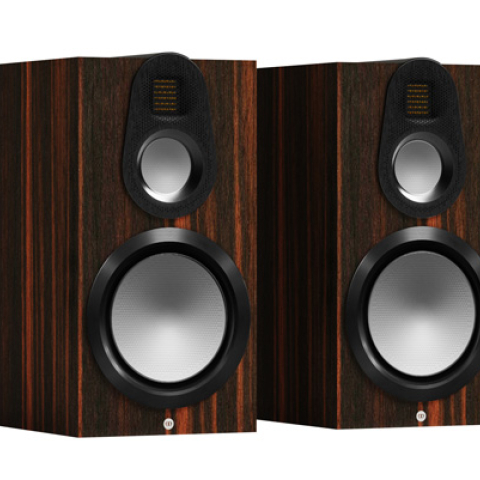
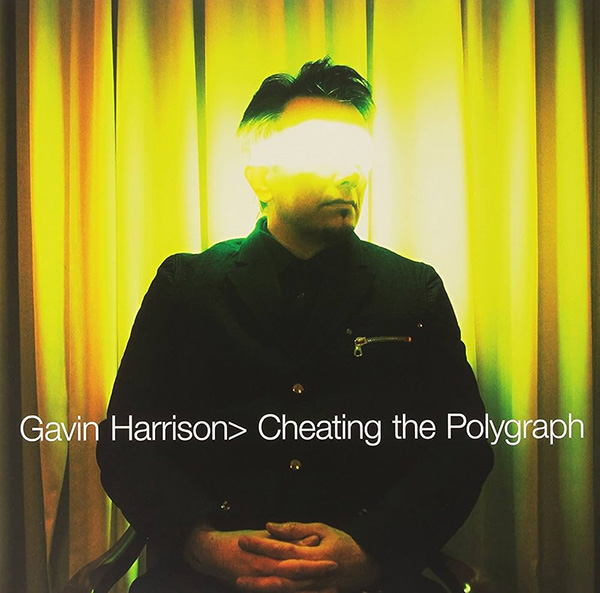
I never put much stock in PRaT (pace, rhythm, and timing) as a defining characteristic of an audio product, and don't believe I've ever used the term in a review. The 20A's made me reconsider. They're rhythmically prodigious, which I think is related to the DSP-controlled drivers' ability to start and stop on a dime, with no overhang. It could also be related to DSP-managed time-alignment. I heard it time and again, including on Gavin Harrison's title track from Cheating the Polygraph (16/44.1 FLAC, KScope/Qobuz), an intricately woven modern big-band outing with a prominent percussion part. Judged on timing ("the ability to swing," as Thomas Dolby might say), the Dynaudios easily outclassed a second setup I'd been listening to: the Monitor Audio Gold 100 6G standmounts driven by Quad 303 bridged mono amps and a Quad 33 preamp. (It's a combo that costs only about 40% of the Danish contenders, so the comparison isn't quite fair, but I had no other standmounts on hand.)
 On "Blackbird," from the Beatles' The Beatles (aka the White Album (24/96 FLAC, Universal/Qobuz), it's clear that Paul McCartney doubletracked his vocal, but I noticed for the first time that sometimes his stops don't match—listen at 1:23, when the d in the word "blackbird" comes a fraction later on one track than on the other.
Such were the pleasures of living with the Dynaudios. They delivered fresh insight and small revelations, new perspectives and recurring delights. They also reminded me how much great sound can elevate great music.
On the whole, the Esotar3 tweeters produced treble that was extended, airy, and free of glare. Cymbals had shimmer without tizz; string harmonics were finely rendered; sibilants didn't bite unless the bite was on the recording. Meanwhile, the woofer delivered an inviting, natural midrange: Voices came through in proportion, piano tone had weight without bloat, and dense mixes were untangled without strain. Bass extension reached into the 30Hz range with, yes indeed, confidence. This meant that acoustic bass, kickdrums, and deep synths carried real authority. In any case, it was easy to hear why the 20A's received the 2025–2026 EISA (European Imaging and Sound Association) Best Product award in the Active Loudspeaker category.
If I had to pinpoint one aspect of the Dynaudios that wasn't quite to my liking, it's that they introduced a slight metallic edge when I played music unreasonably loudly—especially recordings with many instruments—at least, that's what they did on the Gavin Harrison track I mentioned. The same was true for "Normal," a Porcupine Tree song off the Nil Recurring EP (16/44.1 FLAC, Qobuz/KScope). At extremish levels, I would've preferred a marginally more relaxed presentation, which I got when I went from 95–97dB at the listening position (yes, that's too loud; I don't recommend it for more than one or two tracks at a time) to 80–85dB. This is likely a DSP issue that could be resolved with a firmware update. I also got it by choosing the "Dark" tone-control setting.
On "Blackbird," from the Beatles' The Beatles (aka the White Album (24/96 FLAC, Universal/Qobuz), it's clear that Paul McCartney doubletracked his vocal, but I noticed for the first time that sometimes his stops don't match—listen at 1:23, when the d in the word "blackbird" comes a fraction later on one track than on the other.
Such were the pleasures of living with the Dynaudios. They delivered fresh insight and small revelations, new perspectives and recurring delights. They also reminded me how much great sound can elevate great music.
On the whole, the Esotar3 tweeters produced treble that was extended, airy, and free of glare. Cymbals had shimmer without tizz; string harmonics were finely rendered; sibilants didn't bite unless the bite was on the recording. Meanwhile, the woofer delivered an inviting, natural midrange: Voices came through in proportion, piano tone had weight without bloat, and dense mixes were untangled without strain. Bass extension reached into the 30Hz range with, yes indeed, confidence. This meant that acoustic bass, kickdrums, and deep synths carried real authority. In any case, it was easy to hear why the 20A's received the 2025–2026 EISA (European Imaging and Sound Association) Best Product award in the Active Loudspeaker category.
If I had to pinpoint one aspect of the Dynaudios that wasn't quite to my liking, it's that they introduced a slight metallic edge when I played music unreasonably loudly—especially recordings with many instruments—at least, that's what they did on the Gavin Harrison track I mentioned. The same was true for "Normal," a Porcupine Tree song off the Nil Recurring EP (16/44.1 FLAC, Qobuz/KScope). At extremish levels, I would've preferred a marginally more relaxed presentation, which I got when I went from 95–97dB at the listening position (yes, that's too loud; I don't recommend it for more than one or two tracks at a time) to 80–85dB. This is likely a DSP issue that could be resolved with a firmware update. I also got it by choosing the "Dark" tone-control setting.
 The roaring 20s
As I see it, the almost full-range, full-scale Confidence 20A's are meant for experienced audiophiles who want flagship driver technology in a smaller-than-usual footprint. They'll also appeal to owners who value integrated amplification and DSP correction, and customers who use balanced sources and prefer a system with fewer boxes and wires. You may well choose to give these Dynaudios a hard pass if you're on a restricted budget, want Roon and streaming capabilities built in, or love swapping tubes for fun.
Priced at $24k, the Confidence 20A's roared right into luxury territory when they were introduced a year ago. There, they compete with active offerings like Genelec's 8380A's ($20,500/pair) and Grimm Audio's LS1c's ($26,500/pair without integratable subwoofers). They're almost twice the cost of the passive Confidence 20s, but you're not just paying for amplification; you're paying for drivers and electronics carefully engineered to form a no-hassle, well-matched, unified system ... and maybe an end to the upgrade cycle.
If you see the audiophile journey as an end in itself, the 20A's will feel like surrender. But if you want to just press play and sink into the music, this is the kind of done-and-dusted, no-excuses solution that high-end audio has long promised but rarely delivered.
Footnote 1: The Dynaudios don't demand this level of cabling but have enough resolution to reveal what it brings.
Footnote 2:There's more where that came from. On XTC's "Beating of Hearts," off Mummer, there's a low synthesizer drone that follows the line "louder than bombers in flight," evoking the menace of an overhead bomber squadron. "Love on a Farmboy's Wages," from the same 1983 album, has an equivalent flourish: in the line "A shilling for the fellow who milks the herd," Partridge sings the last word with a subtle bovine lilt.
With the Confidence 20A, we see Dynaudio pulling out all the stops to create an end-game system for audiophiles tired of endless component chasing. Connect a source that has a volume control, digital or analog, and you're done. Skip the component matching and the cable anxiety.
Apart from the dimensions, though, much has changed. Rather than blithely cramming electronics into Confidence 20 enclosures and calling it good, Dynaudio redesigned everything except the tweeter and the feet. The result is an active speaker system that's less an amplification project than a reimagining of what high-end active monitors can be.
The driver complement features Dynaudio's 1.1" Esotar3 soft-dome tweeter, whose enlarged rear chamber and optimized venting reduces resonance and back pressure on the diaphragm, resulting (we are told) in lower distortion, greater sensitivity, and cleaner integration with the woofer. Smack in the middle of the baffle sits a 7" NeoTec magnesium silicate polymer cone with a neodymium-magnet–based motor. The woofer features an aluminum voice coil wound on a glass-fiber former, for optimal stiffness.
It's a setup!John Quick, Dynaudio's US VP of sales and marketing, kindly drove the five hours from Boston to midcoast Maine to deliver the speakers and set them up in my listening room. After a couple of hours of changing their positions by inches, then millimeters, he declared himself satisfied, and I couldn't disagree: The test tracks we played were enveloping and accurate. Head-bobbing and foot-tapping ensued. If it all fell short of nirvana, we could point the finger at FedEx: the AudioQuest AES3 interconnects that were sent from that company's California headquarters were still en route to my place. They would arrive two days after the promised delivery date. On the day of Quick's visit, we made do with analog microphone cables. Not bad, but I noticed that the vocals on Marc Cohn's "29 Ways," from his self-titled debut album (16/44.1 FLAC, Qobuz/Rhino), had become a bit grain-coated. Jitter? All the same, the system did well—and increasingly better—as day turned into night and its electronics warmed up. I ended my listening at 4am with a very fine (make that mesmerizing) recording: Love in Exile (24/96 FLAC, Trio/Qobuz) by singer Arooj Aftab, pianist Vijay Iyer, and bassist Shahzad Ismaily. Muscular-sounding and hard-driving yet good at fine detail, the Dynaudios left little on the table. The next morning, when daylight returned, I took a closer look. The 20A's I'd received were finished in "Space High Gloss," an Apple-reminiscent moniker that simply means gloss black. There's another color option, which Dynaudio calls "Snow High Gloss." If you guessed that it's white, you're half-right. "Two-tone" might be a better label: the cabinet itself is white, but the curved, protruding baffle (sculpted from Compex, a hardened foam) is matte black, as are the stands. Those stands are supported by outrigger feet with spikes or pads (you receive both). The tops of the stands are shaped to sonically complement the speakers' downfiring bass ports, though you can't see this once the speaker is permanently attached to its stands.
All connections are located on the bottom rear of each stand for floor-level wiring. There, you'll find single balanced analog and AES3 digital inputs on XLR connectors plus a digital output (also on AES3/XLR) to link the two speakers together—though this is only needed if your source has only one AES3 output. The USB-B port is for service only and doesn't allow a USB source to feed into the DAC stage. There's no built-in streamer and no app-based room correction. Dynaudio clearly expects the buyer to own, or be willing to buy, a high-quality source component with balanced outputs. I alternated between two players: the Grimm MU1 ($14,800, connected via AES3) and the Eversolo DMP-A10 ($3999, via balanced analog on XLR).
Above the connection ports, vertically mounted along the spine of each stand, are six control knobs. From the top, the first control is a left/right switch that lets the user assign the correct channel when using the digital input. The second is an analog sensitivity control with three settings (Low, Mid, High) to match speaker sensitivity to source output voltage. The third provides sound adjustment with three tone settings: Dark, Neutral, and Bright. I preferred Neutral with most music and Dark with certain '70s pop albums and early digital recordings. The fourth knob is a room-position control with three settings—Wall, Corner, and Free—to adjust for speaker placement near (or not near) room boundaries. The fifth knob offers sample rate conversion, which can be set to leave the source sample rate intact for the highest sound quality or to convert the files to enable gapless playback of tracks with different sample rates. The sixth and final control is a light switch that sets the illumination of the Y-shaped Dynaudio logo on the front of the stand to Off, On, or Dim. The light glows white during playback, flashes red if there's clipping at the analog input, pulses red rapidly if thermal protection is activated, and extinguishes itself after 20 minutes without a signal. I never saw it turn red.
The Confidence 20A is a bass-reflex design with a port that vents straight down into the attached stand. That port features Dynaudio's "Exponentially Shaped Dual Flared" (ESDF) port design with a shape claimed to virtually eliminate port noise and turbulence. While the passive Confidence 20 reaches down to 42Hz (–3dB), the active version extends bass response to 33Hz—a welcome 9Hz improvement that challenges the low-frequency capabilities of many floorstanders.
A day later, the AudioQuest package arrived: a pair of Black Beauty XLR interconnects, two Wild AES3 cables, and two Blizzard C13 power cables. Those 4m Wild digital interconnects retail for a whopping $13,000/pair, a sum that would've bought you a modest single-family house in circa 1960 (footnote 1); time marches on, along with inflation. I expected better performance vis-à-vis the generic mike cables—and I got it, clear as day. An AES3 cable is built as a 110 ohm balanced transmission line, which is important for carrying high-frequency digital data cleanly. Standard mike cables are designed for analog audio in the audible range and typically measure 40–50 ohms. Most simply can't preserve the fast signals needed for digital transmission. Things were looking up, but my champagne problems weren't over. After I connected the AudioQuest cables, I couldn't get the Eversolo A10 to cooperate with the Dynaudio 20A's. With the sonically and visually lovely AudioQuest Black Beauty XLRs ($2345 per 4m pair) running between the Eversolo and the Dynaudios, I could select the unit in Roon and fire up a track, but no music emanated from the speakers. When rebooting the speakers and the Eversolo didn't work, I called John Quick. He made quick work of the issue. "Do you have the digital cables connected from the Grimm as well as the analog XLRs from the Eversolo?" he asked. I did, and I told him so, beginning to feel sheepish. Quick explained that the speakers don't know when the user wants to switch from a digital signal to an analog one. When components are connected and switched on, the digital connection between them is always active, so the products are constantly performing a neurotic little are-you-still-there handshake. For the 20A's, this means that they can't auto-sense an analog source if a digital one is connected. It's necessary to physically disconnect the digital cables in order for the analog inputs to work. As soon as I did that, music flooded the room.
Sound judgmentI began my critical listening with XTC's "Easter Theater" from Apple Venus Volume 1 (16/44.1 FLAC, Qobuz/Cooking Vinyl) and soon thought I'd made a mistake with the cables. The backing vocal that sings "stage left" came from the right. A quick check on a different system confirmed that all was well: That vocal part is supposed to arrive from the audience's right, which means stage left. No idea why I'd never noticed the seeming contradiction before. Anyway, it's a sly theatrical reference, not a stereo wiring test. Andy Partridge being Andy Partridge, it's almost certainly intentional—a small audio wink (footnote 2).
Insect bomber Buddhist droningAnd suddenly there it was, conjured, present: the intoxicating brew of a sun-drenched day bursting with critters, all inviting me to take the plunge, to lazily join in the pleasure of ...
Copper chord of August's organ.
... floating round and round,I listened to the song, an old favorite, on a night when my house was covered in an early frost. But I could suddenly smell the verdant grass, the sunbaked soil, and the floral-touched breeze, and I felt a profound longing for the abundance of a hot August afternoon.
like a bug in brandy
in this big bronze cup.
On "Blackbird," from the Beatles' The Beatles (aka the White Album (24/96 FLAC, Universal/Qobuz), it's clear that Paul McCartney doubletracked his vocal, but I noticed for the first time that sometimes his stops don't match—listen at 1:23, when the d in the word "blackbird" comes a fraction later on one track than on the other.
Such were the pleasures of living with the Dynaudios. They delivered fresh insight and small revelations, new perspectives and recurring delights. They also reminded me how much great sound can elevate great music.
The roaring 20sAs I see it, the almost full-range, full-scale Confidence 20A's are meant for experienced audiophiles who want flagship driver technology in a smaller-than-usual footprint. They'll also appeal to owners who value integrated amplification and DSP correction, and customers who use balanced sources and prefer a system with fewer boxes and wires. You may well choose to give these Dynaudios a hard pass if you're on a restricted budget, want Roon and streaming capabilities built in, or love swapping tubes for fun.
Footnote 1: The Dynaudios don't demand this level of cabling but have enough resolution to reveal what it brings.