I can't remember which audio show it was at, but I do recall the circumstances and impression. Shortly after Dynaudio USA introduced the Octave Audio brand to US audiophiles, I caught my first brief listen to Octave equipment in an acoustically handicapped exhibit room. The sound was so flat and uninvolving that I summarily assumed that Octave manufactured mediocre solid state equipment. With that gross error—Octave's founder/ designer/president Andreas Hofmann, 68, greatly favors the sound of tubes over transistors and has, since 1977 (footnote 1), embraced the design philosophy of tubes for sound-relevant circuit parts and modern semiconductors for tube-circuit periphery—I crossed the company's products off my ever-burgeoning "Equipment to Review" list.
Though I doubt anyone needs proof that even well-intentioned critics can be, at times, obtuse dolts, the eyes in the back of my head wince as I recall my facile dismissal of Octave gear. What has helped those eyes relax is the deservedly glowing reviews I have since bestowed on Octave's former flagship, the Jubilee Mono SE tubed pentode push-pull mono power amplifier; the Octave MRE 220 SE pentode push-pull mono power amplifier; and the recently discontinued Jubilee hybrid preamplifier (footnote 2).
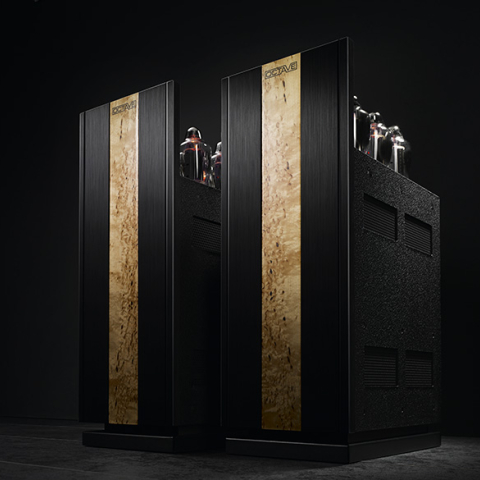
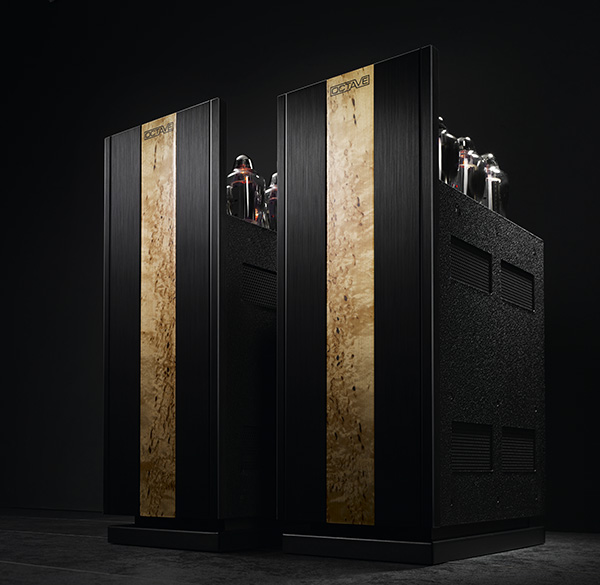
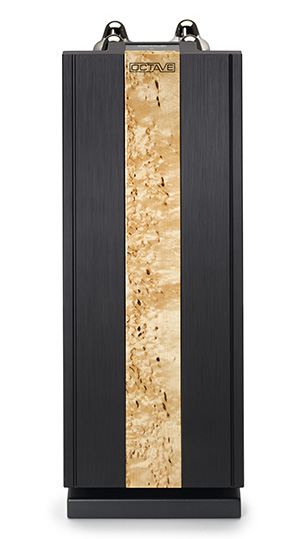
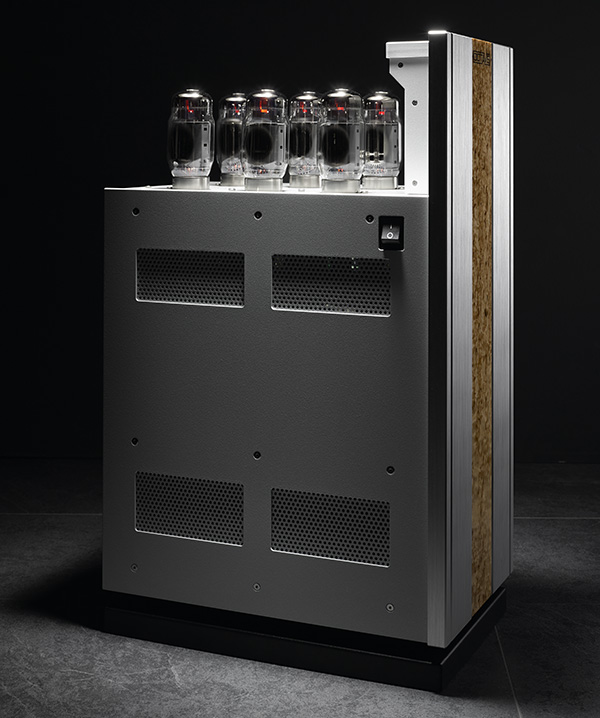
Now comes a first for Octave, the Jubilee Class A mono ($85,000/pair; footnote 3), a push-pull class-A monoblock with a self-regulating autobias pentode circuit that can also run in "high power" class-AB mode. Smaller and less powerful than the Jubilee Mono Ultimate ($142,500/pair), a 172.6lb, 29.13" tall KT170-based monolith capable of outputting 440W into 4 ohms, the Jubilee Class A monoblock weighs a more manageable 143lb, stands 25.2" tall, and uses KT120, KT150, or KT170 output tubes. It's also less powerful than the Jubilee Mono Ultimate, outputting a maximum of 160W class-A or 280W class-AB regardless of speaker impedance.
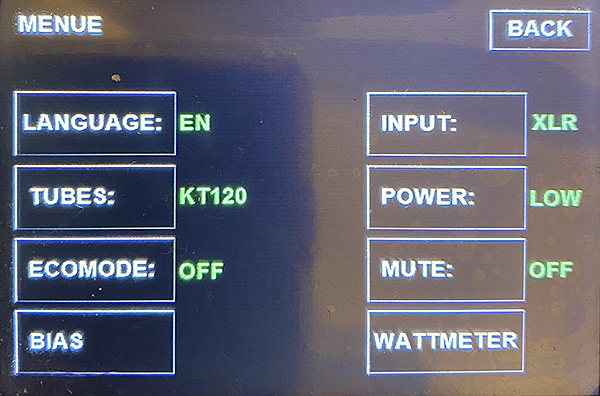
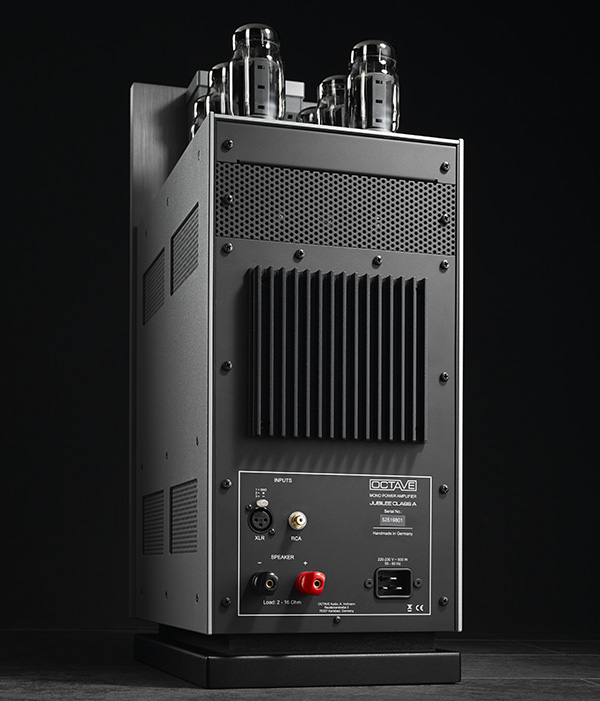
The Jubilee Class A includes a carefully designed, comprehensive electronic safety system and employs a soft-start sequence similar to that in many other amplifiers. Other important features include Eco Mode, which shortens warm-up time while saving electricity and tube life; a choice of six KT120, KT150, or KT170 for its output tubes; a new touchscreen control for amplifier status and diagnostics; selectable RCA and XLR inputs; speaker output terminals that accommodate both spades and bananas; and "ultra-wideband output transformer technology," with power and output transformers designed and manufactured in-house. Almost everything else in the amplifier is sourced within an hour's drive of the Octave Audio factory in Karlsbad, Germany.
After John Quick of Dynaudio USA and Gary Bruestle of Octave dealer Definitive Audio of Bellevue, Washington, set up the Jubilee Class A monos in my music room, I found them far easier and simpler to operate than the Jubilee Mono SE amps that had been here before. As noted above, all controls are easily accessible via a touchscreen on the amplifier's top, directly in front of the tubes. Switching between various settings is a cinch, and bias adjustment is automatic. With presets for tube types, there is no need to stand over a hot tower while adjusting bias. Even at the end of the review period (April 10), I only rarely needed to turn on the air conditioning. Then again, I live in Port Townsend, Washington, in a crow's eyesight of Victoria, BC, rather than in Texas, Florida, or Arizona.
As with the other Octave gear I've reviewed, I liked the Jubilee Class A monoblock's sound a helluva lot. But before I say more about the sound, it's best to share what I learned about the Jubilee Class A from talks with Quick and Hofmann at a product unveiling at Definitive Audio in Bellevue, Washington, on January 29, 2026, and less than two months later by Zoom.
 Insider insights
"My designs are ultrawide bandwidth," Hofmann said back in January. "There is no problem with ringing, and they are absolutely stable and compatible with all speakers and cables. The Jubilee Class A monoblock's design is so linear that it is not affected by the load. There is always a linear relationship between harmonics and distortion." Prior to the release of the Jubilee Class A monoblock, Hofmann only had one other push-pull class-A model in his line, the V70 Class A integrated. There were—and are—two single-ended class-A amps in the lineup—the Jubilee 300 B and the V 16—but the rest are class-AB amplifiers. "I like the sound of class-A in this circuit," Hofmann said at the start of a candid conversation remarkably devoid of sales pitches. "Push-pull has a lot of drive, is very speedy, has much more control, and can output a lot more power. But from the musical aspect, the Jubilee Class A monoblock has a very good natural sound. Some people may say that class-A is too soft, too warm, and lacks power and drive, but I consider the Jubilee Class A monoblock an amplifier for a real music lover. It's not a killer machine; it's an amplifier for people who don't need too much power, and who value musical- ity over all else."
Quick quickly clarified that one advantage of class-A amplification is that when it drives a loudspeaker, it uses all its energy to drive the loudspeaker load. "The reason class-A is not that popular is that in order to get real power out of it, you need a lot of output devices, and you generate a ton of heat," he said.
"In a classic class-A design, you cannot exceed the limits of the class-A bias setting, so most amplifiers fall in the class-AB category where they may be biased to a low class-A. If you set the Jubilee Class A to its 'high power' setting, it'll dissipate up to 50W in class-A as opposed to 160. From there, it regulates to its A/AB topology, where the current of its output devices can increase above the preset dissipation threshold, and 'high power' peaks up to 280W are possible."
Hofmann said that there are huge differences in power consumption from brand to brand and type to type. "In a push-pull design such as the Jubilee Class A, we don't have need for mandatory, extremely high idle current that puts off a lot of heat," he said. "That's why we've developed Eco Mode, which for KT120 tubes consumes only 40W as opposed to 550W in full class-A mode."
When Eco Mode is turned on, the amp operates normally until it receives no signal for nine minutes. At that point, all tubes, along with the high voltage needed to power them, are turned off while other key electronics are kept warm and engaged. This shortens warm-up time to at least a half-hour rather than a full hour or more.
 Though the Jubilee Class A monoblock can use three types of KT output tubes, Quick said that both he and Hofmann think that the 120 and 170 "best deliver the sound we think class-A should express." My review samples arrived with a choice of KT120s and KT170s, with KT150s omitted.
When asked what he considered the ideal class-A sound, Hofmann replied, "The class-A sound we seek has a little more body and a little more volume in the bass. Maybe it's a bit more rounded than class-AB, but it has a slightly more analog touch. Even its midrange delivers more body and emotion. Class-AB tends to be a little more direct and, depending upon the speaker, a little more aggressive. With a very good speaker that is fast and detailed, I prefer class-A.
"In the big push-pull Jubilee Ultimate, the KT170 produces a very, very precise and controlled sound with a little bit of warm character. But in a class-A design, there's really no need to use a tube that warms up the sound a little bit. In my opinion, the KT120 remains a very good tube that's very fast and natural. I actually prefer it in the Jubilee Class A mono, because we don't need a warm-sounding tube to make the amp sound better."
Though the Jubilee Class A monoblock can use three types of KT output tubes, Quick said that both he and Hofmann think that the 120 and 170 "best deliver the sound we think class-A should express." My review samples arrived with a choice of KT120s and KT170s, with KT150s omitted.
When asked what he considered the ideal class-A sound, Hofmann replied, "The class-A sound we seek has a little more body and a little more volume in the bass. Maybe it's a bit more rounded than class-AB, but it has a slightly more analog touch. Even its midrange delivers more body and emotion. Class-AB tends to be a little more direct and, depending upon the speaker, a little more aggressive. With a very good speaker that is fast and detailed, I prefer class-A.
"In the big push-pull Jubilee Ultimate, the KT170 produces a very, very precise and controlled sound with a little bit of warm character. But in a class-A design, there's really no need to use a tube that warms up the sound a little bit. In my opinion, the KT120 remains a very good tube that's very fast and natural. I actually prefer it in the Jubilee Class A mono, because we don't need a warm-sounding tube to make the amp sound better."
 The output transformer and more
The volume of bass produced by the Jubilee Class A mono is the result of a new type of output transformer, developed by Hofmann, that has higher efficiency, considerably less loss, and very wide frequency response. Developing this transformer required 10 prototypes and took quite some time. Quick noted that the higher-powered Jubilee Ultimate, which outputs 440W, is the real successor to the Mono SE I reviewed in 2022. "The big improvement between the old and new amplifiers can be heard in their clarity, resolution, power, and low frequencies. These advancements are substantially due to Andreas's new output transformer. After perfecting that transformer for the Jubilee Ultimate, Andreas scaled it back for the lower-powered Jubilee Class A."
"Making a big amplifier like the Jubilee is not that easy," Hofmann said. "It's a huge challenge that took me a long time. But the tower design best enables me to separate the amplifier's different stages. It gives me the perfect separation between the power supply, the output transformer, and the input stage."
Hofmann pays special attention to phase relationships. "The better you have the amplifier's phase under control—the less phase shift you have—the better the feedback works," he said. "With too much phase shift, there is delay between the bass and the high frequencies. I always look for ways to optimize feedback, because feedback is extremely important for speaker control. I feel I have found a very good way to implement feedback to enable the amplifier to drive big speakers with big woofers.
"I also use the best materials I can find. Even the same capacitor or resistor can sound different if manufactured in different production plants. I switched to caps from Roederstein, Germany, a few years ago, and I select the best. For resistors, I use Beyschlag, an old German company. They are now manufactured in the Czech Republic. In all cases, I have to listen and tell the salesman exactly what I want."
At conversation's end, Quick and Hofmann summarized their thoughts. "The Jubilee Class A costs less than the Jubilee Ultimate because it uses less copper and has a smaller optimized power supply that uses two mains transformers," Quick said. "In addition, the Jubilee Class A's external chassis parts are smaller, and the front-panel metalwork is thinner. A huge power supply isn't needed in class-A. Rather, what is requisite for the best class-A sound are a superior feedback circuit design and output transformer." To which Hofmann added, "I went with the class-A design because power is not everything. We need the best sound possible."
 Proceed
After the Octave Jubilee Class A towers easily fit on my undersized Grand Prix Monza amplifier stands, we abandoned any thoughts of putting Wilson Audio Pedestals beneath them. I'm not sure why. All I know for certain is that I enjoyed their airy, deep, controlled presentation so much that I never once felt a need to enhance it. Connecting a 20A power cable and XLR interconnects was a snap. So were the touchscreen settings, which control Eco Mode, muting, bias monitoring, an optional wattmeter display, language (German or English), input selection, tube choice, and "low power" (class-A) or "high power" (class-AB). Because no one who needs or wants the extra power of class-AB is going to plop down extra money for a class-A amplifier, I listened entirely in the "low power" setting optimized for class-A listening.
Switching in and out of Eco Mode was easy. So was switching the "Tubes" setting when we switched from KT170 to KT120. Although a manual had not been finalized by the end of the review period, I never felt the need to consult one once these options were explained.
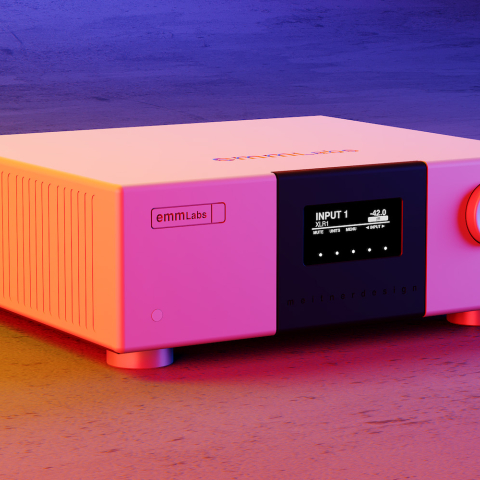
I had a choice of two preamplifiers: the fine solid state EMM Labs PREi I reviewed last month, and the same, freshly retubed (and freshly discontinued) Octave Jubilee preamp that I auditioned in the summer of 2025. The PREi was the most detailed and neutral of the two; the Octave preamp supplied more air, positioned the soundstage farther back, and added a lovely helping of warmth and ripeness to the sound. Which I preferred depended upon the music, my digestion, and the phase of the moon.
My initial listen with KT170 output tubes did not leave me overjoyed. Regardless of power output, I found their sound, in my system, rather flat and uninvolving. Since this isn't always the case with KT170s—the Audio Research 330M monoblocks, which sound wonderful, are built around KT170s—I can only assume that Hofmann optimized the Jubilee Class A for the KT120 sound he prefers. As you're about to read, that was fine with me.
 Play
Play
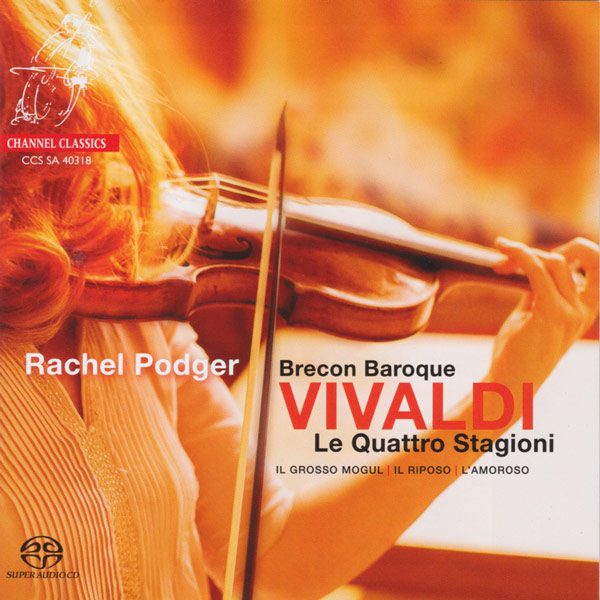
Two days after installation, when I was certain all cables had settled in, I took my first listen with my dear friend Anna Frank. The EMM Labs PREi was in play. When Anna requested Vivaldi's Four Seasons, I proposed a recording I hadn't heard in ages, Rachel Podger and Brecon Baroque's delightfully inventive period instrument version of Le Quattro Stagioni (DSD128, Channel Classics/download). My guess is that I haven't taken more than a casual listen to this recording since my DAC was a dCS Rossini rather than a Varèse, the amps and preamp were who knows, the streamer a Roon Nucleus+ rather than an Innuos Nazaré, the Wilson Alexia speakers one or two versions behind the Alexia V, my fiber network's SFP modules and power supplies several steps behind, and my all-important room treatment inadequate for a room that I'm convinced is cursed with diabolical dimensions. Oh my goodness, how much my system's sound has changed! Through the Octave Jubilee Class A monoblocks, every instrument was perfectly controlled, with every timbral source identifiable in a large soundstage. I especially enjoyed the strong bass foundation which grounded the performance and allowed sounds higher in the range to soar free. Podger and friends' improvised nature sounds were a joy, replete with the authentic instrument colors I know well from my times attending Philharmonia Baroque Orchestra concerts in the Bay Area. Of all the qualities that impressed—my initial assessment was "fabulous"—what swayed me most were the lack of coloration; the ability to hear everything on the recording, including the air conditioning; and the feel of the music. When Winter's Largo began—incongruous with air conditioning, I know—I swear I could "hear" the sound of falling snow. I don't recall being anywhere near as impressed with this recording when I reviewed it over eight years ago.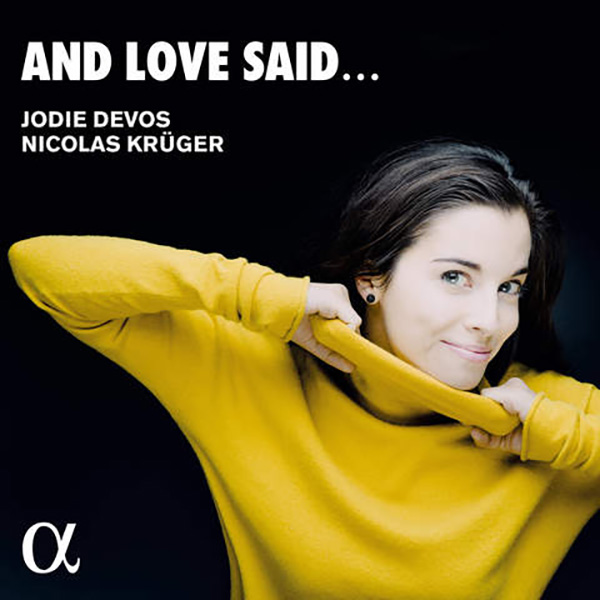 I began the next audition, accompanied by buddy Scott Campbell, with Jodie Devos's rendition of Freddie Mercury's "You Take My Breath Away" (24/96 WAV download, Alpha) from the album And Love Said... . When the song concluded, I said to Scott, "What else is there to say than 'gorgeous'?" Every detail, every small dynamic shift or expressive nuance I've ever heard from this recording was there, and the silence between notes supreme. When Scott next chose "How High the Moon" from the Modern Jazz Quartet's Pyramid (LP version) (16/44.1 FLAC, Rhino Atlantic/Qobuz), he offered similarly succinct commentary: "It's amazing!"
When we switched to the Octave Jubilee preamp, we investigated an optional setting, suggested by John Quick, and discovered that, with balanced interconnects, the Jubilee preamp sounded best with its interconnect toggle switch set to "unbalanced" (transformer off ). I would hope this shortcoming has been addressed by the new transformer in the recently released Jubilee Preamp SE (footnote 4). Regardless, Scott was in heaven. His reaction to hearing the Jubilee preamp once again made me feel like a stage master in a baroque opera theatre who, by pulling some cables behind the scenes, managed to "magically" elevate celestial Handelian sopranos to the heavenly spheres.
My next listens were to recordings I decided to review. First up, Lise Davidsen: Live at the Met (24/48 WAV, Decca/download; footnote 5). I can't say much for the engineering, which left the piano sounding flat and shallow and clearly limited in dynamics to avoid distortion through smartphone speakers and cheap earbuds, presumably. But the great Davidsen sounded glorious, especially in her range of colors and unusually warm, radiant, edgeless midrange. The plushness of her instrument may be ill-suited to Schubert lieder. Nor is narrowing her sound to a fine line (as many a great lieder singer and Italian spinto knows how to do) her forte. But what she can do well, the Octave Jubilee Class A monoblocks conveyed with beauty and truth to the source.
I began the next audition, accompanied by buddy Scott Campbell, with Jodie Devos's rendition of Freddie Mercury's "You Take My Breath Away" (24/96 WAV download, Alpha) from the album And Love Said... . When the song concluded, I said to Scott, "What else is there to say than 'gorgeous'?" Every detail, every small dynamic shift or expressive nuance I've ever heard from this recording was there, and the silence between notes supreme. When Scott next chose "How High the Moon" from the Modern Jazz Quartet's Pyramid (LP version) (16/44.1 FLAC, Rhino Atlantic/Qobuz), he offered similarly succinct commentary: "It's amazing!"
When we switched to the Octave Jubilee preamp, we investigated an optional setting, suggested by John Quick, and discovered that, with balanced interconnects, the Jubilee preamp sounded best with its interconnect toggle switch set to "unbalanced" (transformer off ). I would hope this shortcoming has been addressed by the new transformer in the recently released Jubilee Preamp SE (footnote 4). Regardless, Scott was in heaven. His reaction to hearing the Jubilee preamp once again made me feel like a stage master in a baroque opera theatre who, by pulling some cables behind the scenes, managed to "magically" elevate celestial Handelian sopranos to the heavenly spheres.
My next listens were to recordings I decided to review. First up, Lise Davidsen: Live at the Met (24/48 WAV, Decca/download; footnote 5). I can't say much for the engineering, which left the piano sounding flat and shallow and clearly limited in dynamics to avoid distortion through smartphone speakers and cheap earbuds, presumably. But the great Davidsen sounded glorious, especially in her range of colors and unusually warm, radiant, edgeless midrange. The plushness of her instrument may be ill-suited to Schubert lieder. Nor is narrowing her sound to a fine line (as many a great lieder singer and Italian spinto knows how to do) her forte. But what she can do well, the Octave Jubilee Class A monoblocks conveyed with beauty and truth to the source.
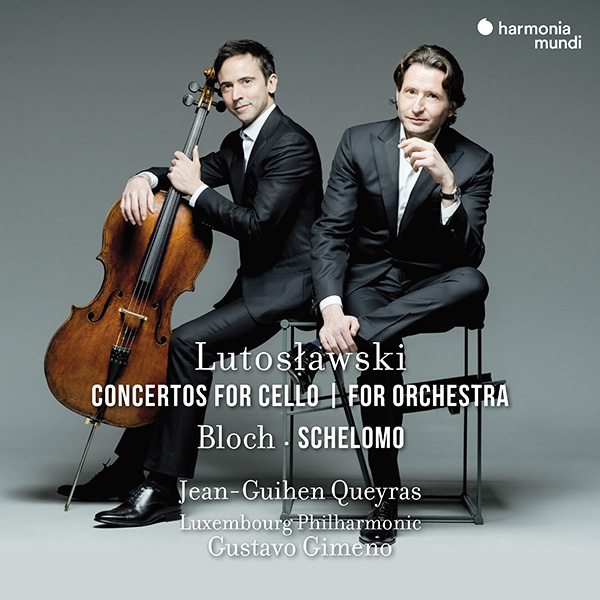 I've always wanted to review more Lutosławski for Stereophile, and the new recording, Lutosławski: Concertos for Cello for Orchestra • Bloch: Schelomo (24/96 WAV, Harmonia Mundi/download) from cellist Jean-Guihen Queyras and the Luxembourg Philharmonic, conducted by Gustavo Gimeno, gave me the opportunity. It also proved one mighty test for an amplifier. Transparency was excellent, lyrical flow transporting, and colors saturated and full. At sufficient volume, the soundstage was thrillingly large. The explosions, dissolution, frenetic energy, and poetic lamentation in these two pieces touched me deeply.
"The cello sounds as if it's dying," I wrote about Queyras's conclusion to Schelomo. Bass reproduction was excellent. Comparing how the Octave Jubilee Class A's sounded with the two different preamps, I noted that the PREi delivered sharper focus, but the Octave Jubilee's smooth polish, warmth, and bloom were hard to resist. Either way, the Jubilee Class A monoblocks sounded wonderful.
Somewhere in my explorations, I turned to another tried-and-true period instrument recording, Akademie für Alte Musik Berlin's most recent version of Bach's Brandenburg Concertos (24/192 WAV, Harmonia Mundi/download). Playing Concerto No.3 through the Octave Jubilee preamp, I was most impressed by the soundstage presentation, complete with realistic boundaries and resonance; the excellent air and depth; and, as you might expect, the arresting range of colors. Bravo!
I've always wanted to review more Lutosławski for Stereophile, and the new recording, Lutosławski: Concertos for Cello for Orchestra • Bloch: Schelomo (24/96 WAV, Harmonia Mundi/download) from cellist Jean-Guihen Queyras and the Luxembourg Philharmonic, conducted by Gustavo Gimeno, gave me the opportunity. It also proved one mighty test for an amplifier. Transparency was excellent, lyrical flow transporting, and colors saturated and full. At sufficient volume, the soundstage was thrillingly large. The explosions, dissolution, frenetic energy, and poetic lamentation in these two pieces touched me deeply.
"The cello sounds as if it's dying," I wrote about Queyras's conclusion to Schelomo. Bass reproduction was excellent. Comparing how the Octave Jubilee Class A's sounded with the two different preamps, I noted that the PREi delivered sharper focus, but the Octave Jubilee's smooth polish, warmth, and bloom were hard to resist. Either way, the Jubilee Class A monoblocks sounded wonderful.
Somewhere in my explorations, I turned to another tried-and-true period instrument recording, Akademie für Alte Musik Berlin's most recent version of Bach's Brandenburg Concertos (24/192 WAV, Harmonia Mundi/download). Playing Concerto No.3 through the Octave Jubilee preamp, I was most impressed by the soundstage presentation, complete with realistic boundaries and resonance; the excellent air and depth; and, as you might expect, the arresting range of colors. Bravo!
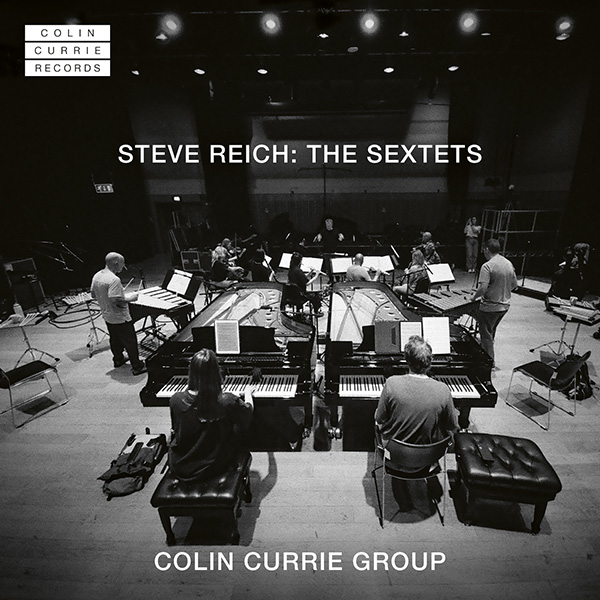 Next up, a new recording of Fauré: Sonatas for Violin and Piano Transcriptions from Kerson Leong and Jonathan Fournel (24/192 WAV, Alpha/download). Although the interpretations did not pass the ultimate Serinus Sniff Test, I could not help but be seduced by the fullness and warmth of Leong's low tones and his violin's gorgeous warmth higher up. Faring far better interpretation-wise was the joyful sound of percussion, from the Colin Currie Group, on Steve Reich: The Sextets (24/96 WAV, Colin Currie Records/download). Deep percussion sounded great, and instrumental colors were ideal. The subtlest of changes was easy to hear.
When audiophiles Rey Alvarado and Josh Kout paid a return visit to Serinusland, Josh requested Audioslave's "Getaway Car" (Album Version) (16/44.1 FLAC, Interscope Records/Qobuz). Through the EMM Labs PREi, Josh called it "a stunning experience; ... a thrilling journey through Chris Cornell's vocal prowess." Rey termed it "pretty saucy." From two seasoned audiophiles, this is high praise indeed. Score 10 for the Jubilee Class A's way with rock, at least on this track. It did equally well on tracks from Peter Gabriel and Leon Bridges.
Next up, a new recording of Fauré: Sonatas for Violin and Piano Transcriptions from Kerson Leong and Jonathan Fournel (24/192 WAV, Alpha/download). Although the interpretations did not pass the ultimate Serinus Sniff Test, I could not help but be seduced by the fullness and warmth of Leong's low tones and his violin's gorgeous warmth higher up. Faring far better interpretation-wise was the joyful sound of percussion, from the Colin Currie Group, on Steve Reich: The Sextets (24/96 WAV, Colin Currie Records/download). Deep percussion sounded great, and instrumental colors were ideal. The subtlest of changes was easy to hear.
When audiophiles Rey Alvarado and Josh Kout paid a return visit to Serinusland, Josh requested Audioslave's "Getaway Car" (Album Version) (16/44.1 FLAC, Interscope Records/Qobuz). Through the EMM Labs PREi, Josh called it "a stunning experience; ... a thrilling journey through Chris Cornell's vocal prowess." Rey termed it "pretty saucy." From two seasoned audiophiles, this is high praise indeed. Score 10 for the Jubilee Class A's way with rock, at least on this track. It did equally well on tracks from Peter Gabriel and Leon Bridges.
 Summing up
If asked to condense my thoughts about the Octave Jubilee Class A monoblock into a few words, they would be: Natural. Neutral. Open. Honest to the source. Precisely because a pair of these amplifiers does not editorialize, it sounds as beautiful, moving, and impactful as the music it helps reproduce. Other tube amps may sound more tube-like, in the stereotypical sense, but few I've heard are as direct-sounding and musical as the Octave Jubilee Class A. I loved how music sounded honest through it. If you love music as an end in itself—if you love music for the music's own sake—I can't imagine that you won't take to the Octave Jubilee Class A monoblocks as a dog takes to its favorite bone. Few that hear them will be willing to let them go.
Footnote 1: See octave.de/en/about-octave/history. Footnote 2: See octave.de/en/products/jubilee-line/jubilee-preamp-se. Footnote 3: See octave.de/en/products/jubilee-line/jubilee-class-a. Footnote 4: "SE" stands for "Second Edition." Footnote 5: See sfcv.org/articles/review/live-met-lisa-davidsens-voice-full-bloom.
Insider insights"My designs are ultrawide bandwidth," Hofmann said back in January. "There is no problem with ringing, and they are absolutely stable and compatible with all speakers and cables. The Jubilee Class A monoblock's design is so linear that it is not affected by the load. There is always a linear relationship between harmonics and distortion." Prior to the release of the Jubilee Class A monoblock, Hofmann only had one other push-pull class-A model in his line, the V70 Class A integrated. There were—and are—two single-ended class-A amps in the lineup—the Jubilee 300 B and the V 16—but the rest are class-AB amplifiers. "I like the sound of class-A in this circuit," Hofmann said at the start of a candid conversation remarkably devoid of sales pitches. "Push-pull has a lot of drive, is very speedy, has much more control, and can output a lot more power. But from the musical aspect, the Jubilee Class A monoblock has a very good natural sound. Some people may say that class-A is too soft, too warm, and lacks power and drive, but I consider the Jubilee Class A monoblock an amplifier for a real music lover. It's not a killer machine; it's an amplifier for people who don't need too much power, and who value musical- ity over all else."
Though the Jubilee Class A monoblock can use three types of KT output tubes, Quick said that both he and Hofmann think that the 120 and 170 "best deliver the sound we think class-A should express." My review samples arrived with a choice of KT120s and KT170s, with KT150s omitted.
When asked what he considered the ideal class-A sound, Hofmann replied, "The class-A sound we seek has a little more body and a little more volume in the bass. Maybe it's a bit more rounded than class-AB, but it has a slightly more analog touch. Even its midrange delivers more body and emotion. Class-AB tends to be a little more direct and, depending upon the speaker, a little more aggressive. With a very good speaker that is fast and detailed, I prefer class-A.
The output transformer and moreThe volume of bass produced by the Jubilee Class A mono is the result of a new type of output transformer, developed by Hofmann, that has higher efficiency, considerably less loss, and very wide frequency response. Developing this transformer required 10 prototypes and took quite some time. Quick noted that the higher-powered Jubilee Ultimate, which outputs 440W, is the real successor to the Mono SE I reviewed in 2022. "The big improvement between the old and new amplifiers can be heard in their clarity, resolution, power, and low frequencies. These advancements are substantially due to Andreas's new output transformer. After perfecting that transformer for the Jubilee Ultimate, Andreas scaled it back for the lower-powered Jubilee Class A."
ProceedAfter the Octave Jubilee Class A towers easily fit on my undersized Grand Prix Monza amplifier stands, we abandoned any thoughts of putting Wilson Audio Pedestals beneath them. I'm not sure why. All I know for certain is that I enjoyed their airy, deep, controlled presentation so much that I never once felt a need to enhance it. Connecting a 20A power cable and XLR interconnects was a snap. So were the touchscreen settings, which control Eco Mode, muting, bias monitoring, an optional wattmeter display, language (German or English), input selection, tube choice, and "low power" (class-A) or "high power" (class-AB). Because no one who needs or wants the extra power of class-AB is going to plop down extra money for a class-A amplifier, I listened entirely in the "low power" setting optimized for class-A listening.
PlayTwo days after installation, when I was certain all cables had settled in, I took my first listen with my dear friend Anna Frank. The EMM Labs PREi was in play. When Anna requested Vivaldi's Four Seasons, I proposed a recording I hadn't heard in ages, Rachel Podger and Brecon Baroque's delightfully inventive period instrument version of Le Quattro Stagioni (DSD128, Channel Classics/download). My guess is that I haven't taken more than a casual listen to this recording since my DAC was a dCS Rossini rather than a Varèse, the amps and preamp were who knows, the streamer a Roon Nucleus+ rather than an Innuos Nazaré, the Wilson Alexia speakers one or two versions behind the Alexia V, my fiber network's SFP modules and power supplies several steps behind, and my all-important room treatment inadequate for a room that I'm convinced is cursed with diabolical dimensions. Oh my goodness, how much my system's sound has changed! Through the Octave Jubilee Class A monoblocks, every instrument was perfectly controlled, with every timbral source identifiable in a large soundstage. I especially enjoyed the strong bass foundation which grounded the performance and allowed sounds higher in the range to soar free. Podger and friends' improvised nature sounds were a joy, replete with the authentic instrument colors I know well from my times attending Philharmonia Baroque Orchestra concerts in the Bay Area. Of all the qualities that impressed—my initial assessment was "fabulous"—what swayed me most were the lack of coloration; the ability to hear everything on the recording, including the air conditioning; and the feel of the music. When Winter's Largo began—incongruous with air conditioning, I know—I swear I could "hear" the sound of falling snow. I don't recall being anywhere near as impressed with this recording when I reviewed it over eight years ago.
I began the next audition, accompanied by buddy Scott Campbell, with Jodie Devos's rendition of Freddie Mercury's "You Take My Breath Away" (24/96 WAV download, Alpha) from the album And Love Said... . When the song concluded, I said to Scott, "What else is there to say than 'gorgeous'?" Every detail, every small dynamic shift or expressive nuance I've ever heard from this recording was there, and the silence between notes supreme. When Scott next chose "How High the Moon" from the Modern Jazz Quartet's Pyramid (LP version) (16/44.1 FLAC, Rhino Atlantic/Qobuz), he offered similarly succinct commentary: "It's amazing!"
I've always wanted to review more Lutosławski for Stereophile, and the new recording, Lutosławski: Concertos for Cello for Orchestra • Bloch: Schelomo (24/96 WAV, Harmonia Mundi/download) from cellist Jean-Guihen Queyras and the Luxembourg Philharmonic, conducted by Gustavo Gimeno, gave me the opportunity. It also proved one mighty test for an amplifier. Transparency was excellent, lyrical flow transporting, and colors saturated and full. At sufficient volume, the soundstage was thrillingly large. The explosions, dissolution, frenetic energy, and poetic lamentation in these two pieces touched me deeply.
Next up, a new recording of Fauré: Sonatas for Violin and Piano Transcriptions from Kerson Leong and Jonathan Fournel (24/192 WAV, Alpha/download). Although the interpretations did not pass the ultimate Serinus Sniff Test, I could not help but be seduced by the fullness and warmth of Leong's low tones and his violin's gorgeous warmth higher up. Faring far better interpretation-wise was the joyful sound of percussion, from the Colin Currie Group, on Steve Reich: The Sextets (24/96 WAV, Colin Currie Records/download). Deep percussion sounded great, and instrumental colors were ideal. The subtlest of changes was easy to hear.
Summing upIf asked to condense my thoughts about the Octave Jubilee Class A monoblock into a few words, they would be: Natural. Neutral. Open. Honest to the source. Precisely because a pair of these amplifiers does not editorialize, it sounds as beautiful, moving, and impactful as the music it helps reproduce. Other tube amps may sound more tube-like, in the stereotypical sense, but few I've heard are as direct-sounding and musical as the Octave Jubilee Class A. I loved how music sounded honest through it. If you love music as an end in itself—if you love music for the music's own sake—I can't imagine that you won't take to the Octave Jubilee Class A monoblocks as a dog takes to its favorite bone. Few that hear them will be willing to let them go.
Footnote 1: See octave.de/en/about-octave/history. Footnote 2: See octave.de/en/products/jubilee-line/jubilee-preamp-se. Footnote 3: See octave.de/en/products/jubilee-line/jubilee-class-a. Footnote 4: "SE" stands for "Second Edition." Footnote 5: See sfcv.org/articles/review/live-met-lisa-davidsens-voice-full-bloom.