In high-end audio, Italian designs play by different rules. They tend to favor beauty over austerity, boldness over caution, and emotion over restraint. Rather than just hearing the music, you're meant to be swept away by it. That spirit animates gear from Unison Research, a tube-focused company located just north of Venice. Founded in 1987 by Giovanni Maria Sacchetti, the brand was taken over in 2000 by audio entrepreneur Giovanni Nasta, who brought it under the umbrella of A.R.I.A. (footnote 1), the company that manufactures Opera loudspeakers.
Today, five years after Nasta's untimely death, his sons Bartolomeo and Riccardo helm the operation with their mother Donatella, building gear that feels both personal and ambitious. When I visited the A.R.I.A. facility a couple of years ago, it felt less like a factory than a craftsman's enclave. To a deadline-harried American, the pace seemed slow, but by the second and final day, I'd come to admire the patience and precision. Workers fussed over every curve and solder joint.
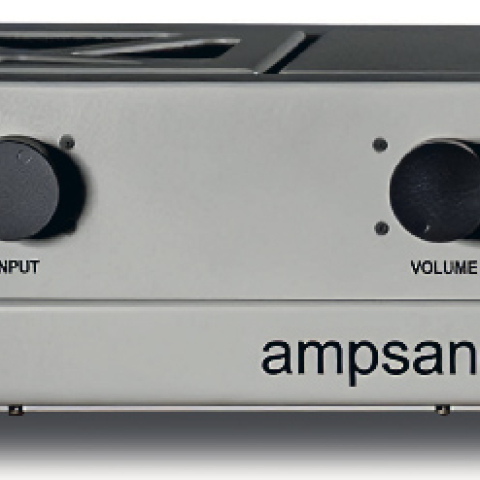
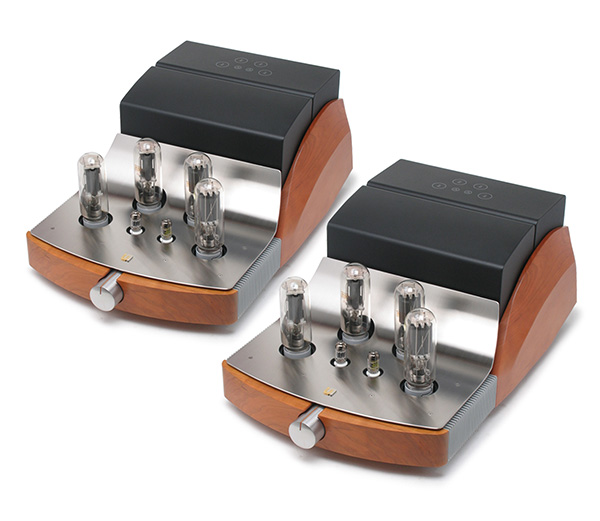
Unison's top-of-the-line components—the monoblock Reference amplifiers ($49,998/pair) and matching preamplifier ($24,999)—aren't objects you'd add to a system casually. They demand space, commitment, and probably a dolly. The monoblocks feel geologically dense, as if someone tried to forge a musical instrument with tectonic pressure. The flourishes of shiny metal, rich cherrywood, and high-end glass are half design showroom, half mad-scientist lab.
 The promise of high drama
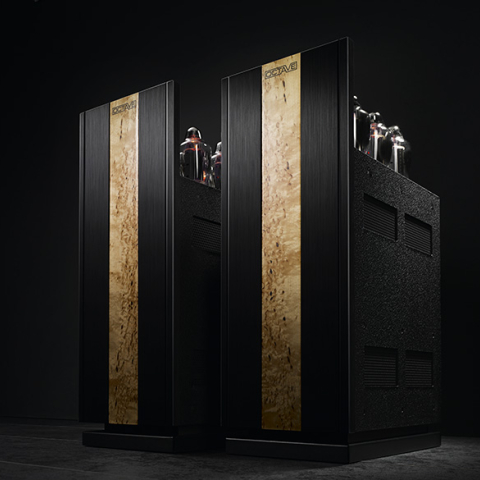
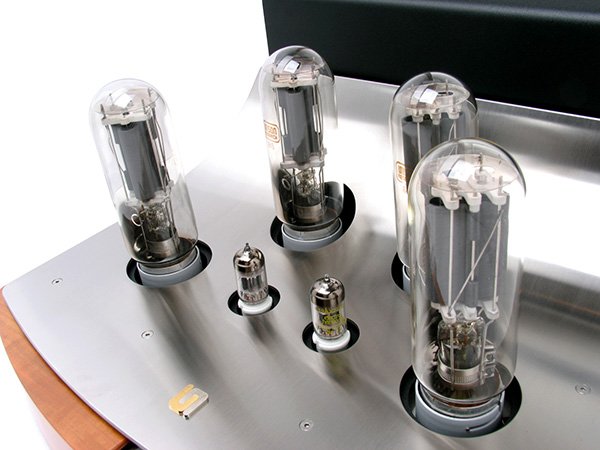
The first thing you notice about the Reference monoblocks are the tubes: four towering 845s in a half-circle surrounding and dwarfing the ECC82 and ECC83 in the middle. Even in a room full of gear, the 845s draw the eye. More than 7" tall, 845s radiate heat, light, and old-world authority. The smaller tubes quietly handle voltage gain and drive the big triodes. 845s aren't the most common valves, but they've long been favored by makers of exacting, high-drama amplifiers: Line Magnetic, Mastersound, Viva, Cary. Adding to the amps' nearly theatrical flair is their size and heft: Each 155lb Reference monoblock is a good 19" wide, more than 30" deep, and almost the height of a vinyl album. The combined draw for a pair is around 640W at idle. In my 4000ft3 room, even when the weather was chilly, the References generated enough heat to warm the place within a few hours. After a few hours more, the ceiling fan would be on high, and the dogs would seek out the far corners.
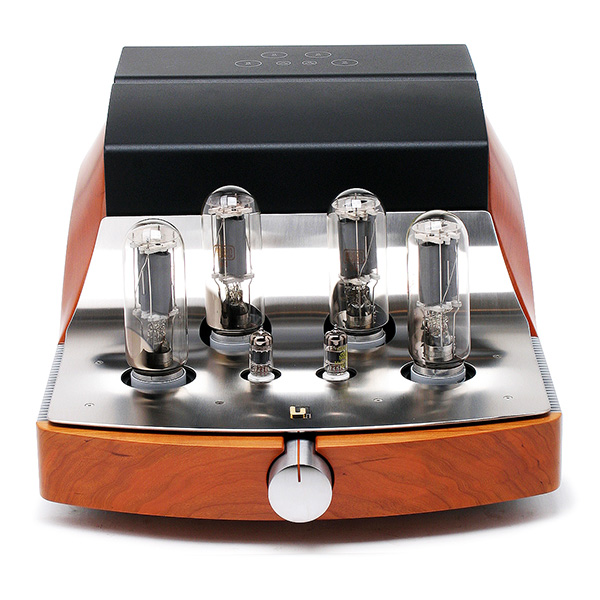 Each amplifier's formidable chassis features a polished-metal base plate that houses the vacuum tubes, and cherry side panels that add beauty and structural support. The wood also benefits sound quality, Unison Research says on its website, "by helping to dampen resonance in the metal chassis." The back half of the amplifier slopes dramatically upward from the metal plane, providing the housing for a large power supply, high-quality capacitors, and other unseen internals. On the black top of this housing is a silk-screened diagram indicating which of the six tubes should be inserted into which slot. By most accounts, 845 tubes will last 2500–5000 hours, or up to five years if you listen 20 hours a week. Replacing eight 845s with four matched pairs, at current prices, could set you back $4000–$6000 if you spring for premium Psvane Acme tubes, or more if you prefer sought-after NOS tubes in excellent condition.
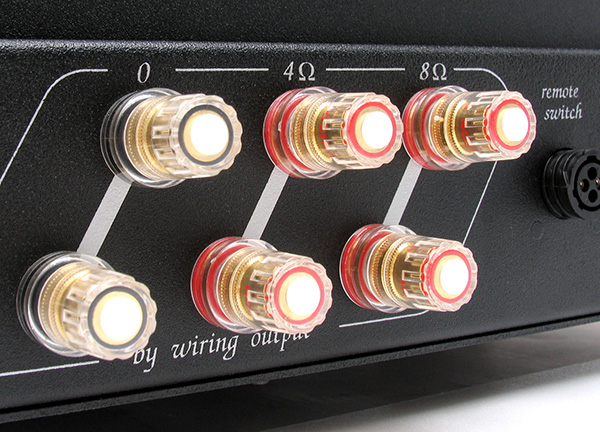 The rear panel has separate terminals for 4 ohm and 8 ohm speaker connections. I slightly preferred the 8 ohm tap with my reference Focal Scala Utopia Evos, and the 4 ohm one with the Estelon X Diamond Mk IIs. Unison Research doesn't get overly prescriptive here; the company advises to trust your ears and try both impedance options.
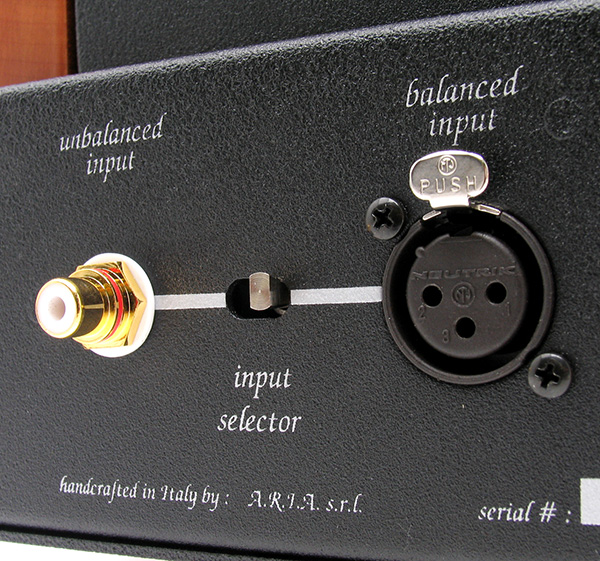
The matching Unison Research Reference preamplifier is intended to be connected with RCA cables, not XLRs. Unison expert Mike Hoatson, who owns the Listening Room dealership in Chestertown, Maryland, conferred with the Italian team, then relayed, "Single-ended sounds better in all their testing. It's what they recommend." So strong is the conviction that the Reference Pre is capable of running balanced that a user must really want it. In that case, the dealer will open the chassis and move some jumpers. "They offer an XLR option just in case you have a very long cable run."
It's different with the Unison Reference monoblocks. They are much easier to please. A rear-panel switch lets you select either balanced or unbalanced connections. To me, the balanced option sounded ever so slightly noisier, enough to notice but not enough to really matter. Regardless, I opted for AudioQuest Black Beauty RCA cables, both with the Reference Pre that I used about half the time and with the solid state Benchmark HPA4 line stage, one of my go-to components.
The rear panel has separate terminals for 4 ohm and 8 ohm speaker connections. I slightly preferred the 8 ohm tap with my reference Focal Scala Utopia Evos, and the 4 ohm one with the Estelon X Diamond Mk IIs. Unison Research doesn't get overly prescriptive here; the company advises to trust your ears and try both impedance options.
The matching Unison Research Reference preamplifier is intended to be connected with RCA cables, not XLRs. Unison expert Mike Hoatson, who owns the Listening Room dealership in Chestertown, Maryland, conferred with the Italian team, then relayed, "Single-ended sounds better in all their testing. It's what they recommend." So strong is the conviction that the Reference Pre is capable of running balanced that a user must really want it. In that case, the dealer will open the chassis and move some jumpers. "They offer an XLR option just in case you have a very long cable run."
It's different with the Unison Reference monoblocks. They are much easier to please. A rear-panel switch lets you select either balanced or unbalanced connections. To me, the balanced option sounded ever so slightly noisier, enough to notice but not enough to really matter. Regardless, I opted for AudioQuest Black Beauty RCA cables, both with the Reference Pre that I used about half the time and with the solid state Benchmark HPA4 line stage, one of my go-to components.
 Hoatson told me that the Reference monoblock's power supply is "obtained from two transformers. Each transformer has two high-voltage secondaries, and these four secondaries feed four power supplies connected in series to obtain a single power supply capable of delivering 1000V. In total, about 8000µF of capacitors are employed." Why four power supplies? Per Hoatson and Unison Research, "[T]he 845 valve is very sensitive to the heater filament voltage, [so] each individual [845] valve has its own dedicated power supply and an electronic circuit that adjusts the valve operating point to maintain maximum sonic performance over time."
Now listen here
Hoatson told me that the Reference monoblock's power supply is "obtained from two transformers. Each transformer has two high-voltage secondaries, and these four secondaries feed four power supplies connected in series to obtain a single power supply capable of delivering 1000V. In total, about 8000µF of capacitors are employed." Why four power supplies? Per Hoatson and Unison Research, "[T]he 845 valve is very sensitive to the heater filament voltage, [so] each individual [845] valve has its own dedicated power supply and an electronic circuit that adjusts the valve operating point to maintain maximum sonic performance over time."
Now listen here
The DIP switches on the back of the preamp let you select different impedance and gain settings for the built-in phono stage, to match your cartridge. Having kissed vinyl goodbye a couple of decades ago, I skipped that operation and auditioned the Unison amps with an entirely digital front-end. My sources included the Aurender A20 streamer, the Eversolo DMP-A10, and—hello, old friend—a Sony S9000ES SACD player I hadn't used in a dozen years. Why revive it? I wanted to listen to British pop band XTC's last two albums, Apple Venus and Wasp Star, and those 23 wonderful songs have been yo-yoing on and off hi-rez streaming services due to rights issues. When, recently, the albums vanished again, I was fed up and ordered the CDs online (footnote 2). That meant digging the Sony out of semiretirement.
 I was tickled by how refined this CD player sounded a quarter-century after I bought it (coincidentally, in the same year Wasp Star came out). But the biggest surprise was that the Sony's tray held a disc I hadn't seen in years and had given up for gone: Paquito D'Rivera's Portraits of Cuba. That Red Book CD was a joy in all respects. The cowbell on the title track is very nearly there in your room, 4' from the front edge of the virtual stage and slightly right of center. (I seconded the "More cowbell!" plea.) The recording is one of the best I've heard for that kind of holographic accuracy. There's also little or no compression. In fact, the dynamic range alone is enough to add Portraits of Cuba to your favorites. Then, of course, there's the performance itself. It is, as my kids would say, fire. D'Rivera's self-assured band reaches a state so fluid that the music feels less played than poured. Note-taking is hard during such foot-tapping good times. I felt like a stenographer at a hoedown.
Later, on the Aurender player, I cued up Concerto in One Movement, written for piano and tuba by Alexey Lebedev and performed by Stefan Schulz on bass trombone and Tomoko Sawano on piano. It's a highlight from their terrific Berlin Recital album (16/44.1 FLAC, BIS/Tidal). I don't usually think of a tuba (or a bass trombone) as a lyrical instrument—not as much as a violin or a piano anyway—but soon Schulz's horn hovered at the edge of ecstasy, almost sentient, almost alive. It's a thoroughly modern piece, thanks in part to the Stravinsky-esque small percussion. The Unison monoblocks gave the instruments the space they needed. All sounded lush but not overripe.
I was tickled by how refined this CD player sounded a quarter-century after I bought it (coincidentally, in the same year Wasp Star came out). But the biggest surprise was that the Sony's tray held a disc I hadn't seen in years and had given up for gone: Paquito D'Rivera's Portraits of Cuba. That Red Book CD was a joy in all respects. The cowbell on the title track is very nearly there in your room, 4' from the front edge of the virtual stage and slightly right of center. (I seconded the "More cowbell!" plea.) The recording is one of the best I've heard for that kind of holographic accuracy. There's also little or no compression. In fact, the dynamic range alone is enough to add Portraits of Cuba to your favorites. Then, of course, there's the performance itself. It is, as my kids would say, fire. D'Rivera's self-assured band reaches a state so fluid that the music feels less played than poured. Note-taking is hard during such foot-tapping good times. I felt like a stenographer at a hoedown.
Later, on the Aurender player, I cued up Concerto in One Movement, written for piano and tuba by Alexey Lebedev and performed by Stefan Schulz on bass trombone and Tomoko Sawano on piano. It's a highlight from their terrific Berlin Recital album (16/44.1 FLAC, BIS/Tidal). I don't usually think of a tuba (or a bass trombone) as a lyrical instrument—not as much as a violin or a piano anyway—but soon Schulz's horn hovered at the edge of ecstasy, almost sentient, almost alive. It's a thoroughly modern piece, thanks in part to the Stravinsky-esque small percussion. The Unison monoblocks gave the instruments the space they needed. All sounded lush but not overripe.
 Next on the playlist was the equally transporting "If," a song by L.A. band Unloved, off the album Heartbreak (16/44.1 FLAC, Heavenly/Qobuz). It sounded like sacred music due to the big, gothy church acoustics. (The reverb is probably fake, but it feels ecclesiastical all the same.)
The Unison-fed Focal Scalas captured every nuance of The Last Will and Testament, Opeth's latest (and career-best) album (24/96 FLAC, Moderbolaget/Qobuz): dense, layered prog rock with a death-metal bent. A lot of tube amps seem built to extract the best from the latest reissue of "Take Five" or Kind of Blue. The References are a damn sight more agnostic. They provide a clear, involving conduit to the music of Billy Strings and Billie Holiday; Motown and Mogwai; Charlie Parker and CharlestheFirst.
Next on the playlist was the equally transporting "If," a song by L.A. band Unloved, off the album Heartbreak (16/44.1 FLAC, Heavenly/Qobuz). It sounded like sacred music due to the big, gothy church acoustics. (The reverb is probably fake, but it feels ecclesiastical all the same.)
The Unison-fed Focal Scalas captured every nuance of The Last Will and Testament, Opeth's latest (and career-best) album (24/96 FLAC, Moderbolaget/Qobuz): dense, layered prog rock with a death-metal bent. A lot of tube amps seem built to extract the best from the latest reissue of "Take Five" or Kind of Blue. The References are a damn sight more agnostic. They provide a clear, involving conduit to the music of Billy Strings and Billie Holiday; Motown and Mogwai; Charlie Parker and CharlestheFirst.
 "Poison Moon," from Elvis Costello's Unfaithful Music & Soundtrack Album (CD, Ume B0023881-02), is a stripped-down acoustic piece with an odd mixing choice: The vocals are hard-panned to the left, the softly strummed guitar to the right. It didn't matter; the voice stopped me cold. Something about the Unisons' rendering made it feel less stylized, more emotionally bare, as if the production veil had thinned.
The heavy tom work on "Watching the Detectives" (off My Aim Is True, Costello's debut, 16/44.1 FLAC, Stiff/Qobuz) was another unexpected pleasure. I'd always thought of both the songwriting and the sound on this album as tense and prickly. Yet, with the Scala speakers and the big Unison amps, the album hit hard: tight, thunderous, together. No complaints.
On Costello's "When I Was Cruel," from the album of the same name (16/44.1 FLAC, Island Mercury/Qobuz), the bass seemed a little too loose, with the Unisons giving up some of their grip. I heard it again on "Objects Outlive Us," the opener from Steven Wilson's The Overview (24/96 FLAC, Kscope/Qobuz). Those were two of the rare moments during the 10-week evaluation period when the lowest notes lingered just a little too long.
For a few days, the Unison Research monoblocks overlapped in my listening room with the Pathos InPoL Legacy hybrid amplifier I reviewed in the July issue, so I did some A/B listening. Though the Pathos is a single-chassis hybrid integrated, it shares the Unison monoblocks' Italian origin and class-A topology. The pair of Unison Research amps ($24,999 each) is close in price to the $55,000 Pathos. It seemed like a fair enough comparison.
"Poison Moon," from Elvis Costello's Unfaithful Music & Soundtrack Album (CD, Ume B0023881-02), is a stripped-down acoustic piece with an odd mixing choice: The vocals are hard-panned to the left, the softly strummed guitar to the right. It didn't matter; the voice stopped me cold. Something about the Unisons' rendering made it feel less stylized, more emotionally bare, as if the production veil had thinned.
The heavy tom work on "Watching the Detectives" (off My Aim Is True, Costello's debut, 16/44.1 FLAC, Stiff/Qobuz) was another unexpected pleasure. I'd always thought of both the songwriting and the sound on this album as tense and prickly. Yet, with the Scala speakers and the big Unison amps, the album hit hard: tight, thunderous, together. No complaints.
On Costello's "When I Was Cruel," from the album of the same name (16/44.1 FLAC, Island Mercury/Qobuz), the bass seemed a little too loose, with the Unisons giving up some of their grip. I heard it again on "Objects Outlive Us," the opener from Steven Wilson's The Overview (24/96 FLAC, Kscope/Qobuz). Those were two of the rare moments during the 10-week evaluation period when the lowest notes lingered just a little too long.
For a few days, the Unison Research monoblocks overlapped in my listening room with the Pathos InPoL Legacy hybrid amplifier I reviewed in the July issue, so I did some A/B listening. Though the Pathos is a single-chassis hybrid integrated, it shares the Unison monoblocks' Italian origin and class-A topology. The pair of Unison Research amps ($24,999 each) is close in price to the $55,000 Pathos. It seemed like a fair enough comparison.
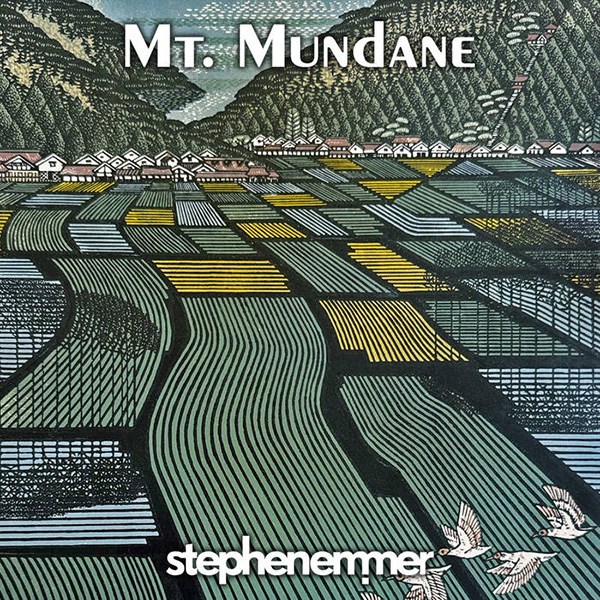 First up: Mt. Mundane, a moving 2024 album by pianist and composer Stephen Emmer, recorded in London's Abbey Road Studios with a 60-piece orchestra (24/96 FLAC, Electric Fairytale/Qobuz). Emmer's years-long, virulent tinnitus nearly broke him mentally, but he responded the way great artists do: by persisting, overcoming, and using the ordeal as inspiration. His latest record, surprisingly upbeat and lyrical, blends orchestral pop and neo-classical influences from Johnny Mercer to Claude Debussy.
After some time with the shamefully underappreciated Emmer album, I understood that the Unison separates delivered a slightly fuller sound through the midrange than the Pathos integrated. With the Unison amps, instruments occupied the space between the speakers in a way that made me think of an impressionist painting, where verve and feeling, by choice, take precedence over exacting precision. On the same passages, the Pathos InPoL amp bent scrupulously toward realism. Voices and instruments through the Unison Reference amps were often more involving and subjectively pleasing, at least at first, at some cost in image separation and spatial realism. This was evident on "Elephants Never Forget," off British prog-metal band Haken's album Fauna (24/96 FLAC, InsideOutMusic/Qobuz). It's a brilliant pastiche of Queen and Gentle Giant, opening like a lost track from A Night at the Opera then giving way to the twitchy funk and odd meters of mid-'70s art rock. For separation I'd give the nod to the Pathos, but the Unison Research pair won me over for emotional pull.
These small distinctions emerged through close A/B comparisons over short stretches—minutes, an hour at most. I doubt I could have reliably identified one amp or the other in blind tests spaced a day apart.
First up: Mt. Mundane, a moving 2024 album by pianist and composer Stephen Emmer, recorded in London's Abbey Road Studios with a 60-piece orchestra (24/96 FLAC, Electric Fairytale/Qobuz). Emmer's years-long, virulent tinnitus nearly broke him mentally, but he responded the way great artists do: by persisting, overcoming, and using the ordeal as inspiration. His latest record, surprisingly upbeat and lyrical, blends orchestral pop and neo-classical influences from Johnny Mercer to Claude Debussy.
After some time with the shamefully underappreciated Emmer album, I understood that the Unison separates delivered a slightly fuller sound through the midrange than the Pathos integrated. With the Unison amps, instruments occupied the space between the speakers in a way that made me think of an impressionist painting, where verve and feeling, by choice, take precedence over exacting precision. On the same passages, the Pathos InPoL amp bent scrupulously toward realism. Voices and instruments through the Unison Reference amps were often more involving and subjectively pleasing, at least at first, at some cost in image separation and spatial realism. This was evident on "Elephants Never Forget," off British prog-metal band Haken's album Fauna (24/96 FLAC, InsideOutMusic/Qobuz). It's a brilliant pastiche of Queen and Gentle Giant, opening like a lost track from A Night at the Opera then giving way to the twitchy funk and odd meters of mid-'70s art rock. For separation I'd give the nod to the Pathos, but the Unison Research pair won me over for emotional pull.
These small distinctions emerged through close A/B comparisons over short stretches—minutes, an hour at most. I doubt I could have reliably identified one amp or the other in blind tests spaced a day apart.
 Bravo, Bravissimo!
Unison Research says on its website, "From design to electronics, our production is completely and proudly made in Italy. The result is [something that] experts now define as an Italian sound."
If an Italian sound exists, I gather it isn't an engineering spec but a sensibility. Where most gear aims to get out of the way of the music, boutique hi-fi from Italy participates in it. It isn't neutral in the strictest sense. For many, it's more human.
Sonically, the 845s occupy their own terrain. They don't punch like KT150s or dazzle with immediacy. Instead, they bloom. They stretch space, thicken tone, and draw you in with an unhurried, dimensional ease. They flesh out the harmonic body of a note and let its decay hang in the air without collapsing the structure around it. The Unison Reference amplifiers make full use of that character.
Are they worth the price? How attached are you to your second kidney?
When everything settles and the mind calms, what's left is music: vivid, beautiful, whole, and rendered with uncommon care. The Unison Reference amplifiers turn spending into savoring, and savor them I did.
Footnote 1: The acronym stands for Advanced Research in Audio. Footnote 2: I suppose the band's ploy worked!
The promise of high dramaThe first thing you notice about the Reference monoblocks are the tubes: four towering 845s in a half-circle surrounding and dwarfing the ECC82 and ECC83 in the middle. Even in a room full of gear, the 845s draw the eye. More than 7" tall, 845s radiate heat, light, and old-world authority. The smaller tubes quietly handle voltage gain and drive the big triodes. 845s aren't the most common valves, but they've long been favored by makers of exacting, high-drama amplifiers: Line Magnetic, Mastersound, Viva, Cary. Adding to the amps' nearly theatrical flair is their size and heft: Each 155lb Reference monoblock is a good 19" wide, more than 30" deep, and almost the height of a vinyl album. The combined draw for a pair is around 640W at idle. In my 4000ft3 room, even when the weather was chilly, the References generated enough heat to warm the place within a few hours. After a few hours more, the ceiling fan would be on high, and the dogs would seek out the far corners.
Each amplifier's formidable chassis features a polished-metal base plate that houses the vacuum tubes, and cherry side panels that add beauty and structural support. The wood also benefits sound quality, Unison Research says on its website, "by helping to dampen resonance in the metal chassis." The back half of the amplifier slopes dramatically upward from the metal plane, providing the housing for a large power supply, high-quality capacitors, and other unseen internals. On the black top of this housing is a silk-screened diagram indicating which of the six tubes should be inserted into which slot. By most accounts, 845 tubes will last 2500–5000 hours, or up to five years if you listen 20 hours a week. Replacing eight 845s with four matched pairs, at current prices, could set you back $4000–$6000 if you spring for premium Psvane Acme tubes, or more if you prefer sought-after NOS tubes in excellent condition.
The rear panel has separate terminals for 4 ohm and 8 ohm speaker connections. I slightly preferred the 8 ohm tap with my reference Focal Scala Utopia Evos, and the 4 ohm one with the Estelon X Diamond Mk IIs. Unison Research doesn't get overly prescriptive here; the company advises to trust your ears and try both impedance options.
The matching Unison Research Reference preamplifier is intended to be connected with RCA cables, not XLRs. Unison expert Mike Hoatson, who owns the Listening Room dealership in Chestertown, Maryland, conferred with the Italian team, then relayed, "Single-ended sounds better in all their testing. It's what they recommend." So strong is the conviction that the Reference Pre is capable of running balanced that a user must really want it. In that case, the dealer will open the chassis and move some jumpers. "They offer an XLR option just in case you have a very long cable run."
Hoatson told me that the Reference monoblock's power supply is "obtained from two transformers. Each transformer has two high-voltage secondaries, and these four secondaries feed four power supplies connected in series to obtain a single power supply capable of delivering 1000V. In total, about 8000µF of capacitors are employed." Why four power supplies? Per Hoatson and Unison Research, "[T]he 845 valve is very sensitive to the heater filament voltage, [so] each individual [845] valve has its own dedicated power supply and an electronic circuit that adjusts the valve operating point to maintain maximum sonic performance over time."
Now listen hereThe DIP switches on the back of the preamp let you select different impedance and gain settings for the built-in phono stage, to match your cartridge. Having kissed vinyl goodbye a couple of decades ago, I skipped that operation and auditioned the Unison amps with an entirely digital front-end. My sources included the Aurender A20 streamer, the Eversolo DMP-A10, and—hello, old friend—a Sony S9000ES SACD player I hadn't used in a dozen years. Why revive it? I wanted to listen to British pop band XTC's last two albums, Apple Venus and Wasp Star, and those 23 wonderful songs have been yo-yoing on and off hi-rez streaming services due to rights issues. When, recently, the albums vanished again, I was fed up and ordered the CDs online (footnote 2). That meant digging the Sony out of semiretirement.
I was tickled by how refined this CD player sounded a quarter-century after I bought it (coincidentally, in the same year Wasp Star came out). But the biggest surprise was that the Sony's tray held a disc I hadn't seen in years and had given up for gone: Paquito D'Rivera's Portraits of Cuba. That Red Book CD was a joy in all respects. The cowbell on the title track is very nearly there in your room, 4' from the front edge of the virtual stage and slightly right of center. (I seconded the "More cowbell!" plea.) The recording is one of the best I've heard for that kind of holographic accuracy. There's also little or no compression. In fact, the dynamic range alone is enough to add Portraits of Cuba to your favorites. Then, of course, there's the performance itself. It is, as my kids would say, fire. D'Rivera's self-assured band reaches a state so fluid that the music feels less played than poured. Note-taking is hard during such foot-tapping good times. I felt like a stenographer at a hoedown.
Later, on the Aurender player, I cued up Concerto in One Movement, written for piano and tuba by Alexey Lebedev and performed by Stefan Schulz on bass trombone and Tomoko Sawano on piano. It's a highlight from their terrific Berlin Recital album (16/44.1 FLAC, BIS/Tidal). I don't usually think of a tuba (or a bass trombone) as a lyrical instrument—not as much as a violin or a piano anyway—but soon Schulz's horn hovered at the edge of ecstasy, almost sentient, almost alive. It's a thoroughly modern piece, thanks in part to the Stravinsky-esque small percussion. The Unison monoblocks gave the instruments the space they needed. All sounded lush but not overripe.
Next on the playlist was the equally transporting "If," a song by L.A. band Unloved, off the album Heartbreak (16/44.1 FLAC, Heavenly/Qobuz). It sounded like sacred music due to the big, gothy church acoustics. (The reverb is probably fake, but it feels ecclesiastical all the same.)
If I loved you less I'd be a liar.The Unisons' tubes glowed like votive candles, sanctifying the drama. By now, the amplifiers were in my system but also in my system. They beautifully rendered the hushed, expressive Rhodes piano on John Martyn's "Couldn't Love You More" (16/44.1 FLAC, One World/Qobuz) and the claves on his "Certain Surprise" (16/44.1 FLAC, Island/Qobuz), and bassist John Giblin's bending-note harmonics on Martyn's "Some People Are Crazy" (16/44.1 FLAC, Island/Tidal). I've listened to these recordings for decades. With the Unison monoblocks (and the Estelon speakers), they landed in a way that quickened my pulse and made the skin on my arms tingle. Many tube amps excel at reproducing open-sounding music from acoustic acts, trios, and quartets, but they begin to sound congested when the arrangements get dense. Happily, the Unison amps handled complex, layered music with composure: Frank Zappa's Roxy & Elsewhere (16/44.1 FLAC, Zappa/Qobuz), XTC's Oranges & Lemons (16/44.1 FLAC, Virgin/Qobuz), Martial Solal's Big Band (16/44.1 FLAC, Dreyfus/Tidal), and various classical orchestral pieces including Mahler's Symphony No.9 played by the San Francisco Symphony under Michael Tilson Thomas (24/96 FLAC, SFS Media/Qobuz). Even the weight and speed of taiko hits came through with more authority than I'd thought likely from a tube amplifier. That kind of performance is usually the province of solid state contenders.
If I loved you more I'd fade away.
"Poison Moon," from Elvis Costello's Unfaithful Music & Soundtrack Album (CD, Ume B0023881-02), is a stripped-down acoustic piece with an odd mixing choice: The vocals are hard-panned to the left, the softly strummed guitar to the right. It didn't matter; the voice stopped me cold. Something about the Unisons' rendering made it feel less stylized, more emotionally bare, as if the production veil had thinned.
The heavy tom work on "Watching the Detectives" (off My Aim Is True, Costello's debut, 16/44.1 FLAC, Stiff/Qobuz) was another unexpected pleasure. I'd always thought of both the songwriting and the sound on this album as tense and prickly. Yet, with the Scala speakers and the big Unison amps, the album hit hard: tight, thunderous, together. No complaints.
First up: Mt. Mundane, a moving 2024 album by pianist and composer Stephen Emmer, recorded in London's Abbey Road Studios with a 60-piece orchestra (24/96 FLAC, Electric Fairytale/Qobuz). Emmer's years-long, virulent tinnitus nearly broke him mentally, but he responded the way great artists do: by persisting, overcoming, and using the ordeal as inspiration. His latest record, surprisingly upbeat and lyrical, blends orchestral pop and neo-classical influences from Johnny Mercer to Claude Debussy.
Bravo, Bravissimo!Unison Research says on its website, "From design to electronics, our production is completely and proudly made in Italy. The result is [something that] experts now define as an Italian sound."
Footnote 1: The acronym stands for Advanced Research in Audio. Footnote 2: I suppose the band's ploy worked!