Last year, I reported on Stax's glamorous new SR-007S electrostatic earspeakers ($2390) in conjunction with the Stax SRM-700S driver amplifier. This report was extra fun because I was just finishing up a long romantic affair with a loaner pair of vintage Stax SR-Omegas about which, in his 1995 Stereophile review, Tom Norton declared: "If you want the truth, however—at least as honestly as I've heard it in any headphones—you want the Stax SR-Omegas." I declared the new version to be the most gloriously lifelike transducer since the Quad 57 and Stax's own F81 floorspeakers.
My taste in audio frequency transducers begins with my desire for fast transients and clear vistas, tricks electrostats specialize in. My brain knows that fast and clean can go two ways: Sometimes it leads to only hard, bright, and analytical; other times it can be a portal to the psychedelic realms of LSD spiderwebs. From attending audio shows, I know that fast and clean are the hooks that pull in the rubes, but if fast and clean does not lead quickly and directly to the trippy and poetic, it becomes useless and boring.
So much so-called low distortion hi-fi gear makes a hard, bright, dry, gray sound that some audiophiles have come to think of as what "accurate" sounds like. To me hard, bright, dry, and gray are obvious colorations. In the realm of hi-fi transducers, the ones that aren't proactively exposing music's poetics are covering them up. The best part of using Stax's original Omegas was how much Marilyn Monroe vibe they exuded. Recordings never sounded gray, or dry, or bright; they sounded blonde, with red lipstick smiling, and voluptuous. The SR-007S driver unit retained and refined those Omega charms, proving that Stax was still evolving their brand aesthetic.
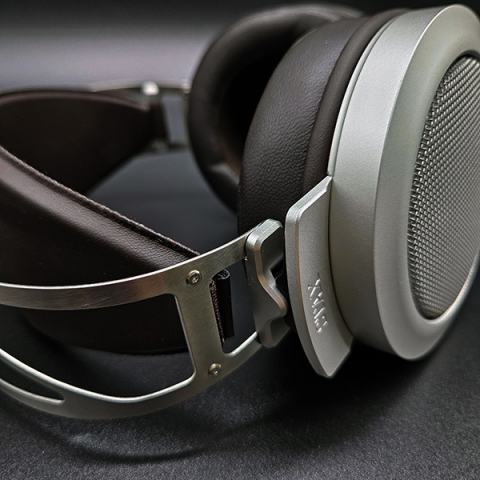
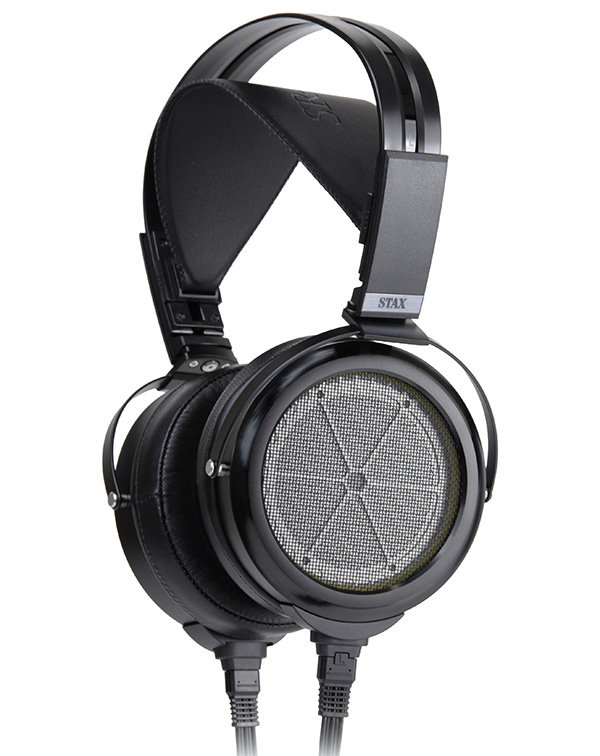 The Stax SR-009D headphones
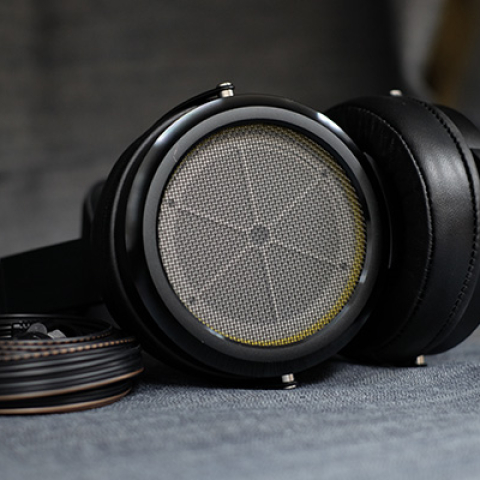
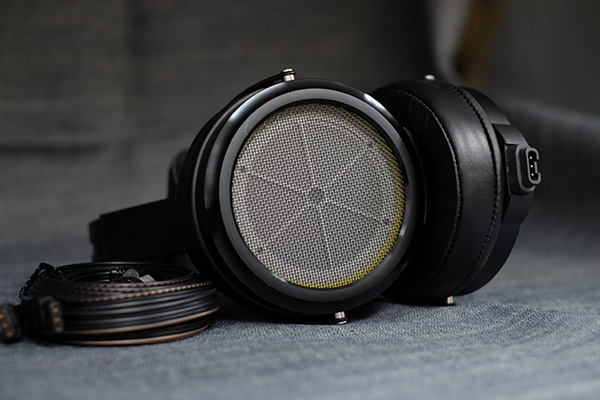
These new SR-009D headphones ($2890, footnote 1) look to be more of an enhanced distillation than a reissue of the 2011 version of the SR-009. Compared to Stax's current 009 flagship, the SR-009S, the SR-009D uses the original 009's MLER (Multi-Layer-Elect-Rords), while the 009S uses Stax's more evolved version called the "MLER 2" diaphragm. The "D" uses the "High Polymer Ultra-Thin Film," while the "S" diaphragm is made of "Ultra-Thin Super Engineering Plastic Film." The D uses a fixed electrode with "thermal diffusion bonding." The S uses fixed gold-plated electrodes made with an "improved etching process." As regards cables, the D uses removable OFC, silver-coated, parallel six-strand, six-nines, low-capacitance wires, while the original SR-009 used fixed cables. The earpads on the D are genuine sheep leather on the skin-touching portion with synthetic leather on the surrounding portion. The original 009 used an all-aluminum frame; the D uses a newly developed injection-molded case. The D-version updates the original 009's friction-sliding headband, while the S version employs a 10-step slider.
For the record, Stax itself describes the 2011 009 as having a "Hyper-analytical, bright" sound profile and the D-version as "Classic 009 Clarity with smoother mids." The original SR-009 weighed 454gm; the new D weighs 452gm.
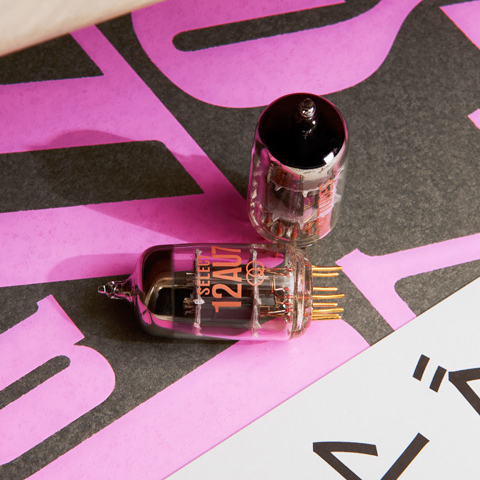
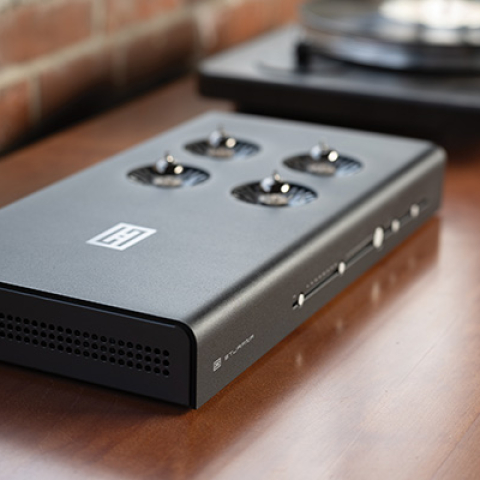
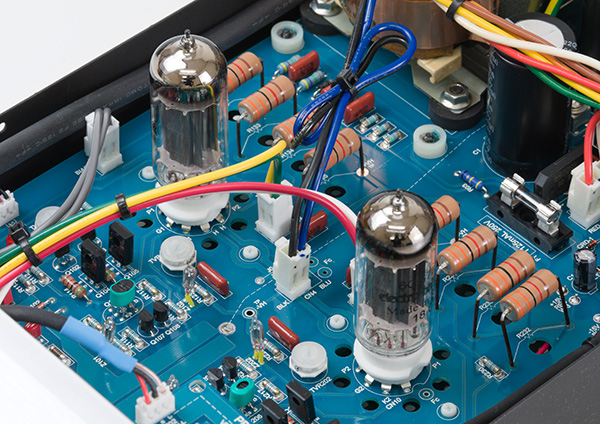
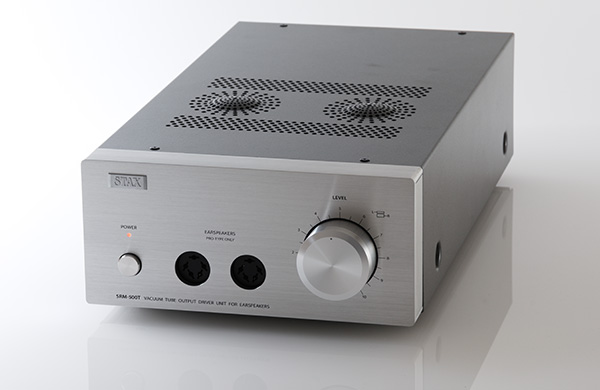 The Stax SRM-500T driver unit: It would have been interesting to compare the SRM-700S I used for my SR-007S report to the new SRM-500 ($1499), and to try it with the new SR-009D headphones, but the solid state driver unit went back a long time ago. According to the Stax website: "Stax's SRM-500T is the successor of the SRM-006tS. The SRM-500T utilizes a pair of 6FQ7/6CG7 vacuum tubes on the output driven by a custom-made low noise dual FET. This updated design offers improved power efficiency allowing for better sound quality over the conventional vacuum tube output driver unit featured in the SRM-006tS." The SRM-500T also utilizes a FET, with a 6SN7 tube in the output stage.
Listening to Stax: Hearing a woman sing beautifully while accompanied by a lute is an intoxicating experience I've been falling into lately. The lute-song duo called Mignarda, out of Cleveland Heights, Ohio, has reminded me how much I love picturing 16th century couples sitting next to each other under trees, in fluffy clothes, singing love songs. This form of delight-filled sensuality pleases my dreaming mind.
The Stax SRM-500T driver unit: It would have been interesting to compare the SRM-700S I used for my SR-007S report to the new SRM-500 ($1499), and to try it with the new SR-009D headphones, but the solid state driver unit went back a long time ago. According to the Stax website: "Stax's SRM-500T is the successor of the SRM-006tS. The SRM-500T utilizes a pair of 6FQ7/6CG7 vacuum tubes on the output driven by a custom-made low noise dual FET. This updated design offers improved power efficiency allowing for better sound quality over the conventional vacuum tube output driver unit featured in the SRM-006tS." The SRM-500T also utilizes a FET, with a 6SN7 tube in the output stage.
Listening to Stax: Hearing a woman sing beautifully while accompanied by a lute is an intoxicating experience I've been falling into lately. The lute-song duo called Mignarda, out of Cleveland Heights, Ohio, has reminded me how much I love picturing 16th century couples sitting next to each other under trees, in fluffy clothes, singing love songs. This form of delight-filled sensuality pleases my dreaming mind.
 The Mignarda album that's holding me close right now is The Delight of Solitariness: The Lute Songs of John Dowland (24/96 FLAC, Prima Classic/Qobuz). It was released in 2024, and the sound I experienced while listening through the SR-009Ds was not hard or soft, bright or dull, dry or wet, or anything less colorful than the sun and stars. The Stax Earspeakers made each song a singular delight, with nary a thought about sound quality. There was so little coloration that lutenist Ron Andrico and mezzo-soprano Donna Stewart were able to directly communicate the romantic realities behind this music's lonely sentiments—glorifying courtly love—without slouching towards irony or academic detachment. I hate the words "neutral" and "accurate," so let's just say the Stax SR-009D played these tunes without any sound-issue distractions.
While listening to The Delight of Solitariness with the Stax SR-009D, I suddenly remembered playing this John Dowland album through Audeze's original CRBN electrostatics powered by LTA's Z10e amplifier. If my memory served me right, the SR-009Ds were sounding very much like the CRBNs. This memory was so I-am-there clear that I had to pull out the CRBNs and try them with Stax's SRM-500T. And dang me to that hot crowded place if the Stax amp with the Audeze CRBNs didn't have that same compelling transparency that refuses to draw attention to itself or upstage musical content. Both headphones placed recorded content in front of their own quiet stillness.
The Mignarda album that's holding me close right now is The Delight of Solitariness: The Lute Songs of John Dowland (24/96 FLAC, Prima Classic/Qobuz). It was released in 2024, and the sound I experienced while listening through the SR-009Ds was not hard or soft, bright or dull, dry or wet, or anything less colorful than the sun and stars. The Stax Earspeakers made each song a singular delight, with nary a thought about sound quality. There was so little coloration that lutenist Ron Andrico and mezzo-soprano Donna Stewart were able to directly communicate the romantic realities behind this music's lonely sentiments—glorifying courtly love—without slouching towards irony or academic detachment. I hate the words "neutral" and "accurate," so let's just say the Stax SR-009D played these tunes without any sound-issue distractions.
While listening to The Delight of Solitariness with the Stax SR-009D, I suddenly remembered playing this John Dowland album through Audeze's original CRBN electrostatics powered by LTA's Z10e amplifier. If my memory served me right, the SR-009Ds were sounding very much like the CRBNs. This memory was so I-am-there clear that I had to pull out the CRBNs and try them with Stax's SRM-500T. And dang me to that hot crowded place if the Stax amp with the Audeze CRBNs didn't have that same compelling transparency that refuses to draw attention to itself or upstage musical content. Both headphones placed recorded content in front of their own quiet stillness.
 I think the $4500 CRBN might have dotted a few more "i"s and crossed a couple more "t"s, and maybe the CRBN's quiet clarity was marginally more pronounced, but these two electrostatic headphones—both driven by the SRM-500T—sounded more alike than different. As perceived distortions are lowered, audio components become more invisible, and as a result, sound more alike.
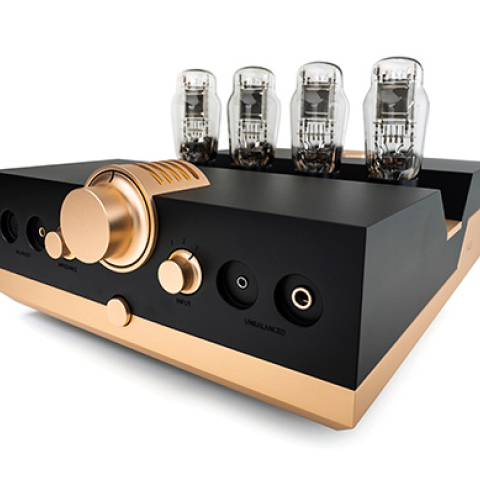
With the Linear Tube Audio Z10e: Once I start pulling a curiosity thread, I can't stop. Suddenly, I needed to try the SR-009D powered by Linear Tube Audio's versatile Z10e integrated amplifier, which can drive speakers of sufficient sensitivity as well as regular and electrostatic headphones. You are allowed to laugh, but when I first turned on the Z10e, I was listening to the Stax thinking, "These headphones sound a lot like my Voxativ speakers." This happens frequently because this floor system is tuned to sound like headphones. In fact, at one point I thought I was listening to the Stax when I noticed that the LTA amp was switched to Speakers! I was listening to the Voxativs but thinking I was listening to the Stax! (footnote 2)
When I switched the Z10e's switch to Headphones, the Stax SR-009Ds still had the same tone and temper as my floorspeakers, but the Ds were quieter, darker, and more inner-mind. The Z10e took the Stax JFET out of the signal path and replaced it with OTL tubes, which upgraded the 009D's handling of reverb and atmosphere without compromising its innate transparency.
Listening at Audio46: Today, March 4, I got the Emperor's Tour at Audio46 at 29 West 46th Street in Manhattan. Audio46 is an iconic NYC landmark, located between 5th and 6th Avenues, one block south of the block that has only diamond stores. This is such a unique block that just standing on the sidewalk in front of the Audio46 store made me feel like a tourist.
My visit to Audio46 included a laugh-filled picture-snapping hang with Douglas Ip, senior manager of sales and marketing at Stax headphones, and Tony Aama, founder and president of Audio46. The reason for my visit was to compare Stax's three top headphones, the new SR-009D I've been describing, the SR-007S I reviewed last year, and the $6200 SR-X9000—all with the same source, from Eversolo, and the Stax SRM-700S, the solid state driver amplifier I used to audition the 007S.
I tried the SR-009D first, because I wanted to see if I could tell the difference between my memory of the transistor SRM-700S I used for my SR-007S report and the SRM-500T I was using at home. I presumed I would notice some obvious trait that would distinguish the tubed drive unit from its transistor counterpart, but I can't say I did: Apparently the JFETs on the input of both the 500T and 700S dominated the sound. In a blind test, I doubt I could tell which amp was which.
On the other hand, the Stax SR-007S and SR-009D headphones sounded remarkably different. The 700S driver amplifier excelled at beat and rhythm-keeping, which emphasized or brought out the 007S's finest performance traits: nuanced, uninhibited dynamics with palpable vocal and instrumental detail. At Audio46, the SRM-700S put more life and light into the SR-007S than into the 009D.
When I listened again at home, I realized the SR-009D felt a little more liquid and colorful with the SRM-500T energizing their diaphragms. This served to remind me how important it is to choose the right amp to mate with your Earspeaker. The folks at Audio46 are prepared and equipped to help you with that choice.
Stax's $6200 flagship SR-X9000s took all the pleasures of the 009D and the 007S and amped up the intensity—especially their phenomenal transparency (for lack of a better word). The SR-X9000 left no doubts in my mind: This might be as completely and naturally transparent as a headphone can be.
I have that same feeling when I use HiFiMan's original Susvara, the JPS Labs Abyss AB-1266 TC, the Audeze CRBN, and the RAAL S1a ribbons. These flagship headphones have one thing in common: They showcase sensationally sculpted soundscapes with vibrant, laser-cut detail.
Overall: Stax SR-009D is a high-resolution transducer that does not present as bright or analytical like its illustrious forebear, the original SR-009 introduced in 2011. The 009D's sound is brilliant and voluptuous and 100% nonfatiguing. Those objectivist persons who championed the original SR-009 are not likely to embrace this kinder, gentler D version, which to my ears is much lower in distortion than the unlettered original. If you like straight-up, honest truth, with the texture and flavor of a stirred martini, these new Stax Ds might please you with their smooth, unaffected presentation.
Compared to Stax's SR-007S, which, when powered by the Stax SRM-700S drive unit, presented recordings with the glamorous zest of a champagne cocktail, the SR-009D seemed quieter and more relaxed, at least when powered by the tubed Stax SRM-500T driver unit.
I think the $4500 CRBN might have dotted a few more "i"s and crossed a couple more "t"s, and maybe the CRBN's quiet clarity was marginally more pronounced, but these two electrostatic headphones—both driven by the SRM-500T—sounded more alike than different. As perceived distortions are lowered, audio components become more invisible, and as a result, sound more alike.
With the Linear Tube Audio Z10e: Once I start pulling a curiosity thread, I can't stop. Suddenly, I needed to try the SR-009D powered by Linear Tube Audio's versatile Z10e integrated amplifier, which can drive speakers of sufficient sensitivity as well as regular and electrostatic headphones. You are allowed to laugh, but when I first turned on the Z10e, I was listening to the Stax thinking, "These headphones sound a lot like my Voxativ speakers." This happens frequently because this floor system is tuned to sound like headphones. In fact, at one point I thought I was listening to the Stax when I noticed that the LTA amp was switched to Speakers! I was listening to the Voxativs but thinking I was listening to the Stax! (footnote 2)
When I switched the Z10e's switch to Headphones, the Stax SR-009Ds still had the same tone and temper as my floorspeakers, but the Ds were quieter, darker, and more inner-mind. The Z10e took the Stax JFET out of the signal path and replaced it with OTL tubes, which upgraded the 009D's handling of reverb and atmosphere without compromising its innate transparency.
Listening at Audio46: Today, March 4, I got the Emperor's Tour at Audio46 at 29 West 46th Street in Manhattan. Audio46 is an iconic NYC landmark, located between 5th and 6th Avenues, one block south of the block that has only diamond stores. This is such a unique block that just standing on the sidewalk in front of the Audio46 store made me feel like a tourist.
My visit to Audio46 included a laugh-filled picture-snapping hang with Douglas Ip, senior manager of sales and marketing at Stax headphones, and Tony Aama, founder and president of Audio46. The reason for my visit was to compare Stax's three top headphones, the new SR-009D I've been describing, the SR-007S I reviewed last year, and the $6200 SR-X9000—all with the same source, from Eversolo, and the Stax SRM-700S, the solid state driver amplifier I used to audition the 007S.
I tried the SR-009D first, because I wanted to see if I could tell the difference between my memory of the transistor SRM-700S I used for my SR-007S report and the SRM-500T I was using at home. I presumed I would notice some obvious trait that would distinguish the tubed drive unit from its transistor counterpart, but I can't say I did: Apparently the JFETs on the input of both the 500T and 700S dominated the sound. In a blind test, I doubt I could tell which amp was which.
On the other hand, the Stax SR-007S and SR-009D headphones sounded remarkably different. The 700S driver amplifier excelled at beat and rhythm-keeping, which emphasized or brought out the 007S's finest performance traits: nuanced, uninhibited dynamics with palpable vocal and instrumental detail. At Audio46, the SRM-700S put more life and light into the SR-007S than into the 009D.
When I listened again at home, I realized the SR-009D felt a little more liquid and colorful with the SRM-500T energizing their diaphragms. This served to remind me how important it is to choose the right amp to mate with your Earspeaker. The folks at Audio46 are prepared and equipped to help you with that choice.
Stax's $6200 flagship SR-X9000s took all the pleasures of the 009D and the 007S and amped up the intensity—especially their phenomenal transparency (for lack of a better word). The SR-X9000 left no doubts in my mind: This might be as completely and naturally transparent as a headphone can be.
I have that same feeling when I use HiFiMan's original Susvara, the JPS Labs Abyss AB-1266 TC, the Audeze CRBN, and the RAAL S1a ribbons. These flagship headphones have one thing in common: They showcase sensationally sculpted soundscapes with vibrant, laser-cut detail.
Overall: Stax SR-009D is a high-resolution transducer that does not present as bright or analytical like its illustrious forebear, the original SR-009 introduced in 2011. The 009D's sound is brilliant and voluptuous and 100% nonfatiguing. Those objectivist persons who championed the original SR-009 are not likely to embrace this kinder, gentler D version, which to my ears is much lower in distortion than the unlettered original. If you like straight-up, honest truth, with the texture and flavor of a stirred martini, these new Stax Ds might please you with their smooth, unaffected presentation.
Compared to Stax's SR-007S, which, when powered by the Stax SRM-700S drive unit, presented recordings with the glamorous zest of a champagne cocktail, the SR-009D seemed quieter and more relaxed, at least when powered by the tubed Stax SRM-500T driver unit.
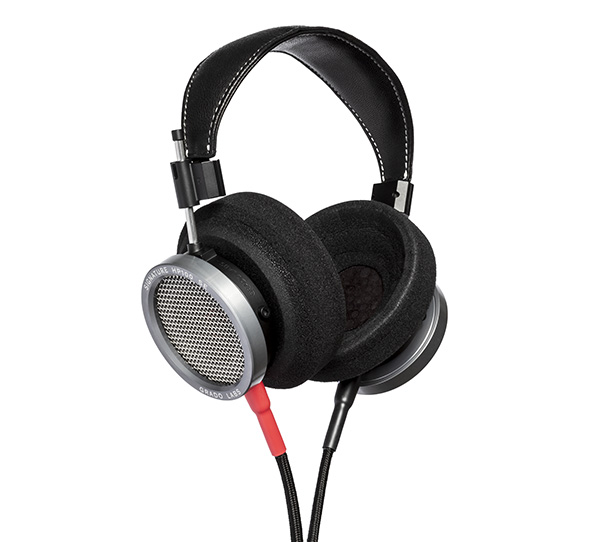 The Grado Signature HP100 SE
I once owned Grado's first headphone, the HP1. I used it until someone gave me an SR60, which I regarded as truth until I bought the Koss ESP/950 electrostatic headphones, which have remained my reference for what a proper midrange should sound like.
The next Grado I tried was the SR325x with its Mylar driver, open back, cocobolo wood case, 50mm diaphragm, 32 ohm impedance, and 99.8dB sensitivity. After that, in Gramophone Dreams #31, I reviewed Grado's flagship at the time, the GS3000e, describing it as a breakthrough product. That $1795 headphone was easy to drive, played blue-sky clear, and was superbly crafted.
Grado's new HP100 SE ($2495, footnote 3) celebrates the 100th anniversary of founder Joe Grado's birth. It costs $2495 and features a 6', detachable (!) 12-conductor cable with—praise all the gods—a long, red tube of shrink wrap melted over the right channel's four-pin mini-XLR phone connector, making it easy to see, even in low light.
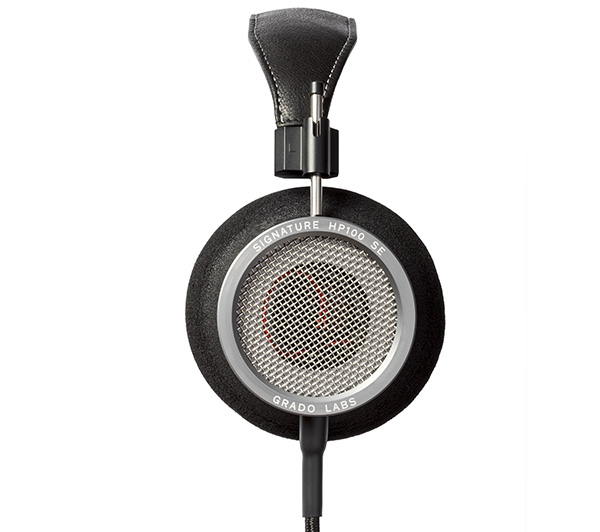 The HP100 SE's 52mm dynamic driver is made of paper and carbon fiber and is specified as 117dB SPL at 1mW. It comes in a "hand-machined" aluminum housing with a leather and stainless steel headband. Grado's large, over-the-ear "bowl pads," called the "G cushions," come standard, as does a pair of small, "F-style" on-the-ear cushions for customers to try as an alternative. I ordered mine with the optional flat "B pads," which tightly surround my ear with thick foam, stuffing the driver's diaphragm right up against the opening of my ear canal while blocking room sound.
My experience indicates that choice of earpads, wires, and power amplifiers affects the tone and transient truthfulness of every headphone. Having three earpad choices reminded me to remind you that the first step in all headphone listening is to correctly seat the earpads on each ear. This is especially important with Grado's HP100 SE.
The HP100 SE's 52mm dynamic driver is made of paper and carbon fiber and is specified as 117dB SPL at 1mW. It comes in a "hand-machined" aluminum housing with a leather and stainless steel headband. Grado's large, over-the-ear "bowl pads," called the "G cushions," come standard, as does a pair of small, "F-style" on-the-ear cushions for customers to try as an alternative. I ordered mine with the optional flat "B pads," which tightly surround my ear with thick foam, stuffing the driver's diaphragm right up against the opening of my ear canal while blocking room sound.
My experience indicates that choice of earpads, wires, and power amplifiers affects the tone and transient truthfulness of every headphone. Having three earpad choices reminded me to remind you that the first step in all headphone listening is to correctly seat the earpads on each ear. This is especially important with Grado's HP100 SE.
 I compared the three earpads using Brigitte Fontaine and Areski Belkacem's Baraka 1980 (24/96 FLAC, Kuroneko/Qobuz), a stripped-down, unedited two-channel recording using one mike for Brigitte's voice, the other for her partner, multi-instrumentalist and vocalist Areski Belkacem. This is a raw, voice-to-mike-to-tape recording with little to no studio processing. That made it easy to spot clouding or blurring.
I started with the bowl-shaped G cushions, which the HP100s were wearing when I opened the box. They presented recordings with a gracious, natural ease that highlighted delicacy and dimensionality. The F cushions placed the diaphragms directly on the ear, where I could feel them shifting about as I moved. For me, the F-cushion sound was too up-close and intense. Dynamic headphones can be very sensitive to driver placement and geometry; even a slight angle relative to the ear canal will change the immediacy and imaging aspects of the reproduction.
What sounded right and worked with my ear anatomy was the around-the-ear B cups. For me, they struck a good balance between too close and too far.
The Cosmic Tones Research Trio sounded like an octet or a chamber orchestra playing "Sankofa" from Live at Public Records (24/96 FLAC, Mississippi Records/Qobuz). The Cosmic Tones Research Trio—which consists of Norman Norfleet on alto sax, alto clarinet, soprano sax, flute, percussion, and vocals; Harlan Silverman playing cello, flute, modular synth, vocals, and percussion; and Kennedy Verrett on piano, Fender Rhodes, vocals, and percussion—produced artfully layered, intricately woven sounds that flowed, morphed, and intersected my thoughts at each bend in their instrumental river. This is mystical "rivers-and-woods" jazz that treats my brain like I want jazz music to treat my brain. With the Grado HP100, this highly textured, harmonically rich music elevated my spirits and expanded my wonderings about: Who are we? Who are these Cosmic Tones Research people? And why do I enjoy their music so much?
I compared the three earpads using Brigitte Fontaine and Areski Belkacem's Baraka 1980 (24/96 FLAC, Kuroneko/Qobuz), a stripped-down, unedited two-channel recording using one mike for Brigitte's voice, the other for her partner, multi-instrumentalist and vocalist Areski Belkacem. This is a raw, voice-to-mike-to-tape recording with little to no studio processing. That made it easy to spot clouding or blurring.
I started with the bowl-shaped G cushions, which the HP100s were wearing when I opened the box. They presented recordings with a gracious, natural ease that highlighted delicacy and dimensionality. The F cushions placed the diaphragms directly on the ear, where I could feel them shifting about as I moved. For me, the F-cushion sound was too up-close and intense. Dynamic headphones can be very sensitive to driver placement and geometry; even a slight angle relative to the ear canal will change the immediacy and imaging aspects of the reproduction.
What sounded right and worked with my ear anatomy was the around-the-ear B cups. For me, they struck a good balance between too close and too far.
The Cosmic Tones Research Trio sounded like an octet or a chamber orchestra playing "Sankofa" from Live at Public Records (24/96 FLAC, Mississippi Records/Qobuz). The Cosmic Tones Research Trio—which consists of Norman Norfleet on alto sax, alto clarinet, soprano sax, flute, percussion, and vocals; Harlan Silverman playing cello, flute, modular synth, vocals, and percussion; and Kennedy Verrett on piano, Fender Rhodes, vocals, and percussion—produced artfully layered, intricately woven sounds that flowed, morphed, and intersected my thoughts at each bend in their instrumental river. This is mystical "rivers-and-woods" jazz that treats my brain like I want jazz music to treat my brain. With the Grado HP100, this highly textured, harmonically rich music elevated my spirits and expanded my wonderings about: Who are we? Who are these Cosmic Tones Research people? And why do I enjoy their music so much?
 This fantastic jazz recording showed me how relaxed and resolving the HP100 could be. My first impression suggested that this was a transparency upgrade from the GS3000e, which excelled at that quality. Curious, I pulled out the GS3000e and started my comparison playing the remastered "Walk on the Wild Side" from Lou Reed's 1972 release, Transformer (24/96 FLAC, RCA Legacy/Qobuz).
I listened first with the HP100 SE, sourced by T+A's MP 3100 HV DAC, streamer, and CD player driving Linear Tube Audio's Z10e, and I have to say very loudly: This combo rendered tones as perfectly as I could imagine them being reproduced. I was using the midsized, around-the-ear "B" earpads, and the bass notes, which drive the entire song along, had the exact right bite, drive, and forward momentum. Witnessing this level of tone and bass-note truthfulness was exhilarating. I was in awe of Lou's songwriting and gladder than ever to have been in New York in the 1970s.
Playing Transformer with the GS3000e reminded me that timing and transients are the bone structure of accurate tone. The sound of the GS3000e, which uses diaphragms made of Mylar and neodymium magnets, was fresh and clear and open and fun, but the 3000e did not have the bite and drive or liquid transparency of the HP100 SE with its rare earth alloy magnets. I think the HP100 SE's new diaphragms, magnets, wires, and closer-than-ever (0.04dB) channel matching have endowed the HP100 SE with more speed and transparency than any previous Grado headphone. This is Grado's most resolving headphone ever.
This fantastic jazz recording showed me how relaxed and resolving the HP100 could be. My first impression suggested that this was a transparency upgrade from the GS3000e, which excelled at that quality. Curious, I pulled out the GS3000e and started my comparison playing the remastered "Walk on the Wild Side" from Lou Reed's 1972 release, Transformer (24/96 FLAC, RCA Legacy/Qobuz).
I listened first with the HP100 SE, sourced by T+A's MP 3100 HV DAC, streamer, and CD player driving Linear Tube Audio's Z10e, and I have to say very loudly: This combo rendered tones as perfectly as I could imagine them being reproduced. I was using the midsized, around-the-ear "B" earpads, and the bass notes, which drive the entire song along, had the exact right bite, drive, and forward momentum. Witnessing this level of tone and bass-note truthfulness was exhilarating. I was in awe of Lou's songwriting and gladder than ever to have been in New York in the 1970s.
Playing Transformer with the GS3000e reminded me that timing and transients are the bone structure of accurate tone. The sound of the GS3000e, which uses diaphragms made of Mylar and neodymium magnets, was fresh and clear and open and fun, but the 3000e did not have the bite and drive or liquid transparency of the HP100 SE with its rare earth alloy magnets. I think the HP100 SE's new diaphragms, magnets, wires, and closer-than-ever (0.04dB) channel matching have endowed the HP100 SE with more speed and transparency than any previous Grado headphone. This is Grado's most resolving headphone ever.
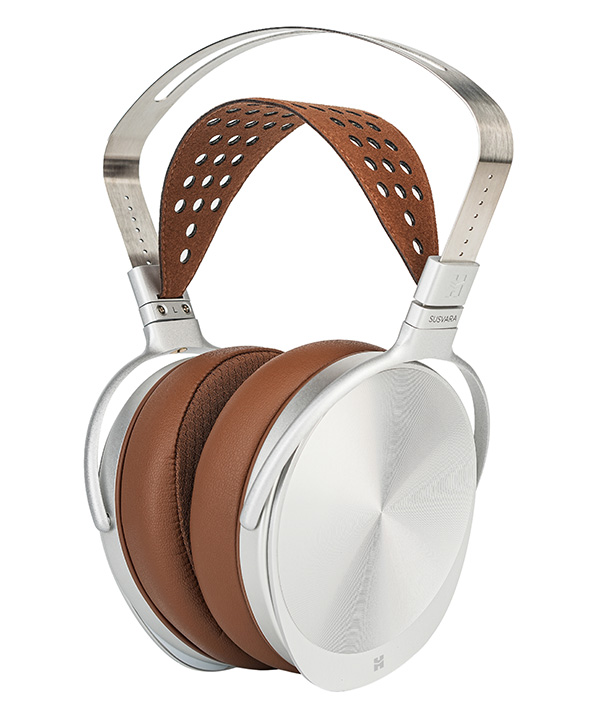 The HiFiMan Susvara Unveiled
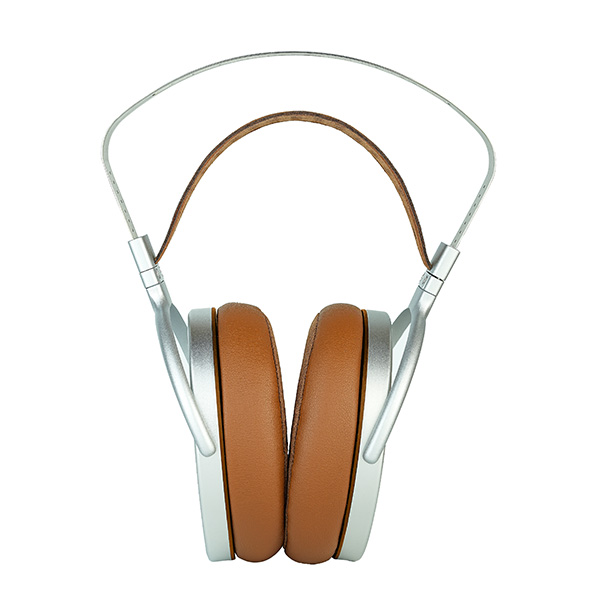
The original HiFiMan Susvara cost $6000 when it came out in 2017. Its 60 ohm, 83dB-sensitive planar magnetic driver was the most difficult of all loads to drive except for HiFiMan's notorious H5. The new "Unveiled" Susvara ($8000) remedies that with a 45 ohm planar-magnetic diaphragm and 86dB/mW sensitivity.
For some reason, most headphone amps do not like 60 ohm loads. At 60 ohms, their membranes need to suck current at a rate puny amplifiers can't muster while maintaining the correct voltage. When I reviewed the original Susvara, I used a 25W Pass Labs XA25 basic stereo amplifier, intended for speakers. The sound from that combo was as beautiful and resolved as from any transducer I'd ever tried.
I admit to having doubts whether the Unveiled's "high conductivity metallic silver" conductor layer would outperform the original's sputtered-gold conductor layer.
This new Susvara features a removable aluminum panel called the Magnetic Veil. This contraption, which looks like a venetian blind, is designed to fit over the outside of the Susvara's earcups to protect the membranes from damage "by the absorption of magnetic objects when not in use."
 Every time I use the Unveiled, I am stunned by its ability to sort, arrange, and clearly display extremely complex sounds. The exquisite layering on The Cosmic Tones Research Trio's Live at Public Records is tonally off the wall, with reverb-saturated harmonics. The new Susvara brightened up its well-defined images and dramatically separated each recorded track. Everything was better defined but not as pristine and grainless as via the original. The old Susvara played darker but had that same quality of transparency as the Stax SR-X9000 and Audeze's CRBN electrostatics. The old Susvara rendered crowd noise and applause with so much superdetailed realism it put smiles on my face.
When I switched from the old 83dB/mW Susvara to the new, 86dB/mW Unveiled, the volume control on LTA's Z10e suggested the new version might be closer to 6dB more sensitive. With the new Susvara, The Cosmic Tones Research Trio had more grunge, punch, and bite, with more dominant rhythm-keeping and dynamic presence. The Unveiled is considerably more awake and present than the original. It's a mover and a dancer. The old version is more sedate, dreamy, and meditative. It's the primary headphone I take out to listen to special recordings on special occasions. The new one, I could use every day and never wish I was using something else.
Every time I use the Unveiled, I am stunned by its ability to sort, arrange, and clearly display extremely complex sounds. The exquisite layering on The Cosmic Tones Research Trio's Live at Public Records is tonally off the wall, with reverb-saturated harmonics. The new Susvara brightened up its well-defined images and dramatically separated each recorded track. Everything was better defined but not as pristine and grainless as via the original. The old Susvara played darker but had that same quality of transparency as the Stax SR-X9000 and Audeze's CRBN electrostatics. The old Susvara rendered crowd noise and applause with so much superdetailed realism it put smiles on my face.
When I switched from the old 83dB/mW Susvara to the new, 86dB/mW Unveiled, the volume control on LTA's Z10e suggested the new version might be closer to 6dB more sensitive. With the new Susvara, The Cosmic Tones Research Trio had more grunge, punch, and bite, with more dominant rhythm-keeping and dynamic presence. The Unveiled is considerably more awake and present than the original. It's a mover and a dancer. The old version is more sedate, dreamy, and meditative. It's the primary headphone I take out to listen to special recordings on special occasions. The new one, I could use every day and never wish I was using something else.
Footnote 1: Stax, 3798-1 Shimonanbata, Fujimi, Saitama Prefecture, 354-0004, Japan. Web: stax-international.com. US distributor: Woo Audio, 29 West 46th St., New York, NY. Tel: (917) 773-8645. Email: info@ wooaudio.com. Web: staxaudio.com.
Footnote 2: Stax Earspeakers are open-back, making it possible to hear the speakers quite clearly with them on.
Footnote 3: Grado Labs, 4614 7th Ave., Brooklyn, NY 11220. Tel: (718) 435-5340. Web: gradolabs.com.
Footnote 4: HiFiMan, 2602 Beltagh Ave., Bellmore, NY 11710. Tel: (201) 443-4626. Web: hifiman.com.
The Stax SR-009D headphonesThese new SR-009D headphones ($2890, footnote 1) look to be more of an enhanced distillation than a reissue of the 2011 version of the SR-009. Compared to Stax's current 009 flagship, the SR-009S, the SR-009D uses the original 009's MLER (Multi-Layer-Elect-Rords), while the 009S uses Stax's more evolved version called the "MLER 2" diaphragm. The "D" uses the "High Polymer Ultra-Thin Film," while the "S" diaphragm is made of "Ultra-Thin Super Engineering Plastic Film." The D uses a fixed electrode with "thermal diffusion bonding." The S uses fixed gold-plated electrodes made with an "improved etching process." As regards cables, the D uses removable OFC, silver-coated, parallel six-strand, six-nines, low-capacitance wires, while the original SR-009 used fixed cables. The earpads on the D are genuine sheep leather on the skin-touching portion with synthetic leather on the surrounding portion. The original 009 used an all-aluminum frame; the D uses a newly developed injection-molded case. The D-version updates the original 009's friction-sliding headband, while the S version employs a 10-step slider.
The Stax SRM-500T driver unit: It would have been interesting to compare the SRM-700S I used for my SR-007S report to the new SRM-500 ($1499), and to try it with the new SR-009D headphones, but the solid state driver unit went back a long time ago. According to the Stax website: "Stax's SRM-500T is the successor of the SRM-006tS. The SRM-500T utilizes a pair of 6FQ7/6CG7 vacuum tubes on the output driven by a custom-made low noise dual FET. This updated design offers improved power efficiency allowing for better sound quality over the conventional vacuum tube output driver unit featured in the SRM-006tS." The SRM-500T also utilizes a FET, with a 6SN7 tube in the output stage.
Listening to Stax: Hearing a woman sing beautifully while accompanied by a lute is an intoxicating experience I've been falling into lately. The lute-song duo called Mignarda, out of Cleveland Heights, Ohio, has reminded me how much I love picturing 16th century couples sitting next to each other under trees, in fluffy clothes, singing love songs. This form of delight-filled sensuality pleases my dreaming mind.
The Mignarda album that's holding me close right now is The Delight of Solitariness: The Lute Songs of John Dowland (24/96 FLAC, Prima Classic/Qobuz). It was released in 2024, and the sound I experienced while listening through the SR-009Ds was not hard or soft, bright or dull, dry or wet, or anything less colorful than the sun and stars. The Stax Earspeakers made each song a singular delight, with nary a thought about sound quality. There was so little coloration that lutenist Ron Andrico and mezzo-soprano Donna Stewart were able to directly communicate the romantic realities behind this music's lonely sentiments—glorifying courtly love—without slouching towards irony or academic detachment. I hate the words "neutral" and "accurate," so let's just say the Stax SR-009D played these tunes without any sound-issue distractions.
While listening to The Delight of Solitariness with the Stax SR-009D, I suddenly remembered playing this John Dowland album through Audeze's original CRBN electrostatics powered by LTA's Z10e amplifier. If my memory served me right, the SR-009Ds were sounding very much like the CRBNs. This memory was so I-am-there clear that I had to pull out the CRBNs and try them with Stax's SRM-500T. And dang me to that hot crowded place if the Stax amp with the Audeze CRBNs didn't have that same compelling transparency that refuses to draw attention to itself or upstage musical content. Both headphones placed recorded content in front of their own quiet stillness.
I think the $4500 CRBN might have dotted a few more "i"s and crossed a couple more "t"s, and maybe the CRBN's quiet clarity was marginally more pronounced, but these two electrostatic headphones—both driven by the SRM-500T—sounded more alike than different. As perceived distortions are lowered, audio components become more invisible, and as a result, sound more alike.
The Grado Signature HP100 SEI once owned Grado's first headphone, the HP1. I used it until someone gave me an SR60, which I regarded as truth until I bought the Koss ESP/950 electrostatic headphones, which have remained my reference for what a proper midrange should sound like.
The HP100 SE's 52mm dynamic driver is made of paper and carbon fiber and is specified as 117dB SPL at 1mW. It comes in a "hand-machined" aluminum housing with a leather and stainless steel headband. Grado's large, over-the-ear "bowl pads," called the "G cushions," come standard, as does a pair of small, "F-style" on-the-ear cushions for customers to try as an alternative. I ordered mine with the optional flat "B pads," which tightly surround my ear with thick foam, stuffing the driver's diaphragm right up against the opening of my ear canal while blocking room sound.
I compared the three earpads using Brigitte Fontaine and Areski Belkacem's Baraka 1980 (24/96 FLAC, Kuroneko/Qobuz), a stripped-down, unedited two-channel recording using one mike for Brigitte's voice, the other for her partner, multi-instrumentalist and vocalist Areski Belkacem. This is a raw, voice-to-mike-to-tape recording with little to no studio processing. That made it easy to spot clouding or blurring.
I started with the bowl-shaped G cushions, which the HP100s were wearing when I opened the box. They presented recordings with a gracious, natural ease that highlighted delicacy and dimensionality. The F cushions placed the diaphragms directly on the ear, where I could feel them shifting about as I moved. For me, the F-cushion sound was too up-close and intense. Dynamic headphones can be very sensitive to driver placement and geometry; even a slight angle relative to the ear canal will change the immediacy and imaging aspects of the reproduction.
This fantastic jazz recording showed me how relaxed and resolving the HP100 could be. My first impression suggested that this was a transparency upgrade from the GS3000e, which excelled at that quality. Curious, I pulled out the GS3000e and started my comparison playing the remastered "Walk on the Wild Side" from Lou Reed's 1972 release, Transformer (24/96 FLAC, RCA Legacy/Qobuz).
The HiFiMan Susvara UnveiledThe original HiFiMan Susvara cost $6000 when it came out in 2017. Its 60 ohm, 83dB-sensitive planar magnetic driver was the most difficult of all loads to drive except for HiFiMan's notorious H5. The new "Unveiled" Susvara ($8000) remedies that with a 45 ohm planar-magnetic diaphragm and 86dB/mW sensitivity.
Every time I use the Unveiled, I am stunned by its ability to sort, arrange, and clearly display extremely complex sounds. The exquisite layering on The Cosmic Tones Research Trio's Live at Public Records is tonally off the wall, with reverb-saturated harmonics. The new Susvara brightened up its well-defined images and dramatically separated each recorded track. Everything was better defined but not as pristine and grainless as via the original. The old Susvara played darker but had that same quality of transparency as the Stax SR-X9000 and Audeze's CRBN electrostatics. The old Susvara rendered crowd noise and applause with so much superdetailed realism it put smiles on my face.
When I switched from the old 83dB/mW Susvara to the new, 86dB/mW Unveiled, the volume control on LTA's Z10e suggested the new version might be closer to 6dB more sensitive. With the new Susvara, The Cosmic Tones Research Trio had more grunge, punch, and bite, with more dominant rhythm-keeping and dynamic presence. The Unveiled is considerably more awake and present than the original. It's a mover and a dancer. The old version is more sedate, dreamy, and meditative. It's the primary headphone I take out to listen to special recordings on special occasions. The new one, I could use every day and never wish I was using something else.
Footnote 1: Stax, 3798-1 Shimonanbata, Fujimi, Saitama Prefecture, 354-0004, Japan. Web: stax-international.com. US distributor: Woo Audio, 29 West 46th St., New York, NY. Tel: (917) 773-8645. Email: info@ wooaudio.com. Web: staxaudio.com.