Big loudspeakers are where diligent hi-fi reviewers really earn their pay. Not only are they heavy and difficult to move, but they also require attention and patience to set up so that they sound their best in our listening spaces. They take time to understand and study. And they all sound quite different from each other—not subtle differences, like the ones between two high-quality, similarly designed DACs. In this respect, big speakers are like phono cartridges, only more so.
That also makes big loudspeakers especially fun to review. The review is an adventure, akin to meeting a new person. Speakers have personalities—and big speakers have big personalities. The specs and measurements, along with the manufacturer's design philosophy and marketing points, tell you a bit about them, like a swipe through a dating app or a resumé on LinkedIn. But we don't really know them until we invite them into our homes and live with them for a while, ideally a few months. The process requires hours of listening with the big speakers mated in a system with top-quality components, all well-matched and well-known. It's an aural odyssey and often memorable.
Before writing, I like to review speakers for at least three months. The first month is the sorting-out period: breaking them in, learning their characteristics, experimenting with amplifiers, finding the best positions in my listening space. Then I like to listen to a variety of music, some digital, some on vinyl, some familiar, some not. Finally, I bear down and, using well-known reference tracks—music, not test tones—form opinions. It took all of three months to get to know the EgglestonWorks Andra 5.
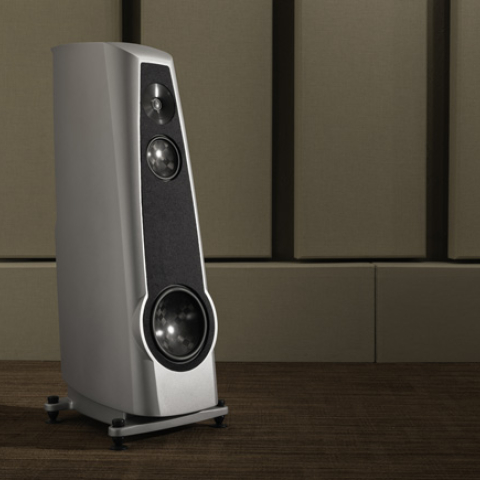
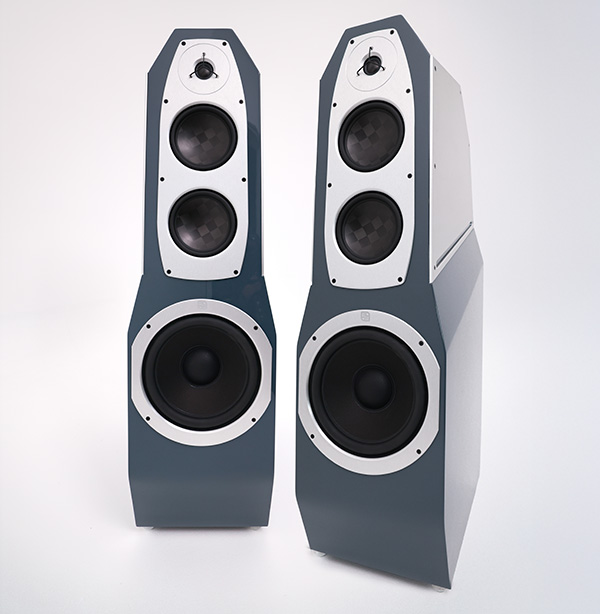
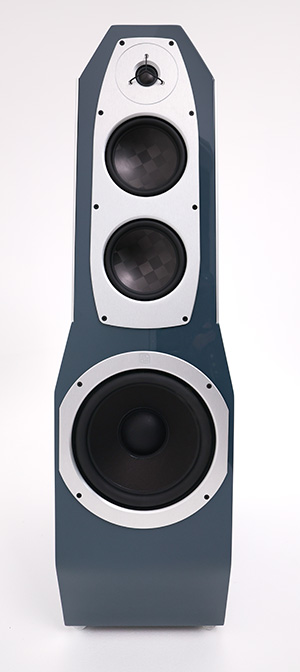
The Andra 5 is physically striking, tall, and—the pair I had at least—colorful. They sound very good when optimally placed and driven with the right amplifier. Those last two factors took me longer than usual to figure out.
 The fifth generation
EgglestonWorks has been building Andra speakers since at least 1997, when Wes Phillips reviewed the original Andra for Stereophile (footnote 1). By the time Paul Bolin reviewed the Andra II in 2002, ownership of the company had shifted from founder Bill Eggleston to Michael Sabre and Jim Thompson. The original Andra woofer chamber contained two 12" woofers in reflex-loaded, isobaric configuration with one behind the other, inside the cabinet. The second-generation Andra also used the isobaric approach, but now in a sealed box (footnote 2). This latest generation uses a single woofer in a rear-ported chamber. EgglestonWorks speakers—the top-line Ivy's—were the go-to monitors in Bob Ludwig's room at the legendary Gateway Mastering Studios; in fact, Bob worked with Bill Eggleston designing them. Now retired, Ludwig has a pair of original Andras in his home system (footnote 3). EgglestonWorks Ivy speakers are in Colin Leonard's studio, SING Mastering, in Atlanta, Georgia.
Nowadays, Thompson owns the company and designs the speakers. Master carpenter Richard Tielens and a team of nine colleagues build them, in Memphis, Tennessee. Individual drivers are sourced from other companies. Crossover networks are built in-house.
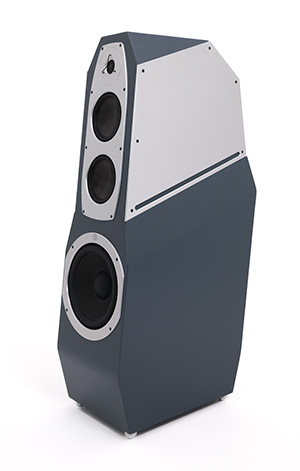 The Andra 5's cabinet is made of MDF, carbon fiber, and aluminum and is offered in just about any paint color the buyer desires. I asked Thompson if there was a webpage showing available colors. He replied: "This would be quite the webpage, as the options are infinite. We utilize automotive painting and have our own computer mixing station. As such, we can literally match any automotive color on any production car."
The pair of Andra 5s I was sent were dark blue. The side panels are adorned by silver-colored aluminum plates with black carbon fabric underneath. Tielens said the metal and carbon fabric are partly decorative, though they also contribute to damping cabinet resonances. The aluminum panels have a narrow cutout at the bottom. Several visitors asked me if those were vents for the midrange chambers. They aren't. What you can see through the aluminum cutout isn't dark empty space but a black carbon fiber sheet. An all-black version is also available.
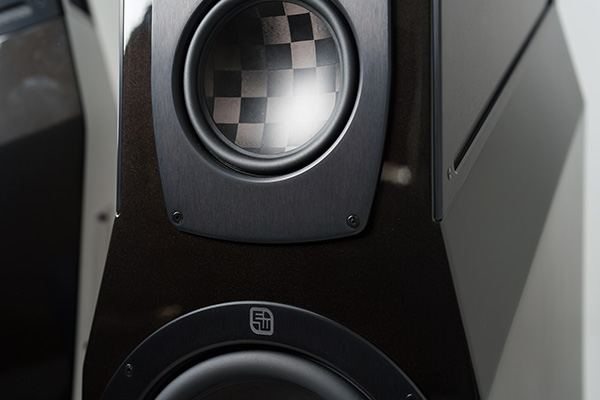
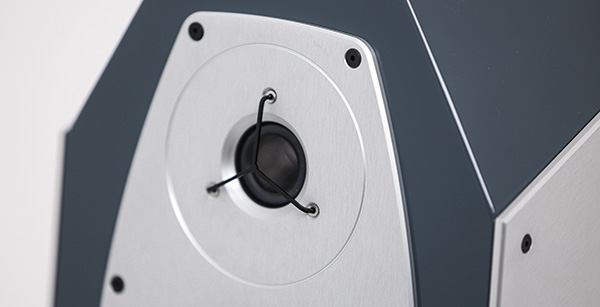
The fifth-generation Andra is a three-way, with a 12" (total diameter; effective radiating diameter is about 8") long-throw paper-cone woofer, two 6.5" carbon-cone midrange drivers (effective radiating diameter about 5"), and a 1" carbon fiber–dome tweeter. Thompson said, "The woofer and tweeter are ScanSpeak, and the mids are Satori by SB Acoustics. The tweeter is the brand-new TPCD [Thin-Ply Carbon Diaphragm] design that we helped tweak. It is based on the [beryllium] version of the ScanSpeak tweeter that we used for a long time." A beryllium shortage caused those tweeters to be discontinued. "We wanted something with the [same] detail. ... By using carbon in the mids and the tweeter, we get continuity of material and a natural sense of unity." The crossover frequencies are 350Hz and 2.3kHz.
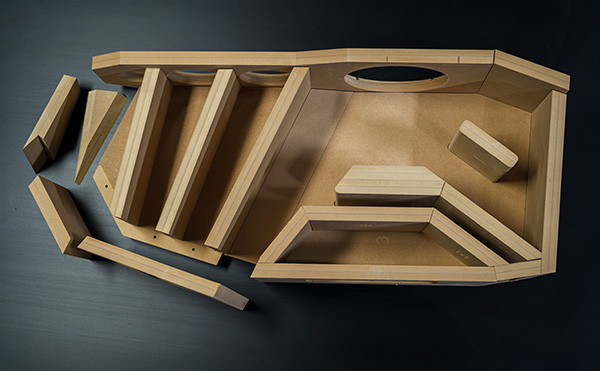
More details from Thompson: The tweeter chamber is not ported, while "the mids are housed in individual 'tubes' and vented to the rear—not a port, though." The bass chamber has a rear port, at the bottom, about 10" wide and 1.5" tall, with rounded outer edges. Internally, the woofer chamber (below) features nonparallel surfaces and a thin exit tube to the port. The midrange chambers are open to the rear, with a fabric vent on the back panel. The tweeter chamber is sealed, with nonparallel walls that flare upward in the rear, likely to dissipate back pressure.
The Andra 5's cabinet is made of MDF, carbon fiber, and aluminum and is offered in just about any paint color the buyer desires. I asked Thompson if there was a webpage showing available colors. He replied: "This would be quite the webpage, as the options are infinite. We utilize automotive painting and have our own computer mixing station. As such, we can literally match any automotive color on any production car."
The pair of Andra 5s I was sent were dark blue. The side panels are adorned by silver-colored aluminum plates with black carbon fabric underneath. Tielens said the metal and carbon fabric are partly decorative, though they also contribute to damping cabinet resonances. The aluminum panels have a narrow cutout at the bottom. Several visitors asked me if those were vents for the midrange chambers. They aren't. What you can see through the aluminum cutout isn't dark empty space but a black carbon fiber sheet. An all-black version is also available.
The fifth-generation Andra is a three-way, with a 12" (total diameter; effective radiating diameter is about 8") long-throw paper-cone woofer, two 6.5" carbon-cone midrange drivers (effective radiating diameter about 5"), and a 1" carbon fiber–dome tweeter. Thompson said, "The woofer and tweeter are ScanSpeak, and the mids are Satori by SB Acoustics. The tweeter is the brand-new TPCD [Thin-Ply Carbon Diaphragm] design that we helped tweak. It is based on the [beryllium] version of the ScanSpeak tweeter that we used for a long time." A beryllium shortage caused those tweeters to be discontinued. "We wanted something with the [same] detail. ... By using carbon in the mids and the tweeter, we get continuity of material and a natural sense of unity." The crossover frequencies are 350Hz and 2.3kHz.
More details from Thompson: The tweeter chamber is not ported, while "the mids are housed in individual 'tubes' and vented to the rear—not a port, though." The bass chamber has a rear port, at the bottom, about 10" wide and 1.5" tall, with rounded outer edges. Internally, the woofer chamber (below) features nonparallel surfaces and a thin exit tube to the port. The midrange chambers are open to the rear, with a fabric vent on the back panel. The tweeter chamber is sealed, with nonparallel walls that flare upward in the rear, likely to dissipate back pressure.
 The crossover and rear panel are in a separate, walled-off internal chamber. There are two sets of binding posts, for the highs (tweeter and mids) and lows (woofer), for biamping or biwiring. Included in the accessories box are heavy-gauge jumper wires for single-wire hookup, which is how I drove them.
These speakers are heavy: 159lb each. The user manual wisely advises, "Always move speakers with assistance." EgglestonWorks sent the review pair with a moving company, which unpacked them and placed them in my living room. When John Atkinson came over to measure them, we were able to tilt-lift the left one onto his wheeled dolly, which allowed him to keep his microphone in a fixed position and rotate the speaker through its on- and off-axis measurements. The Andra 5s come with a selection of metal feet and spikes. On my composite-wood floor, I used the feet.
The crossover and rear panel are in a separate, walled-off internal chamber. There are two sets of binding posts, for the highs (tweeter and mids) and lows (woofer), for biamping or biwiring. Included in the accessories box are heavy-gauge jumper wires for single-wire hookup, which is how I drove them.
These speakers are heavy: 159lb each. The user manual wisely advises, "Always move speakers with assistance." EgglestonWorks sent the review pair with a moving company, which unpacked them and placed them in my living room. When John Atkinson came over to measure them, we were able to tilt-lift the left one onto his wheeled dolly, which allowed him to keep his microphone in a fixed position and rotate the speaker through its on- and off-axis measurements. The Andra 5s come with a selection of metal feet and spikes. On my composite-wood floor, I used the feet.
 Setup: The Goldilocks challenge
The user manual describes the Andra 5 as "highly responsive to placement," which turned out to be true. The recommended initial placement is 24" from the rear wall, with "unequal distances from rear and sidewalls," the speakers spaced 8' "center-to-center"; the manual states that the center–center distances should be no less than 7' 6". The listening position "ideally" forms "an equilateral triangle with the speakers." I found that there was not enough bass if the speakers were much farther out from the front wall, and to my ears, if they were moved closer, the bass got mushy without getting bigger.
I tried many other placements and found that moving the speakers just an inch or two one way or another made a significant difference. I started with the speakers farther apart, because that's how big speakers usually work best in my room. After listening to a few songs and hearing me complain about the bass not filling the room, a friend who works for a different speaker company diagnosed the speakers as being a bit too far apart, the woofers unable to "integrate with each other and the room"; he recommended moving them to exactly 8' apart. Sure enough, the bass locked in much better at the recommended separation and at the recommended 24" from the front wall, so that's where they ended up.
I sat 8' from the plane formed by the speakers' front edges. A perfect 8' triangle made the sound too bright for my taste and didn't produce a fully satisfying stereo image. EgglestonWorks recommends toe-in of 15°–30° degrees, noting "Direct aiming yields sharper imaging. Slight toe-out yields a wider soundstage." Here, too, I followed the instructions, toeing in the speakers by about 15°.
Strong advice: Read the manual and do what it says.
Then came break-in. The manual says the speakers are broken in about 50 hours at the factory and recommends "at least 100 hours of music playback at moderate to high volume" for additional break-in. The promised reward: "Expect smoother highs, tighter bass, and improved coherence over time." One hundred hours is a lot of music-playing time when the speakers need to be returned in a couple of months. During the first month, I did some enjoyable listening, to all kinds of music in all formats, from heavy metal to classical, from streaming to vinyl, but I didn't write down any listening impressions or form any conclusions until at least a month had passed.
Early impressions: tight and fast bass that doesn't extend all the way down, very precise and revealing midrange and treble, not putting any kind of "pretty face" on the music. If a recording was less than good, the Andra 5s did not present it otherwise.
 Attaining the optimum low end
Even after the long break-in period, the bass did not present itself as deep and full as I would expect from such a large cabinet and a 12" woofer. The songs on my Qobuz Bass Test playlist (footnote 4) were good tonally, but the expected floor-moving bottom octave just wasn't there. A good example is James Blake's "Limit to Your Love," from his self-titled 2011 album (16/44.1 FLAC, A&M/Qobuz), an oft-cited low-end reference track for Stereophile reviewers. In his 2015 review of the KEF Blade Two, JA described the song's "bottom-octave synth-bass notes a minor second apart." Initially, I heard those synth-bass notes at separate pitches—so, good pitch resolution—but I couldn't feel them. My reference Bowers & Wilkins 808 speakers are better at conveying every bit of that bass energy. Likewise, Phil Lesh's bass on the Grateful Dead's live cover of Merle Haggard's "Mama Tried," recorded at the Fillmore East, April 26, 1971, and released on Grateful Dead (Skull & Roses) 50th Anniversary Expanded Edition (24/192 FLAC, Qobuz) wasn't as fulsome and tangible as I expected. Again, the notes were heard but not felt.
During the second month, the woofers seemed to loosen up—gradually. I also moved my listening seat about 6" closer, so I was 8' from the center point between the fronts of the speakers. After being out of town for a week, I warmed up the system and voilà, the bass finally sounded full-sized. Still not as big as the B&Ws, but big enough to satisfy. I'm surprised to write this, but in some rooms and systems, these large and heavy speakers might benefit from a subwoofer or two.
Amplifier selection
There's still more to the Andra 5s' bass story. During that first month, I listened mostly with my reference amplifier, the Benchmark AHB2, which has never had trouble driving any other speaker I've reviewed. Bass I could hear but not feel led me to try other amplifiers. The best choice was a "vintage"—I can't believe the 1990s is now "vintage"—Aragon 8002 class-AB high-current power amp with a heavy-duty linear power supply. It was a good match to the Andra 5s, precise, but no edgy high end. Thompson told me that the Andra 5's minimum impedance is 5.4 ohms at 85Hz (we'll see what JA's measurements say), so not a difficult load. But the rated sensitivity (87.5dB) is lowish, so you need twice as much power as you'd need for a 90dB-rated speaker. Thompson said, "In my experience, amplifiers with high current and strong damping sharpen bass control and timing on most speakers, but definitely in this case with the Andra 5—not because the speaker is hard to drive but because it rewards that extra control."
Don't expect great sound without bringing an amplifier with some serious grunt to the listening party.
I did most of my reviewing using the Aragon 8002. I also spent some time with the Andra 5s connected to the T+A Symphonia streaming receiver (see my Follow-Up review in the January issue). The Symphonia's well-designed tone controls were helpful. I favored listening with the bass control at +2, up one setting from flat. The treble control usually was fine set flat, but some music sounded best with it set to –2, one setting down from flat. The Symphonia had enough low-frequency umph for some very satisfying listening with the Andra 5s.
 Finally, time for critical listening
By the end of the second month, I felt like I knew the Andra 5s, and they were broken in enough that I could bear down and do some real reviewer-style critical listening.
Returning to my Bass Test playlist, the low end now sounded more like I expect. Those synth-bass notes in the James Blake tune moved some serious room air. The electric bass in the left channel of Aretha Franklin's cover of Simon and Garfunkel's "Bridge Over Troubled Water" (from ARETHA, Atlantic/Rhino, Qobuz 24/96 stream): same thing. And one of my favorites on the playlist, "Memphis Soul Stew" from King Curtis's King Size Soul (Atlantic/Rhino, Qobuz CD-resolution stream), sounded especially lively, with Tommy Cogbill's funky bassline punching out of the left speaker. The very bottom of the bass was never as firm and strong as through my B&W 808s, but I sat closer to the Andra 5s and that made up some of the difference. I was ultimately satisfied with the Andra 5s' low end.
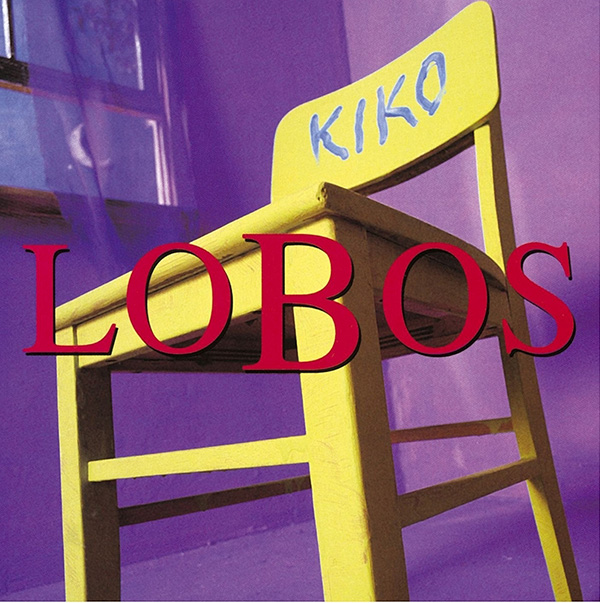 These EgglestonWorks speakers excelled with my Imaging Test playlist (footnote 5). Los Lobos's "Kiko and the Lavender Moon" from Kiko (16/44.1 FLAC, Warner Bros./Qobuz) played with all the jagged details of each instrument, the clearly delineated two-voice vocals in the center. "Blue Nile," from Nature by Dave's True Story (16/44.1 FLAC, BePop Records/Qobuz), cast a wide, high, deep soundstage, with Kelly Flint's dream-hazy vocals carrying the day. The Andra 5s didn't paper over the late 1980s upper-midrange gloss on Southern Pacific's cover of Del Shannon's "I Go to Pieces" from County Line (16/44.1 FLAC, Warner Bros./Qobuz); it spotlighted every nuance of the group-harmony vocals. With Natalie Merchant's "The Peppery Man" from Leave Your Sleep (24/88.2 FLAC, Nonesuch/Qobuz), every voice was precisely placed in the soundstage, and the tuba and bass clarinet tonality was very realistic. Willie Nelson's voice on his cover of Hoagy Carmichael's "Stardust," from the album of the same name (24/88.2 FLAC, Columbia/Qobuz), was less "whiskey and leather" than I expected, but his words were articulated and his guitar played in such a realistic way that it was as if he were 8' in front of me, between the speakers.
Vinyl playback through the Andra 5s was mostly satisfying, though the highly detailed top end did nothing to suppress ticks and pops on noisy records. With well-made, good-condition records, the EgglestonWorks speakers imparted extra-sharp focus and detail. That crispness benefitted the sound of Allen Toussaint's Southern Nights (Rhino Reserve RES1 2168), unclouding the somewhat muddy mix and revealing the rich textures of Toussaint's arrangements.
These EgglestonWorks speakers excelled with my Imaging Test playlist (footnote 5). Los Lobos's "Kiko and the Lavender Moon" from Kiko (16/44.1 FLAC, Warner Bros./Qobuz) played with all the jagged details of each instrument, the clearly delineated two-voice vocals in the center. "Blue Nile," from Nature by Dave's True Story (16/44.1 FLAC, BePop Records/Qobuz), cast a wide, high, deep soundstage, with Kelly Flint's dream-hazy vocals carrying the day. The Andra 5s didn't paper over the late 1980s upper-midrange gloss on Southern Pacific's cover of Del Shannon's "I Go to Pieces" from County Line (16/44.1 FLAC, Warner Bros./Qobuz); it spotlighted every nuance of the group-harmony vocals. With Natalie Merchant's "The Peppery Man" from Leave Your Sleep (24/88.2 FLAC, Nonesuch/Qobuz), every voice was precisely placed in the soundstage, and the tuba and bass clarinet tonality was very realistic. Willie Nelson's voice on his cover of Hoagy Carmichael's "Stardust," from the album of the same name (24/88.2 FLAC, Columbia/Qobuz), was less "whiskey and leather" than I expected, but his words were articulated and his guitar played in such a realistic way that it was as if he were 8' in front of me, between the speakers.
Vinyl playback through the Andra 5s was mostly satisfying, though the highly detailed top end did nothing to suppress ticks and pops on noisy records. With well-made, good-condition records, the EgglestonWorks speakers imparted extra-sharp focus and detail. That crispness benefitted the sound of Allen Toussaint's Southern Nights (Rhino Reserve RES1 2168), unclouding the somewhat muddy mix and revealing the rich textures of Toussaint's arrangements.
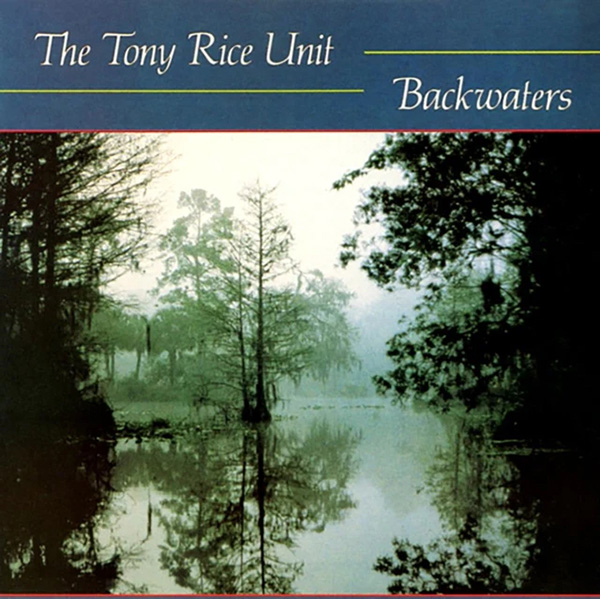 Backwaters by the Tony Rice Unit (Rounder/Craft CR00916), a genre of music Rice called "spacegrass," played punchy and peppy, emphasizing the group's masterful musicianship. The group's version of the jazz standard "On Green Dolphin Street" was particularly enjoyable. With its extended twin fiddle solos, the song led me to imagine Lester Flatt and Earl Scruggs setting up shop in the Hot Club of Paris, jamming with Django Reinhardt and Stéphane Grappelli.
Now that my Spotify Premium account includes lossless streaming, I'm more prone to run the world's most popular streaming service through my dCS Bartók APEX. At the very end of my time with the Andra 5s, I spent an evening blissed out to my Psychedelia by Tom playlist, the system cranked up loud. No psychedelic drugs were needed; I closed my eyes and imagined a brightly colored dream-trip into the music. My reviewer mind shut off, and my music-lover senses took over. I took John Lennon's wise counsel, turned off my mind, relaxed, and floated downstream. It was a glorious period at the end of the Andra 5 sentence.
Backwaters by the Tony Rice Unit (Rounder/Craft CR00916), a genre of music Rice called "spacegrass," played punchy and peppy, emphasizing the group's masterful musicianship. The group's version of the jazz standard "On Green Dolphin Street" was particularly enjoyable. With its extended twin fiddle solos, the song led me to imagine Lester Flatt and Earl Scruggs setting up shop in the Hot Club of Paris, jamming with Django Reinhardt and Stéphane Grappelli.
Now that my Spotify Premium account includes lossless streaming, I'm more prone to run the world's most popular streaming service through my dCS Bartók APEX. At the very end of my time with the Andra 5s, I spent an evening blissed out to my Psychedelia by Tom playlist, the system cranked up loud. No psychedelic drugs were needed; I closed my eyes and imagined a brightly colored dream-trip into the music. My reviewer mind shut off, and my music-lover senses took over. I took John Lennon's wise counsel, turned off my mind, relaxed, and floated downstream. It was a glorious period at the end of the Andra 5 sentence.
 Conclusions
Once I got to know and understand the Andra 5s, they rewarded me with deeply revealing listening, bringing forth interesting details from favorite tracks.
At nearly $40,000/pair, the Andra 5 is a serious hi-fi purchase for most people. I strongly recommend listening to them in your own space, set up as detailed in the user manual, before making a purchase decision. Just make sure the pair you audition is well broken-in.
The Andra 5 sound tends toward detailed and revealing. Recordings that can stand up to sharp focus and honest reproduction of their tonality will shine. Poor recordings may sound worse than they do through more forgiving speakers. EgglestonWorks' stated goal is "to re-create a musical experience so vividly and accurately that it evokes the same emotion as a live performance." The Andra 5s succeed at that if that emotion was captured in the recording.
The look of the Andra 5 is unique and may be polarizing. The limitless choice of paint color gives buyers the choice of either blending them into the room decor or having them be more visually conspicuous. Fit and finish is superb.
My brief relationship with the Andra 5s involved some adjustment and accommodation. In the terminology of modern human relationships, I had to put in the work. Then they delivered the promised sound qualities, and the work was quickly forgotten. It was a fun ride.
Footnote 1: The original Andra was honored as Stereophile's 1997 Loudspeaker of the Year. Footnote 2: Isobaric loading isn't especially common, but it isn't uncommon, either. A list of companies currently employing isobaric loading includes Audiovector, MonAcoustic, and Wilson-Benesch. Footnote 3: See Bob Ludwig's farewell interview. Footnote 4: See open.qobuz.com/playlist/21395182. Footnote 5: See open.qobuz.com/playlist/22204090
The fifth generationEgglestonWorks has been building Andra speakers since at least 1997, when Wes Phillips reviewed the original Andra for Stereophile (footnote 1). By the time Paul Bolin reviewed the Andra II in 2002, ownership of the company had shifted from founder Bill Eggleston to Michael Sabre and Jim Thompson. The original Andra woofer chamber contained two 12" woofers in reflex-loaded, isobaric configuration with one behind the other, inside the cabinet. The second-generation Andra also used the isobaric approach, but now in a sealed box (footnote 2). This latest generation uses a single woofer in a rear-ported chamber. EgglestonWorks speakers—the top-line Ivy's—were the go-to monitors in Bob Ludwig's room at the legendary Gateway Mastering Studios; in fact, Bob worked with Bill Eggleston designing them. Now retired, Ludwig has a pair of original Andras in his home system (footnote 3). EgglestonWorks Ivy speakers are in Colin Leonard's studio, SING Mastering, in Atlanta, Georgia.
The Andra 5's cabinet is made of MDF, carbon fiber, and aluminum and is offered in just about any paint color the buyer desires. I asked Thompson if there was a webpage showing available colors. He replied: "This would be quite the webpage, as the options are infinite. We utilize automotive painting and have our own computer mixing station. As such, we can literally match any automotive color on any production car."
The pair of Andra 5s I was sent were dark blue. The side panels are adorned by silver-colored aluminum plates with black carbon fabric underneath. Tielens said the metal and carbon fabric are partly decorative, though they also contribute to damping cabinet resonances. The aluminum panels have a narrow cutout at the bottom. Several visitors asked me if those were vents for the midrange chambers. They aren't. What you can see through the aluminum cutout isn't dark empty space but a black carbon fiber sheet. An all-black version is also available.
The crossover and rear panel are in a separate, walled-off internal chamber. There are two sets of binding posts, for the highs (tweeter and mids) and lows (woofer), for biamping or biwiring. Included in the accessories box are heavy-gauge jumper wires for single-wire hookup, which is how I drove them.
Setup: The Goldilocks challengeThe user manual describes the Andra 5 as "highly responsive to placement," which turned out to be true. The recommended initial placement is 24" from the rear wall, with "unequal distances from rear and sidewalls," the speakers spaced 8' "center-to-center"; the manual states that the center–center distances should be no less than 7' 6". The listening position "ideally" forms "an equilateral triangle with the speakers." I found that there was not enough bass if the speakers were much farther out from the front wall, and to my ears, if they were moved closer, the bass got mushy without getting bigger.
Attaining the optimum low endEven after the long break-in period, the bass did not present itself as deep and full as I would expect from such a large cabinet and a 12" woofer. The songs on my Qobuz Bass Test playlist (footnote 4) were good tonally, but the expected floor-moving bottom octave just wasn't there. A good example is James Blake's "Limit to Your Love," from his self-titled 2011 album (16/44.1 FLAC, A&M/Qobuz), an oft-cited low-end reference track for Stereophile reviewers. In his 2015 review of the KEF Blade Two, JA described the song's "bottom-octave synth-bass notes a minor second apart." Initially, I heard those synth-bass notes at separate pitches—so, good pitch resolution—but I couldn't feel them. My reference Bowers & Wilkins 808 speakers are better at conveying every bit of that bass energy. Likewise, Phil Lesh's bass on the Grateful Dead's live cover of Merle Haggard's "Mama Tried," recorded at the Fillmore East, April 26, 1971, and released on Grateful Dead (Skull & Roses) 50th Anniversary Expanded Edition (24/192 FLAC, Qobuz) wasn't as fulsome and tangible as I expected. Again, the notes were heard but not felt.
There's still more to the Andra 5s' bass story. During that first month, I listened mostly with my reference amplifier, the Benchmark AHB2, which has never had trouble driving any other speaker I've reviewed. Bass I could hear but not feel led me to try other amplifiers. The best choice was a "vintage"—I can't believe the 1990s is now "vintage"—Aragon 8002 class-AB high-current power amp with a heavy-duty linear power supply. It was a good match to the Andra 5s, precise, but no edgy high end. Thompson told me that the Andra 5's minimum impedance is 5.4 ohms at 85Hz (we'll see what JA's measurements say), so not a difficult load. But the rated sensitivity (87.5dB) is lowish, so you need twice as much power as you'd need for a 90dB-rated speaker. Thompson said, "In my experience, amplifiers with high current and strong damping sharpen bass control and timing on most speakers, but definitely in this case with the Andra 5—not because the speaker is hard to drive but because it rewards that extra control."
Finally, time for critical listeningBy the end of the second month, I felt like I knew the Andra 5s, and they were broken in enough that I could bear down and do some real reviewer-style critical listening.
These EgglestonWorks speakers excelled with my Imaging Test playlist (footnote 5). Los Lobos's "Kiko and the Lavender Moon" from Kiko (16/44.1 FLAC, Warner Bros./Qobuz) played with all the jagged details of each instrument, the clearly delineated two-voice vocals in the center. "Blue Nile," from Nature by Dave's True Story (16/44.1 FLAC, BePop Records/Qobuz), cast a wide, high, deep soundstage, with Kelly Flint's dream-hazy vocals carrying the day. The Andra 5s didn't paper over the late 1980s upper-midrange gloss on Southern Pacific's cover of Del Shannon's "I Go to Pieces" from County Line (16/44.1 FLAC, Warner Bros./Qobuz); it spotlighted every nuance of the group-harmony vocals. With Natalie Merchant's "The Peppery Man" from Leave Your Sleep (24/88.2 FLAC, Nonesuch/Qobuz), every voice was precisely placed in the soundstage, and the tuba and bass clarinet tonality was very realistic. Willie Nelson's voice on his cover of Hoagy Carmichael's "Stardust," from the album of the same name (24/88.2 FLAC, Columbia/Qobuz), was less "whiskey and leather" than I expected, but his words were articulated and his guitar played in such a realistic way that it was as if he were 8' in front of me, between the speakers.
Vinyl playback through the Andra 5s was mostly satisfying, though the highly detailed top end did nothing to suppress ticks and pops on noisy records. With well-made, good-condition records, the EgglestonWorks speakers imparted extra-sharp focus and detail. That crispness benefitted the sound of Allen Toussaint's Southern Nights (Rhino Reserve RES1 2168), unclouding the somewhat muddy mix and revealing the rich textures of Toussaint's arrangements.
Backwaters by the Tony Rice Unit (Rounder/Craft CR00916), a genre of music Rice called "spacegrass," played punchy and peppy, emphasizing the group's masterful musicianship. The group's version of the jazz standard "On Green Dolphin Street" was particularly enjoyable. With its extended twin fiddle solos, the song led me to imagine Lester Flatt and Earl Scruggs setting up shop in the Hot Club of Paris, jamming with Django Reinhardt and Stéphane Grappelli.
Now that my Spotify Premium account includes lossless streaming, I'm more prone to run the world's most popular streaming service through my dCS Bartók APEX. At the very end of my time with the Andra 5s, I spent an evening blissed out to my Psychedelia by Tom playlist, the system cranked up loud. No psychedelic drugs were needed; I closed my eyes and imagined a brightly colored dream-trip into the music. My reviewer mind shut off, and my music-lover senses took over. I took John Lennon's wise counsel, turned off my mind, relaxed, and floated downstream. It was a glorious period at the end of the Andra 5 sentence.
ConclusionsOnce I got to know and understand the Andra 5s, they rewarded me with deeply revealing listening, bringing forth interesting details from favorite tracks.
Footnote 1: The original Andra was honored as Stereophile's 1997 Loudspeaker of the Year. Footnote 2: Isobaric loading isn't especially common, but it isn't uncommon, either. A list of companies currently employing isobaric loading includes Audiovector, MonAcoustic, and Wilson-Benesch. Footnote 3: See Bob Ludwig's farewell interview. Footnote 4: See open.qobuz.com/playlist/21395182. Footnote 5: See open.qobuz.com/playlist/22204090