Nick Doshi is cautiously reserved when he talks about his amplifiers, preferring to let the products speak for themselves. At every show I've heard them at, from Chicago to DC to Munich, they have done exactly that: Every system I've heard featuring a Doshi amp has delivered great sound. When I pressed him as to why, he just smiled.
So it was with a little trepidation that I asked to review the hybrid Doshi Audio Evolution Stereo Amplifier ($24,995), a push-pull, hybrid solid state/tube amplifier that operates its first 50Wpc in class-A into 5 ohms, up to 65Wpc in class-AB. The amp exhibits the best qualities of a triode, Doshi insisted.
"The Doshi Stereo Amplifier is actually two very different and highly desirable amplifiers in a single, extraordinary product," the Doshi website states. "While servicing a classic Marantz amplifier, Nick realized that the EL34 tube could be made to exhibit exactly the same electrical characteristics as a 300B."
I asked Nick Doshi about this. "Actually, it was a one-off Marantz 300B amplifier built by Sid Smith"—the legendary Marantz engineer—"to show how a 300B push-pull amp should really be done," Nick answered in an email. "It used 8B output transformers, which piqued my interest. I did some research and saw the similarities in the curves and tried an experiment involving a set of separate screen windings to deliver power from the screens of an EL34/6CA7 tube."
Continuing the narrative from the Doshi Audio site: "Employing an extremely expensive output transformer custom-designed to Doshi's specifications, a discrete, tertiary transformer winding is connected directly to the grids of each output tube. As a result, when used at low power, the Doshi Stereo Amplifier provides sonic and electrical performance identical to a push-pull 300B amplifier!"
I've enjoyed many great triode-based amplifiers over the years. If Doshi's claims about the sound of the Evolution Stereo Amplifier are accurate, I'm all in and all ears.
Class-AB stereo amplifiers are characterized by bias current that determines how much of the amplifier's total power is delivered in class-A. The Doshi Evolution has not one but two notable transitions: It runs class-A up to 50W, and it acts like a triode amplifier for the first 10–12W.
 "The Evolution Stereo Amplifier is designed with two sets of push-pull primary windings," Doshi explained. "One set for the plates and one set for the screens. This differs from the standard pentode, triode, or ultralinear operation commonly used. The idea is to load the screens such that the first few watts of output power are the result of screen contribution, and as the screens reach their limit, the plates take over the load. It did not work exactly as I wanted it, but it worked well enough to make for a wonderful, effervescent-sounding amplifier. The goal was to bring out the beauty of a triode-like midrange with power and control.
"Another choice was to use as little feedback [as possible] to achieve this," he added. "The preamplifiers do not use overall feedback, and the amplifiers use very little, 7dB in the case of the stereo amplifier."
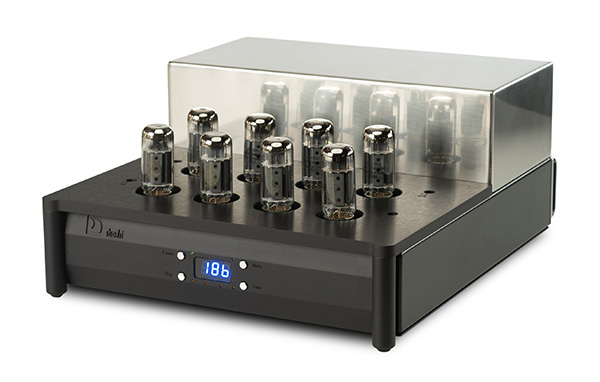
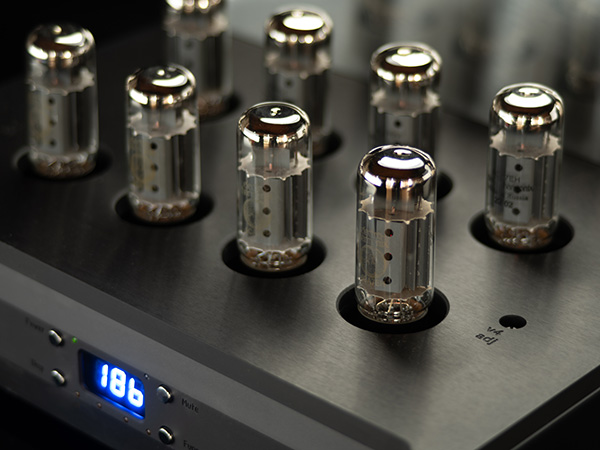
Doshi designed his Evolution Stereo Amplifier to use only two active stages to deliver output in excess of 55Wpc. Unusually for a hybrid amplifier, the input stage is solid state and the output stage is tubed; it's usually the other way around. The input/driver stage uses matched Linear Systems dual JFETs. The output stage uses four pairs of EL34 tubes strapped in parallel, which halves the output impedance of the tube, doubles the current capacity, and lowers the dissipation in the tube, increasing tube life.
"Our JFET input/splitter stage drives two pairs of EL34/6CA7 output tubes per channel," Nick wrote in an email. "Although most stereo amplifiers use a single pair of tubes per channel, our four-tube design yields lower output impedance and the ability to master complex loads. As a result, our Evolution Stereo Amplifier can drive virtually any loudspeaker."
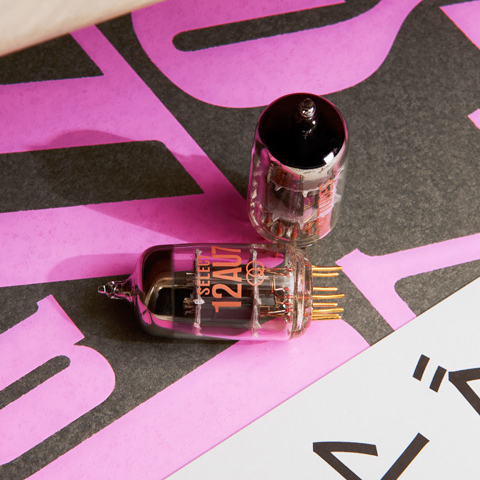
What's more, the tubes are much cheaper than 300Bs. "Using a relatively inexpensive EH 6CA7 type means that the overall cost of renewing the tubes is under $300," Doshi wrote.
The amplifier employs Doshi's "Component De-Stressing" methodology, whereby every part is over-specified to optimize reliability, longevity, and sound quality.
"The Evolution Stereo Amplifier is designed with two sets of push-pull primary windings," Doshi explained. "One set for the plates and one set for the screens. This differs from the standard pentode, triode, or ultralinear operation commonly used. The idea is to load the screens such that the first few watts of output power are the result of screen contribution, and as the screens reach their limit, the plates take over the load. It did not work exactly as I wanted it, but it worked well enough to make for a wonderful, effervescent-sounding amplifier. The goal was to bring out the beauty of a triode-like midrange with power and control.
"Another choice was to use as little feedback [as possible] to achieve this," he added. "The preamplifiers do not use overall feedback, and the amplifiers use very little, 7dB in the case of the stereo amplifier."
Doshi designed his Evolution Stereo Amplifier to use only two active stages to deliver output in excess of 55Wpc. Unusually for a hybrid amplifier, the input stage is solid state and the output stage is tubed; it's usually the other way around. The input/driver stage uses matched Linear Systems dual JFETs. The output stage uses four pairs of EL34 tubes strapped in parallel, which halves the output impedance of the tube, doubles the current capacity, and lowers the dissipation in the tube, increasing tube life.
"Our JFET input/splitter stage drives two pairs of EL34/6CA7 output tubes per channel," Nick wrote in an email. "Although most stereo amplifiers use a single pair of tubes per channel, our four-tube design yields lower output impedance and the ability to master complex loads. As a result, our Evolution Stereo Amplifier can drive virtually any loudspeaker."
What's more, the tubes are much cheaper than 300Bs. "Using a relatively inexpensive EH 6CA7 type means that the overall cost of renewing the tubes is under $300," Doshi wrote.
The amplifier employs Doshi's "Component De-Stressing" methodology, whereby every part is over-specified to optimize reliability, longevity, and sound quality.
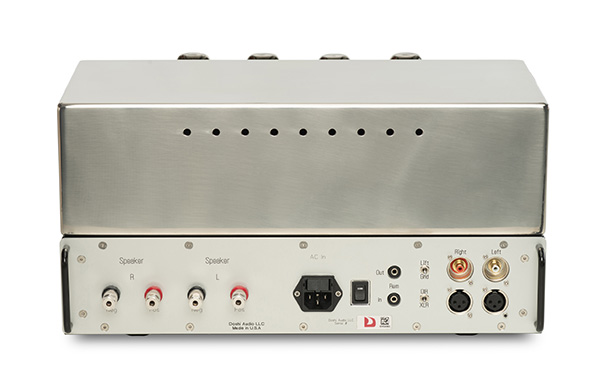 "Our Sowter Audio output transformers, for example, are designed for continuous output in excess of 100W at 20Hz, preventing core saturation," Doshi wrote. "Every component of this amplifier is overbuilt to optimize reliability. The power supply is vastly oversized, so all components run cool, the output transformers similarly so. The chassis utilizes 14ga stainless steel for strength and nonmagnetic properties. A career spent in broadcasting has served to make me keenly aware that reliability is goal #1."
The Evolution Stereo Amplifier employs "three-stage" mechanical decoupling technology to minimize resonances. Critical audio circuits are point-to-point wired and mounted on an acoustically isolated subchassis made of 14ga stainless steel, suspended from a top plate of anodized aluminum. All this is mounted on a constrained-layer aluminum platform that floats on four vibration-absorbing feet, mechanically decoupled from the chassis with rubber and Sorbothane.
"The input, regulators, and power supply use circuit boards and the output tubes are wired point-to-point to keep the grid resistors, etc., closest to the tubes," Doshi continued.
Chassis and transformer covers are stainless steel; the rear panel is aluminum as is the front panel and the top plate. Digital control circuitry is supplied by John Chapman of Bent Audio, custom for Doshi Audio. RCA and XLR jacks are by Neutrik. Speaker binding posts are by Cardas.
The Evolution Stereo has both RCA and XLR inputs, but the single-ended (RCA) inputs are preferred. The RCA inputs are the "direct" inputs because "the amplifier input is single ended. The balanced inputs are fed through an op-amp–based balanced-to– single-ended converter. It's an instrumentation op-amp topology and is incredibly transparent, but it counts as another amplification stage. Doshi Audio recommends using the SE inputs if possible for the cleanest signal path."
The input impedance is 30k ohms, "for perfect compatibility with the widest possible range of preamplifiers," the Doshi website states. Still, care should be taken with preamplifier matching. The Doshi Evolution didn't work well with my Shindo Allegro mono, which has a high output impedance for a preamp, rising in the bass due to capacitor coupling. With the Shindo-Doshi combo, the sound was thin, constricted, and bland, with insufficient bass. "The Shindo cannot drive a 30k ohm input impedance without low-frequency attenuation, due to its design," Doshi said. "Provided the preamplifier has a low enough output impedance and a large enough output coupling capacitor (if designed in a 'Classic' tube topology), there will be no issues in matching."
"Our Sowter Audio output transformers, for example, are designed for continuous output in excess of 100W at 20Hz, preventing core saturation," Doshi wrote. "Every component of this amplifier is overbuilt to optimize reliability. The power supply is vastly oversized, so all components run cool, the output transformers similarly so. The chassis utilizes 14ga stainless steel for strength and nonmagnetic properties. A career spent in broadcasting has served to make me keenly aware that reliability is goal #1."
The Evolution Stereo Amplifier employs "three-stage" mechanical decoupling technology to minimize resonances. Critical audio circuits are point-to-point wired and mounted on an acoustically isolated subchassis made of 14ga stainless steel, suspended from a top plate of anodized aluminum. All this is mounted on a constrained-layer aluminum platform that floats on four vibration-absorbing feet, mechanically decoupled from the chassis with rubber and Sorbothane.
"The input, regulators, and power supply use circuit boards and the output tubes are wired point-to-point to keep the grid resistors, etc., closest to the tubes," Doshi continued.
Chassis and transformer covers are stainless steel; the rear panel is aluminum as is the front panel and the top plate. Digital control circuitry is supplied by John Chapman of Bent Audio, custom for Doshi Audio. RCA and XLR jacks are by Neutrik. Speaker binding posts are by Cardas.
The Evolution Stereo has both RCA and XLR inputs, but the single-ended (RCA) inputs are preferred. The RCA inputs are the "direct" inputs because "the amplifier input is single ended. The balanced inputs are fed through an op-amp–based balanced-to– single-ended converter. It's an instrumentation op-amp topology and is incredibly transparent, but it counts as another amplification stage. Doshi Audio recommends using the SE inputs if possible for the cleanest signal path."
The input impedance is 30k ohms, "for perfect compatibility with the widest possible range of preamplifiers," the Doshi website states. Still, care should be taken with preamplifier matching. The Doshi Evolution didn't work well with my Shindo Allegro mono, which has a high output impedance for a preamp, rising in the bass due to capacitor coupling. With the Shindo-Doshi combo, the sound was thin, constricted, and bland, with insufficient bass. "The Shindo cannot drive a 30k ohm input impedance without low-frequency attenuation, due to its design," Doshi said. "Provided the preamplifier has a low enough output impedance and a large enough output coupling capacitor (if designed in a 'Classic' tube topology), there will be no issues in matching."
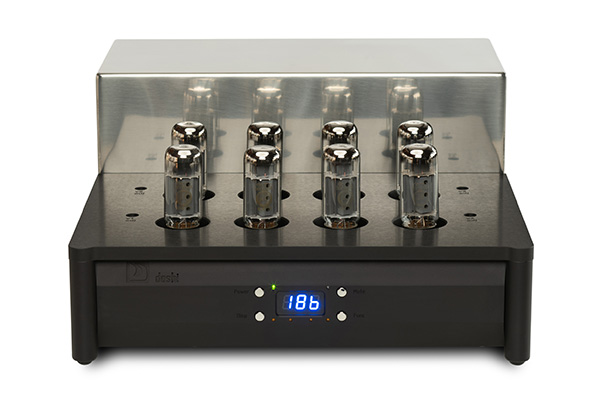 The front of the Evolution Stereo Amplifier includes four small buttons: Power (On or Off), Disp (which turns the display panel on), Mute, and Func. The Func switch steps through the bias settings for each tube pair to facilitate biasing. It also provides access to a timer that indicates how long the tubes have been in use. The Stereo Evolution is not autobiasing, but biasing is simple. The procedure is described below and on p.4 of the user manual.
Around back, alongside the inputs and outputs, a Ground Lift switch enables system optimization. An optically isolated 12V trigger loop enables the amplifier to be powered on and off remotely. The main power switch sits above the IEC receptacle.
On startup, the amp is muted for about a minute. When the mute button is pressed on the front panel, both input and output are shorted, protecting the speakers from any inadvertent cable movements.
In voicing the Evolution Stereo Amplifier, Doshi used speakers from Wilson, Kharma, Tannoy, ATC, KEF, Franco Serblin, Popori Acoustics—and Joseph Audio, a frequent, sympathetic companion at shows.
Doshi amplifiers are assembled in the company's Charlottesville, Virginia, factory. After prefabricated control boards and cable harnesses are delivered, Doshi handles final assembly, testing, and shipping.
Setup
The front of the Evolution Stereo Amplifier includes four small buttons: Power (On or Off), Disp (which turns the display panel on), Mute, and Func. The Func switch steps through the bias settings for each tube pair to facilitate biasing. It also provides access to a timer that indicates how long the tubes have been in use. The Stereo Evolution is not autobiasing, but biasing is simple. The procedure is described below and on p.4 of the user manual.
Around back, alongside the inputs and outputs, a Ground Lift switch enables system optimization. An optically isolated 12V trigger loop enables the amplifier to be powered on and off remotely. The main power switch sits above the IEC receptacle.
On startup, the amp is muted for about a minute. When the mute button is pressed on the front panel, both input and output are shorted, protecting the speakers from any inadvertent cable movements.
In voicing the Evolution Stereo Amplifier, Doshi used speakers from Wilson, Kharma, Tannoy, ATC, KEF, Franco Serblin, Popori Acoustics—and Joseph Audio, a frequent, sympathetic companion at shows.
Doshi amplifiers are assembled in the company's Charlottesville, Virginia, factory. After prefabricated control boards and cable harnesses are delivered, Doshi handles final assembly, testing, and shipping.
Setup
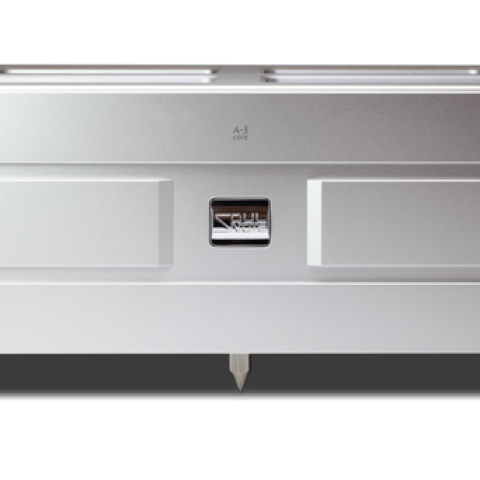
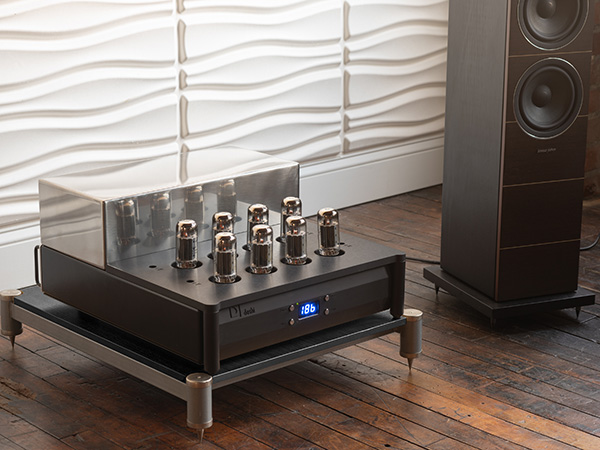
The Doshi Audio Evolution Stereo Amplifier stands 18" wide × 20" deep × 8" high and weighs 65lb—though as I hauled it up my building's winding staircase and around my apartment, it felt much heavier. Once it was unpacked, I wrestled it to the mancave rug that covers the wood plank floor in front of my equipment rack. I placed three large A/V RoomService Equipment Vibration Protectors under the amp: My Greenwich Village building is vulnerable to vibrations caused by moving trucks. The footers scored a big improvement: soundstaging, sense of air, and bass control. Biasing was straightforward, though good light and decent eyesight are helpful for seeing those small front-panel buttons and especially the small, engraved letters next to the individual tubes. Doshi described the biasing process. "The front panel has four buttons around the display: Top left, power; top right, mute; bottom left, display on/off; bottom right, function. To activate the display, press the bottom left button. Now the display will stay on until the button is pressed again. Use the function button to step through the five functions: 1—hours elapsed, 2—bias for tube pair V1 (first LED below the window is lit), 3—bias for tube pair V2 (second LED under the window is lit), and so on until the V4 bias. Pressing the button for the sixth time will bring it back to elapsed hours and no LEDs lit up.
"The bias settings for the amplifier can be adjusted for a slightly different sound to match system and personal taste. Typically, settings from 170 to 200 on the display are safe to use, with 180–185 being the norm. Lower settings will lean out the sound, and higher settings will fatten it up for a more 'tubey' presentation."
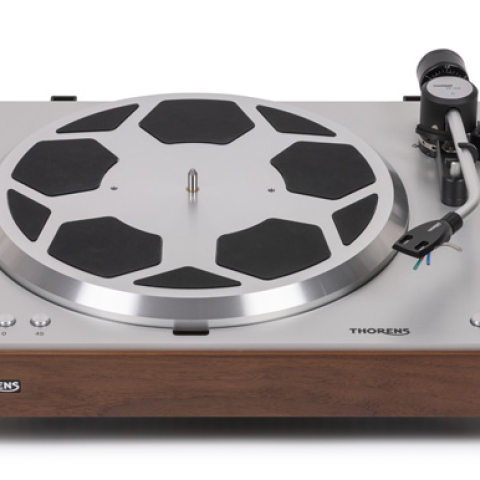
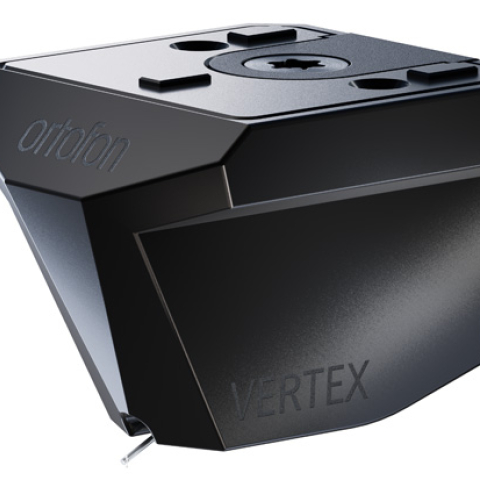
I biased the tubes near 200, which sounded best to my ears. The rest of the system was the J.Sikora Standard Max Supreme turntable, Allnic-H-5500 phono stage, Ampsandsound Yosemite preamplifier—which according to the manufacturer has a modest (for a tubed pre) output impedance in the 300–600 ohm range, depending on what tube is used in the last position—and DeVore Fidelity Super Nine loudspeakers.
 Listening
When choosing material for audio reviews, I use familiar records that test a handful of system parameters. For this review, I pulled out Tord Gustavsen Trio's Going Places (ECM Records ECM 7598119), Count Basie's 88 Basie Street (Analogue Productions APJ 156), The Master Trio (Baybridge Records KUX-183-B), Michael Franks's The Art of Tea (Reprise Records MS 2230), Tom Petty and the Heartbreakers' Mojo (Reprise Records 523971-1), Yussef Kamaal's Black Focus (Brownswood Recordings BWOOD0157LP), and the debut album from 1970s UK prog rock quartet U.K. (Polydor/E.G. 2302 080).
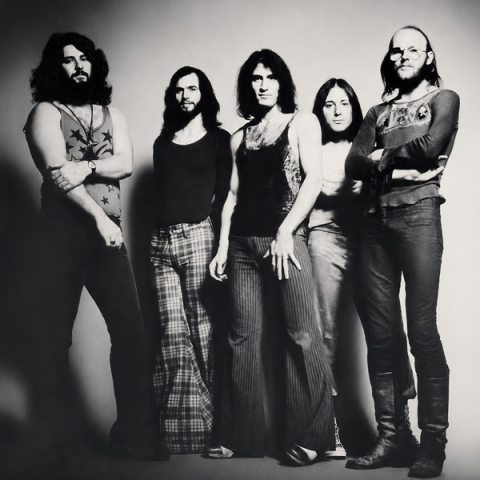
The late-1970s album U.K., while not a sonic masterpiece, showcases amazing performances by John Wetton, Bill Bruford, Allan Holdsworth, and Eddie Jobson. The synergy between the Ampsandsound Yosemite preamp and the Doshi Evolution Stereo amp was exceptional, extracting maximum detail from the recording. Most amplifiers define the boundaries of a soundstage; with the Yosemite and the Doshi, I perceived no borders—just a galactic-scale soundstage that seemed to go on forever.
The Art of Tea, a classic '70s vocal jazz record from Michael Franks, possesses tonal warmth, a lush, slightly atmospheric bottom end, and an airy top. The Evolution Stereo extracted the full reverb and decay from Franks's voice, the precise articulation of Wilton Felder's bass, and the delicate textures of Larry Carlton's guitar and John Guerin's cymbals. This resulted in fine clarity, precise image placement, and a CinemaScope-worthy soundstage. The Doshi sounded pristine and precise without ever turning clinical, operating with superb transparency to the original production—an honest presentation that was pleasing and revealing in similar parts. With some recordings, the treble brightened from a warm amber to slightly silvery, yet this transparency and truthful sound were consistent, reproducible traits of the amplifier.
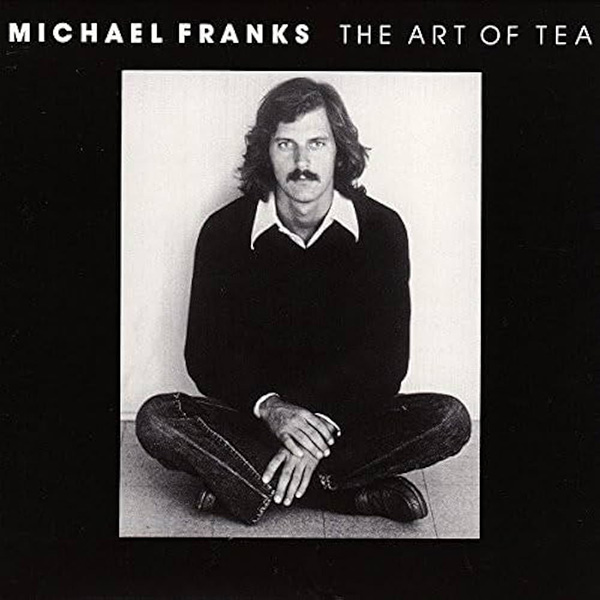 On Franks's swinging "Popsicle Toes," Joe Sample's Rhodes piano was chewy, John Guerin's two ride cymbals well defined both tonally and dimensionally, in a wide, satisfying soundstage.
On Tom Petty's romping "Jefferson Jericho Blues," the amp's exceptional definition, layering, and contrast in separating the bass drum and bass guitar were stunning.
The Evolution Stereo is clear-headed, dynamic, and frequently revelatory. It frames every record (and associated upstream gear) in its true production milieu. And when the music called for it, as with the punchy dynamics of the Petty track, the amp delivered a powerful kick.
The Evolution Stereo's noisefloor was low, which helped the amplifier uncover previously unheard details. This was brilliantly demonstrated on Yussef Kamaal's "Black Focus," a subtle yet potent mix of brooding keyboards, swift brushwork, and enormous low bass. It seemed to carry the weight of the Atlantic Ocean, yet it maintained the clarity of a cloudless, subzero day.
On Franks's swinging "Popsicle Toes," Joe Sample's Rhodes piano was chewy, John Guerin's two ride cymbals well defined both tonally and dimensionally, in a wide, satisfying soundstage.
On Tom Petty's romping "Jefferson Jericho Blues," the amp's exceptional definition, layering, and contrast in separating the bass drum and bass guitar were stunning.
The Evolution Stereo is clear-headed, dynamic, and frequently revelatory. It frames every record (and associated upstream gear) in its true production milieu. And when the music called for it, as with the punchy dynamics of the Petty track, the amp delivered a powerful kick.
The Evolution Stereo's noisefloor was low, which helped the amplifier uncover previously unheard details. This was brilliantly demonstrated on Yussef Kamaal's "Black Focus," a subtle yet potent mix of brooding keyboards, swift brushwork, and enormous low bass. It seemed to carry the weight of the Atlantic Ocean, yet it maintained the clarity of a cloudless, subzero day.
 The Evolution Stereo delivered surprising levels of visceral texture, absolute presence, and stellar dynamics, but to me its sound did not recall a classic SET amplifier. The Evolution Stereo was superbly clear, dynamic, punchy, well-controlled, detailed, and coherent. It offered the best spatial resolution I've encountered from an amplifier. Its tonal presentation was precise and well-ordered. It was never romantic or soft. It presented music on a wide, cavernous stage that often strode out into my listening space like an actor jumping off the stage and into the audience.
Keeping everything else the same, I switched to the Voxativ Ampeggio loudspeakers. Now the Evolution Stereo sounded more like a SET amp. The music retained its finery, detail, texture, and palpability, now with less generous bass and less profound imaging, but with even more presence and precise layering. The Tord Gustavsen Trio was remade, the Ampeggio's focused, fast, full-range driver playing exceptionally well with the Evolution Stereo's low noisefloor and high elucidation factor. The sound practically glowed.
Playing Tower of Power's In the Slot with the Evolution Stereo/ Voxativ Ampeggio produced similarly striking results. The treble was silvery, not forward but highly informative, and bass was more atmospheric than sculpted in space. The sound was thrilling, palpable, bracing—3D to a degree not heard before in my system. The Voxativ speakers confirmed this amplifier's life force, ample power delivered with controlled grace.
The Evolution Stereo delivered surprising levels of visceral texture, absolute presence, and stellar dynamics, but to me its sound did not recall a classic SET amplifier. The Evolution Stereo was superbly clear, dynamic, punchy, well-controlled, detailed, and coherent. It offered the best spatial resolution I've encountered from an amplifier. Its tonal presentation was precise and well-ordered. It was never romantic or soft. It presented music on a wide, cavernous stage that often strode out into my listening space like an actor jumping off the stage and into the audience.
Keeping everything else the same, I switched to the Voxativ Ampeggio loudspeakers. Now the Evolution Stereo sounded more like a SET amp. The music retained its finery, detail, texture, and palpability, now with less generous bass and less profound imaging, but with even more presence and precise layering. The Tord Gustavsen Trio was remade, the Ampeggio's focused, fast, full-range driver playing exceptionally well with the Evolution Stereo's low noisefloor and high elucidation factor. The sound practically glowed.
Playing Tower of Power's In the Slot with the Evolution Stereo/ Voxativ Ampeggio produced similarly striking results. The treble was silvery, not forward but highly informative, and bass was more atmospheric than sculpted in space. The sound was thrilling, palpable, bracing—3D to a degree not heard before in my system. The Voxativ speakers confirmed this amplifier's life force, ample power delivered with controlled grace.
 Conclusion
The Doshi Evolution Stereo Amplifier combines the resolution, force, and precision of solid state with the tone, spaciousness, sweetness, and splendor of tubes. It's a splendid performer, one of the best amplifiers I've heard. It has more than a touch of magic. It makes music sing.
"The Evolution Stereo Amplifier is designed with two sets of push-pull primary windings," Doshi explained. "One set for the plates and one set for the screens. This differs from the standard pentode, triode, or ultralinear operation commonly used. The idea is to load the screens such that the first few watts of output power are the result of screen contribution, and as the screens reach their limit, the plates take over the load. It did not work exactly as I wanted it, but it worked well enough to make for a wonderful, effervescent-sounding amplifier. The goal was to bring out the beauty of a triode-like midrange with power and control.
"Another choice was to use as little feedback [as possible] to achieve this," he added. "The preamplifiers do not use overall feedback, and the amplifiers use very little, 7dB in the case of the stereo amplifier."
"Our Sowter Audio output transformers, for example, are designed for continuous output in excess of 100W at 20Hz, preventing core saturation," Doshi wrote. "Every component of this amplifier is overbuilt to optimize reliability. The power supply is vastly oversized, so all components run cool, the output transformers similarly so. The chassis utilizes 14ga stainless steel for strength and nonmagnetic properties. A career spent in broadcasting has served to make me keenly aware that reliability is goal #1."
The Evolution Stereo Amplifier employs "three-stage" mechanical decoupling technology to minimize resonances. Critical audio circuits are point-to-point wired and mounted on an acoustically isolated subchassis made of 14ga stainless steel, suspended from a top plate of anodized aluminum. All this is mounted on a constrained-layer aluminum platform that floats on four vibration-absorbing feet, mechanically decoupled from the chassis with rubber and Sorbothane.
The front of the Evolution Stereo Amplifier includes four small buttons: Power (On or Off), Disp (which turns the display panel on), Mute, and Func. The Func switch steps through the bias settings for each tube pair to facilitate biasing. It also provides access to a timer that indicates how long the tubes have been in use. The Stereo Evolution is not autobiasing, but biasing is simple. The procedure is described below and on p.4 of the user manual.
Around back, alongside the inputs and outputs, a Ground Lift switch enables system optimization. An optically isolated 12V trigger loop enables the amplifier to be powered on and off remotely. The main power switch sits above the IEC receptacle.
The Doshi Audio Evolution Stereo Amplifier stands 18" wide × 20" deep × 8" high and weighs 65lb—though as I hauled it up my building's winding staircase and around my apartment, it felt much heavier. Once it was unpacked, I wrestled it to the mancave rug that covers the wood plank floor in front of my equipment rack. I placed three large A/V RoomService Equipment Vibration Protectors under the amp: My Greenwich Village building is vulnerable to vibrations caused by moving trucks. The footers scored a big improvement: soundstaging, sense of air, and bass control. Biasing was straightforward, though good light and decent eyesight are helpful for seeing those small front-panel buttons and especially the small, engraved letters next to the individual tubes. Doshi described the biasing process. "The front panel has four buttons around the display: Top left, power; top right, mute; bottom left, display on/off; bottom right, function. To activate the display, press the bottom left button. Now the display will stay on until the button is pressed again. Use the function button to step through the five functions: 1—hours elapsed, 2—bias for tube pair V1 (first LED below the window is lit), 3—bias for tube pair V2 (second LED under the window is lit), and so on until the V4 bias. Pressing the button for the sixth time will bring it back to elapsed hours and no LEDs lit up.
ListeningWhen choosing material for audio reviews, I use familiar records that test a handful of system parameters. For this review, I pulled out Tord Gustavsen Trio's Going Places (ECM Records ECM 7598119), Count Basie's 88 Basie Street (Analogue Productions APJ 156), The Master Trio (Baybridge Records KUX-183-B), Michael Franks's The Art of Tea (Reprise Records MS 2230), Tom Petty and the Heartbreakers' Mojo (Reprise Records 523971-1), Yussef Kamaal's Black Focus (Brownswood Recordings BWOOD0157LP), and the debut album from 1970s UK prog rock quartet U.K. (Polydor/E.G. 2302 080).
On Franks's swinging "Popsicle Toes," Joe Sample's Rhodes piano was chewy, John Guerin's two ride cymbals well defined both tonally and dimensionally, in a wide, satisfying soundstage.
The Evolution Stereo delivered surprising levels of visceral texture, absolute presence, and stellar dynamics, but to me its sound did not recall a classic SET amplifier. The Evolution Stereo was superbly clear, dynamic, punchy, well-controlled, detailed, and coherent. It offered the best spatial resolution I've encountered from an amplifier. Its tonal presentation was precise and well-ordered. It was never romantic or soft. It presented music on a wide, cavernous stage that often strode out into my listening space like an actor jumping off the stage and into the audience.
Keeping everything else the same, I switched to the Voxativ Ampeggio loudspeakers. Now the Evolution Stereo sounded more like a SET amp. The music retained its finery, detail, texture, and palpability, now with less generous bass and less profound imaging, but with even more presence and precise layering. The Tord Gustavsen Trio was remade, the Ampeggio's focused, fast, full-range driver playing exceptionally well with the Evolution Stereo's low noisefloor and high elucidation factor. The sound practically glowed.
Playing Tower of Power's In the Slot with the Evolution Stereo/ Voxativ Ampeggio produced similarly striking results. The treble was silvery, not forward but highly informative, and bass was more atmospheric than sculpted in space. The sound was thrilling, palpable, bracing—3D to a degree not heard before in my system. The Voxativ speakers confirmed this amplifier's life force, ample power delivered with controlled grace.
ConclusionThe Doshi Evolution Stereo Amplifier combines the resolution, force, and precision of solid state with the tone, spaciousness, sweetness, and splendor of tubes. It's a splendid performer, one of the best amplifiers I've heard. It has more than a touch of magic. It makes music sing.