I decided I'd "pull up the patient pants," as my wife often advises, and set it up by the book: the user manual. The book says to download the app first and use it for setup. This proved the right move, as navigating the device's menu tree is time-consuming with the remote and even more so using the front-panel buttons and knobs. The app was a bit clunky when it came to pairing the unit to my Wi-Fi network, which required several attempts but ultimately worked. I could have plugged in the Ethernet cable and connected quicker, but I wanted to use this with Wi-Fi since I figured that would be more typical. Once the unit and my phone communicated, I could control many functions with the app, most importantly selecting content from streaming services and my NAS server digital library. I signed onto Qobuz through the T+A app; then I was able to run Qobuz without switching to the standalone Qobuz app. For Spotify, the R 2500 R shows up as a "speaker" option in the Spotify app. Selecting it engages Spotify Connect, whereby the Spotify app is the user interface but the R 2500 R is directly communicating with Spotify's servers, and audio is streamed directly to it, not going through the phone or tablet. The built-in streamer also works with Tidal Connect and Apple Airplay. As noted earlier, soon it will work with Roon.
Initial listening and use
No matter what resolution file I threw at it, from whatever source, the R 2500 R played without hitches or hiccups. I also tested Bluetooth and Apple Airplay connectivity, and both were accomplished with no hitches. Airplay streaming from the Qobuz app in my phone sounded excellent with CD-resolution content. (Airplay maxes out at 24 bit/48kHz; Bluetooth is lossy.) I quickly found out that the best way to control the R 2500 R is with a combination of the phone app and the remote. The phone is usually the best way to select the music's source, especially when the source is streaming from internet services, the NAS library, or an attached USB drive or stick. Playing a CD, it's probably easier to push the DISC button on the remote, which also includes the standard CD-player functions. Same with choosing a radio station—however, if you press the RADIO button, you then have to navigate a menu to choose regular FM, digital FM, or internet radio. I quickly found out that driving internet radio from the screen menu with the remote is not the way to go; use the app (and be prepared for hours of fun exploring the world of internet broadcasting streams). All that said, kudos to T+A for offering app-free ways to do many things. What if—horror of horrors—there's an interwebs outage? No sweat: The R 2500 R is analog enough to let you dip back into the 20th century and listen to the radio, insert a CD, or spin some vinyl (footnote 7).
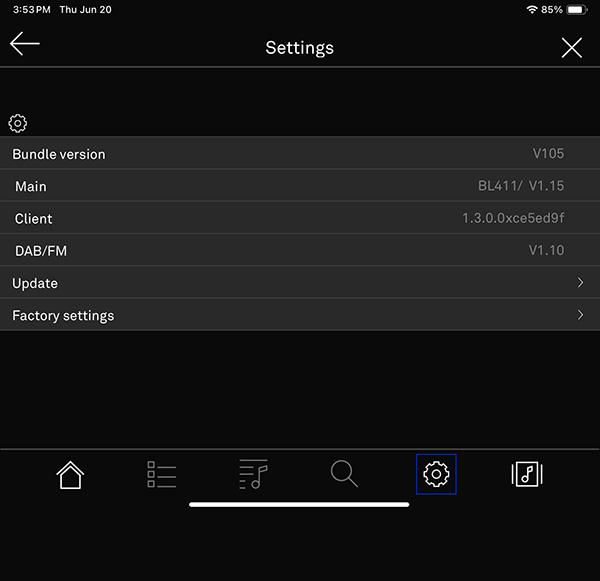 Several firmware upgrades happened while I had the R 2500 R in for review. Also during that time, there were instances where whatever I was doing at the time hung it up, so it wouldn't switch between sources. This seemed to be an issue with switching from the streamer to other sources, especially the built-in CD player. Whenever it locked up, all that was required was a power-off and reboot. It did not lock up after the last firmware update during the review period. The T+A engineering team issued this statement: "The T+A team is constantly receiving feedback about app operation from the field and will continue to release new updates over time."
Driving various speakers
Several firmware upgrades happened while I had the R 2500 R in for review. Also during that time, there were instances where whatever I was doing at the time hung it up, so it wouldn't switch between sources. This seemed to be an issue with switching from the streamer to other sources, especially the built-in CD player. Whenever it locked up, all that was required was a power-off and reboot. It did not lock up after the last firmware update during the review period. The T+A engineering team issued this statement: "The T+A team is constantly receiving feedback about app operation from the field and will continue to release new updates over time."
Driving various speakers
Shannon told me to give the R 2500 R two weeks to break in, running it constantly. I set it up in my office and plugged my Amphion One18 monitors into the A speaker terminals and a pair of old Marantz Imperial 5G speakers that I rescued from an e-waste trailer into the B terminals. When I was at work in the office, I played music through the Amphions. Most other times, I streamed an internet radio station (mynoise.net) with the looped sounds of a rain storm, and I played low-volume pink noise overnight. To my ears, music sounded pretty damn good from the get-go. I can't say there was a radical improvement by the end of the break-in period, maybe slightly more extended bass and a tiny bit more air, space, and reverb tails. I wouldn't swear to it. I noticed from the start that the R 2500 R runs dead silent (no audible noisefloor and no internal fans), except when relays are clicking to select sources or to raise or lower the volume. This component doesn't call attention to itself in any way; it just plays music and does it well. Once I got accustomed to the remote and app, it was easy to switch among sources and perform all the control functions. I rarely approached the amp or touched the front-panel controls, except to load or remove a CD. Since the phone app showed me what was playing, I rarely looked at the front panel, to be honest.
The app's search engine is not excellent—a common problem with today's music software—and interfacing with NAS libraries or attached hard drives requires more finger-punches to get to the desired music than the best streamer apps I've reviewed, such as those by WiiM and Cambridge Audio. The way search results come back is sometimes incorrect or confusing (ie, albums show up as "tracks" and the "albums" tab claims to have no results). I passed this info on to Shannon and demonstrated some issues with the app when he and his wife came to visit for a very pleasant morning of music and conversation (footnote 8). Later, T+A told Stereophile that "Tom's and other early users' comments and feedback after using the app search functions have been noted, and our team is confident that [search functions] will be improved in new iterations of the app that are currently being developed."
While the R 2500 R was situated in the office, I tested it as a USB-connected computer audio interface, with my aging Lenovo desktop PC. I downloaded and installed the T+A Windows USB driver with no problems, and the R 2500 R was immediately recognized and worked as expected with no further tweaking. I did some production editing and CD authoring using the T+A amp instead of my regular RME soundcard, and everything worked as expected. Based on all the listening I did from the computer, I'd say the R 2500 R's DAC is pro-grade as far as neutrality and the smooth operation of its USB driver. I also plugged a bus-powered Western Digital hard drive into the USB socket of the R 2500 R. Using the phone app, I was able to navigate the file menus and play anything I desired. It was in this mode that I first experienced the R 2500 R's excellent DSD DAC, playing files ripped from SACDs. My ears perked up, because I heard a clarity and naturalness that not all DACs seem able to convey from DSD material.
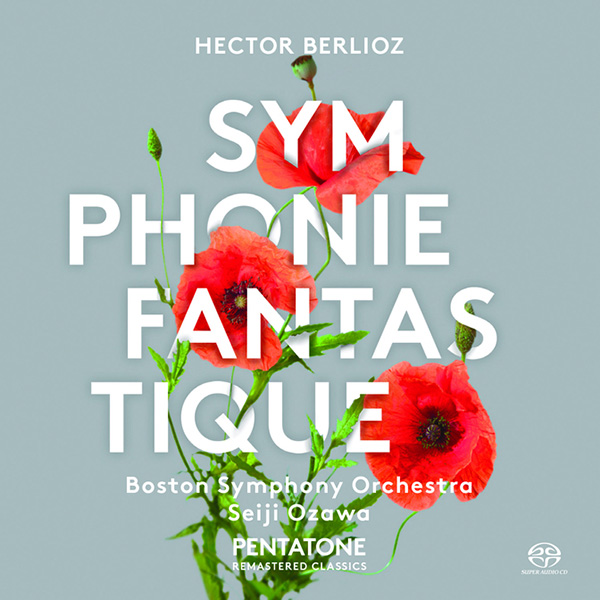 One specific example was Seiji Ozawa and the Boston Symphony's recording of Berlioz's Symphonie Fantastique, ripped from a now-out-of-print Pentatone SACD's stereo layer. (The disc also includes a four-channel "quad" layer and a CD layer.) The tonal balance of the instruments and the lush room-tone of Symphony Hall felt completely right. The DSD DAC also did an exceptional job with a rip of the Japanese SACD of Sticky Fingers by the Rolling Stones, claimed to be a "flat transfer of the master tape." The dynamics and the way things sit in the mix are superior to all recent CD remasters. The raucous rocking and rolling came through in spades.
Its bottom-octaves self
One specific example was Seiji Ozawa and the Boston Symphony's recording of Berlioz's Symphonie Fantastique, ripped from a now-out-of-print Pentatone SACD's stereo layer. (The disc also includes a four-channel "quad" layer and a CD layer.) The tonal balance of the instruments and the lush room-tone of Symphony Hall felt completely right. The DSD DAC also did an exceptional job with a rip of the Japanese SACD of Sticky Fingers by the Rolling Stones, claimed to be a "flat transfer of the master tape." The dynamics and the way things sit in the mix are superior to all recent CD remasters. The raucous rocking and rolling came through in spades.
Its bottom-octaves self
Break-in and computer testing complete, it was time to move the R 2500 R up into the reference system. I placed it on top of my dCS Bartók streamer/DAC, moved the speaker connections from my Benchmark AHB2 power amp to the T+A's terminals, fired it up, and dove right in. The first thing I like to test with amplifiers new to my B&W 808 speakers is the low end. The Benchmark amp drives these speakers with remarkable control and precise bass extension. A bassline that is recorded distinctly should sound the same; the beat should be crisp and well-defined. I have created a Qobuz playlist, "Bass Test," made of tracks I find useful in amplifier and speaker comparisons (footnote 9). Some of these tracks are far from the ultimate floor-shakers, but each tells me something about how an amp/speaker combo handles the lowest octaves. For instance, in Bob Marley's "Concrete Jungle," the tonality of the bass instrument is distinctive, and each note is clearly articulated. It's the same with the Grateful Dead's cover of "Mama Tried," with the tonality of Phil Lesh's bass amp also part of the sound. "Flea," from St. Vincent's recent All Born Screaming, features interestingly jagged bass-synth sounds. Meanwhile, Professor Longhair's "Big Chief," in the version by the Dirty Dozen Brass Band, has a prominent bass part for sousaphone. And Charlie Watts's booming kickdrum on "Honky Tonk Women" from the Stones' Forty Licks anthology should pound like a gut punch when the volume is turned up to a level suitable for the raunchy romp the song calls for. In all cases, the T+A R 2500 R's power amp comported itself well. It didn't exhibit quite the masterful control of the Benchmark, but it was damn good and satisfying. There was no mud or crud at the bottom. If you have full-range speakers and like bass-heavy music, you could live a happy life with the R 2500 R. Based on its output power ratings, it might not be able to drive the most difficult speakers to house-rocking levels, but it had no problem with my speakers, with any music, at any volume level I desired.
 A group session
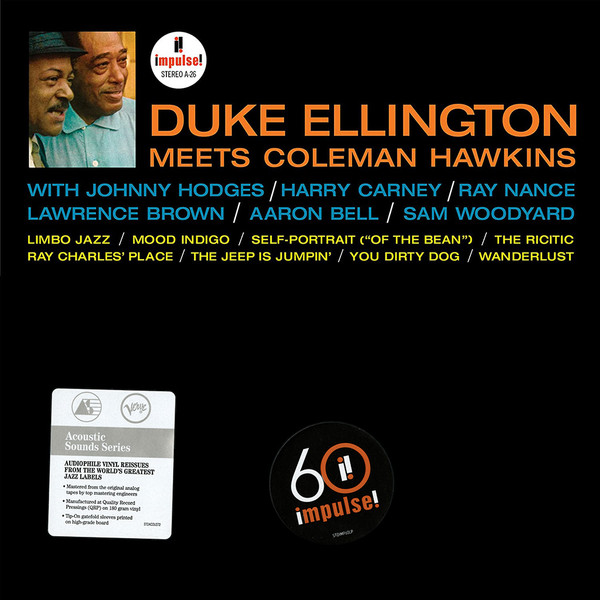
While the R 2500 R was set up in the main system, I invited my hi-fi posse over for a listen. Mike, Dave, Farrukh, and I gather regularly for lunch followed by an afternoon of listening at one of our houses. The guys were interested to hear what a top-shelf, premium-priced receiver does and how it sounds in 2024. The first thing we all noted was that the R 2500 R clearly presented the audible differences between several versions of the great album Duke Ellington Meets Coleman Hawkins (Impulse, various vinyl needle drops, CD reissues, and DSD tracks compared). This album has been reissued numerous times, and every version I own sounds different from the others. We have done this comparison several times, and we always seem to conclude that the original LP sounds most lifelike, but some later versions have a more uniform and extended-frequency tonality. We also noted that our familiar reference tracks sounded as they should in my system, meaning the R 2500 R wasn't imposing colorations or other audible distortions. We were impressed with the CD player. We each brought a familiar disc or two to spin, and all sounded as expected. In fact, the system sounded damn good. I demonstrated the way the R 2500 R had solid control of the low end, and we liked the 3D imaging of well-recorded music. We compared sending some tracks via Apple Airplay from Dave's phone to the R 2500 R, listening for differences between Apple Music and Qobuz with the same CD-resolution and HD tracks. (Apple Music sounded a lot worse!) We confirmed that the audio was going out of the phone at full resolution (16/44.1 or 24/48) from both streamers. I don't know what Apple does to mangle its streams, but I'm sticking with Qobuz!
Finally, we compared some tracks streamed from my NAS server through the R 2500 R's DAC and then through my dCS Bartók, connected to one of the R 2500 R's analog inputs. There was an audible difference between the two DACs. I hear the dCS as always relaxed and musical, everything in balance always and a tiny bit "impressionistic" rather than high-contrast super-sharp. In that respect, it's wonderful for enjoying all music, but perhaps isn't unforgiving enough to be a studio-reference DAC for honing minute sonic details.
In contrast, the T+A DAC is like the sharpest HD photo, extremely detailed about the lines around things and the contrasts of sounds. The cost of that kind of precision is a bit less "glue" holding everything together in the most musically pleasing ways.
The R 2500 R's DAC is in keeping with the very best modern DACs in that it is ultra-revealing and transparent. But the Bartók is my hi-fi reference for a reason. Its sound is something apart, almost always in the best ways, from any other DAC I've heard.
What about the radio?
I don't live in an area with good FM reception, and those stations that do come in aren't interesting or bold in their content, including modern-times NPR. Still, after merely draping the T-wire FM antenna over a pair of framed pictures on the wall above my stereo cabinet, I was able to pull in all the expected stations using the R 2500 R's FM tuner, usually with little or no static or hiss. The combination of its excellent amplification and my full-range speakers demonstrated why I don't pay attention to FM radio anymore: The sound and content go in the category of life is too short. The R 2500 R's robust internet radio features are a whole other kettle of fish. T+A's app uses the Airable Internet Radio interface, which allows searching and exploration of a world of radio streams. With internet radio, audio quality varies, but you can search out and hear the few hardy stalwarts of imaginative and original broadcasting that remain on US airwaves. And it's interesting to scan the globe and find out what's on the air in other countries, what turns other people on. A "High Quality" tab filters out the most lossy streams. As is the case with other streaming devices that include internet radio, an R 2500 R owner could spend many, many hours riding the virtual airwaves.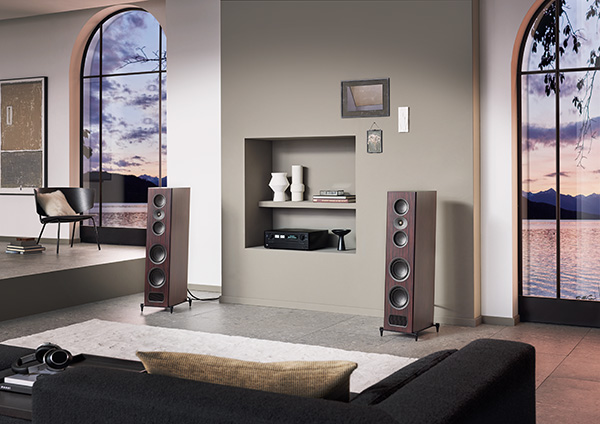 Summing up a complex device
The T+A R 2500 R offers almost limitless music-listening options in a handsome, relatively compact component. Add a pair of good speakers, and you're off to the races. It is premium priced, for sure, but it offers premium sound. It isn't especially streamlined or simple to use (nor is it especially complex), but is that the point of a receiver? There are usually several ways to accomplish each control action, either with the front-panel controls, remote, app, or a combination. That can be useful, allowing the same thing to be done in different logistical scenarios (for instance if the remote is at hand and the phone is another room, charging).
The analog and digital sections of the R 2500 R sounded excellent to my ears, capable of presenting everything in a given track of recorded music and nothing more. No matter the source, its performance is in line with its price. The app should continue to improve, and T+A "has been working closely with Roon engineers on Roon certification and hopes to announce completion of certification in the near future."
If you're in the market for a nearly complete music source in one piece of kit, and your sonic tastes run quick, quiet, evenhanded, and accurate to the source (which pretty much sums up "high-fidelity"), you should investigate the T+A R 2500 R.
Footnote 7: T+A offers an optional phono board—user's choice of MM or MC (not both)—which substitutes for ANALOG IN 2. The performance of the phono module will be the focus of a follow-up review.
Footnote 8: Jim Shannon is a jazz aficionado. If you meet him at a hi-fi show, ask him for his list of recommended albums. If you like jazz at all, there will be something on that list you will put in frequent rotation.
Footnote 9: See open.qobuz.com/playlist/21395182.
No matter what resolution file I threw at it, from whatever source, the R 2500 R played without hitches or hiccups. I also tested Bluetooth and Apple Airplay connectivity, and both were accomplished with no hitches. Airplay streaming from the Qobuz app in my phone sounded excellent with CD-resolution content. (Airplay maxes out at 24 bit/48kHz; Bluetooth is lossy.) I quickly found out that the best way to control the R 2500 R is with a combination of the phone app and the remote. The phone is usually the best way to select the music's source, especially when the source is streaming from internet services, the NAS library, or an attached USB drive or stick. Playing a CD, it's probably easier to push the DISC button on the remote, which also includes the standard CD-player functions. Same with choosing a radio station—however, if you press the RADIO button, you then have to navigate a menu to choose regular FM, digital FM, or internet radio. I quickly found out that driving internet radio from the screen menu with the remote is not the way to go; use the app (and be prepared for hours of fun exploring the world of internet broadcasting streams). All that said, kudos to T+A for offering app-free ways to do many things. What if—horror of horrors—there's an interwebs outage? No sweat: The R 2500 R is analog enough to let you dip back into the 20th century and listen to the radio, insert a CD, or spin some vinyl (footnote 7).
Several firmware upgrades happened while I had the R 2500 R in for review. Also during that time, there were instances where whatever I was doing at the time hung it up, so it wouldn't switch between sources. This seemed to be an issue with switching from the streamer to other sources, especially the built-in CD player. Whenever it locked up, all that was required was a power-off and reboot. It did not lock up after the last firmware update during the review period. The T+A engineering team issued this statement: "The T+A team is constantly receiving feedback about app operation from the field and will continue to release new updates over time."
Driving various speakersShannon told me to give the R 2500 R two weeks to break in, running it constantly. I set it up in my office and plugged my Amphion One18 monitors into the A speaker terminals and a pair of old Marantz Imperial 5G speakers that I rescued from an e-waste trailer into the B terminals. When I was at work in the office, I played music through the Amphions. Most other times, I streamed an internet radio station (mynoise.net) with the looped sounds of a rain storm, and I played low-volume pink noise overnight. To my ears, music sounded pretty damn good from the get-go. I can't say there was a radical improvement by the end of the break-in period, maybe slightly more extended bass and a tiny bit more air, space, and reverb tails. I wouldn't swear to it. I noticed from the start that the R 2500 R runs dead silent (no audible noisefloor and no internal fans), except when relays are clicking to select sources or to raise or lower the volume. This component doesn't call attention to itself in any way; it just plays music and does it well. Once I got accustomed to the remote and app, it was easy to switch among sources and perform all the control functions. I rarely approached the amp or touched the front-panel controls, except to load or remove a CD. Since the phone app showed me what was playing, I rarely looked at the front panel, to be honest.
One specific example was Seiji Ozawa and the Boston Symphony's recording of Berlioz's Symphonie Fantastique, ripped from a now-out-of-print Pentatone SACD's stereo layer. (The disc also includes a four-channel "quad" layer and a CD layer.) The tonal balance of the instruments and the lush room-tone of Symphony Hall felt completely right. The DSD DAC also did an exceptional job with a rip of the Japanese SACD of Sticky Fingers by the Rolling Stones, claimed to be a "flat transfer of the master tape." The dynamics and the way things sit in the mix are superior to all recent CD remasters. The raucous rocking and rolling came through in spades.
Break-in and computer testing complete, it was time to move the R 2500 R up into the reference system. I placed it on top of my dCS Bartók streamer/DAC, moved the speaker connections from my Benchmark AHB2 power amp to the T+A's terminals, fired it up, and dove right in. The first thing I like to test with amplifiers new to my B&W 808 speakers is the low end. The Benchmark amp drives these speakers with remarkable control and precise bass extension. A bassline that is recorded distinctly should sound the same; the beat should be crisp and well-defined. I have created a Qobuz playlist, "Bass Test," made of tracks I find useful in amplifier and speaker comparisons (footnote 9). Some of these tracks are far from the ultimate floor-shakers, but each tells me something about how an amp/speaker combo handles the lowest octaves. For instance, in Bob Marley's "Concrete Jungle," the tonality of the bass instrument is distinctive, and each note is clearly articulated. It's the same with the Grateful Dead's cover of "Mama Tried," with the tonality of Phil Lesh's bass amp also part of the sound. "Flea," from St. Vincent's recent All Born Screaming, features interestingly jagged bass-synth sounds. Meanwhile, Professor Longhair's "Big Chief," in the version by the Dirty Dozen Brass Band, has a prominent bass part for sousaphone. And Charlie Watts's booming kickdrum on "Honky Tonk Women" from the Stones' Forty Licks anthology should pound like a gut punch when the volume is turned up to a level suitable for the raunchy romp the song calls for. In all cases, the T+A R 2500 R's power amp comported itself well. It didn't exhibit quite the masterful control of the Benchmark, but it was damn good and satisfying. There was no mud or crud at the bottom. If you have full-range speakers and like bass-heavy music, you could live a happy life with the R 2500 R. Based on its output power ratings, it might not be able to drive the most difficult speakers to house-rocking levels, but it had no problem with my speakers, with any music, at any volume level I desired.
A group sessionWhile the R 2500 R was set up in the main system, I invited my hi-fi posse over for a listen. Mike, Dave, Farrukh, and I gather regularly for lunch followed by an afternoon of listening at one of our houses. The guys were interested to hear what a top-shelf, premium-priced receiver does and how it sounds in 2024. The first thing we all noted was that the R 2500 R clearly presented the audible differences between several versions of the great album Duke Ellington Meets Coleman Hawkins (Impulse, various vinyl needle drops, CD reissues, and DSD tracks compared). This album has been reissued numerous times, and every version I own sounds different from the others. We have done this comparison several times, and we always seem to conclude that the original LP sounds most lifelike, but some later versions have a more uniform and extended-frequency tonality. We also noted that our familiar reference tracks sounded as they should in my system, meaning the R 2500 R wasn't imposing colorations or other audible distortions. We were impressed with the CD player. We each brought a familiar disc or two to spin, and all sounded as expected. In fact, the system sounded damn good. I demonstrated the way the R 2500 R had solid control of the low end, and we liked the 3D imaging of well-recorded music. We compared sending some tracks via Apple Airplay from Dave's phone to the R 2500 R, listening for differences between Apple Music and Qobuz with the same CD-resolution and HD tracks. (Apple Music sounded a lot worse!) We confirmed that the audio was going out of the phone at full resolution (16/44.1 or 24/48) from both streamers. I don't know what Apple does to mangle its streams, but I'm sticking with Qobuz!
I don't live in an area with good FM reception, and those stations that do come in aren't interesting or bold in their content, including modern-times NPR. Still, after merely draping the T-wire FM antenna over a pair of framed pictures on the wall above my stereo cabinet, I was able to pull in all the expected stations using the R 2500 R's FM tuner, usually with little or no static or hiss. The combination of its excellent amplification and my full-range speakers demonstrated why I don't pay attention to FM radio anymore: The sound and content go in the category of life is too short. The R 2500 R's robust internet radio features are a whole other kettle of fish. T+A's app uses the Airable Internet Radio interface, which allows searching and exploration of a world of radio streams. With internet radio, audio quality varies, but you can search out and hear the few hardy stalwarts of imaginative and original broadcasting that remain on US airwaves. And it's interesting to scan the globe and find out what's on the air in other countries, what turns other people on. A "High Quality" tab filters out the most lossy streams. As is the case with other streaming devices that include internet radio, an R 2500 R owner could spend many, many hours riding the virtual airwaves.
Summing up a complex deviceThe T+A R 2500 R offers almost limitless music-listening options in a handsome, relatively compact component. Add a pair of good speakers, and you're off to the races. It is premium priced, for sure, but it offers premium sound. It isn't especially streamlined or simple to use (nor is it especially complex), but is that the point of a receiver? There are usually several ways to accomplish each control action, either with the front-panel controls, remote, app, or a combination. That can be useful, allowing the same thing to be done in different logistical scenarios (for instance if the remote is at hand and the phone is another room, charging).
Footnote 7: T+A offers an optional phono board—user's choice of MM or MC (not both)—which substitutes for ANALOG IN 2. The performance of the phono module will be the focus of a follow-up review.