T+A R 2500 R Streaming Receiver Phono Module
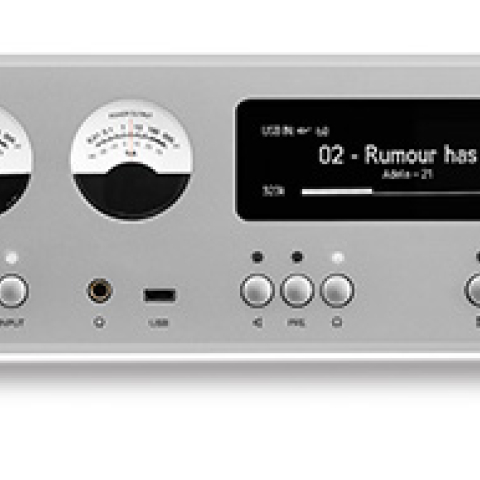
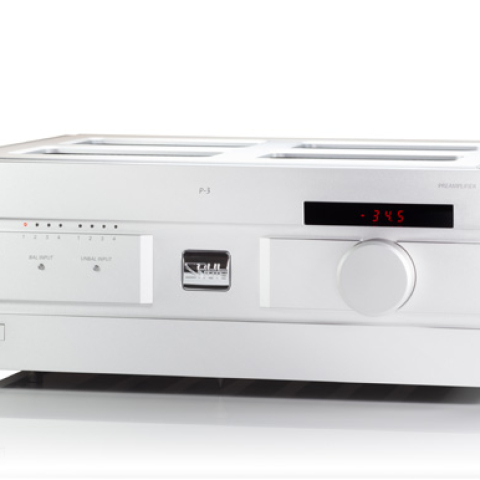
In my review of the T+A R 2500 R receiver in the August 2024 issue, I covered many of its features and took as deep a dive as time and column inches allowed. Suffice to say, it's a very complex device, a near-complete system minus speakers (and a turntable/cartridge system, if you're into vinyl). It's a radio (FM and FM-HD), CD player, networked streamer-computer, DAC, analog preamplifier (including analog tone controls), class-AB power amplifier, and power supply, all in one relatively compact and mid-weight, well-finished metal chassis. It is perhaps the most complete receiver ever made.
After I submitted the review, T+A's Jim Shannon said "Keep it a while." He offered to send an optional phono preamp module ($920) for installation and review. I jumped at this opportunity, as well as the chance to retest some of the app-control features when it was finally certified Roon Ready (footnote 1). In a firmware/app update, T+A also added a swell feature to the built-in CD player.
Although the R 2500 R is fully featured and not inexpensive by any measure (footnote 3), it's still a receiver. I don't think its optional phono preamp will be of interest to a vinyl aficionado with a sedan-priced record-playing rig. That person has their own fleet of cartridges and preamps and will connect them to the R 2500 R's line inputs. I asked Shannon to send me the moving magnet version of the phono board and configured its gain, input resistance, and capacitance as I thought would well match my Ortofon 2M Blue cartridge (once owned by the late Art Dudley, RIP), which was mounted on my Technics SL-1200MK7 turntable and connected with a vintage SME cable. I love this no-fuss, no-frills vinyl-spinning system. I won't claim for a second that it digs every tiny microdetail out of every groove, but it's a cinch to use, it runs flawlessly on-speed, and surface noise is minimal with clean, carefully owned records.
To my ears, the 2M Blue's sound highlights much of what I like about well-recorded, well-mastered, well-plated, well-pressed vinyl: honest instrumental sounds and timbres, quick and non-exaggerated dynamics, a pleasingly rich low end, and nonharsh top end. Vinyl done right has the ability to project a musical life force into the room. Digital sources can certainly sound as good or better, and also provide the lifelike sound holograph, but I'm more impressed when records do it because the electromechanical system is easily made wrong by any number of human and machine errors, and the cutting/plating/pressing/playback system is far from its output equaling its input. In short, I consider great-sounding vinyl playback something of a miracle, and relish it like an expertly prepared meal.
The phono module arrived while John Atkinson had the R 2500 R on his test bench; he was kind enough to install it and relates his experiences in the measurements report that was published in the January issue. By the time I got the unit back in my living room, analog input 2, the first of two RCA connections on the rear panel, was labeled "Phono" on the front-panel screen. All I needed to do was plug the SME cable into the module's RCA jacks and hook the ground wire to the grounding post above them. As John found out, the T+A phono module is a traditional preamp circuit in that the phono ground is separate from the system/third wire AC ground. If your turntable ground wire isn't floating above power ground, don't connect it. I think most turntable ground wires float, but check your user manual if you have doubts.
Right away, I noticed silence when the needle wasn't in a groove. Even at the elevated volume levels appropriate for classical records, no hiss, hum, or hash was audible at the listening seat. Cranking the volume all the way up and putting my ears near one of the B&W 808 speakers, I heard a little bit of hiss and what sounded like computer or Wi-Fi hash, not enough to be heard with music or between cuts at any volume level I'd ever dare use. That very low noisefloor was achieved on a circuit board that's wedged inside what's essentially a computer case (switching power supply and all), a notoriously hostile environment of RFI, ground-plane noise, and everything else that can trip up a low-level signal before and during amplification. Impressive engineering, for sure.
All connected, I started spinning records. My first smile was for setting the gain and capacitance right. Phono volume levels about matched digital sources (as long as they weren't all-loud-all-the-time dynamics-crunched) and streaming. Listening to some favorite records, the T+A's upper mids and treble sounded right immediately.
With my friends Mike and Dave, I undertook an afternoon of listening comparisons between some original Pablo Records jazz albums and new remasters from Analogue Productions (footnote 3). We focused on Duke's Big 4 by Duke Ellington, Joe Pass, Ray Brown, and Louis Bellson. This is an exceptional album, a gathering of legends in a relaxed small-group setting. The jacket notes don't say where it was recorded, but Pablo owner/producer Norman Granz often worked at RCA's studios in the early 1970s—this was made in 1973—and the original LP (Pablo 2310 703) carries the distinctive "I" mark of RCA's late great Indianapolis pressing plant. In any case, the performances and recording are dynamic, crisp, and they swing like hell. "The Hawk Talks," third cut on side 1, is by Bellson and features a fantastic drum solo using every part of his kit. The Ortofon–Technics–T+A signal chain sent it out the speakers so the man and his drums were right there on the right side of the room. His big bass drum sounded both the percussive beat and the resonance of the instrument itself.
We also dug deep into 88 Basie Street, by who else but the Count. It's a combination big- and small-band album made late in Basie's career (1983). The big-band cuts were arranged and conducted by Sammy Nestico. Legendary recording engineer Allen Sides ran the board at his Ocean Way studio in Hollywood. The side 2 opener, "The Blues Machine," features all the voices of the Basie big band across a wide soundstage. The massed horns and saxes didn't fuzz up, everything stayed in its place, and the big sound emerged intact into the room. The next track, "Katy," is a ballad that Nestico dedicated to Basie's wife. The short tune builds to a swell of the full band at the end. My original LP (Pablo 2310-901), surprisingly heavyweight for the 1980s, was made after Fantasy Group bought the label; the current owner is Concord Music Group.
Since this is an audiophile magazine, you're probably thinking "Enough with the lead-up; which versions sounded better?" Alas, life and music are nuanced, and all versions sounded good in their own ways. On a general level, the new vinyl is intended to sound as close to the master tape as possible, plus the unavoidable "black box" sonic signature of vinyl production. I think the original LPs were cut with more latitude, a mission statement like "make it sound good on the most systems possible." As such, the originals sound more stereotypical "vinyl" ("warmed up" midrange, a bit less low bass than originally recorded, superb cohesion, and a feeling that the individual musicians' parts mesh well). The new cuts sound more "precise," meaning each sound is distinct, each voice clearer. To my ears, this helps the swing factor because the beat is more propulsive. But the stereo image is wider and perhaps somewhat "pulled apart" compared to the tight weave of the originals. They're all worth owning.
The next day, I spun some new Rhino High Fidelity platters, cut all-analog by Kevin Gray. The one that got me out of my seat (and solidified my notion of the Perfect Side—see My Back Pages in the January issue) was Gram Parsons's Grievous Angel. The Rhino LP (RHF1 2171) blows away the older CD version and anything else I could find streaming on Qobuz. Talk about irrepressible life forces, bottled up in grooves and released out into the room, wowzer. What a great album!
Later, I took the R 2500 R down to my office, connected to Amphion One18 speakers, to test its Roon functionality (more on that soon). While I had it there, I connected my Philips AF-887 belt-drive (quartz–servo-locked) turntable that had belonged to my late mother. Its tonearm now hosts a Shure M97xE with original stylus. This cartridge, a solid groove-tracker, can sound lifeless if there's a capacitance mismatch with the preamp. I proved this to myself while reviewing the Pro-Ject Phono Box RS2 standalone phono preamp. It played happy-to-my-ears with the T+A R 2500 R preamp module, capacitance setting same as for the Ortofon 2M Blue. In fact, this cartridge never sounded better. The sound coming out of the speakers was a marked improvement over the usual source, my vintage McIntosh MA6500 integrated amp. I never objected to the sound of vinyl playback through the MC, but the R 2500 R brought a lot more out of that old, modest phono rig. Another of the many reasons I regretted sending it on its way.
Now, briefly, the R 2500 R's Roon Readiness. It worked exactly as expected as a Roon Endpoint. Setup was as I described for the Hegel H400. The R 2500 R showed up as a Roon Ready endpoint option in the Roon desktop app, I selected it, and away we went. T+A already provides a robust streaming-control app, with decent search capabilities for both local files (con nected and networked storage) and the streaming services you connect to the app (Qobuz and/ or Tidal). If you're not already a subscriber, the case for Roon isn't as clear-cut as it was for the Hegel H400. However, if you want the full search-everything-at-once experience and the richest metadata available, Roon is the winner. You'll still need to use the T+A app to switch between inputs, control the bass and treble, etc. You can also do this using the traditional wireless remote, or the menu-driven front-panel controls, but the T+A Navigator G3 app is more straightforward for most control functions.
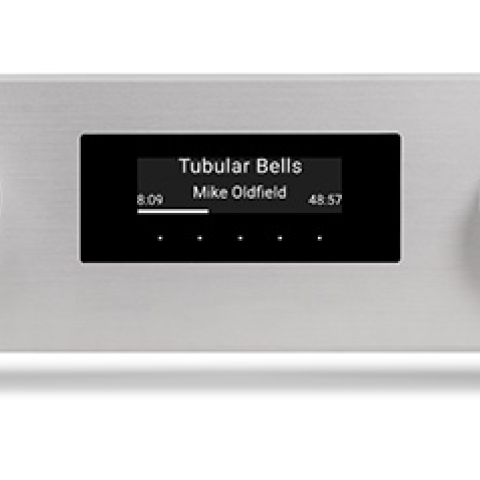
Finally, a feature of the R 2500 R that I ended up digging quite a bit was the built-in CD player. It's great to be able to play anything quickly and conveniently through the same piece of gear. I still own 1000+ CDs, and I made sure to spin some favorites in the R 2500 R, in both systems. It never failed me, and it's neato that the T+A app grabs metadata from Gracenote/TiVo and displays the CD cover art and track titles, allowing me to control playback from my iPhone. I was surprised how deep the metadata grabbing goes. I couldn't trip it up with a limited-production disc of vintage Dr Pepper commercials put out by ad agency Y&R in the mid-1990s. Nor did it trip up with Annapolis Sounds Volume 2, an obscure 2008 offering from Charles Richardson's eponymous DIY label (footnote 4). On a CD I made of a needle drop of the original RCA Living Stereo LP of Beethoven's 3rd Symphony, by Charles Munch and the Boston Symphony Orchestra, the T+A app retrieved metadata displayed in what looked like Japanese. I took that to mean that there was a limited-release CD of exactly that content, in Asia. Still, impressive! By the way, the track titles retrieved from Gracenote were displayed on the R 2500 R's front-panel screen, a feature not present when I first received the unit, courtesy of a firmware update.
I thoroughly enjoyed my extended time with the T+A R 2500 R. It did all of its seemingly limitless functions well and sounded as good or bad as any source material (in other words, it's unflappably honest). It plays all the old formats and is equipped for what's next. It's a most impressive device.—Tom Fine
Footnote 1: See my follow-up review of the Hegel H400 in the January issue for some details on why Roon Ready certification has taken so long with some devices. Footnote 2: The R 2500 R costs $18,880; the optional phono preamp module (either MM or MC) costs $920. T+A elektroakustik GmbH & Co. KG, Planckstrasse 9-11, D-32052 Herford, Germany. Tel: +49 (0) 5221-7676-0. Email: info@ta-hifi.de. Web: ta-hifi.de/en. Footnote 3: Nepotism note: I wrote the text for Analogue Productions' insert sheet, the history of Pablo Records. In exchange, my copies of the new LPs were provided gratis.
Footnote 4: Charlie Richardson is best known for his novel remedy for sticky-shed syndrome, a condition that can render magnetic tapes unplayable.
Footnote 1: See my follow-up review of the Hegel H400 in the January issue for some details on why Roon Ready certification has taken so long with some devices. Footnote 2: The R 2500 R costs $18,880; the optional phono preamp module (either MM or MC) costs $920. T+A elektroakustik GmbH & Co. KG, Planckstrasse 9-11, D-32052 Herford, Germany. Tel: +49 (0) 5221-7676-0. Email: info@ta-hifi.de. Web: ta-hifi.de/en. Footnote 3: Nepotism note: I wrote the text for Analogue Productions' insert sheet, the history of Pablo Records. In exchange, my copies of the new LPs were provided gratis.