With the Middle Ts (and no DEQX or other processing), large ensembles of all types and well-recorded operas were presented in large, holographic soundstages that approached what I enjoy with my multichannel system. Take, for example, the 24-bit/96kHz remastering of the 1963 recording of Britten's War Requiem, with the composer leading the London Symphony Orchestra and Chorus (BD, Decca 478 5433)—a towering performance that has not yet been supplanted by newer ones made with more modern recording technologies. With just a pair of Middle Ts to handle the massive forces and familiar acoustic of Kingsway Hall, there was thrilling new detail and impact, as well as a renewal of my respect and appreciation for the skills of producer John Culshaw.
In fact, I enjoyed a greater sense of presence and communication from this landmark recording than I did with two otherwise excellent multichannel recordings I had on hand: Gianandrea Noseda/LSO (2 SACD/CDs, LSO Live 719), and Richard Hickox/LSO (2 SACD/CDs, Chandos 5007). Nor was remastering the whole story here: I had a similar reaction to the classic recording of Puccini's Turandot with Sutherland, Pavarotti, Caballé, Zubin Mehta, and the London Philharmonic—on regular CD (Decca 414 274-2). Since its original release on LP in 1973, this recording by producer Ray Minshull and engineers James Lock and Kenneth Wilkinson has always been regarded as the best recording, per se, of this opera, and the Middle Ts gave me vocal and instrumental richness in spades, along with a clearly definable if somewhat changeable theatrical stage.
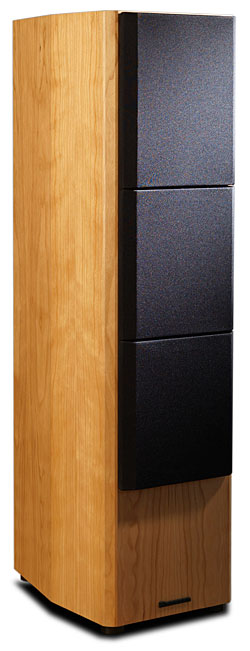 I think the Middle Ts' spatial performance was as much a result of their smooth, untiring treble as of the matching between the two speakers. The tweeters never called attention to themselves, but rather provided all the edge called for. Sara K.'s sibilants on her Hell or High Water (SACD/CD, Stockfisch SFR 357.4039.2) were rendered naturally, but the transients of strings and percussion also had snap and delineation (though the triple grilles clearly muted such felicities).
The midrange was equally satisfying. The Sara K. disc demonstrated how the Middle Ts could render a well-recorded voice with a most thrilling, somewhat eerie presence. The Brystons delineated Ping from Pang from Pong in Turandot, and revealed inner vocal lines of the choirs in the War Requiem. I make so much of the midrange presence because, while I found nothing to suggest that the Middle Ts were accented or peaky, they seemed to place images just a bit more forward in terms of distance, though not of character.
The bass, too, was outstanding for a speaker of this size, as attested by the sheer weight and power of the low end with the bass drum in the opening scene of Turandot, or the pipe organ (and everything else) in the War Requiem. Moreover, I could turn these recordings up to unneighborly levels with no sign of stress or limiting from the Brystons. I guess you might expect even more from the bigger Model T, with its trio of woofers and pairs of midranges and tweeters—but I doubt it could be realized in my living room.
The Middle Ts also seemed to put everything together just right, if not perfectly. Both a speaker's bass performance and the integration of its drivers greatly depend on the room and the speakers' positions in it. The Middle Ts were more tolerant of these factors than many speakers I've had here, and sounded good in almost any reasonable location. Over time, however, I found that, no matter where I put the Brystons, there seemed to be just a bit more lower midrange than I thought was right. At first, I thought, "Hey, this is great! Just listen to the power!" Male voices sounded natural, but somewhat richer and more macho than I'm used to. The same for lower strings and brass.
It was some weeks before I was sure that what I was hearing were a very slight emphasis around 200Hz, and a slight sag from there down to 100Hz. One can see this in the frequency-response graph included in Bryston's Quick Setup Guide. I don't want to make too big a deal of a deviation from flat of only ±1 or ±2dB in a frequency range hugely influenced or even swamped by room effects. I allowed myself to apply some correction in the form of DEQX or Dirac Live, both of which first confirmed Bryston's otherwise admirably flat FR curve for the Middle T. The result was simply icing on the cake, and the entire problem will probably be insignificant or nonexistent in most rooms.
I think the Middle Ts' spatial performance was as much a result of their smooth, untiring treble as of the matching between the two speakers. The tweeters never called attention to themselves, but rather provided all the edge called for. Sara K.'s sibilants on her Hell or High Water (SACD/CD, Stockfisch SFR 357.4039.2) were rendered naturally, but the transients of strings and percussion also had snap and delineation (though the triple grilles clearly muted such felicities).
The midrange was equally satisfying. The Sara K. disc demonstrated how the Middle Ts could render a well-recorded voice with a most thrilling, somewhat eerie presence. The Brystons delineated Ping from Pang from Pong in Turandot, and revealed inner vocal lines of the choirs in the War Requiem. I make so much of the midrange presence because, while I found nothing to suggest that the Middle Ts were accented or peaky, they seemed to place images just a bit more forward in terms of distance, though not of character.
The bass, too, was outstanding for a speaker of this size, as attested by the sheer weight and power of the low end with the bass drum in the opening scene of Turandot, or the pipe organ (and everything else) in the War Requiem. Moreover, I could turn these recordings up to unneighborly levels with no sign of stress or limiting from the Brystons. I guess you might expect even more from the bigger Model T, with its trio of woofers and pairs of midranges and tweeters—but I doubt it could be realized in my living room.
The Middle Ts also seemed to put everything together just right, if not perfectly. Both a speaker's bass performance and the integration of its drivers greatly depend on the room and the speakers' positions in it. The Middle Ts were more tolerant of these factors than many speakers I've had here, and sounded good in almost any reasonable location. Over time, however, I found that, no matter where I put the Brystons, there seemed to be just a bit more lower midrange than I thought was right. At first, I thought, "Hey, this is great! Just listen to the power!" Male voices sounded natural, but somewhat richer and more macho than I'm used to. The same for lower strings and brass.
It was some weeks before I was sure that what I was hearing were a very slight emphasis around 200Hz, and a slight sag from there down to 100Hz. One can see this in the frequency-response graph included in Bryston's Quick Setup Guide. I don't want to make too big a deal of a deviation from flat of only ±1 or ±2dB in a frequency range hugely influenced or even swamped by room effects. I allowed myself to apply some correction in the form of DEQX or Dirac Live, both of which first confirmed Bryston's otherwise admirably flat FR curve for the Middle T. The result was simply icing on the cake, and the entire problem will probably be insignificant or nonexistent in most rooms.
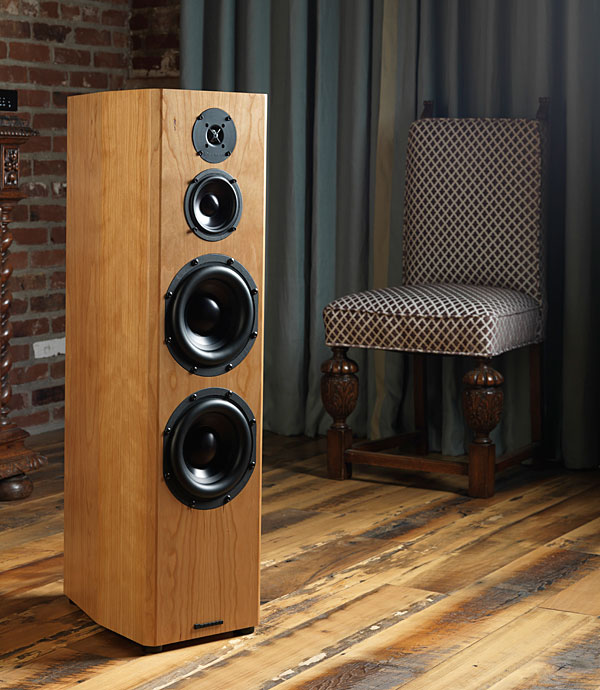 In an admittedly unfair face-off, the Middle Ts sounded as cleanly and smoothly integrated as my B&W 800 Diamonds ($24,000/pair), and threw nearly as big a soundstage. The B&Ws, however, create a sense of silent space (audiophile air?) that enlivens the soundstage; the Brystons did not. Of course, that in no way detracted from the actual music the Middle Ts made. Drawing from memory and notes, I can make only generalized comparisons of the Middle T with other speakers I've auditioned in this room. Still, the Bryston competed well with the pricier B&W 804D ($7500/pair), the ADAM Audio Classic Column MK3 ($7000/pair), and the Aerial Acoustics 7T ($9850/pair). The Middle T went head-to-head with all of these models in the bass and midrange, but again seemed to lack their treble finesse. Bear in mind, however, that all of these speakers cost more than the Middle T. I suspect that the most appropriate comparison would be with Revel's Performa3 F208 ($5000/pair). Both it and the Middle T have two 8" woofers in a ported enclosure, and they're almost identically priced. Erick Lichte loved the Revels, but I've heard them only at a Consumer Electronics Show, and so can say little more than this: Those who have $5000 to spend on speakers should listen to both before making a choice.
Conclusions
In an admittedly unfair face-off, the Middle Ts sounded as cleanly and smoothly integrated as my B&W 800 Diamonds ($24,000/pair), and threw nearly as big a soundstage. The B&Ws, however, create a sense of silent space (audiophile air?) that enlivens the soundstage; the Brystons did not. Of course, that in no way detracted from the actual music the Middle Ts made. Drawing from memory and notes, I can make only generalized comparisons of the Middle T with other speakers I've auditioned in this room. Still, the Bryston competed well with the pricier B&W 804D ($7500/pair), the ADAM Audio Classic Column MK3 ($7000/pair), and the Aerial Acoustics 7T ($9850/pair). The Middle T went head-to-head with all of these models in the bass and midrange, but again seemed to lack their treble finesse. Bear in mind, however, that all of these speakers cost more than the Middle T. I suspect that the most appropriate comparison would be with Revel's Performa3 F208 ($5000/pair). Both it and the Middle T have two 8" woofers in a ported enclosure, and they're almost identically priced. Erick Lichte loved the Revels, but I've heard them only at a Consumer Electronics Show, and so can say little more than this: Those who have $5000 to spend on speakers should listen to both before making a choice.
Conclusions
I seem to have picked away at the Bryston Middle T. Though I have no reason to redact any of the criticisms I've made, I hope that I haven't obscured the most important message: The Middle T is an excellent speaker, and an excellent value at $5400/pair—it bears comparison with speakers costing much more. Its tonal balance is neutral, its power handling will exceed the needs (and the capacity) of most users, its bass extension is substantial, and, most important for me, it offers a generously wide, deep, and immediate soundstage with stable imaging. The Bryston Middle T is the real thing: a wonderful speaker at a reasonable price that can be enjoyed for many years as its owner basks in the security of its two-decade warranty.
I think the Middle Ts' spatial performance was as much a result of their smooth, untiring treble as of the matching between the two speakers. The tweeters never called attention to themselves, but rather provided all the edge called for. Sara K.'s sibilants on her Hell or High Water (SACD/CD, Stockfisch SFR 357.4039.2) were rendered naturally, but the transients of strings and percussion also had snap and delineation (though the triple grilles clearly muted such felicities).
The midrange was equally satisfying. The Sara K. disc demonstrated how the Middle Ts could render a well-recorded voice with a most thrilling, somewhat eerie presence. The Brystons delineated Ping from Pang from Pong in Turandot, and revealed inner vocal lines of the choirs in the War Requiem. I make so much of the midrange presence because, while I found nothing to suggest that the Middle Ts were accented or peaky, they seemed to place images just a bit more forward in terms of distance, though not of character.
In an admittedly unfair face-off, the Middle Ts sounded as cleanly and smoothly integrated as my B&W 800 Diamonds ($24,000/pair), and threw nearly as big a soundstage. The B&Ws, however, create a sense of silent space (audiophile air?) that enlivens the soundstage; the Brystons did not. Of course, that in no way detracted from the actual music the Middle Ts made. Drawing from memory and notes, I can make only generalized comparisons of the Middle T with other speakers I've auditioned in this room. Still, the Bryston competed well with the pricier B&W 804D ($7500/pair), the ADAM Audio Classic Column MK3 ($7000/pair), and the Aerial Acoustics 7T ($9850/pair). The Middle T went head-to-head with all of these models in the bass and midrange, but again seemed to lack their treble finesse. Bear in mind, however, that all of these speakers cost more than the Middle T. I suspect that the most appropriate comparison would be with Revel's Performa3 F208 ($5000/pair). Both it and the Middle T have two 8" woofers in a ported enclosure, and they're almost identically priced. Erick Lichte loved the Revels, but I've heard them only at a Consumer Electronics Show, and so can say little more than this: Those who have $5000 to spend on speakers should listen to both before making a choice.
ConclusionsI seem to have picked away at the Bryston Middle T. Though I have no reason to redact any of the criticisms I've made, I hope that I haven't obscured the most important message: The Middle T is an excellent speaker, and an excellent value at $5400/pair—it bears comparison with speakers costing much more. Its tonal balance is neutral, its power handling will exceed the needs (and the capacity) of most users, its bass extension is substantial, and, most important for me, it offers a generously wide, deep, and immediate soundstage with stable imaging. The Bryston Middle T is the real thing: a wonderful speaker at a reasonable price that can be enjoyed for many years as its owner basks in the security of its two-decade warranty.