Note: As we prepare for our coverage of High End Vienna and its many satellite shows, we share more of Jason Victor Serinus and Rogier van Bakel's coverage of Europe's second most important audio show, Audio Video Warsaw. Audio Video Warsaw 2026 will take place this fall, October 23-25, 2026. For Jason and Rogier's previous Warsaw show coverage, go here.
Deciding whether to exhibit hop in the PGE Narodowy Stadium or, many miles away, the Radisson Blu Sobieski and nearby Golden Tulip is like choosing between strolling through midtown Manhattan, and/or walking through neighborhoods with less cachet. In either case, you sometimes encounter riches, and you sometimes find yourself involuntarily surrounded by dreck.
Strolling briskly through the corridors of the stadium, in which many of the biggest and most well-known audio and visual brands from multiple countries stake territory, might be equated to rapidly riding past subway stops in Greenwich Village, the Chelsea, 32nd Street and Macy's, Times Square and the theater district, 59th Street/Columbus Circle with its access to Carnegie Hall, Central Park, and Lincoln Center, etc., etc. Eventually, if you're on the right train, you end up in or near a Columbia University-adjacent neighborhood. Every stop offers a uniquely enticing wonderland of possibilities that beckons you with its promises.
Had I shot a video of my walk down the wide hallways of the stadium's outer ring, you would discover one attention-grabbing sonic display after the other. Large banners, some illuminated, along with bells and whistles galore draw you to everything from Abyss and Audio Research to ZMF headphones. Occasionally—though far less than in earlier decades—you encounter a pair of short-skirted blonds smiling blankly while beckoning you into their A/V den of iniquity. But more often than not, the banners themselves pull you along like successive flashes of light through subway windows.
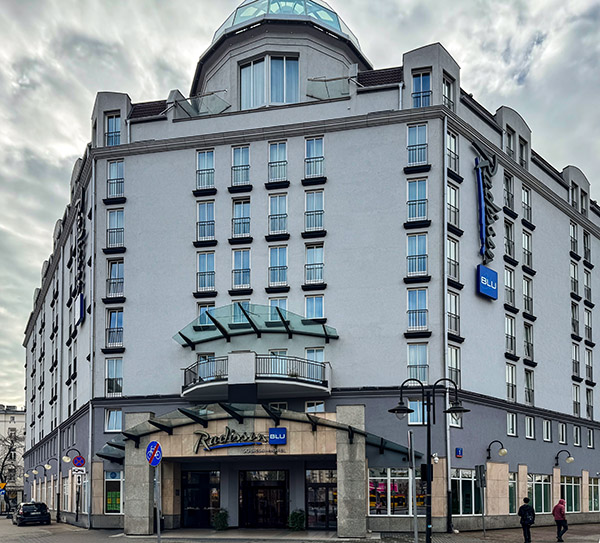 The small rooms and decently sized suites on the seven floors of the Radisson Blu Sobieski offer a different ride entirely. The enticement is not from huge banners (although there are a few); rather, it's from the prospect of discovering something new in an international playground of design and sound. Since the majority of exhibitors are smaller Polish or European companies with no US presence, and many rooms' signage is limited to a standardized black-and-white door sign that prosaically proclaims the room's sponsor, there is no way to know what deserves your attention unless you open the door, enter, remain determined to dart into a decent seat, and listen.
Nor can you get much of an inkling of the sound from the looks of the equipment. Small, plain looking speakers can sound fantastic, while large, fanciful speaker arrays or unusually sculpted valve amplifiers with exotic tubes can sometimes sound flat and dull. Once a journalist cuts themselves loose from a predetermined list of companies and rooms to cover, they never know what they'll find.
The small rooms and decently sized suites on the seven floors of the Radisson Blu Sobieski offer a different ride entirely. The enticement is not from huge banners (although there are a few); rather, it's from the prospect of discovering something new in an international playground of design and sound. Since the majority of exhibitors are smaller Polish or European companies with no US presence, and many rooms' signage is limited to a standardized black-and-white door sign that prosaically proclaims the room's sponsor, there is no way to know what deserves your attention unless you open the door, enter, remain determined to dart into a decent seat, and listen.
Nor can you get much of an inkling of the sound from the looks of the equipment. Small, plain looking speakers can sound fantastic, while large, fanciful speaker arrays or unusually sculpted valve amplifiers with exotic tubes can sometimes sound flat and dull. Once a journalist cuts themselves loose from a predetermined list of companies and rooms to cover, they never know what they'll find.
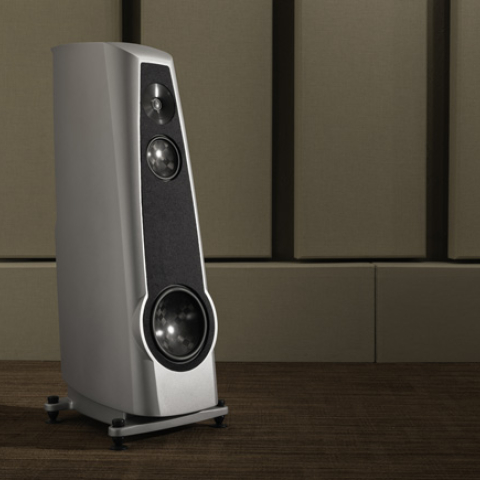
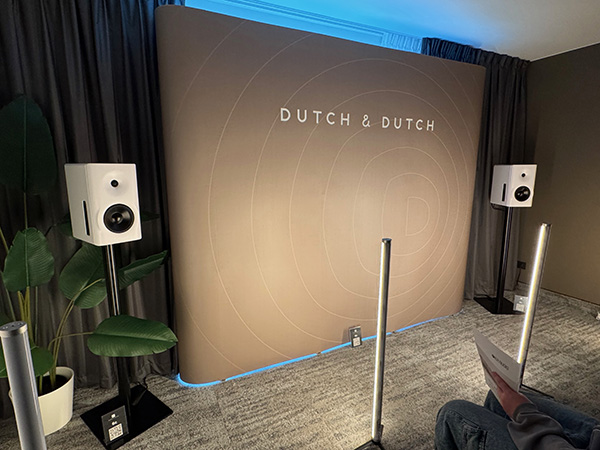
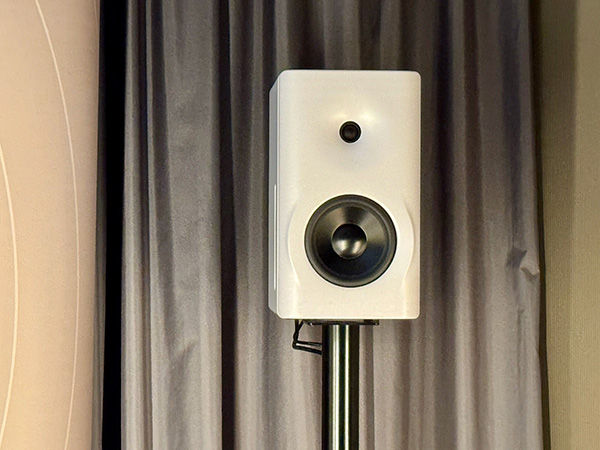 On Saturday, I segued from the "known" ground of Dutch & Dutch's premiere showing of its smaller, five-years-in-the-making, all-in-one active 6c loudspeaker system to Ø Audio of Norway's far larger Icon loudspeaker with its horn driver and 12" woofer. While I'll mostly leave discussion of the Dutch x 2 premiere to my colleague Rogier van Bakel—who liked the sound of its tweeter more than moi—I spent a decent amount of time with Ø's Icon and chatting with the company's towering, axe-wielding, spine-stretching Jonathan Magnus Cook.
Even though Ø's Electrocompaniet EV800 amplification was the same as at the final High End Munich show in May 2025, the Icon's sound was so vastly different than the larger Verdande that Ø showed in Munich as to make me wonder if there was something wrong with one of the other components in Ø's Munich exhibit.
On Saturday, I segued from the "known" ground of Dutch & Dutch's premiere showing of its smaller, five-years-in-the-making, all-in-one active 6c loudspeaker system to Ø Audio of Norway's far larger Icon loudspeaker with its horn driver and 12" woofer. While I'll mostly leave discussion of the Dutch x 2 premiere to my colleague Rogier van Bakel—who liked the sound of its tweeter more than moi—I spent a decent amount of time with Ø's Icon and chatting with the company's towering, axe-wielding, spine-stretching Jonathan Magnus Cook.
Even though Ø's Electrocompaniet EV800 amplification was the same as at the final High End Munich show in May 2025, the Icon's sound was so vastly different than the larger Verdande that Ø showed in Munich as to make me wonder if there was something wrong with one of the other components in Ø's Munich exhibit.
 In the company of a dCS Rossini player and clock and an Innuos streamer (which Ø did not use in Munich), the sound was generous, full-range, colorful, and perfectly controlled. The system's excellent midrange found its complement in exceptionally clear and lively highs. No ifs, ands, or buts—the sound was really good. The more I listened, the more I understood why Ø's distribution had expanded from 10 to close to 40 countries in a year's time. With Harmonia Distribution handling Ø speakers in the US, I expect to see their availability increase before and after AXPONA 2026.
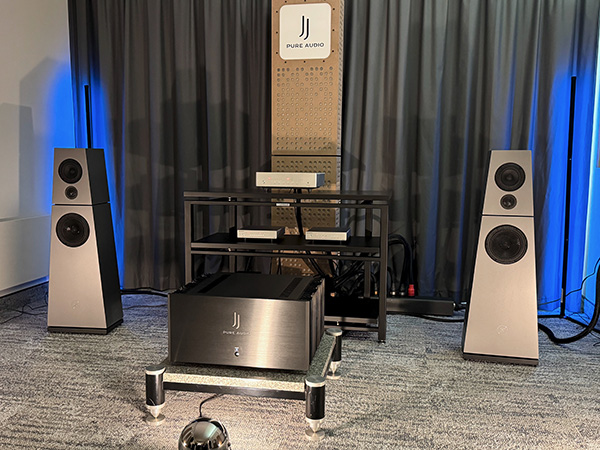
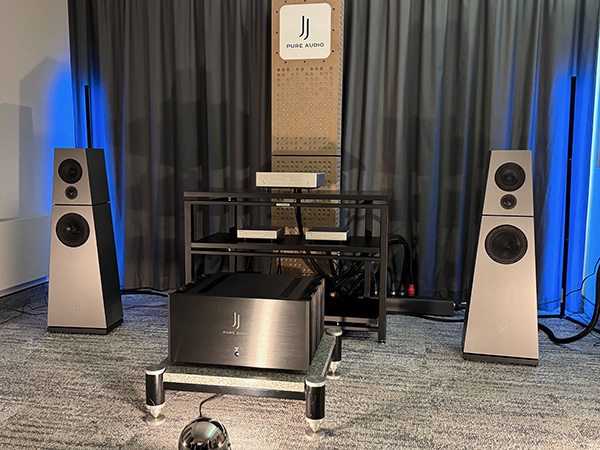 As soon as I entered Pure Audio's smaller room and heard yet another recording by Leonard Cohen, it became clear that many Polish exhibitors are smitten with his voice, artistry, and sound. Either that, or they're trying to appeal to the perceived likes of the audiophiles who attend the Warsaw show. During my visit, Cohen easily topped Diana Krall, who made but one appearance.
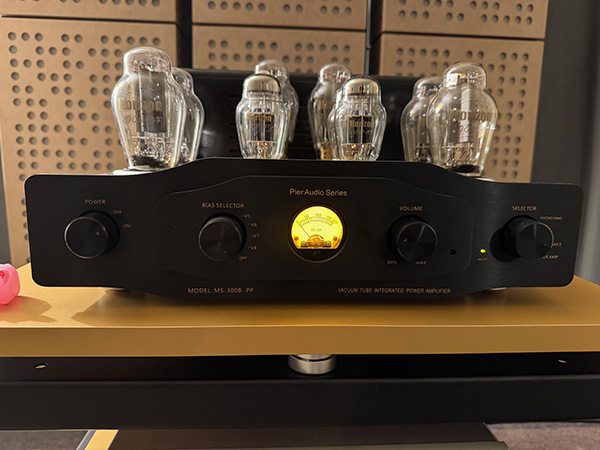 The company also had a second room with a larger speaker which, together with a Chinese-made Eltheria amplifier (5500 Euros) from, I believe, Pier Audio—and an excellent-sounding Denafrips R-to-R DAC with no digital oversampling—produced equally impressive sound.
 JVS receives enlightenment from less than 1 watt
Jim Austin's suggestion to check out the first international launch of Gunnar Hildén's Soft Collective—their first exhibition at a show outside of Scandinavia—proved spot-on. Through its hand-crafted SC-05 dual open baffle loudspeaker, which features an 18" woofer, "dipole radiation," and 92dB sensitivity, music was beautiful and engaging from the first note. That it was produced by a fast-switching Zikra Audio Danish amplifier that consistently output less than 1W power on the most demanding passages blew my mind. Shown in the company of a Zikra SE 300B XLS preamplifier with built-in phono stage and external power supply, a Rockna streamer and DAC, Technics turntable, and Dyrholm Audio cables, this system transmitted exceptional sound.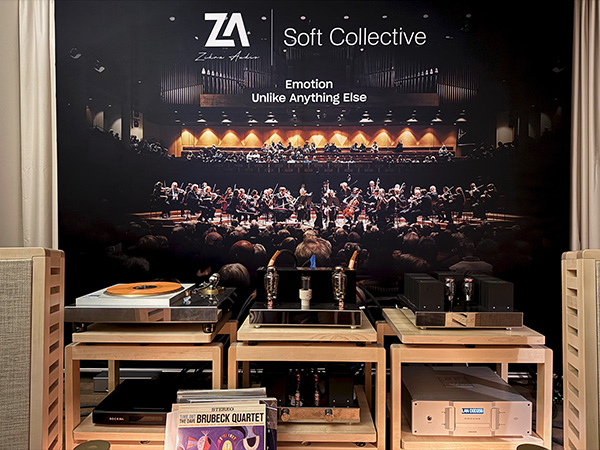 I was thrilled by the beautiful delicacy, wonderful transparency, colors, and solid bass of an Alison Krauss recording that was sourced from Tidal and upsampled to DSD256 via an I2S interface. It was so unlike anything I expected to hear from flea-watt SE amplification that I pulled out my phone and shot an admittedly imperfect but nonetheless compelling four-minute talk with Hildén. To shatter my mind, he played an early digital Erato LP of Rostropovich conducting L'Orchestre de Radio France in a surprisingly lyrical movement from Prokofiev's Seventh Symphony. The sound was beautiful, glowing, lively, and entrancing. Timpani may not have been under full control in the small hotel room, but the musical flow was so compelling as to transcend such concerns. "Color for days and nights," breathlessly scribbled moi in my notebook.
When I asked to hear more, I was treated to a CBS LP of Vivaldi's Concerto for Two Mandolins in G, performed by La Grande Ecurie et la Chambre du Roy, Jean-Claude Malgoire conducting. The ensemble sounded perfect, warm, and sweet. As I left the room with a smile on my face, I could hear Herb Reichert and the single-ended triode crowd in Brooklyn cheering, "JVS finally got it!" Hey, it may have taken many decades, but what's time in the face of music's eternal beauty?
I was thrilled by the beautiful delicacy, wonderful transparency, colors, and solid bass of an Alison Krauss recording that was sourced from Tidal and upsampled to DSD256 via an I2S interface. It was so unlike anything I expected to hear from flea-watt SE amplification that I pulled out my phone and shot an admittedly imperfect but nonetheless compelling four-minute talk with Hildén. To shatter my mind, he played an early digital Erato LP of Rostropovich conducting L'Orchestre de Radio France in a surprisingly lyrical movement from Prokofiev's Seventh Symphony. The sound was beautiful, glowing, lively, and entrancing. Timpani may not have been under full control in the small hotel room, but the musical flow was so compelling as to transcend such concerns. "Color for days and nights," breathlessly scribbled moi in my notebook.
When I asked to hear more, I was treated to a CBS LP of Vivaldi's Concerto for Two Mandolins in G, performed by La Grande Ecurie et la Chambre du Roy, Jean-Claude Malgoire conducting. The ensemble sounded perfect, warm, and sweet. As I left the room with a smile on my face, I could hear Herb Reichert and the single-ended triode crowd in Brooklyn cheering, "JVS finally got it!" Hey, it may have taken many decades, but what's time in the face of music's eternal beauty?
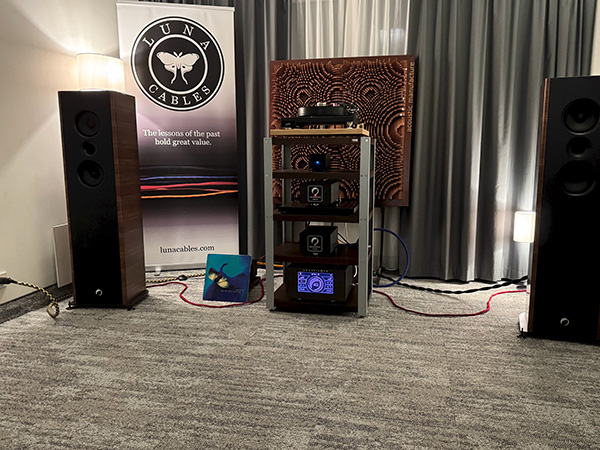 Other, very different rooms followed, including an almost shocking transition to a far higher powered Grandinote system with a J.Sikora turntable playing an LP featuring Dead Can Dance's "Song of the Nile." But for the duration of the afternoon, I could not get the sound of the Soft Collective/Zikra Audio system out of my head.
Part 3 will be posting soon.
Other, very different rooms followed, including an almost shocking transition to a far higher powered Grandinote system with a J.Sikora turntable playing an LP featuring Dead Can Dance's "Song of the Nile." But for the duration of the afternoon, I could not get the sound of the Soft Collective/Zikra Audio system out of my head.
Part 3 will be posting soon.
The small rooms and decently sized suites on the seven floors of the Radisson Blu Sobieski offer a different ride entirely. The enticement is not from huge banners (although there are a few); rather, it's from the prospect of discovering something new in an international playground of design and sound. Since the majority of exhibitors are smaller Polish or European companies with no US presence, and many rooms' signage is limited to a standardized black-and-white door sign that prosaically proclaims the room's sponsor, there is no way to know what deserves your attention unless you open the door, enter, remain determined to dart into a decent seat, and listen.
Nor can you get much of an inkling of the sound from the looks of the equipment. Small, plain looking speakers can sound fantastic, while large, fanciful speaker arrays or unusually sculpted valve amplifiers with exotic tubes can sometimes sound flat and dull. Once a journalist cuts themselves loose from a predetermined list of companies and rooms to cover, they never know what they'll find.
On Saturday, I segued from the "known" ground of Dutch & Dutch's premiere showing of its smaller, five-years-in-the-making, all-in-one active 6c loudspeaker system to Ø Audio of Norway's far larger Icon loudspeaker with its horn driver and 12" woofer. While I'll mostly leave discussion of the Dutch x 2 premiere to my colleague Rogier van Bakel—who liked the sound of its tweeter more than moi—I spent a decent amount of time with Ø's Icon and chatting with the company's towering, axe-wielding, spine-stretching Jonathan Magnus Cook.
Even though Ø's Electrocompaniet EV800 amplification was the same as at the final High End Munich show in May 2025, the Icon's sound was so vastly different than the larger Verdande that Ø showed in Munich as to make me wonder if there was something wrong with one of the other components in Ø's Munich exhibit.
In the company of a dCS Rossini player and clock and an Innuos streamer (which Ø did not use in Munich), the sound was generous, full-range, colorful, and perfectly controlled. The system's excellent midrange found its complement in exceptionally clear and lively highs. No ifs, ands, or buts—the sound was really good. The more I listened, the more I understood why Ø's distribution had expanded from 10 to close to 40 countries in a year's time. With Harmonia Distribution handling Ø speakers in the US, I expect to see their availability increase before and after AXPONA 2026.
As soon as I entered Pure Audio's smaller room and heard yet another recording by Leonard Cohen, it became clear that many Polish exhibitors are smitten with his voice, artistry, and sound. Either that, or they're trying to appeal to the perceived likes of the audiophiles who attend the Warsaw show. During my visit, Cohen easily topped Diana Krall, who made but one appearance.
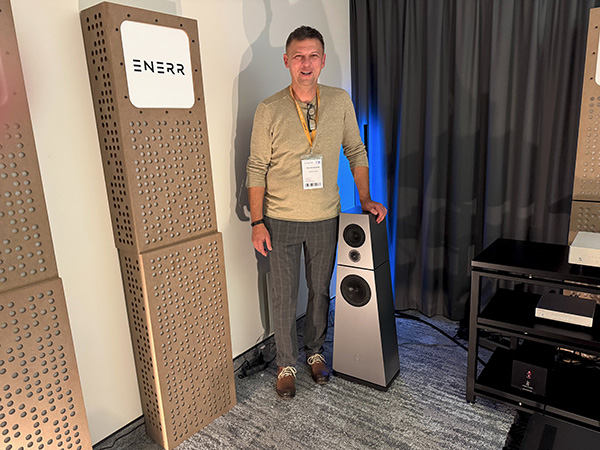
Pure Audio's Piotr Kwiatkowski.
Pure Audio's equipment, which is distributed under the Audiothlon brand, transmitted timbres which sounded honest and true. Percussive impact and timing were also quite impressive. The huge bass drum in Reference Recordings' Minnesota Orchestra take on Copland's Fanfare for the Common Man may not have sounded as huge as I've heard it through larger systems, but the presentation was nonetheless extremely impressive through loudspeakers (4000 Euros/pair) designed for smaller rooms. The 50W class-AB amplifier (10,000 Euros) deserves a lot of credit.
The company also had a second room with a larger speaker which, together with a Chinese-made Eltheria amplifier (5500 Euros) from, I believe, Pier Audio—and an excellent-sounding Denafrips R-to-R DAC with no digital oversampling—produced equally impressive sound.
JVS receives enlightenment from less than 1 watt
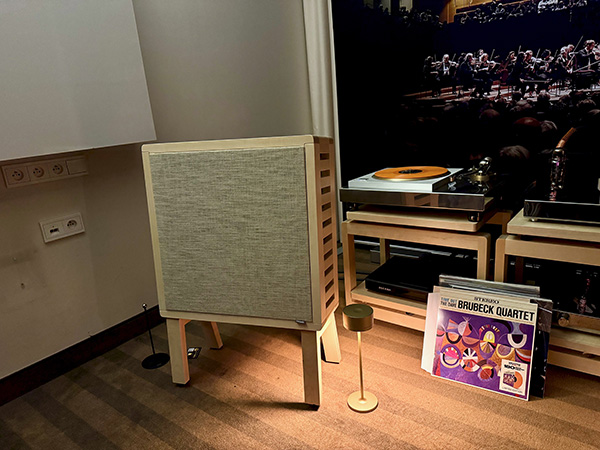
Jim Austin's suggestion to check out the first international launch of Gunnar Hildén's Soft Collective—their first exhibition at a show outside of Scandinavia—proved spot-on. Through its hand-crafted SC-05 dual open baffle loudspeaker, which features an 18" woofer, "dipole radiation," and 92dB sensitivity, music was beautiful and engaging from the first note. That it was produced by a fast-switching Zikra Audio Danish amplifier that consistently output less than 1W power on the most demanding passages blew my mind. Shown in the company of a Zikra SE 300B XLS preamplifier with built-in phono stage and external power supply, a Rockna streamer and DAC, Technics turntable, and Dyrholm Audio cables, this system transmitted exceptional sound.
I was thrilled by the beautiful delicacy, wonderful transparency, colors, and solid bass of an Alison Krauss recording that was sourced from Tidal and upsampled to DSD256 via an I2S interface. It was so unlike anything I expected to hear from flea-watt SE amplification that I pulled out my phone and shot an admittedly imperfect but nonetheless compelling four-minute talk with Hildén. To shatter my mind, he played an early digital Erato LP of Rostropovich conducting L'Orchestre de Radio France in a surprisingly lyrical movement from Prokofiev's Seventh Symphony. The sound was beautiful, glowing, lively, and entrancing. Timpani may not have been under full control in the small hotel room, but the musical flow was so compelling as to transcend such concerns. "Color for days and nights," breathlessly scribbled moi in my notebook.
When I asked to hear more, I was treated to a CBS LP of Vivaldi's Concerto for Two Mandolins in G, performed by La Grande Ecurie et la Chambre du Roy, Jean-Claude Malgoire conducting. The ensemble sounded perfect, warm, and sweet. As I left the room with a smile on my face, I could hear Herb Reichert and the single-ended triode crowd in Brooklyn cheering, "JVS finally got it!" Hey, it may have taken many decades, but what's time in the face of music's eternal beauty?
Other, very different rooms followed, including an almost shocking transition to a far higher powered Grandinote system with a J.Sikora turntable playing an LP featuring Dead Can Dance's "Song of the Nile." But for the duration of the afternoon, I could not get the sound of the Soft Collective/Zikra Audio system out of my head.
Part 3 will be posting soon.