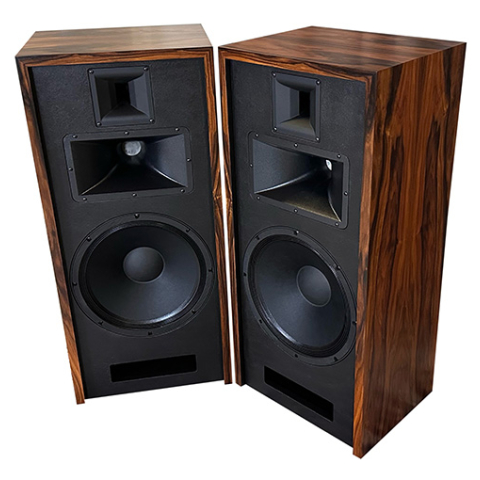
This past May, I stormed the halls of the international audio orgy High End Munich. My scorched-earth tour covered countless rooms, in pursuit of the holy grail of music playback. Among the finalists, a clear pattern emerged: With a few exceptions, my favorite rooms used horn-loaded speakers (footnote 1).
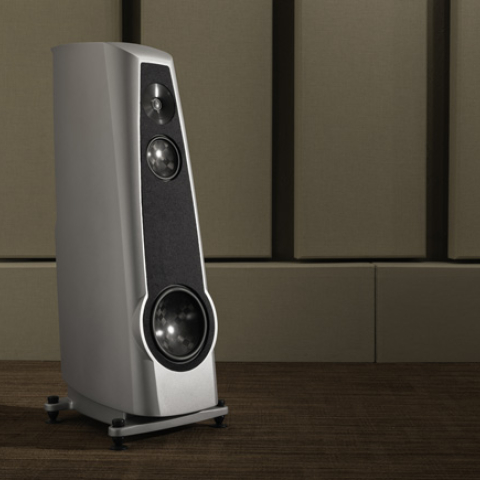
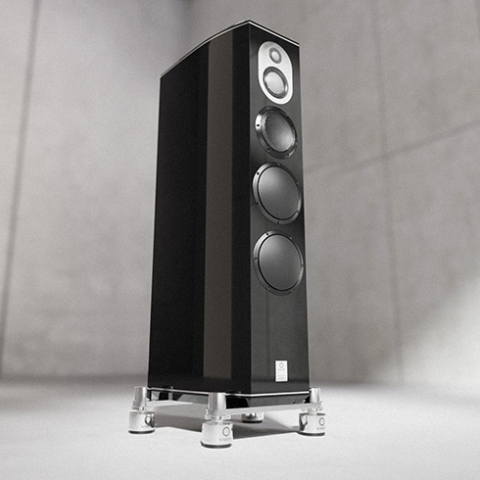
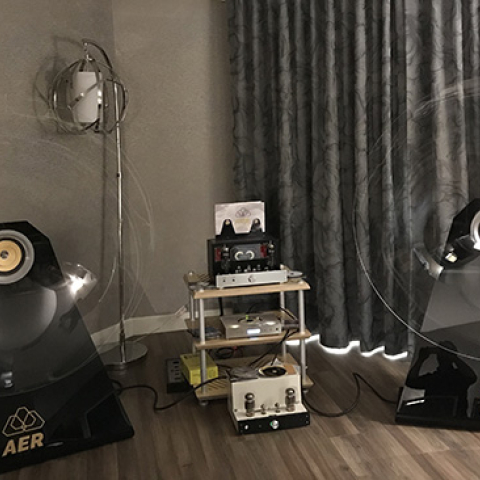
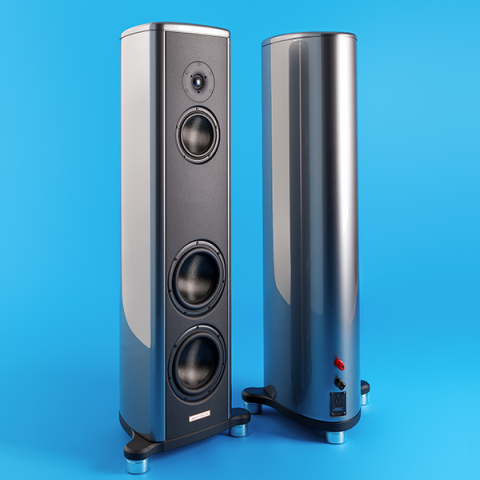
The exceptions—great rooms with speakers that aren't horn loaded—were by Avalon Acoustics, Auer Acoustics, and Matter. The Avalon Acoustics Saga Signature's "seamless linearity created a womblike embrace," I reported. Auer Acoustics' Versura V4 offered "an unblemished signal that effortlessly escaped the confines of [its] Panzerholz cabinets." The Matter Audio Antimatter speaker generated "a nonmechanical, in-the-flow appeal." Speakers from Joseph Audio and Aequo Audio also impressed.
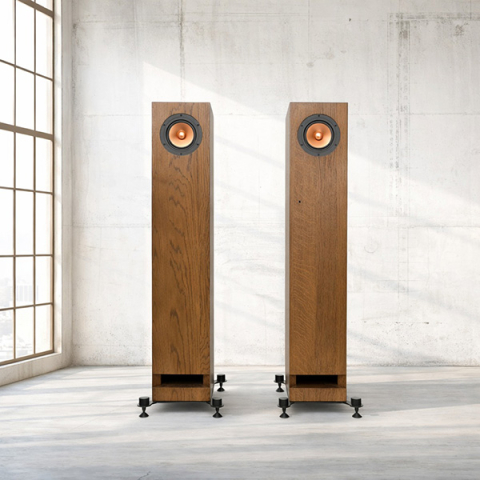
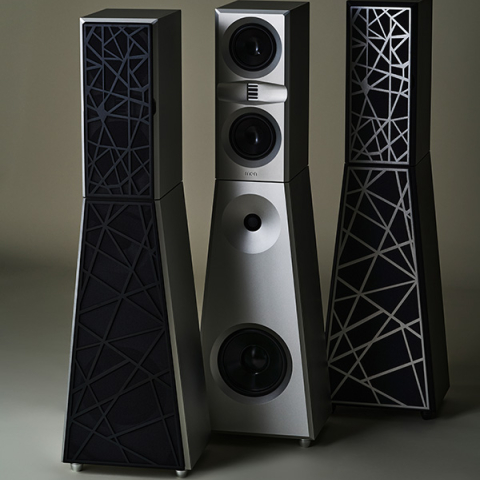
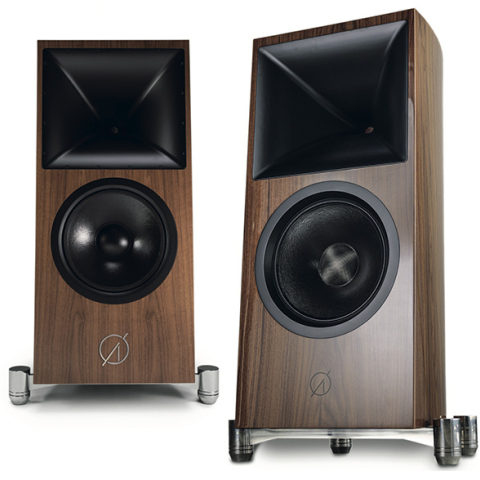
But horn-loaded speakers entirely captured me. The pyramid-shaped Odeon Audio Helix combined deep-rooted low-end power and luxurious scale. Tune Audio's Anima loudspeakers delivered rare coherence, impressive resolution, and golden tone. The colossal 1935-era Western Electric horns in the Silbatone room played music from vinyl that was skyscraper scaled, natural sounding, and utterly engrossing.
Back in the USA, Greg Roberts's Volti Audio builds some of the finest horn-loaded loudspeakers I've heard. Of the Volti flagship Vittora, Art Dudley wrote, "to find another new speaker that delivers this combination of scale, impact, openness, freedom from overt distortions, and sheer, consistent listenability, one must spend considerably more than $17,500." About the Volti Rival, I opined in 2017, "the Rivals played music with supreme fidelity, openness, lifelike images, transparency, impact, touch, timing, dynamics, and flat-out musical fun." More recently, in a follow-up to the Volti Razz loudspeaker review, I wrote, "the Volti/Sugden/Pass Labs powerhouse made music that convincingly altered my space and my listening perceptions ... with real flesh-and-blood sonic splendor."
I first heard the Volti Audio Lucera loudspeaker ($12,900/pair) at the 2024 Capital Audiofest. Ever since, I've been determined to hoist them up the seven floors of stairs to my Greenwich Village lookout lodge.
 Description
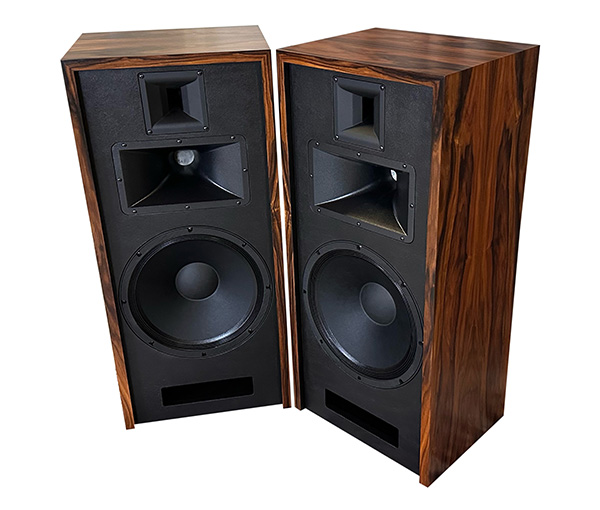
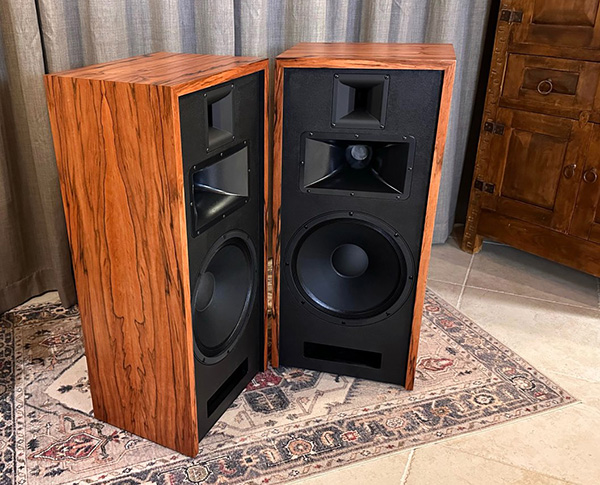
The Lucera is a horn-loaded three-way with a rated sensitivity of 99dB/2.83V/1m. Its specified nominal impedance is 8 ohms. The specifications say it goes down to 32Hz.
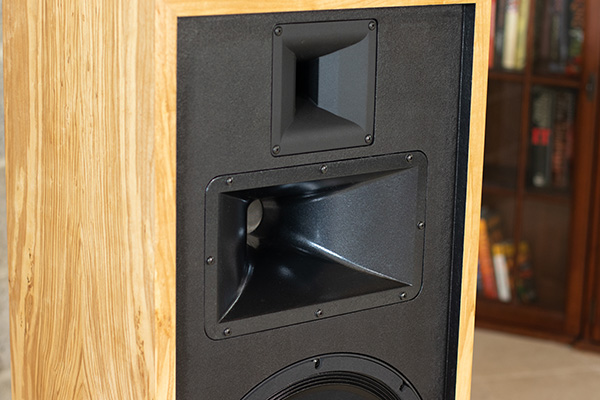
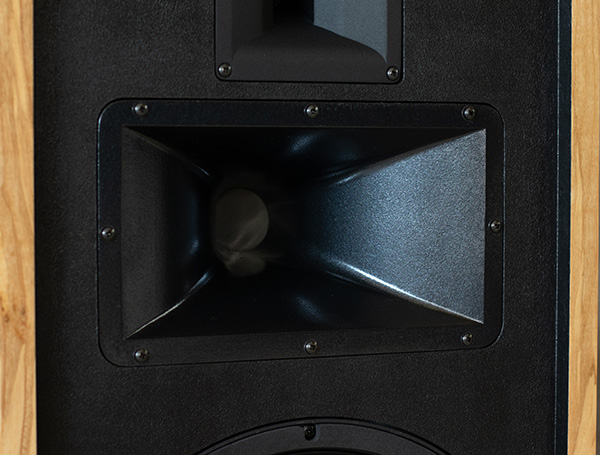
For the treble, the Lucera uses a compression driver with a polyimide diaphragm and a 1" outlet feeding into an aluminum horn lens. The midrange is covered by a compression driver with a dome-shaped composite diaphragm, a neodymium magnet, and a 2" outlet issuing into a cast-metal midrange horn with a 2" throat. The low end is bass-reflex with a high-sensitivity, pro-audio, pleated surround, paper-cone 15" woofer with neodymium magnet and cast-aluminum frame.
"Drivers are attached with machine screws into threaded inserts and torqued down," Roberts explained over email. "The CNC machine cuts grooves into the front baffles, so the drivers are recessed and flush with the front of the cabinet."
The Lucera cabinet is constructed of 1"-thick Baltic Birch plywood, assembled with polyurethane-based adhesives, and finished in real wood veneers. It stands 40" tall, 18" wide, and 14" deep. The Lucera sits flat on the floor with four thick felt pads underneath.
"All pieces of the cabinets—sides, top, bottom, back, front, internal braces—are interlocked together." The grooves are cut by NC so that the pieces fit together "like a 3D puzzle," Roberts explained. "This helps make the cabinets very stout."
The Lucera uses hand-built crossovers with metalized polypropylene capacitors, 14-gauge, hand-wound air-coil copper inductors, and metal-oxide resistors, all mounted on separate wooden boards positioned within the cabinet to minimize vibration. Internal wiring is 14-gauge, oxygen-free, stranded copper. The midrange crosses over to the tweeter at a high 6kHz.
 On the Lucera's back panel, you'll find Lynk resistors that allow you to fine-tune the tweeter and midrange output. I experimented but eventually returned to the factory settings.
Roberts puts a lot of work into damping his cabinets, which led me to ask if he subscribes to the thin wall or thick wall school of speaker design and how implementation affects sound.
"I use two different kinds of damping inside the Lucera: dense foam on the cabinet surfaces and a strategically placed piece of loose fiber mat," Roberts explained. "During development, after most of the crossover work is done, I spend a lot of time listening to different amounts of damping and different locations of damping within the cabinet to determine the best balance. Some of it is intuitive and works the way you think it would, and some of it is surprisingly variable.
"On the one hand, I don't subscribe to the idea that the speaker cabinet should be a part of the sound," he continued, "but on the other hand, I do think it's possible to over-brace and overdamp a speaker cabinet. ... I've found that the 1"-thick Baltic Birch plywood, strategically braced inside, gives me a stoutly built cabinet that complements the overall sound I'm listening for and will last for many decades as well."
The Lucera was made to fill a hole in the Volti lineup "between the Razz and the Rival," Roberts said. "But it was important to me that this new speaker also have a character all its own. The cabinet was the easiest part to figure out, since it shares the same construction as the Razz and the Rival. But I wanted a different sound from this model, more expansive than the Razz and more linear in the bass. The 15" woofer (versus 12" in the Razz) gives a higher sensitivity, which is immediately noticeable. The increased sensitivity and larger woofer cone give us a wider and deeper soundstage. The Razz and Lucera share the same midrange horn lens, made of a thick cast metal that we dampen on the backside, but the Lucera has different midrange drivers and tweeters, which are a nice step up in quality from the Razz."
On the Lucera's back panel, you'll find Lynk resistors that allow you to fine-tune the tweeter and midrange output. I experimented but eventually returned to the factory settings.
Roberts puts a lot of work into damping his cabinets, which led me to ask if he subscribes to the thin wall or thick wall school of speaker design and how implementation affects sound.
"I use two different kinds of damping inside the Lucera: dense foam on the cabinet surfaces and a strategically placed piece of loose fiber mat," Roberts explained. "During development, after most of the crossover work is done, I spend a lot of time listening to different amounts of damping and different locations of damping within the cabinet to determine the best balance. Some of it is intuitive and works the way you think it would, and some of it is surprisingly variable.
"On the one hand, I don't subscribe to the idea that the speaker cabinet should be a part of the sound," he continued, "but on the other hand, I do think it's possible to over-brace and overdamp a speaker cabinet. ... I've found that the 1"-thick Baltic Birch plywood, strategically braced inside, gives me a stoutly built cabinet that complements the overall sound I'm listening for and will last for many decades as well."
The Lucera was made to fill a hole in the Volti lineup "between the Razz and the Rival," Roberts said. "But it was important to me that this new speaker also have a character all its own. The cabinet was the easiest part to figure out, since it shares the same construction as the Razz and the Rival. But I wanted a different sound from this model, more expansive than the Razz and more linear in the bass. The 15" woofer (versus 12" in the Razz) gives a higher sensitivity, which is immediately noticeable. The increased sensitivity and larger woofer cone give us a wider and deeper soundstage. The Razz and Lucera share the same midrange horn lens, made of a thick cast metal that we dampen on the backside, but the Lucera has different midrange drivers and tweeters, which are a nice step up in quality from the Razz."
 Roberts has always been a horn guy. He got his start repairing Klipsch K-Horns. He's enjoying the new proliferation of horn speakers on the market.
"I like that there are more horn speakers being introduced," Roberts wrote. "It puts the focus of the industry on what I think is the very best topology for enjoying music in one's listening room. But it seems that every horn speaker I listen to, even the horn speakers I think are pretty good, have at least one fault that bothers me, some element to the sound that pokes me in the side the whole time the music is playing.
"How can I just sit and relax and immerse myself in the music if the midrange is calling attention to itself due to harshness, glare, or coloration?" Roberts asks. "Or, I'm hearing the woofer thumping away inside the cabinet instead of hearing a bass guitar and drums as part of the music. Or edginess in the upper midrange, midrange glare from metal diaphragms, tizzyness from the tweeter, or poor integration between components. Once I've heard one of these issues, I can't unhear it. It's there all the time! This must happen to so many people who buy speakers."
At shows, Roberts always uses digital sources, never vinyl. "I prefer vinyl, but using digital for shows is simply more convenient," he told me.
I asked about the system he uses for evaluating speakers. His digital setup consists of an Innuos music server feeding a Mojo Audio DAC, connected with a Triode Wire Labs USB cable. Qobuz is his choice of streaming platform. He uses select tracks for testing low bass, soundstage, complex music passages, and so on. He uses all manner of amps: tubes, solid state, class-D.
He also tests how his speakers work in different rooms. "During development, I will set up in my listening room, which is quite large, but will often switch to a smaller room in my shop to hear how the speaker energizes the room," Roberts revealed. "I'm looking for even power distribution. Testing my speakers in a small room often changes my mind about the overall balance of the design as compared to a larger room. This experience is one of the reasons why I provide adjustments to the output level of midrange and high frequencies."
Roberts has always been a horn guy. He got his start repairing Klipsch K-Horns. He's enjoying the new proliferation of horn speakers on the market.
"I like that there are more horn speakers being introduced," Roberts wrote. "It puts the focus of the industry on what I think is the very best topology for enjoying music in one's listening room. But it seems that every horn speaker I listen to, even the horn speakers I think are pretty good, have at least one fault that bothers me, some element to the sound that pokes me in the side the whole time the music is playing.
"How can I just sit and relax and immerse myself in the music if the midrange is calling attention to itself due to harshness, glare, or coloration?" Roberts asks. "Or, I'm hearing the woofer thumping away inside the cabinet instead of hearing a bass guitar and drums as part of the music. Or edginess in the upper midrange, midrange glare from metal diaphragms, tizzyness from the tweeter, or poor integration between components. Once I've heard one of these issues, I can't unhear it. It's there all the time! This must happen to so many people who buy speakers."
At shows, Roberts always uses digital sources, never vinyl. "I prefer vinyl, but using digital for shows is simply more convenient," he told me.
I asked about the system he uses for evaluating speakers. His digital setup consists of an Innuos music server feeding a Mojo Audio DAC, connected with a Triode Wire Labs USB cable. Qobuz is his choice of streaming platform. He uses select tracks for testing low bass, soundstage, complex music passages, and so on. He uses all manner of amps: tubes, solid state, class-D.
He also tests how his speakers work in different rooms. "During development, I will set up in my listening room, which is quite large, but will often switch to a smaller room in my shop to hear how the speaker energizes the room," Roberts revealed. "I'm looking for even power distribution. Testing my speakers in a small room often changes my mind about the overall balance of the design as compared to a larger room. This experience is one of the reasons why I provide adjustments to the output level of midrange and high frequencies."
 Setup
Setup
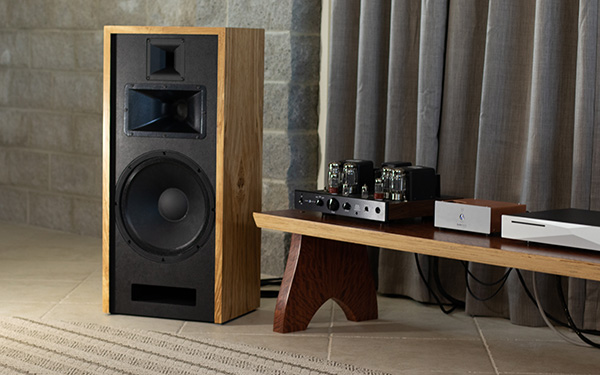
For this review, I drove the Luceras with the Air Tight ATM-1 2024 Edition power amplifier. Volume adjustment was facilitated by the Rogue Audio RP-7 preamp. Late in the review period, I replaced these components with the Riviera Labs Levante integrated amplifier. All music was played on my reference vinyl front-end consisting of the J.Sikora Standard Max Supreme turntable with KV9 Max Zirconium tonearm and the Aidas Tru-Stone Gold Web cartridge. Phono preamp duties were handled mostly by the Tavish Audio Design Adagio, though I also listened with the Manley Chinook. For cabling, etc., see the Associated Equipment sidebar. The Luceras responded well to precise placement. They preferred being situated away from the front wall, but placing them farther apart (hence closer to the sidewalls) expanded the soundstage, with no apparent downside. They liked to be toed in to point almost at the listening seat. Reducing the toe-in slightly also expanded the soundstage; moving past that point sacrificed focus.
At first, I dismissed Roberts's insistence on biwiring via the Lucera's robust binding posts. When I eventually gave in, running Danacable to the bottom and AudioQuest William Tell to the top, the speakers shed any constraints. The soundstage bloomed, and all the most important sonic elements improved: treble clarity, definition, visceral impact. Biwiring the speakers released a level of fidelity that surpassed my original, single-run configuration.
Roberts offers a one-year warranty on his speakers, when many manufacturers offer two or even more. His explanation is an affirmation of his commitment to his brand and his customers. "One year is the warranty in writing," he explained over text. "However, at my discretion, I will replace or repair any components or crossovers on any of my speakers regardless of who owns them, with no time limit. Easy to do, because in the 15 years I've been in business, I've never had to replace anything. Volti Audio speakers are not poofy high-end box speakers where if you just look at them the wrong way you blow a tweeter. They are extremely durable and will last for many decades."
 Listening
In tribute to the late Brian Wilson, I took out my original copy of Surf's Up (LP, Reprise Records/Brother Records RS 6453), my favorite Beach Boys album. While I often lose myself in the lilting nostalgia of the mandolin-filagreed "Disney Girls (1957)" and the surreal heights of the title track, "'Til I Die" moves me most. This powerful Brian Wilson composition, with its reflections on the cycle of life and death and our place in the cosmos, resonates deeply. King Crimson bassist John Wetton called it a prog record and "a revelation."
"'Til I Die" casts a soundstage that's both tightly knit and expansive, reflecting the era's studio tech and the legendary live rooms of United Western Recorders. (I once stood in that space interviewing metal anarchists System of a Down, marveling at emotional echoes of past albums by the Beach Boys, Ray Charles, and The Mamas & the Papas.) With the Luceras, the experience was amplified. They rendered every voice and instrument uniquely, revealing the intricate layers: gently resonant vibraphone; pulsing electronic bass drum; colossal Hammond B3; towering vocal stacks. All this resulted in a veritable cathedral of sensory overload. Goosebumps.
From surfboards to airplanes: The title of Tony Bennett's If I Ruled the World: Songs for the Jet Set (LP, Columbia CS 9143), which was released in 1965, sounds like a concept album, but it isn't really (footnote 2). Rather, it's a collection of standards and near-standards. The title track's chattering children at the beach, crashing surf, and stereo-panned jet exhaust swoosh is as captivating as Surf's Up in its own way. The production on this Don Costa–arranged journey is all about hard left and right instruments surrounding Bennett's walnut-paneling vocal tone, a voice as large as Sugarloaf Mountain. The Luceras played Jet Set with excellent linearity and seamlessness; crossover points were undetectable. The Luceras' wholeness and openness induced calm.
Treble and mids were clear and clean, never strident, closed in, or boxy. The Luceras sit slightly on the warm side of neutral, imbuing records with a touch of treble sweetness and a lucid midrange focus. Considering the relative sizes of the woofers (large) and my listening room (small), the Luceras were well-behaved in the bass: never bloated, loose, too big, or out of touch.
 I thought the speakers' big woofers would be ideal for subterranean dance music bass synth, and they were. On Abu Ama's Ishara into Abyss (LP, Hexx 9 Records 25 052 002), which generates enough bass tonnage (tight, blurred, chaotic) to decimate a city block, the Lucera's low end was tight and tuneful.
Lately I've been captivated by the work of British keyboardist and composer Greg Foat. His music is built on vintage synths and expansive, jam-band jazz. The album resonates with seasoned jazz enthusiasts and the more casual, Sade-loving attendees of my Brooklyn deejay nights. Foat's album Interstellar Fantasy (Blue Crystal BCRLP 04) features extended, groove-driven tracks that would fit seamlessly into an eclectic electric jazz compilation, a sci-fi soundtrack, or a set by Belgian deejay Buscemi.
The Luceras' rendering of Foat's liquid music evoked in my brain an opulent invertebrate gliding through the sea. Rich, sunny tones. Lush, focused bass and drums. The Luceras were consistently sweet, succinct, and tonally pristine (or pristinely tonal) with ample power when needed.
Donald Fagen's The Nightfly (Warner Bros. Records 1-23696) is a rather crispy record; I'm thinking of its chirpy, era-defining synths, arid guitar, crisp brass, and papery-stomp snare drum. That touch of warmth the Luceras supply was useful here; the album sounded good. The Luceras dressed Fagen's cynicism in silk shirts and running shoes, sounding sonically refined and rhythmically precise.
The Luceras faithfully conveyed the unique sonic characteristics of various phono stages, from the rich tonal saturation of the Tavish Audio Design Adagio and the more incisive Manley Chinook to the sweet, robust quality of the Allnic H-5500.
I thought the speakers' big woofers would be ideal for subterranean dance music bass synth, and they were. On Abu Ama's Ishara into Abyss (LP, Hexx 9 Records 25 052 002), which generates enough bass tonnage (tight, blurred, chaotic) to decimate a city block, the Lucera's low end was tight and tuneful.
Lately I've been captivated by the work of British keyboardist and composer Greg Foat. His music is built on vintage synths and expansive, jam-band jazz. The album resonates with seasoned jazz enthusiasts and the more casual, Sade-loving attendees of my Brooklyn deejay nights. Foat's album Interstellar Fantasy (Blue Crystal BCRLP 04) features extended, groove-driven tracks that would fit seamlessly into an eclectic electric jazz compilation, a sci-fi soundtrack, or a set by Belgian deejay Buscemi.
The Luceras' rendering of Foat's liquid music evoked in my brain an opulent invertebrate gliding through the sea. Rich, sunny tones. Lush, focused bass and drums. The Luceras were consistently sweet, succinct, and tonally pristine (or pristinely tonal) with ample power when needed.
Donald Fagen's The Nightfly (Warner Bros. Records 1-23696) is a rather crispy record; I'm thinking of its chirpy, era-defining synths, arid guitar, crisp brass, and papery-stomp snare drum. That touch of warmth the Luceras supply was useful here; the album sounded good. The Luceras dressed Fagen's cynicism in silk shirts and running shoes, sounding sonically refined and rhythmically precise.
The Luceras faithfully conveyed the unique sonic characteristics of various phono stages, from the rich tonal saturation of the Tavish Audio Design Adagio and the more incisive Manley Chinook to the sweet, robust quality of the Allnic H-5500.
 With the Riviera Labs Levante
The Luceras played well with this hybrid (tube input/solid state output) integrated amplifier. The speakers seemed to spring to more upright, alert attention focus with the Riviera Labs Levante in 30Wpc mode. Bass had more grip; mids and treble were even more stirring and impactful.
The Levante-Lucera team made XTC's 12" single "Senses Working Overtime" (Virgin VSX 1138) bullet ahead like a deranged early music band. From the visceral thrum of hand drums through the golden shimmer of acoustic guitars to the head-snapping stomp of snare and bass, this whole track was an assault. While the Lucera's treble showed a hint of hotness on this track at peak volume, the bass drum and electric bass were seamless, as dynamic as a taut bodhrán, playing with head-smacking force yet never faltering in its composure or integration.
It seemed fitting to close my audition with some hot jazz: my 1957, 47 West 63rd New York deep-groove "P" pressing of Blue Note 1542, Sonny Rollins. Featuring Rollins, trumpeter Donald Byrd, bassist Gene Ramey, and drummer Max Roach, this is one of Blue Note's prime LPs. This original pressing demonstrates the power and the glory of Rudy Van Gelder's ears and hands, no modern remastering required. The Voltis projected the record's trumpet/tenor front line in "Decision" like dual bullseyes, creating a sharper, more piercing presence than I'd heard before. The drums and bass felt subtly recessed, lending a laid-back feel to the backline. Everything remained clean, focused, and exceptionally illustrative, down to Roach's precise, four-stroke riffs during his solo. The Luceras handled them unfazed.
 Conclusion
Offering much of the Volti Rival's magic, the Luceras deliver seamless integration, sparkling highs, clear, warm mids, and abundant, pinpoint bass that refuses to go flabby. They sounded good with everything I connected them to, including both tube and hybrid power amps. Their innate openness, broad versatility, and responsiveness made them ideal partners for this Stereophile reviewer. I bought the review pair.
Footnote 1: Not that anyone who reads my stuff regularly will find this surprising. Footnote 2: The album title comes from the second track, from the West Side musical Pickwick. The "Jet Set" part, presumably, comes from the first track, Antoônio Carlos Jobim's "Samba do Aviaão," which translates as "Song of the Jet."
DescriptionThe Lucera is a horn-loaded three-way with a rated sensitivity of 99dB/2.83V/1m. Its specified nominal impedance is 8 ohms. The specifications say it goes down to 32Hz.
On the Lucera's back panel, you'll find Lynk resistors that allow you to fine-tune the tweeter and midrange output. I experimented but eventually returned to the factory settings.
Roberts has always been a horn guy. He got his start repairing Klipsch K-Horns. He's enjoying the new proliferation of horn speakers on the market.
"I like that there are more horn speakers being introduced," Roberts wrote. "It puts the focus of the industry on what I think is the very best topology for enjoying music in one's listening room. But it seems that every horn speaker I listen to, even the horn speakers I think are pretty good, have at least one fault that bothers me, some element to the sound that pokes me in the side the whole time the music is playing.
SetupFor this review, I drove the Luceras with the Air Tight ATM-1 2024 Edition power amplifier. Volume adjustment was facilitated by the Rogue Audio RP-7 preamp. Late in the review period, I replaced these components with the Riviera Labs Levante integrated amplifier. All music was played on my reference vinyl front-end consisting of the J.Sikora Standard Max Supreme turntable with KV9 Max Zirconium tonearm and the Aidas Tru-Stone Gold Web cartridge. Phono preamp duties were handled mostly by the Tavish Audio Design Adagio, though I also listened with the Manley Chinook. For cabling, etc., see the Associated Equipment sidebar. The Luceras responded well to precise placement. They preferred being situated away from the front wall, but placing them farther apart (hence closer to the sidewalls) expanded the soundstage, with no apparent downside. They liked to be toed in to point almost at the listening seat. Reducing the toe-in slightly also expanded the soundstage; moving past that point sacrificed focus.
ListeningIn tribute to the late Brian Wilson, I took out my original copy of Surf's Up (LP, Reprise Records/Brother Records RS 6453), my favorite Beach Boys album. While I often lose myself in the lilting nostalgia of the mandolin-filagreed "Disney Girls (1957)" and the surreal heights of the title track, "'Til I Die" moves me most. This powerful Brian Wilson composition, with its reflections on the cycle of life and death and our place in the cosmos, resonates deeply. King Crimson bassist John Wetton called it a prog record and "a revelation."
I thought the speakers' big woofers would be ideal for subterranean dance music bass synth, and they were. On Abu Ama's Ishara into Abyss (LP, Hexx 9 Records 25 052 002), which generates enough bass tonnage (tight, blurred, chaotic) to decimate a city block, the Lucera's low end was tight and tuneful.
Lately I've been captivated by the work of British keyboardist and composer Greg Foat. His music is built on vintage synths and expansive, jam-band jazz. The album resonates with seasoned jazz enthusiasts and the more casual, Sade-loving attendees of my Brooklyn deejay nights. Foat's album Interstellar Fantasy (Blue Crystal BCRLP 04) features extended, groove-driven tracks that would fit seamlessly into an eclectic electric jazz compilation, a sci-fi soundtrack, or a set by Belgian deejay Buscemi.
The Luceras' rendering of Foat's liquid music evoked in my brain an opulent invertebrate gliding through the sea. Rich, sunny tones. Lush, focused bass and drums. The Luceras were consistently sweet, succinct, and tonally pristine (or pristinely tonal) with ample power when needed.
With the Riviera Labs LevanteThe Luceras played well with this hybrid (tube input/solid state output) integrated amplifier. The speakers seemed to spring to more upright, alert attention focus with the Riviera Labs Levante in 30Wpc mode. Bass had more grip; mids and treble were even more stirring and impactful.
ConclusionOffering much of the Volti Rival's magic, the Luceras deliver seamless integration, sparkling highs, clear, warm mids, and abundant, pinpoint bass that refuses to go flabby. They sounded good with everything I connected them to, including both tube and hybrid power amps. Their innate openness, broad versatility, and responsiveness made them ideal partners for this Stereophile reviewer. I bought the review pair.
Footnote 1: Not that anyone who reads my stuff regularly will find this surprising. Footnote 2: The album title comes from the second track, from the West Side musical Pickwick. The "Jet Set" part, presumably, comes from the first track, Antoônio Carlos Jobim's "Samba do Aviaão," which translates as "Song of the Jet."