Geez, they're big! The Arendal 1528 Tower 8, the premier model in Arendal's new 1528 loudspeaker line, reached higher than my chin and weighed roughly 200lb unpacked; you can add another 100lb or so for the shipping boxes and pallets. Sure, I've experienced such jumbo loudspeakers before, but never in my own listening room.
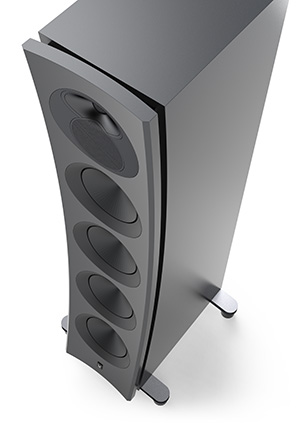
Available in either gray ("Basalt") or white ("Polar"), each imposing Arendal Tower employs four 8" custom-designed aluminum-cone woofers crossing over to a 5" carbon-graphene composite-cone midrange driver at 420Hz. The midrange driver gives way to a 28mm (1.1") lithium-magnesium dome tweeter at 2.8kHz. All drivers are well protected, the woofers by a small setback into the front baffle and the midrange and tweeter by metal screens, said to be acoustically transparent. In addition, removable covers—also acoustically transparent—are included for the woofers to keep small (or not so small) curious hands from doing damage while exploring. I left the woofer covers off for all my listening.
The Arendal Tower's front baffle is configured in a gentle arc, intended for time alignment: the shape ensures that the output of each driver will reach the listener at roughly the same time, though this depends on the height of a listener's ears and the distance of the listener from the loudspeaker. If you're auditioning the Towers, sit down!
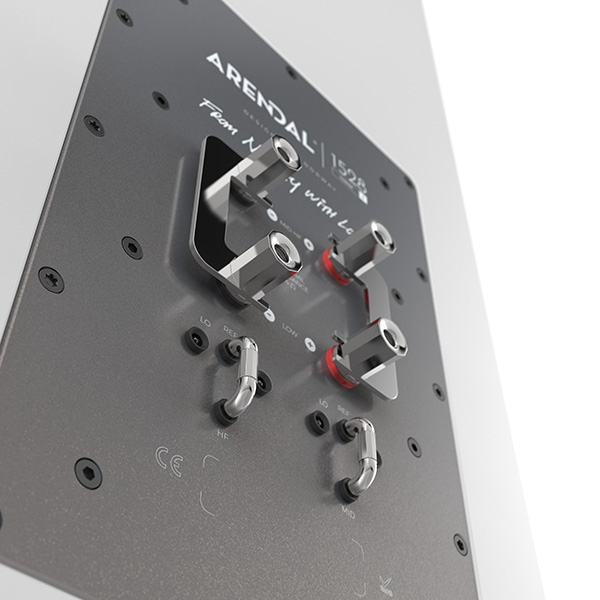
On the Tower's rear panel, you'll find two pairs of high-quality binding posts, supporting either conventional connection or biwiring/biamping. I used the former. Below that—quite close to the floor and not easy to get at—you'll also find a set of movable jumpers that allow you to set the midrange and tweeter to any of three volume settings. I experimented with them briefly but ended up using them in their reference (default) positions.
 In today's high-price market for large, heavy loudspeakers, the Arendal Towers stand out as bargains—though probably only dedicated audiophiles would consider $9500/pair loudspeakers a bargain. To achieve that price, Arendal has their Norway-designed loudspeakers manufactured in China. I noticed no lapses in quality that might have resulted from substandard manufacturing; indeed, fit'n'finish were excellent. Another way that Arendal keeps its prices down is by selling directly to the customer: no dealer, no dealer markup. The downside? While Arendal Sound offers abundant lifetime virtual support—by internet, phone, or Zoom—you'll have to get your own help in unpacking and setting up the Towers.
Unpacking
In today's high-price market for large, heavy loudspeakers, the Arendal Towers stand out as bargains—though probably only dedicated audiophiles would consider $9500/pair loudspeakers a bargain. To achieve that price, Arendal has their Norway-designed loudspeakers manufactured in China. I noticed no lapses in quality that might have resulted from substandard manufacturing; indeed, fit'n'finish were excellent. Another way that Arendal keeps its prices down is by selling directly to the customer: no dealer, no dealer markup. The downside? While Arendal Sound offers abundant lifetime virtual support—by internet, phone, or Zoom—you'll have to get your own help in unpacking and setting up the Towers.
Unpacking
In my case, however, Arendal arranged help unpacking and setting up these heavy speakers. These assistants did all the heavy lifting. I supervised, though not well. (One of our review pair first went to Stereophile's John Atkinson to do the measurements, which I haven't yet seen as I turn in this review. How JA coped with the Arendal Tower's size and weight, I can't imagine.)
A pair of support crossbars, slightly wider than the cabinet and fitted with rubber feet, are included. These raise the Towers a bit more than 2" off the floor. I discovered these items only after the Towers were unpacked and set up with their bottoms flush with the floor, my helpers long gone. With the help of a friend, I was able to install the crossbars and feet, but it wasn't easy. The proper setup procedure, described in a separate set of instructions I found only later, directs you to add the support bars and feet while the loudspeakers are still on their backs in their shipping boxes. When you then tip them upright, the feet will be in place.
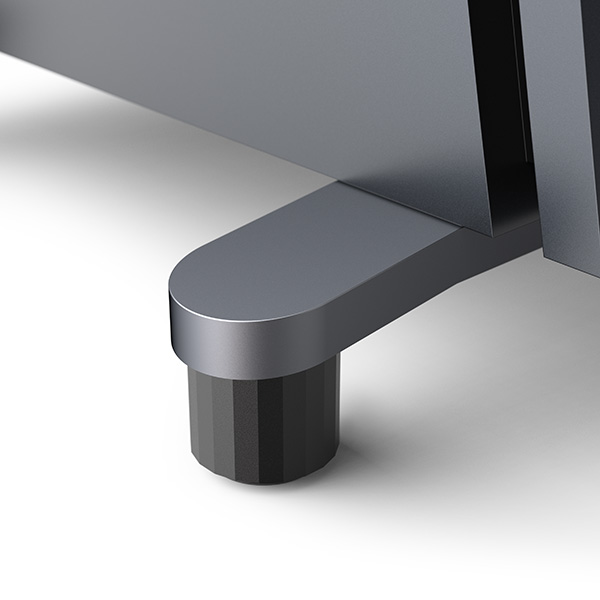 The Towers offer a slightly more elegant look with those support crossbars and feet installed, but they serve a more important purpose. The Towers can be used either sealed or ported, and the port is located on the bottom of the cabinet! Without the feet, the floor blocks the port. Even with the crossbars and feet, it can still be difficult to insert or remove the port plugs. In fact, the only way to do this is by tipping the Tower—not far, but you'll definitely need a second set of hands.
After a few early listening sessions, I decided that the best result in my room was with the ports open. All the commentary in this review reflects the Towers in their bass-reflex configuration.
Setup
The Towers offer a slightly more elegant look with those support crossbars and feet installed, but they serve a more important purpose. The Towers can be used either sealed or ported, and the port is located on the bottom of the cabinet! Without the feet, the floor blocks the port. Even with the crossbars and feet, it can still be difficult to insert or remove the port plugs. In fact, the only way to do this is by tipping the Tower—not far, but you'll definitely need a second set of hands.
After a few early listening sessions, I decided that the best result in my room was with the ports open. All the commentary in this review reflects the Towers in their bass-reflex configuration.
Setup
My main listening area is modest in size at roughly 16' × 20', with a 10' ceiling. The ceiling isn't flat; instead, it has an odd, inverted-pyramid shape. Also, the back wall has the corners cut out; this is useful for reducing the room modes, but it means there's less space between the speakers and the wall behind. The floor in this area is wood over concrete slab, and a moderately thick carpet covers some 80% of the floor. There's no padding under that carpet; I once tried fiber (not foam) padding, but I didn't like the acoustical result. I wrote that the room size is modest—but one of the room's 20' sides is open to a kitchen and beyond that an open dining room. A short, open hallway leads to a midsized front entryway. These open spaces contribute to the air volume that any loudspeakers must contend with. I positioned the Arendal Towers 9' apart near the front of my room on one of the 16' sides, with roughly 1.5' between the back of the Towers to those cut-out corners behind. An 85" television is located between the loudspeakers, but with its screen set back from the Towers' fronts by roughly 3.5'. During serious listening, I covered the TV screen with a medium-weight blanket to absorb high frequencies that might otherwise be reflected. The Towers were toed in to aim almost to the listening chair.
My listening room and setup have typically produced a midbass peak between 100Hz and 200Hz at the primary listening seat. The only certain cure has been room EQ, but I didn't use EQ in this review. In fact, when I first set up the Towers, the problem I noted was not an excess of bass; rather, I found that the bottom end was a little lean. This improved when I moved the listening seat about a foot farther back. It may also have helped that by that time I had put in several early listening hours on the Arendals. Arendal says to expect it to take about 50 hours for their speakers to reach peak performance.
 Listening
With any passive loudspeaker, the bass depends entirely on the room, the speakers' positions, and the position of the listening seat. This makes snap judgments about the quality of a loudspeaker's bass unwise. It takes time and experimentation to properly judge a loudspeaker's bass performance. As finally configured, the Arendal Towers' bass was consistently tight, clean, and impressively extended when demanded by the source. Decades ago, at CES, which at the time was short for Consumer Electronics Show, an exhibitor handed me a compilation CD his company had put together featuring a wide range of challenging bass material. I still have that disc, but I have regrettably few details on the albums from which the clips were culled. The selections range from vocals singing over bass (Aaron Neville and Michel Jonasz), to classical (Respighi's Pines of Rome and Hindemith organ works), to drums of every description. The Arendals sailed through all of them. I played some of these tracks at levels higher than I would normally choose, and the Arendal Towers didn't flinch.
But it wasn't the Arendals' bass that first grabbed my attention. It was their superb resolution—the highs. Whether the source material was percussion or other instruments with significant high-frequency content, the Arendals captured every nuance, without exaggeration. The Nils Lofgren Acoustic Live concert (Vision Music VMCD1005) is rich with such material, and the recording is exceptional. From the opening explosive guitar riff, it doesn't let up, whether it's Lofgren with his solo guitar or together with his supporting players. There's no shortage of low guitar here either. The Arendals easily handled this recording's demands.
Sinne Eeg is a Danish jazz singer and composer. On Eeg Fonnesbæk, she is accompanied by a sparsely scored double bass played by Thomas Fonnesbæk (StuntRecords STUCD 15082). The jazz-heavy singing Eeg specializes in requires perfect pitch, and she nails it, particularly in near–a cappella selections. This is a strikingly good recording, close in but natural, and Eeg's vocals were brought to life by the Arendal Towers. Fonnesbæk's double bass accompaniment was crisply detailed. His fingerings on the double bass strings were clearly audible but never intrusive. The sound was as natural as you might have heard had you been standing in the studio in front of the performers.
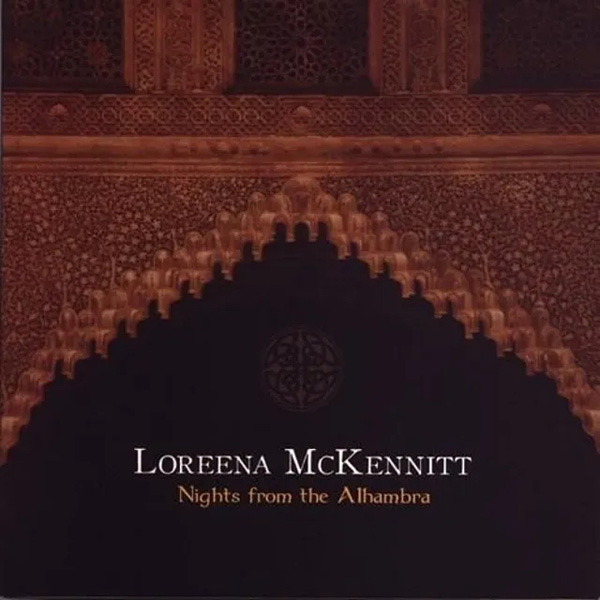 Nights from the Alhambra (Verve Records B0009459-00) is a four-disc package (two CDs, two DVDs) of a Loreena McKennitt concert in Spain—just McKennitt's voice, her harp, and a symphony orchestra. (Only the CDs are referenced here.) This is a recording that should not be missed by lovers of female vocals. The only "flaw" is that McKennitt's words are often difficult to understand, a result of her accent and not the recording or the Arendals' pristine performance. This CD package is magic. McKennitt makes such songs as "Bonny Portmore," "Dante's Prayer," and "The Lady of Shalott" irresistible.
I've collected a number of opera recordings over the years, but I don't pull them out very often, and I don't really consider myself an opera fan. I've been to exactly one live opera performance: Turandot, on a visit to Vienna, dirt-cheap standing room. Why, then, do I have so many opera recordings? Because I fell in love with a particular opera singer's voice: the great American soprano Leontyne Price, who is now in her 90s and still with us, though long retired. One of her most popular albums isn't really opera—it's 1961's Christmas Songs (London 421 103-2), which has been reissued many times, on LP and CD (and cassette), with many different covers and several different titles. Price isn't the only star who makes an appearance on this record: She is accompanied by the Vienna Philharmonic conducted by Herbert von Karajan. It was recorded at the Sofiensaal in Vienna by the legendary team of John Culshaw (producer) and Gordon Parry (engineer). This is an exceptionally good recording—so good that it makes you wonder just how much better recording quality has gotten over the past 60+ years. Today's tools may be better, but are the techniques?! That thought came to mind more than once as I listened to this superb recording on the Arendals.
Nights from the Alhambra (Verve Records B0009459-00) is a four-disc package (two CDs, two DVDs) of a Loreena McKennitt concert in Spain—just McKennitt's voice, her harp, and a symphony orchestra. (Only the CDs are referenced here.) This is a recording that should not be missed by lovers of female vocals. The only "flaw" is that McKennitt's words are often difficult to understand, a result of her accent and not the recording or the Arendals' pristine performance. This CD package is magic. McKennitt makes such songs as "Bonny Portmore," "Dante's Prayer," and "The Lady of Shalott" irresistible.
I've collected a number of opera recordings over the years, but I don't pull them out very often, and I don't really consider myself an opera fan. I've been to exactly one live opera performance: Turandot, on a visit to Vienna, dirt-cheap standing room. Why, then, do I have so many opera recordings? Because I fell in love with a particular opera singer's voice: the great American soprano Leontyne Price, who is now in her 90s and still with us, though long retired. One of her most popular albums isn't really opera—it's 1961's Christmas Songs (London 421 103-2), which has been reissued many times, on LP and CD (and cassette), with many different covers and several different titles. Price isn't the only star who makes an appearance on this record: She is accompanied by the Vienna Philharmonic conducted by Herbert von Karajan. It was recorded at the Sofiensaal in Vienna by the legendary team of John Culshaw (producer) and Gordon Parry (engineer). This is an exceptionally good recording—so good that it makes you wonder just how much better recording quality has gotten over the past 60+ years. Today's tools may be better, but are the techniques?! That thought came to mind more than once as I listened to this superb recording on the Arendals.
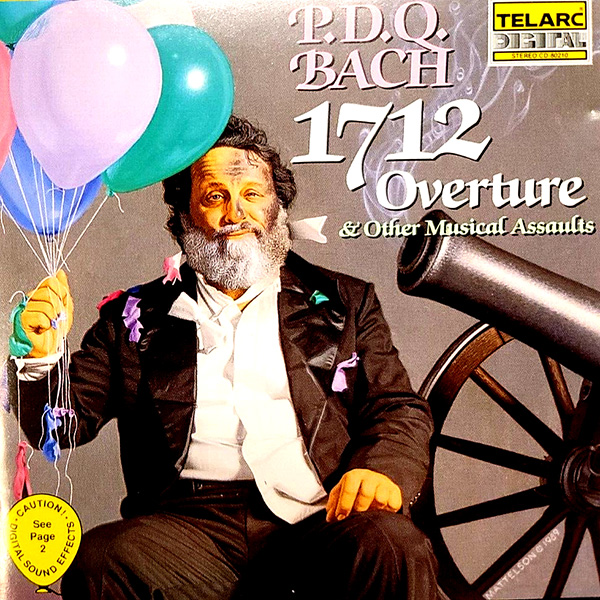 Even senior readers might have to think back to remember P.D.Q. Bach's 1712 Overture and Other Musical Assaults (Telarc CD-80210). This was one of several similar Telarc recordings that took serious music down a peg or two, in good fun, of course. They were an acquired taste in the laugh department but first rate in sound quality. As heard on the Arendals, there was nothing to complain about. The material ranges from quiet introspection (sort of) to immense. (I had to ride the gain a bit to avoid overloading not the Arendals but the room and my ears!) It was an odd but unique experience, and the Arendal Towers didn't flinch.
Swedish company Opus3 has released some of the best-sounding CDs you're ever likely to hear, and they've been doing it for many years. Test Record 4 (CD 9200) is a compilation of their work going back to 1977. Every track sounded so good on the Arendals that the experience was impossible to critique—another example of older recording technology holding its own.
I'm a fan of film scores, though I find some of them difficult to enjoy separated from their films. Two exceptions, both on CD, worked beautifully on the Arendals: The Power of One (Elektra 9 61335-2) and Casper (MCA Soundtracks MCAD-11240). Yes, that Casper, the friendly ghost!
The Power of One is a 1992 multinational production about a boxer in South Africa sometime in the late 1930s or early '40s. I haven't seen the film, but the choral-heavy score—by Hans Zimmer—sounds spectacular on the Arendals with some of the best-recorded choral music I've heard.
Even senior readers might have to think back to remember P.D.Q. Bach's 1712 Overture and Other Musical Assaults (Telarc CD-80210). This was one of several similar Telarc recordings that took serious music down a peg or two, in good fun, of course. They were an acquired taste in the laugh department but first rate in sound quality. As heard on the Arendals, there was nothing to complain about. The material ranges from quiet introspection (sort of) to immense. (I had to ride the gain a bit to avoid overloading not the Arendals but the room and my ears!) It was an odd but unique experience, and the Arendal Towers didn't flinch.
Swedish company Opus3 has released some of the best-sounding CDs you're ever likely to hear, and they've been doing it for many years. Test Record 4 (CD 9200) is a compilation of their work going back to 1977. Every track sounded so good on the Arendals that the experience was impossible to critique—another example of older recording technology holding its own.
I'm a fan of film scores, though I find some of them difficult to enjoy separated from their films. Two exceptions, both on CD, worked beautifully on the Arendals: The Power of One (Elektra 9 61335-2) and Casper (MCA Soundtracks MCAD-11240). Yes, that Casper, the friendly ghost!
The Power of One is a 1992 multinational production about a boxer in South Africa sometime in the late 1930s or early '40s. I haven't seen the film, but the choral-heavy score—by Hans Zimmer—sounds spectacular on the Arendals with some of the best-recorded choral music I've heard.
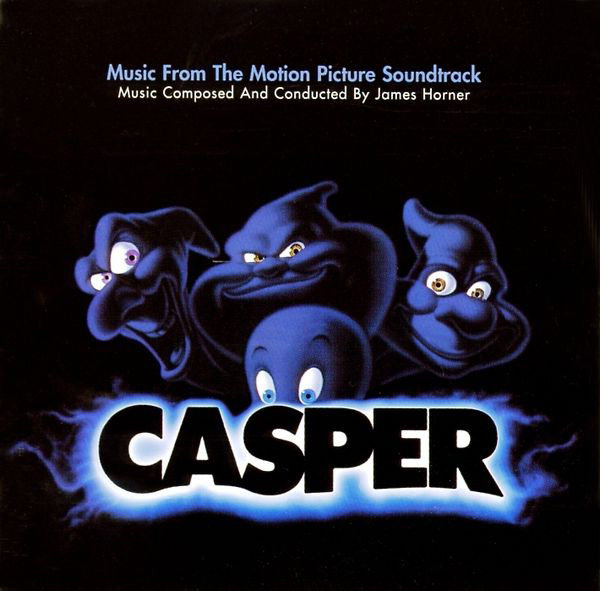 Casper was a real surprise, but it shouldn't have been. The score was composed by the late James Horner, who died in a private plane crash in 2015, and engineered by Shawn Murphy, in my opinion the best film recording engineer in Hollywood. Horner is best known for his score for Titanic, but he has scored hundreds of others. With that pedigree, the Casper score couldn't miss, and it doesn't. On the Arendals, it is at its best in the quieter, more introspective moments, but it doesn't shortchange the ambitious action scenes (footnote 1).
Conclusion
Casper was a real surprise, but it shouldn't have been. The score was composed by the late James Horner, who died in a private plane crash in 2015, and engineered by Shawn Murphy, in my opinion the best film recording engineer in Hollywood. Horner is best known for his score for Titanic, but he has scored hundreds of others. With that pedigree, the Casper score couldn't miss, and it doesn't. On the Arendals, it is at its best in the quieter, more introspective moments, but it doesn't shortchange the ambitious action scenes (footnote 1).
Conclusion
Great gear—and the Arendals are great—will expose mediocre source material. But when they are fed good sources, they'll pay you back many times over. The Arendal Towers will, in my judgment, perform their best in a comfortably large but not huge room. In a more open space, common in many homes today, the bass might come across as a little lighter than you might expect from eight serious woofers (four per side) working together. (If they do, just turn down the HF and midrange controls and turn up the volume to compensate.) Even in my large room, the bottom end was consistently clean and well-controlled. The Arendals' rich, realistic detailing across the board was possibly the best I've experienced in my listening room, though also the largest, heaviest, and most expensive. If the size and the price of the Arendal Sound 1528 Towers don't faze you, they're well worth serious consideration
Footnote 1: Murphy specializes in film scores. See mixwiththemasters.com/masters/shawn-murphy for a fascinating if all-too-brief account of how he records a full symphony orchestra.
In today's high-price market for large, heavy loudspeakers, the Arendal Towers stand out as bargains—though probably only dedicated audiophiles would consider $9500/pair loudspeakers a bargain. To achieve that price, Arendal has their Norway-designed loudspeakers manufactured in China. I noticed no lapses in quality that might have resulted from substandard manufacturing; indeed, fit'n'finish were excellent. Another way that Arendal keeps its prices down is by selling directly to the customer: no dealer, no dealer markup. The downside? While Arendal Sound offers abundant lifetime virtual support—by internet, phone, or Zoom—you'll have to get your own help in unpacking and setting up the Towers.
UnpackingIn my case, however, Arendal arranged help unpacking and setting up these heavy speakers. These assistants did all the heavy lifting. I supervised, though not well. (One of our review pair first went to Stereophile's John Atkinson to do the measurements, which I haven't yet seen as I turn in this review. How JA coped with the Arendal Tower's size and weight, I can't imagine.)
The Towers offer a slightly more elegant look with those support crossbars and feet installed, but they serve a more important purpose. The Towers can be used either sealed or ported, and the port is located on the bottom of the cabinet! Without the feet, the floor blocks the port. Even with the crossbars and feet, it can still be difficult to insert or remove the port plugs. In fact, the only way to do this is by tipping the Tower—not far, but you'll definitely need a second set of hands.
After a few early listening sessions, I decided that the best result in my room was with the ports open. All the commentary in this review reflects the Towers in their bass-reflex configuration.
My main listening area is modest in size at roughly 16' × 20', with a 10' ceiling. The ceiling isn't flat; instead, it has an odd, inverted-pyramid shape. Also, the back wall has the corners cut out; this is useful for reducing the room modes, but it means there's less space between the speakers and the wall behind. The floor in this area is wood over concrete slab, and a moderately thick carpet covers some 80% of the floor. There's no padding under that carpet; I once tried fiber (not foam) padding, but I didn't like the acoustical result. I wrote that the room size is modest—but one of the room's 20' sides is open to a kitchen and beyond that an open dining room. A short, open hallway leads to a midsized front entryway. These open spaces contribute to the air volume that any loudspeakers must contend with. I positioned the Arendal Towers 9' apart near the front of my room on one of the 16' sides, with roughly 1.5' between the back of the Towers to those cut-out corners behind. An 85" television is located between the loudspeakers, but with its screen set back from the Towers' fronts by roughly 3.5'. During serious listening, I covered the TV screen with a medium-weight blanket to absorb high frequencies that might otherwise be reflected. The Towers were toed in to aim almost to the listening chair.
ListeningWith any passive loudspeaker, the bass depends entirely on the room, the speakers' positions, and the position of the listening seat. This makes snap judgments about the quality of a loudspeaker's bass unwise. It takes time and experimentation to properly judge a loudspeaker's bass performance. As finally configured, the Arendal Towers' bass was consistently tight, clean, and impressively extended when demanded by the source. Decades ago, at CES, which at the time was short for Consumer Electronics Show, an exhibitor handed me a compilation CD his company had put together featuring a wide range of challenging bass material. I still have that disc, but I have regrettably few details on the albums from which the clips were culled. The selections range from vocals singing over bass (Aaron Neville and Michel Jonasz), to classical (Respighi's Pines of Rome and Hindemith organ works), to drums of every description. The Arendals sailed through all of them. I played some of these tracks at levels higher than I would normally choose, and the Arendal Towers didn't flinch.
Nights from the Alhambra (Verve Records B0009459-00) is a four-disc package (two CDs, two DVDs) of a Loreena McKennitt concert in Spain—just McKennitt's voice, her harp, and a symphony orchestra. (Only the CDs are referenced here.) This is a recording that should not be missed by lovers of female vocals. The only "flaw" is that McKennitt's words are often difficult to understand, a result of her accent and not the recording or the Arendals' pristine performance. This CD package is magic. McKennitt makes such songs as "Bonny Portmore," "Dante's Prayer," and "The Lady of Shalott" irresistible.
Even senior readers might have to think back to remember P.D.Q. Bach's 1712 Overture and Other Musical Assaults (Telarc CD-80210). This was one of several similar Telarc recordings that took serious music down a peg or two, in good fun, of course. They were an acquired taste in the laugh department but first rate in sound quality. As heard on the Arendals, there was nothing to complain about. The material ranges from quiet introspection (sort of) to immense. (I had to ride the gain a bit to avoid overloading not the Arendals but the room and my ears!) It was an odd but unique experience, and the Arendal Towers didn't flinch.
Swedish company Opus3 has released some of the best-sounding CDs you're ever likely to hear, and they've been doing it for many years. Test Record 4 (CD 9200) is a compilation of their work going back to 1977. Every track sounded so good on the Arendals that the experience was impossible to critique—another example of older recording technology holding its own.
Casper was a real surprise, but it shouldn't have been. The score was composed by the late James Horner, who died in a private plane crash in 2015, and engineered by Shawn Murphy, in my opinion the best film recording engineer in Hollywood. Horner is best known for his score for Titanic, but he has scored hundreds of others. With that pedigree, the Casper score couldn't miss, and it doesn't. On the Arendals, it is at its best in the quieter, more introspective moments, but it doesn't shortchange the ambitious action scenes (footnote 1).
Great gear—and the Arendals are great—will expose mediocre source material. But when they are fed good sources, they'll pay you back many times over. The Arendal Towers will, in my judgment, perform their best in a comfortably large but not huge room. In a more open space, common in many homes today, the bass might come across as a little lighter than you might expect from eight serious woofers (four per side) working together. (If they do, just turn down the HF and midrange controls and turn up the volume to compensate.) Even in my large room, the bottom end was consistently clean and well-controlled. The Arendals' rich, realistic detailing across the board was possibly the best I've experienced in my listening room, though also the largest, heaviest, and most expensive. If the size and the price of the Arendal Sound 1528 Towers don't faze you, they're well worth serious consideration
Footnote 1: Murphy specializes in film scores. See mixwiththemasters.com/masters/shawn-murphy for a fascinating if all-too-brief account of how he records a full symphony orchestra.