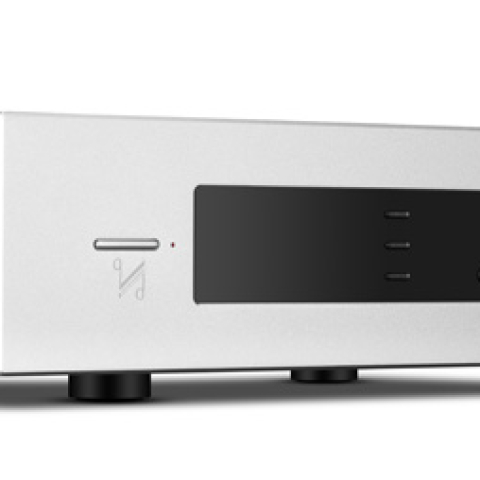
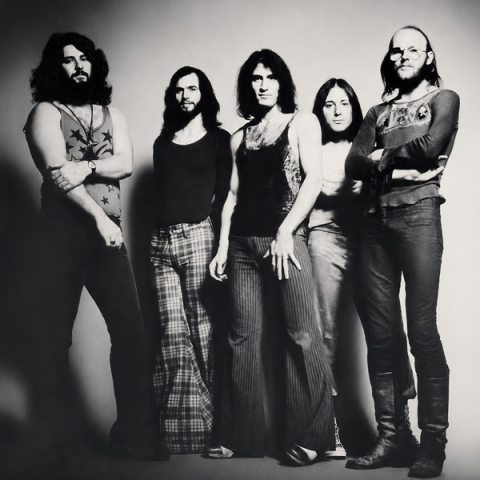
Birds of Fire is a difficult record for any hi-fi to decode. Four out of five times I've played this album, the compositions have seemed annoying and pretentious. But the Enzo XLs, driven by a Roksan K2 B2 integrated amplifier, presented "Thousand Island Park" in such a relaxed and edifying fashion that I wondered why I hadn't "gotten" this music before. Musical moments naturally morphed one into the next. I could watch the music unfold.
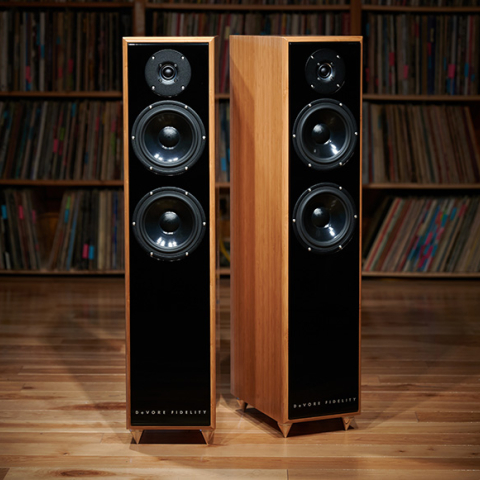
The Enzo XLs reminded me ever so much of Snell's gloriously hypermusical Type A speakers, albeit with a slightly more hesitant, tighter, but perhaps more integrated sound. The XLs didn't breathe air like the Snells, but they could move air like those giant robots. They didn't open up, or sing in romance languages like the Snells or my DeVore Fidelity Orangutan O/93s, but they could place a realistically scaled Frank Sinatra, from his Swing Easy! (LP, Capitol H528), right in my room.
"Now somewhere in the black mountain hills of Dakota there lived a young boy named Rocky Raccoon . . ." Playing this track from The Beatles (LP, Parlophone PMC 7067) with Grado Labs' Mono cartridge had an almost carnival-ride up-and-down syncopation that had me bouncing and smiling. When I was playing the new The Beatles in Mono reissues (14 LPs, Apple 6337971) through the XLs, I just wanted to retire and hit the road in a restored VW microbus. The Enzos reminded me how, every time I play a familiar old record through a newly upgraded system, I wonder: Am I the first person to truly hear this recording?
 Somewhere in my soggy memory I hear these words: ultimate test record. I can't remember what it was or who made it, but over the years I have anointed several of the recordings I own with that title. Right now, the honor goes to the ear-opening A Nonesuch Treasury of Americana, a compilation released in 1977 (2 LPs, Nonesuch H7-14). Over the course of its four sides, Americana takes the listener on a fantastic journey through 18th- and 19th-century American composers of popular music. It features fun ditties like Henry Clay Work's "Grandfather's Clock" ("And it stopped—short—never to run again, when the old man died!"), and James Hewitt's "Yankee Doodle," played by Richard Ellsasser on the famous organ of the Hammond Museum in Gloucester, Massachusetts. This record is beyond happy fun. In addition to a cappella granddads and monster electric organs, it has mezzo-sopranos, baritones, choirs, trombones, snare drums, a vanload of historical instruments, and full-tilt marching bands—all very simply recorded by Marc J. Aubort and Joanna Nickrenz. (If you don't already know Aubort and Nickrenz's legacy of minimally miked recordings, put this magazine down now, log on to eBay, and start bidding on any of their Nonesuch or Vox/Turnabout LPs, footnote 1).)
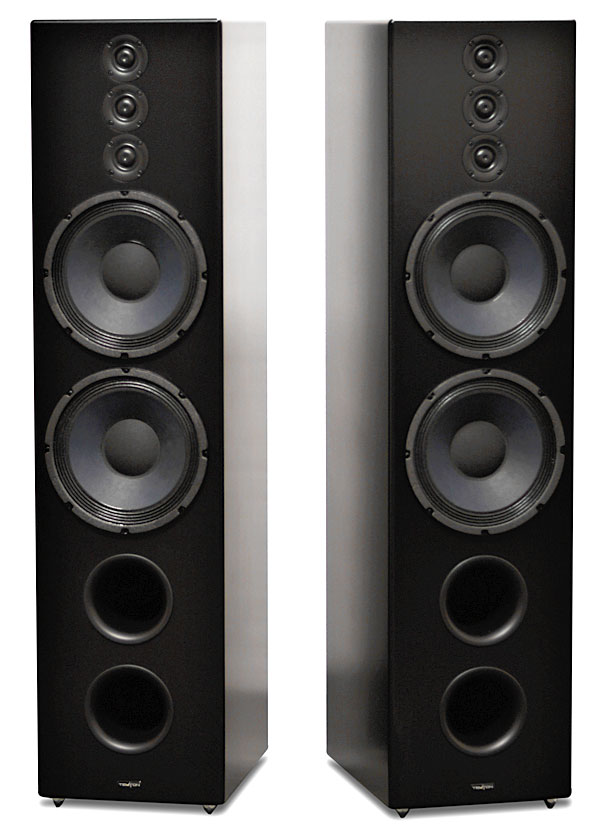
Oh yeah—I almost forgot about the speakers! The Tekton Enzo XLs played all four sides of this recording masterpiece with note-perfect tone. They projected the scale and air of each unique recording venue in a fashion that made me admire Marc and Joanna more than ever [insert row of heart emoticons]. If you're an imaging freak but still want the deep bass that only a big-ass, air-moving monolith can provide, these are the speakers for you. Organs, choirs, and mezzo-sopranos all gave me goose-bumps. The Tekton Enzo XLs not only did imaging and soundstaging with ease, they were easy to place in my room. I had a hard time finding bad spots for them.
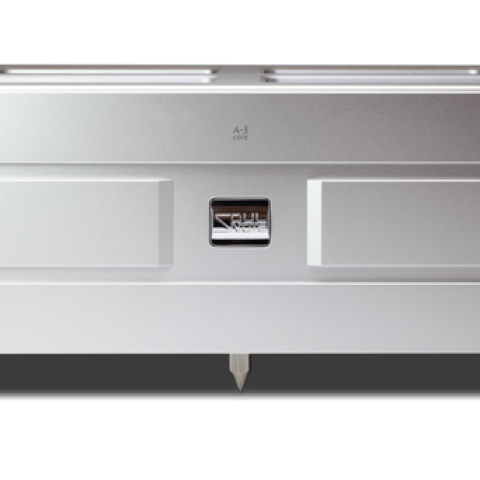
I drove the XLs with every amp I had, and the Enzos played differently but effectively with each. With the Rogue Audio Sphinx, bass slam and midrange boogie were beyond top shelf. The highs were elegant and clean. With the Roksan K2 B2, I could have danced forever. With the Simaudio Moon 340i (review to come), I felt a little—and dreamed a little—that I was listening to the big Wilsons with Dan D'Agostino's steam-punk amps sitting on the floor. With my Line Magnetic LM518 IA, the XLs played acoustic jazz and big classical orchestras with pagan magicke and Enlightenment finesse. Then I remembered that the Enzo XL is 96.5dB sensitive. So . . .
I hooked the Tektons up to my totally budget, made-in-China Antique Sound Labs Tulip 2A3, a single-ended 3Wpc amp with NOS RCA 2A3 tubes ($599 new). This transformed the bass from well-dressed Wall Street raider to metrosexual Parisian poet. Drunk on absinthe, this mustachioed, low-frequency bohemian slurred a little, and his beret smelled of Gauloises, but he spoke most colorfully. The midrange shape-shifted into a beautiful Geisha. Koto music played with paper-lantern charm. The highs became Hokusai geese flying against a blue October sky.
Most loudspeakers, and especially big ones, suffer from an inability to play well and preserve gooseflesh at volumes very low and very high. The Tekton Enzo XLs played as well at a whisper as they did at a scream. And speaking of highs . . .
You should know by now that the main highs I prefer come from intense music and tweeters that completely "disappear." Well, each Enzo XL has three tweeters, each apparently crossed over at a different frequency, and they all "disappeared" just fine.
Doing business and getting high
Somewhere in my soggy memory I hear these words: ultimate test record. I can't remember what it was or who made it, but over the years I have anointed several of the recordings I own with that title. Right now, the honor goes to the ear-opening A Nonesuch Treasury of Americana, a compilation released in 1977 (2 LPs, Nonesuch H7-14). Over the course of its four sides, Americana takes the listener on a fantastic journey through 18th- and 19th-century American composers of popular music. It features fun ditties like Henry Clay Work's "Grandfather's Clock" ("And it stopped—short—never to run again, when the old man died!"), and James Hewitt's "Yankee Doodle," played by Richard Ellsasser on the famous organ of the Hammond Museum in Gloucester, Massachusetts. This record is beyond happy fun. In addition to a cappella granddads and monster electric organs, it has mezzo-sopranos, baritones, choirs, trombones, snare drums, a vanload of historical instruments, and full-tilt marching bands—all very simply recorded by Marc J. Aubort and Joanna Nickrenz. (If you don't already know Aubort and Nickrenz's legacy of minimally miked recordings, put this magazine down now, log on to eBay, and start bidding on any of their Nonesuch or Vox/Turnabout LPs, footnote 1).)
Oh yeah—I almost forgot about the speakers! The Tekton Enzo XLs played all four sides of this recording masterpiece with note-perfect tone. They projected the scale and air of each unique recording venue in a fashion that made me admire Marc and Joanna more than ever [insert row of heart emoticons]. If you're an imaging freak but still want the deep bass that only a big-ass, air-moving monolith can provide, these are the speakers for you. Organs, choirs, and mezzo-sopranos all gave me goose-bumps. The Tekton Enzo XLs not only did imaging and soundstaging with ease, they were easy to place in my room. I had a hard time finding bad spots for them.
I drove the XLs with every amp I had, and the Enzos played differently but effectively with each. With the Rogue Audio Sphinx, bass slam and midrange boogie were beyond top shelf. The highs were elegant and clean. With the Roksan K2 B2, I could have danced forever. With the Simaudio Moon 340i (review to come), I felt a little—and dreamed a little—that I was listening to the big Wilsons with Dan D'Agostino's steam-punk amps sitting on the floor. With my Line Magnetic LM518 IA, the XLs played acoustic jazz and big classical orchestras with pagan magicke and Enlightenment finesse. Then I remembered that the Enzo XL is 96.5dB sensitive. So . . .
I hooked the Tektons up to my totally budget, made-in-China Antique Sound Labs Tulip 2A3, a single-ended 3Wpc amp with NOS RCA 2A3 tubes ($599 new). This transformed the bass from well-dressed Wall Street raider to metrosexual Parisian poet. Drunk on absinthe, this mustachioed, low-frequency bohemian slurred a little, and his beret smelled of Gauloises, but he spoke most colorfully. The midrange shape-shifted into a beautiful Geisha. Koto music played with paper-lantern charm. The highs became Hokusai geese flying against a blue October sky.
Most loudspeakers, and especially big ones, suffer from an inability to play well and preserve gooseflesh at volumes very low and very high. The Tekton Enzo XLs played as well at a whisper as they did at a scream. And speaking of highs . . .
You should know by now that the main highs I prefer come from intense music and tweeters that completely "disappear." Well, each Enzo XL has three tweeters, each apparently crossed over at a different frequency, and they all "disappeared" just fine.
Doing business and getting high
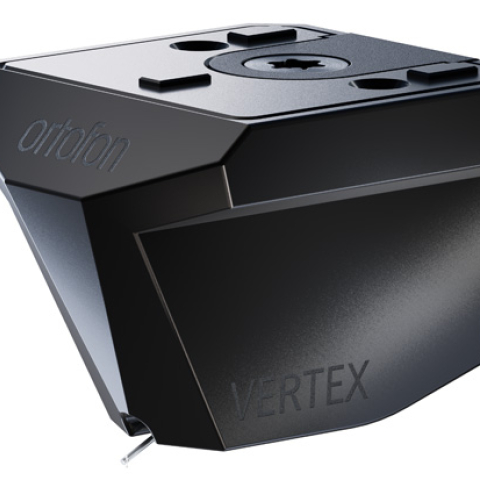
My main criticism of the Tekton Enzo XL is that its overall sound leaned a tiny bit more toward the Puritan, the restrained, and the businesslike than I prefer. Piano tone, attacks, and decays were always quite good—but not always as corporeal or as rich as I like. The XLs had a little kale-shake gym-rat in their DNA. You guys (and maybe even John Atkinson or Michael Fremer) would call them simply neutral. Me? I found myself occasionally wishing for a busty Gypsy dancer to appear, pull me down laughing in the dirt, and spill pirate rum all over the both of us. Occasionally, I could have used a measure more of what Art Dudley calls chunk—a little more juicy red meat. But nevertheless! I would describe the Enzo XL as being not too anything. They avoided overstatement in a smart, admirable way. I usually like speakers with a system Q (complex electro-mechanical damping or Quality factor) of 0.55, or maybe 0.6 or even 0.65! The higher numbers reflect sounds that are looser and less damped. The Enzo XLs sounded like a textbook Q of 0.5. When I began playing them with the Ortofon 2M Black, I was surprised at just how similar the characters of cartridge and speakers were. Both transducers have a kind of well-damped orderliness. Conclusions
Unlike my joyous, main-squeeze DeVore Fidelity Orangutan O/93s or my "how can they be so good?" KEF LS50s, these floorstanders from Tekton don't fit the "Restricted LF" category of Stereophile's "Recommended Components." Eric Alexander's creations are probably the first truly full-range speakers I have experienced in the privacy of my own bunker.
I didn't know what I was missing. All of my reference speakers deliver colorful, beautifully toned, rhythmic, coherent, pleasurably detailed music. But they perform these musical functions at a price: they give up one or more octaves of soul-infusing bass. High-quality expression in the lower registers is always extra expensive. It's a law of nature.
The Enzo XLs gave me 90% of the coherence and joy of my Class A reference speakers, along with at least one additional, deeply gratifying octave of big, live-sounding, pants-flapping, room-filling bass. Unbelievably, they also gave me something like 90% of the accuracy and authority I heard from Wilson Audio's "giant robots" back in the late '80s.
Today, the average price of the speakers listed in "Class A–Full Range" of Stereophile's "Recommended Components" is over $56,000/pair. In that world, the $2100/pair Tekton Enzo XLs are practically free. Based on my reviewing experience, these practically free speakers will get you a satisfyingly big portion of those $50,000 models' performance. Consider this review a thoughtfully considered, heartfelt recommendation. These giant monoliths are great fun!
Footnote 1: See Michael Fremer's 2010 Analog Planet interview with Aubort.
Somewhere in my soggy memory I hear these words: ultimate test record. I can't remember what it was or who made it, but over the years I have anointed several of the recordings I own with that title. Right now, the honor goes to the ear-opening A Nonesuch Treasury of Americana, a compilation released in 1977 (2 LPs, Nonesuch H7-14). Over the course of its four sides, Americana takes the listener on a fantastic journey through 18th- and 19th-century American composers of popular music. It features fun ditties like Henry Clay Work's "Grandfather's Clock" ("And it stopped—short—never to run again, when the old man died!"), and James Hewitt's "Yankee Doodle," played by Richard Ellsasser on the famous organ of the Hammond Museum in Gloucester, Massachusetts. This record is beyond happy fun. In addition to a cappella granddads and monster electric organs, it has mezzo-sopranos, baritones, choirs, trombones, snare drums, a vanload of historical instruments, and full-tilt marching bands—all very simply recorded by Marc J. Aubort and Joanna Nickrenz. (If you don't already know Aubort and Nickrenz's legacy of minimally miked recordings, put this magazine down now, log on to eBay, and start bidding on any of their Nonesuch or Vox/Turnabout LPs, footnote 1).)
Oh yeah—I almost forgot about the speakers! The Tekton Enzo XLs played all four sides of this recording masterpiece with note-perfect tone. They projected the scale and air of each unique recording venue in a fashion that made me admire Marc and Joanna more than ever [insert row of heart emoticons]. If you're an imaging freak but still want the deep bass that only a big-ass, air-moving monolith can provide, these are the speakers for you. Organs, choirs, and mezzo-sopranos all gave me goose-bumps. The Tekton Enzo XLs not only did imaging and soundstaging with ease, they were easy to place in my room. I had a hard time finding bad spots for them.
I drove the XLs with every amp I had, and the Enzos played differently but effectively with each. With the Rogue Audio Sphinx, bass slam and midrange boogie were beyond top shelf. The highs were elegant and clean. With the Roksan K2 B2, I could have danced forever. With the Simaudio Moon 340i (review to come), I felt a little—and dreamed a little—that I was listening to the big Wilsons with Dan D'Agostino's steam-punk amps sitting on the floor. With my Line Magnetic LM518 IA, the XLs played acoustic jazz and big classical orchestras with pagan magicke and Enlightenment finesse. Then I remembered that the Enzo XL is 96.5dB sensitive. So . . .
My main criticism of the Tekton Enzo XL is that its overall sound leaned a tiny bit more toward the Puritan, the restrained, and the businesslike than I prefer. Piano tone, attacks, and decays were always quite good—but not always as corporeal or as rich as I like. The XLs had a little kale-shake gym-rat in their DNA. You guys (and maybe even John Atkinson or Michael Fremer) would call them simply neutral. Me? I found myself occasionally wishing for a busty Gypsy dancer to appear, pull me down laughing in the dirt, and spill pirate rum all over the both of us. Occasionally, I could have used a measure more of what Art Dudley calls chunk—a little more juicy red meat. But nevertheless! I would describe the Enzo XL as being not too anything. They avoided overstatement in a smart, admirable way. I usually like speakers with a system Q (complex electro-mechanical damping or Quality factor) of 0.55, or maybe 0.6 or even 0.65! The higher numbers reflect sounds that are looser and less damped. The Enzo XLs sounded like a textbook Q of 0.5. When I began playing them with the Ortofon 2M Black, I was surprised at just how similar the characters of cartridge and speakers were. Both transducers have a kind of well-damped orderliness. Conclusions
Unlike my joyous, main-squeeze DeVore Fidelity Orangutan O/93s or my "how can they be so good?" KEF LS50s, these floorstanders from Tekton don't fit the "Restricted LF" category of Stereophile's "Recommended Components." Eric Alexander's creations are probably the first truly full-range speakers I have experienced in the privacy of my own bunker.
Footnote 1: See Michael Fremer's 2010 Analog Planet interview with Aubort.