Case in point: Whether playing, via the Parasound Halo HINT 6 ($2495) the Police's Ghost in the Machine (LP, A&M SP 3730), or Karl Berger and Dave Holland and Ed Blackwell's Transit (LP, Black Saint BSR 0092), or Willie Hutch's funk classic Fully Exposed (LP, Motown M 784V1), the A7s delivered the low-down, throbbing, subterranean heart of every recording exceptionally well and without exception. Sting's rich e-bass had never resounded so weighty and whole. The clarity of Dave Holland's double bass on Transit was a veritable master class in walking bass. And the titanic tonnage of Motown bassist Lawrence Dickens on Fully Exposed was dense and rock-solid via the A7. Call me sated.
On the Back Page of this issue I review John Coltrane's 1963: New Directions (5 LPs, Verve AVER 10701). This set of remasterings provided a wide range of challenges with which to gauge the A7. Johnny Hartman's creamy voice in "They Say It's Wonderful" contrasted beautifully with Coltrane's glowing tenor sax and drummer Elvin Jones's glistening brushwork, with large if not huge images appearing on a soundstage of respectable depth and breadth. Trane, in particular, sounded sweet and relaxed, the A7s allowing the recorded sound a solid, immediate, and very physical presentation. The A7 consistently took first place in the naturalness sweepstakes. At times, the upper frequencies of the saxophone and McCoy Tyner's piano sounded a mite tight in absolute terms. But Jimmy Garrison's double bass was consistently fleshy and chewy, and exceptionally rich.
 As with Willie Hutch's Fully Exposed, I've been digging deep into the 1970s LPs of my recently departed brother-in-law, a wonderful human being gone too soon. Andy, a Brit, particularly loved dub, reggae, and R&B, and as I clean and sort his collection, I'm happily surprised at the records' condition. I love spinning Andy's '70s R&B titles, chock full of swooning orchestras, cooing female harmonies, and sticky-funky rhythm sections. Through the A7s, Barry White and the Love Unlimited Orchestra's score for the 1974 film Together Brothers (LP, Pye International NSPL 28203) rose up before me like a Broadway production, its swimming strings, choogling rhythm section, and forward-motion funk a full-on festival. The A7 resolved the record's epic studio soundfield with speed and excitement, the low end driving the music but never at the expense of the upper frequencies, which were clean and revealing yet never analytical. I noted a touch of treble zing! in strings and guitars, but heard no harshness or grit and experienced zero fatigue.
The A7s also reproduced the interwoven acoustic and electronic tableaux of Police's Ghost in the Machine as practically a real-life event, with drummer Stewart Copeland's two-and-four snare-drum crack! practically visible, and the immense weight of the studio production as thrilling to me as I imagine hearing an opera live in the opera house is for others. Here was a superbly tactile, meaty, and immersive sound. With disc after disc, the A7s produced solid images with lightning-fast delivery and impressive physicality—I could feel each instrument's unique texture in space.
Switching gears but staying with the Halo HINT 6, I played tenor saxophonist Noah Preminger's Some Other Time (LP, Newvelle NV003LP). This 2014 recording, tweaked to Newvelle Records' immaculate standards, only further confirmed the A7's character traits. The center fill of Preminger's tenor sax was first-rate, with uniformly crisp transients; Billy Hart's cymbals rolled and danced across the stage, Ben Monder's holographic guitar hung before me like a giant reverberating butterfly, and John Patitucci's double bass was ripe but not too ripe, the A7s punching out every bit of fingers-on-strings touch and tangibility.
Opting for the BorderPatrol DAC ($995) and using the LG player as the source of digital data, I spun Pat Metheny's One Quiet Night (CD, Warner Bros. 48473-2). Metheny's shimmering acoustic guitars sounded entirely clean and luminous.
. . . with the Heed Audio Elixir integrated amplifier
As with Willie Hutch's Fully Exposed, I've been digging deep into the 1970s LPs of my recently departed brother-in-law, a wonderful human being gone too soon. Andy, a Brit, particularly loved dub, reggae, and R&B, and as I clean and sort his collection, I'm happily surprised at the records' condition. I love spinning Andy's '70s R&B titles, chock full of swooning orchestras, cooing female harmonies, and sticky-funky rhythm sections. Through the A7s, Barry White and the Love Unlimited Orchestra's score for the 1974 film Together Brothers (LP, Pye International NSPL 28203) rose up before me like a Broadway production, its swimming strings, choogling rhythm section, and forward-motion funk a full-on festival. The A7 resolved the record's epic studio soundfield with speed and excitement, the low end driving the music but never at the expense of the upper frequencies, which were clean and revealing yet never analytical. I noted a touch of treble zing! in strings and guitars, but heard no harshness or grit and experienced zero fatigue.
The A7s also reproduced the interwoven acoustic and electronic tableaux of Police's Ghost in the Machine as practically a real-life event, with drummer Stewart Copeland's two-and-four snare-drum crack! practically visible, and the immense weight of the studio production as thrilling to me as I imagine hearing an opera live in the opera house is for others. Here was a superbly tactile, meaty, and immersive sound. With disc after disc, the A7s produced solid images with lightning-fast delivery and impressive physicality—I could feel each instrument's unique texture in space.
Switching gears but staying with the Halo HINT 6, I played tenor saxophonist Noah Preminger's Some Other Time (LP, Newvelle NV003LP). This 2014 recording, tweaked to Newvelle Records' immaculate standards, only further confirmed the A7's character traits. The center fill of Preminger's tenor sax was first-rate, with uniformly crisp transients; Billy Hart's cymbals rolled and danced across the stage, Ben Monder's holographic guitar hung before me like a giant reverberating butterfly, and John Patitucci's double bass was ripe but not too ripe, the A7s punching out every bit of fingers-on-strings touch and tangibility.
Opting for the BorderPatrol DAC ($995) and using the LG player as the source of digital data, I spun Pat Metheny's One Quiet Night (CD, Warner Bros. 48473-2). Metheny's shimmering acoustic guitars sounded entirely clean and luminous.
. . . with the Heed Audio Elixir integrated amplifier
Fed by the rich-sounding Heed Audio Elixir integrated amplifier ($1195), the A7's traits remained similar, but now with lushness to the fore. The Heed warmed the A7's already excellent bass characteristics, and though the Hungarian integrated isn't the last word in resolution, it knows how to boogie, swing, and dance. Preminger's Some Other Time sounded more diffuse through the Heed-Spendors than through the Parasound-Spendors, but also more immediate and friendly. Preminger's tenor was still huge, dead center in the mix, but Hart's cymbals were now more subdued than they'd sounded through the brilliantly detailed Parasound. I concluded that the A7 was simply exposing everything upstream: the good, the different, the whole megillah. The Heed presented an overall creamier-sounding whole. Ghost in the Machine remained deep of soundstage and bass extension, and Copeland's snare drum cracked in front of me just as mightily as it had with the Halo. There was less layering of instruments on a smaller stage, but what remained was solid and propulsive, thanks to the A7.
 Through every amplifier, with every recording, the A7 wowed me with its remarkably natural reproduction skills. Lesser speakers can make music sound processed, with shrunken heads, a sterile midrange, and plastic-brittle beats. The A7 found the ever-physical sweet spot in everything I played, on LP or CD.
Via the Heed, Dave Holland's double bass grew wirier, in a good way—Transit seemed to have more air. So did one of my current favorite recordings, Diana Krall and Tony Bennett's Love Is Here to Stay (CD, Verve B0028703-02). This album takes you deep into the musicians' lair—you can hear the depth of the recording studio, and where the microphones are placed for Peter Washington's double bass and Kenny Washington's drums—and though the two singers are up front in the mix, it all sounds thoroughly genuine, without artifice. Double bass was large, with full-scale force. Again, the A7s brought out all of the singers' human qualities—all their flesh and blood.
. . . with the Mytek Brooklyn DAC and Brooklyn Amplifier(s)
Through every amplifier, with every recording, the A7 wowed me with its remarkably natural reproduction skills. Lesser speakers can make music sound processed, with shrunken heads, a sterile midrange, and plastic-brittle beats. The A7 found the ever-physical sweet spot in everything I played, on LP or CD.
Via the Heed, Dave Holland's double bass grew wirier, in a good way—Transit seemed to have more air. So did one of my current favorite recordings, Diana Krall and Tony Bennett's Love Is Here to Stay (CD, Verve B0028703-02). This album takes you deep into the musicians' lair—you can hear the depth of the recording studio, and where the microphones are placed for Peter Washington's double bass and Kenny Washington's drums—and though the two singers are up front in the mix, it all sounds thoroughly genuine, without artifice. Double bass was large, with full-scale force. Again, the A7s brought out all of the singers' human qualities—all their flesh and blood.
. . . with the Mytek Brooklyn DAC and Brooklyn Amplifier(s)
Mytek's Brooklyn DAC/preamp ($1995), with two of their Brooklyn amplifiers ($2495 each) in bridged mode, resolved information as class-D amps should: with merciless focus on speed and clarity, and less attention paid to color saturation or editorializing. The Mytek sound takes some getting used to, but once in its realm, you're hearing the music unadulterated.
The Spendors feasted on the Myteks, but poor recordings sounded poor. Thankfully, The Great Jazz Trio's Milestones (LP, Inner City IC 6030) is a landmark jazz recording—these vibrant performances by pianist Hank Jones, bassist Ron Carter, and drummer Tony Williams are timeless. When Williams ignites his double-fisted, thunderous tom assault in the title track, his resonant bass drum LOUD like Jo Jones pumped on swing steroids, the A7 ramped up dynamic levels to meet him, explosion for explosion. Perfecting its tactile, effortless approach, with lovely air atop and powerful bass below, the Spendor A7 easily made its case as one of the finest speakers for enjoying jazz this side of Greg Roberts's Volti Audio Rivals!
Conclusions
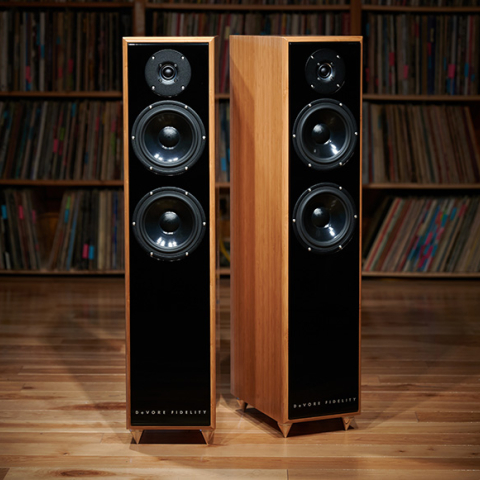
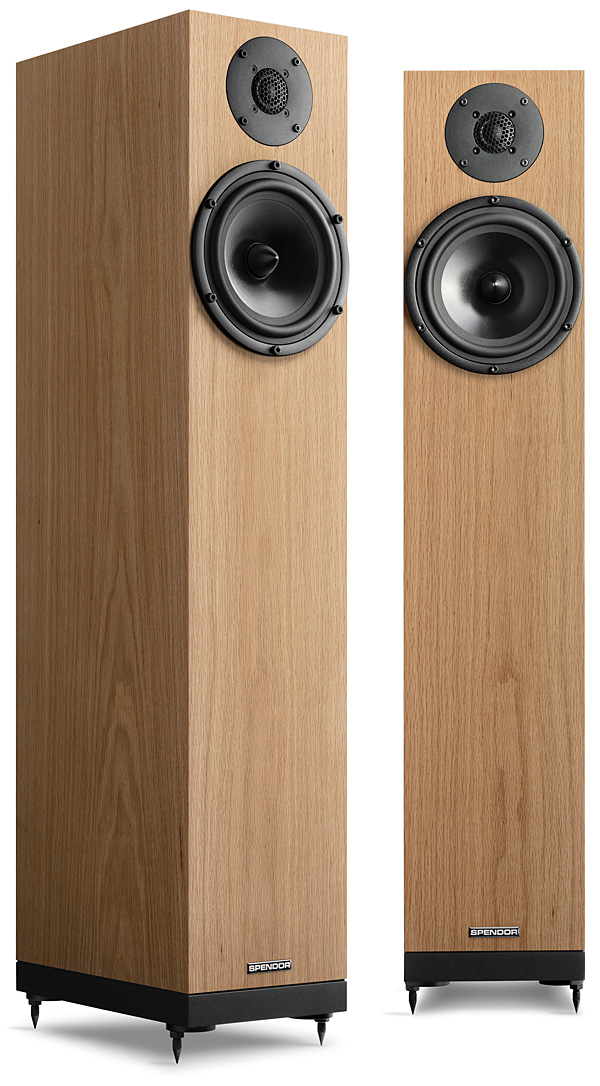
As if custom-made for me, the pair of Spendor A7s was the perfect fit for my smallish listening room. Everything they touched came out clear and lucid, and bass frequencies were especially tuneful, tight, and extended. Disc after disc, music flowed with ease and aplomb from the A7s' lovely cabinets. Though not as ultimately revealing of tone, texture, and low-end fundamentals as my DeVore Fidelity Orangutan O/93s, the Spendor A7s played crisply and cleanly, with a neutral midrange and revealing, powerful bass. I found very little to fault in the A7 and much to love, most notably its palpable and authentic presentation of everything from Willie Hutch's grooving soul to Dave Holland's aromatic, straight-ahead jazz. If I were in the market for a pair of floorstanding speakers costing about $5000/pair, the Spendor A7 would take my cash.
As with Willie Hutch's Fully Exposed, I've been digging deep into the 1970s LPs of my recently departed brother-in-law, a wonderful human being gone too soon. Andy, a Brit, particularly loved dub, reggae, and R&B, and as I clean and sort his collection, I'm happily surprised at the records' condition. I love spinning Andy's '70s R&B titles, chock full of swooning orchestras, cooing female harmonies, and sticky-funky rhythm sections. Through the A7s, Barry White and the Love Unlimited Orchestra's score for the 1974 film Together Brothers (LP, Pye International NSPL 28203) rose up before me like a Broadway production, its swimming strings, choogling rhythm section, and forward-motion funk a full-on festival. The A7 resolved the record's epic studio soundfield with speed and excitement, the low end driving the music but never at the expense of the upper frequencies, which were clean and revealing yet never analytical. I noted a touch of treble zing! in strings and guitars, but heard no harshness or grit and experienced zero fatigue.
Fed by the rich-sounding Heed Audio Elixir integrated amplifier ($1195), the A7's traits remained similar, but now with lushness to the fore. The Heed warmed the A7's already excellent bass characteristics, and though the Hungarian integrated isn't the last word in resolution, it knows how to boogie, swing, and dance. Preminger's Some Other Time sounded more diffuse through the Heed-Spendors than through the Parasound-Spendors, but also more immediate and friendly. Preminger's tenor was still huge, dead center in the mix, but Hart's cymbals were now more subdued than they'd sounded through the brilliantly detailed Parasound. I concluded that the A7 was simply exposing everything upstream: the good, the different, the whole megillah. The Heed presented an overall creamier-sounding whole. Ghost in the Machine remained deep of soundstage and bass extension, and Copeland's snare drum cracked in front of me just as mightily as it had with the Halo. There was less layering of instruments on a smaller stage, but what remained was solid and propulsive, thanks to the A7.
Through every amplifier, with every recording, the A7 wowed me with its remarkably natural reproduction skills. Lesser speakers can make music sound processed, with shrunken heads, a sterile midrange, and plastic-brittle beats. The A7 found the ever-physical sweet spot in everything I played, on LP or CD.
Via the Heed, Dave Holland's double bass grew wirier, in a good way—Transit seemed to have more air. So did one of my current favorite recordings, Diana Krall and Tony Bennett's Love Is Here to Stay (CD, Verve B0028703-02). This album takes you deep into the musicians' lair—you can hear the depth of the recording studio, and where the microphones are placed for Peter Washington's double bass and Kenny Washington's drums—and though the two singers are up front in the mix, it all sounds thoroughly genuine, without artifice. Double bass was large, with full-scale force. Again, the A7s brought out all of the singers' human qualities—all their flesh and blood.
. . . with the Mytek Brooklyn DAC and Brooklyn Amplifier(s) Mytek's Brooklyn DAC/preamp ($1995), with two of their Brooklyn amplifiers ($2495 each) in bridged mode, resolved information as class-D amps should: with merciless focus on speed and clarity, and less attention paid to color saturation or editorializing. The Mytek sound takes some getting used to, but once in its realm, you're hearing the music unadulterated.
As if custom-made for me, the pair of Spendor A7s was the perfect fit for my smallish listening room. Everything they touched came out clear and lucid, and bass frequencies were especially tuneful, tight, and extended. Disc after disc, music flowed with ease and aplomb from the A7s' lovely cabinets. Though not as ultimately revealing of tone, texture, and low-end fundamentals as my DeVore Fidelity Orangutan O/93s, the Spendor A7s played crisply and cleanly, with a neutral midrange and revealing, powerful bass. I found very little to fault in the A7 and much to love, most notably its palpable and authentic presentation of everything from Willie Hutch's grooving soul to Dave Holland's aromatic, straight-ahead jazz. If I were in the market for a pair of floorstanding speakers costing about $5000/pair, the Spendor A7 would take my cash.