A century ago, pioneering psychiatrist Carl Jung had a wild encounter with the power of sound. "In a village on the way from Lake Albert to Rejaf in the Sudan we had a very exciting experience," Jung wrote in his book Memories, Dreams, Reflections. He goes on to describe his participation in a tribal drum and dance ritual. "Night had fallen ... when we heard drums and horn blasts. Soon some sixty men appeared, martially equipped with flashing lances, clubs, and swords." A huge fire was built. Women and children began dancing around the fire, and the men formed an outer ring. Jung's guides and armed guards fled the scene. Jung continued:
Jung eventually bribed the Africans, with cigarettes, to stop the ritual and disperse. The modern interpretation is that he probably interrupted a sacred rite meant to call spirits of ancestors into the living. He was lucky those lances, clubs, and swords weren't turned on him (footnote 2).
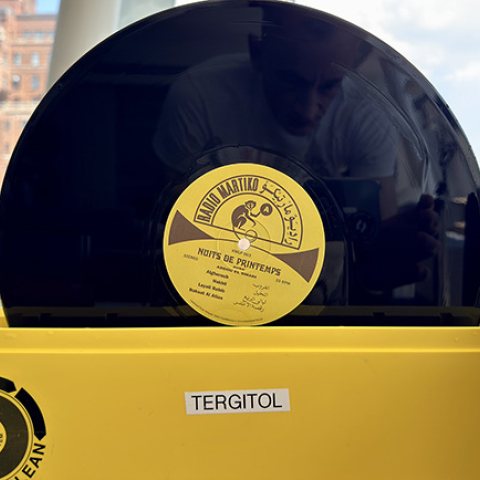
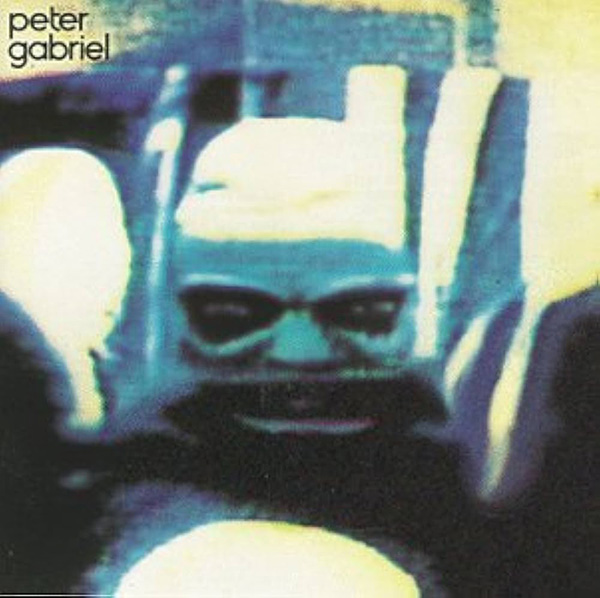 But that's not the point. Decades later, musician Peter Gabriel read the words above and imagined Jung self-subsumed into the tribal beat. He created his hit "The Rhythm of the Heat," the first track on Security (titled Peter Gabriel outside the North American market), which was among much else an early-1980s turntable trackability challenge, with its massive, bass-heavy drum and percussion onslaught.
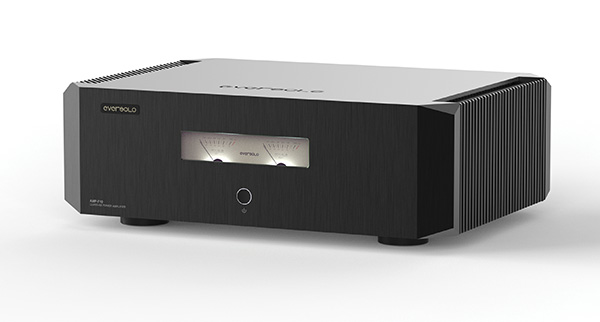
Which brings us, finally, to the Eversolo AMP-F10 power amplifier ($2480, footnote 3). A hundred years after Jung's African travels, I spun my first-pressing Security LP, mastered by Townhouse Studios in England (footnote 4), on my reference system, with the Eversolo amplifier in place of my Benchmark AHB2.
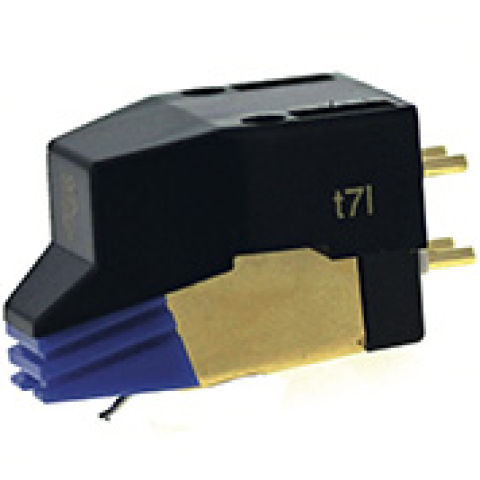
From the Bowers & Wilkins 808 speakers poured the buildup to a drumming frenzy, with floor- and wall-shaking low end (and no groove-jumping by my Hana SL MKII cartridge). Like Jung's, it was a "very exciting experience." To quote the song, "The rhythm has my soul!"
The strong and large bottom end of the AMP-F10 is the place to start, because it is literally foundational to the amplifier's personality. Paired with the right speakers, this amplifier will deliver a visceral musical experience, felt throughout the body.
Should a power amplifier have a personality?
But that's not the point. Decades later, musician Peter Gabriel read the words above and imagined Jung self-subsumed into the tribal beat. He created his hit "The Rhythm of the Heat," the first track on Security (titled Peter Gabriel outside the North American market), which was among much else an early-1980s turntable trackability challenge, with its massive, bass-heavy drum and percussion onslaught.
Which brings us, finally, to the Eversolo AMP-F10 power amplifier ($2480, footnote 3). A hundred years after Jung's African travels, I spun my first-pressing Security LP, mastered by Townhouse Studios in England (footnote 4), on my reference system, with the Eversolo amplifier in place of my Benchmark AHB2.
From the Bowers & Wilkins 808 speakers poured the buildup to a drumming frenzy, with floor- and wall-shaking low end (and no groove-jumping by my Hana SL MKII cartridge). Like Jung's, it was a "very exciting experience." To quote the song, "The rhythm has my soul!"
The strong and large bottom end of the AMP-F10 is the place to start, because it is literally foundational to the amplifier's personality. Paired with the right speakers, this amplifier will deliver a visceral musical experience, felt throughout the body.
Should a power amplifier have a personality?
In my perfect, mastering-engineer world, amplification is linear and neutral, just gain across a straight wire. Any sort of tone shaping must be precise and under my control. It comes from an analog component like a system equalizer or (in my parallel life as a music consumer) a tone control on a preamplifier, or from DSP built into the system and controlled by a phone app or menu tree. If I want to hear exactly what a recording sounds like, I can remove all tone shaping from the signal chain and hear it in its naked glory, as it is. But that's not how hi-fi systems work. Each component has its own sound, to lesser or greater degrees, which it imparts on the system. The key is to build a system with synergy or tonal force-multiplying. Find the balance by matching the components with each other and with speakers, and you end up with a sound that's in your sweet spot. Importantly, such a system (when it's well-curated) doesn't sound like the parts are fighting each other.
So if you want to be in the driver's seat, you need to learn what tone qualities each part of the system brings to the table so that you know where to focus attention if something doesn't sound right.
I've heard many amplifiers over the years, tubed and solid state, integrated and separate—and no two sounded exactly alike. Whether I wish it or not, all amplifiers have some degree of "sound" or "personality."
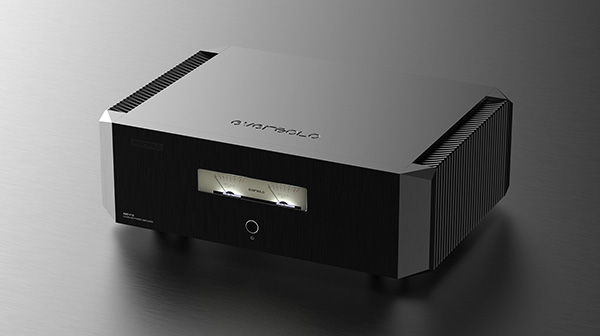 A mighty amplifier from China, packaged to fit many spaces
The AMP-F10 is the first class-AB power amplifier from the young Chinese hi-fi company Eversolo, a division of Shenzhen-based Zidoo Technology. The AMP-F10 is no shrinking violet—check out the Specifications sidebar. It's rated plenty powerful, with very low distortion, a wide, flat frequency response, and excellent channel separation. And, with a rated damping factor greater than 600 and a published 2 ohm power rating, it's designed to drive even the wildest and wooliest speaker loads with firm control.
In an email conversation with Eversolo's elusive designers (footnote 5), set up by Lily Luo of Eversolo distributor Forté Distribution, I learned that the AMP-F10's output stage incorporates five pairs of Vishay IRFP9240 high-current MOSFET devices per channel. The transistors are fed by a "1000 watt power supply," with a current reserve of 160,000µF capacitance. At the front-end of each channel is an "Eversolo Ultra Low Noise Preamp Module," which they described as "an audio operational amplifier with FET input to form the amplification circuit."
The AMP-F10's marketing materials highlight its "innovative DC filtering circuit between the main AC supply and audio circuit, effectively removing low-frequency DC interference." The description goes on. "This design ensures that only clean AC power is delivered to the audio circuits, effectively enhancing the performance of the audio circuit while reducing the hum from the toroidal transformer." In all the systems I connected the amplifier to, it ran dead quiet, whether wired in via its single-ended RCA or balanced XLR inputs.
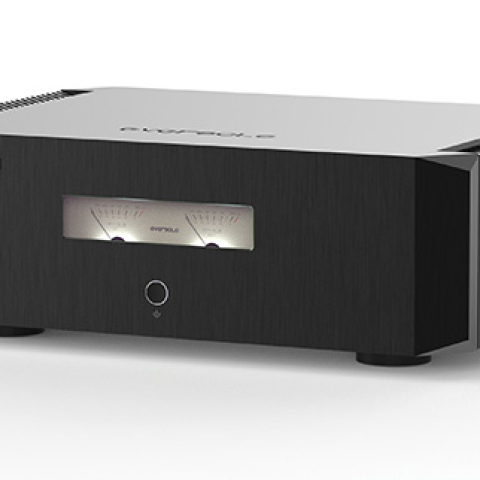
This sharp-looking black metal amplifier is flanked by large heatsinks. Its front panel features brightly illuminated meters. The logarithmic scale is labeled "Watts/dB/4-ohms." In my experience, most of the needle travel was between 0 and 34, so the needles are active and bouncy, more eye candy than useful real-time data points, though I suppose they'd tell you if you're approaching clipping. Below the meters is the pushbutton power switch.
Given its power ratings and linear power supply, the AMP-F10 is hefty, but it's not overbuilt. It weighs about 40lb, and the heatsink fins aren't ridiculously sharp—though they are sharp enough to cut through the fabric bag it comes wrapped in if it's handled carlessly. In moving it around, it was easy to slip my fingers under it and lift from the bottom, avoiding fingertips on fins. Still, I wore work gloves to unpack it.
It was smart to design this amp in a not-huge form factor with a pleasing and relatively low-key look. It can't be tucked away because it runs hot. It needs airflow around and above those heatsinks. The amp's designer explained: "The F10 is a class-AB amplifier with a bias toward class-A. Class-AB amplifiers will generate heat even when there is no music signal input, mainly because their operating mode dictates that current still flows in the static state. In the push-pull output stage of a class-AB amplifier, a static bias current is set to avoid the crossover distortion between class-A and class-B. This current continues to flow through the output transistors even without an input signal. This static current creates a certain power dissipation in the power transistors, which is then converted into heat."
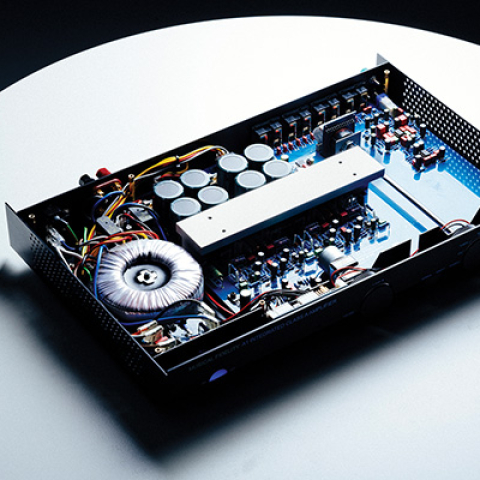
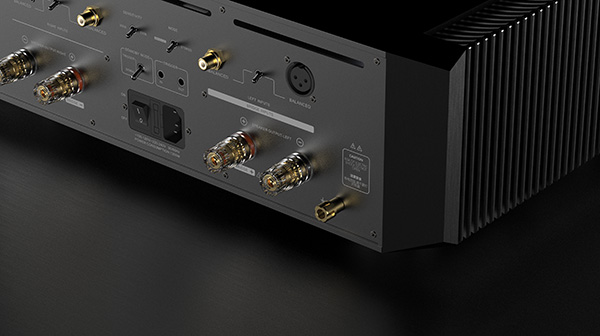 Inside, in the center of the chassis, is a large, heavy toroidal transformer, surrounded by large filter capacitors (footnote 6). The output transistors are on each side, along the walls. The input/output connections and the power supply filter/control boards are at the rear. It's not exactly a tight fit, but Eversolo has used the space efficiently, packing in a lot of power. Given how much heat the amp generates, high-quality electrolytic capacitors are needed, so they don't dry out and fail prematurely in the amp's warm/hot internal environment. Eversolo's designer said the capacitors are rated to "operate at 105°C for 3000 hours. For every 10°C reduction in operating temperature, their service life doubles."
On the back panel is an assortment of switches that allow flexibility in how the amp is used. There's a switch for stereo and bridged-mono modes, for example. (In bridged mode, the amp is rated at an impressive 950W into 4 ohms, but then you need two of them for a stereo system.) There are switches to select the balanced or single-ended inputs. There's a gain switch: 23dB or 29dB, to optimize the system so that you can use a bit more of your preamp's volume dial. The speaker connectors work with spade lugs or banana plugs. And there are 1/8" input and output connections for 12V power-on/power-off triggering.
Listening scenario #1: small scale
Inside, in the center of the chassis, is a large, heavy toroidal transformer, surrounded by large filter capacitors (footnote 6). The output transistors are on each side, along the walls. The input/output connections and the power supply filter/control boards are at the rear. It's not exactly a tight fit, but Eversolo has used the space efficiently, packing in a lot of power. Given how much heat the amp generates, high-quality electrolytic capacitors are needed, so they don't dry out and fail prematurely in the amp's warm/hot internal environment. Eversolo's designer said the capacitors are rated to "operate at 105°C for 3000 hours. For every 10°C reduction in operating temperature, their service life doubles."
On the back panel is an assortment of switches that allow flexibility in how the amp is used. There's a switch for stereo and bridged-mono modes, for example. (In bridged mode, the amp is rated at an impressive 950W into 4 ohms, but then you need two of them for a stereo system.) There are switches to select the balanced or single-ended inputs. There's a gain switch: 23dB or 29dB, to optimize the system so that you can use a bit more of your preamp's volume dial. The speaker connectors work with spade lugs or banana plugs. And there are 1/8" input and output connections for 12V power-on/power-off triggering.
Listening scenario #1: small scale
The AMP-F10's first stop was my office, where I connected it (unbridged) to my small, two-way Amphion One18 speakers and to the preamp output of a McIntosh MA6500 integrated amplifier. I let it warm up for a half-hour to shake off travel chills. Once the heatsink fins were warm to the touch, I figured it was ready to make some sound. I streamed various familiar music from Qobuz through a Cambridge MNX10 streamer-DAC, getting an idea of how the AMP-F10 played with the One18s. Right away, the little speakers sounded more assured than they do with the McIntosh amplifier, with more pronounced bass. They sounded like medium-sized speakers, capably transmitting all but the lowest bass notes—and not in a boomy way or in a way that forced the little woofers to work harder than they should and break up. The amp didn't sound like it was working hard, even as I asked it to drive the speakers loud.
 I was able to flummox the AMP-F10/One18 combo with a track from my "Bass Test" playlist (footnote 7), specifically Aretha Franklin's cover of "Bridge Over Troubled Water" from the 2021 anthology ARETHA (24/96 FLAC, Atlantic-Rhino/Qobuz). When I turned it up loud, the F10-powered electric bass in the left channel dug deep enough and loud enough to rattle the left woofer.
I switched to my "Imaging Test" playlist (footnote 8), which I use when I need to focus on the soundstage and the individual voices and instruments within it. A song I recently added to this playlist is "April Fool" from Rough Mix, a 1977 collaboration between the Who's Pete Townsend and Faces' Ronnie Lane (24/96 FLAC, Universal/Qobuz). Lane sings in the left channel; Townsend's acoustic guitar is in the right. Eric Clapton's expertly picked dobro is in the middle, with Clapton tapping his foot in rhythm. In a well-matched system, each instrument and Lane's voice sound lifelike and balanced, as if in the room. Through the little Amphion speakers, it was like a miniature performance in front of me, with real, fleshy, very small musicians.
Also on that playlist is my remix/remaster of Igor Stravinsky's Tango (K62, orchestral version), performed by the London Symphony Orchestra, Antal Dorati conducting (24/96 FLAC, Mercury Living Presence/Qobuz), recorded in Watford Town Hall June 7, 1964, using three Schoeps M201 omnidirectional microphones. The recording, by my late friend and mentor Robert Eberenz, places each instrument in the orchestra precisely, with an acoustic guitar in front of the woodwinds, violins to the left, and lower strings to the right. Hovering behind, beyond, and above is the room sound of Watford. The combination of the Eversolo power amp and Amphion speakers produced a pleasingly detailed, wide, high soundstage, each instrument's tonality distinct and correct.
I was able to flummox the AMP-F10/One18 combo with a track from my "Bass Test" playlist (footnote 7), specifically Aretha Franklin's cover of "Bridge Over Troubled Water" from the 2021 anthology ARETHA (24/96 FLAC, Atlantic-Rhino/Qobuz). When I turned it up loud, the F10-powered electric bass in the left channel dug deep enough and loud enough to rattle the left woofer.
I switched to my "Imaging Test" playlist (footnote 8), which I use when I need to focus on the soundstage and the individual voices and instruments within it. A song I recently added to this playlist is "April Fool" from Rough Mix, a 1977 collaboration between the Who's Pete Townsend and Faces' Ronnie Lane (24/96 FLAC, Universal/Qobuz). Lane sings in the left channel; Townsend's acoustic guitar is in the right. Eric Clapton's expertly picked dobro is in the middle, with Clapton tapping his foot in rhythm. In a well-matched system, each instrument and Lane's voice sound lifelike and balanced, as if in the room. Through the little Amphion speakers, it was like a miniature performance in front of me, with real, fleshy, very small musicians.
Also on that playlist is my remix/remaster of Igor Stravinsky's Tango (K62, orchestral version), performed by the London Symphony Orchestra, Antal Dorati conducting (24/96 FLAC, Mercury Living Presence/Qobuz), recorded in Watford Town Hall June 7, 1964, using three Schoeps M201 omnidirectional microphones. The recording, by my late friend and mentor Robert Eberenz, places each instrument in the orchestra precisely, with an acoustic guitar in front of the woodwinds, violins to the left, and lower strings to the right. Hovering behind, beyond, and above is the room sound of Watford. The combination of the Eversolo power amp and Amphion speakers produced a pleasingly detailed, wide, high soundstage, each instrument's tonality distinct and correct.
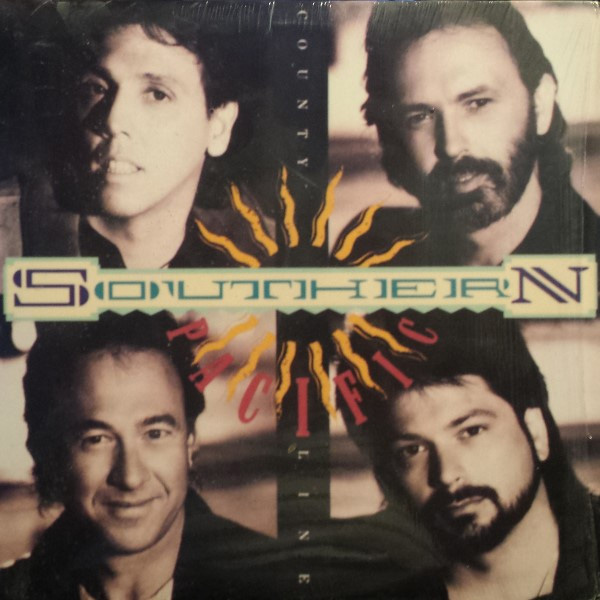 Another evergreen imaging reality check is Southern Pacific's doo-wop a capella cover of "I Go to Pieces" from Country Line (16/44.1 FLAC, Warner Bros.-Rhino/Qobuz). The voices are spread across the soundstage, and backup singers are behind the primary voices. The little system ably reproduced the recording's width and depth and separated the voices even while preserving the tight ensemble weave.
I also spun some vinyl from my modest office rig (Philips AF-887 turntable, Shure M97xe cartridge, McIntosh MA6500 built-in phono preamp). Especially enjoyable was the new Rhino High Fidelity version of Black Sabbath's Paranoid (LP, Warner RHF1 3104), the album I consider the birth of heavy metal music (footnote 9). I drove the little Amphions hard, the Eversolo amp feeding them a steady onslaught of hard-rocking fury. The amp and the speakers didn't buckle, and the experience was invigorating.
Listening scenario #2: full scale
Another evergreen imaging reality check is Southern Pacific's doo-wop a capella cover of "I Go to Pieces" from Country Line (16/44.1 FLAC, Warner Bros.-Rhino/Qobuz). The voices are spread across the soundstage, and backup singers are behind the primary voices. The little system ably reproduced the recording's width and depth and separated the voices even while preserving the tight ensemble weave.
I also spun some vinyl from my modest office rig (Philips AF-887 turntable, Shure M97xe cartridge, McIntosh MA6500 built-in phono preamp). Especially enjoyable was the new Rhino High Fidelity version of Black Sabbath's Paranoid (LP, Warner RHF1 3104), the album I consider the birth of heavy metal music (footnote 9). I drove the little Amphions hard, the Eversolo amp feeding them a steady onslaught of hard-rocking fury. The amp and the speakers didn't buckle, and the experience was invigorating.
Listening scenario #2: full scale
Satisfied that I somewhat understood the sound of the AMP-F10, I took it to the reference system in the living room. There, it would have the opportunity to drive full-sized, full-range, room-filling B&W 808 speakers (two 12" woofers, two 4" midrange drivers, and a dome tweeter on each side) fed by high-quality sources chosen for quickness, neutral-leaning frequency balance, and detailed resolution.
When I swapped in the AMP-F10 and idled my Benchmark AHB2 power amp, I noticed right away that the system sounded different, especially in the lowest octaves. The Eversolo brought out usefully more bass weight than I had noticed before, but sometimes it was too much. Turning to the "Bass Test" playlist again, there was a bit too much boom in "Flea" by St. Vincent, from All Born Screaming (24/48 FLAC, St. Vincent/Qobuz) and a lot too much in the remix of Paramore's "This Is Why" by Foals, from Re: This Is Why (24/44.1 FLAC, Atlantic/Qobuz). But Charlie Watts's kickdrum in "Honky Tonk Women"—the version from Forty Licks (24/96 FLAC, Polydor/Qobuz)—sounded massively exciting, as if the song's heartbeat had grown a size or two.
Both the AMP-F10 and AHB2 amps produced satisfying, house-shaking bottom-octave synthesizer tones in Hans Zimmer's title track to Blade Runner 2049 (Original Motion Picture Soundtrack) (16/44.1 FLAC, Epic/Qobuz). Through the Benchmark, each note was more distinct and detailed, and they were just as impactful.
 The B&W 808s aren't what I call "modern sparkling" in the top end. They don't sound dull or lacking detail, but they don't hype the breathiness of singers or put a glossy sheen on a triangle or other high percussion. They never sound like they're pushing too hard, top or bottom. With the Eversolo amplifier, the imaging was fine, the sounds of instruments and voices in the upper octaves were present, with adequate detail, but sometimes the bottom end was out of proportion—too large. The soundstage was plenty detailed but not quite as high-def pinpoint as with the Benchmark amplifier, which costs more than $1000 more. Neither amp was stressing out nor exceeding its optimum zone of operation with any kind of music at any volume I could tolerate. They simply had different sound profiles, with the Eversolo leaning heavier, the Benchmark quicker but not lean.
Spinning vinyl in the reference system was also instructive. Returning to Peter Gabriel's "The Rhythm of the Heat": The Ghanaian drums by the Ekome Dance Company were harder to separate from Jerry Marotta's drum kit through the AMP-F10 than through the AHB2; through the latter, each beat was more distinct, but the cumulative bass energy wasn't as massive. Gabriel's vocals were more enunciated and less chesty through the Benchmark. In both cases, the rhythm had my soul, in slightly different ways. If a rhinoceros whip had been handy, I would have swung it.
It was an interesting contrast. I think the Eversolo amp would be perfect with floorstanding speakers sporting smaller-diameter woofers. I suspect it can push every bit of gut punch out of 6.5" cones and probably produce pleasing low-frequency tone and energy at lower listening volumes than some other amps can. With my big B&Ws, I prefer the sound of the Benchmark, perhaps only because I am accustomed to it and comfortable with it after hundreds of listening hours—or perhaps because it's simply better suited to the rest of my system.
The B&W 808s aren't what I call "modern sparkling" in the top end. They don't sound dull or lacking detail, but they don't hype the breathiness of singers or put a glossy sheen on a triangle or other high percussion. They never sound like they're pushing too hard, top or bottom. With the Eversolo amplifier, the imaging was fine, the sounds of instruments and voices in the upper octaves were present, with adequate detail, but sometimes the bottom end was out of proportion—too large. The soundstage was plenty detailed but not quite as high-def pinpoint as with the Benchmark amplifier, which costs more than $1000 more. Neither amp was stressing out nor exceeding its optimum zone of operation with any kind of music at any volume I could tolerate. They simply had different sound profiles, with the Eversolo leaning heavier, the Benchmark quicker but not lean.
Spinning vinyl in the reference system was also instructive. Returning to Peter Gabriel's "The Rhythm of the Heat": The Ghanaian drums by the Ekome Dance Company were harder to separate from Jerry Marotta's drum kit through the AMP-F10 than through the AHB2; through the latter, each beat was more distinct, but the cumulative bass energy wasn't as massive. Gabriel's vocals were more enunciated and less chesty through the Benchmark. In both cases, the rhythm had my soul, in slightly different ways. If a rhinoceros whip had been handy, I would have swung it.
It was an interesting contrast. I think the Eversolo amp would be perfect with floorstanding speakers sporting smaller-diameter woofers. I suspect it can push every bit of gut punch out of 6.5" cones and probably produce pleasing low-frequency tone and energy at lower listening volumes than some other amps can. With my big B&Ws, I prefer the sound of the Benchmark, perhaps only because I am accustomed to it and comfortable with it after hundreds of listening hours—or perhaps because it's simply better suited to the rest of my system.
 Listening scenario #3: the product manager's choices
During my e-mail conversation with the unnamed product manager for the AMP-F10, I asked what music was used in designing and "voicing" it. Answering on his behalf, distributor Luo said, "He usually listens to classical and electronic music, primarily using the Focal Sopra No.2 speakers (two 7" woofers, one 6.5" mid/bass driver, one 1" beryllium inverted-dome tweeter per side). He enjoys works like Aaron Copland's Fanfare for the Common Man, and his personal favorite is Vangelis's Chariots of Fire."
With the Eversolo amp in the reference system, I streamed the title track and the opening theme from Vangelis's 1981 movie soundtrack album (16/44.1 FLAC, Universal/Qobuz) and chose the Reference Recordings version of Fanfare by Eiji Oue conducting the Minnesota Orchestra (24/48 FLAC, Qobuz).
The Vangelis synthesized soundstage sounded larger than I remembered it from a long-ago evening at the movies. It also didn't sound as "early digital harsh" as I expected it to. It was quite nice, with the AMP-F10 providing pleasant heft, giving this music-from-electronics an unexpected authenticity.
Fanfare's opening bass drum and gong sounded vastly magnificent, as if a wormhole in the universe briefly opened and sound shot out. The brass following it was not harsh; it was authoritative.
I also enjoyed Vangelis's music through the Benchmark amp, noticing a few more small details in the chirpy top end of some synthesizer sounds. Fanfare's percussion shot out into the room a bit faster, more like thunder after a lightning bolt overhead than the opening of a wormhole. There was a bit more bell sound to the brass and more detail in the articulation. I was equally pleased with both sides of this comparison. Although the two amplifiers do not sound the same, each brings to the table a coherent sound concept.
A worthy new voice
As Eversolo's product line expands, they are racking up good reviews and widening their profile. Luo described the company this way. "Eversolo is a group of very low-key, humble, hardworking people. Most of them are in their 20s and 30s, except senior management, [who are] in their 40s. They are not audiophiles but love and enjoy music and movies." She added, "Even though their products are very popular, they have admitted that they are still very green in audio and are making mistakes. But they are eager to learn and improve. With that attitude, they can only do better and better." In the case of the AMP-F10, they needn't be humble. They've designed it smartly, and it sounds good. My suggestion for future amplifier designing is to make sure to listen through large speakers with big woofers and voice the bass accordingly. Then again, there are already plenty of power amplifiers that fulfill that need. Perhaps an amp that brings extra low-end weight and control to smaller speakers is a marketably unique proposition.
If you're in the market for a new power amplifier, especially if you have smaller floorstanders, standmounts, or bookshelf speakers that could use a little extra bass, the Eversolo AMP-F10 is worth a look and listen. It may help your speakers punch above their size and weight.
Footnote 1: All Jung quotes are taken from the ebook version of Memories, Dreams, Reflections, borrowed from my local library. Footnote 2: See tinyurl.com/kt3jsy22. Footnote 3: Lily Luo, of Forté Distribution, Eversolo's US importer, told me that for now, Eversolo would not increase prices in response to the Trump administration tariffs.
Footnote 4: See discogs.com/release/4169052-Peter-Gabriel-Security.
Footnote 5: See Rogier van Bakel's review of the Eversolo DMP-A8 streaming preamplifier for details on the company and its shy engineer-executives here.
Footnote 6: See tinyurl.com/ycxxtxee.
Footnote 7: See open.qobuz.com/playlist/21395182.
Footnote 8: See open.qobuz.com/playlist/22204090.
Footnote 9: See my review of the 2021 Super Deluxe reissue of Paranoid.
"The men's chorus began to sing, vigorous, bellicose melodies, not unharmonious, and at the same time began to swing their legs. "The women and children tripped around the fire; the men danced toward it, waving their weapons, then drew back again, and then advanced anew, amid savage singing, drumming, and trumpeting."It was a wild and stirring scene, bathed in the glow of the fire and magical moonlight. "My English friend and I sprang to our feet and mingled with the dancers. "I swung my rhinoceros whip, the only weapon I had, and danced with them. "By their beaming faces I could see that they approved of our taking part. "Their zeal redoubled; the whole company stamped, sang, shouted, sweating profusely. "Gradually the rhythm of the dance and the drumming accelerated. ... [T]heir excitement began to get out of bounds, and suddenly the whole affair took on a highly curious aspect. "The dancers were being transformed into a wild horde, and I became worried about how it would end." (footnote 1)
But that's not the point. Decades later, musician Peter Gabriel read the words above and imagined Jung self-subsumed into the tribal beat. He created his hit "The Rhythm of the Heat," the first track on Security (titled Peter Gabriel outside the North American market), which was among much else an early-1980s turntable trackability challenge, with its massive, bass-heavy drum and percussion onslaught.
Which brings us, finally, to the Eversolo AMP-F10 power amplifier ($2480, footnote 3). A hundred years after Jung's African travels, I spun my first-pressing Security LP, mastered by Townhouse Studios in England (footnote 4), on my reference system, with the Eversolo amplifier in place of my Benchmark AHB2.
In my perfect, mastering-engineer world, amplification is linear and neutral, just gain across a straight wire. Any sort of tone shaping must be precise and under my control. It comes from an analog component like a system equalizer or (in my parallel life as a music consumer) a tone control on a preamplifier, or from DSP built into the system and controlled by a phone app or menu tree. If I want to hear exactly what a recording sounds like, I can remove all tone shaping from the signal chain and hear it in its naked glory, as it is. But that's not how hi-fi systems work. Each component has its own sound, to lesser or greater degrees, which it imparts on the system. The key is to build a system with synergy or tonal force-multiplying. Find the balance by matching the components with each other and with speakers, and you end up with a sound that's in your sweet spot. Importantly, such a system (when it's well-curated) doesn't sound like the parts are fighting each other.
A mighty amplifier from China, packaged to fit many spacesThe AMP-F10 is the first class-AB power amplifier from the young Chinese hi-fi company Eversolo, a division of Shenzhen-based Zidoo Technology. The AMP-F10 is no shrinking violet—check out the Specifications sidebar. It's rated plenty powerful, with very low distortion, a wide, flat frequency response, and excellent channel separation. And, with a rated damping factor greater than 600 and a published 2 ohm power rating, it's designed to drive even the wildest and wooliest speaker loads with firm control.
Inside, in the center of the chassis, is a large, heavy toroidal transformer, surrounded by large filter capacitors (footnote 6). The output transistors are on each side, along the walls. The input/output connections and the power supply filter/control boards are at the rear. It's not exactly a tight fit, but Eversolo has used the space efficiently, packing in a lot of power. Given how much heat the amp generates, high-quality electrolytic capacitors are needed, so they don't dry out and fail prematurely in the amp's warm/hot internal environment. Eversolo's designer said the capacitors are rated to "operate at 105°C for 3000 hours. For every 10°C reduction in operating temperature, their service life doubles."
The AMP-F10's first stop was my office, where I connected it (unbridged) to my small, two-way Amphion One18 speakers and to the preamp output of a McIntosh MA6500 integrated amplifier. I let it warm up for a half-hour to shake off travel chills. Once the heatsink fins were warm to the touch, I figured it was ready to make some sound. I streamed various familiar music from Qobuz through a Cambridge MNX10 streamer-DAC, getting an idea of how the AMP-F10 played with the One18s. Right away, the little speakers sounded more assured than they do with the McIntosh amplifier, with more pronounced bass. They sounded like medium-sized speakers, capably transmitting all but the lowest bass notes—and not in a boomy way or in a way that forced the little woofers to work harder than they should and break up. The amp didn't sound like it was working hard, even as I asked it to drive the speakers loud.
I was able to flummox the AMP-F10/One18 combo with a track from my "Bass Test" playlist (footnote 7), specifically Aretha Franklin's cover of "Bridge Over Troubled Water" from the 2021 anthology ARETHA (24/96 FLAC, Atlantic-Rhino/Qobuz). When I turned it up loud, the F10-powered electric bass in the left channel dug deep enough and loud enough to rattle the left woofer.
I switched to my "Imaging Test" playlist (footnote 8), which I use when I need to focus on the soundstage and the individual voices and instruments within it. A song I recently added to this playlist is "April Fool" from Rough Mix, a 1977 collaboration between the Who's Pete Townsend and Faces' Ronnie Lane (24/96 FLAC, Universal/Qobuz). Lane sings in the left channel; Townsend's acoustic guitar is in the right. Eric Clapton's expertly picked dobro is in the middle, with Clapton tapping his foot in rhythm. In a well-matched system, each instrument and Lane's voice sound lifelike and balanced, as if in the room. Through the little Amphion speakers, it was like a miniature performance in front of me, with real, fleshy, very small musicians.
Also on that playlist is my remix/remaster of Igor Stravinsky's Tango (K62, orchestral version), performed by the London Symphony Orchestra, Antal Dorati conducting (24/96 FLAC, Mercury Living Presence/Qobuz), recorded in Watford Town Hall June 7, 1964, using three Schoeps M201 omnidirectional microphones. The recording, by my late friend and mentor Robert Eberenz, places each instrument in the orchestra precisely, with an acoustic guitar in front of the woodwinds, violins to the left, and lower strings to the right. Hovering behind, beyond, and above is the room sound of Watford. The combination of the Eversolo power amp and Amphion speakers produced a pleasingly detailed, wide, high soundstage, each instrument's tonality distinct and correct.
Another evergreen imaging reality check is Southern Pacific's doo-wop a capella cover of "I Go to Pieces" from Country Line (16/44.1 FLAC, Warner Bros.-Rhino/Qobuz). The voices are spread across the soundstage, and backup singers are behind the primary voices. The little system ably reproduced the recording's width and depth and separated the voices even while preserving the tight ensemble weave.
I also spun some vinyl from my modest office rig (Philips AF-887 turntable, Shure M97xe cartridge, McIntosh MA6500 built-in phono preamp). Especially enjoyable was the new Rhino High Fidelity version of Black Sabbath's Paranoid (LP, Warner RHF1 3104), the album I consider the birth of heavy metal music (footnote 9). I drove the little Amphions hard, the Eversolo amp feeding them a steady onslaught of hard-rocking fury. The amp and the speakers didn't buckle, and the experience was invigorating.
Listening scenario #2: full scaleSatisfied that I somewhat understood the sound of the AMP-F10, I took it to the reference system in the living room. There, it would have the opportunity to drive full-sized, full-range, room-filling B&W 808 speakers (two 12" woofers, two 4" midrange drivers, and a dome tweeter on each side) fed by high-quality sources chosen for quickness, neutral-leaning frequency balance, and detailed resolution.
The B&W 808s aren't what I call "modern sparkling" in the top end. They don't sound dull or lacking detail, but they don't hype the breathiness of singers or put a glossy sheen on a triangle or other high percussion. They never sound like they're pushing too hard, top or bottom. With the Eversolo amplifier, the imaging was fine, the sounds of instruments and voices in the upper octaves were present, with adequate detail, but sometimes the bottom end was out of proportion—too large. The soundstage was plenty detailed but not quite as high-def pinpoint as with the Benchmark amplifier, which costs more than $1000 more. Neither amp was stressing out nor exceeding its optimum zone of operation with any kind of music at any volume I could tolerate. They simply had different sound profiles, with the Eversolo leaning heavier, the Benchmark quicker but not lean.
Listening scenario #3: the product manager's choicesDuring my e-mail conversation with the unnamed product manager for the AMP-F10, I asked what music was used in designing and "voicing" it. Answering on his behalf, distributor Luo said, "He usually listens to classical and electronic music, primarily using the Focal Sopra No.2 speakers (two 7" woofers, one 6.5" mid/bass driver, one 1" beryllium inverted-dome tweeter per side). He enjoys works like Aaron Copland's Fanfare for the Common Man, and his personal favorite is Vangelis's Chariots of Fire."
As Eversolo's product line expands, they are racking up good reviews and widening their profile. Luo described the company this way. "Eversolo is a group of very low-key, humble, hardworking people. Most of them are in their 20s and 30s, except senior management, [who are] in their 40s. They are not audiophiles but love and enjoy music and movies." She added, "Even though their products are very popular, they have admitted that they are still very green in audio and are making mistakes. But they are eager to learn and improve. With that attitude, they can only do better and better." In the case of the AMP-F10, they needn't be humble. They've designed it smartly, and it sounds good. My suggestion for future amplifier designing is to make sure to listen through large speakers with big woofers and voice the bass accordingly. Then again, there are already plenty of power amplifiers that fulfill that need. Perhaps an amp that brings extra low-end weight and control to smaller speakers is a marketably unique proposition.
Footnote 1: All Jung quotes are taken from the ebook version of Memories, Dreams, Reflections, borrowed from my local library. Footnote 2: See tinyurl.com/kt3jsy22. Footnote 3: Lily Luo, of Forté Distribution, Eversolo's US importer, told me that for now, Eversolo would not increase prices in response to the Trump administration tariffs.