Solid State Power Amp Reviews

Sort By:  Post Date TitlePublish Date

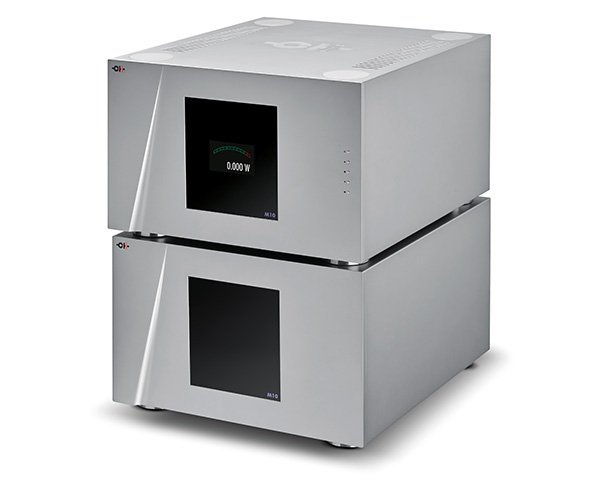
CH Precision M10 monoblock power amplifier

A mono pair of CH Precision M10s ($210,000/pair as reviewed) declares its presence in capital letters. Each channel consists of two large units, each almost 2' high, linked by a total of four umbilical cords. While the "lighter" amplifier unit weighs almost 117lb, the toroidal transformer–based power supply unit tops out at nearly 172lb. That's a lot of metal.

PrimaLuna EVO 300 Hybrid power amplifier

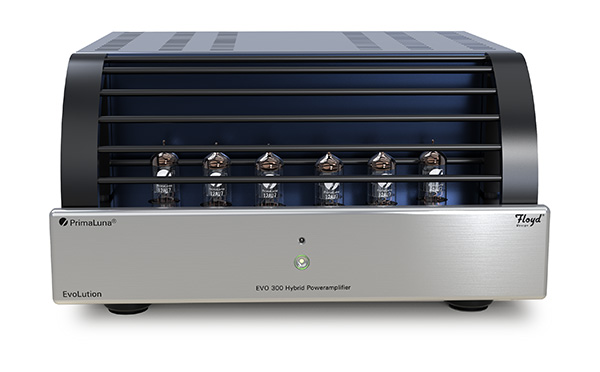
These days, listeners the wide world over enjoy hearing their music recreated for them by equipment whose origins are international; trade isolationists might consider the example of PrimaLuna. This Holland-based company's operations span three continents, with designers from Floyd Design and Durob Audio in the Netherlands, manufacturing in China, and input from California-based Harmonia Distribution.

Eversolo AMP-F10 power amplifier

A century ago, pioneering psychiatrist Carl Jung had a wild encounter with the power of sound. "In a village on the way from Lake Albert to Rejaf in the Sudan we had a very exciting experience," Jung wrote in his book Memories, Dreams, Reflections. He goes on to describe his participation in a tribal drum and dance ritual. "Night had fallen ... when we heard drums and horn blasts. Soon some sixty men appeared, martially equipped with flashing lances, clubs, and swords."

Lyngdorf Audio MXA-8400 8-channel power amplifier

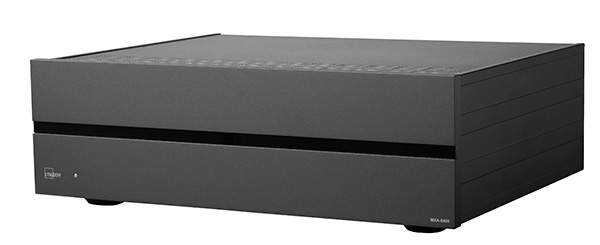
Woot, woot! I was thrilled when I saw the announcement for this amplifier. I was tempted to order one sight unseen and sound unheard. Why? First off, it employs the newest (as of March 2025) class-D amplification technology. Second, it can accommodate all sorts of audio systems, from an eight-channel surround setup to a megalomaniacal two-channel stereo system. Third, the specs, even in the context of its technology, are impressive. And fourth, I can lift it by myself—easily! How can I pass this amplifier up?

Boulder 1151 monoblock power amplifier

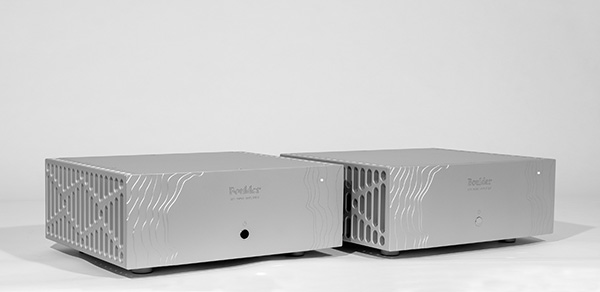
For several decades—from well before I toured the Boulder factory in 2016—I've wanted to get a handle on the best sound the now–41-year-old company can offer. Multiple listening sessions at shows had more than hinted at excellence. But neither my time in Boulder's large, dedicated music room, which was intentionally dry, nor exposure at various hi-fi shows left me convinced that I'd heard Boulder's full potential.

My first opportunity for an in-home audition came in 2021, when I reviewed the 866 stereo integrated amplifier ($17,500 with DAC, $16,000 without). But that entry-level (by Boulder standards) product, which Senior Engineer Jameson Ludlam said was released to build brand awareness and expand the company's reach by offering "a more accessible product that provides the features we think many people are looking for with the performance they have come to expect from Boulder," only provided a peek at the excellence I expected Boulder to achieve.

So when a last-minute review cancellation opened space to review the just-released Boulder 1151 mono power amplifier ($47,000/pair), I thought, "At last!"

Buckeye Purifi Eigentakt 1ET9040BA monoblock power amplifier

Back in 2016, I documented the rise of class-D amps using the early TriPath technology. Used in the Bel Canto eVo 200.2, TriPath cracked open the door to the High End but was never admitted due to a dim and opaque treble. The second wave was based on B&O's ICEpower technology, again via a Bel Canto amplifier, the Ref1000M monoblock. ICEpower had more credibility and was accepted by many but, often, only with, ahem, due consideration for size and efficiency. There was an explosion of new class-D amps in 2016 when Stereophile featured glowing reviews of Bel Canto's e.One Ref600M monoblock, Theta's Prometheus monoblock, and NAD's Masters Series M22 stereo amp, all based on Bruno Putzeys's Hypex NCore technology modules. Finally, it seemed that class-D was "in the room," though, even to this day, there remain critics and quibblers who continue to deny them as true high-fidelity products.

Well, time does not stand still and neither did Bruno Putzeys. He, along with Lars Risbo and Peter Lyngdorf, had founded Purifi in 2015, and in 2019 he unveiled the Purifi Eigentakt power amplifier modules.

Moon 861 stereo/mono power amplifier

It is unusual to begin a review with a detailed discussion of setup. But setup protocol for the Moon 861 power amplifier ($22,000 each), the top-level amplifier in the North Collection from Moon, which I reviewed bridged in mono, proved crucial to its sound.

The setup saga began when Moon co-owner Costa Koulisakis traveled to Port Townsend from Quebec to help remove two 861 amplifiers from their sturdy flight cases and set them up.

Burmester 218 power amplifier

As much as I tinkered with a little crystal radio as a child and started reading stereo magazines in high school, it wasn't until my early 30s that I half-stumbled into the higher end of the hi-fi sphere. As I progressed from used Advents to used Spicas and began to experiment with speaker cables, more and more names of high-end brands entered my consciousness. Burmester (founded in 1977), and some of the other higher-priced components from overseas whose looks seemed commensurate with their prices, held an outsized fascination for me. What about them, other than their visual appearance, accounted for their vaunted reputations and cost?

Balanced Audio Technology REX 500 power amplifier

There was a period in the 1970s when many pop ballads that should have had understated arrangements instead turned grandiose and even maudlin. Take Gilbert O'Sullivan's sensational single "Nothing Rhymed" (a track that went deep for a pop hit, referencing famine, duty, and morality). Soon after the start, O'Sullivan's piano is overshadowed by a loud, saccharine string section.

Another example is "Lotte," German singer Stephan Sulke's portrayal of a dying love affair. The devastatingly wistful chanson is burdened by a mawkish orchestral track—the equivalent of glitterbombing an Edward Hopper painting.

Contrast this with Roberta Flack's definitive version of Ewan MacColl's "The First Time Ever I Saw Your Face." Apart from Flack's voice and her emotional delivery, the gently strummed guitar and quiet piano do all the heavy lifting. An unhurried double bass and a couple of minimally bowed string instruments leave swaths of negative space, helping to give her interpretation its hushed, reverent character.

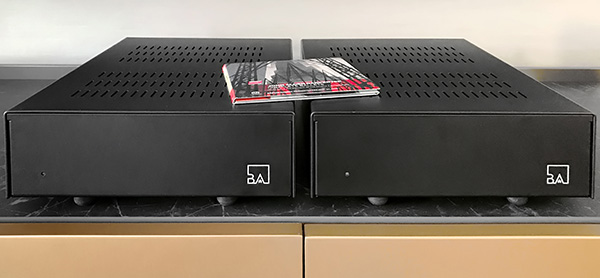
I reflected on all this after spending several months with Balanced Audio Technology's REX 500 solid state power amplifier ($25,000), which has more in common with the Roberta Flack track than with the bombast of "Nothing Rhymed."

Advertisement
Advertisement
Advertisement