Shortly after the Berlin wall came down and the Japanese stock market crashed, my day job was to demonstrate expensive audio products at hi-fi shows all over Europe and America. That entailed surviving on espresso and Toblerone while driving a vintage Mercedes at high speeds 12 hours per day. After four hours of sleep, I was doing 12-hour days of DJ work that entailed choosing the next perfect recording to keep the audience facing forward, mesmerized—a borderline impossible task. To avoid shame and rejection, I always kept a few 7" 45s by groups like The Chambers Brothers or Booker T. and the M.G.'s to play when the vibe was sagging.
I believed then as I do now that the finest sound system is the one that lets each record sound the most like itself. Therefore, one of my policies was to play random CDs or LPs that visitors brought to the event, with a lighthearted warning: If the disc doesn't please me and everybody else—if it doesn't grab 'em and hold 'em in the first 15 seconds—it will be rejected and ejected. I made it clear that they should not take ejection personally.
When people left smiling, I was grateful. When they skulked out without nodding or making eye contact, I felt rejected. Sometimes I took it personally.
What I learned from spending 10-hour days switching between LPs and CDs was that the two formats could and should speak with the same amount of tone-truthfulness and drive—that's basic accuracy—yet sound as different as possible from each other. Who wants analog that sounds digital? Or vice versa?
Unfortunately, digital with power and charisma has been thin on the ground until recently, when all of a sudden, seemingly out of nowhere, digital got big and strong and wild to listen to, with realistic presence and a supernatural transparency.
The first DAC that showed me this new high-intensity digital was Wadax Audio's $166,420 Atlantis Reference, which I auditioned with the Reference Server ($68,800) and power supply ($52,700). Total cost: $287,920. That was an unforgettable, shake-my-head-in-wonder experience.
The second converter that showed me a radical new kind of digital was the full dCS Varèse Music System ($267,500). Its reproduction of files struck me as joltingly undigital, with crazy levels of detail and blatant immediacy—more audio-on-acid than anything I'd previously experienced.
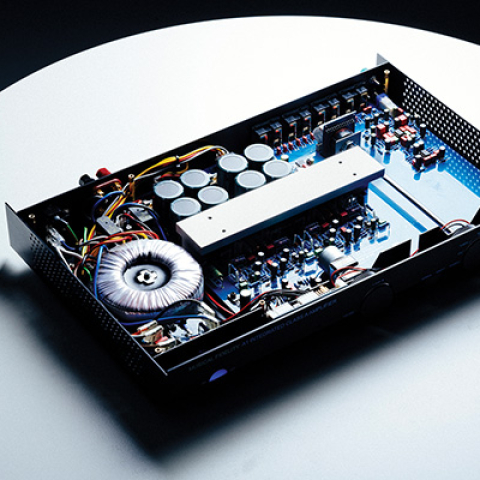
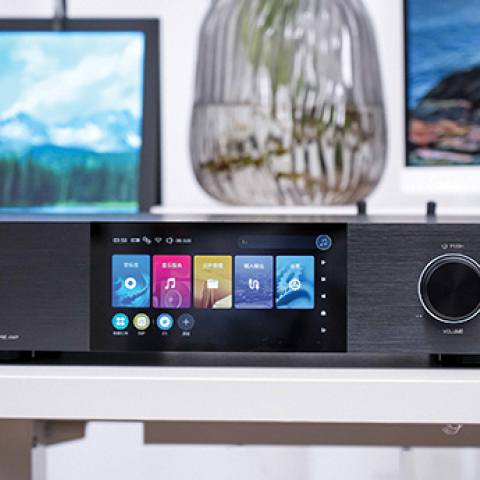
Then some acorns started falling from those mighty oaks. I reviewed the CH Precision–infused Wattson Madison LE streamer-DAC ($4999). Just like the Atlantis and Varèse, it felt like another new form of digital experience. Then I reviewed Ideon Audio's incredible eos, which, at $9999, is doing its best to go head-to-head with anything out there.
To me, all of these DACs felt new because they didn't sound like the "old" digital I was familiar with. What those new DACs all had in common was punched-up immediacy and astonishing transparency.
Today I'll be describing another "acorn" DAC, the least-expensive yet. LAiV Audio's new µDAC is small, costs just $994 ($1049 as of January 1 2026), and is dancing at the same party as the above-mentioned DACs. It offers listeners a unique perspective on what quality digital can sound like.
 Description
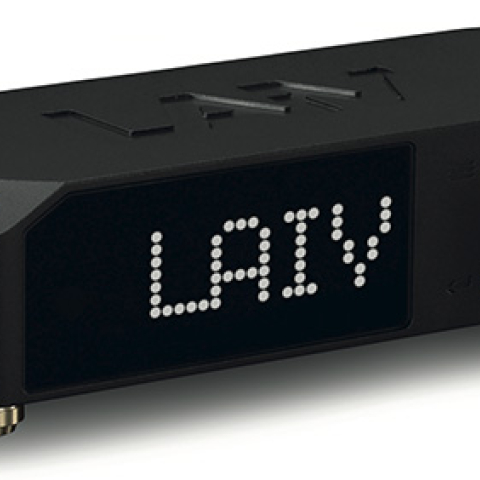
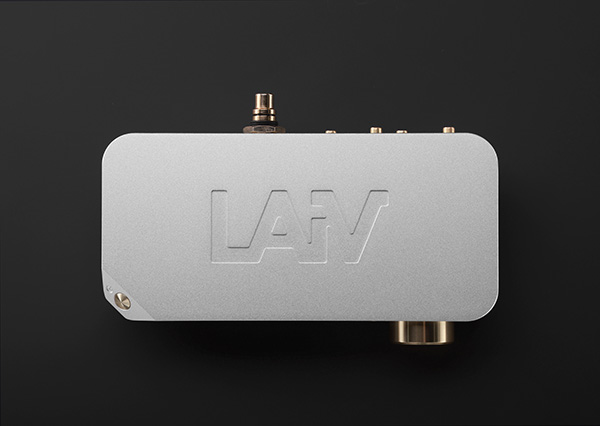
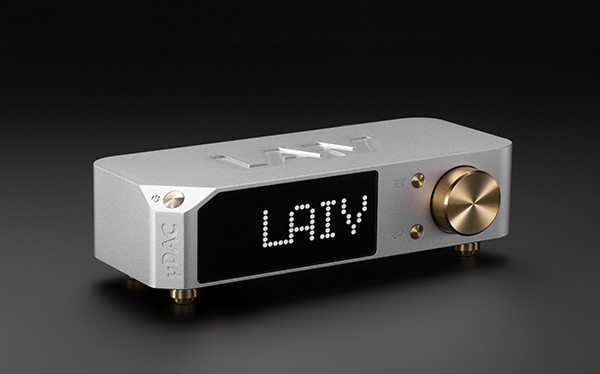
The LAiV Audio µDAC was shipped to me directly from Guangzhou, China, though your US orders will be fulfilled by the company's fulfillment center in California. It arrived in an elegantly engineered box that measured 5" × 9.5" × 10.25". The DAC inside measured just 1.6" high × 6.6" wide × 3.8" deep and weighs only 1.5lb. It's small and intelligently styled with a gold-detailed luxury look that seems intended for placement on a fancy desk or bureau top. It costs just $994 delivered, with shipping, tax, tariffs, and two-year warranty included ($1049 as of January 1 2026). The LAiV Harmony µDAC uses the same discrete-resistor R-2R ladder network architecture as LAiV's larger Harmony DAC ($2849 as of January 1 2026). It comes in a silver or black CNC-machined anodized-aluminum chassis with three gold buttons, a prominent gold knob, and four rubber-tipped gold-anodized aluminum footers. Its modest, self-dimming OLED display is fronted by tempered glass.
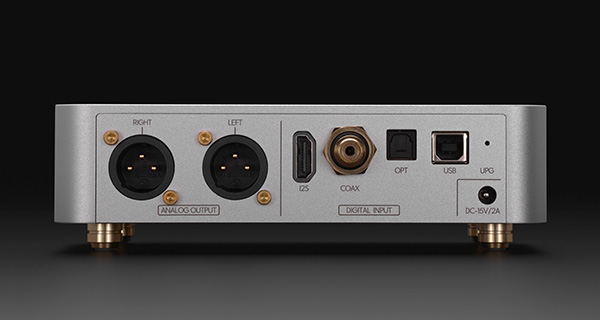
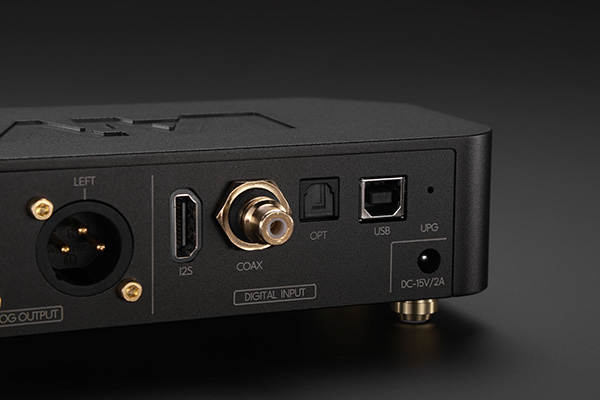
The back panel features four digital inputs: I2S over HDMI, coax S/PDIF, optical, and USB Type-B. The only output choice is balanced XLR, which arises from a discrete class-A output buffer. Inside the box, accessible via menu, are a few setup choices including absolute phase, oversampling and NOS, and display brightness. I left the µDAC on all the time but kept the OLED display dark except when I was using the super-simple menu.
 Setup
Setup
The best thing about these smart new FPGA/R-2R DACs I've been reviewing is that you don't need a team of men in lab coats, or an owner's manual, or even a menu to get them playing. I only needed to look at the back and see which digital inputs matched the cables from my digital sources. I used AudioQuest Cinnamon digital cables for both coax from the TEAC VRDS 701T transport (S/PDIF) and USB from my Mac mini. The DAC has only balanced outputs; I used AudioQuest Black Beauty wires to connect the µDAC to the Linear Tube Audio Z10e integrated amplifier. The LTA amp, in turn, was connected with Cardas Clear Beyond speaker cables to Voxativ Hagen2 full-range speakers.
I didn't need a manual to fire up the LAiV µDAC and play music, but I did need the stiff, glossy cardboard startup guide, which showed me how to set absolute phase and choose between OS and NOS. That glossy card contains QR codes that you can scan to access the owner's manual, warranty terms, and warranty registration.
LAiV's fancy RCX remote, which comes standard with their larger $2700 Harmony DAC, is a $194 option with the desk-friendly µDAC. From its backpackable little box and its simple-as-pie menu, every detail of this classy-looking, easy-to-operate machine appears to have been thoroughly considered. Except the price, nothing about LAiV's µDAC suggests that it's a budget product.
 Listening to NOS
The closest I've gotten to seeing the mechanics of the cosmos exposed was while listening to Beethoven: The Complete Piano Sonatas performed by Artur Schnabel. Recorded between 1932 and 1935 in Abbey Road Studios, London No.3 (EMI 4-CDs CHS 7 63765 2), this set was painstakingly transferred from 78s to four CDs and digitally remastered, with audio restoration carried out in 1991, also at Abbey Road Studios, by Keith Hardwick.
In terms of record labels making natural-sounding digital recordings, 1991 was not a great year, but as one Beethoven sonata passed into the next, the LAiV µDAC in NOS mode let me admire the care, respect, and cleverness lavished on these 78-to-PCM transfers.
As a note for cultural reference, the original box set released in 1939 consisted of 15 bulky, heavy 78rpm discs and cost $200. In 1939, Europe was at war, and America was in an economic depression. A nice new Ford cost around $700.
With the LAiV µDAC, the physicality and tone character of the original electric recordings somehow made it through the wormhole to digital. If you've ever experienced a properly traced 78rpm disc from the electric era, you know how high its level of you-are-there realism can be. LAiV's µDAC managed to transmit some of that 78rpm realism with only a hint of muffling.
The LAiV's clarity encouraged mind melding with Beethoven and Schnabel. The piano sound, especially from Schnabel's left hand, had a seductive weight and sensuality of tone that made it easy to appreciate low-level shifts in tempo.
 When people ask what religion I practice, I say, "The same one as Blind Willie Johnson." I believe what they tell me in mountain gospel and old-time religion, which aims to save souls by faith in Jesus and warn parishioners about the wages of sin. Meanwhile, the bluegrass and country blues I favor features poetic tales of chain gangs, sugar mamas, libidinous acts, and murderous jealousy. However ...
... after all that booze and suffering, I need some classical music to freshen my thoughts and direct my attention skyward toward the workings of the cosmos. Toward Beethoven, who demonstrates how a simple sonata can provoke our highest natures. With that rare talent, Beethoven created a foundation for the music of the rest of the 19th century.
Working 100 years later, Béla Bartók showed the modern industrial world the beauty of pure invention. In all forms of creative work, in art, science, and engineering, pure invention is what every practitioner strives for.
When people ask what religion I practice, I say, "The same one as Blind Willie Johnson." I believe what they tell me in mountain gospel and old-time religion, which aims to save souls by faith in Jesus and warn parishioners about the wages of sin. Meanwhile, the bluegrass and country blues I favor features poetic tales of chain gangs, sugar mamas, libidinous acts, and murderous jealousy. However ...
... after all that booze and suffering, I need some classical music to freshen my thoughts and direct my attention skyward toward the workings of the cosmos. Toward Beethoven, who demonstrates how a simple sonata can provoke our highest natures. With that rare talent, Beethoven created a foundation for the music of the rest of the 19th century.
Working 100 years later, Béla Bartók showed the modern industrial world the beauty of pure invention. In all forms of creative work, in art, science, and engineering, pure invention is what every practitioner strives for.
 Nowhere is this delight in pure invention more evident, or more thrilling to observe, than in Bartók's six string quartets, recorded in 1987 by the Alban Berg Quartett (EMI 2-CDs 0946 3 60947 2 4). These performances quake and shiver. The density and immediacy added by LAiV's µDAC showed off the subtle microcomplexity of the Quartet's performances. EMI's 1987 recording has no right to sound as natural and precise, relaxed, and focused as it did with the µDAC paired with the TEAC VRDS 701T transport. Listening to this recording, I felt as if four decades' worth of stars had lined up in my favor. The LAiV µDAC amped up the vibrancy and presence while keeping all the notes in their proper place. As I listened, I repeatedly thought, this DAC would show well in a six-figure sound system. That's because in my system, I couldn't find a "tell"—some defect sound signature to remind me why it doesn't cost $9994. One of these days, I'll swap it into my friend's system, replacing his dCS Vivaldi. I'm sure that will show me something.
vs the Terminator Plus and Spring3 KTE
Nowhere is this delight in pure invention more evident, or more thrilling to observe, than in Bartók's six string quartets, recorded in 1987 by the Alban Berg Quartett (EMI 2-CDs 0946 3 60947 2 4). These performances quake and shiver. The density and immediacy added by LAiV's µDAC showed off the subtle microcomplexity of the Quartet's performances. EMI's 1987 recording has no right to sound as natural and precise, relaxed, and focused as it did with the µDAC paired with the TEAC VRDS 701T transport. Listening to this recording, I felt as if four decades' worth of stars had lined up in my favor. The LAiV µDAC amped up the vibrancy and presence while keeping all the notes in their proper place. As I listened, I repeatedly thought, this DAC would show well in a six-figure sound system. That's because in my system, I couldn't find a "tell"—some defect sound signature to remind me why it doesn't cost $9994. One of these days, I'll swap it into my friend's system, replacing his dCS Vivaldi. I'm sure that will show me something.
vs the Terminator Plus and Spring3 KTE
Comparing the LAiV µDAC (in NOS) with HoloAudio's $4428 Spring3 KTE (in NOS), I was immediately impressed with how similar they sounded. Both DACs use discrete-component R-2R networks, an FPGA, and ultraclean input circuits, and that's what they both sound like. Both DACs danced freely around the Maypole, but the Spring3 danced under a moister, warmer light. The LAiV presented a somewhat drier version of Schnabel's Beethoven and Bartók's six quartets. But that didn't matter:
The µDAC's extra punch and clarity more than made up for its reduction in texture and atmospherics.
Listening with the Spring3 showed me glimpses of what the µDAC can't do or perhaps has chosen not to do: play wet and ambient. The LAiV DAC sounds bright, lively, and present, which is almost the opposite of the eight-times-more-expensive Denafrips Terminator Plus, which in NOS mode plays a little hesitantly but presents recordings as dark, deep, moist, and ambient. Compared to the four-times-more-expensive Spring3, the µDAC's reverberation times seemed moderately curtailed—just a touch mind you but enough to make the LAiV sound more solid and sharp-focused than the HoloAudio DAC.
 It's all about taste
Even as a child, I collected records by label. My feeling is, if I've enjoyed more than one artist on a particular label, I am likely to enjoy the other artists on that label. And sometimes, as with Arhoolie Records, where lifetimes ago I bought Clifton Chenier and Mance Lipscomb and Flaco Jiménez, I now wish I owned all their releases.
Arhoolie Records' 50th Anniversary Celebration, They All Played for Us, was held over three nights at the Freight & Salvage Coffeehouse in Berkeley, California. This inspired, warm-hearted event is documented in a 192-page hardbound book with color photos by Mike Melnyk and four CDs of celebratory performances by Arhoolie's cohort of still-vital alumni.
Every track comes across as if its performers have not lost the plot and are happy to be there—none more than Ry Cooder playing and singing Sam the Sham and the Pharaohs' 1965 hit "Wooly Bully." If this song don't make the dead and grumpy happy, nothing will.
With the µDAC, I laughed out loud, clapped my hands, and played "Wooly Bully" over and over.
Making folks happy is what sound systems are supposed to do. Fun and surprises came easy with LAiV Audio's µDAC.
 How good is it really?
Todd Garfinkle's masterpiece Será Una Noche – Otra Noche (M•A recordings CD M092A) is the most life-like and 3D digital recording I know. I can never get enough of Lidia Borda's seductive voice, so I use its beauties to assess DACs and CD players.
That was a good plan with the µDAC because of course Otra Noche sounded vivid, with all the players mapped out precisely. But what caught my attention most was the unusual feel of its sound. When I asked my brain to describe this unusual feel, it kept showing me wide-tread car tires made with a hard-rubber compound. Imagine how different the road feels after replacing standard tires with racing tires, or economy shocks with expensive performance shocks. The µDAC has a feel I would describe as anchored and controlled.
All the way through Otra Noche, which presented as a stunning 3D vision, my mind kept asking, what is this $1000 DAC not giving me that a $5000 or $10,000 DAC would? I pondered this question for a month but still could not say for sure.
USB
The µDAC's USB input operates in the optimal isochronous asynchronous mode, which means data are reclocked inside. It uses a proprietary USB receiver with microcontroller based on ARM Cortex-M cores that convert the USB input to I2S. It does not have the triple filtering of Ideon's eos USB input.
But that did not prevent the LAiV DAC from exposing the intricate drama and dynamics of the soundtrack to Yorgos Lamthimos's 2023 film Poor Things (24/48 FLAC Milan/Qobuz). I know this Jerskin Fendrix–composed soundtrack well, and coming out of the Spring3 LTE it sounded wet, bright, brilliant, and flesh-and-bloody. With the Lina DAC and streamer, on a LAN connection via its Mosaic app, Poor Things appeared extraordinarily tall and wide. The LAiV µDAC presented this demonstration-quality recording with less transparency and wetness but with more torque and raw giddyap, punch, and immediacy. With Qobuz coming out of my Mac mini, the sound was strong enough and engaging but not perfectly clean.
 Oversampling
Via USB, Poor Things played from Qobuz sounded flat, not supple or colorful. Then voilà! It occurred to me that putting the µDAC in oversampling mode might perk things up. But to my surprise, oversampling did much more than "perk things up"—it somehow recovered the luminous harmonics and sinewy dynamics that were missing in NOS mode. As is its wont, OS added some third-harmonic punch to Jerskin Fendrix's fantastic score. In OS, the sound of Poor Things went from mildly annoying to forceful and mesmerizing. Momentums ruled. Low frequencies came out. Fun was had. While I listened to American violinist Hilary Hahn playing Bach: Violin Sonatas Nos. 1 & 2; Partita No. 1 (24/88.2 FLAC Decca/Qobuz), I could feel my right brain locking on to the shimmery tones from Hilary's instrument. The older I get, the more I need the healing balm of shimmering violin tone. If it's a J.S. Bach composition providing the armature for this tone, then my thoughts automatically drift heavenward.
When I played Sonata No.1 for Solo Violin (BWV 1001) with the µDAC in OS mode, tone and tempo moved to center stage. Tone became a vibrant force of its own. But tempo was the star of the show.
When I returned to NOS, the sound softened, and the soundstage spread out in all directions—especially depth. The spectrum of harmonics widened. Oversampling's third-harmonic beat-keeping was replaced with plush overtones. Dimensionality upstaged tempo.
It was easy to see why I'm inclined to favor NOS DACs, but with the Hilary Hahn Bach, I preferred the more contained, forward, beat-centered sound of LAiV Audio's OS mode. I imagine many audiophiles will prefer OS. I liked being able to choose.
Exceeding expectations
Throughout these auditions, my mind kept asking, what is the $1k LAiV µDAC not giving me that a $5k or $10k DAC might? I've pondered this question all month, and I'm still not sure. But just now, as I typed that, that demon imp standing on my right shoulder started jabbering in my ear. "Herbie, listen to me! The real question is, what is the LAiV DAC giving you that $10k DACs have not?" That's a much easier question to answer: It is giving me a new, powerful, ear-catching sound that I found musically satisfying from the first track. It's a sound I regard as accurate, that appeals to my left brain only about 15% more than my right brain. Sincerely recommended.
DescriptionThe LAiV Audio µDAC was shipped to me directly from Guangzhou, China, though your US orders will be fulfilled by the company's fulfillment center in California. It arrived in an elegantly engineered box that measured 5" × 9.5" × 10.25". The DAC inside measured just 1.6" high × 6.6" wide × 3.8" deep and weighs only 1.5lb. It's small and intelligently styled with a gold-detailed luxury look that seems intended for placement on a fancy desk or bureau top. It costs just $994 delivered, with shipping, tax, tariffs, and two-year warranty included ($1049 as of January 1 2026). The LAiV Harmony µDAC uses the same discrete-resistor R-2R ladder network architecture as LAiV's larger Harmony DAC ($2849 as of January 1 2026). It comes in a silver or black CNC-machined anodized-aluminum chassis with three gold buttons, a prominent gold knob, and four rubber-tipped gold-anodized aluminum footers. Its modest, self-dimming OLED display is fronted by tempered glass.
SetupThe best thing about these smart new FPGA/R-2R DACs I've been reviewing is that you don't need a team of men in lab coats, or an owner's manual, or even a menu to get them playing. I only needed to look at the back and see which digital inputs matched the cables from my digital sources. I used AudioQuest Cinnamon digital cables for both coax from the TEAC VRDS 701T transport (S/PDIF) and USB from my Mac mini. The DAC has only balanced outputs; I used AudioQuest Black Beauty wires to connect the µDAC to the Linear Tube Audio Z10e integrated amplifier. The LTA amp, in turn, was connected with Cardas Clear Beyond speaker cables to Voxativ Hagen2 full-range speakers.
Listening to NOSThe closest I've gotten to seeing the mechanics of the cosmos exposed was while listening to Beethoven: The Complete Piano Sonatas performed by Artur Schnabel. Recorded between 1932 and 1935 in Abbey Road Studios, London No.3 (EMI 4-CDs CHS 7 63765 2), this set was painstakingly transferred from 78s to four CDs and digitally remastered, with audio restoration carried out in 1991, also at Abbey Road Studios, by Keith Hardwick.
When people ask what religion I practice, I say, "The same one as Blind Willie Johnson." I believe what they tell me in mountain gospel and old-time religion, which aims to save souls by faith in Jesus and warn parishioners about the wages of sin. Meanwhile, the bluegrass and country blues I favor features poetic tales of chain gangs, sugar mamas, libidinous acts, and murderous jealousy. However ...
... after all that booze and suffering, I need some classical music to freshen my thoughts and direct my attention skyward toward the workings of the cosmos. Toward Beethoven, who demonstrates how a simple sonata can provoke our highest natures. With that rare talent, Beethoven created a foundation for the music of the rest of the 19th century.
Nowhere is this delight in pure invention more evident, or more thrilling to observe, than in Bartók's six string quartets, recorded in 1987 by the Alban Berg Quartett (EMI 2-CDs 0946 3 60947 2 4). These performances quake and shiver. The density and immediacy added by LAiV's µDAC showed off the subtle microcomplexity of the Quartet's performances. EMI's 1987 recording has no right to sound as natural and precise, relaxed, and focused as it did with the µDAC paired with the TEAC VRDS 701T transport. Listening to this recording, I felt as if four decades' worth of stars had lined up in my favor. The LAiV µDAC amped up the vibrancy and presence while keeping all the notes in their proper place. As I listened, I repeatedly thought, this DAC would show well in a six-figure sound system. That's because in my system, I couldn't find a "tell"—some defect sound signature to remind me why it doesn't cost $9994. One of these days, I'll swap it into my friend's system, replacing his dCS Vivaldi. I'm sure that will show me something.
vs the Terminator Plus and Spring3 KTEComparing the LAiV µDAC (in NOS) with HoloAudio's $4428 Spring3 KTE (in NOS), I was immediately impressed with how similar they sounded. Both DACs use discrete-component R-2R networks, an FPGA, and ultraclean input circuits, and that's what they both sound like. Both DACs danced freely around the Maypole, but the Spring3 danced under a moister, warmer light. The LAiV presented a somewhat drier version of Schnabel's Beethoven and Bartók's six quartets. But that didn't matter:
It's all about tasteEven as a child, I collected records by label. My feeling is, if I've enjoyed more than one artist on a particular label, I am likely to enjoy the other artists on that label. And sometimes, as with Arhoolie Records, where lifetimes ago I bought Clifton Chenier and Mance Lipscomb and Flaco Jiménez, I now wish I owned all their releases.
Matty told Hatty
About a thing she saw
Had two big horns
And a wooly jaw
Wooly bully
Wooly bully
How good is it really?Todd Garfinkle's masterpiece Será Una Noche – Otra Noche (M•A recordings CD M092A) is the most life-like and 3D digital recording I know. I can never get enough of Lidia Borda's seductive voice, so I use its beauties to assess DACs and CD players.
The µDAC's USB input operates in the optimal isochronous asynchronous mode, which means data are reclocked inside. It uses a proprietary USB receiver with microcontroller based on ARM Cortex-M cores that convert the USB input to I2S. It does not have the triple filtering of Ideon's eos USB input.
OversamplingVia USB, Poor Things played from Qobuz sounded flat, not supple or colorful. Then voilà! It occurred to me that putting the µDAC in oversampling mode might perk things up. But to my surprise, oversampling did much more than "perk things up"—it somehow recovered the luminous harmonics and sinewy dynamics that were missing in NOS mode. As is its wont, OS added some third-harmonic punch to Jerskin Fendrix's fantastic score. In OS, the sound of Poor Things went from mildly annoying to forceful and mesmerizing. Momentums ruled. Low frequencies came out. Fun was had. While I listened to American violinist Hilary Hahn playing Bach: Violin Sonatas Nos. 1 & 2; Partita No. 1 (24/88.2 FLAC Decca/Qobuz), I could feel my right brain locking on to the shimmery tones from Hilary's instrument. The older I get, the more I need the healing balm of shimmering violin tone. If it's a J.S. Bach composition providing the armature for this tone, then my thoughts automatically drift heavenward.
Throughout these auditions, my mind kept asking, what is the $1k LAiV µDAC not giving me that a $5k or $10k DAC might? I've pondered this question all month, and I'm still not sure. But just now, as I typed that, that demon imp standing on my right shoulder started jabbering in my ear. "Herbie, listen to me! The real question is, what is the LAiV DAC giving you that $10k DACs have not?" That's a much easier question to answer: It is giving me a new, powerful, ear-catching sound that I found musically satisfying from the first track. It's a sound I regard as accurate, that appeals to my left brain only about 15% more than my right brain. Sincerely recommended.