On that same sampler, Swedish singer Sophie Zelmani's voice in "How It Feels" (from her Sing and Dance) was rich, sweet, and uncolored. I did, uh, feel that the top end was a bit airless, and so resorted to a non–audiophile-approved fix I've used before: a 1dB boost from the Marantz pre-pro's Treble control. Before you choke on your lunch, this will be no more significant than what might result from a subtle change in room acoustics. The result was subtle, rewarding, and almost invariably positive. I used it for the rest of my listening.
Post-boost, Zelmani occupied a slightly livelier acoustic, with clear yet natural-sounding sibilants. With or without the treble boost, the lower range of her voice was just a bit too warm, but this didn't much trouble me. The same was true with a third cut from the DALI sampler, OP8's "Leather," with singer Howe Gelb (from OP8's only album, Slush). Gelb's voice was clear and uncolored, though a bit thickened, and with a slightly enlarged center image.
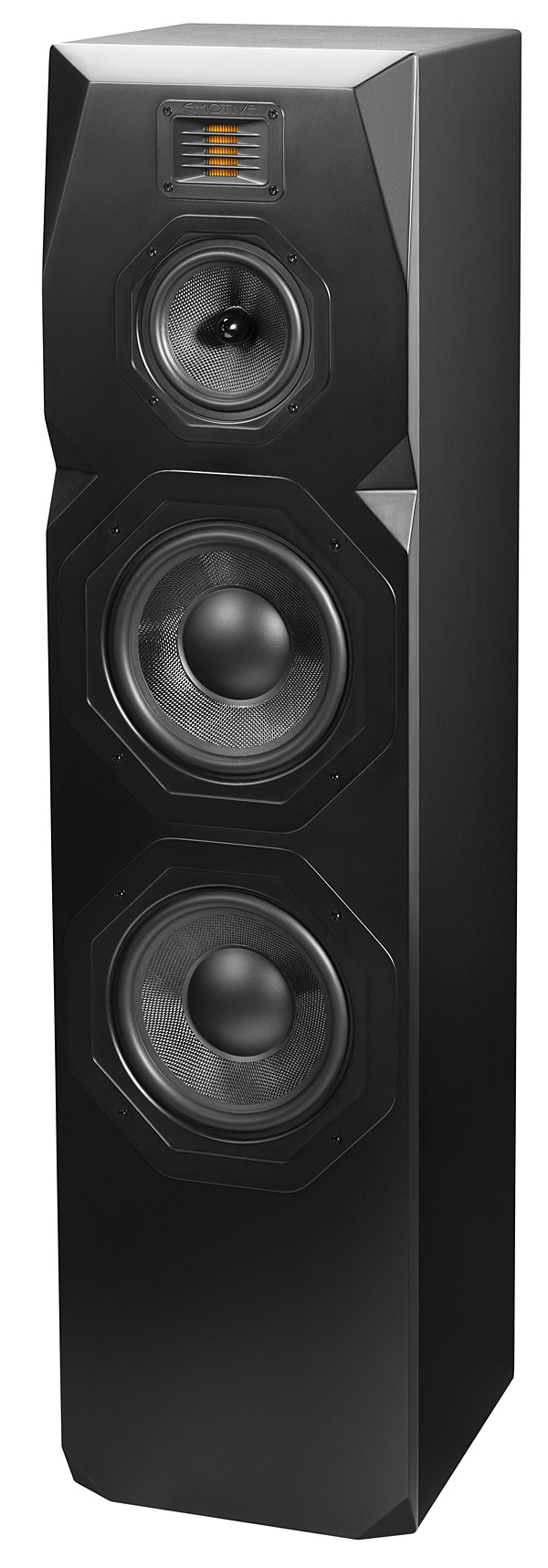
I found the T2's deep bass notably tight but not consistently powerful. The above selections presented the Airmotivs with few low-frequency challenges, offering either a subtle kick drum accompanying voices, or the more forceful but distant drums in the pipa track. J.S. Bach's Toccata and Fugue in d, however, was ear-opening. As played by Jean Guillou on The Great Organ of Saint Eustache, Paris (Dorian DOR-90134), it sounded superb through the T2s, capturing the strikingly spacious acoustic of the church, together with pronounced depth and a generous helping of the organ's bottom end. The latter was still a little lightweight in some ways, with an emphasis on the high pipes, but only a large, properly positioned subwoofer(s) or very large, far pricier floorstanders in the right room—can come close to doing full justice to the extreme bottom end of the best organ recordings. But the sound of the higher pipes was stunning—another plus for that Airmotiv tweeter.
One of the quirkiest CDs I own is La Folia, in which the five-member Atrium Musicë de Madrid, led by Gregorio Paniagua, plays a wide selection of chamber music of no particularly recognizable origin (Harmonia Mundi HM 90.1050). Here are abrupt transients, percussion, chattering Spanish voices, a kazoo, and a finale that includes slammed car doors, raucous horns, and a growling engine. The T2s enthusiastically joined in the fun with crisp detail, finely honed imaging, and notable depth.
But not everything was idyllic. Many of the recordings I played sounded just a bit sluggish through the mid- and upper bass. These issues could likely be traced at least in part to my room, where moving the speakers and/or the listening seat to mitigate problems like these, isn't an option apart from small tweaks. My work for Sound & Vision demands that the speakers support the screen, and the distance of the listening seat from the speakers is similarly restricted.
In my case, the problems are an elevation in roughly the 100–200Hz octave and a significant dip at just above 40Hz. These can shift around a little, depending on the speakers, but are rarely completely absent. In the case of the Airmotiv T2s the 40Hz dip was helped by a bass recovery at 30Hz, likely assisted by room gain. While the T2s won't rattle the rafters in my very large space, this can provide satisfying impact with the right material. It's also possible that the 40Hz dip isn't a dip at all, but part of the speaker's natural rolloff. The recovery at 30Hz could simply be a room-enabled response boost. JA's quasi-anechoic measurements should help solve this riddle.
 But regardless of how it's produced, a dip in the 40Hz region can affect the weight of a speaker's sound. This frequency is significant for the bottom end of many instruments' ranges, including double bass, piano, synthesizer, and drums. With the right music, I didn't always feel I was missing out with the T2s. But with other music, I was aware of the shortcomings. Ditto for the 100–200Hz rise: the more complex the music, the more an excess warmth intruded, thickening the sound and obscuring inner detail. The latter emphasis could also further mask the lack of response lower down, as designers of bookshelf speakers are well aware (hello, BBC LS3/5a). This further complicated the T2s' bass performance; again, how audible these problems are will depend on the recording played.
Another factor in a well-designed speaker is that the designer must compensate for the fact that a loudspeaker becomes less directional below a certain frequency—the so-called the 2pi-to-4pi transition. An absence of such compensation can reduce the speaker's in-room bass by up to 6dB at a frequency that depends on the room and the width of the speaker's front baffle. This can be compensated for in the design, but it drives the designer into Goldilocks mode: too much compensation, and the in-room bass can become bloated; too little, and it sounds thin. The poor designer, whose product will be used in all sorts of rooms, can make only an educated guess as to how much compensation to include.
One way around these problems is to use one or more subwoofers, which can be positioned to offer the most uniform bass. But the optimal position for a subwoofer is almost never next to, and is often nowhere near, the main front speakers; it's extremely rare to achieve uniform and extended bass, together with optimal imaging, when the mains and subs are near each other.
But a subwoofer wasn't a solution here, as people buying a pair of T2s for a two-channel system usually don't (or won't) use one. The common perception is that a big speaker—and compared to the average home loudspeaker, the T2 is—shouldn't need a subwoofer.
The only remaining option is the use of a subtle application of room equalization. I typically don't use it, for reviewing or my own listening, but can I at least mitigate the most obvious bass limitations in my room to get a better feel for the T2's capabilities? My Marantz pre-pro includes Audyssey room EQ, perhaps the best known of its ilk, but I've yet to get results from it that don't sound worse overall than not using it at all. The options remaining to me were the Marantz's Bass and Treble controls and its eight-band, nonparametric, graphic equalizer (see "Sidebar: In-Room Measurements").
Comparisons
But regardless of how it's produced, a dip in the 40Hz region can affect the weight of a speaker's sound. This frequency is significant for the bottom end of many instruments' ranges, including double bass, piano, synthesizer, and drums. With the right music, I didn't always feel I was missing out with the T2s. But with other music, I was aware of the shortcomings. Ditto for the 100–200Hz rise: the more complex the music, the more an excess warmth intruded, thickening the sound and obscuring inner detail. The latter emphasis could also further mask the lack of response lower down, as designers of bookshelf speakers are well aware (hello, BBC LS3/5a). This further complicated the T2s' bass performance; again, how audible these problems are will depend on the recording played.
Another factor in a well-designed speaker is that the designer must compensate for the fact that a loudspeaker becomes less directional below a certain frequency—the so-called the 2pi-to-4pi transition. An absence of such compensation can reduce the speaker's in-room bass by up to 6dB at a frequency that depends on the room and the width of the speaker's front baffle. This can be compensated for in the design, but it drives the designer into Goldilocks mode: too much compensation, and the in-room bass can become bloated; too little, and it sounds thin. The poor designer, whose product will be used in all sorts of rooms, can make only an educated guess as to how much compensation to include.
One way around these problems is to use one or more subwoofers, which can be positioned to offer the most uniform bass. But the optimal position for a subwoofer is almost never next to, and is often nowhere near, the main front speakers; it's extremely rare to achieve uniform and extended bass, together with optimal imaging, when the mains and subs are near each other.
But a subwoofer wasn't a solution here, as people buying a pair of T2s for a two-channel system usually don't (or won't) use one. The common perception is that a big speaker—and compared to the average home loudspeaker, the T2 is—shouldn't need a subwoofer.
The only remaining option is the use of a subtle application of room equalization. I typically don't use it, for reviewing or my own listening, but can I at least mitigate the most obvious bass limitations in my room to get a better feel for the T2's capabilities? My Marantz pre-pro includes Audyssey room EQ, perhaps the best known of its ilk, but I've yet to get results from it that don't sound worse overall than not using it at all. The options remaining to me were the Marantz's Bass and Treble controls and its eight-band, nonparametric, graphic equalizer (see "Sidebar: In-Room Measurements").
Comparisons
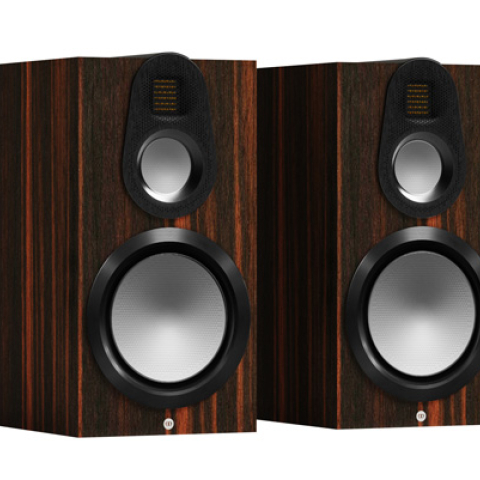
After I'd finished listening to the Airmotiv T2s, I replaced them with my reference Monitor Audio Silver 10s in the same positions, and switched off all EQ, including the Marantz's tone controls. The Monitors' bass was more powerful than that produced by the uncompensated T2s. Though the differences weren't dramatic, and the measurements of the two speakers in this region were similar, I was less conscious of a 40Hz shortcoming from the Silver 10s. In many respects—imaging, depth, overall balance—the two speakers were more alike than different. This is remarkable, considering that the Silver 10 costs $2500/pair to the T2's $999/pair.
The Monitors are smaller, and certainly more striking in appearance, which invariably costs money. Sonically they were also a bit less subtle, and more openly prominent (but not aggressive) in the treble. Interestingly, when I then applied to the Silver 10s the same EQ and control settings I'd used for the Airmotiv T2s, the Monitors, too, profited from them. This was certainly due to the fact that the Silver 10s, in my room, had the same emphasis in the 100–200Hz region as the T2s—slightly more, in fact. I made a similar observation concerning compensation for the Silver 10 in my review of the Anthem Electronics STR integrated amplifier in our July 2018 issue. The Anthem is one of the few two-channel integrated amplifiers offering built-in room EQ in the form of Anthem's proprietary Anthem Room Correction (ARC).
Conclusions
At $999/pair, the Emotiva Airmotiv T2, while hardly perfect (what is?), offers a lot to like. At its price, the main competition comes from small bookshelf models that demand a subwoofer in all but the smallest rooms. The best of these are prettier than the T2, and can outperform it everywhere but in the bottom end. But if you want big floorstanders and funds are limited—or even if they're a bit more flexible—you can do a lot worse than giving a close listen to the Emotiva Airmotiv T2.
But regardless of how it's produced, a dip in the 40Hz region can affect the weight of a speaker's sound. This frequency is significant for the bottom end of many instruments' ranges, including double bass, piano, synthesizer, and drums. With the right music, I didn't always feel I was missing out with the T2s. But with other music, I was aware of the shortcomings. Ditto for the 100–200Hz rise: the more complex the music, the more an excess warmth intruded, thickening the sound and obscuring inner detail. The latter emphasis could also further mask the lack of response lower down, as designers of bookshelf speakers are well aware (hello, BBC LS3/5a). This further complicated the T2s' bass performance; again, how audible these problems are will depend on the recording played.
Another factor in a well-designed speaker is that the designer must compensate for the fact that a loudspeaker becomes less directional below a certain frequency—the so-called the 2pi-to-4pi transition. An absence of such compensation can reduce the speaker's in-room bass by up to 6dB at a frequency that depends on the room and the width of the speaker's front baffle. This can be compensated for in the design, but it drives the designer into Goldilocks mode: too much compensation, and the in-room bass can become bloated; too little, and it sounds thin. The poor designer, whose product will be used in all sorts of rooms, can make only an educated guess as to how much compensation to include.
One way around these problems is to use one or more subwoofers, which can be positioned to offer the most uniform bass. But the optimal position for a subwoofer is almost never next to, and is often nowhere near, the main front speakers; it's extremely rare to achieve uniform and extended bass, together with optimal imaging, when the mains and subs are near each other.
After I'd finished listening to the Airmotiv T2s, I replaced them with my reference Monitor Audio Silver 10s in the same positions, and switched off all EQ, including the Marantz's tone controls. The Monitors' bass was more powerful than that produced by the uncompensated T2s. Though the differences weren't dramatic, and the measurements of the two speakers in this region were similar, I was less conscious of a 40Hz shortcoming from the Silver 10s. In many respects—imaging, depth, overall balance—the two speakers were more alike than different. This is remarkable, considering that the Silver 10 costs $2500/pair to the T2's $999/pair.
At $999/pair, the Emotiva Airmotiv T2, while hardly perfect (what is?), offers a lot to like. At its price, the main competition comes from small bookshelf models that demand a subwoofer in all but the smallest rooms. The best of these are prettier than the T2, and can outperform it everywhere but in the bottom end. But if you want big floorstanders and funds are limited—or even if they're a bit more flexible—you can do a lot worse than giving a close listen to the Emotiva Airmotiv T2.