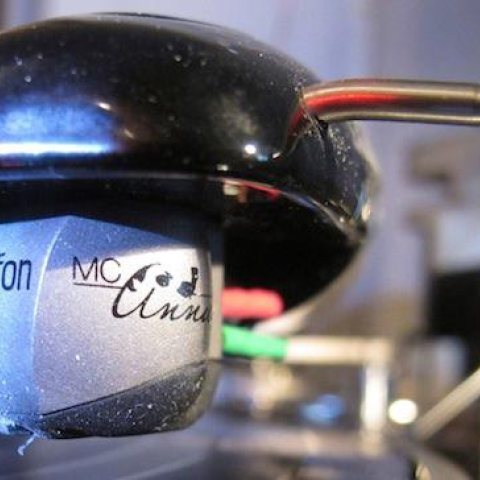
 Where appropriate, the Purpleheart's rich tonality was bolstered by its generous delivery of vivid instrumental textures and three-dimensionality. The cartridge didn't have a sonically unpleasant bone in its body, but when the recording did, the Kiseki gave me enough of it to communicate it effectively, though not with the full measure of possible unpleasantness. It didn't hold back the deliberate sonic horror that is Bruce Springsteen's The River, but a more revealing cartridge like the Lyra Atlas, which costs almost three times as much, lets you hear all of the reverberant, icy mess that invades the stage on many tracks.
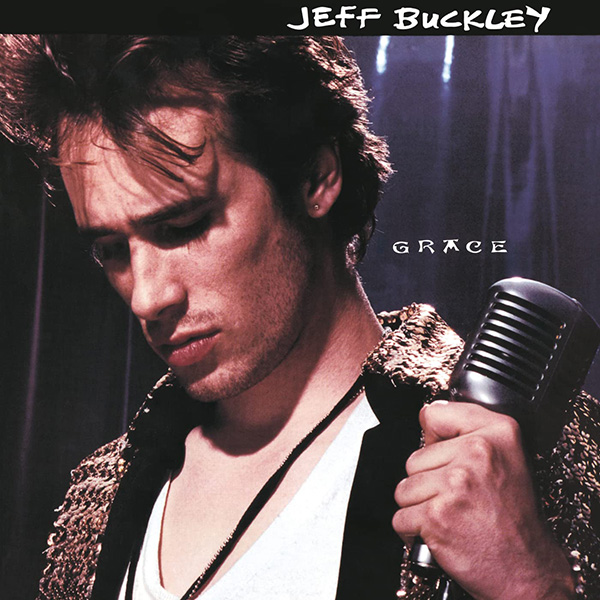
The Purpleheart's moderate transient speed meant that the music's hardest edges were somewhat softened, and that its less-than-full expression of macrodynamics didn't allow it to produce the full thrust of the most explosive recordings. But more than making up for what it nips and tucks in those regards was the Purpleheart's lush yet transparent midrange. If there's a more clogged, reverberation-drenched, busy recording than "Wah Wah," from George Harrison's All Things Must Pass (3 LPs, Apple 7 98025 1), you'll have to tell me about it. The Purpleheart's ability to sort out this track's many reverb-drenched electric guitars produced a new perspective on an old favorite. A reissue of Jeff Buckley's Grace (2 45rpm LPs, Columbia/ORG 194) was particularly stirring through the Purpleheart, as was his dad, Tim Buckley's, Goodbye and Hello (LP, Elektra EKS-7318), which hearing Grace had moved me to spin after a decade's rest on the shelf.
The cartridge the Purpleheart most reminded me of was Sumiko's wood-bodied Palo Santos Presentation ($3999), which has an equally lush, pleasing midrange and, for $700 more, a somewhat more generous expression of dynamics.
Where appropriate, the Purpleheart's rich tonality was bolstered by its generous delivery of vivid instrumental textures and three-dimensionality. The cartridge didn't have a sonically unpleasant bone in its body, but when the recording did, the Kiseki gave me enough of it to communicate it effectively, though not with the full measure of possible unpleasantness. It didn't hold back the deliberate sonic horror that is Bruce Springsteen's The River, but a more revealing cartridge like the Lyra Atlas, which costs almost three times as much, lets you hear all of the reverberant, icy mess that invades the stage on many tracks.
The Purpleheart's moderate transient speed meant that the music's hardest edges were somewhat softened, and that its less-than-full expression of macrodynamics didn't allow it to produce the full thrust of the most explosive recordings. But more than making up for what it nips and tucks in those regards was the Purpleheart's lush yet transparent midrange. If there's a more clogged, reverberation-drenched, busy recording than "Wah Wah," from George Harrison's All Things Must Pass (3 LPs, Apple 7 98025 1), you'll have to tell me about it. The Purpleheart's ability to sort out this track's many reverb-drenched electric guitars produced a new perspective on an old favorite. A reissue of Jeff Buckley's Grace (2 45rpm LPs, Columbia/ORG 194) was particularly stirring through the Purpleheart, as was his dad, Tim Buckley's, Goodbye and Hello (LP, Elektra EKS-7318), which hearing Grace had moved me to spin after a decade's rest on the shelf.
The cartridge the Purpleheart most reminded me of was Sumiko's wood-bodied Palo Santos Presentation ($3999), which has an equally lush, pleasing midrange and, for $700 more, a somewhat more generous expression of dynamics.
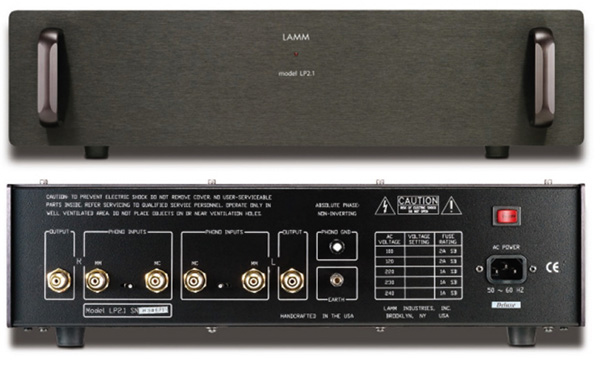 Lamm Industries LP2.1 Deluxe MM/MC phono preamplifier
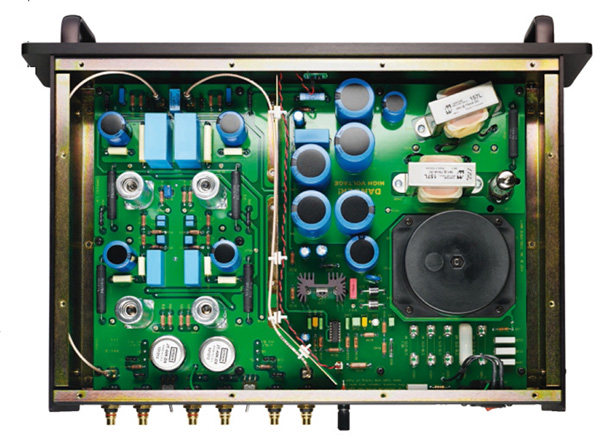
Introduced at the 2014 Consumer Electronics Show, Lamm's LP2.1 Deluxe (footnote 3) replaces the original LP2 Deluxe phono preamplifier. It is a pure class-A, zero-loop-feedback, dual-mono, moving-magnet/moving-coil phono preamplifier with a 6X4 full-wave voltage-rectifier tube and pairs of Russian-made 6C3P and 6C45P-E triode tubes. (Vladimir Lamm, footnote 4, uses the latter two types in his more expensive LP1 Signature phono preamp.) The LP2.1's passive RIAA network sits between its first and second gain stages. Two Jensen JT-44K-DX 1:10 step-up transformers provide an additional 20dB of gain for the MC input, for a total of 60dB. The LP2.1 costs $8690, or $8990 for the Deluxe version, which, Lamm told me at CES, has an upgraded power supply (greater capacitance), polystyrene bypass capacitors for the capacitors in the signal path, and a 20.5-lb damping panel to isolate its electronic components from induced resonances.
 The LP2.1 Deluxe is about as basic as a phono preamplifier can be. On the rear panel are an On/Off switch, mirror-imaged pairs of MM and MC inputs, toggle switches for choosing between them, and outputs jacks (all RCA). There are no MC loading options, but the LP2.1's 1:10 transformer means that an MC cartridge sees a 400 ohm load—overall, a good compromise for cartridges with internal impedances of about 40 ohms or less.
Spectacular Soundstaging, Superb Overall Sound: In MM or MC mode, the LP2.1 Deluxe was as quiet as most solid-state phono preamps, and quieter than some. Backgrounds were dead quiet, musical eruptions volcanic, and top and bottom extension apparently limitless. The sound was not at all "tubey," yet there were a liquidity and a generosity of musical flow that tubes are generally better at producing, especially in conjunction with a tube voltage rectifier.
The LP2.1 Deluxe is about as basic as a phono preamplifier can be. On the rear panel are an On/Off switch, mirror-imaged pairs of MM and MC inputs, toggle switches for choosing between them, and outputs jacks (all RCA). There are no MC loading options, but the LP2.1's 1:10 transformer means that an MC cartridge sees a 400 ohm load—overall, a good compromise for cartridges with internal impedances of about 40 ohms or less.
Spectacular Soundstaging, Superb Overall Sound: In MM or MC mode, the LP2.1 Deluxe was as quiet as most solid-state phono preamps, and quieter than some. Backgrounds were dead quiet, musical eruptions volcanic, and top and bottom extension apparently limitless. The sound was not at all "tubey," yet there were a liquidity and a generosity of musical flow that tubes are generally better at producing, especially in conjunction with a tube voltage rectifier.
 However, most people spending nearly $10,000 on a phono preamplifier will use the LP2.1 with MC cartridges, so I focused most of my attention there. The Lyra Atlas has an internal impedance of 4.2 ohms and likes to see, at most, around 100 ohms; the Kiseki Purpleheart N.S., at 42 ohms, should be loaded with about 400 ohms.
I thought the LP2.1 Deluxe's overall sound through its MC-input transformers was not as open, airy, or, especially, as dynamic as through its MM input, and I've heard both the Lyra and the Kiseki sound more airy, extended, and, especially, dynamic through the Ypsilon VPS-100, which also uses tubed voltage rectification. Of course, the Ypsilon costs ca $34,000, more than three times as much as the Lamm.
However, most people spending nearly $10,000 on a phono preamplifier will use the LP2.1 with MC cartridges, so I focused most of my attention there. The Lyra Atlas has an internal impedance of 4.2 ohms and likes to see, at most, around 100 ohms; the Kiseki Purpleheart N.S., at 42 ohms, should be loaded with about 400 ohms.
I thought the LP2.1 Deluxe's overall sound through its MC-input transformers was not as open, airy, or, especially, as dynamic as through its MM input, and I've heard both the Lyra and the Kiseki sound more airy, extended, and, especially, dynamic through the Ypsilon VPS-100, which also uses tubed voltage rectification. Of course, the Ypsilon costs ca $34,000, more than three times as much as the Lamm.
 One of the records I'd been playing through the LP2.1's MM and MC inputs was the latest outing from Medeski Scofield Martin & Wood: Juice (2 180gm LPs, Indirecto IR 16), mastered by Alan Silverman and Paul Gold. The combo of Lamm LP2.1 and Ypsilon MC-10L produced faster, more precise cymbal transients, plus more air, on a somewhat wider and, especially, deeper stage.
That got me pulling out other familiar LPs with which to compare the Lamm and Ypsilon through the MC-10L transformer. In many performance parameters—especially in terms of the musical flow and liquidity of tubes without their warm colorations—the combos were more similar than different, despite the huge difference in price: the Ypsilons cost a total of $40,000.
One of the records I'd been playing through the LP2.1's MM and MC inputs was the latest outing from Medeski Scofield Martin & Wood: Juice (2 180gm LPs, Indirecto IR 16), mastered by Alan Silverman and Paul Gold. The combo of Lamm LP2.1 and Ypsilon MC-10L produced faster, more precise cymbal transients, plus more air, on a somewhat wider and, especially, deeper stage.
That got me pulling out other familiar LPs with which to compare the Lamm and Ypsilon through the MC-10L transformer. In many performance parameters—especially in terms of the musical flow and liquidity of tubes without their warm colorations—the combos were more similar than different, despite the huge difference in price: the Ypsilons cost a total of $40,000.
Footnote 3: Lamm Industries Inc., Brooklyn, NY 11235 (2015); Miami, FL (2024). Email: lammaudiolab@gmail.com. Web: www.lammindustries.com. Footnote 4: Vladimir Lamm died in April 2022.—Ed. Footnote 5: Reviewed in March 2011.