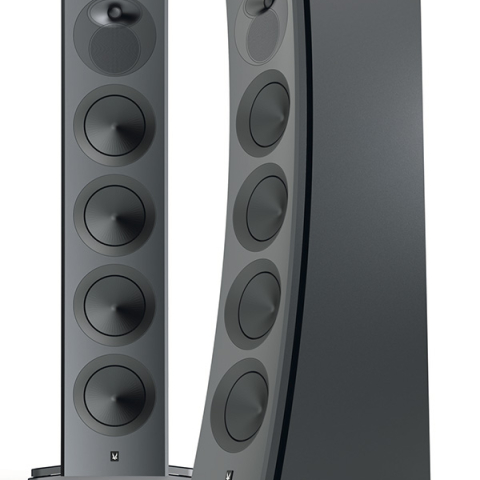
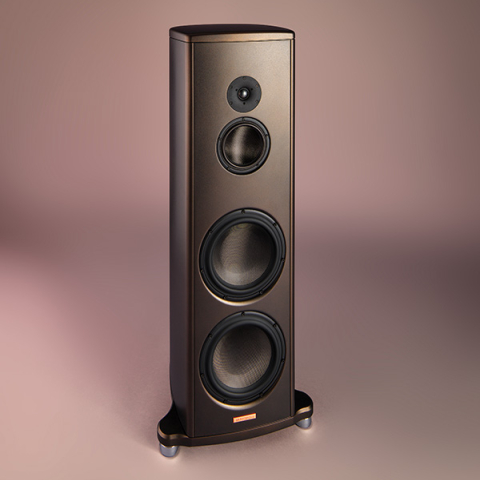
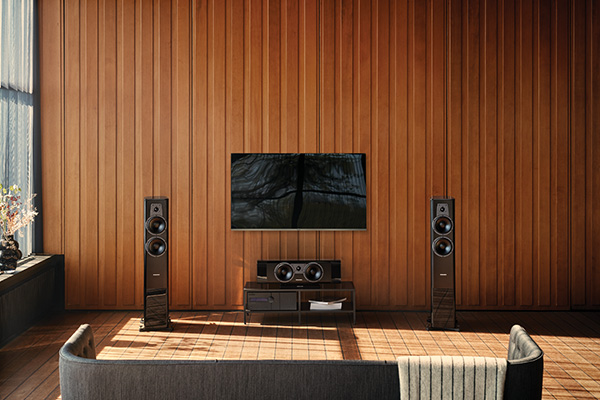
 My pre-Contour impression of Beck's Morning Phase (CD, Capitol Records B001983802) was of an intentionally lo-fi album interspersed with moments of hi-fi splendor (footnote 1). The Contours raised the hi-fi quotient, with color-saturated tones and bloomy harmonics. The Danish speakers made the notes on this CD sound more fully sprouted, like a flower in summer, not early spring.
The acoustic guitar strings at the beginning of "Morning" twirled in the air like actual strings. Beck's voice, which is recorded with a diffuse bullhorn echo effect, flared out netlike from the core of his voice. What I found notable was how starkly both parts' consistencies contrasted and complemented each other, one solidly with physicality and alliterative nuance, the other as an "echo" with diminishing degrees of translucency—yet both were equally well-defined in space. Through the Contours, notes seemed to blossom almost literally—an initial transient burst followed by a spreading out of resplendent tones. The song's chorus, especially, sounded grand, like a rattling peacock train in full bloom, brimming with color.
My pre-Contour impression of Beck's Morning Phase (CD, Capitol Records B001983802) was of an intentionally lo-fi album interspersed with moments of hi-fi splendor (footnote 1). The Contours raised the hi-fi quotient, with color-saturated tones and bloomy harmonics. The Danish speakers made the notes on this CD sound more fully sprouted, like a flower in summer, not early spring.
The acoustic guitar strings at the beginning of "Morning" twirled in the air like actual strings. Beck's voice, which is recorded with a diffuse bullhorn echo effect, flared out netlike from the core of his voice. What I found notable was how starkly both parts' consistencies contrasted and complemented each other, one solidly with physicality and alliterative nuance, the other as an "echo" with diminishing degrees of translucency—yet both were equally well-defined in space. Through the Contours, notes seemed to blossom almost literally—an initial transient burst followed by a spreading out of resplendent tones. The song's chorus, especially, sounded grand, like a rattling peacock train in full bloom, brimming with color.
 The strummed guitar notes at the beginning of "Heart Is a Drum" have never sounded better, rolling inward in densely undulating, space-saturating waves that lapped into my room with limpidity and grace of motion that seemed to defy gravity. Those guitar notes extended so far into my room that, for the first time, I heard lapping waves curl above my head as if I was surfing at their foot. Beck's overdubbed, phasey vocal arrangements spanned the width of my room a couple of feet beyond each speaker, sounding up-close explicit, weighty, and lush.
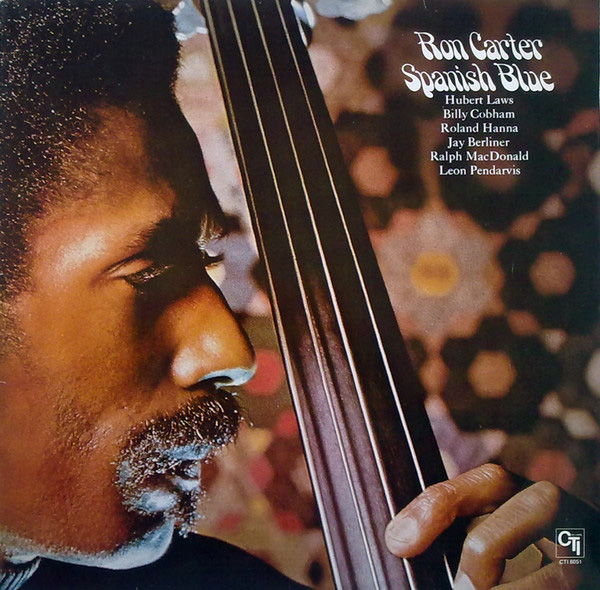 A good offshoot of this is that more records in my collection became more interesting to listen to. Like Ron Carter's Spanish Blue (CD, CBS ZK 40803), which is plagued with brittle harmonics and a shallow soundstage. And yet, on the album's first two tracks, "El Noche Sol" and Miles Davis's "So What," I heard something like liberated notes blooming off instruments.
The Contours delivered a midband richness that was devoid of added warmth or a lower-end tonal lift. The richness was note-driven, harmonically derived from within, and prismatic. Notes appeared to hatch from a precise location in the frequency range. Just as the cars, pedestrians, and cyclists in Denmark kept tightly to their lanes, so did notes through the Contours.
This inside-out blooming process relieved Spanish Blue of some of the guitar's twanginess, the cymbals' breaking-glass texture, and the flute's whistle-shrill substance. Notes had pluck and impact, while the soundstage stretched farther back, letting notes and images breathe. The Contours retrieved air from the recording and filled a soundstage with it. Airy is not a quality I would ascribe to this recording, but there it was, air, audibly in front of and between the instruments.
A good offshoot of this is that more records in my collection became more interesting to listen to. Like Ron Carter's Spanish Blue (CD, CBS ZK 40803), which is plagued with brittle harmonics and a shallow soundstage. And yet, on the album's first two tracks, "El Noche Sol" and Miles Davis's "So What," I heard something like liberated notes blooming off instruments.
The Contours delivered a midband richness that was devoid of added warmth or a lower-end tonal lift. The richness was note-driven, harmonically derived from within, and prismatic. Notes appeared to hatch from a precise location in the frequency range. Just as the cars, pedestrians, and cyclists in Denmark kept tightly to their lanes, so did notes through the Contours.
This inside-out blooming process relieved Spanish Blue of some of the guitar's twanginess, the cymbals' breaking-glass texture, and the flute's whistle-shrill substance. Notes had pluck and impact, while the soundstage stretched farther back, letting notes and images breathe. The Contours retrieved air from the recording and filled a soundstage with it. Airy is not a quality I would ascribe to this recording, but there it was, air, audibly in front of and between the instruments.
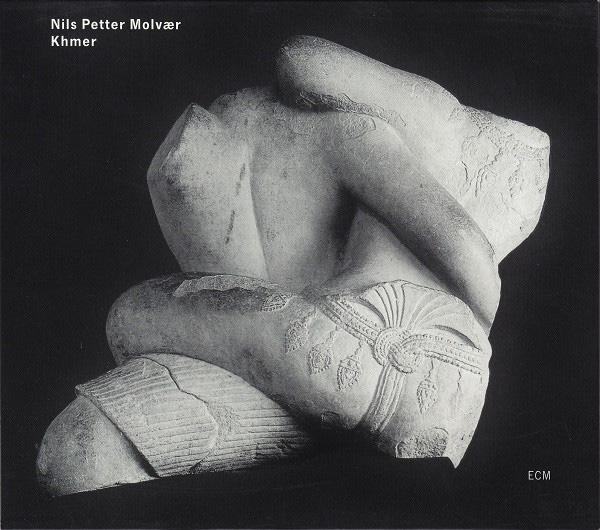 Nils Petter Molvaer's trumpet on Khmer (CD, ECM 1560 537798-2), his Middle Eastern–flavored release, sounded vividly lifelike. The jettisoned, sustained notes electrified my room with their power, intensity, and verisimilitude. The Contours propelled high notes as far as I'd hoped they'd go.
As such moments of musical awareness are wont to do, the Molvaer CD directed my memory to another recording that I was now eager to hear: Dizzy Gillespie's two-movie-scores-on-one-CD, The Cool World/Dizzy Goes Hollywood (CD, Verve 314 531 230-2). Here, too, the trumpet sounded breathtakingly pure, with no breakup, no pebbly texture, not a kink in its lustrous tonality. That was something else that stood out about the 30i: its liquid, all-space-filled sense of sonic integrity and dynamic ease. Listening to Dizzy's fluctuating, soaring, picture-perfect solos, I wondered if I'd ever heard a recorded trumpet sound more real.
Nils Petter Molvaer's trumpet on Khmer (CD, ECM 1560 537798-2), his Middle Eastern–flavored release, sounded vividly lifelike. The jettisoned, sustained notes electrified my room with their power, intensity, and verisimilitude. The Contours propelled high notes as far as I'd hoped they'd go.
As such moments of musical awareness are wont to do, the Molvaer CD directed my memory to another recording that I was now eager to hear: Dizzy Gillespie's two-movie-scores-on-one-CD, The Cool World/Dizzy Goes Hollywood (CD, Verve 314 531 230-2). Here, too, the trumpet sounded breathtakingly pure, with no breakup, no pebbly texture, not a kink in its lustrous tonality. That was something else that stood out about the 30i: its liquid, all-space-filled sense of sonic integrity and dynamic ease. Listening to Dizzy's fluctuating, soaring, picture-perfect solos, I wondered if I'd ever heard a recorded trumpet sound more real.
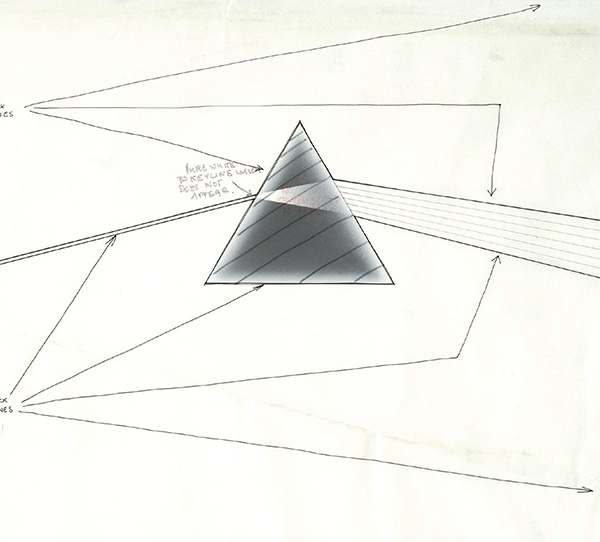 I heard no dearth of bass on Pink Floyd's The Dark Side of the Moon, Live at Wembley, London, 1974 (LP, Pink Floyd Records PFR50LP2), recorded by the BBC and released for the first time in 2023 on vinyl. Hearing it through the Contours, I sat up, ears perked, a frisson of a five-second high scurrying up my neck. This remastered 1972 recording with the played-to-death tunes and special effects didn't sound repetitive; it sounded crisp, spontaneous, fresh!—like it probably did to the people in those stands, who were hearing this music only a year and a half after it was released. Again, I heard that Contour clarity, those effervescent bursts of note-borne colors, and that dynamic spring in the music's step. The energy field radiated by the crowd and the music was resonantly, voluminously stadium-sounding.
 Summing up
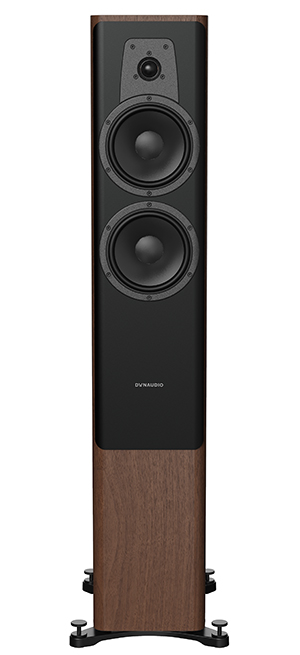
It was like hearing this music for the first time—again. The music, the theatrics, the crowd—through the Contours, it all sounded refreshed and of-the-moment. And poignant, too, which is a highly subjective thing to say, I know, but I felt that sense of poignancy across many tracks I listened to through the Contours, and I thought it should be mentioned, because I think it speaks to the Contours' expressiveness. The Contours sounded impeccably well-designed, built to exacting standards. You can hear this in a few ways: its symmetrical, single-voice cohesion; its colorful transparency; its authentic-seeming tonality; its dynamic ambience; its orderly and clean disposition. It was, in many ways, reminiscent of my time in Denmark. After that first five-second high had leveled off into a sustained phase of euphoric well-being, I thought, This is why better sound is worth it. Because it proved again that the farther we can hear into the performance, the more it has the power to touch us. That's the fundamental premise on which our hobby is built. It would also seem to have been the fundamental premise on which the 30i was built.
Footnote 1: That's a pretty good description of this glorious album, which is assembled from some hi-fi bits, some lo-fi bits, some MP3 bits; see this description.—Jim Austin Footnote 2: This is me saying this, not Rob, but: In my experience, there's something else happening in cases like the one Rob describes. It is this: If you can hear the recording's faults very clearly, the sound is demystified—it makes sense—resulting in a reduction in cognitive dissonance. Stress is reduced. In this way, a superior system can be better, or at least be more agreeable, with less-optimal recordings.—Jim Austin