
Sidebar 3: Measurements
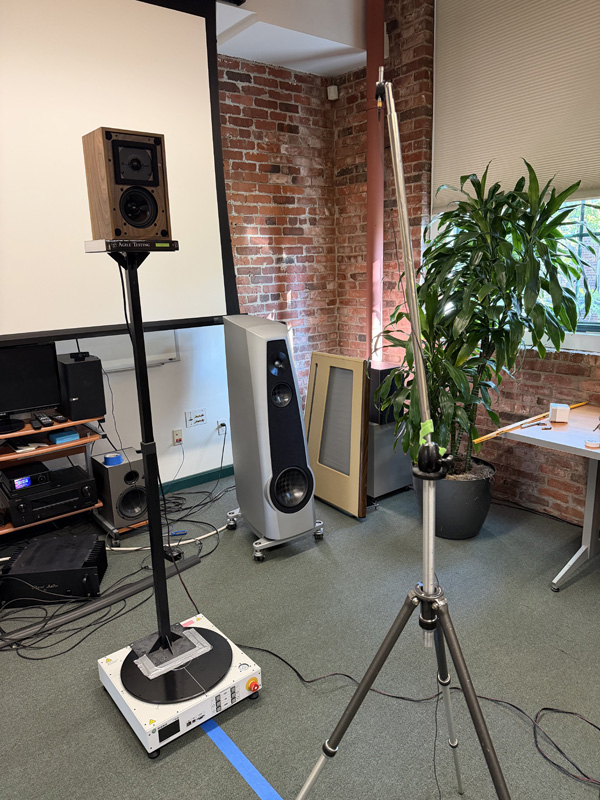
Consonance Compact Monitor loudspeaker: Measurement setup
The Consonance Compact Monitor was measured in a large conference room—11'11" H × 25'3" L × 15'8" W—on a PT&D MDT turntable. I used the Listen SoundCheck 24 audio-test software; a GRAS 40BD ¼" microphone and a 26CB preamp, with a Listen SCM-2 ¼" measurement microphone and a seven-microphone array at 5° vertical increments; a Listen AmpConnect 621 audio interface and amplifier; and a B&K Type 5434-B-001 accelerometer. The system was calibrated with a B&K 4231 acoustic calibrator at an SPL of 94dB at 1kHz.
The first reflection was off the floor, at about 5ms. The loudspeaker was measured at 1m, at tweeter height. From the center of the tweeter to the floor was approximately 68.5".
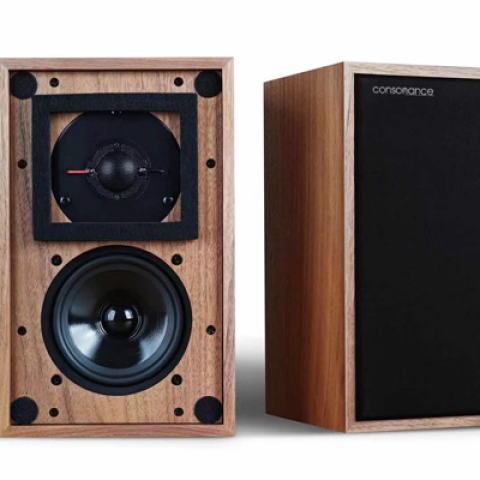
The Consonance Compact Monitor is a small, sealed booshelf monitor that resembles the classic stereophile.com/content/bbc-ls35a-loudspeaker">BBC LS3/5a monitor engineered in the 1970s by the BBC's Research Department for mobile outside-broadcast vans and tight studio spaces. Due to its small size, it was not intended to have deep bass, but it should mate well with a good subwoofer.
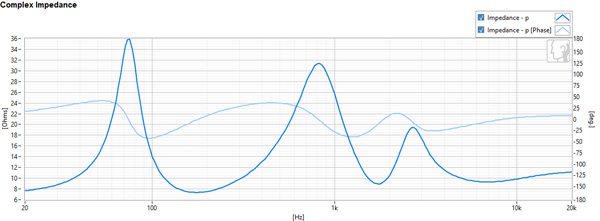
Fig.1 Consonance Compact Monitor, electrical impedance and phase, 20Hz–20kHz.
The minimum impedance (fig.1) was 7.4 ohms, with a very small phase angle; the speaker should be an easy load for an amplifier to drive. However, this high impedance means that nearly twice as much voltage will be needed to achieve the same output level as a typical 4 ohm loudspeaker.
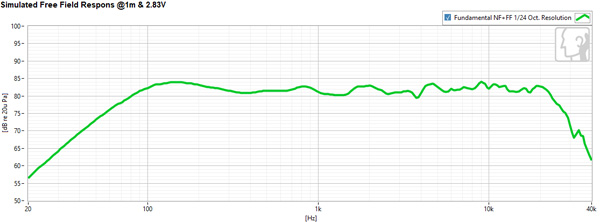
Fig.2 Consonance Compact Monitor, quasi-anechoic response on tweeter axis at 1m, 2.83V, with nearfield and farfield responses spliced at 200Hz.
With the microphone pointing at the tweeter, the average sensitivity, measured between 100Hz and 10kHz, was 82dB/2.83V/m, which means that the amplifier used should also have ample gain. The frequency response (fig.2) was ±3dB from 70Hz to 24kHz, with no major peaks or dips. A good subwoofer could extend the bass nicely below 100Hz.
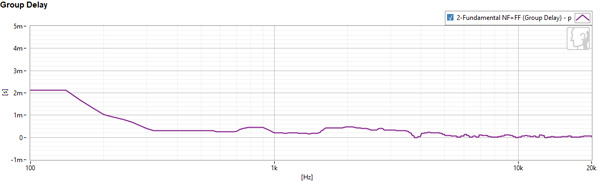
Fig.3 Consonance Compact Monitor, group delay on tweeter axis at 1m.
The group delay (fig.3) was very good because the woofer and tweeter are close together and the woofer is small and shallow. The woofer, however, is set back a little bit inside the cabinet, so the tweeter frequencies arrive before the woofer frequencies.
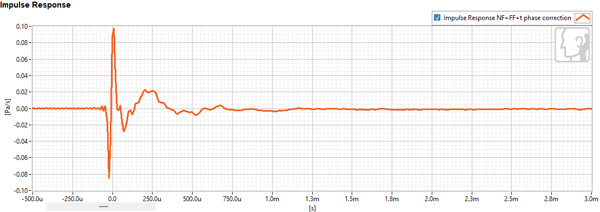
Fig.4 Consonance Compact Monitor, impulse response on tweeter axis at 1m, 20Hz–20kHz.
The transient response (fig.4) was clean, but due to the physical offset between woofer and tweeter, the woofer impulse arrived about 250µs after the tweeter.
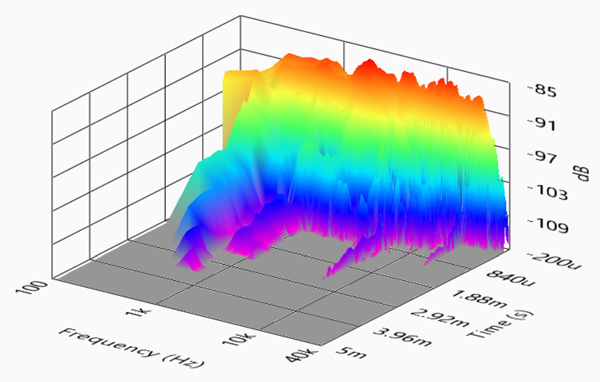
Fig.5 Consonance Compact Monitor, cumulative spectral decay plot on tweeter axis at 1m.
The waterfall (cumulative spectral decay) plot (fig.5) revealed some low-frequency ringing below 1kHz, in the critical midrange where the human ear is very sensitive, and at 8kHz.
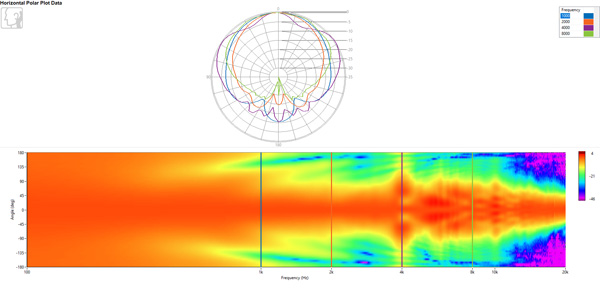
Fig.6 Consonance Compact Monitor, horizontal directivity: off-axis responses at 1m, in 5° steps.
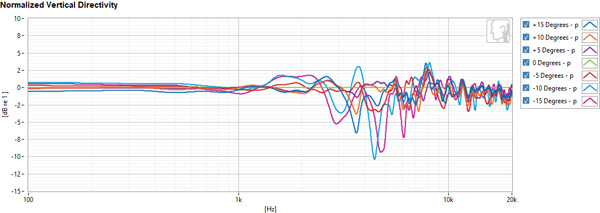
Fig.7 Consonance Compact Monitor, vertical directivity: responses from 15° above axis to 15° below, in 5° steps.
The horizontal directivity (fig.6) was a little scattered over the entire frequency range. There was some off-axis lobing below 2kHz, probably due to the woofer being recessed in the cabinet, and at 4kHz, probably due to diffraction from the tweeter by the raised edge of the cabinet that holds the speaker grille. The vertical directivity (fig.7) looked good except in the crossover frequency range, between 2kHz and 4kHz, which is common. Careful placement of the loudspeaker and seating position will offset audible consequences of the speaker's directivity. Placing the Consonance on a stand at ear level, pointed directly at the listener, is recommended.
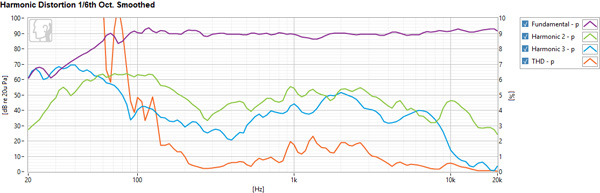
Fig.8 Consonance Compact Monitor, harmonic distortion at an SPL of 90dB: second harmonic, third harmonic, and THD (distortion percentage, right-hand scale).
Distortion (fig.8) was under 2% down to 140Hz but rose significantly at low frequencies due to the small driver size. A good subwoofer and a higher crossover frequency will also reduce the low-frequency distortion.
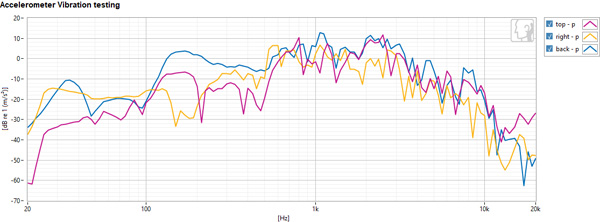
Fig.9 Consonance Compact Monitor, cabinet vibration measured with an accelerometer at several positions on the enclosure (driving voltage, 2.83V).
Finally, an accelerometer was used to check for cabinet resonances that could impact the sound (fig.9). The cabinet is made from 0.4" thick walnut-veneered MDF. When you knock on it with your knuckles, it sounds a bit resonant. The accelerometer was placed at different positions on the panels, and the vibration was measured using the same sinewave sweep at 2.83V. The highest levels were detected on the back panel, at 335Hz, likely a cabinet resonance.—Steve Temme