Confounding easy characterizations, vexing cultural know-it-alls, and making music that sounds like nothing before or since is proof of artistic triumph. Defiantly original music, though, often needs time to simmer and allow trends to catch up before its brilliance can fully resonate.
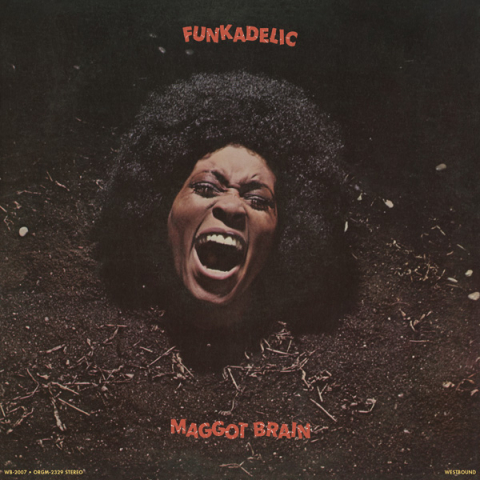
In the 55 years since its release, Maggot Brain, Funkadelic's funk-rock masterpiece, has gone from being called "a shattered, desolate landscape with few pleasures" and "horrible mush" in a 1971 Rolling Stone review to coming in at #136 in that same publication's "500 Greatest Albums of All Time."
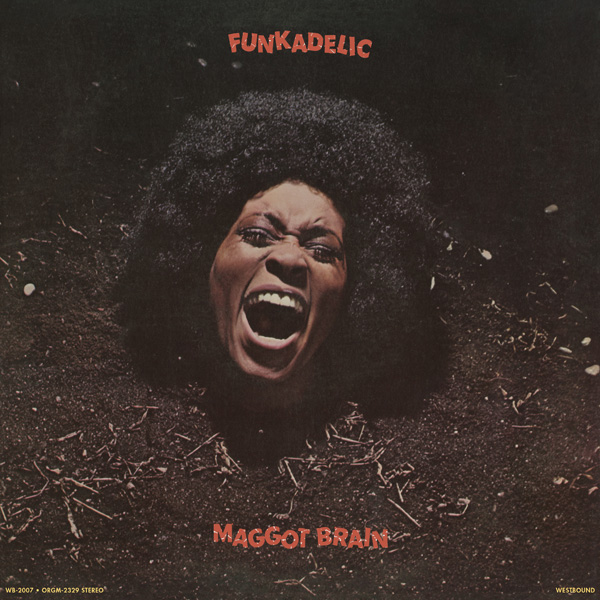
By the early 1970s, the imagination of former barber George Edward Clinton, erstwhile staff songwriter for Berry Gordy's Motown Records, needed two outlets—the more commercial Parliament and the more experimental Funkadelic—to encompass his musical vision. Maggot Brain, the latter band's third album, with its unforgettable cover art, has become one of the most sought-after recordings of American popular music. Original vinyl pressings, which came packaged in fragile Unipaks, routinely fetch more than $1000 on eBay and Discogs. One of the best music zines ever nicked its evocative title (footnote 1).
Happily, two of the rarest gems in the Funkadelic catalog, Maggot Brain and its predecessor, Free Your Mind ... and Your Ass Will Follow, have been remastered, cut at 45rpm, and pressed into 180gm vinyl by Org Music. While both albums have been reissued many times since they were released, in 1970 and 1971, respectively, many have come from dodgy sources and ended up with less-than-exemplary sound. These new reissues are the most sonically rewarding since the original pressings, thanks to the work of Andrew Rossiter and Rich Hansen at Org Music, archivist Catherine Vericolli, engineer Nick King, and vinyl-mastering engineer Dave Gardner, who cut the lacquers.
Gardner started work in the mid-1990s as a mastering engineer for scrappy indie labels, including Amphetamine Reptile. He has gone on to work in indie rock for prominent independent labels including Sub Pop, Merge, and Anti-. He previously remastered the Bad Brains catalog for Org Music.
"I bought a Parliament record as a cassette cutout in Western Pennsylvania," Gardner told me via video call from his car in Los Angeles. "I mentioned this to a family friend, and he was like, 'Oh man, if you think Parliament's good, you gotta hear Funkadelic!' Then in '89, all of a sudden—I found out later that a licensing agreement was about to expire—there were the first four Funkadelic records in record stores on vinyl as imports. I thought they sounded pretty good until I heard the original tapes, and then I was like, 'Oh man, it's not even close.'
"The path to finding those tapes began with a visit several years ago to the Detroit offices of Westbound Records, Funkadelic's original label. Founded in the Motor City by Armen Boladian in 1968, Westbound was also the original home of soul/funk groups the Ohio Players and the Detroit Emeralds.
"In Detroit, meeting with the Westbound folks, we saw a massive wall of tapes, but nobody really knew what they had. We found a certain batch of blank white tape boxes. I flipped one open, and I saw the original Westbound W catalog number, and I was like, 'Holy shit, we just found the final masters to Maggot Brain!' Not even production copies. From a speed standpoint, we started checking a bunch of different vinyl versions, and luckily, we had a couple of collectors who were able to help us. We were able to find a '71 copy in a Unipak, so we were able to use that first-generation LP to lock the tape machine to exactly the same speed.
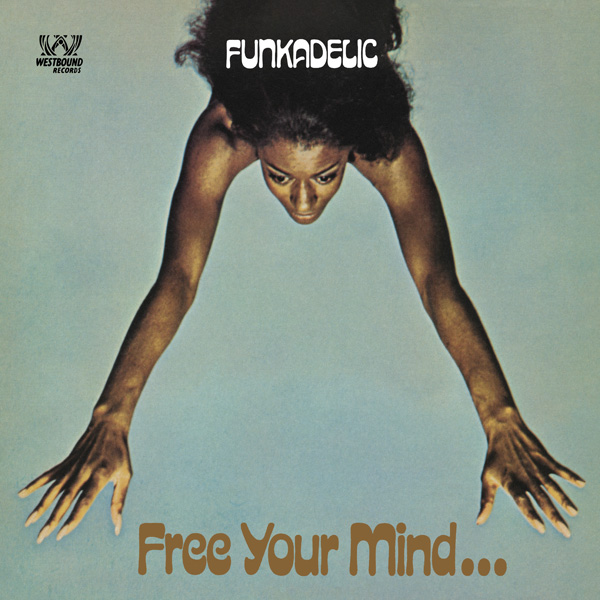 "With Free Your Mind, it was more complex because there was always that rumor that they had done the whole thing while everybody was on acid. I have no idea whether that's true or not, but what I could tell was that as they were mixing the record—and on previous versions you'll hear this—there's something in the right channel. I've always loved that record, but it gets steadily worse sounding. And I think that kind of feeds into the idea that they were all tripping. But it was clear to me that something was going bad electronically."
With the speed problem on Maggot Brain corrected and the electronic distortion on the right channel of Free Your Mind minimized, these Org reissues, which will also be available on CD and high-resolution SACD, have a wider, richer soundstage and a presence lacking in previous reissues. While 45rpm means more frequent flipping of sides, the stereo field information in these reissues is dramatic, and the wild syncopated effects with muting and volume have never been this clear before now.
"Our big goal was not to replicate a certain release—not to ape what has been done before in previous reissues—but to really pay homage to the source, right? It's this music, it's the creation, it's the production, and so let's take that and really focus on kind of blooming that.
"Both Free Your Mind and Maggot Brain are genius," Gardner said. "The production cues are incredible, and the engineering chops are really solid. I had never thought of these as particularly good-sounding records, but I think that these versions indicate they're better-sounding records than we realized. My favorite format of all time is the 7" 45 vinyl record, but I've always been a 12" 45 skeptic. Working on this has totally changed my mind. I'm really excited for people to hear it."
Footnote 1: Maggot Brain is also the name of a print magazine launched in December 2019 by Jack White's music label Third Man Records and edited by Detroit-based music writer Mike McGonigal.
"With Free Your Mind, it was more complex because there was always that rumor that they had done the whole thing while everybody was on acid. I have no idea whether that's true or not, but what I could tell was that as they were mixing the record—and on previous versions you'll hear this—there's something in the right channel. I've always loved that record, but it gets steadily worse sounding. And I think that kind of feeds into the idea that they were all tripping. But it was clear to me that something was going bad electronically."
Footnote 1: Maggot Brain is also the name of a print magazine launched in December 2019 by Jack White's music label Third Man Records and edited by Detroit-based music writer Mike McGonigal.