 Listening
Audiovector specifies a frequency range of 23Hz–53kHz for the R 3 Arreté—quite a boast for a speaker so small and light, though it was clear from my auditioning that it is capable of surprising in-room low-frequency extension. When, at the very end of the review period, I listened to some warble tones from the Stereophile
Editor's Choice CD, the R 3s set me straight: The 40Hz tone was reproduced at full volume. The 31.5Hz tone was down by about 6.5dB, according to the SPL Meter app on my iPhone. The 25Hz tone was down 12dB—easily audible. I could hear the top part of the 20Hz warble tone—which pretty much corroborates Audiovector's claim. For a conventional speaker so small and light, the R 3 Arreté indeed goes surprisingly low.
When I started paying attention—before I started listening critically—I noticed that the R 3s are remarkable in at least one aspect: off-axis imaging. For now (and not for long), the listening seat is an overstuffed loveseat with a seating area about 44" wide. The sweet spot is on the left cushion. I found I could move to the other end of the loveseat with little change in the soundstage. Once I even sat on that annoying sofa perpendicular to the loveseat, outside of and just 3' or so from the left speaker, and I still heard a substantial stereo effect.
Since I discovered it in college, I have spent many weekend nights singing along with friends to Jerry Jeff Walker's
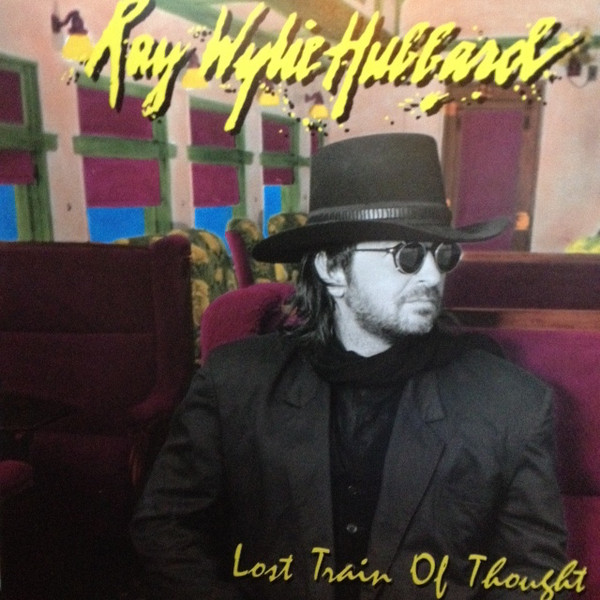
Viva Terlingua, which includes among many other displaced-southerner party tunes, Walker's live take on Ray Wylie Hubbard's "Redneck Mother." For a long time, that's all I knew of Hubbard's music. But over the last few months, motivated at least partly by Alex Halberstadt's column on
Merle Haggard and Willie Nelson, I've been on a southern/western singer-songwriter kick: Hubbard. Guy Clark. John Prine. Kris Kristofferson. Johnny Cash. Jimmy Webb. One night, I started off with Hubbard's "Wanna Rock and Roll," from
Lost Train of Thought (16/44.1 FLAC, Misery Loves Co./Tidal). Via this new system and the R 3 Arretés, Hubbard's voice overlaid Pete Falcone's crisp drums center stage—the cymbals extended farther right—but Hubbard was noticeably farther forward on the stage, well in front of the drummer. In imaging/soundstaging terms, the imaging performance from the sweet spot was, if not quite up to the standard set by its bigger sibling the R 8, still very solid.
A highlight of this album for me is "Love in Vain," and what I noticed most was the sense of relaxation in Hubbard's playing. There are two parts to that: The playing had to be relaxed, and the system has to avoid stressing out and making things sound nervous. Check both boxes. The timbre of his voice was rich, almost woody. Subtly spectacular, or spectacularly subtle? You choose.
With Hubbard and other singer-songwriters (including Guy Clark, whose
Old No. 1 has gotten serious play), this system with these speakers (with due credit to various recording and mastering engineers) managed the trick of maintaining the separate timbres of the voice and guitar while placing them onstage within a coherent sonic picture, a sonic perspective that's consistent and complete. Variety and consistency at once.
When "Lost Train of Thought" (another concept I can relate to) ended, Roon took control, and I picked up a book. I perked up when I heard Joni Mitchell's "River." I decided that wasn't enough Joni, so I queued up
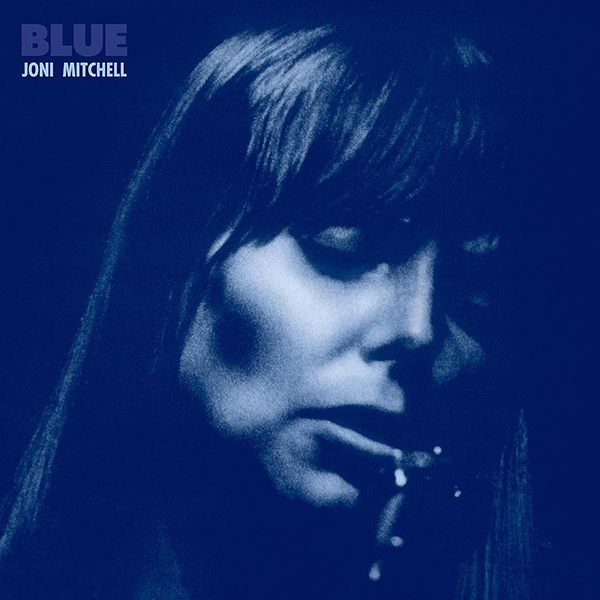
Blue—the whole album (24/192 FLAC, Rhino-Warner/Qobuz)—and played it all the way through. Many highlights here, but what I loved most was the sound of Joni's piano at the start of "Blue"—the song. That ain't no Steinway D, but I loved how each note hung in space, rounded, pellucid, with enough complexity to seem real and present. Hot timbre action.
It
is a Steinway D, I'm pretty sure, that Leif Ove Andsnes is playing on
Janacek/Nielsen: Piano Works (16/44.1 download, Erato). I was able to close my eyes and put myself in the theater in the midhall perspective the recording engineer obviously likes. I can't say I heard 100% of that piano—not at that distance—but I heard more of it than I do when I'm at Carnegie Hall; despite that hall's famous acoustics, or perhaps because of them, I don't hear much direct sound in the seats I typically end up in, and I must do some perceptual work to capture all the music, or even most of it. I listened as Andsnes played Janáçek's "On an Overgrown Path, Book 1: No.1." Online sources suggest that this was recorded at England's Snape Maltings Concert Hall, which isn't huge, but I'm pretty sure it was empty, because when the playing gets louder, the piano's sound takes on that metallic edge characteristic of an empty hall. The speakers did a fine job conveying the hall acoustic.
One night, I found myself studying a list of recently released recordings, in
Pitchfork; one of them was by Camae Ayewa, who goes by Moor Mother; I didn't know her music but had been intrigued for a while. Taking advantage of the incredible luxury that is hi-rez music streaming, I put on the new album,
The Great Bailout, which
Pitchfork says "interrogates the knotty relationship between Europe and Africa, confronting the enduring legacy of colonialism." This is one of those synthetic musical events I described in the April issue's
As We See It—a studio concoction, a big, elaborate production assembled in service of a larger message, a piece of which is legitimate outrage over the fact that when Britain abolished slavery, in 1833, the country compensated slaveowners and not the previously enslaved.
Okay, but how's the music, and how does it sound? I'll admit to not loving either the music or the album's sonics, but in this system, anchored by the rather small R 3 Arretés, the soundstage was
vast, seemingly endless, tapering off gradually with no apparent edges so that no boundary is apparent. The effect is a kind of sonic magic trick, causing the walls of this room to vanish. If it were not for the feeling of the sofa under my butt, I could have closed my eyes and imagined that I was in outer space.
What's more, through this system the music mostly avoided sounding edgy, synthetic, and electronicky, despite being synthetic and electronic. Credit is due to Moor Mother and the engineers—but also to the system for not adding, as some do, a coloration that reminds you always that you're listening to electrically recorded music (footnote 3).
Listening notes like this are a crucial part of any equipment review. Especially in the era of streaming, when readers can easily pull up the same music, it's a great way to compare what you hear in your own system with the experience the reviewer describes. But sometimes those notes don't add up to the whole big-picture story, which in this case is this: The Audiovector R 3 Arretés sounded pure and simple but also rather special in some ways.
The strongest impression the R 3's left was a sense of ease. In line with the designer's intentions, as described above, they let the music go rather lightly—which doesn't mean the music liberated was lightweight; I found instruments satisfactorily corporeal, with enough flesh on the bones—enough instrumental and vocal timbre—to manifest a musician in the room, a musical intelligence, singing, plucking, or drawing a bow.
This casualness impacted imaging, too: The feeling I have—that I've had throughout the audition period—is that these speakers
fling music outward in various directions as though with a casual flick of the wrist. The music then wraps around the furniture, insinuating itself into the room's spaces. The result is a soundstage that stretches well outside the speakers (though of course some recordings constrain the stage) along every axis—vertical, horizontal, depthwise—and often beyond the walls.
Finally, the R 3 Arretés display a certain ... let's call it
dryness, a quality some might fault but that I value highly. It's something in the highs, in the way most recordings aren't tainted by residue from the recording; the Moor Mother record is the best example. This depends on reverb in a recording not being overdone, instead being done well and naturally. When these conditions are met, vocalists and acoustical instruments manifest within the soundstage almost physically. There's nothing—or far less than usual—to disrupt the illusion.
 Conclusions
I asked Audiovector CEO Mads Klifoth—son of designer Ole: Why Arreté? Isn't that French for "stop," or "You're under arrest!"?
The most relevant translation, he told me, is from the Greek, not the French—that's the version with the single
rho—αρετη—despite Audiovector's spelling. "In ancient Greece, a man had
arreté if he was a brilliant warrior, a brilliant hunter, a brilliant cook, a brilliant lover," the younger Klifoth wrote in an email. Arreté—or
arete—is a chameleon of a word, changing shape to mean excellence in any context, whatever that requires. "We think that fits well for our R-series top models."
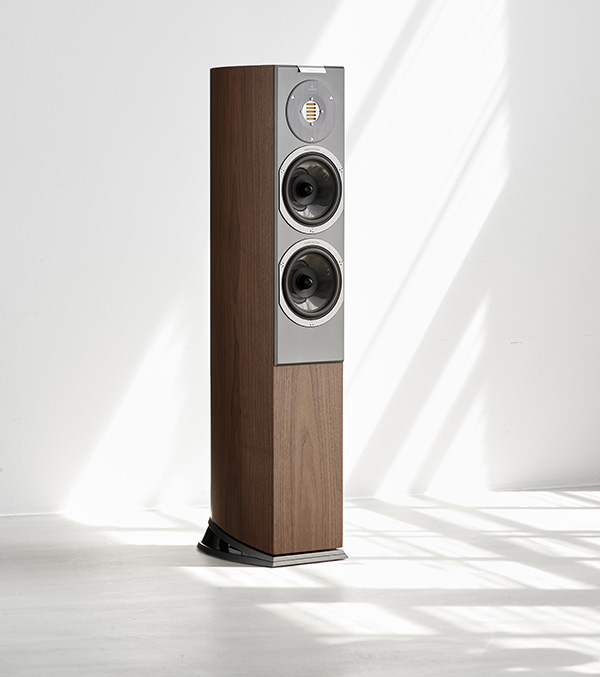
It's rare to find that a company is selling exactly what I'm buying, but my experience with these speakers mirrors the marketing precisely. Audiovector emphasizes low stress, low tension, letting go of the music—and if I had to name one characteristic that most impressed me, it would be their sense of ease. Next up would be imaging—merely very good when you're pinned in the listening chair but far above average from elsewhere in the room, which makes them more sociable—more visitor-friendly—than any other speakers I can think of. They convey instrumental and vocal timbre to a degree at least in line with their $12,900/pair price—certainly enough to ensure intense emotional engagement.
$12,900 is serious money—a substantial investment for all but the truly wealthy—though it's significantly less than you'd pay for, say, a decent low-mileage used car. Still, the R 3 Arreté hits a value sweet spot for me: Ordinary people can aspire to owning a pair, though it may require sacrifice—a more modest car, say, or no Starbucks for a decade or two. For people who truly love music, it's easily worth it.
Footnote 3: I'm aware that here, in using brand-new music in a review—music I've obviously not heard before—I'm stepping into Floyd Toole's "circle of confusion." What is the music contributing? What about the speakers? For that matter, what about the rest of this new reviewing system? For my thoughts about why this is sometimes okay, see As We See It in the
October 2023 issue.