So . . . which alignment curve? If you look at a graph on which all of the various geometries are superimposed, you'll see that every one of them has higher distortion in the outer-groove area, which diminishes as the stylus reaches the first null point—ie, the first point at which there is zero tracking error.
The position of the first null point depends on the curve used. With Löfgren A, it's about 119mm;, with Stevenson (not included in the SMARTractor) and Löfgren B, about 117mm; and with SMARTractor designer Dietrich Brakemeier's UNI-DIN curve, 113mm.
From the first null point on, all of the curves—and ie, the level of distortion—begin to rise. Löfgren B rises least, then begins dropping to the second null point (70mm), after which it rapidly rises to the end of the side, where the decreasing linear speed more than doubles the distortion of the lateral tracking error. The distortion of the Löfgren A curve rises higher, but reaches the second null point about 4mm later. UNI-DIN's distortion curve rises more gently from the first null point than the others, but rises higher than Löfgren B at around 97mm, before plunging down to the second null point, at 63mm, before shooting up again. The Stevenson curve rises highest of all, beginning at around 96mm, and reaches its second null point farthest in, at 60mm, before again rising.
Obviously, if most of your collection mostly comprises older discs, whose inner grooves tend to be cut close to the label, you'll want to use a curve that reaches its second null point as close to the end of the side as possible before the distortion rises again. If you have mostly newer albums (such as 45rpm reissues) whose lead-out grooves don't go as close to the label, then you'll be less concerned about the post-null spike—the side will be over before it becomes a problem. If you listen to a lot of classical music, the Stevenson curve might be attractive: distortion plunges toward the end of the side, where the big orchestral climaxes usually occur, and the second null point is closest to the end of the side.
However, the Stevenson curve also produces the greatest distortion of any curve, and does so over most of the side. That's the curve—or one close to it—that Rega Research uses for its paper protractor; if you own a Rega tonearm and/or turntable, I suggest using a different protractor, and use any curve but the Stevenson, even if you listen to classical music.
While Löfgren A reaches the second null earlier than Löfgren B or UNI-DIN, its distortion curve is by far the lowest overall—until that second null is reached. If you listen to mostly newer LPs, I recommended Löfgren B. If you listen to mostly older records, and especially to classical, I recommend the UNI-DIN curve—if you buy the SMARTractor.
In his instructions, Brakemeier recommends Baerwald/Löfgren A or B/IEC for "modern" records, Baerwald/Löfgren A/DIN or UNI-DIN for older records, and UNI-DIN for classical and/or vocal records, regardless of age. Being a creature of habit, I'm sticking with Löfgren B—but with the SMARTractor, it's relatively easy to experiment.
Yes, at $650, the Acoustic Systems SMARTractor is a relatively expensive accessory, but it's the easiest and most accurate alignment device I've used, and I highly recommend it. Well done, Dietrich Brakemeier. At less than half the price ($259), the Dr. Feickert Protractor NG is the obvious runner-up.
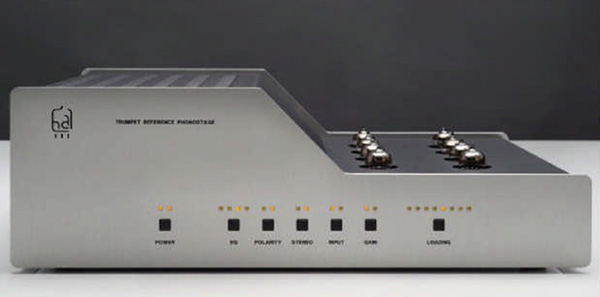
Looking more like something from the house of Conrad-Johnson than Jim Hagerman's usual funky wooden fare, the new Hagerman Audio Labs Trumpet Reference tubed/solid-state phono stage ($7200; footnote 2) combines visual elegance, high build quality, exceptional sound, and (wired) remote control of its unusually complete feature set. And unlike the original Trumpet moving-magnet–only phono stage, the Reference actually fits on a shelf.
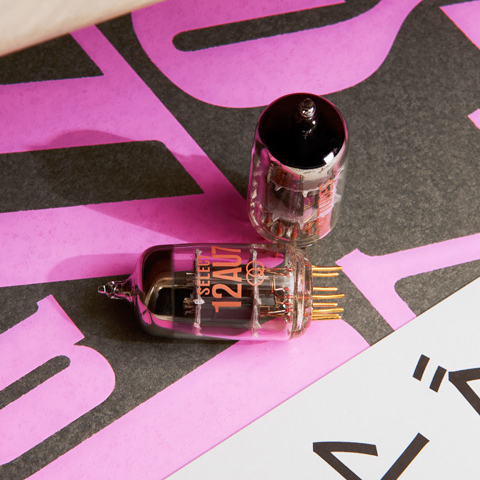
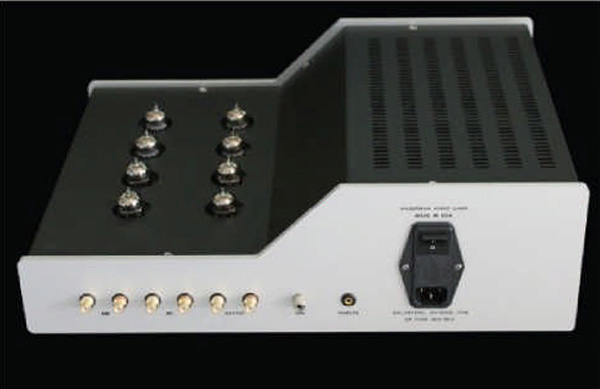
I reviewed the Hagerman Technology Trumpet in the December 2002 issue. (The company has added the Hagerman Audio Labs brand for its more upscale products.) The Trumpet Reference is essentially the Trumpet reimagined and repackaged, with the additions of a host of useful convenience features, all built on the familiar foundation of quartets of 12AX7 and 12AU7 dual-triode tubes. Highlights of the wide-bandwidth (8Hz–500kHz) design include: fully balanced differential circuits; class-A, zero-feedback operation; choke-regulated power supplies; DC heaters; passive split RIAA equalization; and a balanced, JFET-based, moving-coil input stage.
Six front-panel pushbuttons let you choose among four choices of EQ (AES/early Decca ffrr, Decca/EMI/late Decca ffrr, RIAA, Columbia/NAB), Stereo/mono, Input (MM or MC), Polarity, MC Gain (64 or 70dB), and MC Loading (57, 64, 76, 91, 131, 181, 322, or 1k ohms). All functions are also available on the remote. Your selections are indicated by a row of yellow LEDs across the front panel, but these aren't labeled or identified. You'll have to keep the manual handy—as soon as you think you've memorized their meanings, you forget. No big deal.
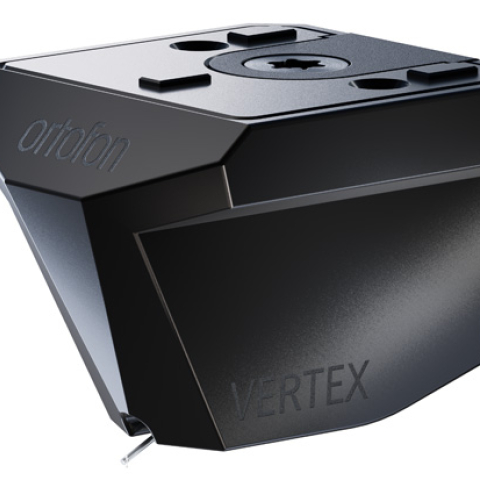
Set to 70dB gain, the Trumpet Reference easily and quietly amplified the Ortofon Anna cartridge's ultra-low (0.2mV) output, producing both more than enough gain and reasonably wide dynamics. The JFET front end was sufficiently neutral not to interfere with the Trumpet's pleasingly but not overwhelmingly tubey sound.
After the Teutonic austerity of the blazingly dynamic, ultraquiet, and notably transparent Trinity Phono I previewed in December 2013 (p.31), which, at $34,750, costs about five times as much as the Hagerman preamp, it took me a while to get used to the Trumpet Reference's relative warmth and generous sustain. Such a difference reflects the wide range of taste in sound among audiophiles. The Trinity carved sharply delineated three-dimensional images against jet-black backdrops on a deep soundstage, and produced hair-raising dynamic contrasts. The Trumpet Reference produced a more relaxed, graceful sound that, on one level, sounded less electronic and more acoustic than the Trinity, but on another was clearly less dynamic, and less able to resolve the low-level information between notes as they decayed.
I'd more enthusiastically recommend the Trumpet Reference for small-scale acoustic music (jazz, folk, or chamber music) than for rock or full symphonic slam, and for systems that can't produce either the full dynamic range or the full low-frequency range of recordings. The Trumpet Reference's bass performance, while very good, wasn't as fully extended or, especially, as punchy as that of the better solid-state phono stages at or near its price, and its dynamic presentation, while very good, was incapable of taking advantage of my Wilson Audio Specialties XLF speakers' full potential.
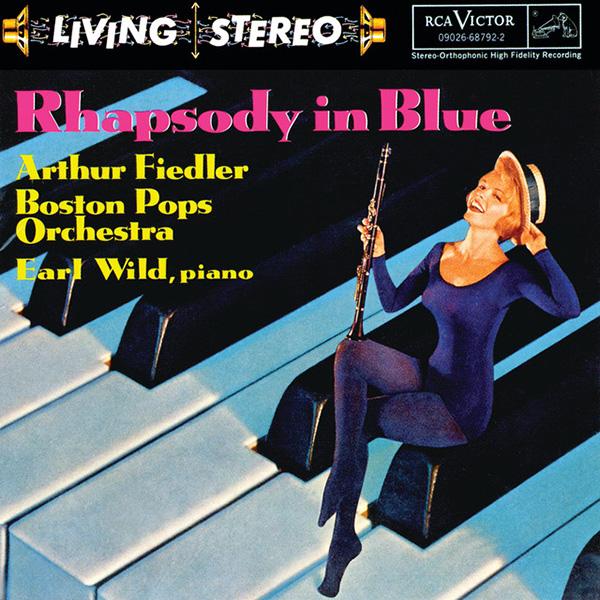 With recordings such as Universal's superb Nick Drake reissues, and of small classical ensembles, particularly of works scored for voices, the Trumpet Reference produced 100% musical satisfaction within the limits of its tubed sound. When I switched to Earl Wild's recording, with Arthur Fiedler and the Boston Pops, of Gershwin's Rhapsody in Blue and An American in Paris (LP, RCA Living Stereo/Analogue Productions LSC-2367), while the Trumpet Reference produced a superbly rich orchestral and, especially, piano sound, it couldn't fully scale the big dynamic peaks at the end of Rhapsody. Its slightly soft transients somewhat blunted the percussive accents in Paris, especially the timpani and wood blocks, as well as the bite of the trumpet, which was slightly softened regardless of loading. Nor was the sound of the hall fully delineated, particularly in terms of rear-stage reflections and the spaces between the notes.
If you love tubed phono preamps and particularly value a rich midrange sound, don't let my accentuation of the Hagerman's negatives cast a pall. The Trumpet Reference was as quiet- and neutral-sounding a hybrid phono preamp as I've heard. Its bass was better controlled than many, if not most, tubed phono stages I've heard, and unlike some of those, its tubey qualities were not at all cloying. In fact, most of the time, I could tell it was tubed only by the limitations at the extremities that I've described above than by its overall sound.
With recordings such as Universal's superb Nick Drake reissues, and of small classical ensembles, particularly of works scored for voices, the Trumpet Reference produced 100% musical satisfaction within the limits of its tubed sound. When I switched to Earl Wild's recording, with Arthur Fiedler and the Boston Pops, of Gershwin's Rhapsody in Blue and An American in Paris (LP, RCA Living Stereo/Analogue Productions LSC-2367), while the Trumpet Reference produced a superbly rich orchestral and, especially, piano sound, it couldn't fully scale the big dynamic peaks at the end of Rhapsody. Its slightly soft transients somewhat blunted the percussive accents in Paris, especially the timpani and wood blocks, as well as the bite of the trumpet, which was slightly softened regardless of loading. Nor was the sound of the hall fully delineated, particularly in terms of rear-stage reflections and the spaces between the notes.
If you love tubed phono preamps and particularly value a rich midrange sound, don't let my accentuation of the Hagerman's negatives cast a pall. The Trumpet Reference was as quiet- and neutral-sounding a hybrid phono preamp as I've heard. Its bass was better controlled than many, if not most, tubed phono stages I've heard, and unlike some of those, its tubey qualities were not at all cloying. In fact, most of the time, I could tell it was tubed only by the limitations at the extremities that I've described above than by its overall sound.
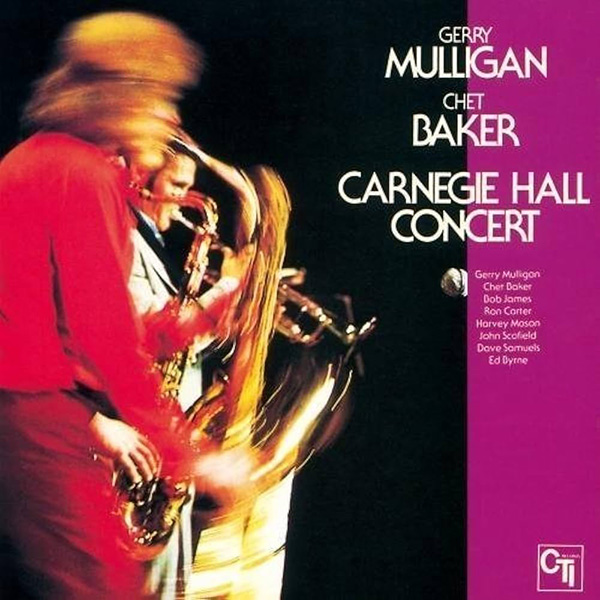 For instance, the Trumpet Reference produced a gloriously full, rich reproduction of Gerry Mulligan and Chet Baker's Carnegie Hall Concert (LP, CTI/Speakers Corner 6054/5), but with the audiophile classic Winds of War and Peace, with Lowell Graham and the National Symphonic Winds (LP, Wilson Audiophile WCD-8823), its dynamic and transient bass limitations were obvious; for example, it couldn't fully express the "mallet of death" bass-drum stroke in John Williams' Liberty Fanfare.
Based on my description of its sound, some of you will read this review and think "The Trumpet Reference is for me!" Others will say, "Next." That's as it should be. However, while the Hagerman Trumpet Reference is, at its core, a Hagerman Trumpet (which now costs $3250), you get a much better chassis, a host of useful adjustment features, and a JFET MC input. Its plethora of remote-controlled setting and convenience features, especially the Mono and Polarity Inversion buttons, also add to its attractiveness.
For instance, the Trumpet Reference produced a gloriously full, rich reproduction of Gerry Mulligan and Chet Baker's Carnegie Hall Concert (LP, CTI/Speakers Corner 6054/5), but with the audiophile classic Winds of War and Peace, with Lowell Graham and the National Symphonic Winds (LP, Wilson Audiophile WCD-8823), its dynamic and transient bass limitations were obvious; for example, it couldn't fully express the "mallet of death" bass-drum stroke in John Williams' Liberty Fanfare.
Based on my description of its sound, some of you will read this review and think "The Trumpet Reference is for me!" Others will say, "Next." That's as it should be. However, while the Hagerman Trumpet Reference is, at its core, a Hagerman Trumpet (which now costs $3250), you get a much better chassis, a host of useful adjustment features, and a JFET MC input. Its plethora of remote-controlled setting and convenience features, especially the Mono and Polarity Inversion buttons, also add to its attractiveness.
Footnote 2: Hagerman Audio Labs, PO Box 61911, Honolulu, HI 96839. Tel: (808) 383-2704. Web: www.haglabs.com.
Photo: Wes Bender
Hagerman Audio Labs Trumpet Reference MM/MC phono stageLooking more like something from the house of Conrad-Johnson than Jim Hagerman's usual funky wooden fare, the new Hagerman Audio Labs Trumpet Reference tubed/solid-state phono stage ($7200; footnote 2) combines visual elegance, high build quality, exceptional sound, and (wired) remote control of its unusually complete feature set. And unlike the original Trumpet moving-magnet–only phono stage, the Reference actually fits on a shelf.
Photo: Wes Bender
If you value a rich harmonic palette, accompanied by a slightly soft overall attack and generous, texturally varied sustain, and are willing to give up some performance at both ends of the dynamic scale, as well as back-of-hall space, full delineation of depth and decay envelopes, and ultratransparency, you'll love the Trumpet Reference's overall more musical, less mechanical sound, and you'll find the Trinity harmonically threadbare and overly analytical.
Those who prefer tube sound would argue that it's more lifelike, less hi-fi. Those who prefer solid-state sound feel that its presentation of dynamics, detail, and transients is more lifelike and less romanticized. Sometimes I get into e-mail tiffs with absolutists on both sides of the fence, and it gets old fast. There's no "correct" answer, only personal preference.
With recordings such as Universal's superb Nick Drake reissues, and of small classical ensembles, particularly of works scored for voices, the Trumpet Reference produced 100% musical satisfaction within the limits of its tubed sound. When I switched to Earl Wild's recording, with Arthur Fiedler and the Boston Pops, of Gershwin's Rhapsody in Blue and An American in Paris (LP, RCA Living Stereo/Analogue Productions LSC-2367), while the Trumpet Reference produced a superbly rich orchestral and, especially, piano sound, it couldn't fully scale the big dynamic peaks at the end of Rhapsody. Its slightly soft transients somewhat blunted the percussive accents in Paris, especially the timpani and wood blocks, as well as the bite of the trumpet, which was slightly softened regardless of loading. Nor was the sound of the hall fully delineated, particularly in terms of rear-stage reflections and the spaces between the notes.
If you love tubed phono preamps and particularly value a rich midrange sound, don't let my accentuation of the Hagerman's negatives cast a pall. The Trumpet Reference was as quiet- and neutral-sounding a hybrid phono preamp as I've heard. Its bass was better controlled than many, if not most, tubed phono stages I've heard, and unlike some of those, its tubey qualities were not at all cloying. In fact, most of the time, I could tell it was tubed only by the limitations at the extremities that I've described above than by its overall sound.
For instance, the Trumpet Reference produced a gloriously full, rich reproduction of Gerry Mulligan and Chet Baker's Carnegie Hall Concert (LP, CTI/Speakers Corner 6054/5), but with the audiophile classic Winds of War and Peace, with Lowell Graham and the National Symphonic Winds (LP, Wilson Audiophile WCD-8823), its dynamic and transient bass limitations were obvious; for example, it couldn't fully express the "mallet of death" bass-drum stroke in John Williams' Liberty Fanfare.
Based on my description of its sound, some of you will read this review and think "The Trumpet Reference is for me!" Others will say, "Next." That's as it should be. However, while the Hagerman Trumpet Reference is, at its core, a Hagerman Trumpet (which now costs $3250), you get a much better chassis, a host of useful adjustment features, and a JFET MC input. Its plethora of remote-controlled setting and convenience features, especially the Mono and Polarity Inversion buttons, also add to its attractiveness.
Footnote 2: Hagerman Audio Labs, PO Box 61911, Honolulu, HI 96839. Tel: (808) 383-2704. Web: www.haglabs.com.