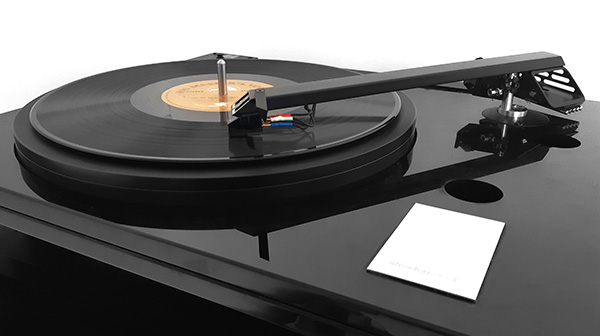
When people ask me what I do for a living, I reply that I'm a turntable setter upper. That seems to me like it should be descriptive enough, but it typically results in follow-up questions that have me explaining a whole audiophile subculture that few nonaudiophiles even realize exists. Occasionally, however, I get a call from a newly minted audiophile, a younger person who is diving headfirst into the hobby for the first time and wants to have their new turntable rig set up properly.
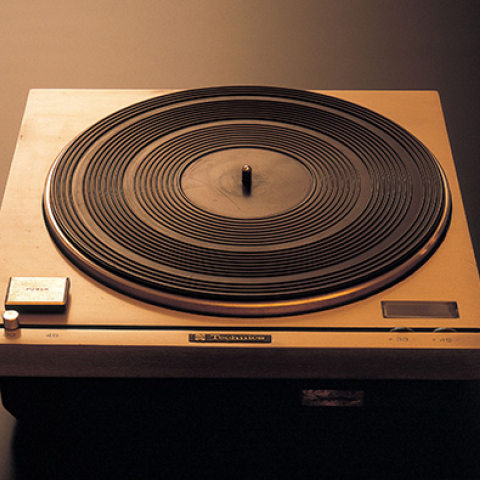
This happened recently when a young father, Marius, asked me to set up his new Technics SL-1200G with a Hana MH cartridge—a super nice rig for a first turntable. Marius had clearly been studying and was asking all kinds of informed questions as I assembled his new addition. His wife whisked the kids away to run some errands as I was working so that they wouldn't be a distraction, and after a little more than an hour, I had everything nicely dialed in. As we started to listen, the family returned, and seven-year-old Martin was giddy with excitement at the prospect of getting to play with this new machine. I explained to Marius that the 1200G's swappable headshells made it easy to have a second, less-costly cartridge mounted and ready to go and encouraged him to let his kids play their own records. I was thinking back to my own experience and how when I was around three, my parents moved the family record player up to a higher shelf to get it out of my reach. I am told my response was to climb up the bookcase so I could continue spinning records.
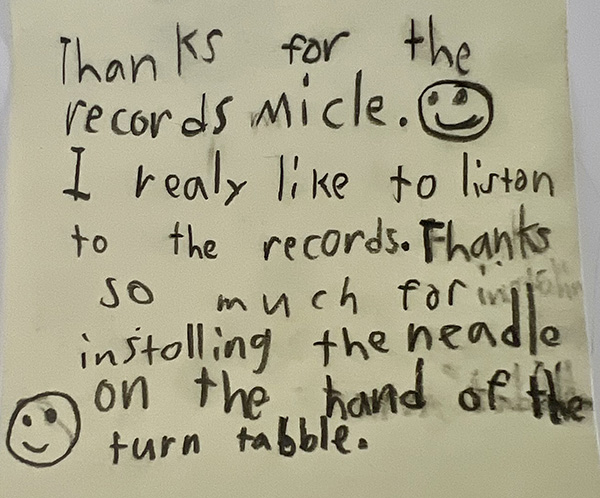 Imagine my delight when, a few days later, Marius sent me an image of a note written by young Martin, who is clearly on the vanguard of audiophiles. Martin, Marius said, was becoming obsessed with cleaning records on their Okki Nokki machine then playing them. But for me the true genius of the note is that Martin seems to have coined a new and much better name for the headshell, calling it the hand. This makes perfect sense: It's at the end of the arm, and it holds the cartridge. Genius. I expect to review Martin's first tonearm design in about 20 years.
Speaking of tonearm designs: A few days ago I was having one of my regular long phone calls with Steve Guttenberg, YouTube's Audiophiliac, when he asked me a probing question. "What part of a turntable system do you feel is the most important: the cartridge, the tonearm, or the turntable itself?" Steve and I have been close friends for more than 40 years, so he already knows what my answer should have been—or what it would have been a few decades ago. Steve knows I cut my audiophile teeth in the UK, and when we met, I was deeply steeped in the philosophies espoused by Linn founder Ivor Tiefenbrun. Linn's dogma said that the most important component in any system is the source, with each subsequent component, ending with the speakers, becoming less important, at least with regards to musical enjoyment. It's the old computer-world thinking of garbage in, garbage out. Most of the British hi-fi press from 45 years ago were deeply invested in this mindset and would propose some rather unbalanced systems, with an analog front end that cost 10 times what the speakers cost.
As for hierarchy within the turntable system itself, it's debatable which component leads and which follow, but according to the Book of Linn, it was the turntable first, followed by the tonearm, and then the cartridge. To press the point home, Linn's more affordable Basik tonearms came with a very low-cost cartridge sourced from Audio-Technica tossed in for free, with the thinking that it was "good enough"; you could always upgrade later. The cynical among us might now point out that Linn's earliest turntable products were a turntable, followed by a tonearm, and then a cartridge.
Perhaps I was aiming to provoke further discussion, but my answer to Steve's question was: The tonearm is the most important analog front end component, followed by the turntable then the cartridge; even so, this really is where my head is today.
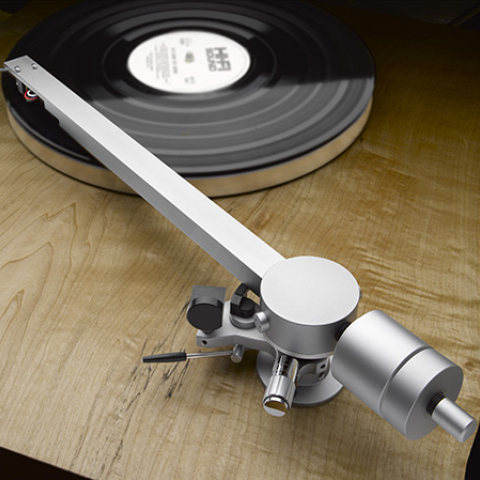
When you think about it, the tonearm has a nearly impossible task. It needs to hold the cartridge (using its hand—thanks, Martin) at a fixed height directly over the center of the record groove so that the stylus and cantilever can move in response to the microscopic deflections embedded in the groove wall itself. Meanwhile, the groove is moving up and down like a ship in a choppy swell, because the record isn't perfectly flat like a mirror, all while jogging sideways from left to right every 1.8 seconds because the record isn't perfectly centered on the turntable platter. Just watch the front of a cartridge as it is playing a record, and in almost every case, you will see it bobbing up and down and from left to right as it follows the groove. Yet we are asking the cartridge to ignore those huge movements and reproduce only the microscopic ones prompted by the deflections in the groove wall. In addition, the stylus has to define the lateral movement of the arm as it plays across the side of the record, although with almost any record, the movement is repeated two steps to the left then one step to the right due to the centering issue.
As if that wasn't difficult enough, we also want the arm to be rigidly fixed in length, with no give in the front-to-back position of the stylus relative to the groove. Ideally, we also want the arm to hold the cartridge at a fixed azimuth, the vertical alignment of the stylus when viewed from head on, as changes here will result in shifting crosstalk levels and phase errors.
To meet all these opposing conditions, most of the tonearms ever made have used a gimbal bearing, with two pairs of ball bearings: one for the horizontal movement, and another for the vertical movement. The problem is that a ball bearing is best suited for applications where there is continuous motion in a single direction, like a bicycle wheel or a fan motor. A tonearm's motion is very different—constantly changing directions, slowly, while only rotating through about 50° laterally and 5° degrees vertically. Because it is repeatedly stopping and reversing direction, the bearing is prone to stiction, which is short for "static friction." Stiction must be overcome every time the armtube starts moving or changes direction. Think of sliding a heavy sofa across a wood floor. It takes a lot more force to first get it sliding than it does to keep it sliding once it's moving.
Tonearm stiction can be minimized by using ultrahigh-quality bearings with precise bearing alignment, but over the years tonearm designers have tried many alternate bearing designs to minimize the problem. Probably the most popular is the unipivot arm where a single vertical point supports the moving part of the arm assembly, allowing free movement both vertically and laterally. A downside is that the arm can also rotate on its axis, resulting in shifting azimuth. Multipoint designs like the knife-edge vertical bearing used on older SME arms and the SAEC arm on the Luxman PD-151 Mark II or the 4Point arms from Kuzma add rotational stability to the mix, although only for the vertical bearing in most cases.
Imagine my delight when, a few days later, Marius sent me an image of a note written by young Martin, who is clearly on the vanguard of audiophiles. Martin, Marius said, was becoming obsessed with cleaning records on their Okki Nokki machine then playing them. But for me the true genius of the note is that Martin seems to have coined a new and much better name for the headshell, calling it the hand. This makes perfect sense: It's at the end of the arm, and it holds the cartridge. Genius. I expect to review Martin's first tonearm design in about 20 years.
Speaking of tonearm designs: A few days ago I was having one of my regular long phone calls with Steve Guttenberg, YouTube's Audiophiliac, when he asked me a probing question. "What part of a turntable system do you feel is the most important: the cartridge, the tonearm, or the turntable itself?" Steve and I have been close friends for more than 40 years, so he already knows what my answer should have been—or what it would have been a few decades ago. Steve knows I cut my audiophile teeth in the UK, and when we met, I was deeply steeped in the philosophies espoused by Linn founder Ivor Tiefenbrun. Linn's dogma said that the most important component in any system is the source, with each subsequent component, ending with the speakers, becoming less important, at least with regards to musical enjoyment. It's the old computer-world thinking of garbage in, garbage out. Most of the British hi-fi press from 45 years ago were deeply invested in this mindset and would propose some rather unbalanced systems, with an analog front end that cost 10 times what the speakers cost.
As for hierarchy within the turntable system itself, it's debatable which component leads and which follow, but according to the Book of Linn, it was the turntable first, followed by the tonearm, and then the cartridge. To press the point home, Linn's more affordable Basik tonearms came with a very low-cost cartridge sourced from Audio-Technica tossed in for free, with the thinking that it was "good enough"; you could always upgrade later. The cynical among us might now point out that Linn's earliest turntable products were a turntable, followed by a tonearm, and then a cartridge.
Perhaps I was aiming to provoke further discussion, but my answer to Steve's question was: The tonearm is the most important analog front end component, followed by the turntable then the cartridge; even so, this really is where my head is today.
When you think about it, the tonearm has a nearly impossible task. It needs to hold the cartridge (using its hand—thanks, Martin) at a fixed height directly over the center of the record groove so that the stylus and cantilever can move in response to the microscopic deflections embedded in the groove wall itself. Meanwhile, the groove is moving up and down like a ship in a choppy swell, because the record isn't perfectly flat like a mirror, all while jogging sideways from left to right every 1.8 seconds because the record isn't perfectly centered on the turntable platter. Just watch the front of a cartridge as it is playing a record, and in almost every case, you will see it bobbing up and down and from left to right as it follows the groove. Yet we are asking the cartridge to ignore those huge movements and reproduce only the microscopic ones prompted by the deflections in the groove wall. In addition, the stylus has to define the lateral movement of the arm as it plays across the side of the record, although with almost any record, the movement is repeated two steps to the left then one step to the right due to the centering issue.
As if that wasn't difficult enough, we also want the arm to be rigidly fixed in length, with no give in the front-to-back position of the stylus relative to the groove. Ideally, we also want the arm to hold the cartridge at a fixed azimuth, the vertical alignment of the stylus when viewed from head on, as changes here will result in shifting crosstalk levels and phase errors.
To meet all these opposing conditions, most of the tonearms ever made have used a gimbal bearing, with two pairs of ball bearings: one for the horizontal movement, and another for the vertical movement. The problem is that a ball bearing is best suited for applications where there is continuous motion in a single direction, like a bicycle wheel or a fan motor. A tonearm's motion is very different—constantly changing directions, slowly, while only rotating through about 50° laterally and 5° degrees vertically. Because it is repeatedly stopping and reversing direction, the bearing is prone to stiction, which is short for "static friction." Stiction must be overcome every time the armtube starts moving or changes direction. Think of sliding a heavy sofa across a wood floor. It takes a lot more force to first get it sliding than it does to keep it sliding once it's moving.
Tonearm stiction can be minimized by using ultrahigh-quality bearings with precise bearing alignment, but over the years tonearm designers have tried many alternate bearing designs to minimize the problem. Probably the most popular is the unipivot arm where a single vertical point supports the moving part of the arm assembly, allowing free movement both vertically and laterally. A downside is that the arm can also rotate on its axis, resulting in shifting azimuth. Multipoint designs like the knife-edge vertical bearing used on older SME arms and the SAEC arm on the Luxman PD-151 Mark II or the 4Point arms from Kuzma add rotational stability to the mix, although only for the vertical bearing in most cases.
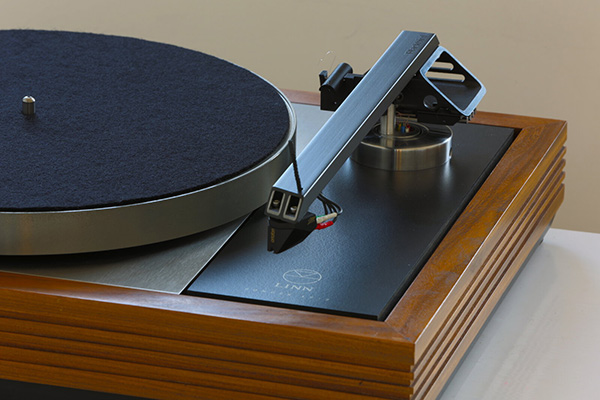 The Supatrac Nighthawk tonearm
My journey to explore the unusual tonearms made by England's Supatrac (footnote 1) has not been the easiest or smoothest. In early 2023, I saw a few pictures and heard some rumors. Then Supatrac showed up at that year's High End Munich. That's where I first encountered the Supatrac Blackbird and its very English inventor Richard Braine. Giving off the vibes of a brilliant, slightly eccentric boffin, Braine explained the concept behind the Blackbird, which looked and worked like nothing else I had ever seen. Braine calls it a sideways unipivot—in fact "Supa" stands for "sideways unipivot arm." After seeing it explained, my feeling is that it's a bit like Bill Firebaugh's Well Tempered arm but with a fixed pivot point instead of Firebaugh's silicone fluid bowl. As with the Well Tempered, the moving part of the arm is suspended from above by two suspension strings, but with the Supatrac, the arm's position is defined by a point facing to the rear from the fixed part of the arm. The support strings—Supatrac calls them hoists—are positioned so that when hanging naturally, the contact point for the pivot makes light contact with the pointed pivot bolt. This contact point's solidity is further ensured by a magnet inserted into the bolt.
I requested a Blackbird to review, but I think they got a bit overwhelmed. Every arm they could build was already sold. A little over a year later, I was asked to install a Blackbird for a customer. I told him I would give it a shot, but I told him I had never worked with one before, and it was very different from most arms.
When I got there, I was immediately stumped. I found the instructions very confusing and hard to relate to the arm in front of me. In desperation, I reached out directly to Richard Braine in England, but even with a phone consultation, it was making little sense. It turned out that the disassembled arm had been shipped with more parts than are covered in the instructions and that the supplied manual was actually for a different version of the arm. I apologized to the customer and packed up my tools. Braine said that because the arm is so unconventional, it is people like me, with a lot of experience with turntables, who have the hardest time figuring it out.
 I knew I needed to get this sorted out in my head, to prepare for future calls, so at the 2025 Munich show I spent close to two hours at the Supatrac booth, with Richard showing me all the ins and outs of setting up the arm.
A couple of months ago, I was contacted by another customer who wanted me to install a Supatrac arm—only this time the customer was in Texas, and the arm was their new flagship model, the Nighthawk. Rather than flying halfway across the country and running into more problems, I told the customer I would do it, but only if he was willing to ship the arm to me in New York first so I could spend some time getting familiar with it.
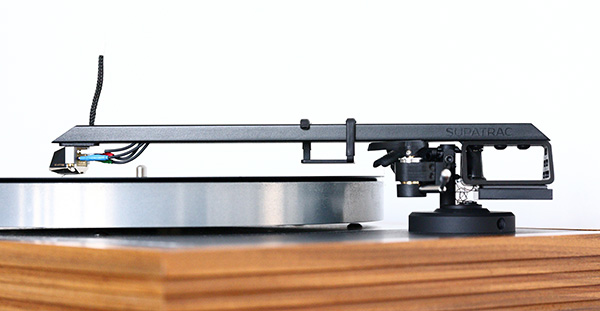
Fundamentally, the Nighthawk and the Blackbird are very similar arms, using identical design approaches. The Nighthawk simply takes everything to a significantly higher level. The arm pillar has double the width of the Blackbird's, for extra rigidity, and the pivot bolt is a heftier 8mm spike. One key difference is the armtube, which like the Blackbird's is a carbon fiber pultrusion (footnote 2), but the Nighthawk uses a more complex layered construction, with a stiffening plate bonded to the bottom of the armtube. This increases the effective mass of the Nighthawk to about 18gm for the 9" version, which can be increased further by adding a supplied clip-on weight called the adapter on the armtube.
I knew I needed to get this sorted out in my head, to prepare for future calls, so at the 2025 Munich show I spent close to two hours at the Supatrac booth, with Richard showing me all the ins and outs of setting up the arm.
A couple of months ago, I was contacted by another customer who wanted me to install a Supatrac arm—only this time the customer was in Texas, and the arm was their new flagship model, the Nighthawk. Rather than flying halfway across the country and running into more problems, I told the customer I would do it, but only if he was willing to ship the arm to me in New York first so I could spend some time getting familiar with it.
Fundamentally, the Nighthawk and the Blackbird are very similar arms, using identical design approaches. The Nighthawk simply takes everything to a significantly higher level. The arm pillar has double the width of the Blackbird's, for extra rigidity, and the pivot bolt is a heftier 8mm spike. One key difference is the armtube, which like the Blackbird's is a carbon fiber pultrusion (footnote 2), but the Nighthawk uses a more complex layered construction, with a stiffening plate bonded to the bottom of the armtube. This increases the effective mass of the Nighthawk to about 18gm for the 9" version, which can be increased further by adding a supplied clip-on weight called the adapter on the armtube.
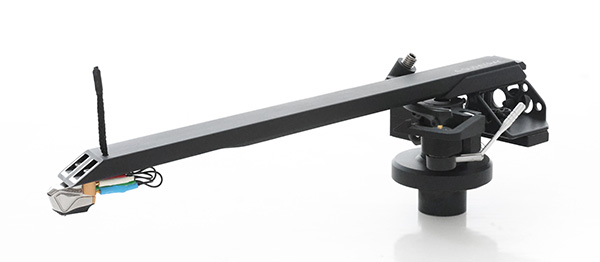 The Nighthawk is available in four common lengths, from 9"–12", ranging in price from $18,500 to $21,000. This is nearly triple the price of the Blackbird arm of the same length and a far cry from the affordable prices originally quoted for the Blackbird in 2023. As often happens with startups, once the reality of production costs, distributor and dealer margins, and the current volatility of the tariff schedule get recognized, prices inevitably go up.
Setup: In the 18 months since that first failed attempt at setting up a Supatrac arm, the setup experience has much improved. The instructions make more sense—but it's still a sea of unfamiliarity for those of us used to more conventional arms. It doesn't help that some of the parts have unusual names: hoist hook, Vader gate (as in Darth), and thrust box. I expect it's one of those things that get easier and faster each time you do it.
The Nighthawk I received is the 12" version, which mounts 291.5mm from the spindle and uses the Linn/Jelco mounting-bolt pattern. I mounted it on my Brinkmann LaGrange turntable.
The Nighthawk is available in four common lengths, from 9"–12", ranging in price from $18,500 to $21,000. This is nearly triple the price of the Blackbird arm of the same length and a far cry from the affordable prices originally quoted for the Blackbird in 2023. As often happens with startups, once the reality of production costs, distributor and dealer margins, and the current volatility of the tariff schedule get recognized, prices inevitably go up.
Setup: In the 18 months since that first failed attempt at setting up a Supatrac arm, the setup experience has much improved. The instructions make more sense—but it's still a sea of unfamiliarity for those of us used to more conventional arms. It doesn't help that some of the parts have unusual names: hoist hook, Vader gate (as in Darth), and thrust box. I expect it's one of those things that get easier and faster each time you do it.
The Nighthawk I received is the 12" version, which mounts 291.5mm from the spindle and uses the Linn/Jelco mounting-bolt pattern. I mounted it on my Brinkmann LaGrange turntable.
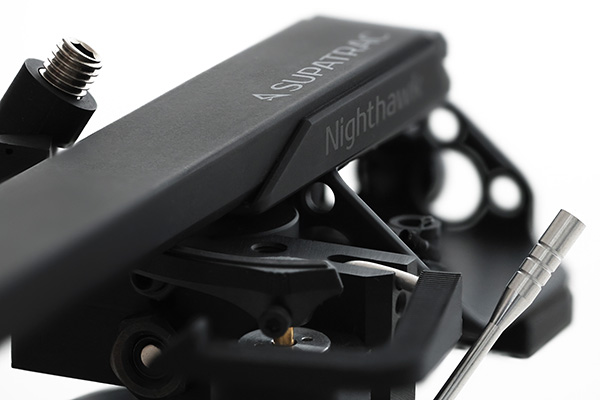 Almost everything about setting it up is unique to this arm, from the magnetically attached bars that you use to adjust the tracking force to the floppy string on top of the headshell that you use to lift and lower the cartridge. A lot of users seem to like the string, but I was never really able to get comfortable with it and if it were my arm would substitute the conventional finger lift that's provided. The arm comes without a conventional armrest; normally you would simply leave the arm sitting on the cueing device when not playing a record. An unusual wire arm rest is included and can be added, but it requires bending a soft metal rod into shape yourself. It remained in the box.
During my time with the Nighthawk, I used it with both the Lyra Atlas λ Lambda and Ortofon MC 90X cartridges. Cartridge alignment and the arm's position can be adjusted using a printed protractor on a piece of card. I hate using basic two-point protractors, so I found a way to position my Feickert NG protractor accurately so that I could use that.
Almost everything about setting it up is unique to this arm, from the magnetically attached bars that you use to adjust the tracking force to the floppy string on top of the headshell that you use to lift and lower the cartridge. A lot of users seem to like the string, but I was never really able to get comfortable with it and if it were my arm would substitute the conventional finger lift that's provided. The arm comes without a conventional armrest; normally you would simply leave the arm sitting on the cueing device when not playing a record. An unusual wire arm rest is included and can be added, but it requires bending a soft metal rod into shape yourself. It remained in the box.
During my time with the Nighthawk, I used it with both the Lyra Atlas λ Lambda and Ortofon MC 90X cartridges. Cartridge alignment and the arm's position can be adjusted using a printed protractor on a piece of card. I hate using basic two-point protractors, so I found a way to position my Feickert NG protractor accurately so that I could use that.
 Performance: All this effort to teach an old dog (me) new tricks would have been a waste if the Nighthawk didn't perform, but oh does it perform!
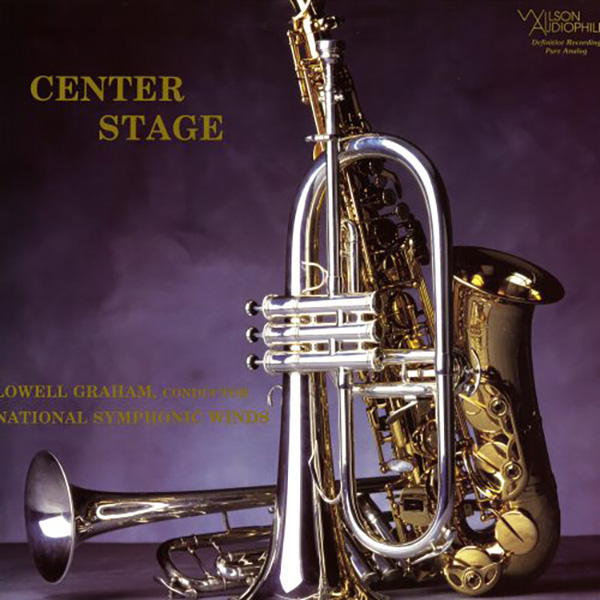
I once managed to damage an expensive cartridge by playing the "Olympic Fanfare" from Center Stage (Wilson Audio W-8824), with Lowell Graham and the National Symphonic Winds. This audiophile recording of a symphonic wind orchestra is famous for the bass drum heard 'round the world. The late David Wilson, who recorded it, once told me the percussionist was able to tune the bass drum to excite specific resonant frequencies in the hall they were recording in. The result has been used to sell subwoofers for nearly 40 years. Putting my Ortofon MC 90X's life at risk, I put the record on the Brinkmann and cued up the track. The Supatrac lived up to its name, sailing through the giant drum thwacks without a whiff of trouble, shaking the windows of my listening room. The brass instruments had bite and clarity while also remaining smooth and resonant. I can't remember hearing this recording sounding better.
One of the records I bring with me to every setup is Once in Every Life (Bee Hive BH 7012), the next-to-last album recorded by the great jazz singer Johnny Hartman. This great recording was reissued a few years back by Analogue Productions. I use it—an original—because it can be prone to sibilance when the setup isn't spot on. My go-to spot is during the song "I Could Write a Book," when Johnny sings the line "and the simple secret of the plot." Those ess sounds can really help you dial in the antiskating force. With a little tweak to the Nighthawk's bias weight, the line became clean as glass yet still sharp and incisive.
Performance: All this effort to teach an old dog (me) new tricks would have been a waste if the Nighthawk didn't perform, but oh does it perform!
I once managed to damage an expensive cartridge by playing the "Olympic Fanfare" from Center Stage (Wilson Audio W-8824), with Lowell Graham and the National Symphonic Winds. This audiophile recording of a symphonic wind orchestra is famous for the bass drum heard 'round the world. The late David Wilson, who recorded it, once told me the percussionist was able to tune the bass drum to excite specific resonant frequencies in the hall they were recording in. The result has been used to sell subwoofers for nearly 40 years. Putting my Ortofon MC 90X's life at risk, I put the record on the Brinkmann and cued up the track. The Supatrac lived up to its name, sailing through the giant drum thwacks without a whiff of trouble, shaking the windows of my listening room. The brass instruments had bite and clarity while also remaining smooth and resonant. I can't remember hearing this recording sounding better.
One of the records I bring with me to every setup is Once in Every Life (Bee Hive BH 7012), the next-to-last album recorded by the great jazz singer Johnny Hartman. This great recording was reissued a few years back by Analogue Productions. I use it—an original—because it can be prone to sibilance when the setup isn't spot on. My go-to spot is during the song "I Could Write a Book," when Johnny sings the line "and the simple secret of the plot." Those ess sounds can really help you dial in the antiskating force. With a little tweak to the Nighthawk's bias weight, the line became clean as glass yet still sharp and incisive.
 This song also features a fun walking bassline played by Victor Gaskin, which had more definition and clarity when played with the Nighthawk and MC 90X than I ever recall hearing. Blues singer Philadelphia Jerry Ricks was born in the city that gave him his name, but he spent a good part of his life living in Eastern Europe, including Budapest. That's where he recorded Empty Bottle Blues (Radioton SLPM 37062), in 1986. This album is Jerry singing, accompanying himself on acoustic guitar, performing his own blues compositions. On "Ain't No Fool," Jerry's sweet, clear voice is complemented by the tonal fluidity of his Martin D-76 guitar. With the Atlas in the Nighthawk, the soundstage was massive, with exceptional depth, yet perfectly focused.
Conclusion: Despite its funky nature, the Supatrac Nighthawk clearly performs on a world-class level. It has been over a year since I had the similarly priced the Kuzma Safir 9 in my system, so it's impossible for me to make a true direct comparison, but I remember the Safir's incredibly powerful and clear bass and dynamic prowess. The Supatrac lives up to its name by letting every cartridge navigate even the toughest records with ease, while maintaining an unsurpassed level of focus and clarity.
This song also features a fun walking bassline played by Victor Gaskin, which had more definition and clarity when played with the Nighthawk and MC 90X than I ever recall hearing. Blues singer Philadelphia Jerry Ricks was born in the city that gave him his name, but he spent a good part of his life living in Eastern Europe, including Budapest. That's where he recorded Empty Bottle Blues (Radioton SLPM 37062), in 1986. This album is Jerry singing, accompanying himself on acoustic guitar, performing his own blues compositions. On "Ain't No Fool," Jerry's sweet, clear voice is complemented by the tonal fluidity of his Martin D-76 guitar. With the Atlas in the Nighthawk, the soundstage was massive, with exceptional depth, yet perfectly focused.
Conclusion: Despite its funky nature, the Supatrac Nighthawk clearly performs on a world-class level. It has been over a year since I had the similarly priced the Kuzma Safir 9 in my system, so it's impossible for me to make a true direct comparison, but I remember the Safir's incredibly powerful and clear bass and dynamic prowess. The Supatrac lives up to its name by letting every cartridge navigate even the toughest records with ease, while maintaining an unsurpassed level of focus and clarity.
Footnote 1: Supatrac, 09 Cheyne Walk, London, SW10 0DJ United Kingdom. Tel: +44 77 04 50 20 20. Email: info@supatrac.com. Web: supatrac.com. US distributor: Musical Surroundings, 5662 Shattuck Ave., Oakland, CA 94609. Tel: (510) 547-5006. Web: musicalsurroundings.com. Footnote 2: I had to look it up. Pultrusion is an automated manufacturing process. Reinforcing fibers are pulled through a resin bath and a heated die, curing them into rigid, durable shapes.
Imagine my delight when, a few days later, Marius sent me an image of a note written by young Martin, who is clearly on the vanguard of audiophiles. Martin, Marius said, was becoming obsessed with cleaning records on their Okki Nokki machine then playing them. But for me the true genius of the note is that Martin seems to have coined a new and much better name for the headshell, calling it the hand. This makes perfect sense: It's at the end of the arm, and it holds the cartridge. Genius. I expect to review Martin's first tonearm design in about 20 years.
The Supatrac Nighthawk tonearmMy journey to explore the unusual tonearms made by England's Supatrac (footnote 1) has not been the easiest or smoothest. In early 2023, I saw a few pictures and heard some rumors. Then Supatrac showed up at that year's High End Munich. That's where I first encountered the Supatrac Blackbird and its very English inventor Richard Braine. Giving off the vibes of a brilliant, slightly eccentric boffin, Braine explained the concept behind the Blackbird, which looked and worked like nothing else I had ever seen. Braine calls it a sideways unipivot—in fact "Supa" stands for "sideways unipivot arm." After seeing it explained, my feeling is that it's a bit like Bill Firebaugh's Well Tempered arm but with a fixed pivot point instead of Firebaugh's silicone fluid bowl. As with the Well Tempered, the moving part of the arm is suspended from above by two suspension strings, but with the Supatrac, the arm's position is defined by a point facing to the rear from the fixed part of the arm. The support strings—Supatrac calls them hoists—are positioned so that when hanging naturally, the contact point for the pivot makes light contact with the pointed pivot bolt. This contact point's solidity is further ensured by a magnet inserted into the bolt.
I knew I needed to get this sorted out in my head, to prepare for future calls, so at the 2025 Munich show I spent close to two hours at the Supatrac booth, with Richard showing me all the ins and outs of setting up the arm.
The Nighthawk is available in four common lengths, from 9"–12", ranging in price from $18,500 to $21,000. This is nearly triple the price of the Blackbird arm of the same length and a far cry from the affordable prices originally quoted for the Blackbird in 2023. As often happens with startups, once the reality of production costs, distributor and dealer margins, and the current volatility of the tariff schedule get recognized, prices inevitably go up.
Almost everything about setting it up is unique to this arm, from the magnetically attached bars that you use to adjust the tracking force to the floppy string on top of the headshell that you use to lift and lower the cartridge. A lot of users seem to like the string, but I was never really able to get comfortable with it and if it were my arm would substitute the conventional finger lift that's provided. The arm comes without a conventional armrest; normally you would simply leave the arm sitting on the cueing device when not playing a record. An unusual wire arm rest is included and can be added, but it requires bending a soft metal rod into shape yourself. It remained in the box.
Performance: All this effort to teach an old dog (me) new tricks would have been a waste if the Nighthawk didn't perform, but oh does it perform!
I once managed to damage an expensive cartridge by playing the "Olympic Fanfare" from Center Stage (Wilson Audio W-8824), with Lowell Graham and the National Symphonic Winds. This audiophile recording of a symphonic wind orchestra is famous for the bass drum heard 'round the world. The late David Wilson, who recorded it, once told me the percussionist was able to tune the bass drum to excite specific resonant frequencies in the hall they were recording in. The result has been used to sell subwoofers for nearly 40 years. Putting my Ortofon MC 90X's life at risk, I put the record on the Brinkmann and cued up the track. The Supatrac lived up to its name, sailing through the giant drum thwacks without a whiff of trouble, shaking the windows of my listening room. The brass instruments had bite and clarity while also remaining smooth and resonant. I can't remember hearing this recording sounding better.
This song also features a fun walking bassline played by Victor Gaskin, which had more definition and clarity when played with the Nighthawk and MC 90X than I ever recall hearing. Blues singer Philadelphia Jerry Ricks was born in the city that gave him his name, but he spent a good part of his life living in Eastern Europe, including Budapest. That's where he recorded Empty Bottle Blues (Radioton SLPM 37062), in 1986. This album is Jerry singing, accompanying himself on acoustic guitar, performing his own blues compositions. On "Ain't No Fool," Jerry's sweet, clear voice is complemented by the tonal fluidity of his Martin D-76 guitar. With the Atlas in the Nighthawk, the soundstage was massive, with exceptional depth, yet perfectly focused.
Conclusion: Despite its funky nature, the Supatrac Nighthawk clearly performs on a world-class level. It has been over a year since I had the similarly priced the Kuzma Safir 9 in my system, so it's impossible for me to make a true direct comparison, but I remember the Safir's incredibly powerful and clear bass and dynamic prowess. The Supatrac lives up to its name by letting every cartridge navigate even the toughest records with ease, while maintaining an unsurpassed level of focus and clarity.
Footnote 1: Supatrac, 09 Cheyne Walk, London, SW10 0DJ United Kingdom. Tel: +44 77 04 50 20 20. Email: info@supatrac.com. Web: supatrac.com. US distributor: Musical Surroundings, 5662 Shattuck Ave., Oakland, CA 94609. Tel: (510) 547-5006. Web: musicalsurroundings.com. Footnote 2: I had to look it up. Pultrusion is an automated manufacturing process. Reinforcing fibers are pulled through a resin bath and a heated die, curing them into rigid, durable shapes.