Like romance or car racing, the act of playing records is tactile by design. Like drifting through curves or making out, spinning vinyl is a learned skill that requires users to touch everything with practiced assurance.
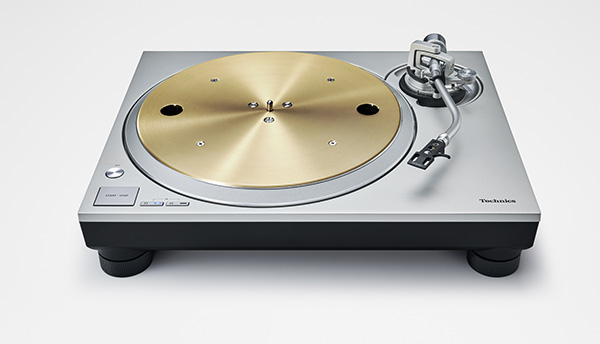
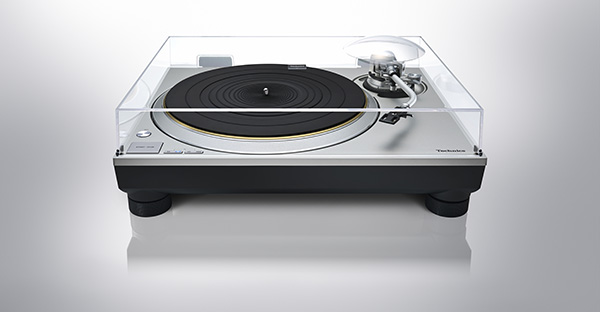
To play a disc with Technics' new SL-1300G record player means pushing its round On button, then touching one or more of its rectangular speed selector buttons, then pushing the big square [Start:Stop] button, then unclamping the tonearm and using its cue lever to raise it up.
Next comes the part where my heart beats a little faster: using the headshell's fingerlift to position the arm over the disc and lower it into a groove.
When the needle contacts the groove, the whole system kicks in and sound comes out. Every time I repeat this pulse-raising arm-cueing ritual, which I've been practicing since 1956, I can feel in my hands the material and engineering quality of the whole record-playing machine. I'm 75, so 68 years playing as many as 500 records per year results in my having experienced at least 34,000 intimate turntable encounters. That's what I call a friend with benefits. And a long-term relationship.
Speaking of long-term relationships, I've owned multiple Technics SL-1200s, using one for more than a decade. I still had it when I reviewed the Technics SL-1200GAE in 2016, and I am currently living with Technics' SL-1300G ($3299) and it's begging to move in. The direct drive SL-1300G is the latest addition to what Technics calls its fourth-generation record players (footnote 1).
Technics' first generation of direct drives began in 1970 and included the SP-10 and the SL-1100. Technics' second generation, which added quartz-locked speed control, was labeled Mk.II. It included the SP-10 Mk.II and the biggest-selling turntable of all time: the SL-1200 Mk.II. The third generation began in 2016 with the SL-1200GAE/G and employed all new closer-tolerance tooling for every part. It also introduced a new coreless motor with digital speed control, which Technics says eliminated the cogging issue. Technics' fourth generation began last year with the introduction of the $2199 SL-1200GR2, and now the SL-1300G, which I will be discussing in this month's Dreams.
 "Hi-fi styling"
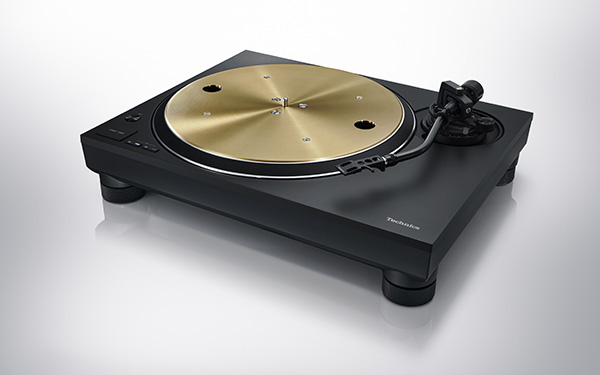
Incorporating features from the other fourth-generation turntables, the Technics SL-1300G represents a crossbreeding of the 'GR2 and the 'G (with a little SL-1000R thrown in for good measure). The result is a domesticated 1200G and a sonically upgraded 1200GR2. The 1300G uses the same triple-layered platter as the 1200G, and an "improved" version of the 1200G's twin-rotor, nine-stator motor. This means the 1300G's motor delivers the same amount of torque as the classic SP-10 Mk.II in a very un–DJ-looking package. Technics' gentle-speaking, good-explaining business development manager Bill Voss describes the 1300G as their "Styling model." He said the 1200GR2 and 1200G are "DJ Styled" while the 1300G is "Hi-Fi Styled," which means it lost the pitch control, the strobe, the cueing light, and the 45rpm adapter. They are also distinguished by being divided into two categories: one that Technics calls "DJ Design," which includes the flagship SL-1200G, the SL-1200GR2, and the SL-1200MK7, and the "Hi-Fi Design" group topped by the SL-1000R, just below which is the SL-1300G, and below that the SL-1500C. On the 1300G, the motor is bolted directly to its thick die-cast aluminum plinth, which in turn is attached to a rubber base, making it a two-layer chassis like the 'GR2, as opposed to the 1200G, which employs a four-layer plinth. These plinth and platter differences are evidenced by the fact that the 1200GR2 weighs 25.35lb, the 1300G weighs 30lb, and the 1200G weighs 42lb. The 1200G's extra weight is due to its heavier bottom cover and two layers of internal damping. Similarly, while the 'GR2's platter weighs 5.5lb, the 1300G's brass-topped diecast aluminum platter weighed 7.93lb on my bathroom scale.
In a text, Bill Voss asked me to not take the review sample apart. To which I gladly consented. I knew in advance: I could not reassemble the 1300G with the same level balance and fine tuning as Panasonic's skilled workers using specialized high-precision equipment.
Fortunately, Fernando Zorrilla of Technics super dealer SkyFi Audio had already taken it apart for me. Cool man Fernando's riveting 43-minute YouTube video (footnote 2) documents his "deep dive" into the SL-1300G. He completely disassembles a SL-1200G, a SL-1200GR2, and the new SL-1300G, comparing these decks side by side, part by part on his workbench. This video, plus the 1300G's owner's manual (footnote 3), answered every question I had (except ones about the tonearm; see later).
 Technics' new motor
At a promo demo at Panasonic's Newark, New Jersey, headquarters, Bill Voss explained how these fourth-generation products are distinguished by their use of Technics' "delta-sigma drive system" and an upgraded multistage power supply. According to Mr. Voss, the 1300G employs a revised version of Technics' coreless direct drive motor. Between this motor's twin rotors is a circuit board supporting nine triangular stator coils. The 1300's circuit board has been upgraded (over the 1200G's) to a new double-sided board with a "reinforced pattern to improve the coil-mounting rigidity." This is important trickle-down technology (from the SL-1000R) that should reduce vibrations and lower noise.
ΔΣ-Drive
For me the biggest news was the 1300G's delta-sigma drive system: a digital rotational control technology that, according to Technics, suppresses microvibrations. According to the Technics website: "The ΔΣ-Drive uses delta-sigma conversion technology to reduce errors in the drive signals, obtaining low distortion drive signals through highly precise PWM generation technology. It also helps to reduce the minor rotational inaccuracies and minute vibrations that cannot be picked up with wow and flutter or S/N ratios." This noise-reducing technology is assisted in its tasks by Technics' Multi-Stage Silent Power Supply, which features active noise canceling.
The result of these new technologies, as I describe in my auditioning below, is a modestly priced record player that performs (noise-, speed-stability-, and momentum-wise) like those big-ticket luxury decks.
 Tonearm questions
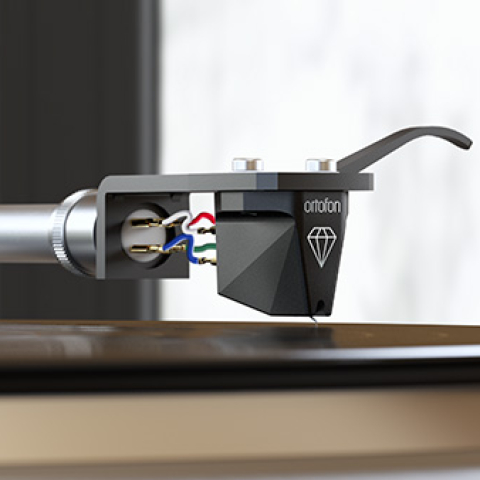
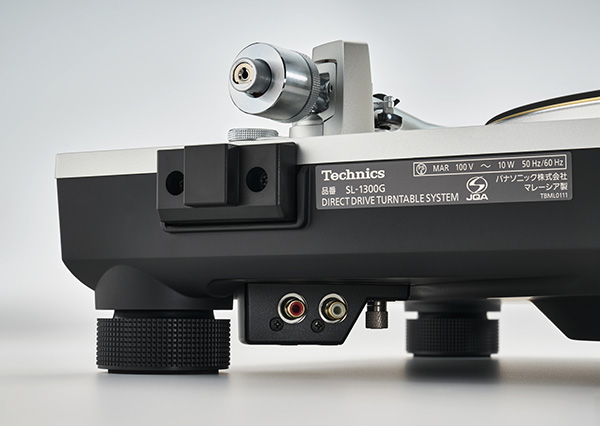
Even if you've never owned a turntable, even if you can't assemble an IKEA bed frame, if you diligently follow the directions in the 1300G's owner's manual, you will end up with a precisely aligned cartridge on a properly set-up turntable. But there is one detail that needs some elucidation. My Nagaoka MP-200 cartridge measures 18.5mm high. Dynavector's XX-2A cartridge measures 18.7mm, my Ortofon 2M Black measures 18mm, and my Goldring E3 measures 17.29mm. The 1300G's manual instructs users to "Adjust the arm height until the tonearm becomes parallel to the record." Under that instruction is an illustration showing an arrow pointing at the middle of the tonearm tube. But wait! Is that instruction correct?
With Nagaoka's MP-200 and the arm at its lowest setting ("0"), the 1300G's tonearm tube was conspicuously higher in the back and could not be lowered further. The Nagaoka is a pretty standard 18mm-high cartridge and if it won't level, which cartridges will?
Then, while I was VTA-vexing, it struck me: The engineers at Technics have been designing turntables longer than almost anybody, and they've sold millions, so it's likely they know more about turntable setup than I do. This thought urged me to a closer study of the 1300G's owner's manual, wherein I discovered a chart telling me that with an 18mm cartridge I should set the tonearm's height dial at 4mm. This seemed counterintuitive, but I tried it, and as I expected, the back of the tonearm looked even higher. However! While I was fretting to Spin Doctor Michael Trei about what I perceived as Technics' VTA issues, he instructed me to use a clear acrylic phono alignment block and train my eye on the top of the cartridge body, not the armtube, or the top of the headshell.
When I placed the sloped-top Technics headshell against Acoustic Signature's 15mm-thick alignment block, the top of the MP-200's body was parallel to the record surface. For decades I'd been eyeballing armtubes against the top of the record because that's where I thought I should start when setting vertical tracking angles. Now I use the alignment block, and a little bubble level designed to sit atop headshells.
I asked Bill Voss and he asked Technics' CTO, Mr. Tadayoshi Okuda, "Does the 1300G's platter sit 3mm higher than previous Technics platters?" Mr. Okuda replied, "It is the same platter as the SL-1200G's except for the presence or absence of the strobe dot."
The 1300G tonearm has an aluminum tube, so I asked, "Other than the magnesium pipe on the 1200G, is everything else on the 1300G's arm the same as the 1200G's?"
Tadayoshi Okuda replied: "The tonearm is almost the same as the SL-1200GR2's, however, the VTA is lowered by 3mm compared to the GR2. The reason for this is to accommodate the lower height type of cartridges."
As I expected, Mr. Okuda, Michael Trei, and the Technics owner's manual were right. But that wasn't the end of the lessons. Clever Trei pointed out two setup details that I had never considered. First was that tightening any H4 headshell with only a top pin can, and often will, raise the front of the headshell—sometimes by one or two degrees—making the headshell not exactly parallel to the armtube. When I checked for this on the Technics, I observed that when I tightened the 1300G's headshell collet as much as I could, the headshell did not appear to move.
Doing that reminded me of the first rule of all mechanical work: Never assume.
Footnote 1: Panasonic Corporation of America, Two Riverfront Plaza, Newark, NJ 07102. Tel: (201) 348-7000. Web: technics.com. Footnote 2: See youtube.com/watch?v=suL4deekMpE. Footnote 3: See av.jpn.support.panasonic.com/support/technics/ downloads.
"Hi-fi styling" Incorporating features from the other fourth-generation turntables, the Technics SL-1300G represents a crossbreeding of the 'GR2 and the 'G (with a little SL-1000R thrown in for good measure). The result is a domesticated 1200G and a sonically upgraded 1200GR2. The 1300G uses the same triple-layered platter as the 1200G, and an "improved" version of the 1200G's twin-rotor, nine-stator motor. This means the 1300G's motor delivers the same amount of torque as the classic SP-10 Mk.II in a very un–DJ-looking package. Technics' gentle-speaking, good-explaining business development manager Bill Voss describes the 1300G as their "Styling model." He said the 1200GR2 and 1200G are "DJ Styled" while the 1300G is "Hi-Fi Styled," which means it lost the pitch control, the strobe, the cueing light, and the 45rpm adapter. They are also distinguished by being divided into two categories: one that Technics calls "DJ Design," which includes the flagship SL-1200G, the SL-1200GR2, and the SL-1200MK7, and the "Hi-Fi Design" group topped by the SL-1000R, just below which is the SL-1300G, and below that the SL-1500C. On the 1300G, the motor is bolted directly to its thick die-cast aluminum plinth, which in turn is attached to a rubber base, making it a two-layer chassis like the 'GR2, as opposed to the 1200G, which employs a four-layer plinth. These plinth and platter differences are evidenced by the fact that the 1200GR2 weighs 25.35lb, the 1300G weighs 30lb, and the 1200G weighs 42lb. The 1200G's extra weight is due to its heavier bottom cover and two layers of internal damping. Similarly, while the 'GR2's platter weighs 5.5lb, the 1300G's brass-topped diecast aluminum platter weighed 7.93lb on my bathroom scale.
Technics' new motorAt a promo demo at Panasonic's Newark, New Jersey, headquarters, Bill Voss explained how these fourth-generation products are distinguished by their use of Technics' "delta-sigma drive system" and an upgraded multistage power supply. According to Mr. Voss, the 1300G employs a revised version of Technics' coreless direct drive motor. Between this motor's twin rotors is a circuit board supporting nine triangular stator coils. The 1300's circuit board has been upgraded (over the 1200G's) to a new double-sided board with a "reinforced pattern to improve the coil-mounting rigidity." This is important trickle-down technology (from the SL-1000R) that should reduce vibrations and lower noise.
For me the biggest news was the 1300G's delta-sigma drive system: a digital rotational control technology that, according to Technics, suppresses microvibrations. According to the Technics website: "The ΔΣ-Drive uses delta-sigma conversion technology to reduce errors in the drive signals, obtaining low distortion drive signals through highly precise PWM generation technology. It also helps to reduce the minor rotational inaccuracies and minute vibrations that cannot be picked up with wow and flutter or S/N ratios." This noise-reducing technology is assisted in its tasks by Technics' Multi-Stage Silent Power Supply, which features active noise canceling.
Tonearm questionsEven if you've never owned a turntable, even if you can't assemble an IKEA bed frame, if you diligently follow the directions in the 1300G's owner's manual, you will end up with a precisely aligned cartridge on a properly set-up turntable. But there is one detail that needs some elucidation. My Nagaoka MP-200 cartridge measures 18.5mm high. Dynavector's XX-2A cartridge measures 18.7mm, my Ortofon 2M Black measures 18mm, and my Goldring E3 measures 17.29mm. The 1300G's manual instructs users to "Adjust the arm height until the tonearm becomes parallel to the record." Under that instruction is an illustration showing an arrow pointing at the middle of the tonearm tube. But wait! Is that instruction correct?
Footnote 1: Panasonic Corporation of America, Two Riverfront Plaza, Newark, NJ 07102. Tel: (201) 348-7000. Web: technics.com. Footnote 2: See youtube.com/watch?v=suL4deekMpE. Footnote 3: See av.jpn.support.panasonic.com/support/technics/ downloads.