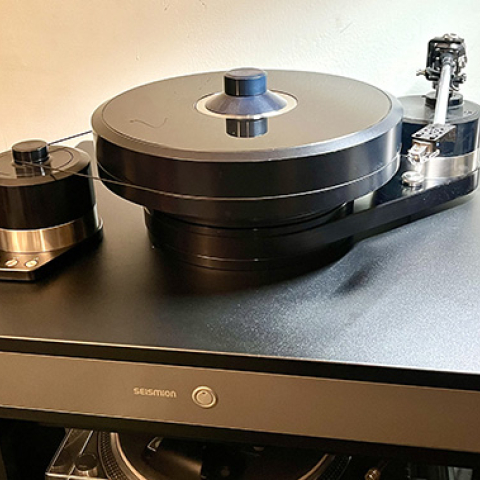
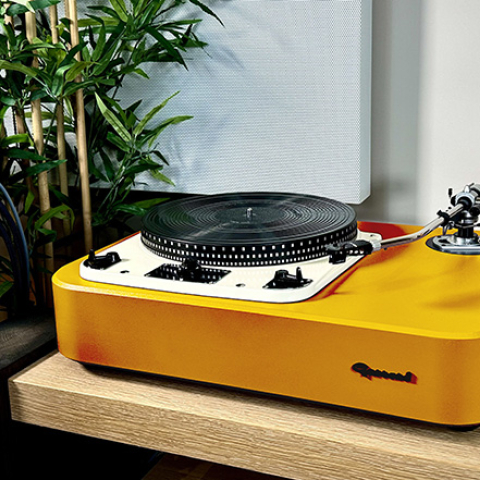
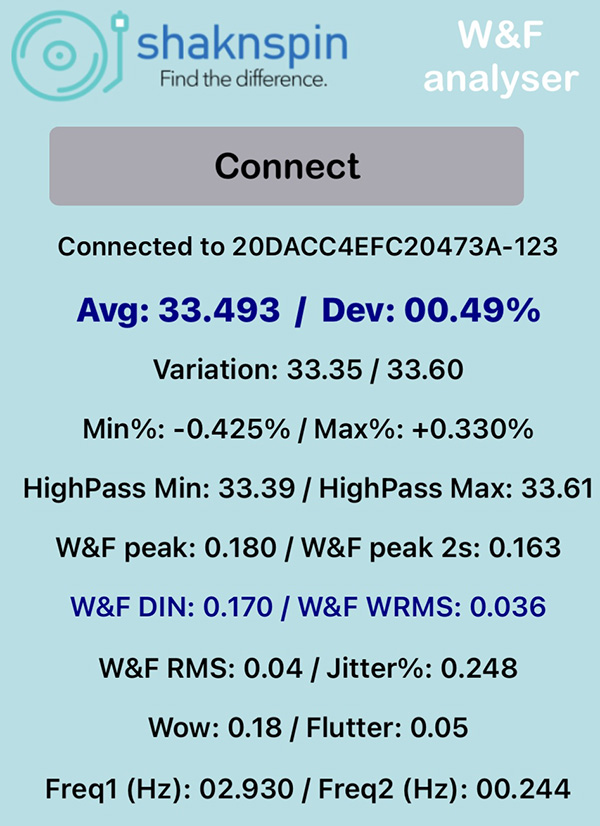
 Performance: Measurements made with the Shaknspin2 speed-measuring device showed that the DG-1S was running about 0.4% fast—not terrible but a little disappointing at the price, and not adjustable (footnote 4). More importantly, the peak wow and flutter was around 0.18%, an excellent result.
After several days of casual use to get everything bedded in, I started a round of more intent listening with "Round Midnight" from Chick Corea's 1982 album Trio Music (ECM 1232/33). Right out of the gate, I heard the hallmarks of a Touraj Moghaddam design, the kind of forward momentum and immediacy I normally associate with classic idler designs like the Garrard 301. No sluggishness! Miroslav Vitou's acoustic bass had the sense of well-defined tightness and clarity you rarely hear from an acoustic double bass, making it easier to hear how his lines jibed with what Chick was playing on piano.
While the bass was fast and clear, it couldn't quite match the power at the very bottom end that you can get from my big, much more costly reference turntables. I'm sure Vertere will tell you that moving up in their line will let you have it all, which may well be true.
Performance: Measurements made with the Shaknspin2 speed-measuring device showed that the DG-1S was running about 0.4% fast—not terrible but a little disappointing at the price, and not adjustable (footnote 4). More importantly, the peak wow and flutter was around 0.18%, an excellent result.
After several days of casual use to get everything bedded in, I started a round of more intent listening with "Round Midnight" from Chick Corea's 1982 album Trio Music (ECM 1232/33). Right out of the gate, I heard the hallmarks of a Touraj Moghaddam design, the kind of forward momentum and immediacy I normally associate with classic idler designs like the Garrard 301. No sluggishness! Miroslav Vitou's acoustic bass had the sense of well-defined tightness and clarity you rarely hear from an acoustic double bass, making it easier to hear how his lines jibed with what Chick was playing on piano.
While the bass was fast and clear, it couldn't quite match the power at the very bottom end that you can get from my big, much more costly reference turntables. I'm sure Vertere will tell you that moving up in their line will let you have it all, which may well be true.
 Drumming legend Roy Haynes's style is hard to miss, especially when he's using brushes, as he is on this track. As with Vitou's bass, the focus of the sound is on the pacing, with every accent clearly defined. Overall, Haynes's drum sound was clear and transparent, providing plenty of insight into the timbre of Haynes's snare drum and cymbals.
It was pretty amazing last year when the streaming TV show Stranger Things brought Kate Bush's 37-year-old song Running Up That Hill back onto the charts. Back in the day, I used this song, and the entire Hounds of Love album (EMI America 17171), to audition gear, because it was quite hard to make this almost entirely synthesized track sound good. On a less-than-sorted turntable, the lush, atmospheric Fair-light CMI synth sounds, gated LinnDrum rhythms, and Kate's heavily processed voice can sound disjointed and confusing, while on a good front end, including the DG-1S, everything gels to form a coherent whole that makes sense. I particularly noted the sense of space around each sound, combining to create a big, airy soundstage with plenty of depth. Kate's vocal is treated with a shorter reverb than the backing track, which helps it stand out against the other instruments, and on the DG-1S, every word remained clear and easily understood.
The DG-1S delivers a healthy slice of the engaging sound you get with bigger Vertere models. These days it can be hard to find a setup person who knows their way around a turntable, so any package that requires minimal setup work is welcome.
Drumming legend Roy Haynes's style is hard to miss, especially when he's using brushes, as he is on this track. As with Vitou's bass, the focus of the sound is on the pacing, with every accent clearly defined. Overall, Haynes's drum sound was clear and transparent, providing plenty of insight into the timbre of Haynes's snare drum and cymbals.
It was pretty amazing last year when the streaming TV show Stranger Things brought Kate Bush's 37-year-old song Running Up That Hill back onto the charts. Back in the day, I used this song, and the entire Hounds of Love album (EMI America 17171), to audition gear, because it was quite hard to make this almost entirely synthesized track sound good. On a less-than-sorted turntable, the lush, atmospheric Fair-light CMI synth sounds, gated LinnDrum rhythms, and Kate's heavily processed voice can sound disjointed and confusing, while on a good front end, including the DG-1S, everything gels to form a coherent whole that makes sense. I particularly noted the sense of space around each sound, combining to create a big, airy soundstage with plenty of depth. Kate's vocal is treated with a shorter reverb than the backing track, which helps it stand out against the other instruments, and on the DG-1S, every word remained clear and easily understood.
The DG-1S delivers a healthy slice of the engaging sound you get with bigger Vertere models. These days it can be hard to find a setup person who knows their way around a turntable, so any package that requires minimal setup work is welcome.
 Playing 7" Records the Right Way
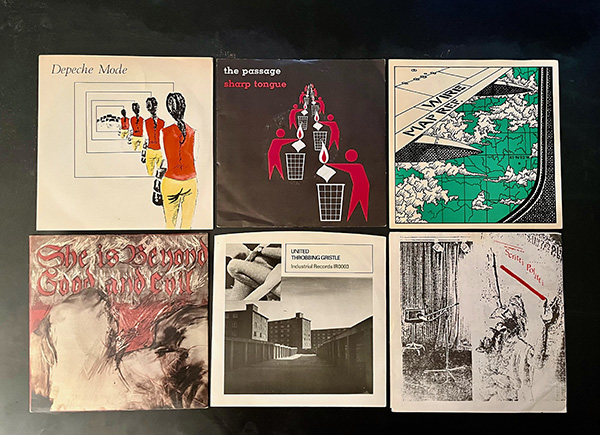
They say that the music of your youth will stay with you for the rest of your life, and that has certainly been true for me. At age 14, I was attending a boarding school in England when I had my first real musical epiphany, hearing BBC Radio 1 DJ Alan Freeman, on his Saturday Rock Show, play The Ramones. It was the first punk record ever played on British radio, and it caused my musical interests to shift in that direction. Suddenly, the sludgy rock and yawn-inducing prog bands I hooked onto as a younger kid seemed very uncool. I embraced the punk movement as it took over youth musical culture in Britain. At school, some friends and I formed a punk band, The Ripchords. We put out a record and even managed to successfully pester Radio 1 DJ John Peel into playing it a couple of times. I am, obviously, deep into vinyl records today, but it wasn't always that way. At boarding school, playing LPs wasn't practical, so cassettes were king; they remained my format of choice for many years. Despite a few early-vinyl purchases, it wasn't until I was at college and finally had my own record player that I started buying records voraciously. By now my interest in punk was morphing into post punk—bands like Echo and the Bunnymen, This Heat, and The Comsat Angels, many of which released their earliest (and often best) music on 7" singles.
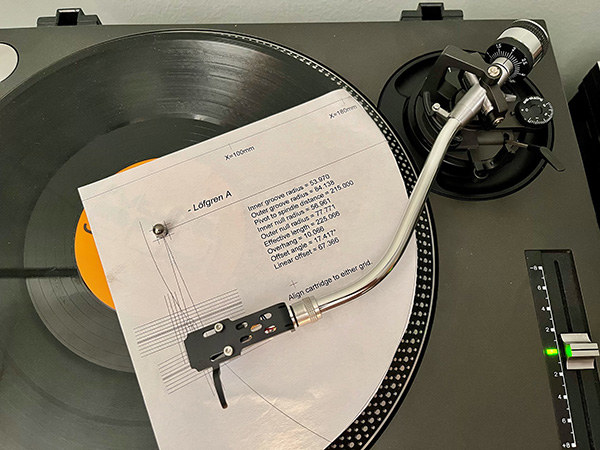 I'm not aware of any protractors available for purchase that are made for 7" records, but a nifty online tool will allow you to make your own. Conrad Hoffman, an audio enthusiast who frequents the Vinyl Engine forums offering helpful and practical advice for all, built a neat little protractor app that lets you define your own parameters in a template then create customized printable arc protractors (footnote 5). I looked up the official RIAA specifications for a 7" record then entered the figures into Hoffman's app. To save you the trouble of looking it up yourself, I used 84.138mm for the outer groove and 53.97mm for the inner groove. The app also lets you choose between Baerwald, Löfgren, or Stevenson calculations, scaled down for the smaller size, but your decision may be determined by how much scope you have to move the cartridge around. Stevenson in particular puts the cartridge really far back in the headshell, so you may not be able to reach the required spot with your tonearm. The only other specification you'll need is your tonearm's spindle-to-pivot distance, which you should be able to find on the Vinyl Engine website or from your turntable or tonearm maker's specifications.
Once the protractor is printed (footnote 6), I like to use an old, damaged record as a support, using a little spray on paper glue to stick the sheet in place. Take care to line up the position for the spindle hole on the paper accurately with the hole in the record; I put a light under the record so I can see the hole through the paper as I position it and stick it down. Now put the protractor on the turntable and move the cartridge back until the stylus follows the arc line perfectly from end to end and the cantilever is square with the grid at both null points. You'll find that the correct position is pushed far back and twisted outward to reduce the offset angle. With the Technics arm, I ended up with the cartridge about 8mm farther back in the headshell and twisted about 4° counterclockwise to reduce the offset angle. That's a pretty radical change.
I'm not aware of any protractors available for purchase that are made for 7" records, but a nifty online tool will allow you to make your own. Conrad Hoffman, an audio enthusiast who frequents the Vinyl Engine forums offering helpful and practical advice for all, built a neat little protractor app that lets you define your own parameters in a template then create customized printable arc protractors (footnote 5). I looked up the official RIAA specifications for a 7" record then entered the figures into Hoffman's app. To save you the trouble of looking it up yourself, I used 84.138mm for the outer groove and 53.97mm for the inner groove. The app also lets you choose between Baerwald, Löfgren, or Stevenson calculations, scaled down for the smaller size, but your decision may be determined by how much scope you have to move the cartridge around. Stevenson in particular puts the cartridge really far back in the headshell, so you may not be able to reach the required spot with your tonearm. The only other specification you'll need is your tonearm's spindle-to-pivot distance, which you should be able to find on the Vinyl Engine website or from your turntable or tonearm maker's specifications.
Once the protractor is printed (footnote 6), I like to use an old, damaged record as a support, using a little spray on paper glue to stick the sheet in place. Take care to line up the position for the spindle hole on the paper accurately with the hole in the record; I put a light under the record so I can see the hole through the paper as I position it and stick it down. Now put the protractor on the turntable and move the cartridge back until the stylus follows the arc line perfectly from end to end and the cantilever is square with the grid at both null points. You'll find that the correct position is pushed far back and twisted outward to reduce the offset angle. With the Technics arm, I ended up with the cartridge about 8mm farther back in the headshell and twisted about 4° counterclockwise to reduce the offset angle. That's a pretty radical change.
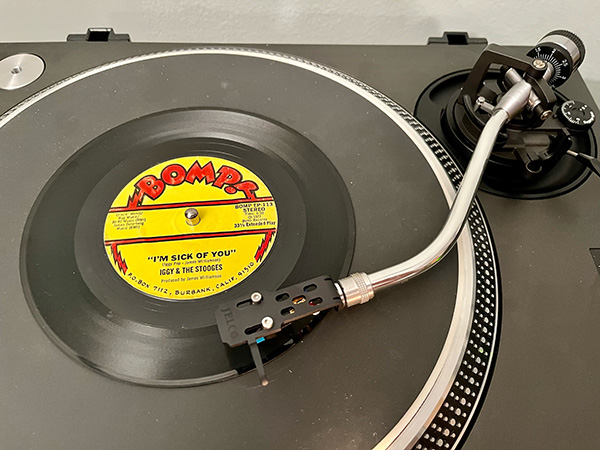 The resulting playback will unlock a level of performance you probably never believed was possible from a single. The sound is cleaner and more transparent, with significantly improved width, depth, and focus. I used an Audio-Technica VM95 series cartridge, which allows you to quickly swap between the five different styli to match the record being played. Use the spherical C stylus to play old, worn mono singles and US styrene pressings, while the red Microlinear stylus works great with clean, later UK pressings. Experimentation is simple and fun. Yes, you have to get up every three to four minutes to change the record, but I had a blast rediscovering my hundreds of singles.
Footnote 4: The upgraded Challenger power supply does not seem to be speed-adjustable, either. Footnote 5: See conradhoffman.com/chsw.htm. The protractor apps are the third and fourth items on the list. There's some other good stuff there, too, like the poet's guide to antiskate. Footnote 6: Depending on settings, some printers may automatically scale the output. You need to be sure the protractor prints at exactly the right size.