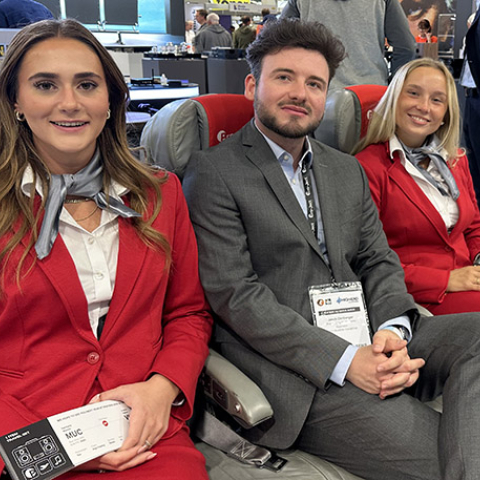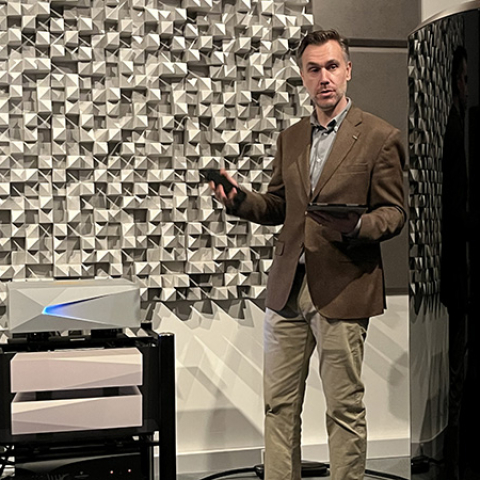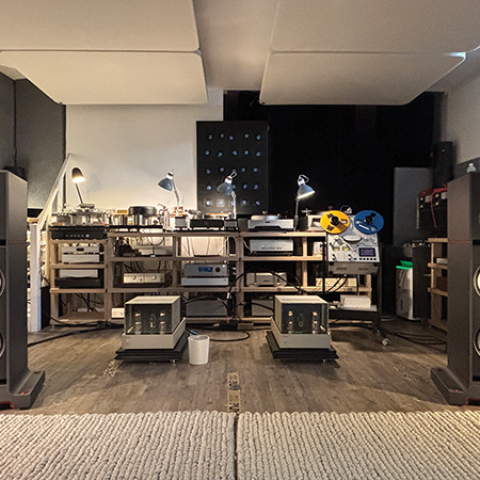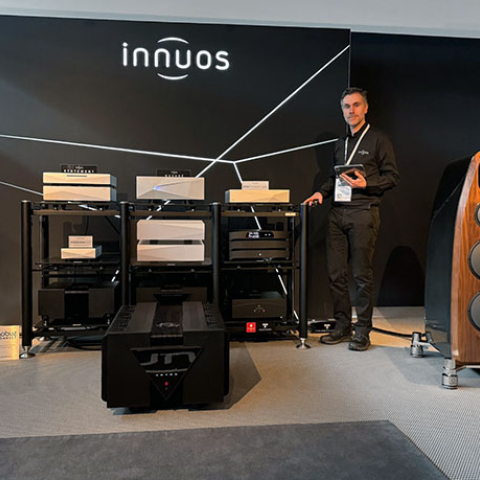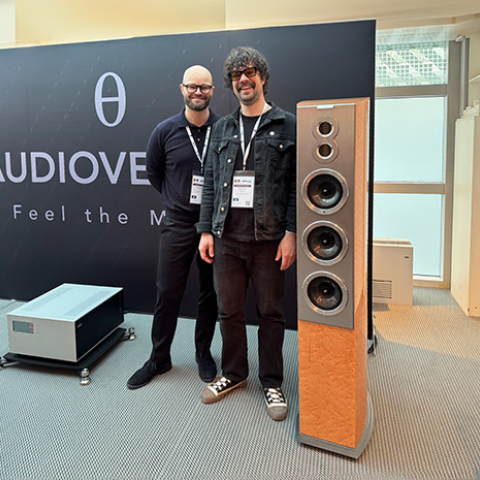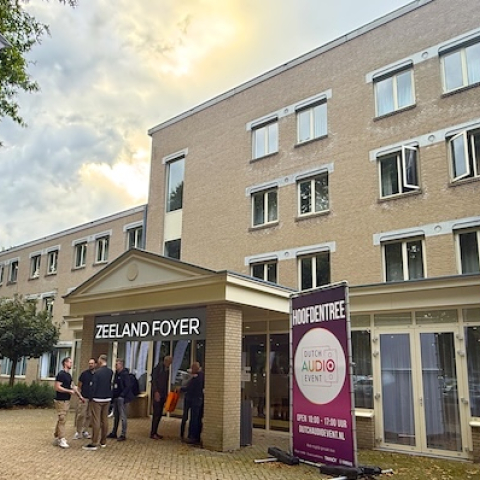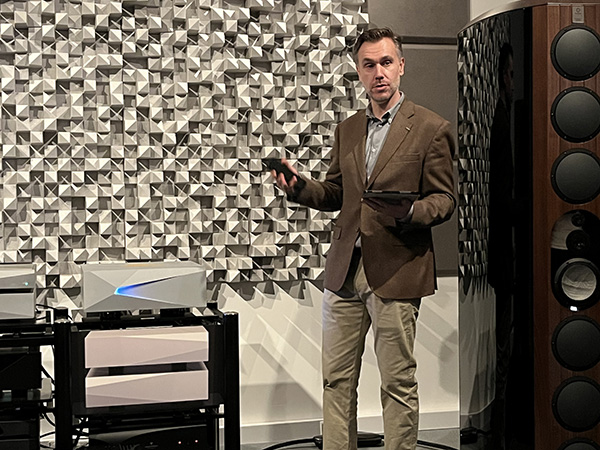
Innuos's Nuno Vitorino introduces the new Nazaré streamer-server. (Photos by Michael Trei.)
It was supposed to be so simple, a well-trod path I've followed almost every May for the last decade: A six-day trip to Munich to attend the final Munich High End Show before it decamps to Vienna next year.
I see any trip to Europe as an opportunity to replenish my personal stash of Anthon Berg Danish marzipan bars, a childhood favorite with a crack-like addictive pull. My flights and hotel were booked months in advance. I was ready to go.
Then Jim Austin, my esteemed editor, asked if I could attend an event at the Clearaudio factory in Erlangen a couple of days before the show, where they would be launching an unspecified new product. I'm the Spin Doctor, and Clearaudio makes record spinners, so of course I said yes. I have set up literally hundreds of Clearaudio products over the last 30 years, but this was my first opportunity to visit their home base and see for myself where and how their products are made. Besides, I'm always up for any opportunity to be unleashed on the speed-limit-free German Autobahn for a few hundred miles, even if it's only in a rental car. I rebooked my outgoing flight so that I could arrive a couple of days earlier than originally planned, to attend the event.
The first stop on my expanded audio mystery tour was the headquarters of Innuos. The company was tight-lipped about what they wanted us to come and experience; all I knew before I winged my way to Portugal was that they had a new flagship streamer-server, and even that part was top-secret. The Innuos headquarters is located in the picture-postcard city of Faro in Portugal's southernmost region, Algarve. If you ever wanted to locate your company in paradise, Faro seems like a good option. White sandy beaches, abundant sunshine, superb restaurants, and a relaxed attitude toward life is the everyday norm here.
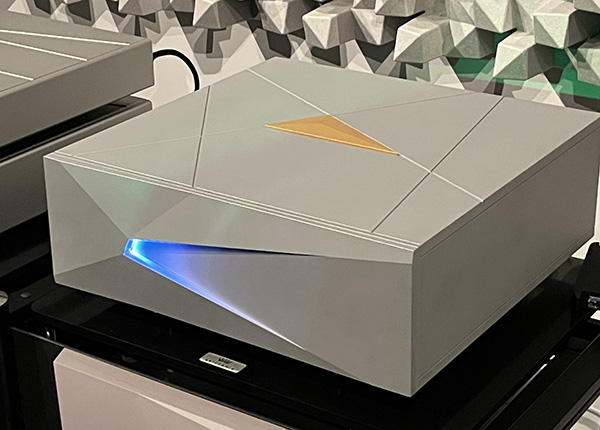
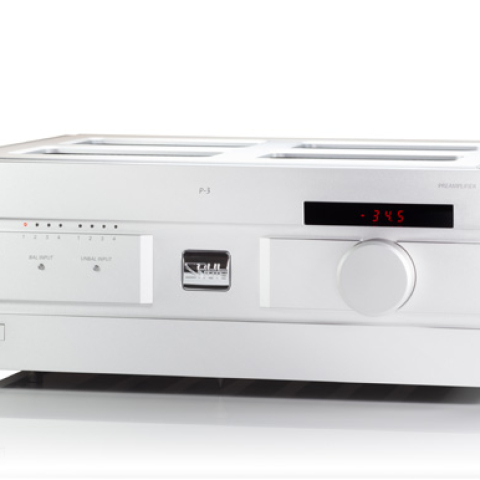
The Innuos Nazaré's main chassis
Nuno Vitorino explained that Nazaré the streamer) consists of three components, each of which can be used independently, or they can all be used together to create a complete, state-of-the-art digital source. The Nazaré is the streamer-server; the Nazaré FLOW is a fully customizable digital output stage; the buyer can specify what type of output module they need to create the best connection to their DAC. A third box goes on the input side: the Nazaré NET, a state-of-the-art network switch.
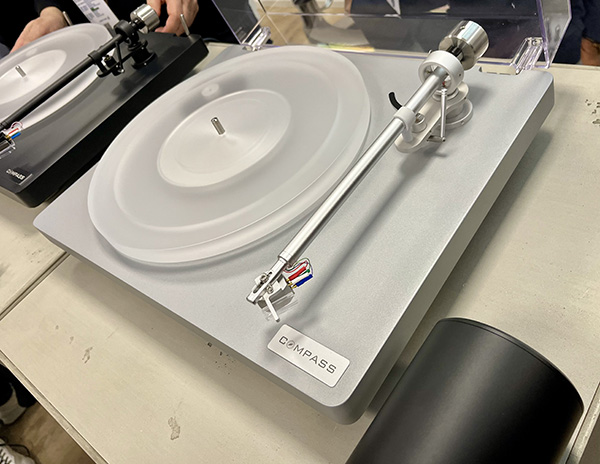
The New Clearaudio Compass
North to ClearaudioClearaudio's home base is the northern Bavarian city of Erlangen, about 120 miles north of Munich. I rented a car at the Munich airport, which turned out to be a sinister-looking black 2025 BMW 5-Series sedan, the perfect Autobahn cruiser. For the last 30 years, I have been a devout Mercedes guy, so tooling around in a Bimmer felt a bit like sleeping with the enemy. But hey, when you're in Munich, you go with the home team. The drive to Erlangen was refreshingly quick at Autobahn speeds, and I was at the hotel before 11pm, resting up for the next day's activities. Clearaudio's factory is a busy place, with a lot of heavy machinery densely packed into a tight space. As I found with my prior visits to Acoustic Signature and SME, Clearaudio is a true turntable manufacturer, making most of the mechanical parts for their turntables, tonearms, and cartridges in house. It's also a family business, founded by Peter Suchy in 1978 and now run by Peter's children Robert, Patrick, and Veronika. During a tour of the production facilities, I was able to see turntables and tonearms being built, and the microdetailed work involved in building phono cartridges. Clearaudio offers a generous trade-in program for cartridge upgrades and exchanges, and I was shown several bins filled with dead cartridges, victims of various kinds of abuse and neglect. Following the tour, Robert Suchy gave a presentation, including a discussion of new power supply options and culminating with the unveiling of Clearaudio's latest entry-level turntable, the Compass. This model breaks with prior Clearaudio tradition in that it is mostly manufactured off site, with some parts and assembly completed by the Litovel factory in the Czech Republic, which also builds Pro-Ject turntables. The most critical parts, such as the main bearing and tonearm, are made by Clearaudio in Erlangen, then shipped to Litovel to assemble. Clearaudio also showed a new entry-level moving magnet cartridge called the N1, which, in contrast to earlier Clearaudio MM cartridges, comes with a user-replaceable stylus. In Europe, MSRP will be 1290; US pricing is expected to be $2000 with the N1 cartridge.
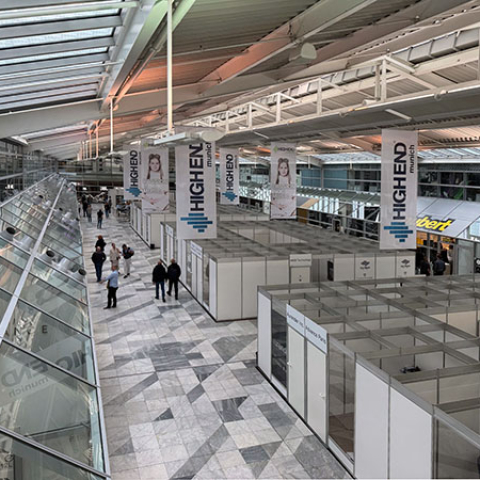
It was time to head back to Munich for the big show. I think this was my 10th Munich show, but it's only now, just as it's about to go away, that I seem to have mastered the cryptic room-numbering scheme used at the Munich Order Center (MOC). Word is, BMW bought the massive facility and plans to raze it to make space for a new building. I have never been especially organized, but this time I was determined to make a plan and stick to it so that I wouldn't miss any important product launches. For the most part I was successful. Here are some of my Munich Show highlights.
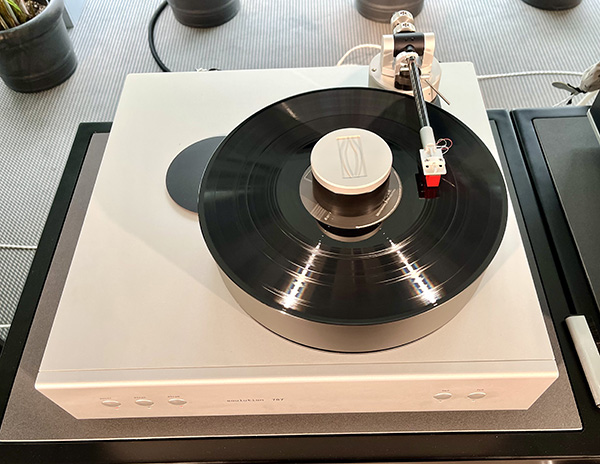
01: Soulution 787, est. CHF67,500
Perhaps the biggest turntable buzz—not literally—at the show was the Soulution 787, to which I give my "Move the Mountain to Muhammad" award. Instead of having the cartridge follow the groove across the record, the cartridge remains in one place while the record moves underneath it. This approach has been used before.
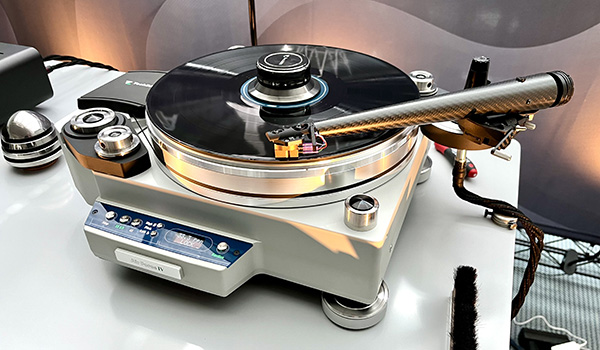
02: TechDAS Air Force IV, $33,000
There are superstitions in Japan about the number four, but this new model sits between the TechDAS V and the TechDAS III in their lineup, so what else were they gonna call it? I spotted several Air Force IVs at the show, including one with a Wand Dark-Light tonearm—review coming soon—and one with the TechDAS Air Force 10 arm.
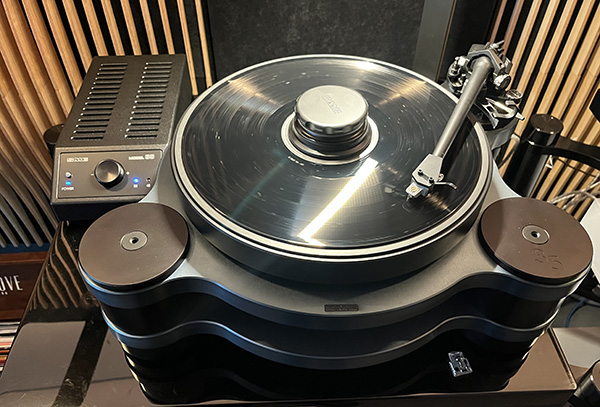
03: SME Model 35, £37,999
SME has been busy creating new models over the last few years, and the new 35 marks a real change of direction, replacing SME's first turntable, the Model 30, which was launched 35 years ago. The Model 35 takes the three-legged approach of the Model 15 but with a suspension similar to that on the flagship Model 60. The 35's tonearm is a brand-new variant of the Series V called the Vi. It uses a resin armtube similar to the VA found only on the Model 60.
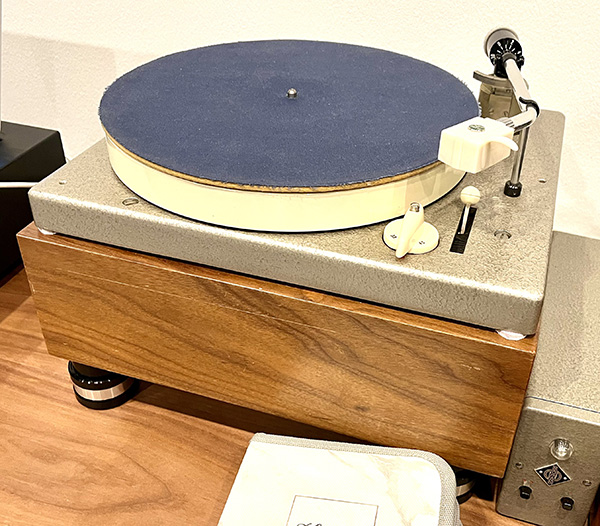
04: Neumann PA2. Here's one you can't even buy.
The Silbatone room is always the place where you can find ultra-unobtainium vintage gear, such as 100-year-old Western Electric horn speakers driven by the rarest tubes on the planet fitted to Silbatone amps made by my friend J.C. Morrison. This year was no exception. Nestled in the middle of a long row of turntables from Thomas Schick and Frank Schröder was this uber-rare Neumann PA2.
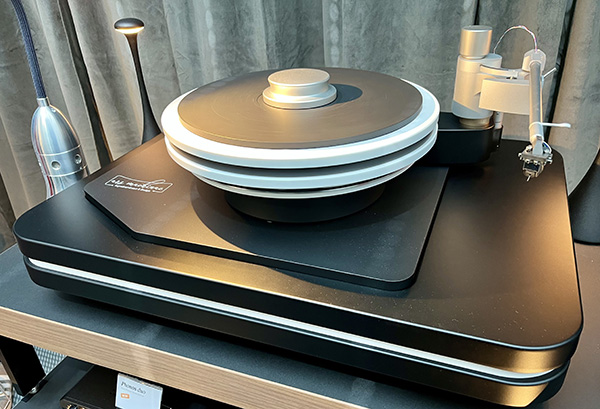
05: ARS Machinae M1, $38,000
I recently worked on one of these beautiful German turntables. It deserves attention.
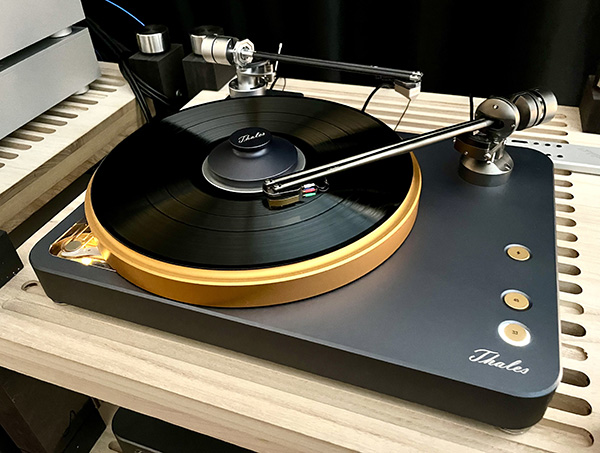
06: Thales Reference, $28,500
Thales turntables are like little Swiss jewel boxes: compact, elegant, and highly sophisticated, with pivoted linear-tracking tonearms and battery power supplies. I have installed dozens of them for Audio Arts NYC. The new Reference turntable takes a unique approach to speed regulation, with a mechanical governor that uses sliding weights on a spinning wheel to keep the speed consistent.
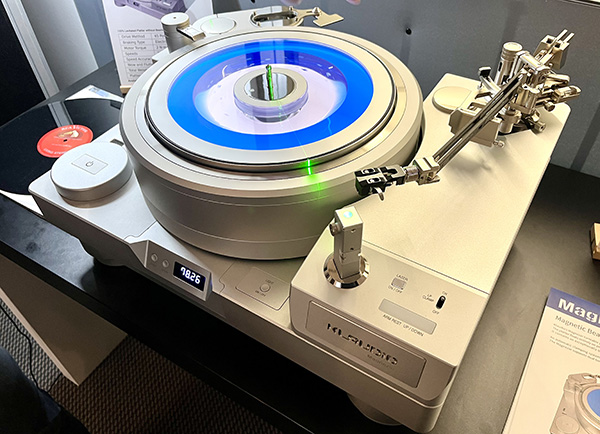
07: Klaudio Magnezar, $50,000
Here's another turntable that breaks the mold, in several ways. The Magnezar is a direct-drive turntable with a magnetically levitating platter, a pivoting tangential tonearm, a motorized record-clamping system that automatically clamps the edge and center of the record, and a liquid-filled platter that stabilizes things by forcing the liquid to the perimeter of the platter as it spins, through centrifugal forces.
08: DS Audio ES 002, about $4000
When I reviewed the DS Audio ES 001 record centering device for Analog Planet a couple of years ago, the main complaint was its prohibitive price. The new ES 002 lowers the price of entry substantially, though it's still expensive. A review is coming soon.
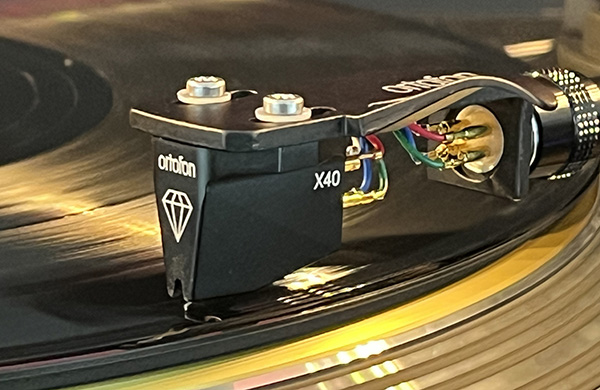
09: Ortofon MC X moving coil cartridges, $299 to $999
Ortofon has replaced the slow-selling MC Quintet range with the MC X series. Instead of Ortofon's usual Red, Blue, Bronze, and Black hierarchy, the MC X takes a page from the OM series, ranging from the $299 MC X10 to the MC X40 at $999. Ortofon says a new damper design delivers improved performance, while the four models are differentiated by stylus type and cantilever material.
That's just a few high points from an impossibly large show.
Way Out WestThe final chapter in this four-legged trip began the day after the Munich show when I connected with Steve Jain and the crew from Fidelity Imports and various writers and YouTubers for a trip to AVM and ViaBlue. Both companies are located around the corner from each other in a town called Malsch, about 230 miles west of Munich near the spa town of Baden Baden, which is where we set up camp. Jain had pulled some strings to get us a private tour of the Mercedes AMG engine plant, where they famously have a single person assemble each engine from start to finish, after which they apply a signed plate with the builder's name on it. In my many trips to the Stuttgart area for Mercedes-related visits, I have seen just about everything, from private tours of the Classic Center's secret warehouses to about a dozen times around the main factory, but this was entirely new for me, and a real treat. Photography inside the assembly plant was strictly verboten, so I don't have anything to show.
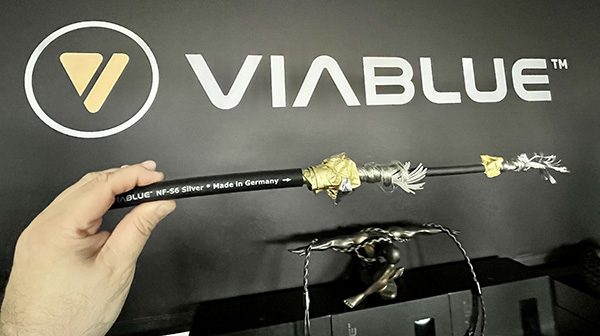
The ViaBlue NF-S6 Silver de(con)structed
Moving on to Malsch, we first visited ViaBlue, where they showed us their line of audio cables and their custom termination work. I don't have any experience with ViaBlue, but the cables look to be well-constructed with some of the most serious shielding I've ever seen, all at sensible prices.
Down the road at AVM, we visited a local subcontractor that provides their chassis, faceplates, and other metalwork, and another local company that populates their circuit boards with surface-mount components. By keeping everything local, AVM boss Udo Besser explained, they can deal with any problems that come up quickly and efficiently without having to ship parts around the world.
At AVM headquarters, we saw how the parts are assembled and tested by hand to create what AVM likes to call "Audiophile Masterpieces."
Footnote 1: Jason Victor Serinus will be reviewing the Innuos Nazaré in Stereophile's September issue.—Ed.